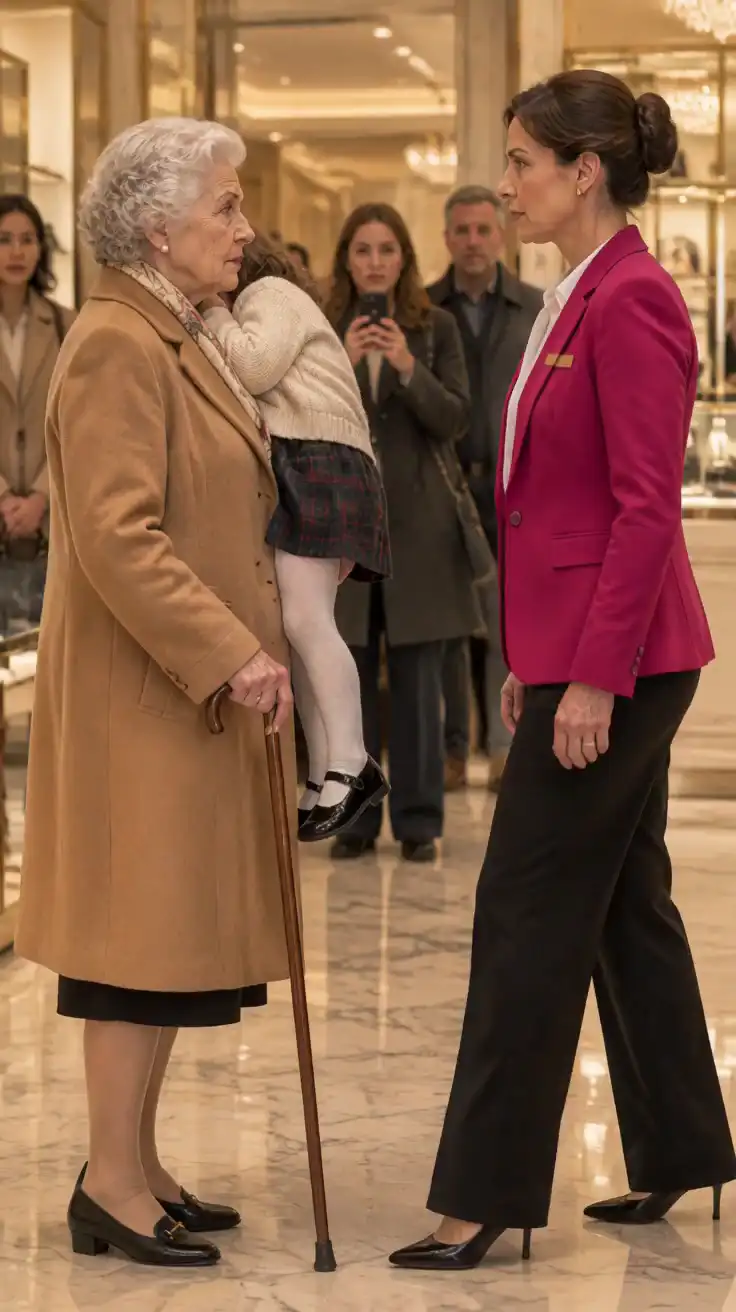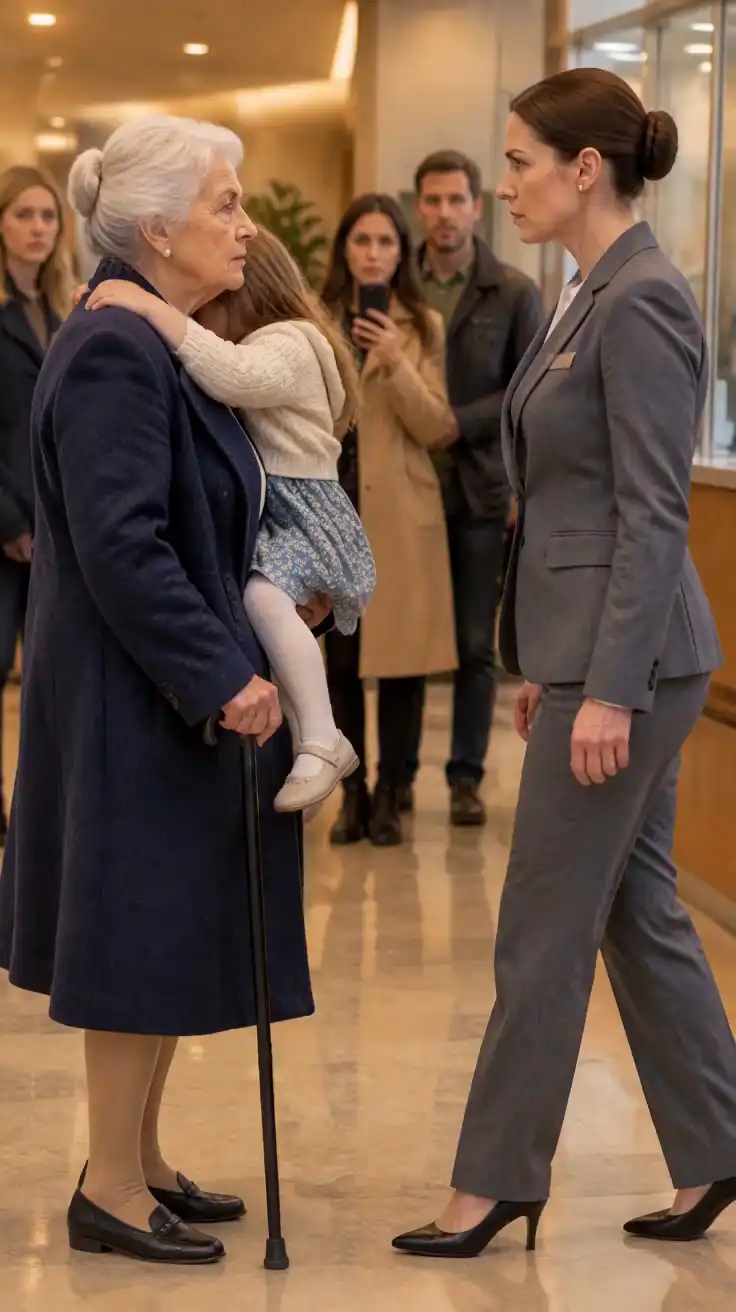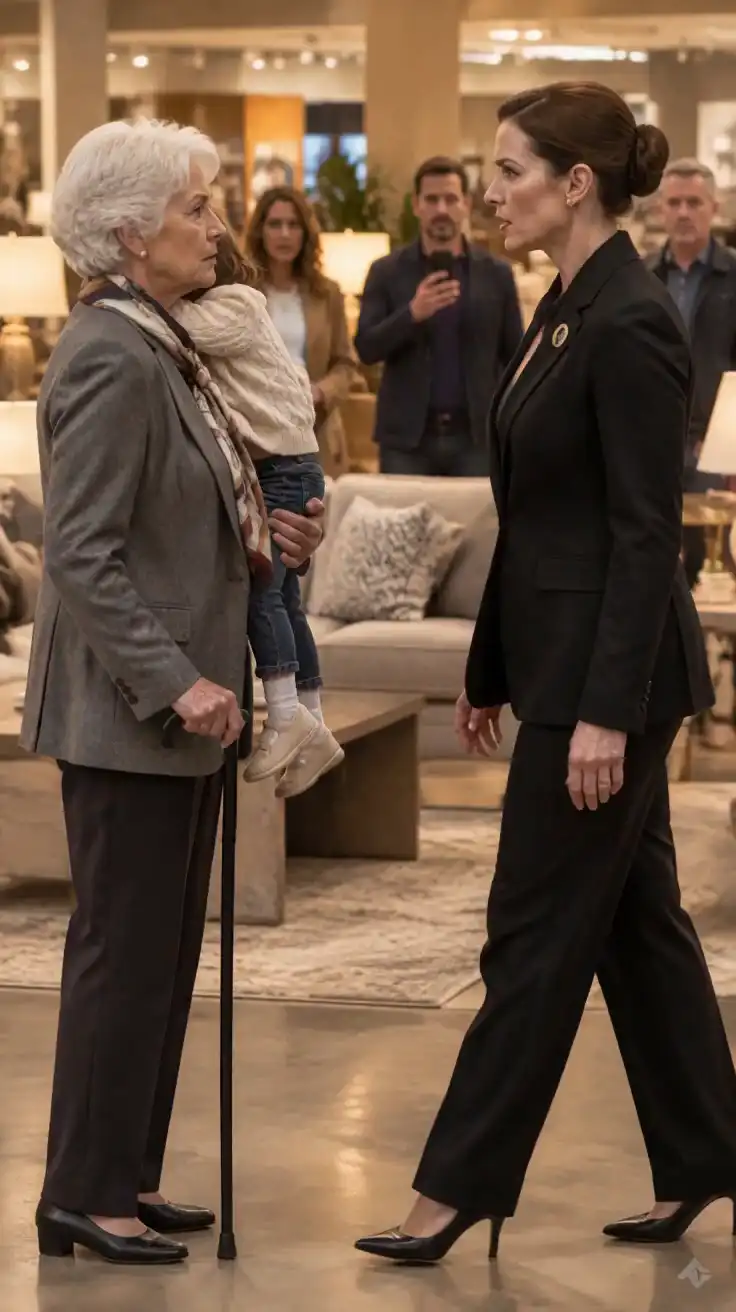
The manager slapped me and ordered the guard to drive me from the shade; my husband's name was on the founders' plaque, and my son's voice came through the phone as the manager reached for the membership ledger.
My cheek burned where the afternoon glare caught it, and grit pressed through the thin fabric at my knees. One guard stood over my chair while another gathered my bag and set it beside the gate.
“Move along,” the manager said. “This area is for members.”
A few people under the awning turned their heads. Someone lowered a glass without taking a drink. I reached for my bag, but the guard hooked two fingers around its strap and kept it just out of reach.
“I only wanted to sit for a minute,” I said.
The manager gave a short laugh. “Then sit somewhere you belong.”
He had already decided what I was: an old woman who had wandered past the wrong gate. No one looked at the bronze plaque near the entrance. No one looked at the faded photograph beneath it, either. The sun had bleached the faces almost white, but I knew the man standing beside the first clubhouse. I had watched him carry lumber across this same ground.
My phone trembled in my palm. I called my son and put him on speaker before the manager could turn away.
“Tell me exactly where you are,” he said.
“By the west entrance.”
The manager folded his arms. “She’s refusing to leave.”
“Ask him to check the membership records,” I said.
“Ma’am, don’t make this difficult,” the manager snapped. “You don’t have a current card.”
The guard shifted closer. His radio crackled, and two members stepped out from the shade. Then three more. The manager glanced at them, annoyed now, as though their attention cost him something.
My son’s voice came through the phone, suddenly quieter. “Put the manager on.”
The manager took the phone, listened, and handed it back without answering. His face had lost its easy color.
“Who is this?” one member asked.
The manager ignored him. My son spoke again through the speaker. “Open the membership roster. Turn to her name.”
The manager’s fingers tightened around the edge of the desk. A board member appeared near the clubhouse doors, followed by two others. No one announced them. They simply stopped and watched.
The manager pulled the heavy roster toward himself. Paper whispered under his thumb as he turned page after page. Then my son said, “Keep going.”
The manager found the page, looked down, and stopped. He read the line once, then again. When he turned the book so the others could see, his hand was shaking.
My son’s voice came through the phone. “Now read it aloud.”
The manager looked at my name, then took one step backward.
THE NAME HE TRIED TO ERASE
I watched the manager’s heel catch on the edge of the carpet.
He did not fall. He caught himself against the desk, one hand flattening the open roster while the other hovered over my name.
“Read it,” Edward said through the phone.
The manager’s eyes moved down the page.
“Margaret Hale,” he said.
His voice was smaller than it had been a minute earlier.
“Keep reading,” Edward said.
The manager swallowed. “Founding family. Lifetime membership. Spouse of Thomas Hale.”
A murmur passed through the people gathered beneath the awning.
The guard holding my bag let go of the strap as if it had burned him. My handbag dropped onto the paving stones, and the little silver clasp popped open. A tube of lipstick rolled toward the manager’s shoes.
He looked at it, then at me.
The roster lay open between us. Beside my name, in the old secretary’s careful handwriting, were the words lifetime membership, never to expire, transferable only by family agreement.
The manager’s thumb covered the last line.
Edward heard the silence over the phone.
“Move your hand,” he said.
The manager slowly lifted it.
A dark pencil mark ran through my name.
Not a single line. Someone had gone over it again and again until the paper had nearly torn.
I bent to pick up my lipstick, but one of the board members reached it first. She was a narrow woman named Helen Price, and I had known her since she was a child who used to sneak lemon cookies from the kitchen at tournaments.
She placed the lipstick in my palm.
“Mrs. Hale,” she said, looking at the page, “who crossed this out?”
The manager straightened.
“It was an administrative correction.”
“Answer her,” Edward said.
The phone was still on speaker. His voice had changed. It was no longer the patient voice he used in meetings, or the warm voice he used when he called me on Sunday mornings. It had become the voice people listened to when a decision had already been made.
The manager glanced at the three board members by the clubhouse doors.
“It was a list cleanup,” he said.
Helen’s mouth tightened. “You crossed out the wife of the man whose name is on the founders’ plaque?”
“I didn’t know she was—”
“You knew,” I said.
He turned toward me.
For the first time since he had walked over to my chair, he looked directly at my face instead of at my shoes, my bag, or the empty chair he wanted me to leave.
“You knew who I was,” I said. “You just decided it didn’t matter.”
His lips parted, but no sound came out.
Edward said, “Mother, don’t move.”
“I’m not moving.”
“I’m on my way.”
The manager’s head snapped toward the phone.
“What do you mean, on your way?”
Edward did not answer him.
He said to me, “Stay with Helen. I’ll be there in four minutes.”
The line went dead.
For a second, the manager seemed to believe the worst part was over. The call had ended. The person on the other end was no longer speaking. He looked around at the members, the guards, and the board members, as though the sudden audience might dissolve now that the phone was quiet.
It did not.
Helen closed the roster with both hands.
“Mr. Voss,” she said, “what exactly is a list cleanup?”
The manager rubbed the back of his neck. “I’ve explained this. We removed inactive names.”
“My name was never inactive,” I said.
“You haven’t played here in years.”
“I stopped playing because my knees stopped carrying me across eighteen holes. That did not cancel my membership.”
“You haven’t paid dues.”
I looked at him.
“What dues?”
He shifted his weight.
Helen opened the roster again. “This entry says lifetime membership. No annual dues.”
“That was an old arrangement.”
“It was the founding arrangement.”
The manager’s face tightened. “The club has changed.”
“Not that much,” said a man behind him.
I knew him as Walter Greene. He had been a member for forty years and had once broken his wrist falling out of a cart. He stepped out from under the awning, carrying his drink in one hand.
“My wife’s name is two pages after hers,” Walter said. “Lifetime membership. No dues.”
A woman beside him raised her hand. “Mine too.”
“Mine,” another member said.
The manager turned toward the clubhouse. “Everyone needs to return to their tables.”
No one moved.
The guard who had taken my bag looked at the ground. The second guard stood near the gate with his radio pressed against his chest, listening to nothing.
Helen turned another page.
“Here are the names you crossed out,” she said.
The manager reached for the book.
She pulled it away.
“Don’t touch it,” she said.
The manager stopped with his fingers suspended above the paper.
The clubhouse doors opened.
Edward walked through them.
He was still wearing the dark suit he used for board meetings, though his jacket was unbuttoned and his tie had been pulled loose. He had come from the upstairs office, not from the road. His hair was damp at the temples, and he carried no phone in his hand.
He saw me first.
His face changed.
He crossed the terrace in long strides, passed the manager without looking at him, and crouched beside my chair.
“Are you hurt?”
“My cheek is sore.”
He looked at the red mark along my face. His jaw tightened.
“I’m all right,” I said.
“Did he hit you?”
The terrace went still.
The manager’s mouth opened.
I answered before he could.
“He slapped me.”
Edward rose.
He did not touch the manager. He did not raise his voice.
He simply looked at him.
“Why?”
The manager’s shoulders lifted. “There was a misunderstanding.”
“You slapped my mother.”
“I didn’t know she was your mother.”
Edward’s eyes did not leave his face.
“That is your explanation?”
“I was enforcing the membership rules.”
“By putting your hand on an eighty-year-old woman?”
“She was trespassing.”
Edward turned to the roster on the desk.
“Her name is in the founding ledger.”
“It had been removed.”
“By you?”
The manager said nothing.
Edward looked at Helen.
“Keep the book open.”
Helen nodded.
Edward stepped toward the bronze plaque beside the entrance. It had been mounted there before I married Thomas, back when the clubhouse was one low building with a leaking roof and a kitchen that smelled permanently of sawdust.
The plaque had darkened with age. Dust had gathered in the grooves of the letters. Most members passed it every day without seeing it.
Edward ran his thumb across the top line.
“Someone bring a cloth,” he said.
A young server hurried out with a folded towel. Edward took it and wiped the plaque from left to right.
The bronze brightened.
The first name emerged.
THOMAS HALE.
Under it were the words founder and first president.
Below that, in a smaller line, was my name.
MARGARET HALE.
I had not looked at it closely in years. My name was not as deep as Thomas’s. When the plaque was made, he had insisted that the club belonged to the people who played there, not to the two of us.
The letters had been cut anyway.
Helen came to stand beside Edward.
“Read it,” she said.
Edward looked toward the members.
“This plaque was installed in 1958,” he said. “It recognizes Thomas Hale as the founder and first president of the club. It also recognizes Margaret Hale as a founding family member and lifetime member.”
The manager shook his head.
“That doesn’t mean she can use every area without notice.”
“She was sitting on a public terrace,” Walter said.
“Members’ terrace,” the manager snapped.
Walter pointed at the plaque. “She is a member.”
The manager’s face reddened.
Edward took the roster from Helen and laid it on the desk beside the plaque.
“Her membership was never revoked,” he said.
“I had authority to update the roster.”
“You had authority to maintain it.”
“I had authority to remove inactive members.”
“Show me where the board authorized you to remove lifetime members.”
The manager looked toward the board members.
No one answered for him.
Helen folded her arms. “Show us.”
The manager’s eyes moved from one face to another. Behind him, more members had come out of the clubhouse. Some stood with their drinks. Others had left their tables untouched, chairs pushed back as they followed the commotion.
A man near the steps said, “He crossed my name out too.”
The manager turned sharply. “Mr. Collins, your account was delinquent.”
“I have a lifetime membership.”
“You haven’t played since 2019.”
“Because I had surgery.”
“You should have contacted the office.”
“I did. You told me the club had changed.”
A woman in a blue visor stepped forward. “You crossed my mother’s name out after she went into assisted living.”
The manager pointed at her. “Her membership was unused.”
“She paid for it in 1974.”
“She didn’t use the facilities.”
“She was ninety-one.”
The manager’s hand dropped.
I looked at the ledger. My name was not the only one marked through. The pages around it were filled with faint lines, initials, and small notes in the margins.
Edward turned the book toward Helen.
“Call the secretary,” he said.
“She’s at home,” Helen replied.
“Call her anyway. Tell her to bring the original minutes from the last three board meetings.”
The manager stepped closer.
“Edward, this is an overreaction.”
“You know my name.”
“I know you’re the president.”
“And you knew I was Thomas Hale’s son.”
“That has nothing to do with this.”
“It has everything to do with this.”
Edward’s voice remained even, but every word landed hard enough that the nearby conversations stopped.
“You told my mother she had no right to sit here. You had her bag taken. You brought security against her. You crossed her name from the roster. Now you’re telling us you did it as part of a cleanup.”
“It was necessary.”
“For what?”
The manager said nothing.
Edward looked past him toward the terrace.
“For what, Mr. Voss?”
The manager’s eyes flicked toward the east lawn, where a new stone patio had been built beside the practice green. The patio was shaded by a row of young ornamental trees. Its tables were empty except for two reserved signs.
Edward followed his gaze.
“Is that why?”
The manager said, “That’s a separate matter.”
“It’s the same matter.”
Helen turned to him. “What separate matter?”
Edward pointed toward the patio. “The manager has been trying to sell reserved access to that area.”
The manager’s face went pale.
“You don’t know what you’re talking about.”
“Then explain the new signs.”
“They’re for club events.”
“There are no events today.”
“They’re for private bookings.”
“Who authorized private bookings?”
The manager looked at the board.
Helen’s expression hardened.
“You told us the patio was closed for maintenance.”
“It was being evaluated.”
“By whom?”
The manager pushed his hands into his pockets. “We needed new revenue.”
“Revenue from what?” Walter asked.
“Premium access.”
A low, angry sound moved through the crowd.
The manager lifted his voice. “The club is losing money. We have to modernize. We cannot keep giving the best spaces to people who never use them.”
I looked at the shaded terrace where I had tried to sit.
“People like me?”
He glanced at me, then away.
“People whose memberships are inactive.”
Edward opened the ledger again.
“Her membership is not inactive.”
“It was never updated.”
“It was never required to be updated.”
“You don’t understand the current operating model.”
“I understand that you crossed her name out and then tried to charge people for access to a space she had a lifetime right to use.”
“That is not what happened.”
“Then tell everyone what happened.”
The manager looked around at the crowd.
No one offered him an escape.
The guard who had held my bag finally spoke.
“Mr. Voss told us the woman wasn’t a member.”
The manager spun toward him.
“Be quiet.”
The guard flinched.
Edward noticed.
“What were you told?” Edward asked.
The guard swallowed. “He said anyone without a current card had to leave the terrace.”
“Did you know Mrs. Hale was listed as a lifetime member?”
“No, sir.”
“Did you see her struck?”
The manager stepped forward. “Don’t answer that.”
The guard’s face tightened. He looked at the manager, then at me.
“Yes,” he said.
The second guard lowered his radio.
“Was there an instruction to use force?” Edward asked.
“No, sir.”
“Then why did you take her bag?”
The guard’s mouth worked.
“Mr. Voss told us to clear the area.”
The manager turned on him. “I told you to escort her out.”
“She was trying to get her bag.”
“And you were doing your job.”
The guard looked down at his boots.
Edward moved closer to him.
“You did not strike her.”
“No, sir.”
“You followed an instruction.”
“Yes, sir.”
“Then stand there and tell the truth.”
The guard nodded once.
The board member named Martin Shaw stepped forward. He was the oldest of the three and had served on the board with Thomas during the club’s expansion in the seventies. He had been quiet until then, perhaps because he had hoped the matter would remain an administrative dispute.
Now he held out his hand toward the manager.
“Give me your key card.”
The manager stared at him.
“What?”
“Your key card. Your office key. Your club phone.”
“This is not a termination meeting.”
“No,” Martin said. “It is an emergency suspension.”
Helen looked at him. “On whose authority?”
Martin glanced at the plaque.
“On mine as acting chair until the board convenes.”
The manager laughed once, but there was no humor in it.
“You can’t suspend me because an old member complained.”
“She is not an old member,” Martin said. “She is a founding member.”
“She has not attended a board meeting in twenty years.”
“She was not required to.”
“She has not paid dues.”
“She was not required to.”
“She has not used the course.”
“She was not required to.”
Each answer struck the manager like a door closing.
Edward took a step toward me and lowered his voice.
“Do you want to go inside?”
I shook my head.
“I want to hear this.”
He nodded.
The manager heard me.
“She’s manipulating the situation.”
I turned toward him.
“I called my son because you told me to leave a club my husband built.”
“You called the president.”
“I called Edward.”
“You knew who he was.”
“He is my son. He is also the president. You were the one who decided those facts could not exist at the same time.”
No one spoke.
The server with the towel stood beside the plaque, still holding it in both hands.
Helen said, “There is another question.”
The manager looked at her.
“Why was Mrs. Hale’s name crossed out last month?”
He rubbed his palms together.
“I’ve already said. List cleanup.”
“Who ordered it?”
“It was my department.”
“Who approved it?”
“I had discretion.”
“Under what policy?”
He looked toward the clubhouse doors.
No answer came.
Martin held out his hand again.
“Your card.”
The manager did not move.
Martin turned to the guard.
“Escort Mr. Voss to his office. He is not to remove any files, records, devices, or personal property belonging to the club.”
The manager’s face turned red.
“You’re embarrassing me in front of the members.”
Martin’s expression did not change.
“You embarrassed yourself when you struck a member.”
“I did not strike—”
The crowd answered before he could finish.
“We saw it.”
“I saw it.”
“You slapped her.”
“He laughed afterward.”
The manager looked toward the person who had spoken. It was a woman named Patricia Lowe, one of the people who had been sitting under the awning when the manager first approached me.
She had lowered her glass then. Now she set it on the ledge.
“You laughed,” she said.
The manager’s eyes hardened.
“It was a misunderstanding.”
“You laughed,” Patricia repeated.
The manager looked at the guards.
Neither moved.
Martin’s hand remained extended.
After several seconds, the manager took a plastic key card from his wallet and placed it in Martin’s palm.
He removed a second card from his jacket.
Then he pulled a phone from his pocket and held it out.
Helen took the phone.
“Passcode?”
“I’m not giving you access to my personal phone.”
“Club phone,” Martin said.
The manager hesitated.
Edward pointed toward the device.
“Is that the club phone?”
“Yes.”
“Then give her the passcode.”
The manager looked at the members watching him.
He gave it.
Helen wrote the numbers on the back of a receipt and handed the phone to Martin.
The manager walked toward the clubhouse with the two guards behind him. He passed within a few feet of me.
He stopped.
For a moment, I thought he might say something. Not an apology. Nothing in his face suggested regret. He looked as if he was measuring how much of the scene he could still deny.
Then his eyes moved to the plaque.
Thomas Hale’s name caught the sunlight.
The manager walked on.
The terrace remained crowded after he disappeared.
No one seemed certain what to do with their hands. Walter set his glass on a table. Patricia picked hers up and then put it down again. The young server folded the towel into a smaller square.
Edward came back to my chair.
“Let me look at your cheek.”
“I don’t need a doctor.”
“I didn’t ask if you needed one.”
“I know that tone.”
“You taught me that tone.”
I touched his sleeve.
He knelt beside me and examined the mark without touching it.
Helen stood over the ledger.
“Mrs. Hale, this entry is original,” she said. “The line crossed through your name was added in blue pencil.”
“Who uses blue pencil?”
“Our office manager used to.”
“Is she still there?”
“No. She retired last year.”
Edward stood.
“Who had access to the office after she retired?”
Helen looked toward the clubhouse.
“Mr. Voss.”
“Who else?”
“The assistant manager. The membership coordinator. The records clerk.”
Martin joined us.
“We’ll need the access logs,” he said.
“Get them,” Edward replied.
Martin looked at him.
“You’re the president.”
“And you’re acting chair?”
“Until we have a full board vote.”
“Then call the meeting.”
“Today?”
“Today.”
A few members exchanged glances.
Martin lowered his voice. “We need a quorum.”
“Call the absent directors.”
“Some are out of state.”
“Put them on speaker.”
Helen closed the ledger carefully.
“Before we do that, I want to see the original minutes.”
The club secretary arrived ten minutes later in a small blue car that pulled up beside the service entrance. She was in her seventies, with a cardigan over a sleeveless dress and a canvas folder pressed against her chest.
Her name was Ruth Bell.
She had worked at the club since before Edward was born. Thomas had hired her when she was twenty-four, and she had typed the club’s first bylaws on a machine that jammed whenever the weather turned humid.
She hurried toward the terrace.
“I brought the minutes,” she said. “What happened?”
Her eyes landed on me.
“Oh, Margaret.”
She set the folder down and touched my shoulder.
“I’m all right,” I said.
Ruth looked toward the clubhouse. “Where is Voss?”
“In his office,” Martin said. “Under suspension.”
Ruth’s eyebrows rose.
“Why?”
Helen opened the roster.
Ruth read my name.
Then she saw the pencil mark.
Her face went still.
“He crossed you out?”
“He says it was a cleanup,” Helen said.
Ruth opened her folder and pulled out a stack of yellowed pages.
“Thomas made this very clear,” she said. “The founding memberships were permanent. They belonged to the founding families whether or not they played, paid annual dues, or lived nearby.”
Edward said, “Do you have the motion?”
Ruth flipped through the pages.
“Here. March 1958. The motion passed unanimously.”
She handed the page to Martin.
He read it aloud.
“‘The founding members and their immediate spouses shall hold lifetime membership in the club, exempt from annual dues, subject only to voluntary resignation or conduct-based revocation by a two-thirds vote of the board.’”
The members around us grew quiet.
Ruth turned another page.
“There’s more. In 1971, the board clarified that the lifetime membership continued after the death of the founding member and remained with the surviving spouse.”
Martin looked at me.
“Thomas never told me that clause was added.”
“He was in the room,” Ruth said. “He proposed it.”
I remembered that afternoon. Thomas had come home with grass stains on his trousers and a folder under his arm. He had been angry because one of the early members had died and the member’s widow had been told she could no longer use the dining room.
“You said the club should not become a place that forgets people,” I told him.
Edward looked at me.
“You remember that?”
“I remember your father coming home angry enough to slam the screen door.”
A few members smiled, but the smile faded when Ruth continued.
“The 1971 minutes also state that founding family names must remain on the membership ledger unless removed under that conduct provision.”
Helen tapped the line through my name.
“Was there a conduct vote?”
Ruth shook her head.
“Not that I know of.”
Martin took the folder from her.
“We’ll check every meeting from the last year.”
Edward looked toward the clubhouse office where the manager had been taken.
“Start with last month.”
Ruth pulled out another set of minutes.
“Here. The April meeting.”
Martin read silently for a moment.
“What does it say?” Helen asked.
He frowned.
“The manager presented a proposal for premium terrace access. It says the board approved a review of legacy memberships.”
“Approved a review,” Edward said. “Not the cancellation of them.”
Martin nodded.
“Correct.”
“Who voted?”
Martin read farther.
“Only four directors were present. The motion passed three to one.”
“Was it within the bylaws?” Helen asked.
“No.”
“Why not?”
“Because any change to lifetime membership requires a full board vote and written notice to the affected members.”
Edward held out his hand.
Martin gave him the minutes.
At the bottom of the page, beneath the signatures, was a typed list of proposed inactive accounts. My name appeared third.
Edward looked at it.
“Who prepared this list?”
Ruth’s finger moved to the margin.
“Looks like the manager’s office.”
“Was it distributed to the board?”
“Apparently.”
“Did anyone ask for the member files?”
Martin shook his head.
“Not before the vote.”
Edward turned toward the members.
“Who was on that committee?”
Martin looked uncomfortable.
“Mr. Voss, the assistant manager, and two directors who resigned in June.”
“Why did they resign?”
“They disagreed about the premium access proposal.”
“Did they know names were being removed?”
“They knew a review was being conducted.”
Edward’s eyes returned to the page.
The answer was there, but not complete.
“Where are the notices?” he asked.
Ruth frowned. “What notices?”
“The written notices required before a lifetime membership can be revoked.”
“There were none.”
Martin said, “We’ll need to confirm.”
Ruth shook her head.
“I was secretary. I would have mailed them.”
Edward looked at the manager’s office again.
The members had followed the conversation closely. Several now held their phones, though no one was filming openly. Their faces had changed. At first, they had watched because a woman had been slapped. Now they were looking at the ledger as if it contained their own futures.
Walter stepped beside me.
“My name is on that list,” he said.
Patricia came forward too.
“So is my mother’s.”
A man near the gate raised his hand. “Mine.”
Helen closed the minutes.
“Then this is not only about Margaret.”
“No,” Edward said. “But it began with her.”
He turned to me.
“Mother, I’m going to ask you something.”
“What?”
“Do you want to continue this here, or do you want to go home?”
I looked at the plaque.
Thomas’s name was visible from where I sat. The letters had been worn smooth by decades of weather. I had watched him stand beneath that plaque on opening day, his hands shaking as he thanked people for believing that a neglected strip of land could become a club.
He had not founded it so people could be sorted into those who belonged and those who did not.
“I’m staying,” I said.
Edward nodded.
“Then we finish it here.”
The emergency board meeting began in the dining room because the regular meeting room was too small for the people who wanted to attend.
The board members sat at one end of a long table. The ledger rested in the center. The original minutes lay beside it. I sat near the window with Edward standing behind my chair.
The manager was not allowed into the room.
He remained in his office under supervision while the assistant manager retrieved records. The guards had been instructed to stay near the hallway, but they did not block the doorway. Members filled the back half of the dining room, sitting shoulder to shoulder and leaning against the walls.
Martin called the meeting to order.
“We are convening under the emergency authority granted to the acting chair when the club’s officers are unavailable or when immediate action is necessary to protect club property and members.”
A man named Douglas Reed raised his hand.
“Are we voting on Mr. Voss?”
“We will vote on suspension and termination after reviewing the records.”
“And the assault?”
Martin looked at me.
“That will be referred to the appropriate authorities.”
I had not called the police. The slap had left a mark, but the greater wound was the ease with which he had believed he could erase me. Edward had asked if I wanted to report it.
I had told him I would decide after the club dealt with him.
Now every person in the room knew what had happened.
Ruth read the 1958 and 1971 provisions aloud.
Then Helen placed the ledger before the board.
“The original entries remain clear,” she said. “The blue pencil marks were added last month. There are thirty-seven affected lifetime memberships.”
A member near the wall said, “Thirty-seven?”
Helen nodded.
“Twenty-nine founding family memberships, eight legacy memberships granted under the same provision.”
Edward looked at the board.
“Who authorized the list?”
Martin said, “The April motion authorized a review.”
“Who converted the review into removals?”
No one answered.
The assistant manager, a young man named Caleb, stood near the doorway.
“I can tell you,” he said.
Martin looked up. “Come in.”
Caleb stepped inside. He held a tablet in both hands.
“I didn’t know if I should speak.”
“You should,” Edward said.
Caleb glanced at me.
“I’m sorry, Mrs. Hale.”
“Tell the truth,” I said.
He nodded.
“Mr. Voss gave me a spreadsheet in May. He told me to update the membership system. He said the names marked in blue were no longer active.”
“Did he tell you to cross them out in the paper ledger?” Helen asked.
“No. The paper book was in the office. He told me not to touch it.”
“Then who did?”
Caleb swallowed.
“Mr. Voss.”
The manager’s voice came from the hallway.
“That’s a lie.”
The guards turned toward him.
He had come out of the office without permission. His jacket was gone, and his shirt sleeves were rolled to his elbows. He looked less like a manager and more like a man who had discovered a door locked behind him.
Martin stood.
“You were instructed to remain in your office.”
“I’m not going to sit there while employees accuse me.”
Caleb’s shoulders tightened.
Edward turned toward the guards.
“Bring him in, but keep him by the door.”
The manager entered.
He did not look at me.
“Caleb has been trying to protect himself,” he said. “He made the changes I instructed, but now he wants to blame me.”
Caleb’s voice shook. “You told me the board approved it.”
“They did.”
“They approved a review.”
“They approved the policy.”
“You said the lifetime memberships were obsolete.”
The manager turned toward him.
“They are obsolete in practice.”
“That isn’t what the bylaws say,” Ruth replied.
The manager pointed at her. “The bylaws are decades old.”
“They are still the bylaws,” Martin said.
“The club cannot survive if it refuses to adapt.”
Edward spoke quietly.
“Adaptation does not include falsifying records.”
“I didn’t falsify anything.”
“You altered the original ledger.”
“I made an administrative notation.”
“You marked through my mother’s name.”
“Because she hadn’t used the club in years.”
“Her membership was exempt from use requirements.”
“I was never shown that provision.”
Ruth gave a short, disbelieving laugh.
“You were shown it when you were hired. Every manager receives the founding documents.”
The manager looked at Martin.
“Is that true?”
Martin nodded.
“The manager’s handbook includes them.”
“Then perhaps the handbook needs to be updated.”
“Not by you,” Helen said.
The room fell silent again.
Edward walked to the table and lifted the original minutes.
“You knew about the founding memberships,” he said. “You knew they were exempt from dues. You knew the board had not voted to revoke them. You crossed out the names anyway.”
The manager’s face hardened.
“Because the club needs revenue.”
“From selling access to spaces those members can use?”
“From offering premium services to people willing to pay.”
“You wanted to make the terrace exclusive.”
“I wanted to keep the club operating.”
“Then why didn’t you bring the proposal to the full board?”
“I brought it to the committee.”
“You brought it to three people.”
“Three directors approved it.”
“Three directors approved a review.”
The manager looked around the room.
“You’re all acting as if this club is some museum. It isn’t. Membership is changing. Younger players want better facilities. They don’t want to sit beside people who never come here.”
A chair scraped against the floor.
Walter stood.
“Careful.”
The manager faced him.
“What?”
“You’re saying the quiet part out loud.”
“I’m saying the truth.”
“No,” Walter said. “You’re saying what you thought you could say when you believed none of us had power.”
The manager’s gaze moved across the room.
People who had once greeted him warmly now sat with their arms folded. A few had tears in their eyes. Others looked furious.
I understood then that the blue pencil had traveled farther than my name. It had crossed out a whole generation of people who had built the club, donated land, repaired fences, cooked meals, and stood in the rain to keep tournaments running.
The manager had not simply forgotten us.
He had calculated that we were too old, too quiet, or too absent to resist.
Edward returned to my side.
“Mother,” he said, “I need to ask you one more thing.”
The manager looked at him.
Edward continued, “Would you be willing to make a formal statement about what happened at the terrace?”
I looked at the room.
The members waited.
“Yes,” I said.
Edward pulled out a chair and sat beside me.
Martin asked the manager to remain silent while I spoke.
I told them about the shade.
I told them I had come through the west entrance because the main parking lot was crowded. I told them my knees had started aching, so I sat beneath the awning for a minute before going inside. I told them the manager asked for my card.
“I told him I didn’t carry one,” I said.
“Did he ask for your name?” Martin asked.
“No.”
“Did you tell him?”
“I said I was a member.”
The manager shifted near the doorway.
I continued.
“He said the area was for members. I repeated that I was one. He told me to leave. When I didn’t get up quickly enough, he slapped me.”
The room held its breath.
“What did he say afterward?” Helen asked.
“He laughed.”
The manager shook his head.
“That isn’t what happened.”
I looked at him.
“You laughed.”
“You’re misremembering.”
“Then why did you smile when I called Edward?”
He did not answer.
I went on.
“He told the guard to remove my bag. The guard took it. I called my son because I wanted someone to know where I was.”
Edward’s hand closed over mine beneath the table.
I finished the statement.
No one asked me whether I had provoked him. No one asked whether I should have carried a card. No one asked whether the slap had been hard enough to count.
When I stopped speaking, Patricia rose from the back of the room.
“I saw it,” she said.
Then Walter.
“So did I.”
Then the two guards.
Then three other members who had been inside the clubhouse but had seen the manager come toward me.
The manager’s face changed with each voice.
He had expected one old woman’s word to stand alone.
It did not.
Martin asked him whether he wanted to respond.
The manager looked at the table.
“My actions were necessary to enforce access rules,” he said.
No apology.
No acknowledgment.
Only the same sentence, stripped of everything but its excuse.
Helen whispered, “That tells us enough.”
The board voted first on the emergency suspension.
Every director present voted yes.
The absent directors joined by phone one at a time. Ruth placed each call on speaker, and each director heard the evidence before voting.
The suspension passed unanimously.
Then the board examined the records of the thirty-seven members.
Caleb brought the electronic files from the office. Helen compared each digital entry with the paper ledger. Every one of the affected memberships had been marked inactive without notice.
Some families had been listed as “unreachable.” Some had been labeled “nonparticipating.” Several had been moved into a file called potential premium conversion.
My name was in that file.
So were Walter’s, Patricia’s mother’s, and the names of people who had died years earlier but whose spouses still belonged to the club.
Edward stared at the screen.
“What was the plan?”
The manager crossed his arms.
“There was no plan.”
Caleb pointed to a column.
“The premium package was priced per reserved seat.”
“Who was going to receive those seats?” Edward asked.
Caleb looked toward the manager.
The manager said nothing.
Ruth found another file.
“These are invoices,” she said.
Helen took them.
They were deposits from prospective members who had been promised access to the shaded terrace, the east patio, and reserved tournament seating. Several deposits had been accepted before the board approved anything.
Martin turned to the manager.
“You were selling rights you did not possess.”
“I was collecting expressions of interest.”
“These are payments.”
“They were refundable.”
“Were they?”
The manager said nothing.
Edward looked at the board.
“This is no longer a policy dispute.”
The director who had joined by phone asked, “Are the funds in the club account?”
Caleb answered.
“No. They were deposited into the management company account.”
The room erupted.
The manager stepped away from the doorway.
“That was a temporary arrangement.”
“Why?” Edward asked.
“To simplify accounting.”
“The club has an accounting department.”
“It was an advance.”
“An advance for what?”
The manager looked toward the members.
No one looked away.
Martin called for order, but the voices continued until Helen struck the table with her palm.
“Enough.”
The sound stopped everyone.
She turned to the manager.
“You were given authority to run the club. You used it to strike lawful members from the ledger, sell access to areas reserved by the founding agreement, and collect money outside the club’s accounts. Then you assaulted one of the members you removed.”
The manager’s face had gone gray.
“I deny the financial allegations.”
“Then the records can speak for you,” Edward said.
He looked at Martin.
“Terminate him.”
The manager laughed again, but it sounded strained.
“You can’t fire me in this room.”
“Why not?”
“Because I have a contract.”
“Your contract contains a conduct clause.”
“Conduct clause?”
“Assault, falsification of records, misuse of club funds, and unauthorized commercial agreements.”
The manager looked toward the board.
“You’re going to destroy this club over an old woman sitting in the shade?”
Edward stood.
“No.”
He pointed at the ledger.
“You tried to destroy the club by deciding that the people who built it no longer belonged.”
The manager’s mouth tightened.
“You think being the president’s mother makes you untouchable.”
I felt Edward’s hand move away from mine.
I touched his wrist.
“Let me answer him.”
Edward looked at me, then nodded.
I turned toward the manager.
“My husband’s name on that plaque did not make me untouchable. It made me responsible. For sixty years, I came here early to help set tables. I washed coffee cups when the kitchen staff was short. I signed checks when the roof leaked. I sat beside Thomas while he read every membership request because he wanted to know who would be joining us.”
The manager stared at me.
“I never asked for special treatment,” I said. “I asked for a chair in the shade.”
He looked down.
“You decided I was nobody because I didn’t have a card in my hand.”
“No,” I continued. “You decided I was nobody because you had already erased my name.”
The room stayed quiet.
“That was your mistake,” I said. “You thought the ink changed the truth.”
The manager’s eyes lifted.
For the first time, something like fear crossed his face.
Martin called for the vote.
The termination passed unanimously.
The manager was escorted from the clubhouse before sunset.
He carried no files. He took no phone. He did not apologize.
At the gate, he paused beside the bronze plaque.
A member stepped aside to let him pass, but no one spoke to him.
He looked once at the names.
Then he walked through the gate.
The board spent the next three hours restoring the ledger.
The blue lines were not erased. Ruth said they had to remain as evidence. Instead, each crossed-out name was verified against the original records and marked active again in red ink.
When she reached mine, she handed me the pen.
“Would you like to do it?”
I looked at the old page.
My name sat beneath Thomas’s, damaged but legible.
I wrote the word restored beside it.
Then I signed my initials.
Edward stood behind me.
“Do you want your membership card?” he asked.
“I never needed one.”
“I know. But I can have one made.”
I considered it.
“Make it simple.”
“What should it say?”
“Margaret Hale. Lifetime member.”
He smiled for the first time that afternoon.
“I’ll make sure they spell it correctly.”
By evening, the board had reinstated every member on the list and canceled the premium access agreements. The deposits were transferred back from the management company account under the direction of the club’s attorney.
The members who had gathered at the terrace did not leave until they saw the written resolutions.
Patricia called her mother.
Walter called his wife.
Ruth sat at the end of the table with the original bylaws spread before her, explaining each clause to anyone who asked.
I stayed beside Edward as he signed the restoration order.
“You should go home,” he said.
“So should you.”
“I’m the president.”
“And I’m the woman who was asked to leave.”
He glanced at me.
“Do you want to sit in the shade now?”
I looked through the windows toward the terrace.
The chair I had been using was still there. One leg was crooked from when the guard had pulled my bag away. The guard had returned it and placed it beside the table.
“Not yet,” I said.
Edward understood.
He walked with me back outside.
The plaque was still dusty around the lower edge. The cloth lay on the step where the server had left it.
I picked it up.
“Mother, let me.”
“I can reach.”
He held the plaque steady while I wiped it.
The letters brightened beneath my hand.
Thomas Hale.
Founder and first president.
Margaret Hale.
Founding family member and lifetime member.
A shallow scratch ran through part of my name. The manager had not marked the bronze. The damage was older, probably from a careless repair or years of weather. Still, I traced it with my fingertip.
“We should have it restored,” Edward said.
“Don’t polish Thomas away.”
“I won’t.”
“And don’t make my name bigger than his.”
“I won’t do that either.”
“Then add the letters that are missing.”
Edward nodded.
The board hired a local engraver who had worked on the club’s signs for decades. He measured the plaque while members stood around him. The next morning, he removed it from the wall and took it to his shop.
For three days, the entrance looked strangely bare.
On the fourth day, he brought it back.
The newly cut letters matched the old ones. My name was complete again. The scratch had been repaired, but the bronze still held the marks of its age.
Edward had the plaque mounted in the same place.
He asked me to stand beside him when the screws were tightened.
The members gathered beneath the awning. Ruth held the original ledger. Martin held the board’s resolution. Walter brought his wife. Patricia brought her mother, who arrived in a wheelchair and insisted on touching the plaque.
Edward spoke first.
“This club was founded on the promise that membership would not be taken away because someone grew old, moved slowly, or stopped playing every week. That promise was broken. Today, the board has restored every lifetime membership and placed the original names back in the ledger.”
He turned toward me.
“My mother’s name was never supposed to disappear.”
The members applauded.
I did not expect the sound to hurt.
It did, a little.
Not because of the manager. Not because of the slap. Because Thomas had been gone for twelve years, and for a moment I could imagine him standing in the crowd with his hands in his pockets, pretending he did not enjoy being praised.
Edward took my hand.
“Would you like to say something?”
I looked at the plaque.
“I only have one thing to say,” I told the members. “If you see someone sitting in the shade, make room.”
Walter laughed.
Patricia wiped her eyes.
Even Martin smiled.
Later that week, the full board held its scheduled election.
Edward’s term as president had not yet expired, but several directors asked him to stand for another term after the emergency meeting. He did not assume the result. He sent every eligible member the agenda, the financial reports, and the proposed reforms.
The reforms included independent control of the membership ledger, board approval for all changes to lifetime status, and a rule requiring two staff members to be present when any member was removed from a facility.
There was also a new policy requiring managers and guards to complete conduct training.
Edward stood before the membership and answered every question.
He did not mention that he was my son unless someone asked.
When they asked, he said, “That relationship is personal. The vote is about whether I have served the club properly.”
I sat in the front row.
When the ballots were counted, Edward was reelected president.
The members applauded until he lifted both hands.
Then he turned to me.
“I think they want you to come up here.”
“I’ve done enough standing.”
He came down instead.
He kissed my cheek, carefully avoiding the fading mark.
“Your card is ready,” he said.
“You made one?”
“It’s in my pocket.”
“Is it simple?”
“Very.”
He handed it to me.
The card was plain, with my name, the club seal, and one line beneath it.
Lifetime member.
I slipped it into my handbag.
“I suppose I should carry it now,” I said.
“You don’t have to.”
“I know.”
We walked outside together.
The chair beneath the awning had been repaired. Someone had placed a small cushion on it. On the table beside it sat a glass of water and a folded napkin.
I lowered myself into the seat.
Edward stood nearby.
“Stay,” I said.
He sat in the chair beside mine.
Across the entrance, the restored plaque caught the late afternoon light. Thomas’s name shone above mine, and mine shone beneath his.
The members moved around us without lowering their voices or looking away. The guards nodded when they passed. Ruth brought out two lemon cookies and set them on a plate between us.
Edward picked one up.
“You remember these?”
“Your father used to sneak them.”
“He said you did.”
“He was a liar.”
Edward smiled.
For a while, neither of us spoke.
The shade covered my knees. A breeze moved through the trees near the patio. Somewhere beyond the clubhouse, someone struck a golf ball, and the clean sound traveled across the lawn.
Edward looked at the plaque.
“Mother?”
“Yes?”
“I’m sorry you had to call me.”
I turned toward him.
“You didn’t make me call you.”
“I should have made sure the roster was protected.”
“You believed people to be decent.”
“That’s not an excuse.”
“No,” I said. “It’s a responsibility. But you took care of it.”
He looked down at his hands.
“I should have known what he was doing.”
“You knew after I called.”
“And then?”
“Then you came.”
His shoulders eased.
I reached into my handbag and took out the membership card.
The plastic was smooth and cool between my fingers.
“I’ll keep it,” I said.
“Good.”
“But I’m still not showing it to anyone unless they ask.”
“That seems fair.”
“And if someone tells me to leave?”
Edward looked at me.
“What should you do?”
I glanced toward the plaque.
“Sit down.”
He laughed.
This time, no one mistook the sound for permission to hurt anyone.
We stayed in the shade until the sun moved behind the clubhouse, and the name on the plaque remained where it had always belonged.