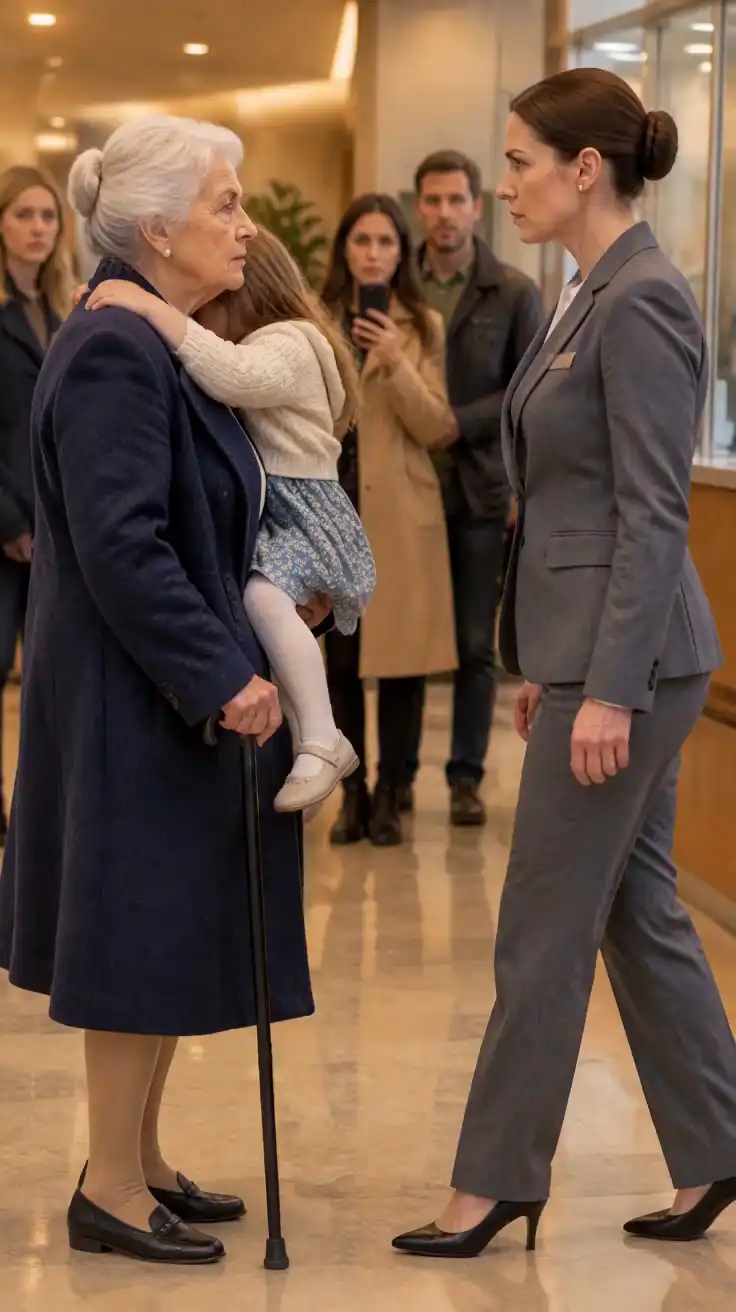
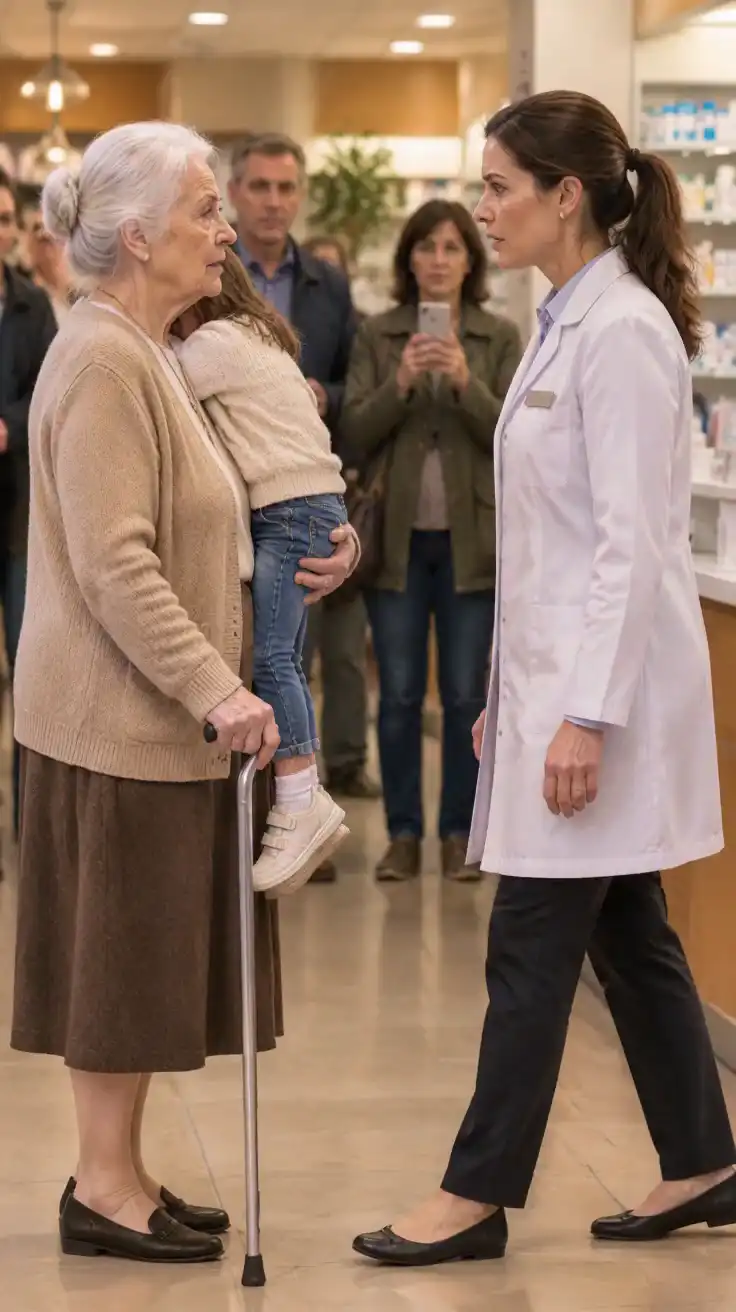
A pharmacy manager slapped me and ordered security to drag me out over my prescription, though I founded this entire chain, right as the voice on my phone answered and someone stepped through the entrance.
Heat spread across my cheek. I pressed my fingers against it as a bottle rattled somewhere behind the counter.
The pharmacist manager held my prescription between two fingers. “This doesn’t look right. You need to leave.”
A security guard stepped beside me, his hand hovering near my elbow. Beyond him, a woman in a work uniform pulled her little boy closer. He had a bandage around one knee and was staring at my face.
“I called the doctor’s office,” the manager told the guard. “They couldn’t confirm it.”
The guard glanced at the waiting customers, then at me. “Ma’am, let’s take this outside.”
I took my phone from my coat pocket. My hand shook enough that I had to brace it against the counter to find my son’s number.
The manager leaned over. “You can call whoever you like, but you’re not getting this filled.”
My son answered on the second ring. I gave him the address.
“Stay there,” he said. “I’m coming.”
The guard had his hand on the door when a man near the pickup window spoke up. “You told me my pills were the same as the ones my doctor ordered. They weren’t even the same color.”
The manager turned toward him. “Manufacturers change. That’s normal.”
“My wife called the doctor,” the man said. “He told her he hadn’t changed a thing.”
A woman beside him drew a pharmacy bag from her purse. “My refill looked different too. I thought I’d made a mistake.”
The manager pointed at the waiting chairs. “If you have a complaint, take a seat. I’ll deal with it after she’s gone.”
Neither customer sat down. The little boy’s mother moved away from the counter, keeping him close, while the guard let the door swing shut.
I stayed where my son had asked me to stay. The manager placed my prescription behind the counter and folded his arms.
When my son came in, he looked first at the red mark on my cheek. Then he asked the manager to bring up my prescription and the store’s dispensing records.
“Who are you supposed to be?” the manager said.
My son took an unfolded license from his coat and laid it on the counter. The manager reached for it, then stopped with his hand suspended above the paper.
THE NAME ON THE LICENSE
Adam flattened the license with his palm. “She founded this pharmacy,” he said, pointing to my name. “I’m her son. I own the chain now.”
The manager’s hand dropped to the counter.
He looked from the license to me, then back at Adam. “You’re Adam?”
“Yes.”
“I didn’t recognize her.”
“You didn’t need to recognize her,” Adam said. “You needed to treat her like a patient.”
The guard took a step away from the door. The woman with the little boy shifted her weight, but she didn’t leave.
The manager cleared his throat. “There was a question about the prescription.”
“And that gave you permission to hit her?”
“I was trying to protect the pharmacy.”
Adam’s fingers tightened on the edge of the paper. “Bring me her prescription.”
The manager hesitated.
“Now,” Adam said.
He disappeared behind the counter and returned with the prescription. He laid it down beside the license, carefully, as though careful hands might change what everyone had seen him do.
I picked up the prescription. My name was on it. The doctor’s office had sent me home with it that morning because their electronic system was down. I had folded it once to fit it in my purse.
“It’s real,” I said.
The manager looked at me. “The office wouldn’t confirm it.”
“They said the person who could confirm it was at lunch,” I said. “I heard you. You put the call on speaker.”
The man near the pickup window nodded. “That’s what I heard too.”
The manager turned toward him. “Sir, you weren’t part of that conversation.”
“I was standing right here.”
Adam held out his hand. “May I?”
I gave him the prescription. He checked the doctor’s name and the date, then handed it back to me.
“We’ll have another pharmacist verify it,” he said.
The manager drew himself up. “I’m the pharmacist on duty.”
“Not for this.”
“You can’t just leave the counter without a pharmacist.”
“I know that.” Adam took out his phone. “I’m calling one from the next store. Until she gets here, we stop dispensing. We don’t ask patients to take chances because it’s inconvenient.”
The manager’s mouth opened, then closed.
Adam moved a few feet away to make the call. I could hear enough to know he’d reached the pharmacist he wanted. He gave her the address, asked how soon she could arrive, and told her to bring the keys to the dispensing system.
When he came back, the manager said, “You’re shutting down my pharmacy over a misunderstanding?”
Adam looked at my cheek. “No. I’m stopping dispensing while we find out what’s happened in this pharmacy.”
He turned to the people waiting. “I’m sorry. A pharmacist from another location is on her way. If you need to leave, please give us a way to reach you before you go. If your medication is urgent, tell me and I’ll help arrange another store.”
The woman with the boy raised her hand a little. “His antibiotic is supposed to start today.”
“We’ll take care of that,” Adam said. “What’s your name?”
“Denise.”
She kept one hand on the boy’s shoulder while she gave him her number. Adam wrote it down on the back of an appointment card from his pocket. The boy picked at the edge of his bandage.
“Is it going to hurt?” he asked.
“The medicine?” Denise said.
He nodded.
“No, baby. It’s going to help.”
Adam crouched so he was level with the boy. “The pharmacist coming over is very good at explaining things. She’ll tell you and your mom exactly what to do.”
The boy considered him, then pressed the bandage flat again.
The manager watched Adam stand. “I’ve worked here for four years.”
“I know how long you’ve worked here,” Adam said. “Please step away from the dispensing area until our relief pharmacist arrives.”
The manager’s face reddened. “You’re making me look guilty in front of customers.”
The man near the pickup window let out a short breath. “You called her a fraud in front of customers.”
“I said the prescription looked suspicious.”
“You hit her,” the man said.
The manager turned to the guard. “You saw the prescription. Tell him it didn’t look right.”
The guard stared at the floor. “I didn’t look at it.”
“You told her she forged it.”
“I know what I said.” The guard glanced at me, then away again. “You told me it was forged.”
I kept one hand on the counter. My cheek had begun to throb in time with my pulse.
The guard approached slowly. “Ma’am, I’m sorry I tried to put you out. I should have asked more questions.”
“You should have,” I said.
He nodded once. “Can I get you some ice?”
I almost told him no. The little boy was watching me, though, and I didn’t want him to think a person had to stand there and hurt just because other people were looking.
“Yes,” I said. “Thank you.”
The guard went toward the break room. Adam came around the counter and put a hand lightly on my shoulder.
“Do you want to sit?”
“I want my prescription filled.”
“I know. You can do both.”
He pulled out one of the waiting chairs. I sat, still holding the folded prescription. The woman who had taken a pharmacy bag from her purse sat beside me, leaving one chair between us.
“I’m Helen,” she said. “I’m sorry to bother you, but I don’t know if I should take these tonight.”
She held up the bag without opening it.
“You’re not bothering me,” I said. “I’m not practicing anymore, though. Let the pharmacist check it.”
Helen glanced toward the manager. “I did ask him when I picked it up. He told me the tablets were different because the supplier changed.”
“Did your doctor tell you not to accept a substitute?”
“He usually calls me when he changes anything. That’s all I know.”
Adam came over. “We’ll have the pharmacist review it with you. Please don’t stop or change a medication based on what any of us say here until she checks and, if necessary, speaks with your prescriber.”
Helen held the bag tighter. “All right.”
The guard returned with a small bag of ice wrapped in a clean towel. I pressed it to my cheek. The cold stung, then dulled the heat.
“Thank you,” I said.
He remained near the door, but this time he faced the waiting area.
Adam went back to the counter. “Where is the generic substitution log?”
The manager’s eyes moved to a cabinet behind him. “Why?”
“Because a patient has raised a question, and I want the records available when the relief pharmacist gets here.”
“Those records contain patient information.”
“That’s why we’ll review them privately, with the appropriate staff. I’m not asking you to read names out loud.”
The manager didn’t move.
Adam took a breath. “Are you refusing to provide a store record to the owner during a patient-safety review?”
“I’m saying you don’t understand the situation.”
“Then help me understand it.”
For a moment I thought the manager might refuse again. Then he unlocked the cabinet, took out a thick binder and set it beside the license.
He kept his hand on the cover.
“Some substitutions are permitted without calling the doctor,” he said.
“Yes,” Adam said. “And some require authorization or must not be made when the prescriber has specified otherwise. That’s why we’re going to check the actual records instead of arguing about them.”
The manager released the binder.
Adam didn’t open it on the counter. He picked it up and carried it into the small consultation room beside the waiting area. Through the window in the door, I could see him set it on the table.
The manager followed him as far as the doorway. “I should be present for this.”
“You’ll have an opportunity to explain every entry,” Adam said. “For now, wait out here.”
“You’re treating me like a criminal.”
Adam looked back at him. “I’m preserving the records and protecting patients. Those are the things I’m responsible for.”
The manager stood in the doorway until the guard said quietly, “Maybe give him some room.”
The manager swung around. “You work for me.”
“I work for the security company,” the guard said. “And I’m not touching that binder.”
The manager walked to the far end of the counter and folded his arms again. This time no one moved when he looked at them.
A delivery driver came in carrying two sealed totes. He stopped when he saw the customers waiting and Adam in the consultation room.
“Where do you want these?” he asked.
The manager started toward him.
Adam opened the consultation-room door. “Please leave them behind the counter, unopened. Our pharmacist will handle them when she arrives.”
The driver looked between them. “Okay.”
He put the totes down. The manager reached for one.
“Leave it,” Adam said.
The manager pulled his hand back.
The driver gave a little shrug and left. The bell above the door rattled after him.
Helen turned her pharmacy bag over in her hands. “I’ve been coming here since before my husband died,” she said to me. “He liked the old pharmacist because she called him by his name.”
“What was his name?”
“Frank.”
“I remember a Frank who always brought peppermints for the staff.”
Her head came up. “That was him.”
“He insisted the jar stay on the counter.”
“He used to buy those peppermints himself,” she said. “I wondered why we went through so many.”
For the first time since the slap, I felt my mouth move toward a smile. Helen’s eyes filled, and she looked down at the bag.
“He would have marched right up there,” she said. “He wasn’t shy about asking.”
“You did ask.”
“And I let him tell me I was imagining things.”
“You’re asking again,” I said.
The manager was close enough to hear. He turned his back.
A few minutes later, a woman in a navy coat hurried through the door with a pharmacy badge clipped to her sweater. She carried a canvas bag and had snow melting on the shoulders of her coat.
“Adam,” she said. “I’m Priya.”
I knew her from a meeting at the head office, though we had never worked a shift together. Adam took her coat and hung it in the consultation room.
“Thank you for coming,” he said. “We’ve stopped dispensing. There are patients waiting, including a child who needs an antibiotic. My mother’s prescription needs verification. Two other patients have questions about substitutions.”
Priya looked at me. “Are you all right?”
“I have ice,” I said. “I’d rather you see the people waiting.”
“I can do both.”
She examined my cheek without touching it, then asked whether I felt dizzy or had any trouble seeing. I told her no.
“If that changes, please get medical care,” she said. “And even if it doesn’t, consider having it checked.”
“I will.”
The manager stepped forward. “Priya, I can explain what’s going on.”
“I’m sure you can,” she said. “First I need to know whether there are any prescriptions already prepared that haven’t been checked.”
He pointed toward a shelf. “Three.”
“Controlled medications?”
“One.”
“Any deliveries that need refrigeration?”
“Not in those totes.”
She nodded. “I’ll verify that myself.”
The manager’s jaw worked. “You don’t have to take his word over mine.”
“I’m taking responsibility for the pharmacy while I’m here,” Priya said. “That means I check.”
She went behind the counter, washed her hands and began looking through the waiting prescriptions. The manager followed, but Adam held up a hand.
“Please wait in the consultation room.”
“That’s where the log is.”
“Then wait in the office upstairs. I’ll come get you.”
“I’m not leaving my store.”
Adam pointed toward the chairs. “You can wait here, then.”
The manager chose a chair against the wall. He sat with his knees apart, staring at Priya as she worked.
Denise approached the counter when Priya called her. The little boy came with her and leaned against her leg. Priya checked the prescription, asked a few questions and explained that she would need several minutes to prepare it.
“Do you have any questions about the dose?” Priya asked.
Denise pulled a folded paper from her pocket. “The doctor told me, but I wrote it down because I was trying to keep him from pulling the bandage off.”
“That’s a good reason to write it down,” Priya said. “We’ll go through it again when it’s ready.”
The boy pointed at the row of colorful toothbrushes near the register. “Can I have the blue one?”
Denise looked at the price, then at him. “We’ll see.”
Priya smiled. “You can think about it while I get your medicine ready.”
Adam turned to me. “I called your doctor’s office. They’re back from lunch, but they want the pharmacist to speak directly with them.”
I held out the prescription. Priya took it from me and compared it with the information on her screen.
“I’ll call now,” she said.
The manager spoke from his chair. “I already called.”
Priya looked at him. “And you said they couldn’t confirm it.”
“They wouldn’t confirm it.”
“That’s not the same as saying it was forged.”
His face tightened. “I thought it was.”
“Then the correct response was to hold the prescription until you could verify it,” Priya said. “Not accuse the patient in front of the store.”
He turned his head toward the window.
Priya made the call from behind the counter. She gave the doctor’s office the information they needed and listened for a moment.
“Yes,” she said. “Thank you. I’ll document that.”
She replaced the receiver. “Your prescription is valid. They confirmed the medication and directions.”
I felt my fingers loosen around the towel.
“Can you fill it?” I asked.
“I can.”
The manager rose. “There was no answer when I called.”
“You told me someone answered,” I said.
“I meant no confirmation.”
“That’s not what you shouted at me.”
His eyes flicked to Adam. “I may have used the wrong word.”
The man near the pickup window stepped forward. “You didn’t just use the wrong word.”
The manager pointed at him. “I’m dealing with her.”
“You were dealing with me before she came in. You told me my pills were the same, and I want somebody else to look.”
Priya addressed him. “What’s your name?”
“Martin.”
“Do you have the medication with you?”
He took a bottle from his jacket pocket. “My wife said to bring it back.”
Priya accepted it, checked the label and asked him to come to the consultation room. Adam brought the substitution binder back to the table, then shut the door partway so their conversation wouldn’t carry into the waiting area.
Helen looked at me. “Should I go in too?”
“Let them finish with Martin first,” I said. “Then ask Priya to check yours.”
The manager sat down again. He took out his phone.
Adam came out of the consultation room. “Who are you calling?”
“My lawyer.”
“That’s your right. Please don’t contact staff about the records or ask anyone to change them.”
“I know how this works.”
“Good. The computer access has been limited while we review what happened.”
The manager stared at him. “You locked me out?”
“I had head office preserve the dispensing records and suspend your access pending review.”
“You did that without asking me?”
“Yes.”
The manager stood so quickly that his chair scraped the floor. The little boy jumped.
Denise wrapped an arm around him. Adam glanced at the child, then lowered his voice.
“You can call your lawyer,” he told the manager. “You cannot use the dispensing system while we’re reviewing it.”
The manager looked toward the consultation-room door. “Those substitutions were legal.”
“Then the records should show that.”
“They don’t show every conversation.”
“Then we’ll speak to the prescribers and patients too.”
The manager walked outside with his phone. Through the front window, I saw him pace beside the cart rack, one hand pressed to his ear.
Denise exhaled. “Is he coming back in?”
“He’s allowed to collect his things,” Adam said. “He won’t be dispensing today.”
She nodded, but she kept watching the door until Priya called her back to the counter.
The antibiotic was ready. Priya showed Denise how to measure the dose and asked her to repeat the directions in her own words. When Denise stumbled over the timing, Priya explained it again without hurrying her.
The boy got his blue toothbrush.
At the register, Denise looked at me. “I hope your face feels better.”
“Thank you,” I said. “I hope his knee does too.”
“It will,” the boy told me. “I’m tough.”
“I can see that.”
After they left, Priya brought Martin out of the consultation room. He looked angry, but he kept his voice low.
“She’s going to call my doctor,” he said to me. “She says she can’t tell from the bottle alone whether it’s what he intended.”
“That’s right,” Priya said. “The record shows a substitution. We need to establish whether it was permitted for this prescription.”
Martin held out his palm. The bottle rested there like something he no longer wanted in his pocket.
“My wife asked him,” he said. “She called the office and asked if the doctor had changed it. He said no.”
“A substitution isn’t always a change the doctor initiates,” Priya said. “Sometimes an equivalent generic is allowed. But if the prescription says not to substitute, or if the particular change requires authorization, we need to see that authorization.”
“And if there isn’t any?”
“Then we’ll follow the prescriber’s directions and make sure you get the right medication. We’ll also report and investigate the dispensing issue.”
He nodded once. “I’ll wait.”
Helen rose when Priya called her name. She brought her bag into the consultation room and closed the door behind her.
Adam went upstairs briefly, then returned with a laptop and a portable scanner. He set them up in the consultation room after Helen came out.
“What are you doing?” I asked.
“Making a secure copy of the log for compliance,” he said. “The original stays here, locked up. The electronic dispensing records are being preserved too.”
“Have you called compliance?”
“They’re on their way.”
“Who?”
“Marisol. She’s been asking for more authority to audit stores without waiting for a regional manager to sign off.”
“Has she got it?”
“She does now.”
He said it without looking away from the laptop. I knew that tone. He was angry with himself, and he hadn’t yet decided what to do with it.
I reached for his wrist. “One thing at a time.”
He put his free hand over mine. “I should have come down sooner.”
“You came as soon as I called.”
“I mean before today.”
The manager returned through the front door. Adam let go of my hand.
“My lawyer says I should make a statement,” the manager said.
“You may,” Adam replied. “Marisol from compliance will be here shortly. You can speak with her, and you can have your lawyer present by phone if you wish.”
“I didn’t do anything to those records.”
“Then you won’t mind us preserving them.”
“I do mind being treated as if I’m lying.”
Martin stood up. “My doctor’s office just called me back. They’re waiting for your pharmacist.”
Priya, who had been checking my prescription, stepped away from the counter. “I’ll call them now.”
The manager looked at Martin. “You’ve been taking the generic for months.”
“And you told me it was the same as what my doctor ordered.”
“It is the same drug.”
Priya raised her hand. “Please let me speak with the prescriber before either of you makes a conclusion about this particular prescription.”
She made the call from the consultation room. Adam stayed outside and drew the door nearly closed.
The manager lowered himself into the chair again. He put his phone on his knee, screen down.
I kept the ice against my cheek. The towel had become damp, and cold water ran between my fingers. Adam brought me a dry one.
“Your father used to keep those towels under the sink,” I said.
“I know. You told me every time I stocked the break room.”
“You put them in the wrong cabinet every time.”
“I liked the cabinet by the door.”
“You liked not bending down.”
He gave me a brief smile, then looked toward the consultation room.
When Priya came out, Martin stood.
“The doctor’s office confirmed that your current prescription specified no substitution,” she said. “They don’t have a record of authorizing the change. The doctor wants to speak with you about what you’ve been taking and arrange the medication he intended.”
Martin’s hand closed around the back of his chair. “How long?”
“We can see the current fill and earlier entries, but I don’t want to guess before the full review. The doctor’s office is checking their records too.”
The manager leaned forward. “I spoke to someone there.”
“Who?” Adam asked.
“I don’t remember her name.”
“Was it the prescriber?”
“No. Someone at the desk.”
“Did that person authorize the substitution?” Priya asked.
“She said they’d pass the message along.”
Martin stared at him. “You told me you’d checked.”
“I sent the request.”
“That isn’t the same thing,” Priya said.
The manager pushed himself up. “We were short-staffed. I had a line at the counter and a shipment that came in late. I couldn’t leave every prescription sitting for days.”
“You could have called the patient,” Priya said. “You could have told him you were waiting for the prescriber. You could have transferred the prescription if he needed it sooner. You couldn’t treat no answer as approval.”
Martin held out the bottle. “What am I supposed to do with this?”
Priya took it carefully. “Let me speak with your doctor about the next step. Don’t take any extra doses or change your schedule until you receive instructions from the prescriber. I’ll make sure you have a number to call if you don’t hear back promptly.”
Martin sat, then got up again. “My wife is going to ask why I didn’t catch it.”
“Tell her you asked the pharmacist,” I said.
He looked at me. “I did.”
“You were supposed to be able to rely on the answer.”
His mouth tightened. He took out his phone and stepped toward the window.
The manager watched him. “You’re making this sound worse than it is.”
Adam faced him. “A prescriber said not to substitute. You changed it without documented approval, and the office says it didn’t authorize the change. How would you like us to describe it?”
“I told you, I left a message.”
“And you didn’t wait for a reply.”
The manager rubbed both hands over his face. “You have no idea what it’s like trying to keep this place open.”
“I know what it costs to keep it open,” Adam said. “And if staffing was unsafe, you should have reported that instead of changing prescriptions without confirmation.”
“I did report it.”
“To whom?”
“My regional manager.”
Adam paused. “When?”
“Last fall. Twice.”
“Do you have those messages?”
“Yes.”
“Give them to Marisol when she arrives.”
The manager looked almost disappointed that Adam hadn’t argued.
Adam added, “We’ll review the staffing complaints. They don’t excuse what happened to the patients, and they don’t excuse what happened to my mother.”
The bell rang again. A woman in a gray coat came in carrying a slim case. Adam introduced her to me as Marisol, though I had met her before.
She looked at my cheek. “I’m sorry,” she said.
“Please make sure the records are safe,” I told her.
“That’s why I’m here.”
She asked the manager to join her in the office upstairs. He picked up his phone.
“My lawyer wants to be on the call.”
“That’s fine,” Marisol said. “I’ll also need your keys and badge while the review is underway.”
His hand went to his belt. For a moment he held the keys there.
“Am I fired?”
“You’re being placed on administrative suspension pending investigation,” she said. “That is not a final decision. You’ll receive the details privately, and you’ll have an opportunity to respond.”
“Because she owns the place?”
“Because of the reported assault and the dispensing concerns,” Marisol said. “The same process applies regardless of who the patient is.”
He unhooked the keys and put them in her hand. The badge followed.
Marisol did not put either item on the public counter. She slipped them into her case and gestured toward the stairs.
“Let’s talk.”
He followed her, phone in hand. I listened to their footsteps until the office door closed above us.
Priya came over with a small paper bag. “Your prescription is ready.”
I reached for it, but she kept it on the counter.
“First, let’s make sure you have time for counseling,” she said.
“I do.”
She went through the medication, the directions and the warning signs that should prompt a call to my doctor. I answered her questions. When she asked whether anything had changed in my other medications, I mentioned a recent adjustment. She checked for an interaction and confirmed that the doctor’s office knew about it.
Only then did she pass me the bag.
“Your prescription is restored in the system,” she said. “The refusal has been corrected, with a note explaining the verification.”
I held the bag against my coat. It was light, but my arm had grown tired enough that I set it on my lap.
“Thank you,” I said.
“You’re welcome. I’m sorry it took so long.”
“It took as long as it needed to take once you got here.”
Adam drew a chair beside mine. “Do you want me to take you home?”
“Not yet.”
“You’ve got your medication.”
“And Martin doesn’t have his answer about the earlier fills. Helen’s still waiting for hers. I’m staying.”
He looked as though he wanted to argue. Instead, he sat.
His phone buzzed. He checked it and stood again.
“Marisol wants the scanner upstairs,” he said. “She’s going to compare the log with the preserved electronic records.”
“Take her some coffee too,” I said.
He glanced toward the break room. “Do we still have that terrible machine?”
“We replaced it three years ago.”
“You never told me.”
“You never asked.”
He went upstairs with the scanner and two cups of coffee.
Priya called Helen into the consultation room again. This time Helen came out holding her bag open and a slip of paper in her hand.
“Mine was an allowed generic,” she told me. “The doctor’s office confirmed it. Priya explained the color can change between manufacturers.”
“Are you comfortable with it now?”
“I am. She showed me what to check on the label next time.”
Helen looked toward the stairs. “I’m glad mine is all right. But he made me feel foolish for asking.”
“Did you tell Priya that?”
“Yes. She wrote down my complaint.”
“Good.”
Helen pulled her coat closed. “Will anything happen to him?”
“He’s suspended while they investigate.”
“That isn’t the same as being fired.”
“No,” I said. “It means they’re looking at what happened before they decide.”
She considered that. “I suppose I’d want someone to look carefully if it were me.”
“So would I.”
“But I’d also want them to listen to the people who came in.”
“They are.”
She touched my shoulder before leaving. “Tell Adam Frank would have liked him.”
“I will.”
The afternoon light shifted across the floor. Priya helped two more patients and directed another to a nearby branch because the medication he needed was out of stock. Each time the door opened, the guard stepped aside and let people decide where they wanted to stand.
Martin remained by the window, speaking quietly to his wife. When he ended the call, he came over.
“She wants to know whether there are more people,” he said.
“We don’t know yet,” I said.
“She said she’d drive over.”
“Does she need to?”
“She wants to hear what the doctor says.”
“Then she should come.”
A few minutes later, Adam came downstairs with Marisol. She carried the binder against her side and asked Priya to join them in the consultation room. They closed the door.
I could see pages turning through the window. Priya pointed to one entry, then another. Marisol wrote notes on a pad. Adam leaned over the table, his mouth set.
When they came out, Marisol asked Martin whether he would be willing to give a statement.
He looked toward the counter. “Here?”
“In private,” she said. “And only about your own prescription and what you were told. We’re also reviewing the records, but we want to understand your experience.”
He followed her inside.
Adam stayed with me. “They found several entries where a substitution was made after a request for authorization was sent, but there’s no approval recorded.”
“How many?”
“Enough that we’re expanding the review. Priya’s comparing the log with the original prescriptions and contacting prescribers where the record is unclear.”
“Does no approval recorded always mean no approval was given?”
“No. That’s why they’re checking. But for Martin’s prescription, the office has already said it didn’t authorize it.”
“What about the others?”
“We don’t know yet.”
I looked at the binder through the glass. Its cover was worn at one corner. Someone had put a strip of clear tape over the damage.
“Don’t let anyone start calling them all mistakes until the pharmacists know what happened,” I said.
“I won’t.”
“And don’t let anyone call them all harmless because they were generics.”
“I won’t do that either.”
He pulled a chair around to face me. “Marisol found complaints in the customer-service system that should have prompted a review sooner.”
“About substitutions?”
“Some. Others were about patients being dismissed when they asked questions.”
“Did the regional manager see them?”
“We’re finding out.”
“You’re going to have to talk to the patients.”
“Yes.”
“Not just send a letter.”
He rubbed his forehead. “For every affected prescription, a pharmacist will contact the patient and prescriber as appropriate. Marisol wants the outreach documented. We’ll use letters where we can’t reach someone, but we won’t rely on them as the first step.”
“That sounds like Marisol.”
“She’s already given me a list of things I should have done six months ago.”
“Is she wrong?”
“No.”
“Then keep listening.”
Martin emerged from the consultation room with his jaw clenched. A woman in a red scarf came in behind him and took his arm.
“This is my wife, Ruth,” he said. “She wants to speak to someone too.”
Marisol opened the door wider. “Please come in.”
Ruth looked at me before she followed him. “He told me what happened to you. Are you hurt?”
“I’ll have it checked.”
“I hope you do.”
They went inside. Adam’s phone rang again. He looked at the screen.
“Priya’s spoken with another prescriber,” he said after the call. “One more substitution wasn’t authorized. Different patient.”
“Have they reached the patient?”
“She’s calling now.”
He walked to the counter, where Priya was already dialing. She waited through a long ring, then left a message asking the patient to call the pharmacy and speak with her directly. She didn’t put medication details on the voicemail.
The patient called back within minutes. Priya took the call in the consultation room after Marisol came out with Martin and Ruth. When Priya returned, she looked at Adam.
“The patient says she asked about the change at pickup. She was told the doctor had approved it.”
“Did she keep the bottle?” Marisol asked.
“Yes. She’s bringing it in. I’ve told her to speak with her prescriber about what to do until we resolve it.”
Ruth crossed her arms. “That’s what he told my husband.”
Marisol opened her pad. “Would you be willing to include that in your statement?”
“I already did. I also told you the date I called.”
“I have it,” Marisol said. “Thank you.”
The woman Priya had called arrived twenty minutes later, carrying her bottle in a grocery bag. Her name was Lila. She had been on her way to pick up her granddaughter and had only a few minutes to spare.
“I can’t stay,” she said. “The school charges if I’m late.”
“You don’t have to,” Priya told her. “I can make a copy of the label, call your prescriber and reach you afterward. May I confirm the best number?”
Lila gave it to her. Then she noticed me sitting beside the counter.
“Are you the lady from earlier?”
“I am.”
“My sister was here. She called me crying.”
“I’m sorry she saw it.”
“She said you didn’t do anything.”
“I was trying to get a prescription filled.”
Lila looked toward the stairs. “He told me the doctor said the substitute was fine. I asked twice because the bottle looked different.”
Priya returned her medication. “We’ll document that. Your prescriber’s office says they did not give approval, so I want you to speak directly with them as well. I’ve asked them to call you.”
Lila put the bottle back in the grocery bag. “I believed him.”
“You had reason to expect an accurate answer,” Priya said.
Lila pressed her lips together. “Please don’t let him call me and tell me I misunderstood.”
“He won’t be contacting patients from this store while the investigation is underway,” Adam said. “If anyone contacts you about it, you can call Marisol or me.”
He gave her his card. She tucked it into her coat and hurried out.
Ruth watched her leave. “How many people have you called?”
“We’re starting with the entries that need immediate verification,” Priya said. “There will be more calls as we review the records.”
“Will you tell people if there was a problem?”
“Yes.”
“Even if they don’t complain?”
“Yes,” Adam said. “They shouldn’t have to find it themselves.”
Marisol glanced at him. “I need to make a report to the state pharmacy board.”
The manager had come down the stairs behind her. He stopped on the last step.
“You’re reporting me?”
“We have confirmed dispensing concerns and an allegation of assault in the pharmacy,” Marisol said. “The board needs to know. We’ll provide the records they request and cooperate with their investigation.”
“You could handle this internally.”
“We’re handling our responsibilities internally too. That doesn’t replace reporting.”
He came down the remaining steps. “My license is my livelihood.”
Martin turned toward him. “My medication is my health.”
The manager looked at him, then at the floor.
Marisol moved toward the consultation room with her phone. “I’m making the call now.”
The manager followed her as far as the doorway. “I want it on record that I was understaffed.”
“It will be part of your statement,” she said.
“And that I tried to reach the offices.”
“You may provide the dates and any records of those calls.”
He remained in the doorway. Marisol waited.
Finally, he stepped aside.
Through the glass, I watched her sit at the table and make the call. She gave the pharmacy’s information, explained the confirmed concerns and asked how the board wanted the records submitted. She wrote down the instructions and repeated them back before ending the call.
When she came out, Adam asked, “What did they say?”
“They’ve opened a report. They’ll review the material and determine their next steps. They may contact the pharmacists, prescribers and patients.”
Ruth nodded. Martin kept his eyes on the floor.
The manager took a folded sheet from his pocket. “These are the dates I emailed the regional manager about staffing.”
Marisol accepted it. “Thank you. I’ll include it in the review.”
He looked toward me. “I didn’t know who you were.”
The store seemed to go quiet around him. Even the refrigerator motor behind the counter sounded louder.
“I heard you the first time,” I said.
“I thought you were trying to pass a bad prescription.”
“You were unsure about a prescription. You could have waited for the doctor’s office.”
“I had people watching. You wouldn’t leave.”
“I was a patient waiting for you to verify my medication.”
His eyes moved to the license, still lying on the counter beside Adam’s laptop.
“I should have handled it differently,” he said.
“Yes,” I said.
He opened his mouth again, but Marisol touched the edge of her case.
“We need to finish your statement upstairs,” she said. “Your lawyer is waiting.”
He looked as if he wanted me to say something else. I picked up my prescription bag instead.
He followed Marisol upstairs.
Adam stood beside me until the office door closed. “Do you want me to call the police?”
“I want to think about it.”
“That’s your decision.”
“I also want a photograph of my cheek before the mark fades.”
“I can do that.”
He took one with my phone, then another when I asked him to make sure the light was good. My face looked unfamiliar on the screen. I put the phone away.
The guard approached. “If you decide to report it, I’ll tell them what I saw.”
I looked up at him. “All of it?”
“Yes, ma’am. Including what I did.”
I gave him my number. “Marisol may need your statement too.”
“She already asked. I’ll give it.”
Ruth came over while Martin spoke with Priya. “I called his doctor again,” she said. “They’re arranging the medication he was supposed to receive. The doctor wants to talk through the last few months with him.”
“That’s good,” I said.
“It would have been better not to need the call.”
“Yes.”
She lowered her voice. “He kept saying he must have misunderstood. Every time he asked about the pills, that man acted like Martin was wasting his time.”
Martin turned toward us. “I can hear you.”
“I know,” Ruth said.
He came over and put his arm around her. “Priya says the doctor will call me tonight. She’s transferring the correct prescription to another branch because it has the medication in stock.”
Adam took out his phone. “I’ll make sure they’re expecting you.”
Martin shook his head. “Priya already did.”
Adam looked at her behind the counter. “Good.”
Ruth squeezed Martin’s hand. “We’re going to pick it up together.”
After they left, the store grew quieter. Priya continued checking the records with a second pharmacist Adam had called in. Each time they found an entry needing clarification, one of them checked the original prescription and contacted the prescriber. Marisol kept a separate list of patients who needed outreach.
I stayed in the chair until my back began to ache. Adam noticed me shifting.
“Home,” he said.
“I’m still listening.”
“You can listen from home. I’ll call you.”
“I don’t need a report every fifteen minutes.”
“You’ll call me if I don’t give you one.”
“That depends on whether you answer.”
He held out my coat. I let him help me into it.
Before we left, I went to the counter. Priya looked up from the computer.
“Will you be here tomorrow?” I asked.
“Yes. And another pharmacist is coming in for the morning shift.”
“Good. Don’t let Adam keep you here all night.”
“I won’t,” she said. “Marisol has already told him I need relief.”
Adam put a hand over his heart. “Apparently everyone has instructions for me.”
“Someone has to,” Priya said.
Outside, the air was cold against my cheek. Adam opened the passenger door of his car and waited until I was settled.
On the drive home, he kept both hands on the wheel. At a red light, he said, “I knew you still came to that store.”
“It’s close to the house.”
“I thought you liked seeing familiar people.”
“I did.”
He waited.
“Some of them left,” I said. “I asked once why there were so many new faces. The manager told me turnover was normal.”
“Did you believe him?”
“I believed it could be normal. I didn’t ask the staff.”
The light changed. He drove another block before speaking.
“You shouldn’t have had to investigate your own pharmacy just to pick up a prescription.”
“I know.”
“I should have known what the complaints looked like.”
“Did you see them?”
“Not individually. Regional managers got monthly reports. I got summaries.”
“What did the summaries say?”
“Customer complaints were within the range we expected for stores that size.”
“Did they say what the complaints were about?”
“Not in enough detail.”
He turned onto my street and pulled into the driveway. Neither of us got out.
“You took over so I could stop worrying about every store,” I said.
“And I built a system that let me stop looking closely enough.”
“You built a system that needs fixing.”
“That sounds kinder.”
“It isn’t meant to be kind. It’s meant to be useful.”
He sat with his hands on the wheel. Then he turned off the engine.
“I’m going to review every store,” he said.
“You can’t do that alone.”
“No. Marisol will lead the compliance review. Pharmacists will review dispensing. I’ll take direct responsibility for the stores instead of leaving everything to the regional managers.”
“All of them?”
“All of them.”
“And when you find something you don’t like?”
“I’ll fix it.”
“Even if fixing it costs you money?”
He looked at me. “Especially then.”
Inside, he put my prescription on the kitchen table and filled a glass of water. I took the first dose as directed. Then he drove me to an urgent care clinic, where a clinician examined my cheek and told me what symptoms to watch for.
By the time we came home, Adam had three messages from Marisol. He read them at the kitchen counter while I made tea.
“Sit down,” he said.
“You’re not making tea in my kitchen.”
“I know where the cups are.”
“You put them in the wrong cabinet when you visit.”
“I like the cabinet by the door.”
I handed him a cup. He accepted it and read the messages again.
“Two more prescribers need to be contacted in the morning,” he said. “One patient has already been reached. No one has told us about an injury from the substitutions, but the review is still open.”
“Has the board received the report?”
“Yes. Marisol is sending the requested records securely.”
“And the manager?”
“Still suspended. His access is off, and he’s been told not to contact patients or staff about the investigation.”
I sat across from him. “What did he say about the staffing complaints?”
“He had emails. We’re reviewing them.”
“Good.”
“You think I’m going to use them as an excuse?”
“I think if the store was understaffed, the next pharmacist needs that fixed. Whatever he did, the patients still need a safe pharmacy.”
Adam nodded. “Priya said the same thing.”
“She’s a sensible woman.”
“She also told me she won’t cover that store indefinitely unless the schedule is changed.”
“Listen to her.”
“I did. We’re adding another pharmacist and a technician while the review continues.”
He set his phone down and wrapped both hands around the tea. The cup rattled slightly against the saucer.
I reached across the table. “Your hand is shaking.”
He turned it over and took mine. “I keep seeing your face when I walked in.”
“I’m here.”
“He hurt you.”
“Yes.”
“I can’t undo that.”
“No.”
He looked down at our hands.
“You can make sure the next person who asks about a prescription gets an answer,” I said.
“I will.”
The next morning, Adam called before I had finished breakfast.
“Marisol’s team has started contacting patients from the entries that need review,” he said. “Priya and the other pharmacists are speaking with prescribers. We’ve also set up a direct line for anyone who wants to raise a concern.”
“Who answers it?”
“People trained to document the complaint and connect the patient with a pharmacist. Not the store manager.”
“Good.”
“We found more cases where the log shows a request but no authorization. Some may have been approved without the approval being recorded. We’re checking each one.”
“And the confirmed cases?”
“Patients and prescribers are being contacted. The pharmacists are arranging corrections where needed.”
I heard a door open on his end.
“Are you at the store?” I asked.
“At the head office. Marisol’s coming in.”
“Let her work.”
“She’s about to tell me the same thing.”
He called again that evening. Martin had received the medication his doctor intended, and Priya had spoken with him and Ruth. Lila’s prescriber had given her instructions. Other patients had called after receiving messages, some angry, some worried, several with their own complaints about being brushed aside.
“Are you writing those down?” I asked.
“Every one.”
“Even the ones that turn out to be permitted substitutions?”
“Those too. A legal substitution doesn’t make it acceptable to mislead a patient or refuse to explain.”
I heard papers move.
“What are you doing now?” I asked.
“Reviewing store staffing reports.”
“All of them?”
“That was the promise.”
“Eat dinner first.”
“I have a sandwich.”
“Is it in front of you?”
A pause.
“Adam.”
“I’ll go get it.”
Over the following days, he came by my house between meetings. Sometimes he brought dinner. Sometimes he brought a question.
At one visit, he spread a stack of staffing schedules across my kitchen table.
“Priya says the busiest hours don’t match the hours management used to set coverage,” he said. “The reports count prescriptions, but they don’t account for calls, consultations or insurance problems.”
“Then ask the people doing the work how long it takes.”
“We are. We’re paying them for the time they spend in the meetings too.”
I slid one schedule toward him. “And if a pharmacist says she can’t safely clear the queue?”
“She can call for help or pause dispensing. She won’t need permission from someone who only sees the daily numbers.”
“Who checks whether help arrives?”
“The district pharmacist. If it doesn’t, the issue goes to Marisol and me.”
He circled a line on the schedule.
“Don’t write on my tablecloth,” I said.
He lifted the page. A blue mark had appeared underneath it.
“I’ll buy you another one.”
“You’ll wash that one.”
He smiled, then turned serious again. “The board has the records. They may want to interview you.”
“I’ll speak to them.”
“And the guard gave his statement.”
“Did he include what he shouted?”
“Yes.”
“Good.”
The investigation continued. Adam didn’t tell me every patient’s name, and I didn’t ask. He told me what he could: the number of entries reviewed, how many required prescriber confirmation, and whether patients had been reached. When the numbers changed, he explained why.
A week later, he came to dinner carrying a covered dish from the restaurant down the street. He set it on the table and took off his coat.
“Before you ask, I’ve eaten lunch,” he said.
“I was going to ask whether you brought bread.”
He pulled a paper bag from under his arm.
“That too.”
As we ate, he told me the chain had completed the first review of the manager’s substitution log. It showed how many substitutions he had made, which ones were permitted, and which lacked the required confirmation when they were dispensed. The pharmacists had contacted the relevant prescribers and were continuing patient follow-up.
“Did he know how many there were?” I asked.
“Marisol showed him the count during his interview. He argued about some entries. She gave him a chance to identify any approvals he believed were missing.”
“Did he?”
“He identified a few calls he said he made. They’re being checked.”
“And his suspension?”
“Still in effect while the investigation proceeds.”
I broke a piece of bread. “That’s the right answer.”
He looked at me. “You don’t want me to make a faster decision?”
“I want you to make one you can support.”
“He hit you.”
“I know. I was there.”
He put down his fork. “I’m sorry.”
“You don’t have to apologize for wanting to protect me.”
“I’m not apologizing for that. I’m sorry I let the stores become so far away from me that a summary could stand in for the people inside them.”
I reached for the covered dish and served him another spoonful.
“Then don’t let them stay far away,” I said.
He ate it. That was how I knew he had heard me.
The next Monday, I went back to the pharmacy with him. Priya was behind the counter with another pharmacist, and a technician I hadn’t met was helping a customer at the register.
Adam held the door for me, but I walked in ahead of him.
Priya came around the counter. “How’s your cheek?”
“The bruise is nearly gone.”
“And the medication?”
“Exactly where it should be.”
She smiled. “Can I help you with anything today?”
“I came to see how you’re doing.”
“Busy,” she said. “But we have enough people for the shift.”
Adam looked at the technician. “Has the new schedule helped?”
“It has,” Priya said. “Ask us again next month, after we’ve lived with it.”
“I will.”
A customer approached with a bottle in her hand. Priya excused herself and listened while the woman explained that her refill looked different. Priya checked the record, compared the medication and brought out a reference to show her. The woman asked another question. Priya answered that one too.
No one told her to sit down. No one told her she was wasting time.
Adam and I stepped aside to give them room.
“The regional managers will still handle their districts,” he said quietly, “but they report directly to me now. Marisol has independent access to the complaint records and authority to audit any store. I’m visiting every location, and the pharmacists have a way to raise safety concerns without going through their managers.”
“All the stores?” I asked.
“All of them.”
He glanced toward the counter. “I own them. I’m taking responsibility for them.”
I slipped my hand through his arm. The license was no longer on the counter. Marisol had returned it to the office for safekeeping.
Priya finished with the customer, who put the bottle back in her purse and thanked her. Then Priya looked over at me.
“Anything else you need?”
I touched the small prescription bag in my coat pocket. “No,” I said. “I have what I came for.”