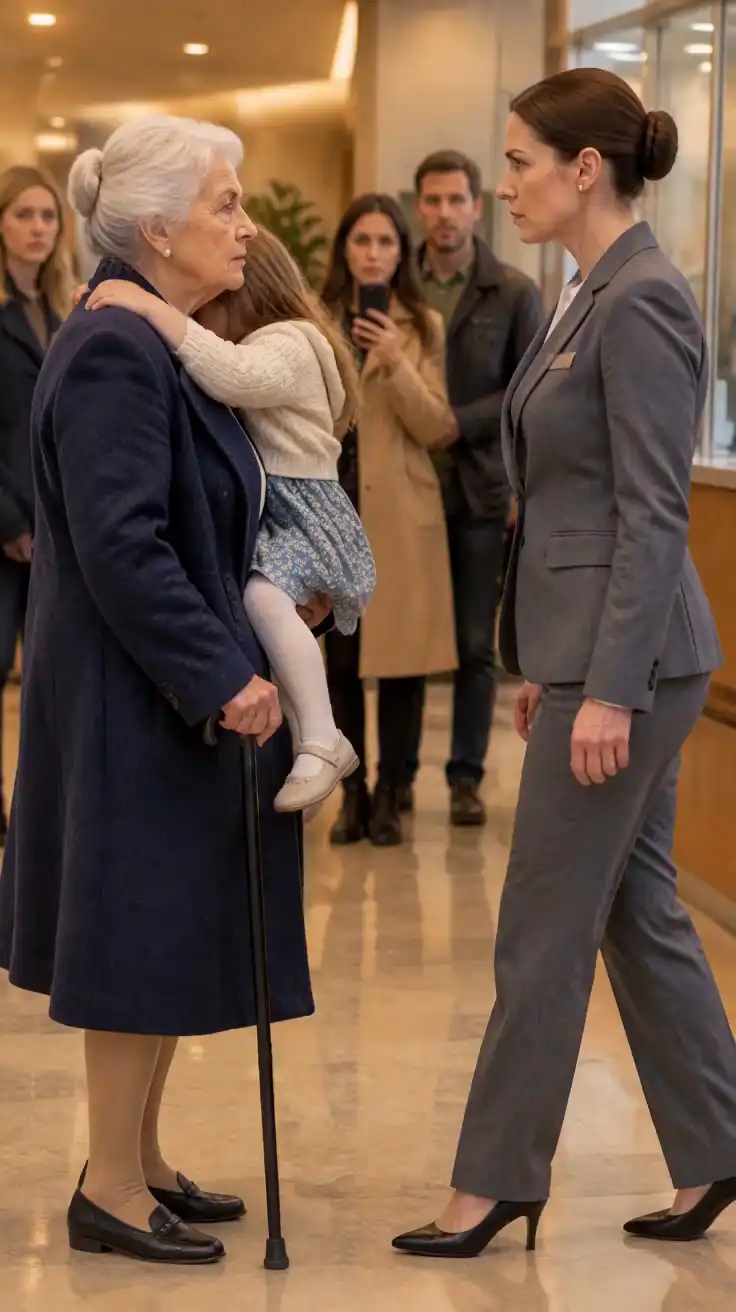
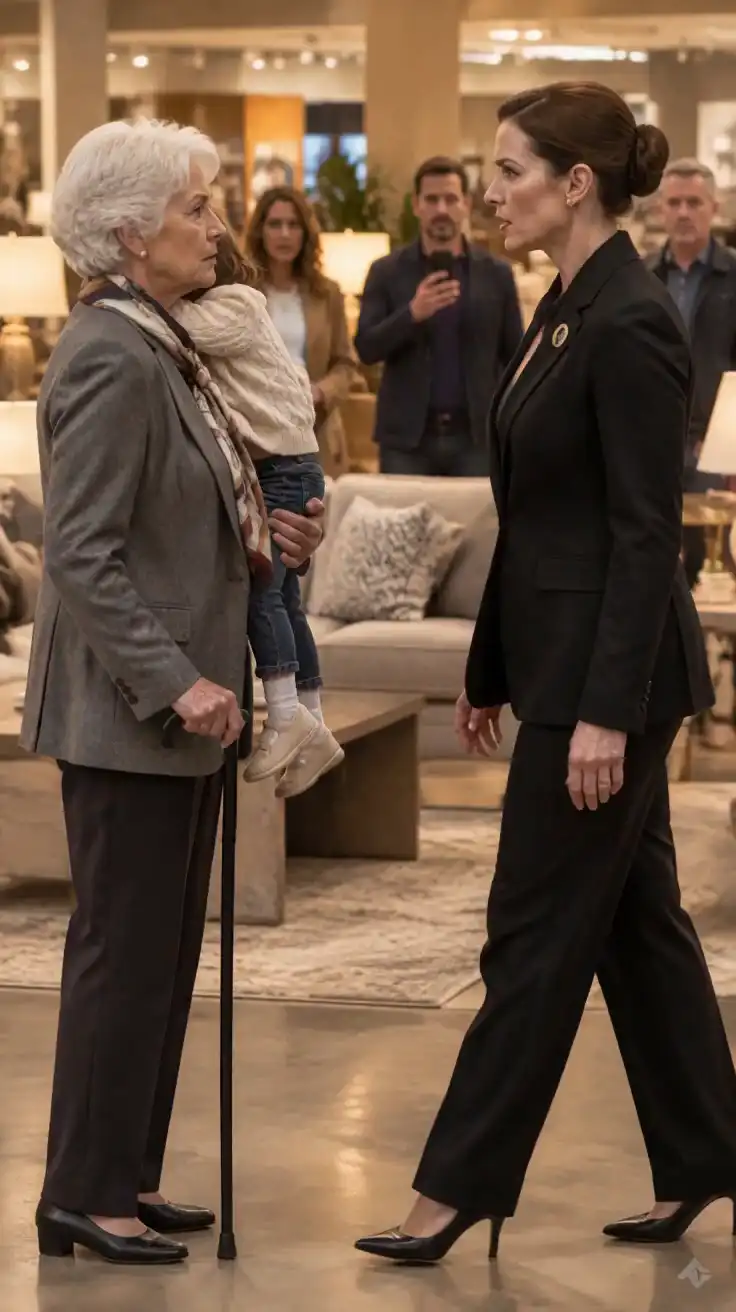
I asked about my missing bed, and the manager slapped me, then laughed when I called for help. He didn't know the voice on the phone was his boss.
The side of my face burned before I heard the guard’s shoes scrape across the concrete. My fingers tightened around the folded delivery slip in my coat, creasing it down the middle.
“Move along,” the sales manager said. “You’re disrupting business.”
A couple near the loading doors looked from my cheek to his raised hand. The woman pulled her purse against her ribs. Her husband whispered, “Is she the customer?”
“She’s nobody we need to deal with,” the manager said.
The guard reached for my elbow. I stepped back and felt the metal edge of a display frame press into my spine.
“I only came for the bed,” I said.
The manager snatched the slip from my hand, glanced at it, and laughed through his nose. “That order is closed. You people lose paperwork and come here demanding free furniture.”
“Call whoever is in charge,” the guard said quietly.
“I am in charge,” the manager snapped. Then he folded the slip once, twice, and tucked it beneath a stack of invoices on the counter.
The warehouse doors stood open behind him. Inside, wrapped mattresses leaned against the racks, their plastic skins catching the afternoon light. I recognized the narrow aisle where the delivery crews kept the larger frames. I also recognized the dent in the blue post beside it, though I kept my mouth shut.
The manager pointed toward the street. “Out.”
The guard’s hand closed around my arm. A phone began ringing on the counter. The manager looked at the screen, frowned, and let it ring until the caller stopped. Then it rang again.
“Answer it,” one of the buyers said.
“Stay out of this,” the manager said.
He shoved the delivery slip farther beneath the invoices. The corner of another paper showed beneath it, carrying the same bed description and the same delivery date. I saw the manager see me looking.
His face tightened.
The phone rang a third time. This time he grabbed it.
“What?” he barked.
I heard my son’s voice through the speaker, low and sharp enough to cut across the loading bay. “Put the order on the table.”
The manager froze with one hand still gripping the phone.
My son continued, “Every page.”
The guard released my arm. A moment later, my son came through the side door carrying a thin brown folder. He crossed to the counter, opened it, and laid the order flat.
Then he placed a second copy beside it.
The manager’s hand stopped in midair.
THE DEED UNDER THE DUST
The manager’s hand stopped in midair.
For one breath, nobody moved.
Then Howard pressed his palm over the two orders and looked at the manager.
“Which one is real?”
The manager’s mouth opened, but no sound came out.
Howard had my son’s broad shoulders and my husband’s habit of standing perfectly still when he was angry. He wore the same dark jacket he used for supplier meetings, but there was dust on one sleeve from the side entrance. He had come straight from somewhere else, carrying the folder against his chest.
The manager glanced toward the guard.
“Call Mr. Howard,” he said. “Tell him there’s been a misunderstanding.”
Howard didn’t look away from him. “You’re speaking to Howard.”
The young couple by the loading doors stepped closer. The woman still held her purse tight against her ribs. The man had his phone out now, though he kept it pointed at the floor.
The manager’s face lost its color.
Howard tapped the first order with one finger.
“Customer: Margaret Bell.”
He tapped the second.
“Customer: Daniel and Priya Cole.”
The bed description beneath both names was identical. Same oak frame. Same mattress. Same headboard. Same warehouse location. Same promised delivery date.
Only the names and addresses were different.
The manager swallowed. “That doesn’t prove anything.”
“It proves you sold one bed twice,” Howard said.
“It proves the computer duplicated an order.”
“The computer didn’t sign your initials in blue ink.”
The manager snatched the top page. Howard caught his wrist before he could pull it away.
“Put it down.”
The manager stared at Howard’s hand.
“You can’t touch me.”
“I’m not touching you. I’m stopping you from destroying a business record.”
“I’m the sales manager.”
“And I’m the owner.”
The words struck the room harder than the slap had struck my face.
The guard’s eyebrows rose. One of the buyers whispered something to the other. Behind the counter, the young cashier lowered her eyes to the register.
The manager gave a short, nervous laugh. “The owner isn’t involved in day-to-day sales.”
“Not anymore,” Howard said. “But I’m still involved when someone hits my mother, hides her order, and sells her purchase to another customer.”
The manager looked at me then. His eyes moved over my gray hair, my plain navy coat, the old leather purse hanging from my shoulder.
“You’re his mother?”
I picked up the folded delivery slip from beneath the invoices.
“I told you I came for my bed.”
Howard’s jaw tightened.
The manager turned to him. “You should have told me she was coming.”
“I shouldn’t have had to.”
“She walked into a restricted warehouse.”
“She walked into a warehouse she owns.”
The manager’s hand dropped to his side.
Howard opened the brown folder again. He removed a photocopy and laid it beside the two orders.
The page was stamped by the county recorder. At the top, the property address appeared in bold type. Beneath it were the names of the owner and the legal description of the building.
Howard pushed the page across the counter.
“Read it.”
The manager didn’t touch it.
Howard looked toward the buyers. “Would one of you read the owner line aloud?”
The couple exchanged a glance.
The man with the phone stepped forward. “I can.”
He bent over the page.
“Owner of record,” he said. “Margaret Bell.”
The manager’s expression changed in small pieces. First his eyebrows drew together. Then his lips parted. Then his eyes moved toward the warehouse doors as if the racks of boxed furniture might offer him somewhere to hide.
The guard took his hand off the radio at his shoulder.
I rested my fingertips on the counter. The wood was scratched beneath the invoices. I had chosen that counter twelve years earlier because the rounded edge was easier for older customers to lean against while they waited.
The manager had never asked who paid for it.
Howard placed a second sheet on top of the deed.
“This is the warehouse lease agreement,” he said. “There is no lease. There is a management agreement between my company and my mother. She owns the building. I operate the furniture business out of it.”
The manager shook his head. “That’s not how it was explained to me.”
“Who explained it?”
“Your office.”
“My office is ten miles away. You’ve been working here for eight months.”
“I was told your mother was just a customer.”
“You were told wrong.”
The manager looked at me again.
I could see the question forming before he asked it. He seemed afraid of the answer, but more afraid of letting the room hear him ask.
“Why didn’t you say who you were?”
I picked up the two orders and held them together by their corners.
“Because I was asking about a bed.”
The woman with the purse gave a quiet, disbelieving laugh.
The manager turned on her. “What’s funny?”
“You slapped an old woman because you didn’t know she owned the building?”
“She was trespassing.”
“She was asking about furniture.”
“She was interfering with staff.”
“She was your customer,” the woman said.
The manager’s eyes flashed. “You don’t know what happened.”
“I know what I saw.”
“And what did you see?” Howard asked.
The woman looked at me before answering.
“I saw him walk up to her and hit her.”
The manager’s shoulders stiffened.
“She was loud,” he said. “She was aggressive.”
“I wasn’t,” I said.
His head snapped toward me.
“You were shouting at me in the warehouse.”
“I asked where my bed was.”
“You accused me of stealing.”
“I asked why the delivery truck went to another address.”
He looked at the orders.
For the first time, the question in the room became larger than the slap.
Howard turned one of the documents around so the addresses faced the buyers.
“My mother’s order is addressed to her house,” he said. “The second order is addressed to the same house.”
He pointed to the line.
The manager tried to cover it with his palm.
Howard moved his hand away.
“Same street. Same number. Same delivery date. Same bed. Why?”
The manager’s breathing grew fast.
“The first order was canceled.”
“By whom?”
“The customer.”
“My mother didn’t cancel it.”
“She didn’t respond to the confirmation call.”
“She answered it. I was sitting beside her.”
“You were not on the call.”
“I heard her say she still wanted the bed.”
The manager pulled a pen from the counter and began clicking it.
Howard held out his hand.
“Give me that.”
“What?”
“The pen.”
“I need to write down—”
“Give it to me.”
The manager put it down.
Howard picked up the first order. “This order was entered on the ninth.”
He lifted the duplicate. “This one was entered on the twelfth.”
“The system can create duplicates.”
“Then why does this one have your initials?”
“It was processed by my department.”
“Your initials are beside the price adjustment.”
The manager rubbed his thumb over the ink as if he could erase it.
“What price adjustment?” I asked.
Howard turned the page toward me.
The second order had a lower sale price than mine. The manager had marked the bed down by nearly seven hundred dollars. Under the discount was a handwritten note: PRIORITY CUSTOMER—TRANSFER FROM HOLD.
My order had been paid in full.
The second buyer had paid a discounted amount for the same item.
Howard’s voice stayed calm.
“You took a paid order, moved it to another customer, and entered a replacement order so the system would show my mother as delayed instead of stolen from.”
“That’s an accusation.”
“It’s a question. Answer it.”
“I didn’t move anything.”
“Then who did?”
The manager looked toward the warehouse.
The answer was in his face before he spoke.
“The inventory team.”
“The inventory team doesn’t change sales orders.”
“I told them to release stock.”
“From what order?”
“From available stock.”
“The bed wasn’t available stock.”
“It was sitting in the warehouse.”
“It belonged to my mother.”
The manager slammed his palm on the counter.
“Your mother didn’t own a bed just because she paid for one!”
The room went silent again.
Howard slowly lifted the receipt.
“She paid in full. You confirmed delivery. You assigned a serial number. You put the merchandise in the staging area. That is not available stock.”
The manager’s cheeks reddened.
“I was trying to keep a customer from canceling.”
“Which customer?”
He said nothing.
Howard turned to the couple near the doors.
“Are you Daniel and Priya Cole?”
The man lowered his phone. “Yes.”
The manager looked at him sharply.
The woman stepped beside her husband. “We’re supposed to have a delivery today.”
Howard nodded. “You were sold this bed.”
Daniel looked from the order to the manager. “We were told it was the last one.”
“It was the last one,” the manager said quickly.
“It was my mother’s,” Howard replied.
Priya’s face tightened. “You knew?”
“I knew the order was in the system.”
“You knew it belonged to someone else?”
“I knew it had been held.”
“For whom?”
The manager did not answer.
Howard said, “For my mother.”
Priya looked at me. “I’m sorry.”
“You didn’t do anything,” I said.
“We paid a deposit.”
“I know.”
The manager stepped toward them. “Your delivery is still scheduled.”
“Where is the bed?” Daniel asked.
“In the warehouse.”
“Then why are you arguing?”
“Because this woman came in and caused a scene.”
Priya pointed toward the two orders. “She caused a scene because you sold her bed to us?”
The manager’s mouth tightened.
Howard lifted the phone he had been holding. “I’m calling inventory.”
The manager’s eyes widened. “Don’t.”
Howard tapped the screen.
A man answered after two rings.
“Howard?”
“Eli, check bay fourteen. Don’t move anything. Tell me whether the oak bedroom set is still wrapped.”
The manager lunged toward the phone.
Howard stepped back.
“Stay where you are.”
“I need to speak to him.”
“You’ll speak when I’m finished.”
The manager looked at the guard. “Remove him.”
The guard didn’t move.
Howard held the phone to his ear.
Eli’s voice came through the speaker. “Bay fourteen is empty.”
The manager’s shoulders dropped.
“Check the dispatch lane,” Howard said.
A pause.
“There’s one wrapped mattress here, no frame.”
“Does the tag show the Bell order?”
Another pause.
“It shows a transfer sticker.”
“Read the number.”
Eli read it aloud.
It matched the serial number on my order.
Howard closed his eyes for half a second.
“Who signed the transfer?”
Eli hesitated.
The manager said, “Eli, don’t answer that.”
Howard’s voice hardened. “Who signed it?”
“Manager authorization,” Eli said.
“Whose name?”
Eli went quiet.
The manager grabbed for the phone again.
Howard ended the call.
For several seconds the only sound was the hum of the refrigeration unit near the loading doors.
Then the front bell rang.
An older man entered carrying a white delivery envelope. He wore a red company jacket and walked with the careful stiffness of someone who had spent years climbing in and out of trucks.
He stopped when he saw the crowd.
“Mr. Bell?” he asked.
Howard turned. “Yes?”
“Cole delivery. We were told to wait outside because there was a problem with the order.”
Daniel stepped forward. “You have our bed?”
The driver looked uncomfortable.
“I have the mattress and frame pieces. The headboard was removed from the truck.”
“Why?” Priya asked.
The driver glanced at the manager.
The manager’s face had gone rigid.
The driver took a breath. “I was told to leave the headboard here for another delivery.”
“Which delivery?” Howard asked.
“I don’t know.”
“You don’t know?”
“I get a route sheet. The instruction was written on it.”
“By whom?”
The driver held out the envelope. “The warehouse desk.”
Howard took it.
The manager moved closer. “That route sheet is internal.”
Howard opened the envelope and looked at the paper.
His expression changed.
“What?” I asked.
He handed it to me.
I recognized the handwriting immediately. It was the manager’s, though the letters were hurried and slanted. Beside the Cole address, someone had written: HOLD HEADBOARD—BELL DELIVERY.
The driver watched my face.
“Is this yours?” Howard asked the manager.
The manager shook his head.
“Looks like your handwriting,” Daniel said.
“I sign hundreds of things.”
“Then you should recognize your own signature.”
The manager pointed at me. “She manipulated him. This is a family business. You’re all taking his side.”
The guard finally spoke.
“Sir, you hit her.”
“I did not—”
“You did,” he said. “I saw it.”
The manager stared at him.
The guard’s hand moved away from the radio. “I also saw you put the slip under the invoices.”
“I was securing a disputed document.”
“You hid it.”
“Watch your language.”
“I’m watching everything.”
Howard took the route sheet from me.
“Daniel, Priya, please wait outside with the driver. No one is taking your furniture. We’ll resolve whose order belongs to which delivery.”
Priya folded her arms. “We’re not leaving until we know what happened.”
“You have every right to stay.”
The manager pointed at Howard. “You’re making this worse.”
“No,” Howard said. “You made it worse when you decided a paid order was easier to conceal than an honest mistake.”
The manager’s phone began ringing.
He looked at the screen.
The words on it were too small for me to read, but his reaction told me the caller mattered. He stepped away from the counter.
“Answer it,” Howard said.
The manager pressed the phone to his ear.
“Hello?”
A woman’s voice came through faintly. She spoke quickly, and the manager’s face tightened.
“Yes, I understand.”
He turned his back to us.
“No, the customer is here.”
A pause.
“Yes, the son is here too.”
His eyes moved toward Howard.
“No, he doesn’t know about the transfer.”
Howard heard that. So did everyone else.
The manager’s hand covered the phone.
The caller asked something.
He answered in a low voice. “The warehouse owner.”
The manager turned pale.
Howard held out his hand.
“Put the call on speaker.”
“I’m handling it.”
“Put it on speaker.”
“I said I’m handling it.”
The caller’s voice cut through the room. “Mark, who is the warehouse owner?”
The manager pressed the phone more tightly against his ear.
Howard stepped around the counter.
“Her name is Margaret Bell.”
The woman on the phone went silent.
Howard continued, “And I’m Howard Bell, the person your company has contracted to operate the store.”
The manager closed his eyes.
The voice returned, sharper now. “Mark, put me on speaker immediately.”
He obeyed.
The woman introduced herself as Dana Ruiz, the regional operations director. Her voice was clipped and controlled, the voice of someone trying not to shout in front of other people.
“Mr. Bell, I’m sorry. I was told there was an inventory dispute.”
“There is an inventory dispute,” Howard said. “There is also a physical assault.”
“I understand there was an altercation.”
“My mother was slapped.”
“Mark said the woman was trespassing and became disruptive.”
“She came to collect a paid order. Your manager hit her, told security to remove her, hid her delivery slip, and sold her bed to another customer.”
Dana went quiet again.
The manager shook his head and mouthed, “Don’t.”
Howard placed the two orders directly in front of the phone.
“The duplicate sale is here. The transfer authorization is here. The property deed is here.”
Dana said, “The deed?”
“My mother owns the building.”
The guard looked at me. The cashier looked at me. The couple looked at me.
The manager stared at the floor.
Dana’s voice grew very cold. “Mark, is that true?”
“It’s complicated.”
“Is it true?”
“The business leases space from the owner.”
“Who is the owner?”
“Margaret Bell.”
“Then why did you tell security she wasn’t on the list?”
The manager ran his hand over his hair.
“She didn’t identify herself.”
“She was the customer named on the order.”
“She was behaving aggressively.”
“Did she hit you?”
“No.”
“Did she threaten you?”
“No.”
“Did she damage property?”
“No.”
“Then why did you put your hands on her?”
The manager looked around the room as if expecting someone to rescue him.
No one did.
Dana said, “Mark, I need you to step away from the counter.”
“I’m the manager.”
“Step away from the counter.”
“I can explain.”
“You can explain after you stop touching company records.”
Howard took the phone from the counter and held it so Dana could hear him clearly.
“My mother’s original order is paid in full. The duplicate was sold to the Coles. The warehouse has one complete set, but the headboard has been held back. I want both orders preserved, the delivery logs preserved, and every inventory adjustment from the last thirty days copied before anyone changes anything.”
Dana answered at once. “Agreed.”
The manager’s head lifted.
“Dana—”
“Do not speak over me.”
He stopped.
“I’m sending the district compliance officer,” she continued. “He is nearby. He will be there within twenty minutes.”
“You don’t need to send anyone,” the manager said.
“I do now.”
“You’re taking his word over mine?”
“I’m taking the documents over your word.”
The call ended.
The manager stood with his hands at his sides. His face had the gray, stiff look of a man who had just discovered the door behind him was locked.
Howard turned to me.
“Mom, are you hurt?”
“My cheek is sore.”
“Do you want a doctor?”
“No.”
“Do you want to make a report?”
I touched the hot skin below my eye.
“Yes.”
The guard nodded. “I’ll provide a statement.”
The woman with the purse raised her hand slightly. “So will I.”
Her husband nodded. “Me too.”
The manager looked at them.
“You were shopping for a bedroom set,” he said. “You don’t know anything about my job.”
The woman’s voice did not rise.
“I know what your hand did.”
The guard opened the security office door.
“Come inside,” he said to me. “We have a chair.”
“I’m not leaving the floor.”
The manager flinched at the word.
Howard placed a hand lightly against my shoulder. “You don’t have to prove anything by standing here.”
“I want to see the warehouse record.”
His hand fell away.
“Mom—”
“You came because I called you about the bed,” I said. “I’m staying until I know where it is.”
He looked at my face, then at the warehouse.
“All right.”
We went through the loading doors together.
The warehouse smelled of cardboard, wood dust, and the sharp plastic scent of new mattresses. Sunlight cut through the upper windows and laid pale rectangles across the concrete. Forklift tracks curved around the central aisles.
I had walked those aisles before the store had opened, when the building was still empty and my husband was alive.
The manager followed us but stopped at the threshold.
Howard turned back.
“Come on.”
“I’m not authorized to enter with customers.”
“You’re authorized to enter as the person who changed the inventory record.”
The guard followed behind him.
At bay fourteen, only a wrapped mattress remained. A strip of blue tape marked its corner. The frame cartons were gone. The headboard was missing.
Howard checked the tag.
“My mother’s serial number,” he said.
The manager crossed his arms. “That doesn’t mean the whole set belongs to her.”
“Where are the frame pieces?”
“Probably in dispatch.”
“Probably?”
“Warehouse staff move things.”
“Who moved them?”
“I don’t know.”
Howard pointed to the blue post. “There’s a camera above that aisle.”
The manager looked up.
The camera’s small red light glowed.
“Security footage,” Howard said. “You’ll give it to Dana.”
“I don’t control the system.”
“You control the people who do.”
“I don’t know what you want from me.”
“I want the truth.”
The manager laughed once, but there was no humor in it.
“The truth is that the Coles wanted a discount, your mother wanted special treatment, and I was trying to keep everyone satisfied.”
“My mother paid the original price.”
“She was getting a delivery slot she hadn’t earned.”
“She had a confirmed date.”
“Customers cancel. Trucks break down. Inventory changes.”
“And when that happens, you sell the same paid item to someone else?”
“It wasn’t sold to someone else until the order was canceled.”
“Who canceled it?”
The manager stared at the floor.
Howard took out his phone. “I’m calling the service desk.”
“Don’t.”
“Why?”
“I can check it.”
“You already had the chance.”
The manager looked at me. “Mrs. Bell, I was trying to help.”
I took one step toward him.
“You put your hand on me.”
“I lost my temper.”
“You laughed.”
His eyes flickered.
“I didn’t.”
“I heard you.”
The guard stood behind us, silent.
I continued, “You saw an older woman in a coat and decided nobody would ask what you had done. That wasn’t losing your temper. That was choosing someone you thought could be ignored.”
The manager’s mouth tightened.
Howard turned to the guard. “Can you escort him out of the inventory area?”
The guard nodded.
The manager’s face hardened. “You can’t remove me from my own workplace.”
Howard said, “This isn’t your workplace. It’s my mother’s building.”
The words had less force this time because the manager had already heard them. The deed was no longer a surprise. It had become a wall around every aisle, every office, every invoice.
The guard moved beside him.
“Come back to the sales floor.”
The manager didn’t move.
Howard took a photograph of the mattress tag.
“Don’t take pictures of company property.”
“It’s evidence of my mother’s purchase.”
“You’re violating policy.”
“I’m documenting what you failed to deliver.”
The manager looked at me.
“You brought him here to intimidate me.”
I shook my head.
“I called him because you told me to leave.”
He had no answer.
Back at the counter, Daniel and Priya were waiting with the delivery driver. The mattress and frame cartons had been set beside the loading doors. The headboard still stood somewhere between my paid order and their promised delivery.
Howard opened the inventory folder.
“Who has the dispatch keys?” he asked.
The driver raised his hand. “I do.”
“Take us to the holding area.”
The manager stepped forward. “No.”
The driver looked at him.
Howard did not raise his voice. “Why not?”
“That area is restricted.”
“To whom?”
“To authorized staff.”
“Is the driver authorized?”
“Yes.”
“Am I authorized?”
The manager said nothing.
Howard looked at me. “Mom?”
I walked past the manager.
The holding area was behind a rolling steel door. The driver unlocked it, and the door rattled upward.
Inside were lamps, tables, boxed chairs, and several upholstered headboards leaning against the rear wall. A yellow tag hung from each piece.
The driver moved down the row.
“Here.”
He pulled a headboard forward.
The tag showed the same serial number as the mattress.
Daniel stepped closer. “That’s ours.”
“No,” Priya said. “That’s the one on our order.”
Howard took both documents from his folder.
“It’s on both.”
The manager remained near the entrance.
“Maybe the system duplicated the number,” he said.
Howard looked at the tag.
“The serial number is printed by the manufacturer.”
“Then the manufacturer made the mistake.”
“The frame cartons have the same number?”
The driver checked the stack.
“Yes.”
Howard turned to Daniel and Priya. “Your order was written for this set, but it was never yours to receive. The manager transferred my mother’s reserved merchandise to your order.”
Priya’s face flushed. “You told us it was available.”
“I believed it was.”
“You signed the transfer.”
“I sign many things.”
“You keep saying that,” Daniel said. “Do you ever remember any of them?”
The manager pointed at him. “You wanted the discount.”
“We wanted the price you offered.”
“You agreed to the terms.”
“We agreed because you told us it was available.”
“Which it was.”
“Because you took it from her.”
The manager turned away.
Howard put the original order on a crate.
“Mom, this is your bed.”
I touched the corner of the headboard. The wood beneath the plastic was warm from the warehouse air.
“It has been here all along.”
“Yes.”
The manager said, “It was scheduled for delivery.”
“To whom?”
He didn’t answer.
Howard looked at the driver. “Can this be delivered today?”
The driver checked his route sheet.
“If the order is released, I can take it.”
“Release it.”
The manager stepped forward. “You can’t authorize that.”
“I’m the owner of the operating company.”
“You don’t have authority over sales.”
“I have authority over my mother’s paid merchandise.”
Dana Ruiz called again.
Howard answered on speaker.
“Dana.”
“Is everyone still there?”
“Yes.”
“Compliance is ten minutes away.”
“Good. We found the complete set.”
Dana exhaled. “Whose order is it under?”
“My mother’s.”
“And the Coles?”
“They have a duplicate sale.”
“Have they paid in full?”
Daniel answered. “We paid a deposit.”
Dana spoke to him. “Mr. Cole, we will refund the deposit immediately and arrange a comparable set at the same price, or we can honor your purchase once new inventory arrives.”
Priya looked at Daniel. “How long?”
Dana hesitated.
“Three weeks, possibly four.”
The manager said, “We can get one from another location.”
Dana’s voice hardened. “You will not make further arrangements without approval.”
“But the customer—”
“You no longer have authority to make customer arrangements.”
The manager went still.
Dana continued, “Mark, effective immediately, you are suspended pending investigation. Do not access the sales system, the inventory system, or any customer records. Leave your keys with security.”
The manager’s face twisted.
“You’re suspending me over a delivery dispute?”
“No. I’m suspending you over falsified inventory movement, duplicate sale activity, concealment of a paid customer document, and physical assault.”
“I didn’t falsify anything.”
“Compliance will review it.”
“You said pending investigation.”
“I did.”
“And what happens to my job?”
“Do not ask me that while the person you struck is standing in the warehouse.”
The manager’s eyes moved to me.
For an instant, I thought he might apologize.
Instead, he said, “She came in acting like she owned the place.”
I looked around at the crates, the racks, the concrete floor, and the steel beams my husband and I had paid to install.
“I did own the place.”
Dana heard me.
The manager looked down.
The compliance officer arrived with a woman from human resources. They came through the loading doors carrying clipboards and a small document box. The guard met them halfway and spoke quietly.
The manager tried to intercept them.
“I can explain the situation.”
The compliance officer held up a hand.
“Mr. Voss?”
“Yes.”
“Please surrender your keys and step to the office.”
“I need to speak to the regional director.”
“You may speak to her after we secure the records.”
“I’m the sales manager.”
“Not for the duration of this investigation.”
He looked at Howard.
“This is a setup.”
Howard said nothing.
The compliance officer turned to me. “Mrs. Bell, are you willing to provide a statement?”
“Yes.”
“Would you like medical attention?”
“No.”
“Would you like someone with you?”
“My son.”
Howard moved beside me.
The manager gave a bitter laugh. “Of course.”
The compliance officer looked at him. “Do not speak to her directly.”
That stopped him.
We returned to the sales counter. The human resources representative took photographs of the two orders, the folded delivery slip, and the property documents. She placed each one in a clear sleeve.
The manager watched as his own handwriting disappeared behind plastic.
The cashier approached with trembling hands.
“I have something,” she said.
The manager turned. “What?”
She looked at Howard instead.
“I printed the original confirmation when Mrs. Bell called yesterday.”
The manager’s face tightened.
The cashier opened a drawer and pulled out a thin file.
“It shows the delivery was confirmed for this afternoon.”
She gave it to Howard.
The page carried the store’s transaction number and the note that the customer had spoken with the service desk.
Howard read it, then passed it to the compliance officer.
The cashier’s voice shook. “Mr. Voss told me to reprint the order under the Cole name.”
“Why?” the compliance officer asked.
“He said the original customer was difficult and might complain.”
The manager stepped toward her.
“You’re lying.”
The guard moved between them.
The cashier backed away, pressing both hands against the counter.
Howard said, “You did the right thing.”
Her eyes filled, but she nodded.
The compliance officer asked her to write a statement.
Daniel and Priya gave theirs next. The delivery driver added the route sheet. The guard described the slap and the attempt to remove me. The woman with the purse gave her name and phone number as a witness. Her husband did the same.
Each statement narrowed the room around the manager.
He had arrived at the counter believing the only evidence was a creased slip beneath a stack of invoices. Now every person he had tried to dismiss had become a witness.
The compliance officer asked him to sign for the surrender of his keys.
He refused.
“You can’t force me.”
The human resources representative said, “If you refuse, security will document the refusal.”
The manager looked toward the guard.
The guard held out his hand.
After a long moment, the manager removed a ring of keys from his pocket. He dropped them into the compliance officer’s palm.
The metal struck with a small, final sound.
Dana remained on speaker.
“Mark,” she said, “you are terminated effective immediately.”
His face turned red.
“You can’t do that without a hearing.”
“We completed the preliminary review.”
“Based on her word?”
“Based on the orders, the transfer record, the route sheet, the witness statements, the camera footage, and your own admission that you moved the inventory.”
“I never admitted that.”
“You said you were trying to keep customers satisfied.”
“That’s not an admission.”
“It is when the records show you removed merchandise from one paid order and assigned it to another.”
He looked at me.
“You wanted the bed today. You got it.”
I felt Howard’s hand close around the back of my chair.
Dana continued, “You also assaulted a customer on property leased by her company. Your employment ends today. Do not return to the premises except by appointment with human resources.”
The manager’s lips moved, but no words came.
The compliance officer pointed toward the side door.
“Please leave the warehouse.”
He did not move.
The guard said, “Mr. Voss.”
The manager picked up his coat from the back of a chair.
As he passed me, he stopped several feet away.
The mark on my cheek had begun to fade into a dull, swollen patch. He looked at it, then at the deed on the counter.
“I didn’t know,” he said.
It was not an apology.
I held his eyes.
“That was the problem.”
He left through the side door.
No one clapped. No one cheered. The door shut behind him, and the warehouse settled back into its ordinary hum.
Howard released a breath.
The driver looked at the bed.
“If we’re delivering this today, I need the paperwork corrected.”
Howard turned to Dana. “Can we release my mother’s order?”
“Yes. Send me a scan of the signed delivery record.”
“And the Coles?”
“We’ll arrange a replacement from the regional inventory.”
Daniel rubbed his forehead. “We don’t want trouble. We just want the bed we paid for.”
Dana answered, “You will receive the same model at the same price, and the delivery fee will be waived.”
Priya looked at me.
“I’m sorry this happened to you.”
“I’m sorry it happened to you too.”
She gave a small nod.
Howard spoke to the driver. “Load my mother’s set first.”
The driver began removing the wrapping. The bed came apart in pieces, each one labeled and protected by cardboard. I stood beside the truck while the workers carried the headboard through the loading doors.
Howard stayed near me.
“Do you want to go home?” he asked.
“When the bed arrives.”
He smiled faintly. “You’re not going to let anyone take it from you again.”
“I paid for it.”
“You did.”
“And I chose the room.”
He looked at me. “The room with the window?”
“The room with the morning light.”
“Then that’s where it goes.”
The delivery driver secured the pieces in the truck. The mattress followed. The frame cartons filled the remaining space.
Before he closed the doors, Howard checked every tag against the original order.
The compliance officer watched him.
“You’re thorough,” she said.
“He learned from his mother,” I replied.
Howard glanced at me.
The officer looked toward the warehouse. “Mrs. Bell, may I ask why you came in alone?”
“I didn’t think I needed an escort to collect furniture.”
“I mean after the first delay.”
“I called the service desk three times. They told me the order was being processed.”
Howard’s expression changed.
He turned to the cashier. “Who handled those calls?”
She checked the system.
“Mr. Voss assigned them to himself.”
“Why?”
“I don’t know.”
The compliance officer wrote it down.
Howard’s voice grew quiet. “He intercepted every complaint.”
The cashier nodded.
“He told us not to transfer calls about delayed orders to corporate.”
Dana heard that through the phone.
“Add that to the investigation,” she said.
Howard looked at the manager’s empty office. “We will.”
The driver closed the truck doors.
I took one last look at the warehouse.
The blue post still had the old dent in it. My husband had made that dent the week we moved the first racks inside. He had backed a forklift too quickly, climbed down, and stared at the metal for a full minute before laughing.
“You’ll never see it once the place is full,” he had told me.
I had seen it every day.
The manager had seen it too, but he had never wondered who put it there.
Howard drove me home in his car while the delivery truck followed. Neither of us spoke for several minutes.
The silence was not empty. It held the slap, the deed, the orders, and the moment the manager realized my name was printed on the building beneath his feet.
At a red light, Howard reached into the console and took out a clean handkerchief.
“Put this against your cheek.”
“I’m fine.”
“Mom.”
I took it.
He watched the traffic ahead.
“I should have told you.”
“Told me what?”
“That I was going to take over the warehouse.”
I turned toward him.
“When?”
“Soon. I was waiting for the final documents.”
“Why didn’t you tell me?”
“Because you kept saying you wanted to stay out of the business.”
“I wanted to stay out of the sales floor. That’s different.”
“I thought you wanted the building to be yours.”
“It is mine.”
“Yes.”
The light changed.
He drove through the intersection.
“Then what are you talking about?”
“I’m transferring it.”
“Transferring what?”
“The warehouse.”
I lowered the handkerchief.
“To whom?”
“To Bell Home Furnishings.”
“That’s your company.”
“It will be.”
I watched his hands on the steering wheel.
He had always driven with both hands, even on empty country roads. His father had taught him that. His father had also taught him that a building was not merely walls and a roof; it was a promise to the people who worked inside it.
“You’re buying it from me?”
“I’m not buying it. You’re transferring ownership to the company in exchange for shares.”
“I don’t need shares.”
“You need protection.”
“I have a deed.”
“You have a deed in your name, and a business that depends on the building. If something happens to you, the store becomes vulnerable. If the company owns the warehouse, the employees, the customers, and the business all answer to one structure.”
“You’ve been planning this.”
“For six months.”
“And today?”
“Today made me stop waiting.”
I looked out the window.
The familiar streets moved past us. The bakery with the striped awning. The pharmacy where I picked up my husband’s prescriptions. The little brick church at the corner.
“I never wanted the warehouse to become a burden,” I said.
“It isn’t a burden.”
“It’s what your father left us.”
“He left us the business. You bought the building.”
“I bought it because the landlord wanted to tear it down.”
“You saved the business.”
“I signed a mortgage.”
“You paid it off.”
“Over twenty years.”
“You still saved it.”
I folded the handkerchief on my lap.
“I didn’t expect to be thanked for buying a building.”
“I’m not thanking you.”
“What are you doing?”
“I’m making sure nobody can stand in that warehouse and tell you that you’re not on the list.”
He pulled into my driveway.
The delivery truck stopped behind us.
Howard got out and opened my door.
“I can walk.”
“I know.”
The driver and his helper carried the bed into the house. Howard directed them toward the back bedroom. I followed, checking each doorway.
The headboard barely cleared the hall.
“Turn it sideways,” I said.
The driver adjusted his grip.
“More to the left.”
Howard smiled. “She knows the measurements.”
“I measured them twice.”
“You measured them three times.”
“Your father measured once and made the men take a window out.”
“That was a different bed.”
“It was still too large.”
The frame went into the bedroom. The mattress followed. The driver set the headboard against the wall beneath the window.
Morning light fell across the plastic.
I stood beside the bed and touched the oak edge.
The delivery driver handed me the final receipt.
“Sign here, please.”
I read the page carefully.
The order number matched the first document. The serial number matched the tag. The delivery address was my house. The customer name was mine.
I signed.
Howard signed beneath me as witness.
The driver gave me the copy.
“Everything look right?”
“Yes.”
He looked at my cheek, then quickly looked away.
“I’m sorry about what happened at the store.”
“Thank you.”
He nodded and left.
Howard remained in the doorway.
“You should put ice on that.”
“I will.”
“And call me if it gets worse.”
“I will.”
“And don’t go back to the store alone.”
I turned.
“Are you giving me permission to enter my own building?”
“I’m asking you not to go alone.”
“That sounds like permission.”
“It’s concern.”
“It sounds like your father.”
Howard’s face softened.
“I know.”
His phone rang.
He answered it.
“Howard Bell.”
I watched his expression shift as he listened.
“Yes. Send it to my office.”
A pause.
“No, my mother’s order is complete. The Coles get a replacement from the other location.”
Another pause.
“Effective today.”
He glanced at me.
“Yes. Transfer the warehouse title to Bell Home Furnishings. My mother will sign the corporate documents tomorrow.”
I raised my eyebrows.
He covered the phone. “The attorney.”
“I’m not signing anything tomorrow.”
“You are if you want to argue about it.”
“I can argue without signing.”
He returned to the call.
“Send the documents. We’ll review them together.”
When he ended the call, he put the phone in his pocket.
“You arranged all of this before asking me.”
“I arranged the option.”
“You decided.”
“I decided nobody else gets to decide what your building is worth.”
The bedroom felt quiet around us. The bed stood where the old one had been, but the room looked different with the oak headboard beneath the window.
Howard stepped toward me.
“I should have been there when you went to the store.”
“You were running the company.”
“I was running the company from the wrong place.”
“I called you.”
“You called after he hit you.”
“I didn’t know he would.”
“I should have known he might.”
I reached up and touched his cheek.
He had a small scar near his ear from when he was eight years old and fell off his bicycle. His father had carried him into the kitchen while I washed the dirt from his knee.
“You came when I called,” I said.
“Of course I did.”
“That’s what matters.”
He lowered his eyes.
“I wanted you to know who you were to me.”
“I know.”
“No. I mean at the store. I wanted everyone there to know.”
I looked toward the receipt in my hand.
The paper was light, almost weightless. Yet it had followed me through the warehouse, across the counter, beneath the manager’s invoices, and into this room.
“They know now,” I said.
He nodded.
The next morning, the attorney arrived with a folder.
Howard had already made coffee. I sat at the kitchen table with an ice pack against my cheek. The swelling had gone down, leaving a yellow shadow beneath my eye.
The attorney spread the transfer documents between us.
She explained the arrangement carefully. The warehouse would be deeded to Bell Home Furnishings, the company Howard operated. In return, I would receive shares and a lifetime right to use the office at the back of the building whenever I wished. The company would maintain the property, pay the taxes, and preserve the warehouse as its primary location.
“You’re not losing control of the business,” Howard said. “You’re changing where the control sits.”
“I know what a transfer is.”
The attorney smiled. “He’s been practicing that sentence for weeks.”
Howard gave her a look.
I read every page.
At the bottom of the final document, my name waited for my signature.
I set down the pen.
“What happens to the manager’s records?”
“Your son has requested an internal audit,” the attorney said.
“Requested?”
“The regional office agreed.”
“Will he be reported?”
Howard answered. “The incident report and witness statements are being sent to the police. The company is also pursuing the inventory investigation.”
I looked at him.
“Is that what you want?”
“I want the record to be accurate.”
“And if they charge him?”
“That will be their decision.”
I picked up the pen.
“I don’t want revenge.”
“I know.”
“I want him to understand that the woman he hit was not helpless.”
Howard said nothing.
I signed the transfer.
The attorney signed as witness. Howard signed after me.
The warehouse no longer belonged to me alone.
It belonged to the company my son had built, the company that had started with a folding table in my husband’s garage and now employed thirty-seven people.
Howard placed his hand over the document.
“Thank you.”
“I didn’t give it away.”
“No.”
“I invested it.”
“Yes.”
“And if you ever sell the company without telling me, I’ll take you to court.”
He smiled.
“Understood.”
Three weeks later, the Coles received their replacement bed.
The regional office sent it from a location two counties away. It arrived at their house on the same day as the refund for their deposit, and Dana Ruiz called them personally to confirm the delivery.
The guard remained at the store. The cashier was promoted to service supervisor. The compliance officer installed new procedures for inventory transfers, including a requirement that two people approve any change to a paid order.
The manager never returned.
I heard through Howard that he had requested a meeting with human resources and argued that the company had misunderstood the situation. The records did not change. The security footage did not change. The witness statements did not change.
Neither did the deed.
A month after the incident, Howard held a staff meeting in the warehouse.
He asked me to attend.
I sat near the loading doors while he stood beside the blue post with the old dent.
Every employee was there, including the delivery driver and the cashier. Dana Ruiz joined by video call from the office. The screen showed her face, though I could not read the small text on the presentation behind her.
Howard did not make a speech about me.
He spoke about the company.
“Every customer who enters this building is entitled to the same respect,” he said. “Every employee is entitled to safety. No sale is worth hiding a mistake, and no position gives anyone the right to put hands on another person.”
The guard looked at me.
Howard continued.
“This warehouse is now owned by Bell Home Furnishings. My mother, Margaret Bell, is the reason the building exists, the reason the business survived its first decade, and the reason we have a place to work today.”
A murmur moved through the staff.
I had not expected that.
Howard turned toward me.
“Mom, would you say something?”
I stood slowly.
The warehouse was quiet.
I looked at the racks, the loading bays, the desk where the manager had shoved my slip beneath the invoices.
“I don’t need anyone to treat me differently because I own the building,” I said. “I need you to treat every person who walks through that door as if they might be the person who keeps the lights on.”
No one moved.
I continued, “Sometimes you won’t know who someone is. That is not an excuse to be careless. It is a reason to be decent.”
The cashier wiped her eyes.
The delivery driver nodded.
Howard’s mouth pulled into the smallest smile.
I sat down.
After the meeting, the guard approached me.
“I’m sorry I grabbed your arm,” he said.
“You were doing what you were told.”
“I should have asked questions.”
“Yes.”
“I’ll do better.”
“I expect you will.”
He nodded and returned to the loading bay.
The cashier brought me a cup of coffee.
“I’m sorry I didn’t speak sooner,” she said.
“You spoke when it mattered.”
“I was scared.”
“So was I.”
She looked surprised.
I touched the faint mark beneath my eye.
“Being scared doesn’t mean you can’t do the right thing.”
She held the coffee out to me.
“Mr. Bell said I could use the service office now.”
“Good.”
“He said you chose the counter.”
“I did.”
“Why?”
“It had a rounded edge.”
She smiled.
“Of course.”
That afternoon, a new sign went up beside the warehouse entrance. It carried the company’s name and listed the office hours. Howard had chosen the lettering, but I chose the placement.
Not above the door.
Beside it, at eye level.
The warehouse received a new lock system and a new camera above bay fourteen. The blue post stayed where it was. Howard asked whether I wanted it painted.
“No,” I said.
“Why not?”
“So we remember where the forklift hit it.”
He laughed.
The bed in my house remained beneath the morning window.
Every time I woke, the oak headboard caught the first light. The mattress was firm, the frame solid, and the room smelled faintly of new wood.
One evening, Howard came by with the final copy of the property transfer.
He placed it on the bedside table.
“It’s recorded,” he said.
I looked at the document.
“Then it’s done.”
“It’s done.”
I ran my fingers over the paper.
“Does the company still have the original deed?”
“Yes.”
“Keep it somewhere safe.”
“It’s in the fireproof cabinet.”
“Not the one in your office.”
“No. The one in my office.”
“Your father kept receipts in a coffee tin.”
“He kept everything in a coffee tin.”
“He would have liked the cabinet.”
“He would have asked why it was so expensive.”
“He would have said the same thing about the bed.”
Howard sat at the foot of the mattress.
“He would have been furious.”
“He would have been.”
“About the slap.”
“About the slap, the duplicate order, the transfer, and the fact that the manager didn’t know who owned the building.”
I smiled.
“Your father never liked being mistaken for someone without authority.”
“Neither do you.”
“I don’t mind being mistaken for a customer.”
“Even after what happened?”
“Customers deserve respect too.”
He looked at the bed.
“Do you like it?”
“Yes.”
“Even though it caused all this?”
“The bed didn’t cause anything.”
He nodded.
Outside, a delivery truck passed on the street. Its tires hissed over the wet pavement.
Howard stood.
“I’ll let you rest.”
“Come back Sunday.”
“I will.”
“And bring the transfer papers.”
“You already signed them.”
“I want to see them.”
“You’ve seen them.”
“I own shares now. I’m entitled to inspect the records.”
He grinned.
“There she is.”
I pointed toward the door.
“Go run your company.”
He left laughing.
I lay back against the new headboard and looked toward the window.
The bed had been sold twice, hidden once, and delivered only after my son laid the orders side by side and made the truth impossible to fold away.
The manager had thought I was a nobody because I came alone, wore an old coat, and asked a simple question.
He had never asked why I knew the warehouse better than he did.
He had never asked whose name was on the deed.
He had never asked who paid for the walls, the racks, the counter, or the floor beneath his shoes.
He only saw an old woman standing in his way.
Now the building belonged to my son’s company. The bed stood in my room. The records carried my name.
And every person at that warehouse knew the answer he should have asked before raising his hand.
I was the owner.