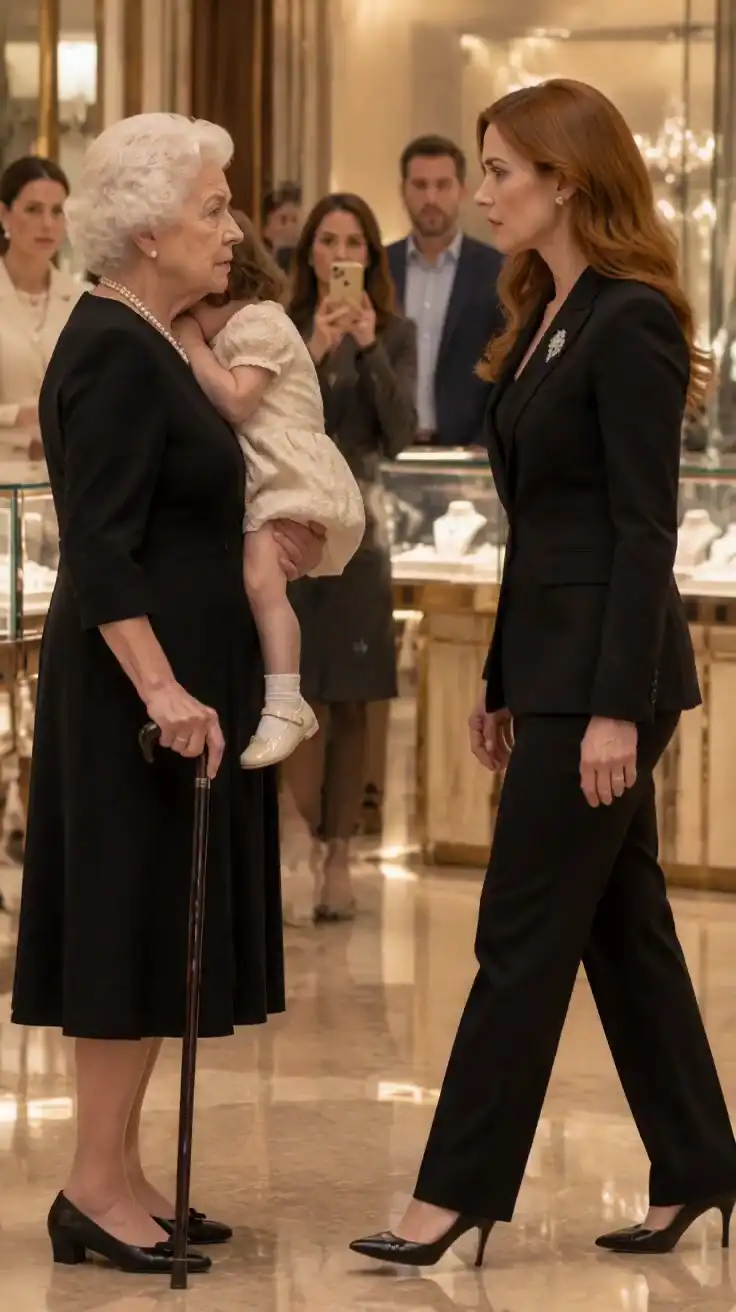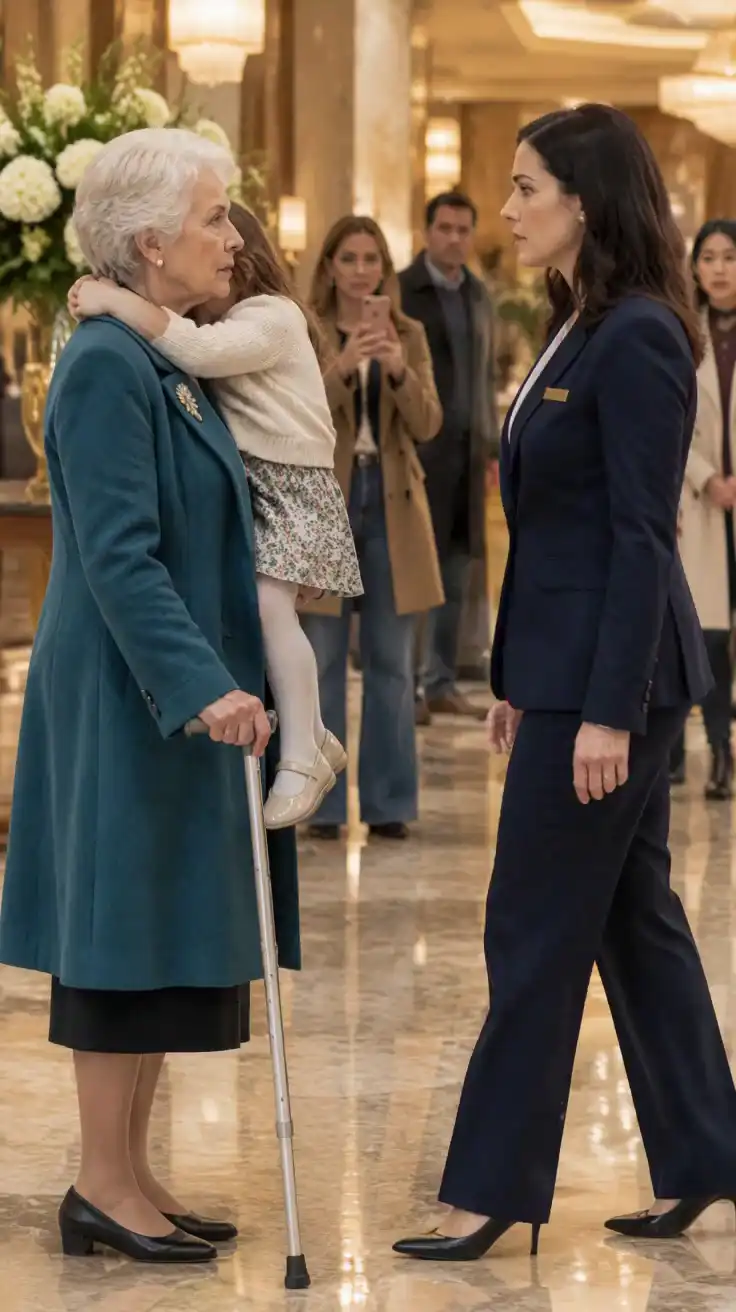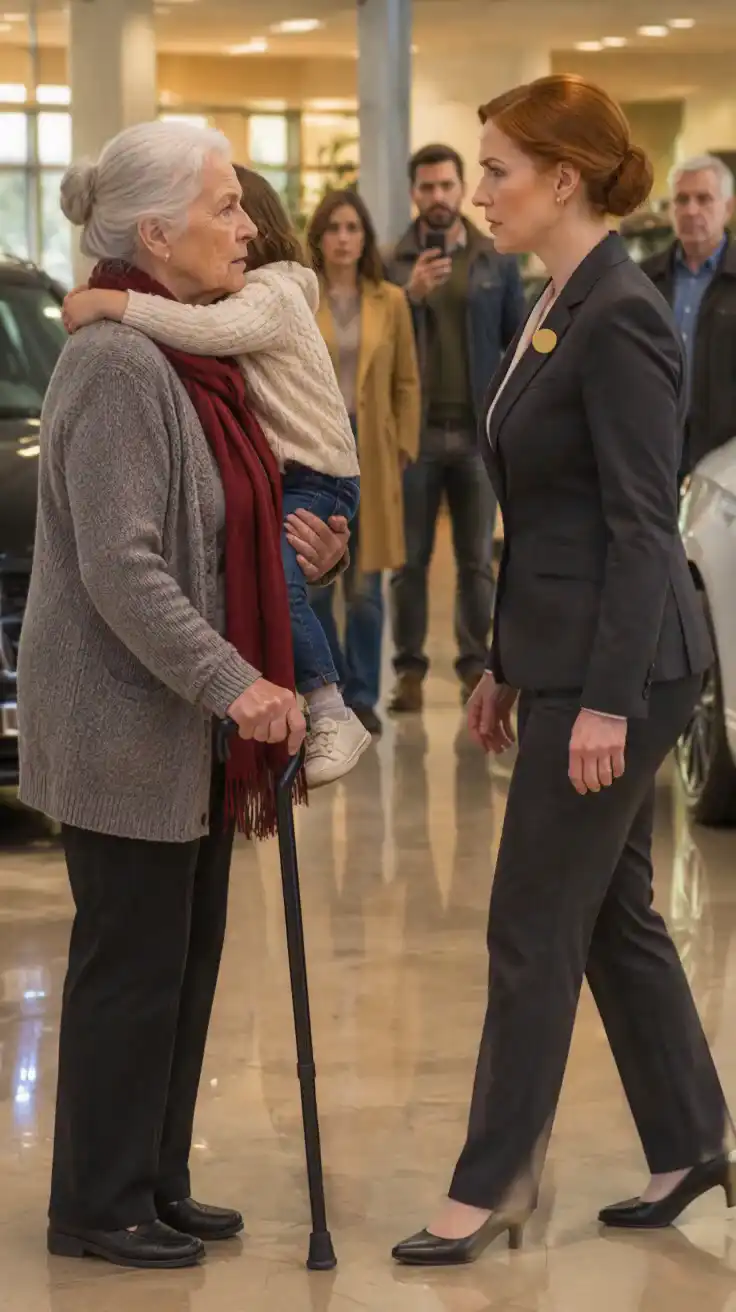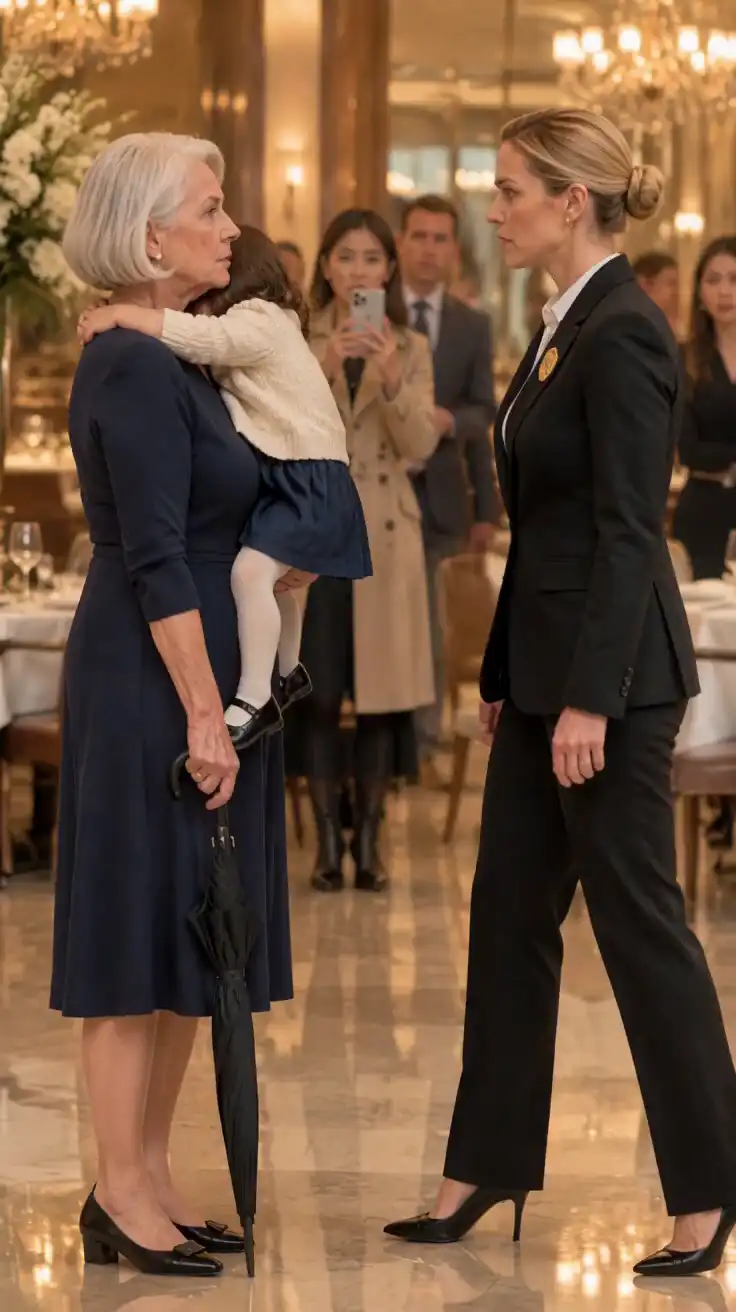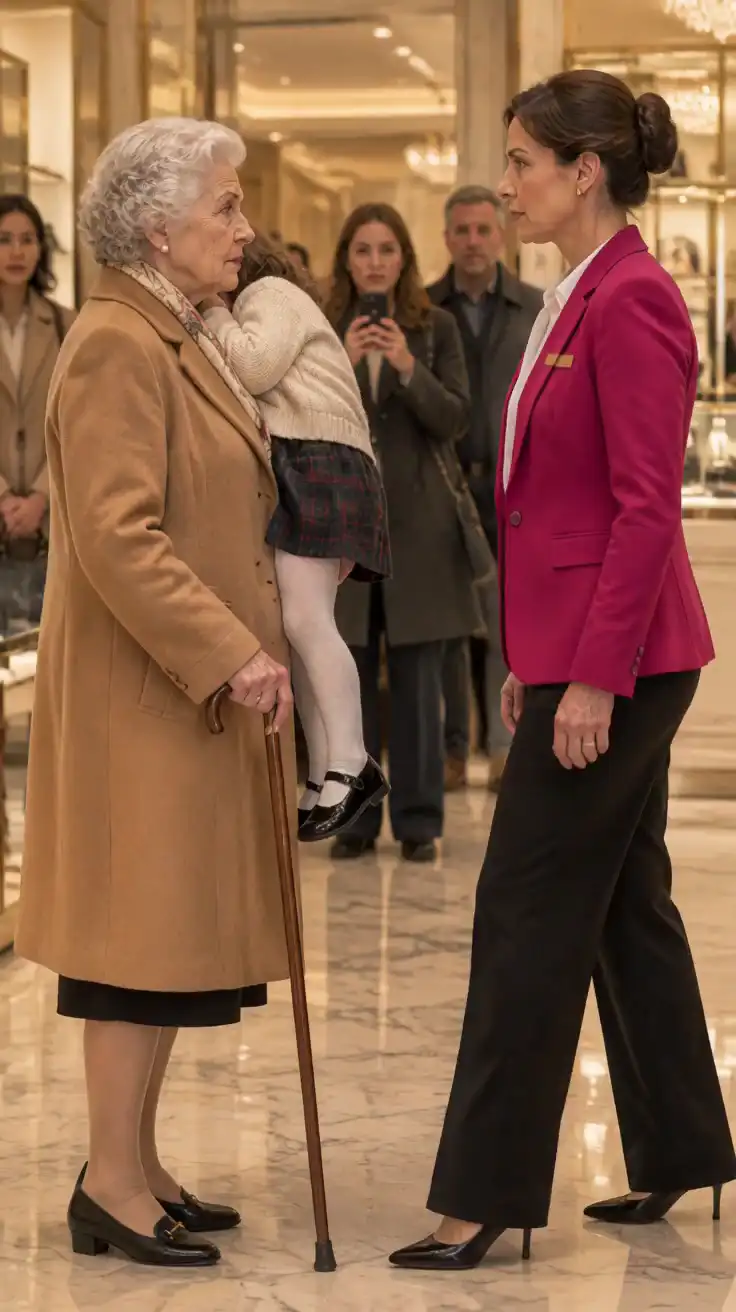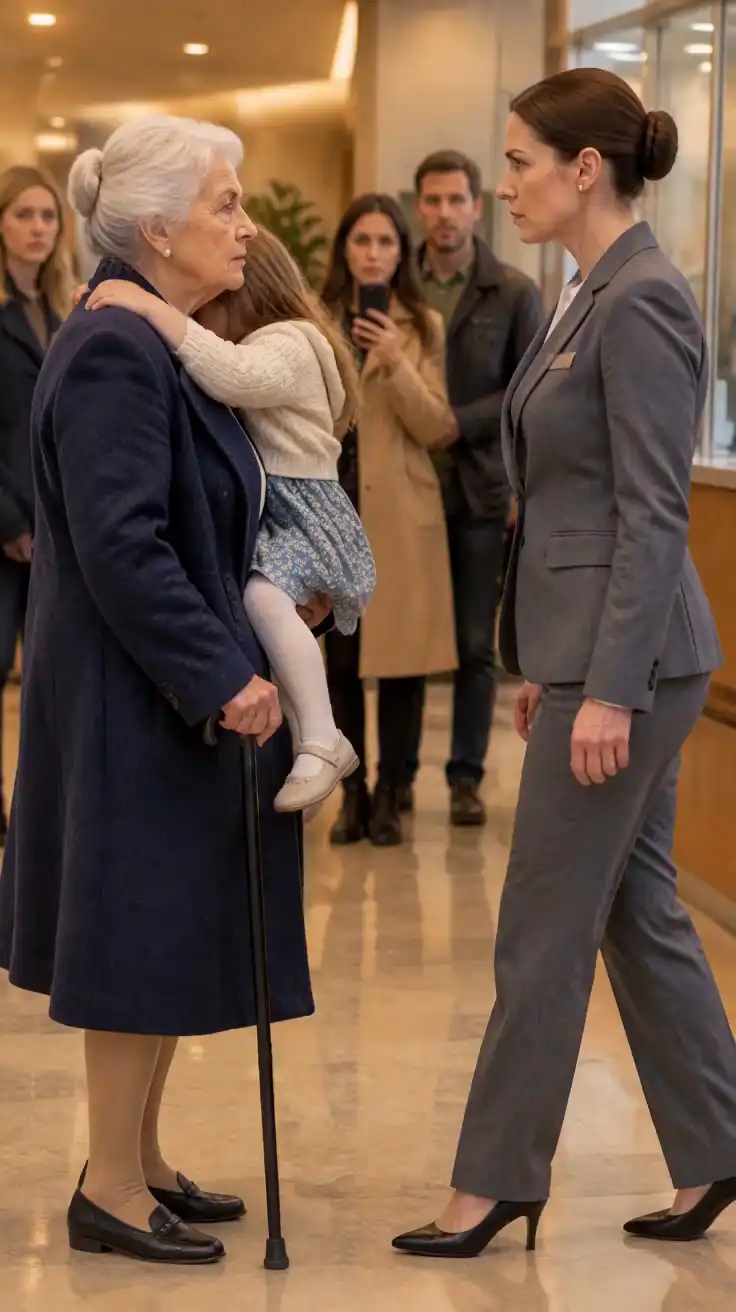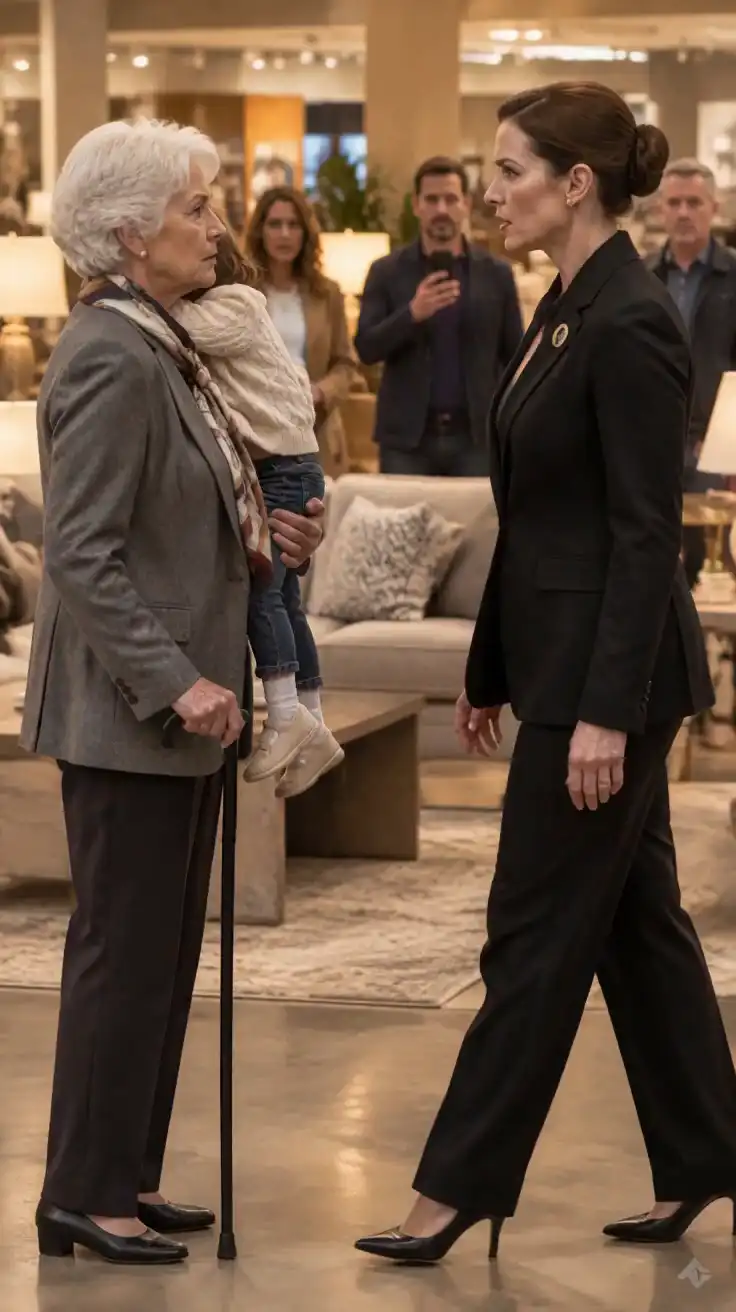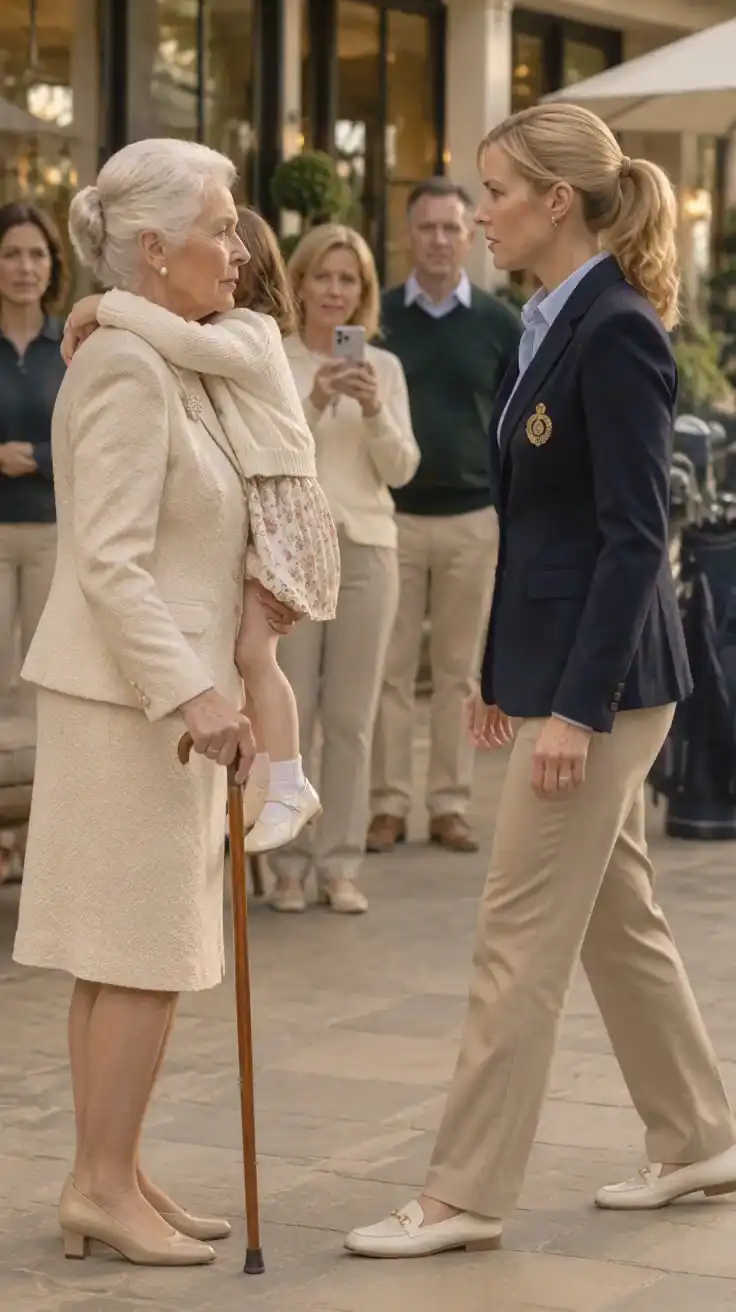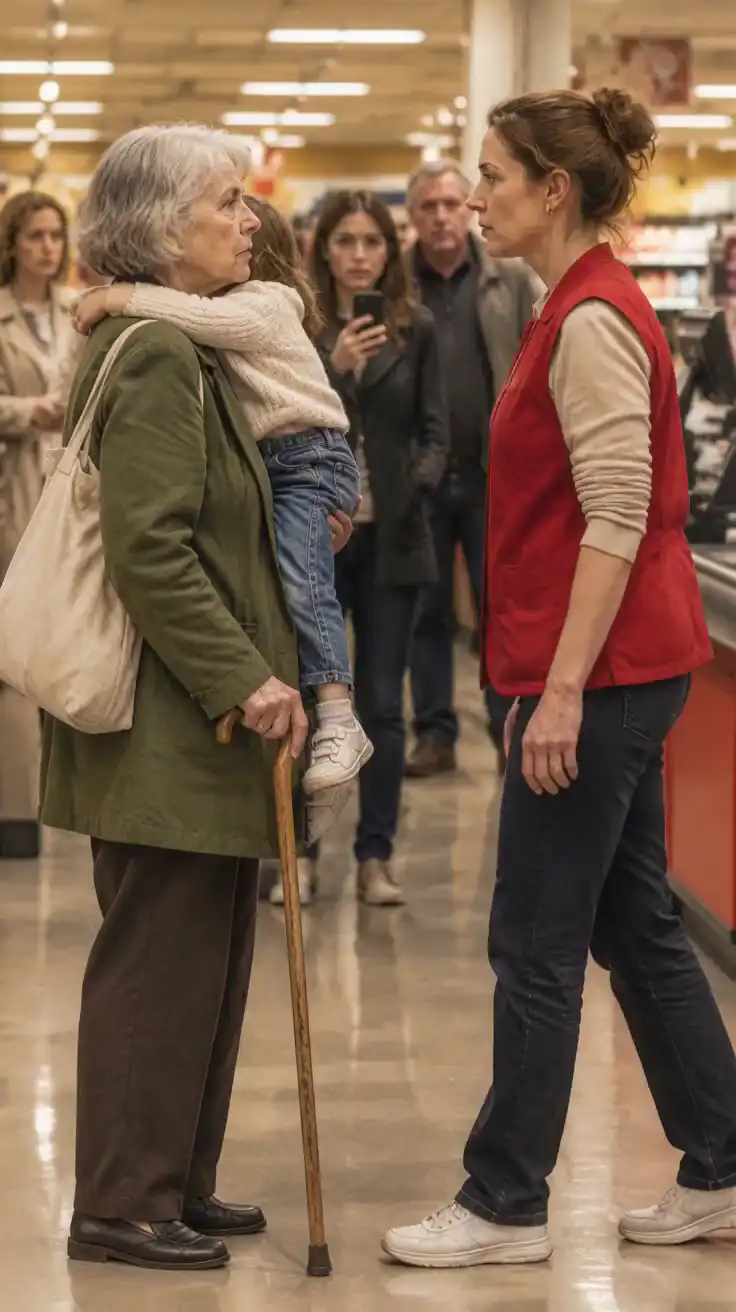
The manager slapped me for complaining about a burned cake, while the guard ordered me out. The recipe behind this bakery’s cakes was mine; I called someone, and a voice on the phone said he was on his way.
The sting spread across my cheek, and my tongue found the inside of my lip. I kept my hands at my sides. The cake sat in its white box between us, its dark edge crumbling onto the tissue paper.
“Don’t make another scene,” the manager said. He looked past me at the customers by the pastry case. “We offered you a replacement.”
“You offered her a smaller cake,” a woman near the register said. She held a little girl’s hand. “And you told her to scrape the black part off.”
The manager turned to the security guard. “Please take her outside.”
The guard touched my elbow. I pulled it free and picked up my phone from the counter. My fingers slipped on the screen twice before I found my son’s number.
The manager reached for the cake box and folded its lid shut. “You can call whoever you want, but you can’t stand here bothering customers.”
My son answered on the third ring. I held the phone against my other cheek and listened while the manager told the guard to hurry. Through the open kitchen door, a baker stopped rolling dough and wiped her hands on her apron.
The guard stayed beside me. A couple waiting for coffee stepped out of line, but they didn’t leave. The woman with the little girl took a napkin from the dispenser and pushed it toward me.
My son said he was coming. I put the phone away and pressed the napkin to my lip.
“You’re holding up the whole counter,” the manager said.
He tried to carry the cake into the kitchen, but the woman stopped him. “Leave it where we can see it.”
He set the box down hard enough to knock the little plastic knife onto the floor. Then he began telling the customers that I had refused every reasonable offer. The baker came out of the kitchen and quietly picked up the knife.
My son arrived with a worn recipe book under his arm. He looked at my face, then at the closed cake box. The manager started toward him with his hand extended.
My son laid the recipe book on the counter. The manager’s hand stopped in midair.
THE RECIPE UNDER THE GLASS
My son did not take the manager’s hand.
He looked at the red mark on my cheek, then at the cake box, then back at the man standing behind the counter.
“Who touched my mother?”
The manager lowered his hand. “Sir, your mother was causing a disturbance.”
“Who touched her?”
The manager glanced at the security guard. “She was asked to leave.”
“That wasn’t my question.”
The guard shifted his weight. He had been standing close enough to block the doorway, but now he moved half a step away from me. The customers behind us stopped pretending to study the pastry case.
The little girl’s mother kept one hand on her daughter’s shoulder. The baker stood beside the register, holding the plastic knife she had picked up from the floor.
My son put both palms on the recipe book.
“Open the box,” he said.
The manager gave a short, humorless laugh. “I don’t think you understand what’s happening here.”
“I understand that you burned a cake, slapped an eighty-year-old woman, and told a guard to put her outside.”
“I did not—”
“Open the box.”
The manager’s eyes flicked toward the kitchen. No one moved to help him.
My son pulled the cake box toward himself. The lid had been folded shut, but the crease had not locked. He lifted it, and the smell came out again: sugar, butter, and the sharp bitter scent of a crust left too long beneath the broiler.
He looked at the cake without touching it.
“Is this the cake she paid for?”
The manager folded his arms. “It’s the cake she ordered.”
“She ordered a birthday cake. Not charcoal around the edges.”
“We offered to replace it.”
“With a smaller cake,” the woman near the register said.
The manager looked at her. “Ma’am, you weren’t part of the transaction.”
“I watched you tell her to scrape it off.”
The little girl pressed her face against her mother’s coat. The woman pulled her closer but did not look away from the manager.
My son opened the recipe book.
The cover was brown cloth, softened at the corners and stained with flour. The spine had been repaired twice with clear tape. I had carried that book through three kitchens, two houses, and one winter when the bakery’s roof collapsed over the old mixing room.
The manager looked at it and smiled again, but the smile did not reach his eyes.
“What is that supposed to prove?”
My son turned the book toward him.
On the open page, the handwriting slanted uphill across the paper. The measurements had been adjusted in the margins. A small line crossed out too much salt. Another line added orange zest. The ink had faded brown, but every loop and hook was mine.
The manager stared at the page.
“Read the name at the bottom,” my son said.
The baker came closer.
She leaned over the counter, then stopped herself before touching the paper.
“I can’t read all of it from there,” she said.
My son lifted the book and carried it to the wall behind the register.
A framed page hung there beneath the bakery’s gold logo. Customers had been told for years that it was the original recipe for the house cake, preserved as a piece of the store’s history. The glass reflected the ceiling lights, but the handwriting underneath was unmistakable.
My son held the book beside the frame.
The last line on the framed page matched the last line in the book. Same cramped note in the margin. Same long tail on the final letter. Same mistake in the measurement, corrected in pencil and never erased.
The baker covered her mouth.
The woman with the little girl whispered, “That’s her handwriting.”
“It is,” I said.
My voice sounded rougher than usual. My cheek was still burning, but the pain had settled into a hard, steady pulse.
My son turned to the manager.
“My mother wrote that recipe.”
The manager looked from the open book to the framed page.
He seemed to wait for someone to laugh. Nobody did.
“That’s not possible,” he said.
“You’ve been working here three years,” my son said. “You never asked.”
“The recipe belongs to the bakery.”
“My mother gave it to the bakery.”
“That doesn’t mean—”
“It means you should know who you just put your hands on.”
The manager’s face changed. Not dramatically. His mouth remained closed, and his shoulders stayed square. But the confident tilt of his chin disappeared.
He looked at me as if he had never seen me before.
I had come into the store every Thursday for eight years. Sometimes I sat by the window with coffee. Sometimes I brought my granddaughter after school and let her choose one cookie. Sometimes I checked the bread shelves because the new bakers still overproofed the sourdough when the weather turned damp.
The manager had called me “sweetheart” when he wanted me to move away from a display. He had called me “ma’am” when customers were listening. He had never called me by my name.
“Your mother wrote the cake recipe?” the baker asked my son.
“She wrote all the original formulas,” he said. “The cake on that wall, the cinnamon rolls, the lemon bars, the morning buns. She developed them before this place had a sign.”
The manager’s eyes went to the book again.
“That’s just an old notebook.”
My son shut it gently.
“It’s the original notebook.”
The man reached for it.
I moved before my son did. I placed my hand over the cover.
“Don’t,” I said.
He stopped.
The security guard looked at the manager, then at me. A moment earlier, he had been preparing to escort me out. Now he stood beside the pastry case with his hands open.
“Mr. Hale,” he said, “maybe we should call the owner.”
The manager turned on him. “I am handling this.”
“No,” my son said. “You’re not.”
He took out his phone, but he did not call anyone yet. He set it beside the recipe book.
“What is your name?” he asked the guard.
The guard swallowed. “Derek.”
“Derek what?”
“Derek Mills.”
“And you saw him slap her?”
Derek looked at the manager.
The manager’s expression hardened. “Careful.”
Derek’s jaw tightened.
The baker spoke first. “I saw it.”
The woman with the little girl raised her hand as though she were in a classroom. “I saw it too.”
A man in a navy work jacket stepped out of the coffee line. “So did I.”
The manager looked around the room. The people he had been telling his story to were no longer his audience. They were witnesses.
My son picked up the cake box and pushed it toward the baker.
“Put it somewhere safe.”
The baker carried it through the opening into the kitchen. She returned with a sheet pan and placed the cake on it without opening the box again.
The manager followed her with his eyes.
“You can’t remove store property.”
My son laughed once. “You still think this is about a cake?”
The manager’s eyes came back to him.
“It’s about what happened to my mother,” my son said. “The cake is just what brought the truth out.”
I touched my cheek with the napkin. The paper had a faint pink stain where my lip had bled.
The little girl’s mother noticed.
“Do you need ice?” she asked.
“I’m fine.”
“You’re not fine,” my son said.
“I will be.”
He looked at the manager again.
“Call the owner.”
“I don’t have to take orders from you.”
“Then I’ll make the call.”
He unlocked his phone.
The manager’s confidence slipped another notch. “Frank, you’re not going to come in here and threaten my staff.”
“I’m not threatening anyone.”
“You’re disrupting business.”
“You struck my mother in front of customers.”
“I was trying to remove a disruptive person.”
My son’s thumb paused over the screen.
“Say that again.”
The manager realized too late that several people had their phones out.
“I said she was being disruptive.”
“No. The part before that.”
“I don’t know what you’re talking about.”
“You said you were trying to remove her.”
The manager’s face flushed. “You’re twisting my words.”
“I’m standing ten feet away. You don’t need help twisting them.”
The baker came out of the kitchen and wiped both hands on her apron.
“Mr. Hale,” she said, “the cake was baked on the wrong rack.”
The manager stared at her. “What?”
“I checked the oven log.”
“You don’t have to explain every mistake to him.”
“I’m not explaining it to him. I’m telling the truth.”
She reached beneath the counter and pulled out a clipboard. The top sheet was covered with times, temperatures, and initials. She kept her finger on one line.
“The cake was placed in at four hundred and twenty-five degrees instead of three hundred and fifty. The timer was set for the regular batch.”
“Who did that?” the manager asked.
“You did.”
The store went quiet.
The baker’s voice trembled, but she kept going.
“You told me to put it in early because you wanted the oven free before the rush. I asked if you wanted the temperature changed. You said the cake could take it.”
The manager stepped toward her.
“Be careful what you say.”
She did not step back.
“I’ve been careful for two years.”
The sentence landed harder than the slap had.
My son turned to me. “Mom, sit down.”
“I can stand.”
“You can sit and still watch him lose his job.”
The woman with the little girl pulled out a chair from a small table near the window. I sat because my knees had begun to shake, though I would not have admitted it to anyone in the room.
My son came around the counter and crouched beside me.
“Did he hurt your jaw?”
“No.”
“Your teeth?”
“No.”
“Your head?”
“The wall didn’t hit me.”
“That isn’t what I asked.”
I looked at him. His hair was damp from the rain, and the collar of his jacket was turned up. He had driven across town without taking time to change out of the work shirt he wore beneath it.
“I’m all right,” I said.
He looked at the mark on my cheek. His fingers curled against his knee.
For a moment, he was no longer the man who had walked in carrying the recipe book. He was the boy who used to stand between his sister and the neighborhood bully, fists closed at his sides because I had told him not to start a fight.
“Frank,” I said quietly.
He met my eyes.
“Don’t make this about your temper.”
“I’m trying not to.”
“Then let the truth do the work.”
He breathed in through his nose and stood.
The manager had moved behind the register. He picked up the phone and pressed a button.
“Call the owner,” my son said.
“I already am.”
The manager waited, then put the receiver down.
“Voicemail.”
“Try again.”
“I said voicemail.”
“Leave a message.”
The manager leaned toward the phone. “This is Thomas Hale at Maple Street Bakery. There’s a customer dispute. I need you to call me back.”
He hung up.
My son looked at him. “You didn’t mention the slap.”
“That’s not relevant to the business interruption.”
Derek shifted beside the door.
“I can call the police,” he said.
The manager spun toward him. “You work for the store.”
“I work security.”
“You work for me while you’re on this floor.”
Derek’s face tightened. “I don’t work for you.”
The manager opened his mouth, then closed it.
My son nodded toward the guard. “Derek, did you see him hit her?”
Derek took a breath.
“Yes.”
The manager said his name like a warning.
Derek looked at me instead.
“He walked up and slapped her,” he said. “Then he laughed.”
The woman with the little girl made a small sound in her throat.
“He told me to get her outside,” Derek continued. “He said nobody wanted her here.”
The little girl’s mother shook her head. “She wasn’t bothering anybody.”
Derek’s hands dropped to his sides.
“I shouldn’t have put my hand on you,” he said to me.
“You didn’t hurt me.”
“I almost did.”
“That’s between you and your conscience.”
He nodded, looking ashamed.
My son pointed to the chair beside me. “Sit down if you’re going to give a statement.”
Derek glanced at the manager.
“You can stand,” my son said. “But don’t leave.”
The manager moved away from the register.
“I’m not staying here to be interrogated.”
“You’re staying until the owner arrives.”
“You don’t own this place.”
My son reached for the recipe book.
“No,” he said. “I don’t.”
The manager’s face loosened with relief.
My son carried the book back to the counter and placed it beside the framed page.
“But my mother does.”
The manager stopped.
I watched the woman with the little girl turn slowly toward me.
My son opened his phone again.
“I’m calling the shop’s attorney.”
The manager’s expression changed so quickly that even the baker noticed.
“You said you didn’t own it.”
“I don’t.”
“Then why are you calling the attorney?”
“Because I’m the current owner.”
The manager stared at him.
My son pressed the call button.
The line rang once.
“Frank,” a woman answered.
“Evelyn, I’m at the bakery. There’s been an assault.”
The manager moved toward him. “You cannot call her.”
My son lifted one hand without looking back.
“There are witnesses,” he continued. “The manager struck my mother in front of customers after she complained about a burned cake. Security is here. I need you to come down.”
The manager reached for the phone.
I stood and put myself between them.
His hand stopped inches from my shoulder.
This time, no one had to tell him not to touch me.
My son watched him over my head.
“Evelyn,” he said, “he’s trying to take the phone.”
The manager stepped back.
The attorney asked a question.
My son answered, “Yes. The recipe book is here. So is the framed original.”
The manager’s face drained.
Evelyn said something that made my son turn toward the framed page.
“Do you have the trust copy?” he asked.
I felt the room tilt—not from the slap, but from the word.
The manager looked at me.
My son ended the call.
“Mom,” he said, “did you bring the folder?”
“It’s in my purse.”
He crossed to me and knelt again.
“May I?”
I opened my purse. The folder was beneath my wallet, a packet of tissues, and the small tin where I kept peppermints. I handed it to him.
The folder was blue and worn at the edges. I had carried it for nearly six years. I had taken it to meetings, to the bank, to the lawyer’s office, and once to the hospital when I broke my wrist.
The manager watched the folder change hands.
“What is that?” he asked.
My son stood with it against his chest.
“You’ll find out.”
“I’m the manager of this store.”
“You’re about to become a former employee.”
He opened the folder but did not remove the papers immediately.
The bakery door opened, and another customer stepped inside. She saw the crowd around the counter and hesitated.
The manager pointed at me.
“She assaulted the staff with false accusations and is refusing to leave.”
The new customer looked at my cheek.
“Who hit whom?” she asked.
No one answered.
She walked back outside.
The manager muttered something under his breath.
The woman with the little girl heard him. “You should stop talking.”
He rounded on her. “You have no idea what you’re talking about.”
“I know what I saw.”
“You saw an elderly woman making a scene.”
“I saw you hit her.”
The little girl looked up at her mother.
“Mommy, why did he hit the lady?”
The question carried across the store.
The manager looked toward the ceiling.
The baker turned away, pressing her lips together.
My son took the first sheet from the folder.
It was not a long document. The paper had a seal in the corner and several signatures at the bottom. The words were printed in neat black type, with handwritten initials beside two paragraphs.
He placed it flat on the counter.
The manager stayed where he was.
“What is that?” he asked again.
My son looked at me.
“Do you want me to read it?”
I nodded.
He rested one hand on the paper.
“This is the trust agreement for Maple Street Bakery.”
The manager laughed, but the sound was thin.
“Don’t be ridiculous.”
My son continued.
“The bakery property, the equipment, the recipes, and the operating business are held in trust for Eleanor Whitcomb.”
The baker’s head snapped up.
My son pointed to me.
“That’s my mother.”
The manager stared at me.
I had never liked being called by my full name. It sounded formal, like someone was calling me into a principal’s office. But that morning, hearing it spoken over the counter made the bakery feel solid beneath my feet.
The manager shook his head.
“No. The owner is Frank Whitcomb.”
“That was the temporary operating arrangement,” my son said. “I handled day-to-day management while the trust was being prepared.”
“You signed my employment papers.”
“I did.”
“You hired me.”
“I did.”
“You told me I was in charge.”
“I told you to manage the store. I never told you to strike a customer.”
The manager pointed at the folder.
“That document is not valid.”
“You’re welcome to have your attorney review it.”
“I don’t need your permission.”
“You’ll need more than permission.”
The baker stepped closer to the counter.
“Can I see it?”
My son turned the page toward her.
She read silently. Her eyes moved from line to line. At the bottom, she stopped.
“Who is the beneficiary?” she asked.
My son turned to the next page.
“My mother’s granddaughter.”
The manager gave a short breath.
“Which granddaughter?”
“Lily.”
The baker’s eyes filled.
“Lily works here on Saturdays.”
“She does,” my son said.
“She’s seventeen.”
“She turns eighteen next month.”
The manager looked toward the back hallway as if Lily might appear there.
“She’s a cashier.”
“She’s the future owner.”
That sentence did what the recipe book had not. The manager’s mouth parted, but nothing came out.
The little girl’s mother looked at me.
“Your granddaughter is going to own this place?”
“When the trust transfers,” I said.
“When?” the manager repeated.
“On her eighteenth birthday,” my son said. “The transfer was filed last year.”
“That’s impossible.”
The baker touched the edge of the document.
“I knew something was happening,” she said. “Frank asked me to sign a confidentiality form.”
The manager looked at her sharply. “You knew?”
“I knew Mrs. Whitcomb was involved. I didn’t know the details.”
“You kept this from me?”
“You never asked me anything except whether the ovens were clean.”
My son lifted the recipe book.
“The reason you didn’t know who wrote the recipes is because you never bothered to find out who the business belonged to.”
The manager’s face had turned red again.
“I was hired to run the store, not to study family history.”
“You were hired to protect the store.”
“And I did.”
“You burned a customer’s cake, lied about the replacement, slapped my mother, and tried to have her removed before anyone could ask questions.”
The manager looked at the customers.
“She was harassing staff.”
The baker shook her head.
“She complained once.”
“She was shouting.”
“She said the cake was burned.”
“She demanded a refund.”
“She paid for a cake,” the woman with the little girl said.
The manager pointed at her. “You’re not an employee.”
“No. That’s why I can say what I saw.”
Derek moved closer to the counter.
“Mr. Hale,” he said, “I’m going to need to report the incident.”
The manager looked at him with sudden fear.
“Don’t do this.”
“I already should have called.”
“Derek.”
“I’m sorry.”
The guard took out his phone.
The manager turned back to my son.
“You’re ruining my career over a misunderstanding.”
My son’s voice stayed quiet.
“You ruined it when you put your hand on her.”
“I was under pressure.”
“So was the cake.”
A few customers let out startled laughs. The manager looked around, and the laughter stopped.
My son opened the recipe book to the first page.
The paper there was darker than the rest. A loose photograph had been tucked between two sheets. He removed it and set it beside the book.
It showed the bakery when it had been a narrow storefront with a striped awning and two dusty windows. I stood outside in a white apron, younger by forty years, holding a tray of rolls. My husband was beside me, one hand on the doorframe. Frank was a boy of twelve, scowling at the camera because he had been told to stop eating the samples.
The baker bent over the photograph.
“That’s the original store,” she said.
“Before the expansion,” I replied.
My son turned the photograph over.
On the back, in my handwriting, was the date and the names of everyone in it.
The manager glanced at it and looked away.
“You can’t prove ownership with a photograph.”
“We’re not trying to.”
My son placed the trust document beside the photograph.
“We’re proving it with the trust.”
He turned to the recipe book again.
“Mom, show them the page.”
I took the book from him.
My fingers felt steadier now.
I opened it to the cake recipe. The original page was crowded with notes. The first version had called for six eggs, but the cake had collapsed in the center. I had written a new measurement beneath it, then added a note about letting the eggs warm before mixing.
The framed page on the wall showed the finished version.
I ran my finger along the margin.
“I wrote this after the first cake failed,” I said. “I was twenty-eight. Frank was still in school. We sold the first successful batch on a Sunday morning.”
The baker listened carefully.
“Why is the recipe framed?” she asked.
“Because my husband wanted people to know where it came from.”
The manager crossed his arms again, but the gesture looked defensive now.
“That doesn’t mean she owns the store.”
My son picked up the trust agreement.
“No. This does.”
The bakery door opened again.
A tall woman in a charcoal coat came in carrying a leather portfolio. She looked past the customers and went directly to my son.
“Frank.”
“Evelyn.”
She looked at my cheek.
“I’m sorry,” she said to me. “I’m the attorney for the Whitcomb Family Trust.”
The manager’s eyes widened.
“You’re the attorney?”
“I am.”
“You can’t just walk in here and make decisions.”
“I can walk into a business held by my client’s trust,” Evelyn said. “And I can advise the trustee.”
She turned to my son.
“Did he strike her?”
“Yes.”
“Any medical attention?”
“Not yet.”
Evelyn looked at me.
“Do you want a doctor?”
“I want him out of my bakery.”
She nodded once.
“Then we’ll start there.”
The manager stepped between us.
“I’m not leaving.”
Evelyn opened her portfolio.
She removed a single page and handed it to my son.
He read it, then gave it to me.
It was the notice of suspension I had signed six months earlier, when the board of the trust gave Frank authority to remove employees for misconduct.
The manager looked at the paper.
“What is that?”
“Notice of immediate suspension,” my son said.
“You can’t suspend me.”
“I can.”
“Under what authority?”
He turned the page around.
“Under the authority you agreed to when you signed your employment contract.”
The manager’s eyes dropped to the signature block.
He read his own name.
Evelyn spoke calmly.
“The suspension is effective immediately. You are not to enter the kitchen, access the office, open the safe, alter the records, contact employees about this matter, or represent yourself as an agent of Maple Street Bakery.”
The manager’s face became very still.
“I want my lawyer.”
“You may call him.”
“I’m not leaving without my personal things.”
“Derek will accompany you.”
The manager looked at the guard.
Derek nodded.
The manager did not move.
My son took the suspension notice back.
“You also need to surrender your keys.”
The manager reached into his pocket and pulled out a ring. Three keys hung from it, along with a red plastic tag bearing the bakery’s initials.
He held them in his fist.
“You’re doing this because she’s your mother.”
“I’m doing this because you hit her.”
“You don’t even know what happened.”
“I was told by four witnesses. I saw the mark on her face. I saw the cake. I heard you.”
“You’re taking their word over mine?”
“I’m taking yours too. You told me exactly what you did.”
The manager looked toward the framed recipe.
“What kind of owner lets her son hide everything from the people running the store?”
“The kind who knows the difference between management and ownership,” I said.
He looked at me.
“You set me up.”
I felt the sting in my cheek again, but this time it came with a different heat.
“I walked in and complained about a burned cake.”
“You knew I didn’t know.”
“I knew you never asked.”
“You let everyone believe Frank owned this place.”
“No,” I said. “You assumed.”
He gripped the keys until his knuckles whitened.
The baker spoke quietly.
“Give them back, Tom.”
He turned to her.
“You’re taking her side too?”
“I’m taking the side of the person who tells the truth.”
The manager laughed bitterly.
“You’ll regret this.”
The baker’s hands tightened around her apron.
“I regret staying quiet when you made people afraid to speak.”
For the first time, the manager had no answer.
He put the keys on the counter.
Derek stepped aside to let him pass.
The manager walked toward the office. At the doorway, he stopped and looked back at me.
“You’ll have no bakery without me.”
I closed the recipe book.
“We had one before you.”
He left with the guard behind him.
Through the front window, I watched Derek escort him across the sidewalk. The manager did not look back until he reached the curb. Then he turned, saw me standing behind the counter, and lifted his chin as though he still expected the last word.
I raised the recipe book slightly.
His face tightened.
Then he walked away.
Inside, no one spoke for several seconds.
The little girl broke the silence.
“Can we still get a cookie?”
Her mother looked embarrassed. “I’m sorry.”
The baker wiped her eyes with the corner of her apron.
“Yes,” she said. “You can still get a cookie.”
She went to the display case.
The customers began moving again, but the mood had changed. People spoke softly. A man in the navy jacket asked if he could leave his name as a witness. The woman with the little girl asked whether I needed someone to drive me to a clinic.
Evelyn gathered the papers.
“Frank, we need to document the condition of the cake and the injury.”
“I know.”
“I also need the employee files.”
“They’re in the office.”
“Not with him.”
“I’ll get them.”
She looked at me.
“Mrs. Whitcomb, are you sure you don’t want to go home?”
I looked around the bakery.
The wooden shelves were still full. The brass bell above the door still moved whenever someone came in. The framed page still hung on the wall, though now I could see a crack in the glass along its bottom edge.
“I’m staying,” I said.
My son moved to the office.
I followed him.
“Mom.”
“I’m staying.”
“You were just hit.”
“And the bakery was just nearly taken over by a man who doesn’t know who owns it.”
“You don’t have to prove anything.”
“I’m not proving anything.”
I held up the recipe book.
“I’m putting my book back where it belongs.”
He looked at me for a long moment, then opened the office door.
The office was small and warm, with a desk under the window and a wall of filing cabinets. The manager had left a half-finished cup of coffee beside the computer. A stack of order forms sat under his elbow mark.
My son went straight to the filing cabinet.
“Which drawer?”
“Employees are in the second.”
He unlocked it with one of the spare keys from the desk.
Evelyn stood behind us.
“Take photographs before moving anything.”
My son pulled out his phone.
The manager’s files were arranged by last name. Several folders had colored tabs. One had a handwritten note on the cover.
My son frowned.
“What?”
He held it up.
The baker’s name was on it.
Evelyn took the folder and opened it.
Inside were written warnings, schedule changes, and a note stating that the baker had been “uncooperative” after questioning oven temperatures.
She looked at me.
“Did you know about this?”
“No.”
The baker appeared in the doorway.
“What is it?”
Evelyn showed her.
The baker read the first page. Her face tightened.
“He told me those were performance reviews.”
“They are,” my son said. “But these comments are not accurate.”
“I refused to sign them.”
“That’s why they’re marked unsigned.”
The baker took the folder and flipped through it.
“He cut my hours after I complained about the oven.”
My son looked toward the front.
“Did he do this to anyone else?”
The baker nodded slowly.
“Two cashiers. One delivery driver.”
Evelyn closed the folder.
“That changes the employment review.”
The baker’s eyes went to me.
“I’m sorry.”
“For what?”
“I should have told you.”
“You shouldn’t have had to tell me about the man who was supposed to be doing his job.”
“I knew the ownership was complicated.”
“Complicated is not the same as secret.”
My son placed the folder on the desk.
“Mom, the trust document was confidential. We didn’t want Lily treated differently.”
“I know.”
“But we should have told the staff there was someone they could report to.”
The baker looked at him.
“I would have reported him if I thought anyone would listen.”
“I’m listening now.”
She gave a small, disbelieving laugh.
“Now that he’s gone?”
“Now that I know.”
The words softened the room.
I touched the recipe book against my chest.
“Frank, take the book out front.”
He looked surprised.
“Why?”
“Because the staff should see it.”
He carried it to the counter and laid it open beneath the framed page.
The baker came out first. Then the customers gathered around.
I stood beside the wall.
“Most of you have seen this page,” I said. “You may not have known what it was.”
The woman with the little girl moved closer.
I pointed to the framed recipe.
“That is the final version of the first cake we sold. The book is the earlier copy. The notes are mine. The signature at the bottom is mine.”
The little girl stood on tiptoe.
“Did you make the cake?”
“I made the recipe.”
“Is it hard?”
“It was at first.”
The baker looked at the burned cake in the kitchen.
“Will you show us how?”
I looked at her.
“Not today.”
She nodded.
“Tomorrow?”
“Tomorrow we’ll make it correctly.”
The customers smiled, but the manager’s absence still hung in the room like the smell of smoke.
Frank opened the trust agreement again.
“I need to read the beneficiary section.”
Evelyn touched his arm.
“Only if your mother wants it read aloud.”
I nodded.
“Read it.”
He placed the document flat on the counter.
The little girl’s mother moved her daughter closer, and the man in the navy jacket stepped beside the door. The baker stood with her hands folded in front of her.
Frank read slowly.
“Upon the beneficiary’s eighteenth birthday, ownership of Maple Street Bakery, including the building, equipment, recipes, trademarks, and operating accounts, shall transfer to Lily Whitcomb under the terms of the Whitcomb Family Trust.”
The baker looked at me.
“You gave it to Lily.”
“I did.”
“She doesn’t know?”
“She knows she is going to inherit the bakery. She doesn’t know every detail.”
“Why not?”
“Because I wanted her to learn the work before she received the keys.”
Frank turned the page.
“The trustee shall retain authority to oversee operations until the transfer date. The beneficiary shall not be required to sell, close, or alter the bakery unless she chooses to do so after the transfer.”
The woman with the little girl glanced at me.
“So you can keep it open?”
“As long as Lily wants.”
The baker’s eyes shone.
“She loves this place.”
“She does.”
“Even after him?”
“Especially after him.”
Frank read the final paragraph.
“Upon transfer, the original recipes shall remain attributed to Eleanor Whitcomb and may not be altered, reproduced, or licensed without the written consent of the beneficiary and the creator’s estate.”
The manager’s voice seemed to echo in my memory: It’s just an old notebook.
The baker looked at the book.
“Your name stays on the recipes.”
“It was always there.”
“Not on the menu.”
“Then we’ll put it there.”
Frank glanced at me.
“Mom?”
I nodded.
“Put it there.”
The man in the navy jacket stepped forward.
“Can I ask something?”
“Yes.”
“Why did the manager say the owner was Frank?”
Frank answered. “Because I handled the business while my mother prepared the trust transfer. I signed contracts, paid invoices, and made staffing decisions. He mistook authority for ownership.”
The man looked at the framed page.
“Seems like he mistook a lot of things.”
The baker took the marker used for the daily specials.
She walked to the chalkboard beside the register. The old list had been written in the manager’s neat block letters. She erased the bottom line, where the house cake was listed without any description.
“What should I write?” she asked.
I looked at the recipe book.
“Write the truth.”
She raised the chalk.
“Eleanor Whitcomb’s original cake?”
“Yes.”
She wrote it across the board.
The letters were uneven. The first name was larger than the rest.
When she finished, she stepped aside.
My son called the police.
The officer arrived twenty minutes later. He was young, with rain darkening the shoulders of his uniform. He spoke to me first, then to Derek, the baker, the woman with the little girl, and the man in the navy jacket.
I answered his questions without embellishment.
“Yes, he struck me.”
“No, I did not touch him.”
“Yes, I complained about the cake.”
“No, I did not threaten anyone.”
The officer asked whether I wanted to press charges.
My cheek had begun to swell. My lip hurt when I spoke.
“Yes,” I said.
Frank’s hand closed around the back of my chair.
The officer wrote it down.
The manager was not there to hear it. But the decision felt heavier because I had made it without him in the room.
After the officer left, Evelyn called the shop owners’ association.
The phone was on speaker so no one had to guess what was being said.
A man answered.
“North County Bakery and Retail Association.”
“This is Evelyn Ross, counsel for the Whitcomb Family Trust,” she said. “I’m calling regarding Maple Street Bakery.”
There was a pause.
“Yes, the membership is current.”
“We need to report the immediate suspension of the store manager.”
Another pause.
“Thomas Hale,” she said. “Effective today.”
My son leaned against the counter.
Evelyn continued.
“The suspension follows an assault on the trustee’s mother, who is also the creator of the store’s original recipes, and an internal review of retaliatory employment practices.”
The baker pressed her fingers against her lips.
Evelyn listened.
“No, he is not authorized to represent the bakery at this time.”
She looked at Frank.
“Do you want the association to release a notice to the member network?”
Frank glanced at me.
I nodded.
“Yes,” he said.
Evelyn listened again.
“The association wants to know whether the store will remain open.”
Frank looked at the burned cake.
“We will.”
Evelyn repeated it.
“Maple Street Bakery will remain open under the trust’s supervision.”
She listened.
“Tomorrow morning?”
She looked at me.
“Tomorrow morning, with a corrected batch of the original cake.”
I nodded.
Evelyn gave the time and ended the call.
The baker let out a long breath.
“They’re really going to tell everyone.”
“They should,” Frank said.
“About him?”
“About the suspension. About the ownership. About the recipe.”
The baker looked at me.
“Are you sure you want your name everywhere?”
I looked at the chalkboard.
Eleanor Whitcomb’s original cake.
My name had never been on the wall before. It had been hidden behind glass without an explanation, treated like decoration instead of history.
“Yes,” I said. “I’m sure.”
Frank closed the recipe book.
“Mom, we still need to go to the clinic.”
“I’ll go after we finish here.”
“No.”
“Frank.”
“No. You’re going now.”
I turned toward him.
“The bakery can stay open without me for an hour.”
“That isn’t the point.”
“I know what the point is.”
He lowered his voice.
“You don’t get to tell me you’re fine when your face is swollen.”
I touched his sleeve.
“I’m not fine.”
His anger disappeared.
“I know.”
“I’m frightened,” I said.
His eyes filled, but he blinked it away.
“Of him?”
“Of what happens after this.”
He looked around the store.
“The store is still here.”
“Stores change.”
“People change.”
“Not always.”
He glanced at the office.
“I will.”
I studied his face.
“You’ve already changed.”
“I should have told you about the trust.”
“You thought you were protecting Lily.”
“I was also trying to protect the business.”
“You were trying to carry everything by yourself.”
He looked down.
“That too.”
I squeezed his arm.
“Then start by taking me to the doctor.”
He nodded.
Before we left, the baker placed the burned cake on the counter.
“What should we do with this?”
I looked at the blackened edge.
“Cut it open.”
She hesitated.
“Why?”
“Because we need to know how much is ruined.”
She brought a knife from the kitchen. The customers gathered close as she sliced through the cake.
The outside was dark, but the center remained pale and soft.
The little girl’s mother looked at it.
“Can it be saved?”
“Not as a cake,” I said. “But we can use the center for something.”
The baker’s eyes brightened.
“Trifle?”
“Add cream and berries.”
The man in the navy jacket laughed.
“That’s the most expensive trifle I’ve ever heard of.”
“It’s already paid for,” I said.
The baker took the cake apart carefully. She scraped away the burned crust, cut the center into cubes, and layered it with whipped cream and fruit in clear cups.
The little girl watched every movement.
“Can I have one?”
Her mother looked at me.
“Please,” I said.
The baker handed the girl a cup. The child tasted it with the small plastic spoon from the counter.
She nodded seriously.
“It’s good.”
The baker smiled.
“Then we’ll call it the second-chance cake.”
I looked at the chalkboard.
“Call it what you want.”
Frank picked up the recipe book.
“We’ll add it to the specials.”
“Not until we make it twice,” I said.
The baker laughed.
“Yes, chef.”
I pointed a finger at her.
“Don’t call me that.”
“You wrote the recipes.”
“That was forty years ago.”
“You still know what you’re doing.”
I looked at the framed page.
“Sometimes.”
The woman with the little girl came to me before we left.
“I’m sorry this happened.”
“Thank you.”
“She was afraid to speak until you came.”
I looked at the baker.
“No,” I said. “She spoke before I did.”
The baker met my eyes.
“Not loudly enough.”
“Loud enough for us to hear.”
The woman reached into her purse.
“I took a picture of the cake before your son arrived. If you need it.”
Evelyn gave her a card.
“Please send it to me.”
The woman took the card and nodded.
The man in the navy jacket gave his name and number to the officer’s form.
Derek stood by the door until everyone else had left.
When he came to me, he removed his security badge.
“I’m not sure I should keep working here,” he said.
“Are you asking me?”
“I’m asking whether you want me here.”
“Did you believe him when he told you to remove me?”
Derek looked at the floor.
“At first.”
“And then?”
“When I saw him hit you, I knew it was wrong.”
“You still touched my arm.”
“I was scared of losing my job.”
“So was the baker.”
He nodded.
“Do you want to keep working here?”
“Yes.”
“Then work differently.”
He looked up.
“What does that mean?”
“If someone tells you to remove a customer, ask why. If you see someone being hurt, don’t wait for permission to call for help.”
“I can do that.”
“Then stay.”
He put the badge back on.
“Thank you.”
“Don’t thank me yet.”
He gave a nervous smile.
I pointed at the chair.
“Sit with the baker and write down everything you remember.”
He went to the counter.
The baker handed him a pen.
For the first time since I had entered the store, people began doing their jobs instead of protecting the manager.
Frank drove me to the clinic.
The doctor examined my cheek, my jaw, and the inside of my mouth. Nothing was broken. He gave me an ice pack and told me to use it in intervals.
Frank sat beside the examination table with his hands clasped.
The doctor left us alone.
“You don’t have to sit like you’re waiting for a verdict,” I said.
“I’m waiting for you to stop saying you’re fine.”
“I never said it at the clinic.”
“You said it when the doctor asked whether you were in pain.”
“I was answering accurately.”
“Mom.”
I put the ice pack against my cheek.
He leaned back.
“Evelyn says the association will send the notice tonight.”
“Good.”
“The police report will be ready tomorrow.”
“Good.”
“The trust transfer is still on schedule.”
“Good.”
“Lily is going to be overwhelmed.”
“She’ll survive.”
“She doesn’t know Tom was suspended.”
“She’ll find out.”
“I could tell her gently.”
“Tell her the truth gently.”
He nodded.
“She’s going to ask why you never told her the recipes were yours.”
I looked at the ice pack.
“Because she already loved the bakery. I didn’t want her to love it because it was hers.”
“What if she doesn’t want it?”
“Then she doesn’t have to keep it.”
“You’ve spent your whole life building it.”
“I built a place for people to work, eat, and come back to. I did not build a cage.”
He looked at me.
“Is that why the trust says she can sell it?”
“Yes.”
“You never told me that.”
“You never asked.”
He gave me a tired smile.
“I’m hearing that a lot today.”
“Then perhaps you’ll remember it.”
He reached over and took my free hand.
“I’m sorry.”
“For the trust?”
“For all of it.”
“You did not slap me.”
“No. But I let you walk into that store believing the business was protected because I had papers in a drawer.”
“The papers protected it.”
“They didn’t protect you.”
“Frank, no paper can stop a foolish man.”
“Maybe not. But I can make sure the next one doesn’t get a second chance.”
I squeezed his hand.
“Now you sound like an owner.”
“I’m not the owner.”
“You’re the trustee.”
“Temporary trustee.”
“Still enough.”
He looked at the swelling on my face.
“I want the recipe credited correctly.”
“It will be.”
“I want your name on every menu.”
“Not every menu.”
“Why not?”
“Because the lunch menu doesn’t need to say who made the soup.”
He laughed despite himself.
“You’re impossible.”
“I’m your mother.”
When we returned to the bakery, evening had settled over the street. The lights inside the store glowed against the wet windows.
Lily was behind the counter.
She was seventeen, tall and thin, with flour on her cheek and a red scarf tied around her hair. She looked from Frank to me, then froze.
“What happened?”
Frank closed the car door.
“I’ll explain.”
She hurried around the counter.
“Grandma, your face.”
“I had an unpleasant conversation with the manager.”
“Did he do that?”
She touched her own cheek.
I nodded.
Her eyes flashed.
“I’ll call the police.”
“They already came.”
“What happened to him?”
“He was suspended.”
“Fired?”
“Not yet,” Frank said.
“Why not?”
“Because the trust has procedures.”
She stared at him.
“The trust?”
He looked at me.
I nodded.
“Tell her.”
Frank opened the bakery door.
Inside, the store had been rearranged. The burned cake was gone. The framed recipe had been removed from the wall and placed flat on the counter. The glass was cracked, but the paper underneath was unharmed.
Lily walked toward it.
“Why is that down?”
I opened the recipe book beside the framed page.
“Because it needs to be repaired.”
She leaned over the book.
The resemblance between the handwriting on the two pages was obvious.
“What is this?”
“An old recipe.”
“Whose?”
“Mine.”
She looked at me.
“You wrote the cake recipe?”
“And the others.”
“And the bakery?”
“Not by myself.”
She looked at Frank.
“What trust?”
He pulled out the folder.
Lily read the first page, then the second. Her lips moved silently. She sat down at the nearest table.
“I don’t understand.”
I sat across from her.
“You are the beneficiary.”
“Of the bakery?”
“Yes.”
“Why?”
“Because I want you to have the choice.”
“Choice?”
“Whether to keep it, change it, or sell it.”
She looked at the shelves, the ovens, the chalkboard, and the framed page.
“I thought Uncle Frank owned it.”
“He managed it.”
“Why didn’t anybody tell me?”
“I wanted you to learn how it worked before you knew what it could become.”
“That doesn’t make sense.”
“It may not today.”
She picked up the recipe book.
“Can I?”
I handed it to her.
She turned the pages carefully. Flour had softened the corners. Several pages carried my notes from years when the bakery barely made rent.
“You wrote all this?”
“Yes.”
“Why is your name not on the menu?”
“Because I never asked.”
“Why didn’t you ask?”
I looked at the chalkboard.
“Sometimes people stop asking for credit because they are busy keeping things alive.”
Lily’s fingers rested on the page.
“Did the manager know?”
“No.”
“Did he hit you because he didn’t know?”
“He hit me because he thought I was a customer who could be pushed aside.”
She looked toward the door.
“Then he shouldn’t be allowed back.”
“He won’t be.”
“Promise?”
Frank answered.
“I promise.”
The baker came out of the kitchen carrying a tray.
She stopped when she saw Lily.
“Your grandmother told us the truth,” she said.
Lily looked at the tray.
“What’s that?”
“Tomorrow’s first test batch.”
The cakes were small and golden, each one domed slightly in the center.
The baker placed them on the counter.
“I followed the original instructions.”
I picked up a toothpick and tested one.
“Too much time in the oven.”
The baker groaned.
“How much?”
“Two minutes.”
She looked at the timer.
“I knew it.”
“You knew and hoped I wouldn’t.”
“I hoped the recipe had changed.”
“The recipe did not change.”
Lily smiled for the first time.
“What happens now?”
I looked at my son.
“Now we make another batch.”
The next morning, the association notice arrived before the first customer. Evelyn brought it in a sealed envelope and placed it beside the register.
The notice stated that Thomas Hale had been removed from his management duties pending a formal review. It named no private details, but it confirmed that he was not authorized to speak for the bakery.
Frank read it once.
“Do we post it?”
Evelyn said, “You don’t have to.”
I took the notice.
“Post it.”
He looked at me.
“Where?”
“Beside the menu.”
The baker found a clean frame. The cracked glass from the recipe frame had been replaced overnight by a shop down the street. She mounted the notice beneath the chalkboard, where everyone could see it without having to ask.
Then Lily came in.
She stood in front of the frame for a long time.
“Is he coming back?” she asked.
“No,” Frank said.
“Because of the slap?”
“Because of the slap, the retaliation, and the way he ran the store.”
Lily looked at me.
“Did you fire him?”
“I suspended him.”
“Will you fire him?”
I pointed at the paper.
“The trust will review the evidence. The decision will be made properly.”
She considered that.
“Can I be there?”
“You are the beneficiary.”
“That means yes?”
“That means you may attend.”
She nodded.
The bakery filled by eight o’clock.
People came for coffee and stayed to look at the framed recipe. Some had seen the association notice. Others had heard from friends who had been there the day before.
A woman asked me whether I was the person who wrote the cake recipe.
“Yes.”
“Could I buy one?”
“We’re still testing.”
The baker brought out a fresh cake.
This one was golden all the way around.
She cut a slice and placed it on a plate.
The woman tasted it.
Her eyes widened.
“That’s wonderful.”
“It should be,” I said. “It took us three attempts.”
The little girl from the day before came back with her mother. She recognized me and ran to the counter.
“Did you make the good cake?”
“I helped.”
“Is there a second-chance one?”
The baker handed her a small cup.
Lily stood beside the register, watching the customers.
Frank stayed near the office, answering calls from suppliers and the association. Whenever someone asked who owned the bakery, he pointed to me, then to Lily.
By noon, the framed recipe was back on the wall.
The new glass made the handwriting clearer.
Beneath it, the baker had added a small brass plate.
ELEANOR WHITCOMB ORIGINAL RECIPE CREATOR
I stood under it while she tightened the last screw.
“You didn’t ask me about the wording,” I said.
“You would have said it was too much.”
“It is too much.”
“It is exactly enough.”
Lily came over.
“Grandma, where should my name go?”
I looked at her.
“Your name?”
“On the menu.”
“You’re not the recipe creator.”
“No. I’m the future owner.”
The baker smiled.
“What do you want it to say?”
Lily thought.
“Maple Street Bakery, founded by Eleanor Whitcomb, held in trust for Lily Whitcomb.”
Frank stopped arranging the invoices.
“That’s a lot for a menu.”
“It’s the truth,” Lily said.
I felt something loosen in my chest.
“Write it.”
The baker took the chalk.
This time, her letters were straight.
By the end of the week, the trust review was complete.
The evidence included the police report, the witness statements, the photograph of the burned cake, the oven log, the employee files, and the recording from the bakery’s security system.
Thomas Hale was dismissed for assault, misconduct, and retaliatory management. His final paycheck was mailed to him. His keys remained in the office drawer. The association removed him from its membership list.
He never apologized.
I did not wait for one.
The important thing was not that he felt ashamed. The important thing was that he no longer had authority over anyone inside that store.
The baker was promoted to operations manager. Derek kept his security job and started a new rule: no customer was removed without a documented reason and a second staff member present.
Lily began training with the baker on ordering, scheduling, and the ovens.
Frank stayed as trustee until her birthday.
On the morning of the transfer, he brought the trust papers to the same counter where he had placed the recipe book.
Lily signed first.
Then I signed.
Then Frank signed as trustee.
Evelyn watched each signature and checked the pages.
When it was finished, she closed the folder.
“It’s hers,” she said.
Lily looked at the keys in her palm.
They were not the manager’s keys. These were new, polished, and tied with a blue ribbon.
She turned to me.
“What do I do first?”
I pointed toward the kitchen.
“Check the oven temperature.”
She laughed.
Then she went to check it.
Frank stood beside me beneath the framed recipe.
“You really gave it to her.”
“I told you I would.”
“You gave away the thing you spent your life building.”
“No.”
He looked at me.
“I gave her the choice to build on it.”
Through the kitchen window, Lily called out.
“The oven is ten degrees too hot!”
The baker shouted back, “I knew it!”
I smiled.
Frank touched the fading mark on my cheek.
“It’s almost gone.”
“It will be.”
“Does it still hurt?”
I looked at the recipe on the wall, my name beneath it, and Lily moving through the kitchen with flour already on her hands.
“Yes,” I said. “A little.”
He waited.
“But not when I look at this.”
He followed my gaze.
The bakery bell rang as another customer entered. The baker called out a greeting. Lily adjusted the oven. Derek held the door for an elderly man carrying a cane.
The store moved around me, warm and bright and loud.
For years, people had eaten my recipes without knowing my name. That had never made the food less good. But when the manager saw me as an obstacle, the truth had finally come out from behind the glass.
The bakery belonged to the trust.
The trust belonged to Lily.
And the recipe on the wall belonged to me.
I picked up the first cake of the morning and carried it to the front counter.
“Who wants a slice?” I asked.
Every hand in the room went up.