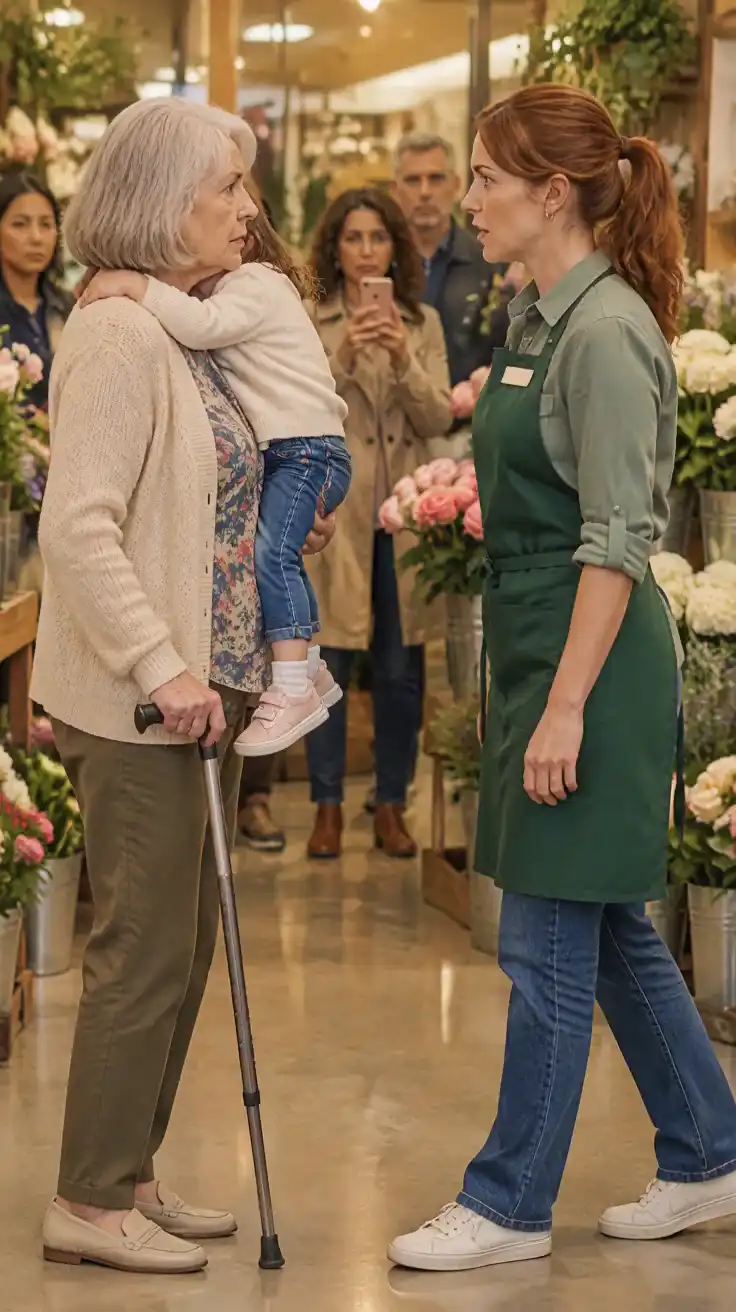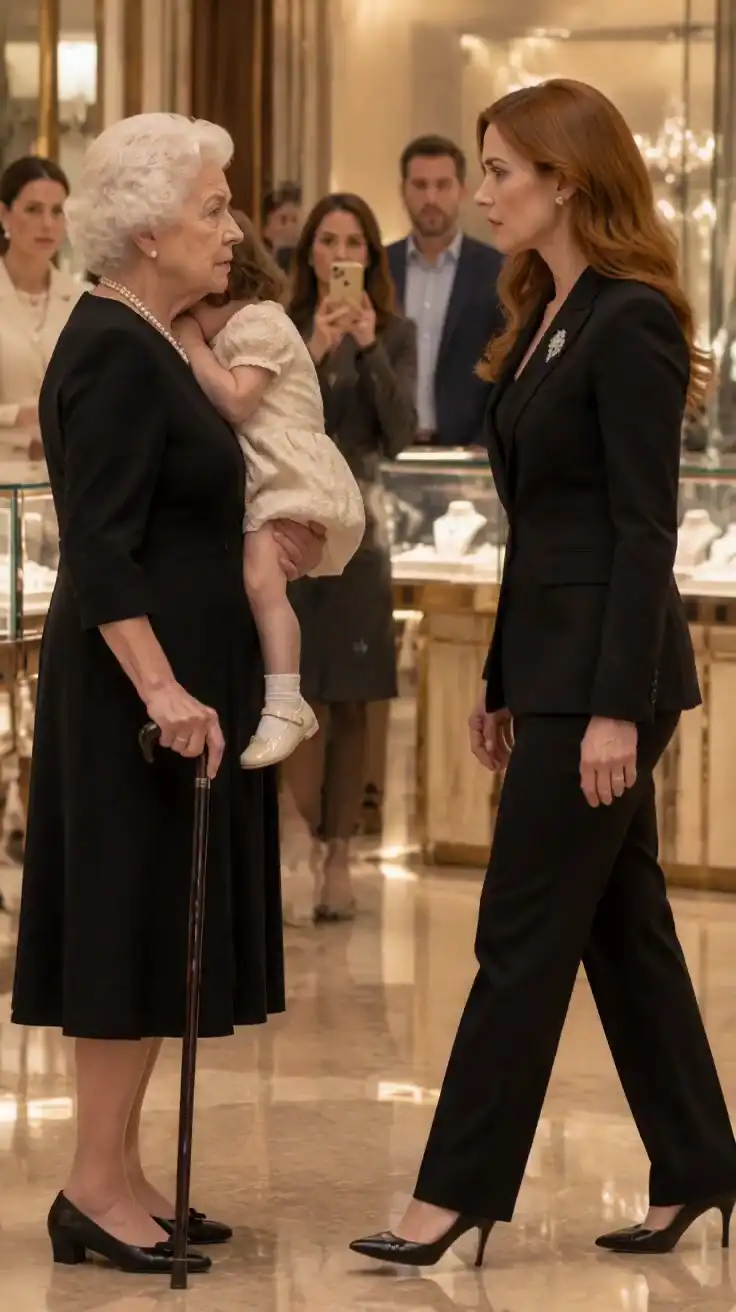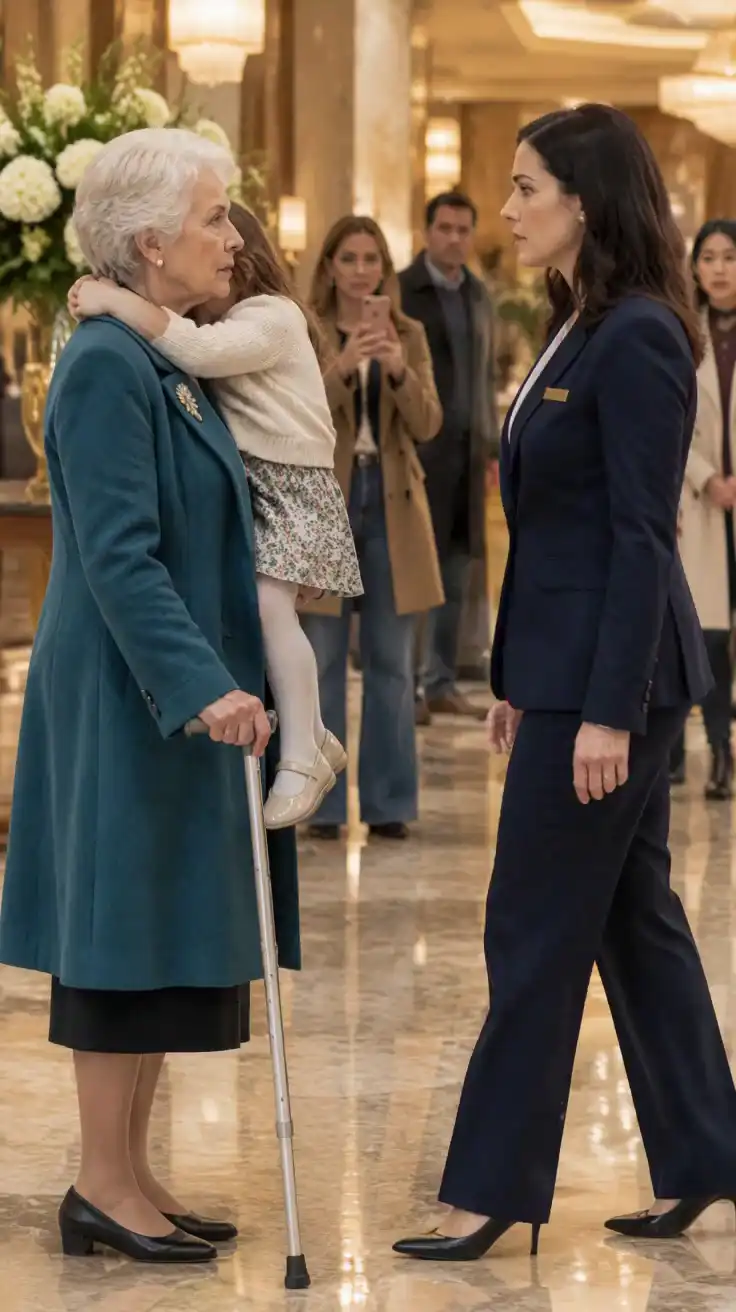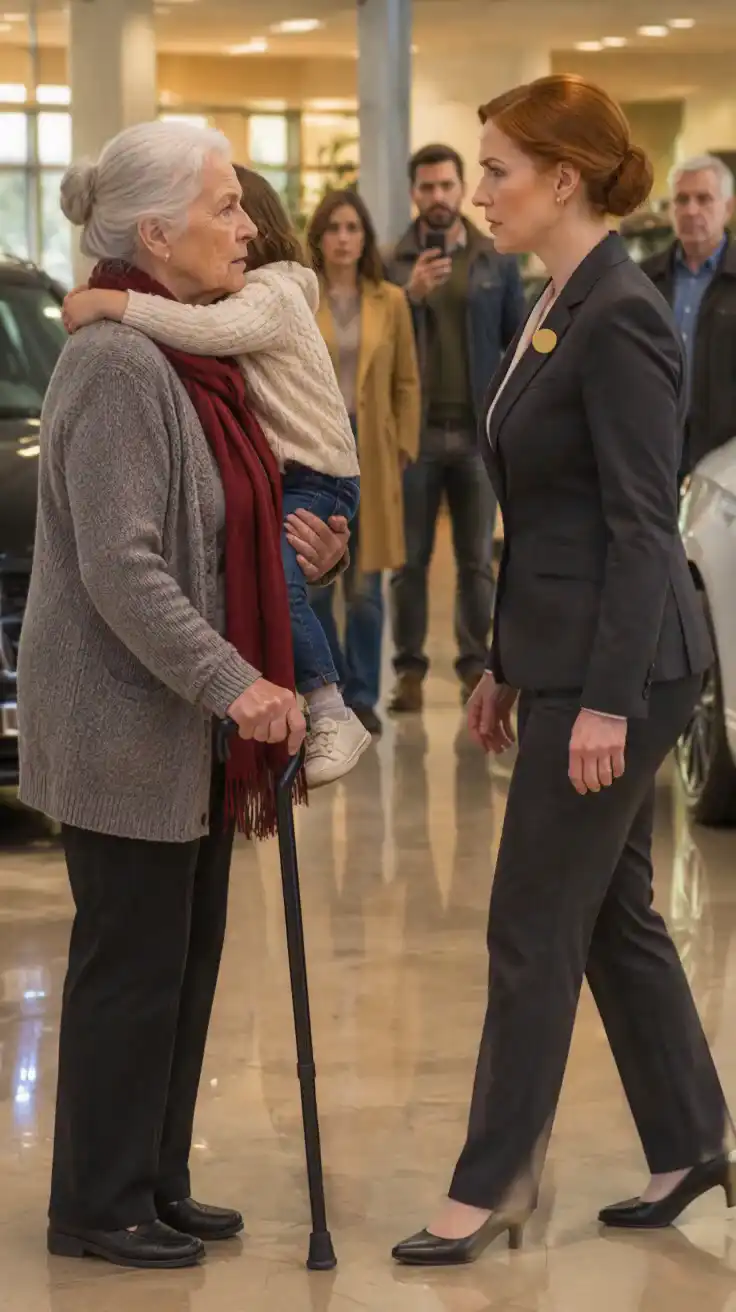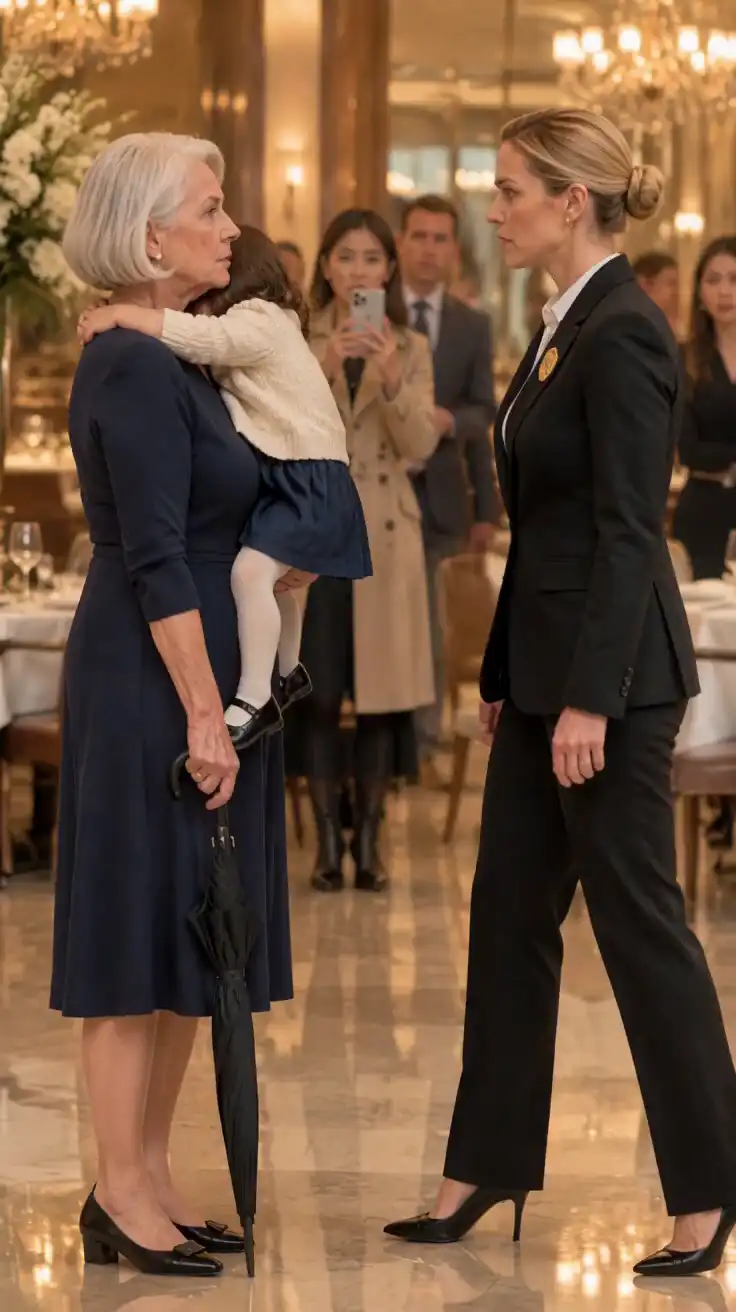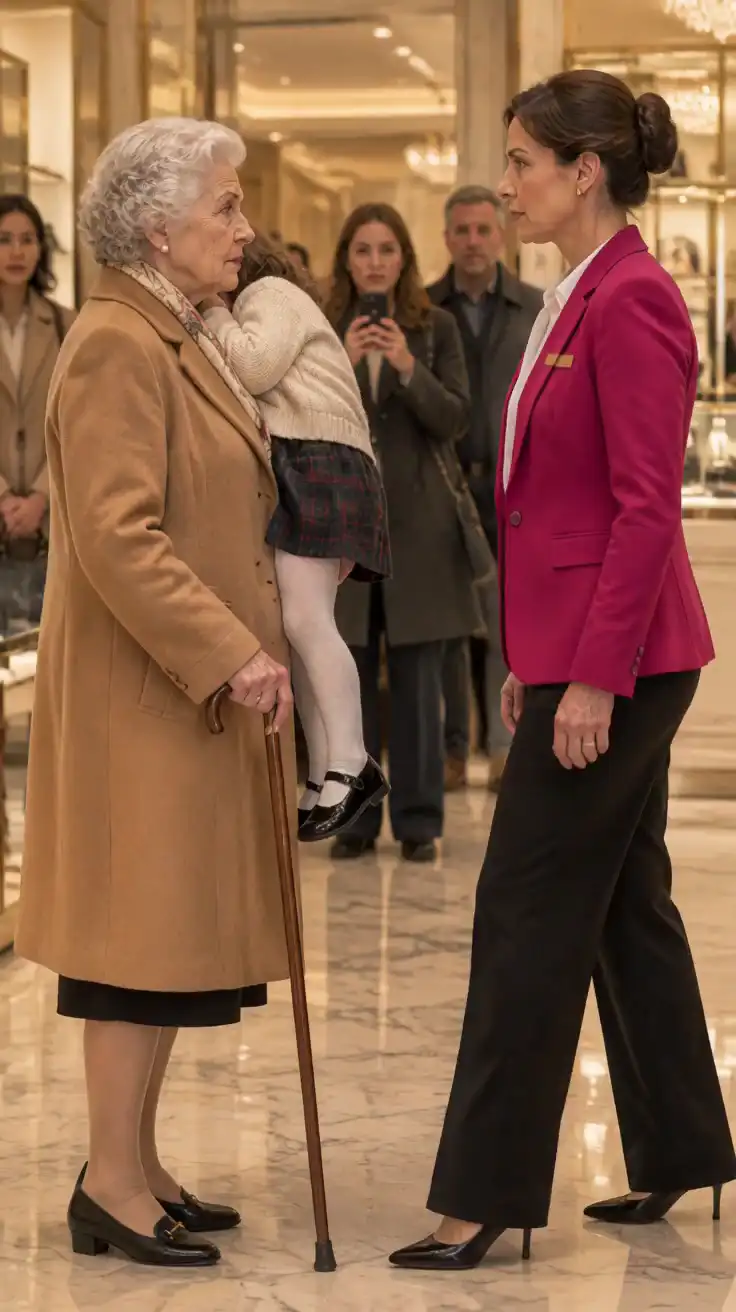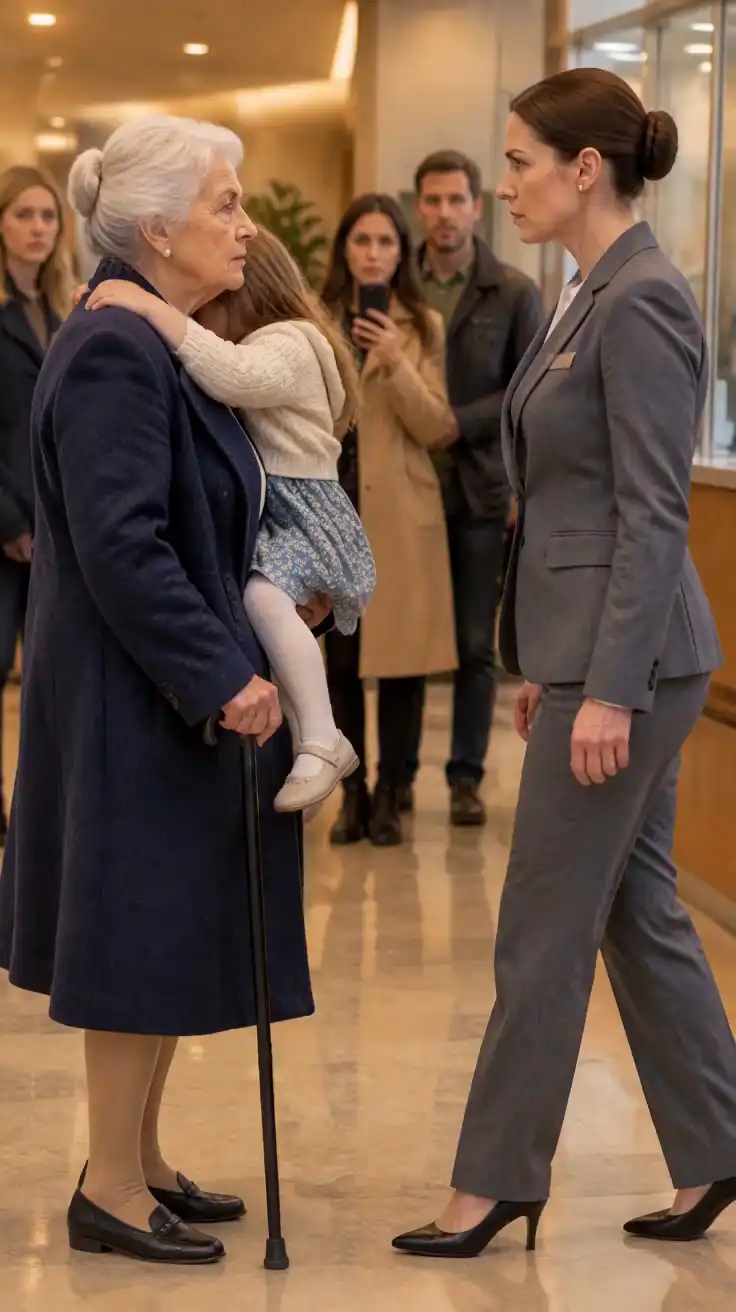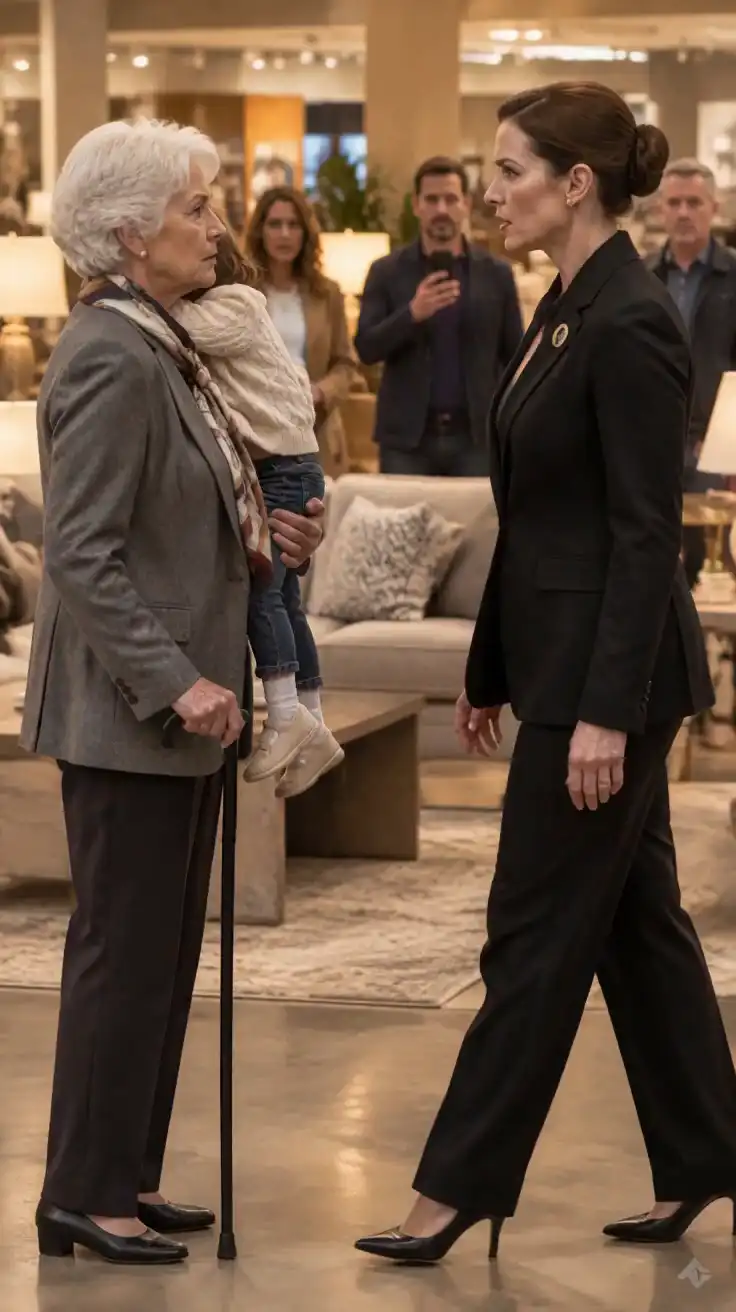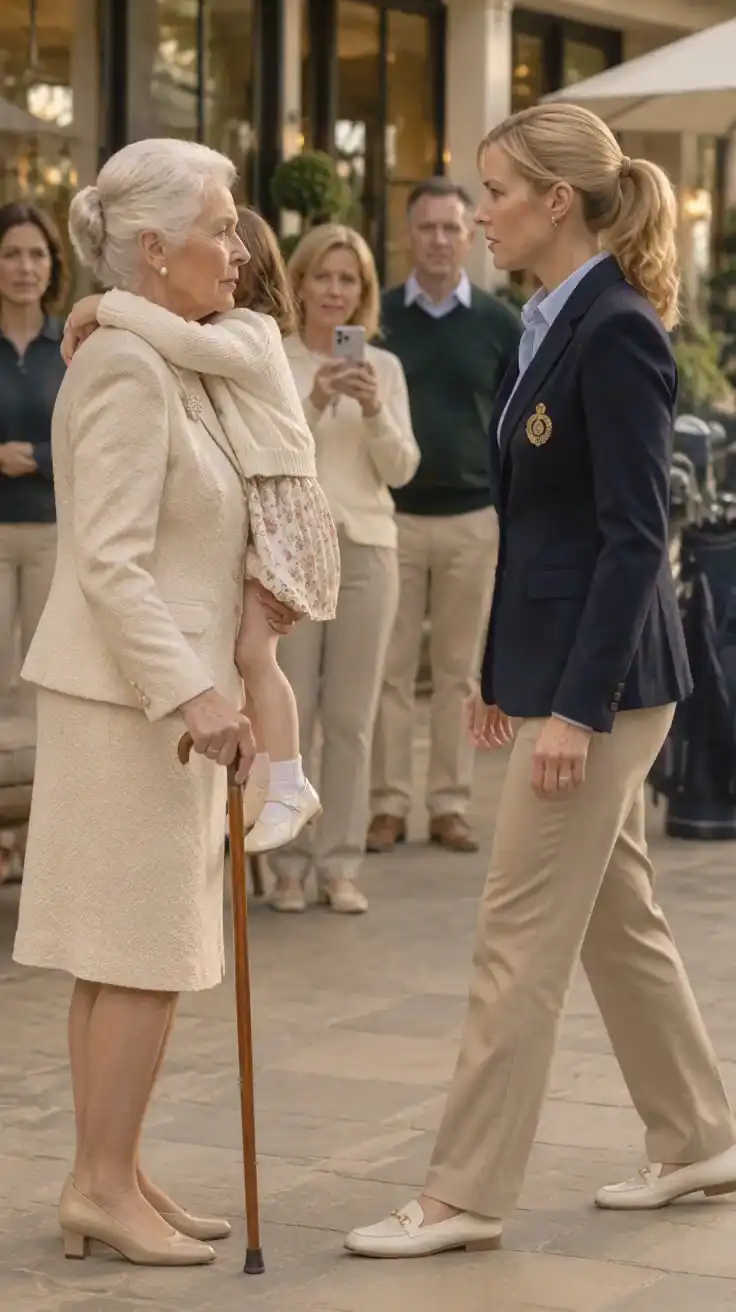
The cashier supervisor slapped me over an expired coupon and ordered the guard to drag me toward the supermarket exit. I hold the deed to the land beneath her counter, and I just dialed my son on speaker.
Heat spread across my cheek, and the crowd’s voices thinned to a hiss. The guard’s hand clamped around my elbow. I kept my feet planted as he tugged me toward the doors.
“She’s holding up the line,” the cashier supervisor said. The coupon shook between my fingers. It had expired yesterday, and she’d already decided I was trying to cheat the store.
A woman near the cart return lifted her phone. Someone behind me said, “You can’t put your hands on her.” The guard loosened his grip, then tightened it again when the supervisor pointed at the exit.
I looked at the customers gathering by the registers. No one knew whose name was on the land beneath their shopping carts. I didn’t say it. I asked the guard to let go.
The supervisor scoffed. “You want to make a scene over a coupon?”
My cheek throbbed. I took out my phone and called my son. He answered over the sound of traffic.
“Can you read me the coupon policy?” I asked.
The supervisor rolled her eyes and told the guard to move me along. He glanced at the growing knot of customers, then at my phone.
My son’s voice came through the speaker, steady and clear. He read the policy aloud. The coupon was still valid.
The supervisor stopped talking. A customer lowered her phone just enough to stare at her. The guard’s fingers fell away from my arm.
Then the supervisor’s own phone rang. She looked at the screen, and her mouth tightened. She answered without stepping away from the register.
“Yes,” she said. “She’s still here.”
I watched the customers edge closer. The voice on the other end kept talking. The supervisor’s gaze flicked from me to the people watching, and she turned the phone so no one could see its screen.
My son said, “Put the policy sheet on the counter.”
The supervisor stared at me. “Who is this?”
I didn’t answer. My son told her again, and this time she reached beneath the register. She pulled out a printed sheet and slapped it onto the counter. Then she took one step back.
THE GROUND BENEATH THE REGISTER
“Read the line about the expiration date,” I said.
David did.
He didn’t raise his voice. He didn’t need to. The register had gone quiet, and the people waiting behind me had stopped pretending to shop. His words carried through the phone, clear enough for the cashier beside the supervisor to hear.
“Coupons remain valid for seven calendar days after the printed expiration date,” he read. “Unless a promotion is specifically marked as final-day only. This one isn’t.”
The supervisor’s fingers hovered over the paper. She looked down at the coupon in my hand, then back at the policy sheet.
“That’s not what I was told,” she said.
My son waited a beat. “Who told you?”
She glanced at the customers, and her chin lifted. “I’m the supervisor.”
“That wasn’t my question.”
The cashier beside her had lowered her eyes to the register screen. The guard was no longer touching me. His hands rested at his sides, and his gaze kept moving from the supervisor to the phone in my hand.
The woman who had lifted her phone near the cart return was recording again. This time, she didn’t try to hide it.
“Ma’am,” David said, “please read the second sentence aloud.”
The supervisor’s lips pressed together.
“Please,” I said. My cheek stung when I spoke. “You were certain enough to call me a cheat. You can read the policy.”
She looked at the paper as if the words might change if she stared at them long enough. Then she read the sentence, quietly.
“Louder,” said the woman with the phone.
The supervisor’s eyes snapped toward her.
I held up one hand. “No. She doesn’t have to do anything. You can read it at whatever volume you like.”
For a moment the only sound was the register beeping at another lane. A customer there had paused with a bottle of milk in her hand. The line behind me shifted, but no one left.
The supervisor read it again, louder.
The coupon was still valid.
David spoke into the phone. “Mom, is the coupon in your hand the one from the weekly circular?”
“Yes.”
“Then the policy applies.”
“I know.”
The supervisor’s eyes narrowed at the phone. “Your son works for the company?”
“He does,” I said.
“Where?”
I glanced at the printed sheet beneath her hand. “You can ask him.”
The supervisor looked from me to the phone, then toward the store office. Her own phone had stopped ringing, but she still held it in her hand. The person on the other end had been talking while David read. I’d heard the faint rush of a voice, too low to make out.
She lifted her phone again. “I have to handle this.”
“You’re handling it,” I said.
“I’m speaking to my manager.”
“Then tell them the policy says the coupon is valid.”
She turned partly away from me. “I’m not discussing store matters in front of customers.”
A man near the end of the line gave a short, disbelieving laugh. “You were happy to discuss her coupon in front of all of us.”
The supervisor’s face tightened.
David remained on the line. “Mom, don’t move. I’m coming.”
The guard shifted his weight. “You heard him. She can stay right there.”
The supervisor stared at him. “You don’t give me instructions.”
“I’m not,” he said. “I’m saying I won’t put my hands on her again.”
She pointed toward the door. “You were told to escort her out.”
“I was.”
“And?”
He looked at the people watching. “I’m not doing that.”
The choice cost him something. I saw it in the way his shoulders stiffened after he spoke. He was a broad man in a blue uniform, but now he looked less like a wall and more like someone who had finally noticed there were people standing on both sides of him.
The supervisor’s phone gave another small buzz. She glanced down. The name on the screen was hidden from where I stood.
“Do you want me to suspend the transaction?” the cashier asked.
“No,” the supervisor said too quickly. “Keep going.”
The cashier didn’t reach for my groceries. “She hasn’t paid.”
“Then ring the next customer.”
The customer behind me shook her head. “I’m not stepping around her.”
The supervisor turned on her. “You don’t need to make this difficult.”
“I’m not the one who slapped a woman over a coupon.”
The woman’s phone stayed up. Another customer had brought out his own. The store’s afternoon business had become a row of carts and people watching us from every direction.
I touched my cheek. It was already swelling. The skin felt hot beneath my fingertips.
The supervisor noticed. For the first time, she looked uncertain.
“You came at me,” she said.
“I was standing here with a coupon.”
“You were arguing.”
“I asked you to read the policy.”
“You were trying to get something for free.”
“Then you should be able to explain why the coupon was invalid.”
She looked toward the guard, but he didn’t move.
David’s voice came through the phone. “Mom, can you put me on speaker?”
I turned the volume up.
“This is David Mercer,” he said. “I’m the regional manager for the district.”
The cashier’s head came up. The guard looked at the supervisor. A few customers exchanged glances.
The supervisor blinked. “Regional manager?”
“Yes. I oversee this store.”
She gave a brittle laugh. It sounded nothing like the laugh she’d let out after striking me. “You’re the regional manager?”
“I am.”
“I didn’t know you were her son.”
“You weren’t supposed to know before you decided whether the coupon was valid.”
The supervisor opened her mouth, closed it, and looked down at the policy again.
I could have told them then that this store stood on land my family owned. I could have reached into my purse and pulled out the deed. It would have been easy to turn the moment into a contest of names and authority.
Instead, I kept my hands on the counter.
The coupon had brought me there. The policy had brought David onto the call. Whatever came next had to be about what had happened, not about how important my family might be.
A customer near the far lane said, “Can somebody call the police?”
“No,” I said.
The supervisor seized on the answer. “You hear that? She doesn’t want police involved.”
“I said no one needs to call them this second,” I replied. “That isn’t the same as saying nothing happened.”
The supervisor’s mouth tightened again.
David said, “Mom, did she put her hands on you?”
“Yes.”
“Did you ask her to leave?”
“Yes.”
“Did she refuse?”
“I was asking about the coupon.”
“That isn’t an answer.”
The supervisor swallowed. “She was holding up the line.”
“Did she refuse to leave?”
The cashier took a breath. “She asked for the policy.”
“Thank you,” I said.
The cashier went still again, as if she hadn’t meant to become part of the conversation.
“Can you tell me your name?” David asked her.
“Lena.”
“Lena, don’t leave the register. I’ll speak with you when I arrive.”
The supervisor tapped her phone against the counter. “You’re not coming here to conduct an investigation over the phone.”
“I’m coming to conduct one in person.”
“You can’t just—”
“I can. I’m the regional manager.”
The supervisor looked around at the customers. “This is a private personnel matter.”
The man behind the woman with the phone said, “Then why did you do it in public?”
The supervisor’s cheeks colored. She reached toward the policy sheet, but I laid my palm on its corner.
“Leave it there.”
She stopped.
“I want the policy preserved,” I said. “I want the coupon preserved. And I want the store’s security recording kept.”
“You don’t get to tell me how to run my store.”
“I haven’t. I’m telling you what I want documented.”
The guard’s radio crackled. He lifted it, then looked to the supervisor.
She gave a sharp shake of her head. “Not now.”
He lowered it.
The store’s front doors opened, letting in a gust of cold air and the squeak of a shopping cart. Two customers came inside, saw the gathering at the registers, and slowed. One of them recognized the woman holding her phone and asked what had happened.
The woman answered in a steady voice. “The supervisor slapped her because of a coupon.”
“I did not slap her because of a coupon,” the supervisor said. “She was being disrespectful.”
The woman kept recording. “That’s not what I saw.”
“Put the phone away.”
“No.”
“You can’t film employees.”
“I’m filming what happened in a public store.”
The supervisor looked at the guard again. He didn’t move.
I pressed the phone closer to my ear. “David, how long?”
“Ten minutes.”
The store was twelve minutes from the regional office without traffic. He had already been on the road when I called, or he was close enough to leave at once.
The supervisor glanced at the door. “I’m not waiting around while he performs for customers.”
“Then you can explain why you left,” I said.
“I am not leaving.”
“Good.”
The cashier moved a few groceries away from the edge of the belt so they wouldn’t fall. She didn’t touch my coupon.
I looked at the paper on the counter. It was a single-page policy notice, printed in black ink, with the store’s logo at the top. I didn’t need to read it to know what it said. David had sent me the policy after the chain changed its coupon rules the previous spring. He had told me to keep a copy in my purse because I still clipped coupons from the circulars.
“I thought you were making an exception,” the supervisor said, looking at me.
“I asked you to apply the written rule.”
“The coupon was expired.”
“By one day.”
“That means it’s expired.”
“Not under that policy.”
She stared at the sheet. “I never saw this.”
I looked at her phone. “You were the one who took the call.”
“That was my district contact.”
“Did you tell them what the paper says?”
Her silence answered before she did.
“I wasn’t asking about the policy,” she said. “I was asking what to do about you.”
“What to do about me?”
“You were disrupting the checkout.”
“I was waiting to pay.”
“You were getting customers involved.”
“The customers saw you hit me.”
“I didn’t hit you hard.”
The woman recording lowered her phone a fraction. “You just admitted you hit her.”
“I said I didn’t hit her hard.”
The supervisor’s face changed as soon as she heard herself. She turned away, but there was nowhere to go. The counter blocked one side, the line the other, and the aisle behind her had filled with customers.
The guard moved closer, not to me but to the supervisor. “You should stop talking.”
She looked at him in disbelief. “You’re taking her side?”
“I’m telling you to stop making this worse.”
“I told you to remove her.”
“And I almost did.”
That left a silence between them.
The supervisor’s phone buzzed again. She answered without looking at the screen. “I’m still here.”
I heard a faint voice from the speaker. The words blurred into the store noise.
“No, she’s not leaving,” the supervisor said. “Her son is the regional manager.”
The voice on the phone rose.
The supervisor turned her back to us. “I understand.”
She listened.
“I said I understand.”
She ended the call.
David’s voice was still on my phone. “Was that your district contact?”
“I think so.”
“Don’t discuss anything further with her.”
The supervisor spun around. “I can hear you.”
“That’s fine,” David replied.
“You can’t tell me not to do my job.”
“I’m telling you not to retaliate against a customer while I’m on my way.”
“I haven’t retaliated.”
“Then you won’t have a problem waiting.”
She gripped the edge of the counter. “You’re going to come in here and decide I’m guilty because your mother called?”
“No. I’m going to review the video, interview the witnesses, and follow the company process. That’s the same process I’d use if the customer were anyone else.”
“Convenient.”
“I’m not asking you to trust me. I’m asking you to preserve the evidence.”
She looked to the customers again, as though someone might rescue her with a different version of what had just happened. No one did.
I lowered my phone from my ear and set it on the counter with the speaker still on.
“David,” I said, “when you come, bring the lease file.”
The supervisor laughed once, but the sound caught in her throat. “The lease file?”
“Yes.”
“What does a lease file have to do with a coupon?”
“Nothing, unless you insist on pretending I’m a stranger who wandered into a store that has nothing to do with my family.”
The people closest to us leaned in. The supervisor glanced at their phones.
I didn’t like being watched. I had spent most of my life preferring a kitchen table to a podium. But the line had changed because she had put her hand on my face, then used the store’s authority to push me out of a place where I had every right to be.
“I’m not asking anyone to take my word for anything,” I said. “The papers will show you.”
The guard cleared his throat. “I’m sorry.”
I looked at him.
He removed his cap and held it against his chest. “I grabbed you when she pointed at the door. I shouldn’t have.”
“You should have listened when I asked you to let go.”
“Yes, ma’am.”
The apology didn’t erase his hand around my elbow. It did, however, give the customers something true to hear besides the supervisor’s excuses.
The supervisor’s gaze sharpened. “Don’t apologize to her. You were following my direction.”
“I was following it,” he said. “That’s why I’m sorry.”
The cashier set a bottle of water beside the register. “Would you like this?”
“Thank you.”
She opened it and placed it close enough for me to reach. A small gesture, but I felt my fingers unsteady when I picked it up.
David said, “Mom, are you hurt?”
“My cheek hurts.”
“Do you want an ambulance?”
“No.”
“Are you sure?”
“Yes.”
He was quiet for a moment. “I’m coming.”
“I know.”
He ended the call so he could drive. The screen went dark, and I saw my own face reflected in it: one cheek flushed, the other pale. I put the phone back in my purse.
“Do you have a name?” I asked the supervisor.
She gave me a look. “You know my name.”
“I don’t.”
“Marissa.”
“Marissa, I want you to leave the policy sheet where it is.”
She folded her arms. “You’re not my supervisor.”
“No. David is.”
“He’s your son.”
“He is also the regional manager.”
“Which means he has a conflict.”
“That’s something he can disclose to the company. It doesn’t make your conduct disappear.”
Marissa’s expression hardened. “You came in here wanting special treatment.”
“I came in for groceries.”
“And then you called your son.”
“After you hit me.”
“After you argued with me.”
“That order matters.”
The woman with the phone gave a slight nod. “It does.”
Marissa pointed at the customer. “You have no idea what happened before you started recording.”
The woman lowered her phone, then lifted it again. “I saw you walk up and slap her. I heard you laugh.”
A man near the cart return spoke. “I heard it too.”
The supervisor’s eyes swept across the group. “You’re all going to regret getting involved in a personnel dispute.”
“Is that a threat?” the man asked.
“No.”
“It sounded like one.”
“Everyone needs to stop putting words in my mouth.”
I looked at the guard. “Could you ask the other lanes to preserve their recordings too?”
He glanced at Marissa. “I can tell the store manager.”
“I am the store manager,” she said.
“You’re the checkout supervisor,” Lena replied, her voice small but clear.
For the first time, Marissa looked genuinely unsettled. She had been wearing authority like a badge everyone was supposed to recognize. Lena had just pointed out its limits.
Marissa straightened her blouse. “I’m the highest-ranking manager on the floor.”
“Then call the next person up,” I said.
“I already did.”
“Who?”
She did not answer.
A bell chimed above the front entrance. The store manager, a man in a green tie, came briskly from the office. He carried a tablet under one arm and stopped when he saw the line of customers gathered around the register.
“What’s going on?”
Marissa answered first. “This customer refused to cooperate, and now she’s trying to use her son’s position to intimidate me.”
“I asked for the coupon policy,” I said.
The manager looked at my cheek. His mouth opened slightly, but Marissa continued.
“She became disruptive. Security was asked to escort her out.”
The guard said, “She asked me to let go.”
The manager looked at him. “Did you touch her?”
“I did.”
“Why?”
“Marissa pointed to the door.”
The manager’s gaze returned to Marissa. “Did you strike her?”
“No.”
The woman recording spoke up. “Yes. I have it on video.”
The manager looked at the phone. “Can you send that to me?”
“I can give it to the police or to corporate. I’m not sending it to someone whose first question was whether she was disruptive.”
The manager’s jaw flexed. “That’s fair.”
Marissa snapped, “You’re supposed to support me.”
“I’m supposed to find out what happened.”
“I told you.”
“And now I’m hearing other accounts.”
He set the tablet down beside the policy sheet. “Don’t touch anything at this register. I’ll lock the transaction and call the district office.”
“Call whoever you want,” Marissa said. “This is a misunderstanding.”
The manager looked toward my cheek again. “I’m sorry this happened.”
“Thank you,” I said. “I want the incident recorded, the security footage preserved, and the store to apply the policy.”
He nodded. “I can do that.”
Marissa gave a short laugh. “You can’t process that coupon.”
“I can approve it,” the manager said.
“I already refused it.”
“The policy says she can use it.”
“I never saw the policy.”
“Then we’ll look at how it got missed. Right now, the customer is entitled to the discount.”
Marissa turned to the customers. “So I’m supposed to take the blame for a rule nobody trained me on?”
“You’re responsible for what you did after you were shown the rule,” I said.
The store manager studied the printed sheet. “Where did this come from?”
“The drawer beneath the register,” Marissa said.
“Why is it there?”
“It was left there.”
“By whom?”
“I don’t know.”
Lena leaned forward. “It was in the weekly operations packet. I put a copy in the drawer after the update.”
“Did you show Marissa?”
“She was on shift when we reviewed it.”
Marissa’s stare made Lena shrink back. The store manager noticed.
“Lena, you’re not in trouble for answering a question.”
“I’m not saying she remembers,” Lena said. “I’m saying we went over it.”
Marissa opened her mouth, but the manager lifted a hand.
“Don’t. We’ll get statements later.”
A customer set a carton of eggs down in the next lane and moved closer. Another customer came around from the pharmacy aisle with a basket. The scene had become public not because I had summoned anyone, but because there was no way to hide a slap in a busy checkout line.
The manager picked up the policy sheet by its edges. “I’ll make a copy for the incident file.”
“Please photograph it too,” I said. “I want the original left here until David arrives.”
The manager hesitated.
“It belongs to the store,” Marissa said.
“It does,” I replied. “That’s why I’m asking you to preserve it, not take it.”
The manager set it down again.
“Fine.”
He unlocked his tablet. “I’m calling the district office.”
Marissa gave him a look. “They already know.”
“Who did you call?”
“My district contact.”
“What did you tell them?”
“That there was an incident.”
“Did you tell them you struck a customer?”
“I didn’t strike her.”
“Marissa.”
She looked away.
He tapped the screen and made the call.
While it rang, the customers began speaking to one another in low voices. The woman with the phone asked if I needed a chair. I said I was all right. The guard moved a stool from the customer-service desk and set it near the register anyway.
I sat because my knees had begun to ache. The water bottle was cold against my palm.
The store manager spoke into his tablet. “This is Frank at the Cedar Square location. I need the district office and loss prevention on the line. There’s an employee conduct incident at front register.”
He listened.
“No, nobody has left. The customer is still here, along with witnesses. I have asked staff to preserve the footage.”
Another pause.
“Yes. The supervisor is present.”
He glanced at Marissa, then stepped a few feet away. He didn’t lower his voice enough to keep the customers from hearing pieces.
“Physical contact,” he said. “The customer says she was struck. We have at least one witness recording.”
Marissa began pacing in the narrow space behind the registers. Each time she neared the end of the counter, a customer shifted to keep her in view.
The guard stood near the entrance. The position put him between the crowd and the doors, but he no longer looked ready to escort me out. He looked like he was waiting to be told what he should have done from the start.
“Can you tell me your name?” I asked him.
“Curtis.”
“Curtis, I appreciate the apology.”
He nodded. “I should’ve asked what happened.”
“Yes.”
“I saw her point at the door and thought it was just part of my job.”
“That’s what you were told.”
“Still.”
He looked down at his cap. I could tell the moment had changed his understanding of what his uniform allowed him to do. He had been asked to move an older woman through a doorway, and he had done it because a supervisor said so. Now the people around him had heard what the supervisor said and seen how quickly his hand had tightened.
“Did you hear her say the coupon was expired?” I asked.
“Yes.”
“Did you see the policy?”
“Not until she put it on the counter.”
“Then you know it was valid.”
He nodded.
“Tell them that when they ask.”
“I will.”
The manager returned to the counter. “The district director is calling back. They want the footage saved, and they’re sending someone from the regional office.”
“Who?” Marissa asked.
He looked at me, then at the tablet. “David Mercer.”
Marissa let out a breath through her nose. “Of course.”
“He’s the regional manager,” I said.
“He’s your son.”
“He is.”
The words sounded different spoken in front of the crowd. They were no longer a private fact carried between a mother and child. The room had heard them. Marissa had heard them. The guard had heard them. I watched each person take the measure of what it meant and, just as important, what it did not.
David’s title did not make me right about the policy. The policy did that.
His title did not make the slap happen. The witnesses did that.
His title did not make the land ours. A deed did that.
The manager opened a new incident report on his tablet. “Can I get your name?”
“Elaine Mercer.”
He paused. “Do you own property nearby?”
“I do.”
Marissa’s face changed.
The store manager didn’t react, but I saw him glance at the lease files on the desk near the customer-service counter.
“What property?” he asked.
“The land under this building.”
The customers stopped whispering.
Marissa looked at me as if I had changed the terms after the fact. I hadn’t. I had been standing on those terms before she came out from behind the register.
“You own this property?” she asked.
“My family does.”
“That doesn’t make you the owner.”
“It does if my name is on the deed.”
Her eyes moved to the manager. “Is that true?”
He didn’t answer at once. He opened a second screen on his tablet. “The store’s lease is under Mercer Holdings.”
“That’s a company,” Marissa said.
“It is.”
“Not her.”
“Elaine is the managing member,” Frank said.
The information seemed to pull the air from the supervisor’s chest. She looked at the land around her: the tile beneath her shoes, the walls that held the registers, the doors where she had pointed the guard to push me.
“I didn’t know,” she said.
“You didn’t ask,” I replied.
“I had no way of knowing.”
“You didn’t need to know who owned the land to treat me like a person.”
A customer behind the man with the eggs said, “That’s the part that matters.”
Marissa turned toward him. “You don’t know anything about my job.”
“No,” he said. “But I know you hit someone.”
She started to answer, then stopped. The crowd had become too large for each objection to be answered with a sharper one. People were watching her instead of watching the store manager. Every excuse became another thing that could be repeated later.
Frank held the tablet out. “I need to ask you a few questions.”
“Now?”
“Yes.”
“Not in front of all these people.”
“We can move to the office, but you need to stay available.”
Marissa looked at me. “You planned this.”
I shifted the water bottle from one hand to the other. “I planned to buy groceries.”
“You called your son.”
“After you hit me.”
“You could have just told me who you were.”
“Would that have changed the policy?”
She didn’t answer.
“Would it have changed your hand?”
Her eyes dropped to the counter.
Frank turned to the customers. “I’m sorry this has disrupted your shopping. We’re keeping the front lanes open. Anyone who witnessed what happened can leave their name with customer service. You don’t have to stay.”
Several people stayed anyway.
The woman with the phone came forward. “I’ll give you my name, but I want a copy of my recording kept with the incident report.”
“We can make a note of that,” Frank said.
“I also want to know who will see it.”
“Corporate and loss prevention.”
“And the police if she reports it.”
Marissa snapped, “This isn’t a criminal matter.”
“That’s not for you to decide,” the woman said.
Frank looked at her. “You’re right. We won’t interfere with any report you choose to make.”
I looked at the woman. “Thank you.”
She nodded. “My mother is about your age. I would want somebody to say something.”
At that, I looked down at the coupon. Its corner had bent where I’d been gripping it. I smoothed the paper on my knee.
I had wanted only to save a few dollars. The coupon was for the brand of coffee I bought every week. My husband had liked it strong, with no sugar, and even after he was gone I kept buying the same tin. It was not a large discount. It was not worth being struck over. But it had been mine to use, and I had been asked to leave as if I had stolen something.
Marissa had called me cheap. She had done it loudly enough for the line to hear.
I didn’t want the crowd to decide that my family’s land made the insult worse. It made the power imbalance different, perhaps. But I had been a customer before anyone knew about the property. The same rule should have protected me then.
Frank asked the witnesses to wait at customer service. A few left their names, while others said they would provide statements by phone. The woman with the recording stayed close.
The cashier, Lena, came around the register. She stopped a few feet from me.
“I’m sorry,” she said.
“You didn’t hit me.”
“I didn’t stop her.”
“You were behind the register.”
“I could have said the policy was right.”
“You did say it.”
“After.”
Her hands folded and unfolded. She looked about twenty, perhaps younger, with a blue lanyard twisted around her fingers.
“You’re still here,” I said. “That counts.”
She gave a small nod, but the worry remained in her face.
“Will I get in trouble?”
“I don’t know.”
“I need this job.”
“I understand.”
“I didn’t want to contradict her. She cuts my hours.”
Marissa had been close enough to hear. Her expression sharpened, but Frank stepped between them.
“We’re not discussing that here,” he said.
“I’m telling the truth,” Lena replied.
“And you should. I’ll speak with you privately, and the company will review the schedule.”
Lena looked at me. “I’m sorry.”
“I heard you.”
She went back to her register, but did not take another customer.
The store manager checked the time. “David said ten minutes. We’ll wait.”
“You’re treating this like a courtroom,” Marissa said.
“No,” Frank replied. “I’m treating it like a serious incident.”
“Because her son is coming?”
“Because a customer was struck, and there are witnesses.”
“I’m the one whose name is going to be dragged through the company.”
“You struck her.”
“I gave her a light slap.”
“You said you didn’t.”
Marissa’s mouth closed. She had no answer for the difference between the two statements.
The woman with the phone lifted hers again. “Can you say that one more time?”
“No,” Marissa said.
The woman kept recording.
Frank asked her to move toward customer service, and she did. Her recording continued as she went.
The customers began to edge back, but not to their carts. They made room for anyone who wanted to pass and left a clear space around my stool. The man with the eggs took his place in line again, though he had not put his groceries on the belt.
“Are you going to use the coupon?” he asked.
“I am.”
“Good.”
Lena came over and picked up the policy sheet. “May I use it to ring you through?”
“Not yet.”
She looked puzzled.
“I want the manager to verify it first.”
Frank nodded. “I’ll do that.”
He read the sheet from top to bottom. The rule matched what David had read. He confirmed the printed date on my coupon, then brought up the circular on his tablet. The promotion had run the previous week. The policy allowed the extra seven days.
“I can honor this,” he said.
“Thank you.”
Marissa watched him from the side. “You’re going to give it to her just to get her out of the store.”
“No,” he said. “I’m honoring the written policy.”
“After all this, the company can afford the difference.”
“It’s a small amount.”
“It’s not about the amount.”
“No,” I said. “It’s about whether you follow the rule when the person in front of you isn’t someone you expect to matter.”
Marissa’s eyes snapped toward me, but no words came.
Frank returned the coupon to me without scanning it. “We can complete the sale when David arrives, if you prefer.”
“I prefer that the policy stays on the counter until he sees it.”
He agreed.
The store manager made a copy of the sheet, then took a photograph of it with his tablet. He wrote the time and the register number in the report. The guard gave him his account of how Marissa had pointed toward the door and ordered him to remove me.
“Use the words she used,” I said.
“I will.”
“Don’t soften them.”
“I won’t.”
He looked at Marissa. “I’ll need your statement, too.”
She crossed her arms. “I’ll give it to the district office.”
“That’s fine.”
At last, the store doors opened again. A man entered in a dark coat, carrying a thin leather portfolio. He didn’t rush through the crowd or call my name from the entrance. He looked toward the front registers, saw me, and walked over.
The people moved aside for him.
“Mom.”
David’s voice had changed from the phone. It was no longer the composed voice of a regional manager reading a policy to a group of strangers. He sounded like the boy who used to come home from school with a split lip and insist he had not cried.
I stood.
He reached for my hands, then stopped himself. “Can I?”
“Yes.”
He took them. His thumb brushed the edge of my palm, careful not to touch my cheek.
“Does it hurt?”
“Yes.”
His jaw tightened. He let go before anger could take the place of concern.
“Did you bring the lease file?” I asked.
He lifted the portfolio. “And the deed.”
Marissa said, “This is ridiculous. You can’t use your position to pressure employees.”
“I won’t,” David replied.
“Then why bring a land deed?”
“Because my mother asked me to bring the lease file, and because you challenged her ownership.”
“I never challenged it.”
“You said she had no way to prove it.”
“I said I didn’t know.”
David set the portfolio on the counter. “Then you can see it.”
He did not open it right away. He looked to Frank.
“Has the footage been preserved?”
“Yes. I sent the request to loss prevention. We’ve also documented the witnesses.”
“Good. Has anyone altered the register transaction?”
“No.”
“Is my mother’s coupon still here?”
I held it up.
He looked at Frank. “Can you confirm the policy?”
“I have. It’s valid.”
David took the printed sheet and read the applicable section again. Then he placed it flat on the counter, beside the coupon.
“The coupon is valid,” he said. “The store policy allows seven calendar days after the printed expiration date. The printed date was yesterday. Mom is entitled to use it.”
He turned to Marissa. “You were given the policy sheet.”
“I wasn’t trained on it.”
“Lena says the policy was included in the operations packet.”
“I didn’t see it.”
“That’s something we’ll review. It doesn’t change the policy.”
“I did what I thought was right.”
“You told her she was trying to cheat the store.”
“She was trying to use an expired coupon.”
“It wasn’t expired under the policy.”
“I thought it was.”
“Then you could have asked.”
Marissa looked toward the customers. “We’re doing this in front of everyone?”
“You did the first part in front of everyone.”
She pressed her lips together.
David opened the portfolio and placed a document on the counter. The cover page showed the property address and the current legal owner. He kept his hand over the lower section, where the names and signatures appeared.
“This is the deed record for the parcel beneath this store,” he said. “The property has belonged to my mother’s family since 1962.”
He turned the page toward Frank first, then toward Marissa and the customers gathered around us.
The deed named my father as the original owner. After he died, ownership had passed to my mother. When she died, I inherited the land, and later transferred it into the family company so the property would remain in the family. The current deed listed Mercer Holdings, with my name as managing member and Elaine Mercer as the sole beneficial owner.
The details were not a secret. They were public record. But I had never needed to wave them around in a grocery store.
David took out the lease agreement.
“The supermarket leases the land from our family company,” he said. “The current term is coming up for renewal.”
The customers looked from the deed to Marissa. The land under their carts, the store beneath the ceiling lights, the loading bay behind the building—all of it rested on the paper laid across the counter.
Marissa stared at the document. “You own the store?”
“No,” I said. “I own the land. The company owns the store.”
David folded his hands over the lease. “The distinction matters. We don’t run the store. We don’t control its employees. The company does.”
“Then you have no say in what happens to me,” Marissa said.
“I have a say as regional manager in the employee investigation. My mother’s ownership doesn’t give her authority over your job.”
The answer seemed to confuse her more than a threat would have.
“I’m not going to tell the company to fire you because we own the land,” I said. “That isn’t my decision to make.”
Her eyes narrowed. “You expect me to believe that?”
“I expect you to read the papers.”
David tapped the policy sheet. “The coupon remains valid. That part is not under review.”
Then he tapped the incident report. “The physical contact is under review.”
Then he touched the lease agreement. “The lease is a separate matter. My mother will make her decision as the landowner, and the company will make its decision about you.”
The neatness of that arrangement made it hard for Marissa to argue with. She had come into the aisle believing a small coupon gave her the right to decide who belonged in the store. Now the three pieces of paper lay side by side: the coupon, the policy, and the deed.
The woman with the phone returned to the group. She looked at the documents, then at me.
“I got the whole thing,” she said. “Including the policy.”
“Keep your original,” I told her. “If corporate asks, give it to them directly.”
“I will.”
A customer near the service desk leaned over to see the lease. “Is the store going to close?”
“No,” David said. “The lease is being reviewed. We’re not closing the store.”
“Will the rent go up?”
“That isn’t decided.”
“Are you going to make them pay more because of this?”
“No.”
I looked at David. “The rent will be decided on the terms we would have used before today.”
He nodded.
The customer took a step back. The answer had reached the people around us. There would be no dramatic closure, no sudden eviction, no punishment disguised as business. The store would continue on land my family owned. The lease would be handled as a lease.
Marissa lifted her chin. “So none of this matters.”
“The deed matters,” I said. “It tells you why I asked him to bring the file. It doesn’t erase what happened.”
She looked at my cheek.
“You could have said you owned the land,” she said.
“I shouldn’t have to introduce myself by listing what I own.”
She looked away first.
David asked Frank to move the witnesses to the customer-service area, then asked Marissa to come to the office. She refused at first, saying she would only speak with the district director. Frank repeated that she could wait there and provide her statement when the representative arrived.
“I’m not waiting in your office like I’m a criminal,” Marissa said.
“No one has said you’re a criminal,” David replied. “You’re an employee being asked to give an account of an incident.”
“You’re my son’s boss.”
“I’m your mother’s son,” he said, “and I’m also the regional manager. To avoid a conflict, I’ll document what I witnessed after I arrived, but the district director and human resources will review the footage and make the employment decision.”
Marissa studied him. “So you’ll step aside?”
“I’ll make sure the company process is followed.”
“That’s not an answer.”
“It is the one I can give you.”
Frank took her to the office with the district director on speakerphone. She went without the guard touching her. Curtis walked several steps behind, not as an escort, but as a witness.
The customers remained near the registers. One by one, they gave their names and phone numbers to Frank. The woman with the video waited until he wrote down the date and time, then asked for a copy of the incident number.
The cashier rang up the groceries in my cart. She scanned each item carefully, then stopped when she reached the coffee.
“Can I use the coupon now?” she asked.
“Check with David.”
He read the policy sheet once more and nodded.
Lena scanned the coupon. The register accepted it.
The total dropped by a few dollars.
There was nothing triumphant in the small electronic chime. No applause, no cheer. The customers watched the screen, and the cashier handed me the receipt.
I folded it into my wallet.
David looked at my cheek again. “Let’s have someone take a picture for the report.”
“Frank can.”
“I’ll take it,” Frank said. “Only for the incident file. You can have a copy.”
I stood by the customer-service desk. He asked before each photograph, and I said yes. He took one from the front and one from the side. The flash caught the swollen skin.
A customer offered me a tissue. I thanked her and used it to dab at the corner of my eye, though no tears had fallen.
David stood beside me while Frank finished. “Do you want to go to the clinic?”
“I don’t think I need one.”
“I want you to be sure.”
“I’ll call my doctor tonight.”
He nodded, but didn’t press.
The district director called David, and he stepped to the side to answer. He spoke in a low voice, explaining that his mother had been involved and that he would leave the disciplinary decision to human resources. He read the names of the witnesses and confirmed the video request.
When he returned, his face had settled into work.
“Corporate is sending a representative to take statements,” he said. “Marissa is being removed from the floor while the review is pending.”
“Suspended?” I asked.
“Administrative leave. It’s not a final decision.”
“That’s your decision?”
“The district director made it.”
The distinction mattered. David made sure it mattered.
“What about the guard?” I asked.
“Curtis will give a statement. He won’t be removed from duty unless the review says otherwise.”
Curtis looked relieved and ashamed in equal measure.
“And Lena?”
“Her statement is being taken separately. She won’t report to Marissa during the review.”
Lena looked over from the register. “Thank you.”
“You don’t need to thank me,” David said. “You told the truth.”
The store manager brought out a chair for me. I sat with my grocery bags at my feet while the store carried on around us. Customers entered, saw the documents on the counter, and heard pieces of what had happened. Some offered a kind word. Others simply pushed their carts past, careful not to stare.
A little girl in a pink jacket paused beside me. Her father tugged gently on her sleeve.
“Is she hurt?” the girl asked.
“A little,” he said.
The girl looked at me. “I’m sorry.”
“Thank you,” I said.
She reached into the pocket of her jacket, pulled out a small wrapped candy, and placed it beside my water bottle.
Her father started to stop her, but I picked it up. “I’ll save it for later.”
She smiled, and they went on.
The district director arrived with a human-resources representative. David greeted them and introduced himself as the regional manager, then immediately explained that he was also my son. He asked them to take the lead on the employee investigation and gave them the incident report.
The representative checked the policy, reviewed the transaction, and asked Frank to show her where the sheet had been kept. Lena told her when it had been placed in the register drawer and how the staff had reviewed it.
Marissa came back from the office carrying her purse. She had changed into a coat. The human-resources representative asked her to wait in the break room while the review continued.
“I’m leaving,” Marissa said.
“You can leave the store,” the representative replied. “We’ll contact you about your statement and next steps.”
“I’m not doing this in front of customers.”
“You may provide a written statement through human resources.”
Marissa glanced at me. “Are you satisfied?”
“No.”
She looked startled.
“I’m not satisfied that you hit me. I’m not satisfied that you called me cheap. I’m not satisfied that you told the guard to drag me out when I asked him to let go.”
Her jaw clenched. “I said I was sorry.”
“No, you didn’t.”
For a second, she seemed ready to argue. Then she looked at the cameras, the customers, and the people from the district office.
“You want me to apologize now?” she said.
“I want you to tell the truth.”
“That’s all?”
“That’s enough for now.”
She lowered her eyes. A pause opened between us. It was not an apology, and I didn’t pretend it was.
The human-resources representative walked her to the employee entrance. The guard stayed where he was. Marissa left without looking back.
David stood beside the documents after she was gone. “We’ll get the report to corporate tonight.”
“Make sure it says she was wrong about the coupon.”
“It will.”
“And make sure it says the store followed the policy when it finally accepted it.”
“I’ll include that.”
“Don’t make it sound as if I got the discount because I own the land.”
“I won’t.”
The woman with the phone said, “The recording makes that clear.”
She gave her name to the representative and left her contact information. The others who had witnessed the slap did the same. Some stayed long enough to finish their shopping. A few left without buying anything.
When the last customer had gone back to the aisles, the front of the store began to sound like a supermarket again. A cart rattled over the tiles. A child complained about wanting cereal. The registers started beeping.
Frank collected the policy sheet and the coupon for the incident file, then made copies for me. I kept the original coupon and accepted the copy of the policy.
David closed the portfolio. The deed went back inside, along with the lease.
“Do you need me to take you home?” he asked.
“I can drive.”
“I’ll follow you.”
“That’s unnecessary.”
“I know.”
“You have work.”
“I can stay until you’re ready.”
I looked at him. “You don’t have to turn this into a shift.”
He gave a tired smile. “I’m your son. That’s a different job.”
I reached up and touched his sleeve. “Then stay long enough to carry the groceries.”
He did.
We loaded the bags into my car. The store stood behind us, its windows bright in the late afternoon. I could see people moving past the registers, each one carrying the small decisions of an ordinary day.
“Will the lease be renewed?” David asked.
“That depends on the terms.”
“The company has been a good tenant.”
“It has.”
“The store manager will want an answer soon.”
“He can have one when I’ve reviewed the paperwork.”
He waited, then said, “You’re not going to end the lease over this.”
“No.”
“I didn’t think so.”
“It’s a separate decision. I won’t let Marissa’s conduct turn into a reason to put the employees out of work.”
He nodded.
“And don’t use the lease to force an apology.”
“I won’t.”
“Or to make the company keep her.”
“I won’t do that either.”
He carried the last bag to the trunk. I looked at the store again.
“Your grandfather bought that land when the road was still gravel,” I said.
“I know.”
“He used to say the town would grow around it.”
“It did.”
“He’d be surprised to see a supermarket there.”
“He’d be more surprised to see people arguing over a paper coupon.”
My cheek hurt when I smiled. “He’d say the paper was doing its job.”
David shut the trunk. “What job?”
“Making people show you what they think the rules are for.”
He leaned against the car, watching me.
“He wouldn’t have wanted me to be cruel to Marissa,” I said. “But he wouldn’t have wanted me to pretend the slap was nothing.”
“He wouldn’t.”
“I’m not asking you to punish her for me.”
“I know.”
“I’m asking you to make sure the review is honest.”
“It will be.”
“And if the company decides she can stay?”
“Then they’ll decide what restrictions or training are required. If they decide she can’t, that will be based on the evidence.”
“That’s right.”
He looked down at his hands. “I was afraid you’d ask me to fire her.”
“I have never wanted you to use your job as a weapon.”
“I know.”
“Good.”
He opened my driver’s door. “You should have called me before you went in.”
“I had no reason to expect to be slapped.”
“I know.”
“You would have been in a meeting.”
“I’d still rather know.”
“I’ll call next time I’m buying coffee.”
He laughed, then stopped when he saw my cheek. “I didn’t mean—”
“I know what you meant.”
He closed the door gently. Before I got in, he reached for my hand.
“I’m sorry I wasn’t there sooner.”
“You came when I called.”
“That isn’t the same thing.”
“It’s enough.”
We drove home in separate cars. He followed far enough behind that I could see him in the mirror but not so close that I felt watched. When I turned into my driveway, he waved and continued to the house where he lived with his family.
That evening, I called my doctor and sent a copy of the incident report to the police. I was not sure whether I would file a complaint, but I wanted the option to remain mine. The officer asked if I had video or witnesses. I gave her the woman’s contact information and the store’s incident number.
I slept poorly. Every time I turned onto the sore side of my face, I woke.
The next morning, David called before eight.
“Human resources has the footage,” he said. “The woman sent her recording directly to the district office.”
“Have they spoken with Marissa?”
“Yes. She gave them a written statement.”
“What did she say?”
“She said she used an open hand to move you away from the register.”
I sat at the kitchen table. The coffee tasted too bitter.
“She called it moving me?”
“Yes.”
“Did she say she laughed?”
“She said she did not recall laughing.”
“I heard it.”
“The video shows it.”
“Then there’s no need to argue about what she recalls.”
“No.”
“What happens next?”
“The district director is reviewing the case with human resources.”
“And Lena?”
“Her statement matches the timeline. Curtis confirmed he was told to remove you.”
“He told the truth?”
“He did.”
“Good.”
David paused. “The company’s legal department asked about the lease.”
“What did you tell them?”
“That the property decision is separate from the employee investigation. You’re reviewing the lease as the landowner.”
“Exactly.”
“They want to know if you’ll meet with them.”
“I will. Not about Marissa’s job. About the renewal.”
“I’ll make that clear.”
We met three days later in a conference room at the regional office. David stayed for the first half, then stepped out so I could speak with the company’s property representative without the awkwardness of his presence.
The representative, a woman named Karen, brought the current lease and the proposed renewal. She knew about the incident. She said it had been reported to the company’s executive office and that the review was still underway.
“I don’t want a special lease because I was treated badly,” I told her.
“I understand.”
“I don’t want the store punished for one supervisor’s conduct.”
“We’re not asking you to make a decision based on the incident.”
“Good.”
She turned a page. The proposed rent was fair. The maintenance terms were clear. The company had kept the parking lot in good condition, and the store had brought business to the neighborhood. The lease had its ordinary problems—repairs, snow removal, the loading entrance—but none of them belonged to the slap.
I took the proposal home to read carefully.
Two weeks later, I signed the renewal.
By then, the company had completed its review. The findings arrived in a thick envelope, along with a letter from the district director.
Marissa had been found to have violated the company’s policy on physical contact and customer treatment. The review also found that she had failed to follow the coupon policy after it was brought to her attention. The company had considered the recorded video, the customer statements, the cashier’s account, the guard’s account, and Marissa’s statement.
The district director called me before the letter arrived.
“We’re not going to ask you to decide her employment status,” she said.
“I don’t want to.”
“The company has decided to transfer her out of this store while we complete the disciplinary process. She won’t supervise employees here. She’ll be assigned to a back-office role at another location, with a final warning.”
“Will she still have a job?”
“For now.”
I folded the corner of the letter. “That’s your decision.”
“It is.”
“Then I won’t interfere.”
The director sounded relieved. “Thank you.”
“I’m not thanking you. I’m telling you the land lease is not a lever.”
“I understand.”
A month later, David told me Marissa had been moved to a different store. She was no longer a checkout supervisor. The company had required her to complete additional training, and her final warning would remain in her personnel file.
“She’ll think you made it happen,” he said.
“Did I?”
“No.”
“Then the paperwork should show what happened.”
“It does.”
“Good.”
The store manager asked me to come by on a quiet morning. I hesitated, then agreed. My cheek had long since healed, but I still thought about the register whenever I saw a coupon in the newspaper.
The store looked the same. The counters had been wiped clean. The policy sheet was no longer tucked under the register. Instead, it was posted beside the customer-service desk, where employees and customers could both read it.
Frank greeted me near the entrance.
“We put the policy where people can find it,” he said. “The coupon rules are posted at every register now.”
“Good.”
“We also added the seven-day extension to the employee training.”
“Good.”
He looked uneasy. “I’m sorry I asked whether you were disruptive before I asked whether you’d been hurt.”
“You apologized that day.”
“I wanted to say it again.”
“I accept it.”
“I should have stepped in sooner.”
“Yes,” I said. “You should have.”
He nodded, taking the answer without defending himself.
A new supervisor was working the front registers. She had gray hair gathered in a braid and a plain name tag. When she saw me, she came over.
“Ms. Mercer?”
“Yes.”
“I’m Diane. I’m filling in at front end.”
“I hope it’s going well.”
“It is. Frank told me what happened.”
“Then he told you the hard part.”
“He told me enough to know the policy needs to be clear.”
She looked at the notice beside customer service. It was printed in large black type. There were no names on it, only the store’s coupon rule and a reminder that employees should call a manager if a customer questioned the policy.
“I’m glad it’s posted,” I said.
“Me too.”
I bought a tin of coffee and a loaf of bread. I had brought the same brand of coffee that morning in a newspaper circular, with a fresh coupon clipped from the page.
At the register, Diane looked at the printed date and the coupon.
“This is valid,” she said.
“I know.”
She scanned it. The discount came off.
No one watched. No one needed to.
At the front doors, I turned back once. The policy notice was visible through the glass, beside the customer-service desk. Frank stood near the office, talking with an employee. Diane had returned to the register. The guard, Curtis, was speaking to a customer by the cart return, his hands resting lightly on the handle of a cart instead of reaching for anyone’s arm.
David called me that afternoon.
“The district director says the property team received the signed renewal,” he said.
“They did.”
“Everything is set?”
“For another five years.”
“That’s good.”
“It’s a good store when people are treated well.”
“I’m glad you renewed.”
“So am I.”
He was quiet. I could hear a door close on his end and the faint voices of employees.
“Did they post the policy?” he asked.
“Yes. By customer service and at the registers.”
“Good.”
“Does the company plan to keep it there?”
“They’ve made it part of the operations checklist.”
“Then it may stay longer than the lease.”
“It should.”
I glanced at the copy of the coupon policy on my kitchen table. I had placed it there beside my father’s old deed, though I had no practical reason to keep them together. One was a store rule, the other a record of the land. Both said the same thing in their own way: what belonged to someone did not become less real because another person failed to look.
“I don’t want your title to be the part people remember,” I said.
“What do you want them to remember?”
“That a rule is still a rule when the customer is old, tired, or standing alone.”
“I’ll tell the district directors.”
“Don’t tell them as a slogan. Put the policy where the cashier can reach it.”
“I can do that.”
“And the guard?”
“We’re updating the security training. They’ll be told not to use physical force to handle a routine customer dispute.”
“Good.”
He gave a small laugh. “You’re making me a list.”
“You’re the regional manager. Lists are part of the job.”
“Is being my mother part of the job?”
“That’s the part with no paperwork.”
He was quiet for a moment. Then I heard the familiar warmth return to his voice.
“I’m glad you called me.”
“So am I.”
“Did you ever decide whether to file a complaint?”
“I did.”
“And?”
“I filed it.”
He exhaled. “All right.”
“I didn’t do it to get her fired. I did it because she hit me, and I wanted the record to say that.”
“That makes sense.”
“I can accept that she has another job. I can’t accept the company pretending nothing happened.”
“They aren’t.”
“No.”
We ended the call. I put the coupon policy back in my purse. The deed stayed on the table a little longer.
My father had bought the property in 1962 with money saved from years of repairing farm equipment. He had kept the deed in a tin box under the bed and taken it out whenever someone asked whether the land was truly his. He used to say he didn’t need to prove it to the ground.
Still, he kept the paper.
I placed it in the desk drawer beside the lease renewal. Then I went to the kitchen and poured myself another cup of coffee.
The supermarket stayed open. The family company received its rent. The store posted the coupon policy where customers could see it, and the new lease kept the business on our land for five more years.
The coupon had been valid all along. The deed had been valid longer than the store had existed.
And the next time I walked through those doors, no one asked me to explain who I was before they applied the rule.