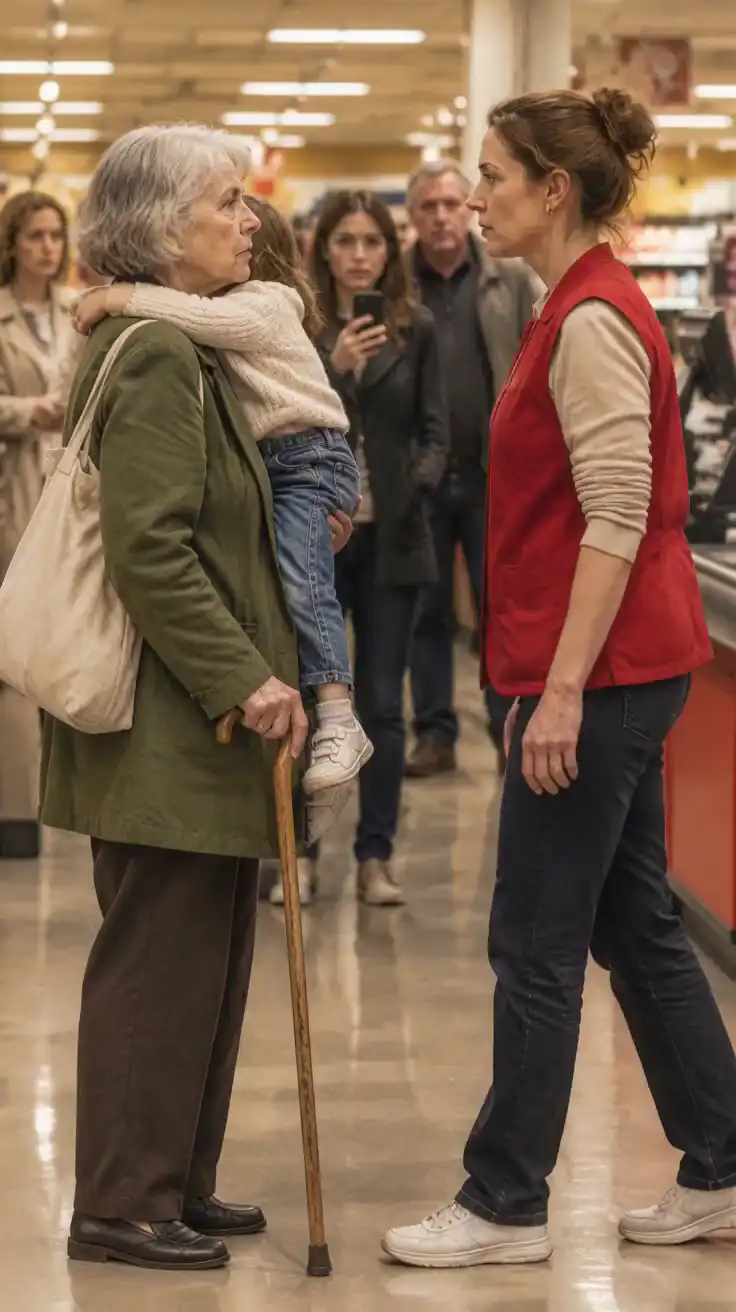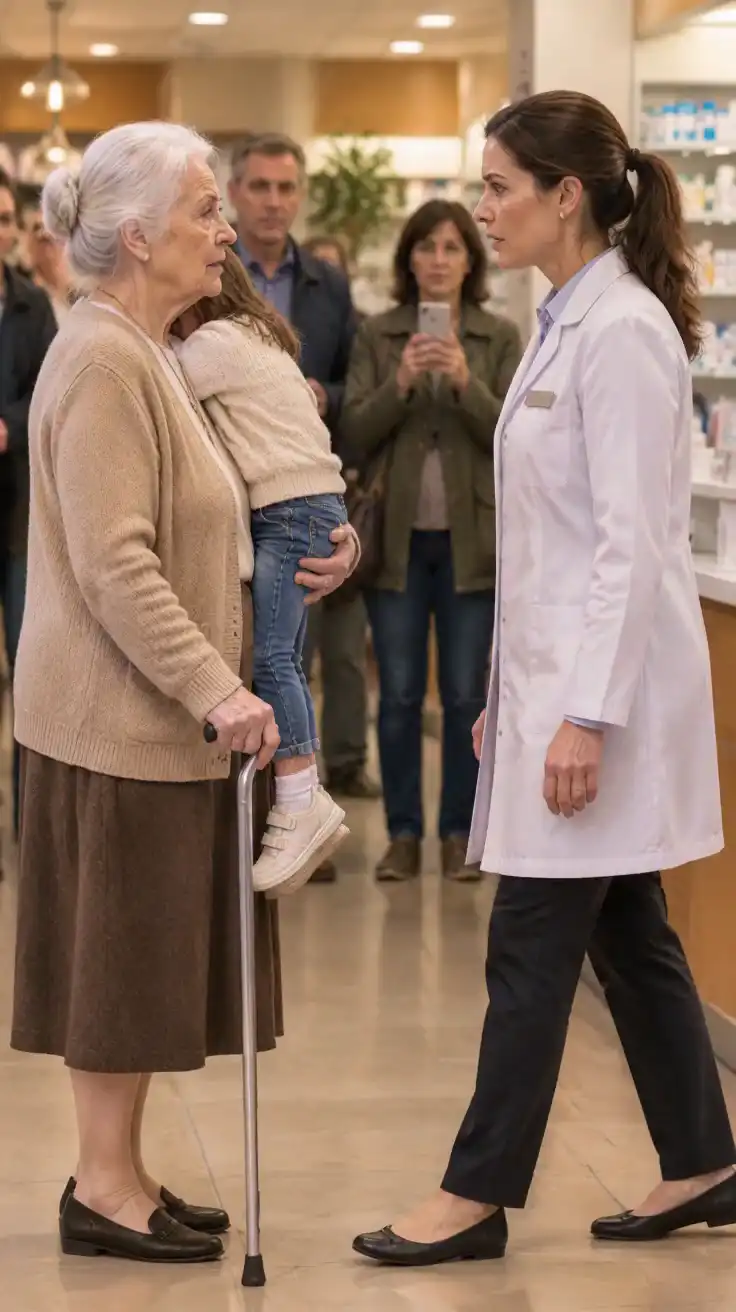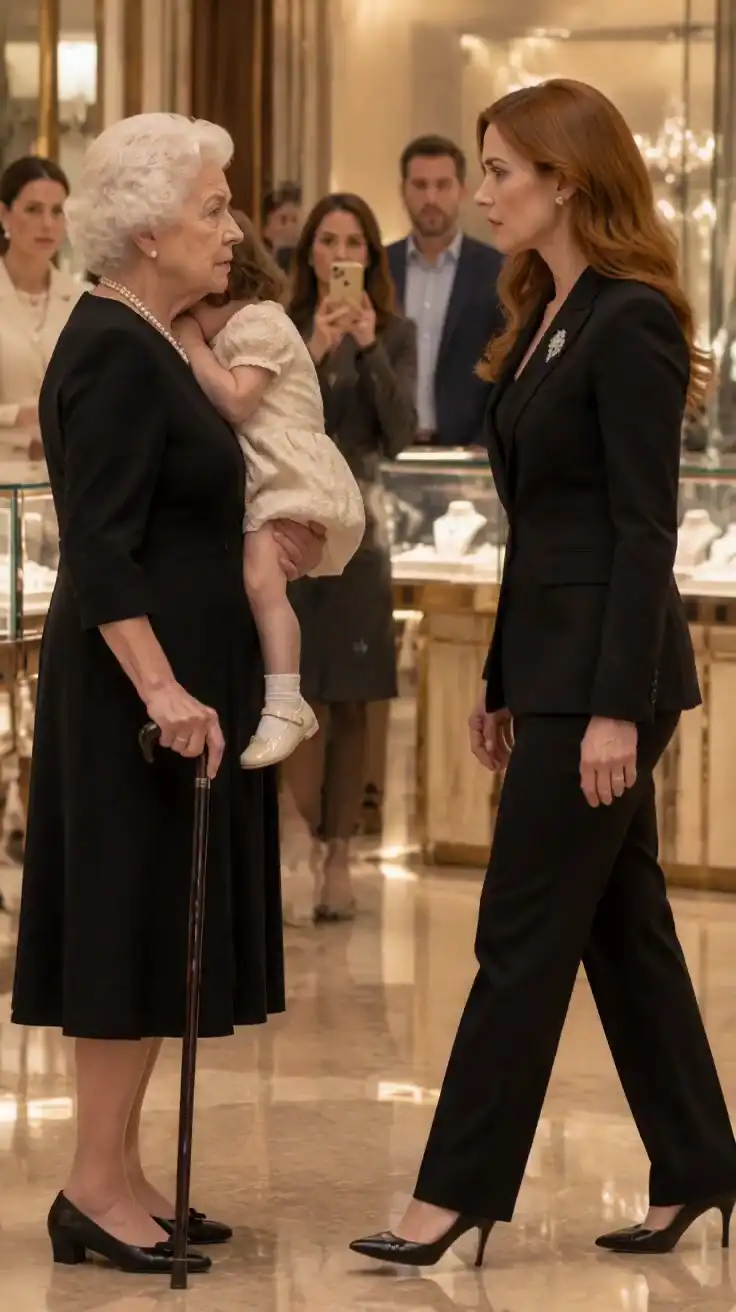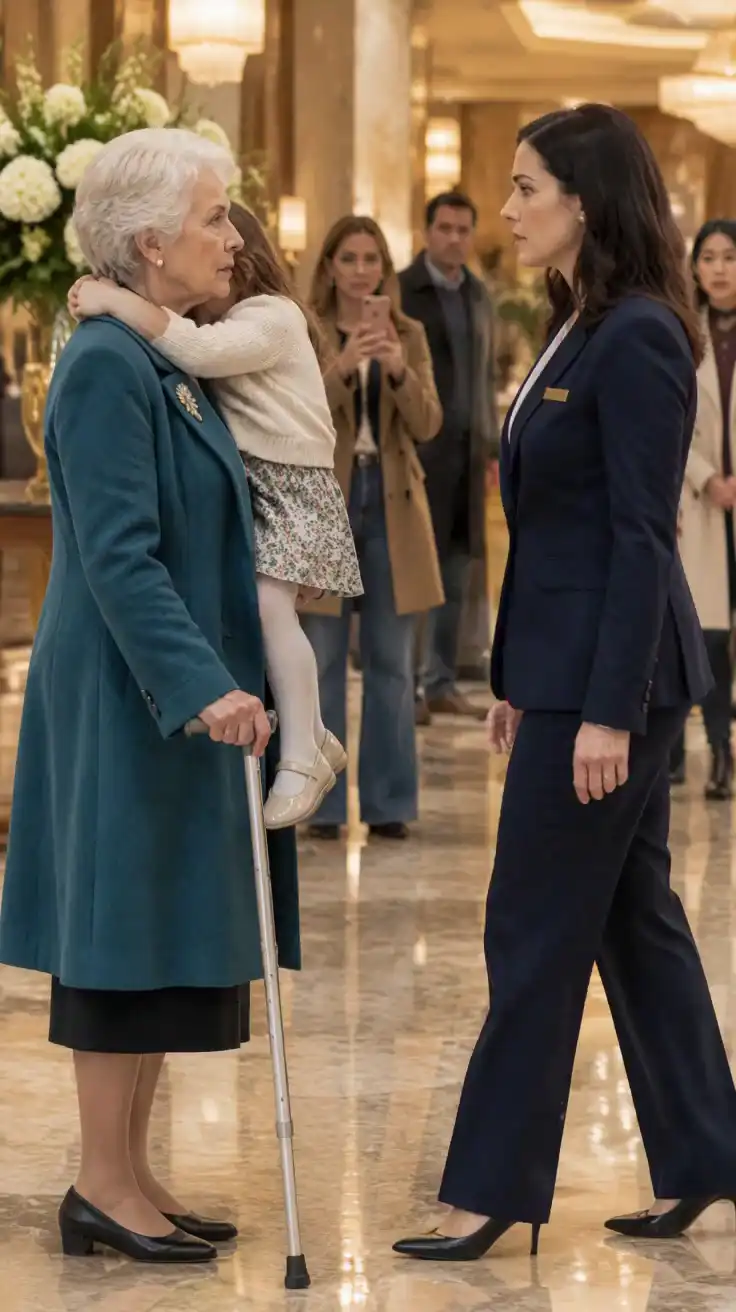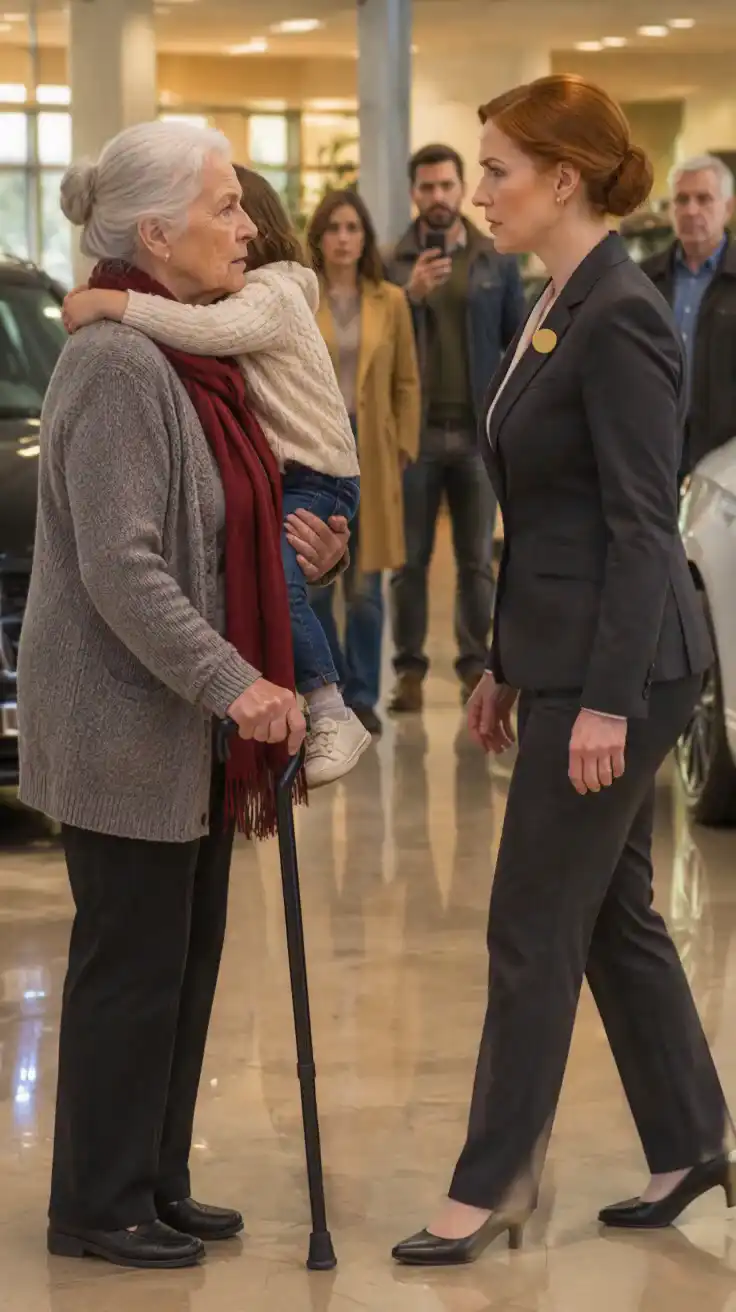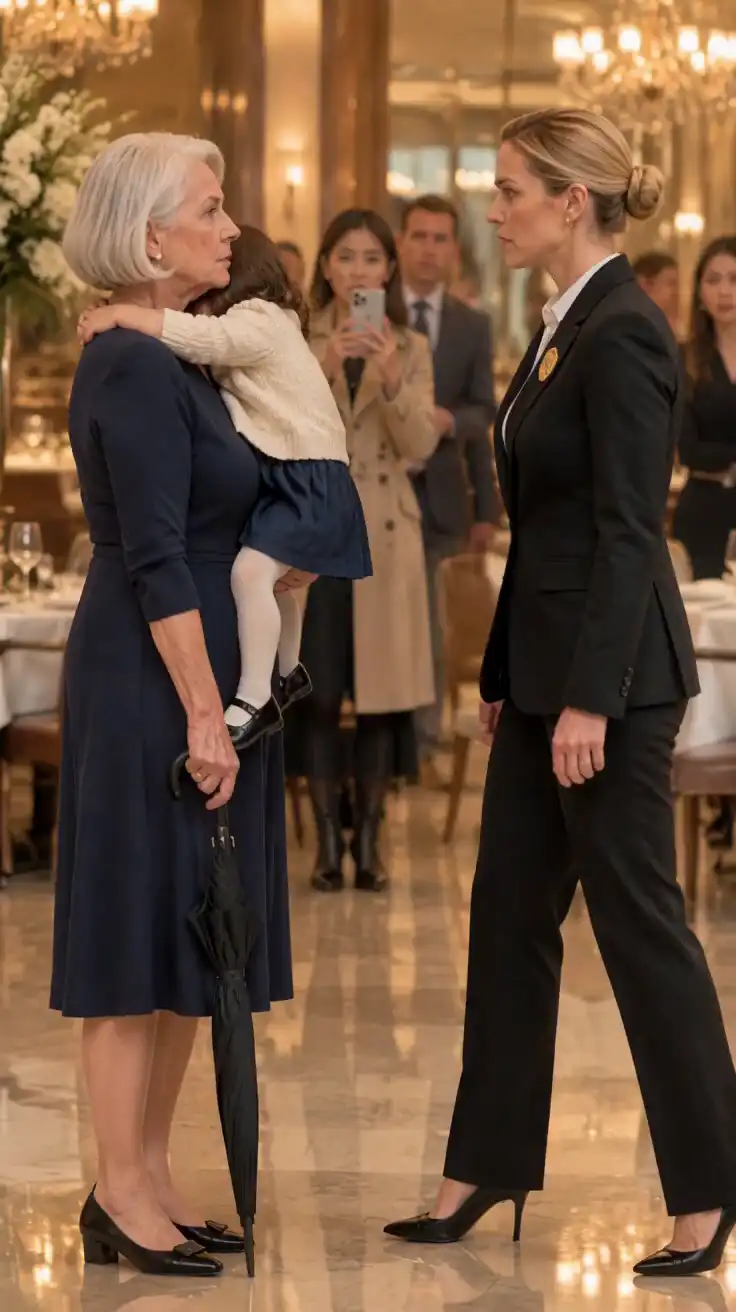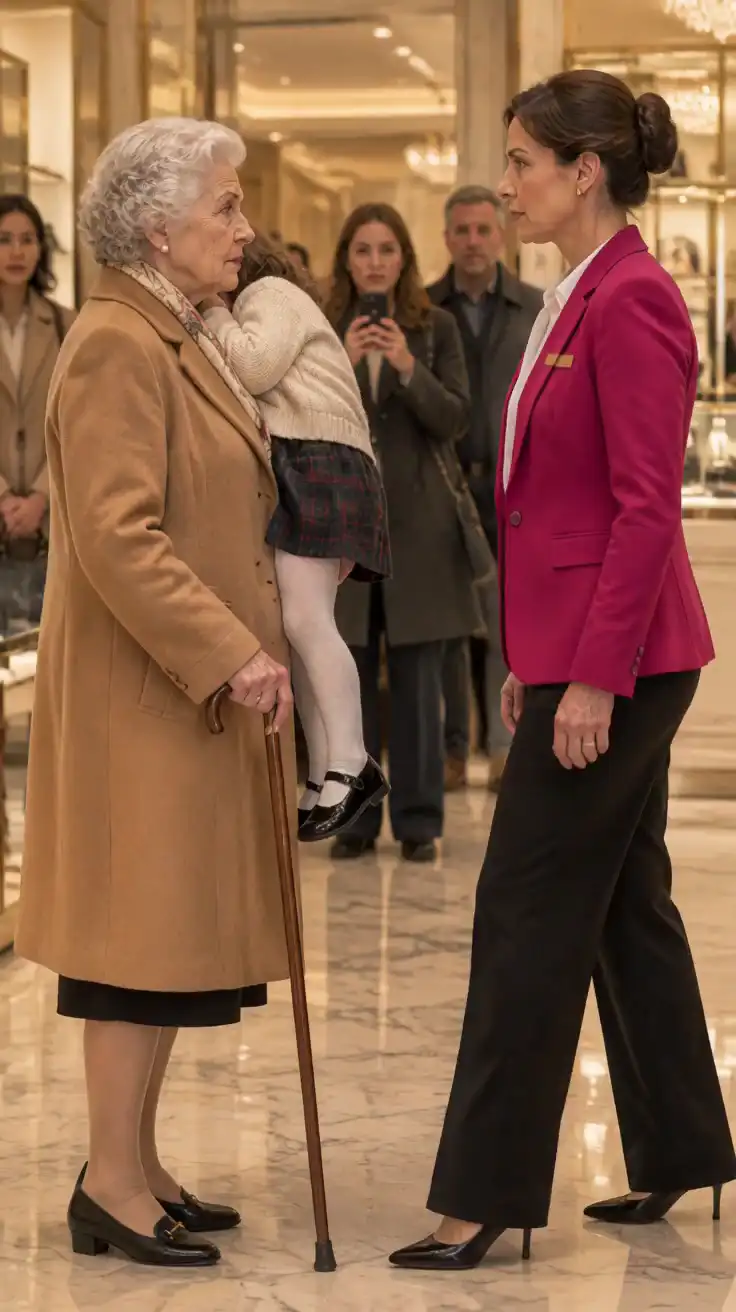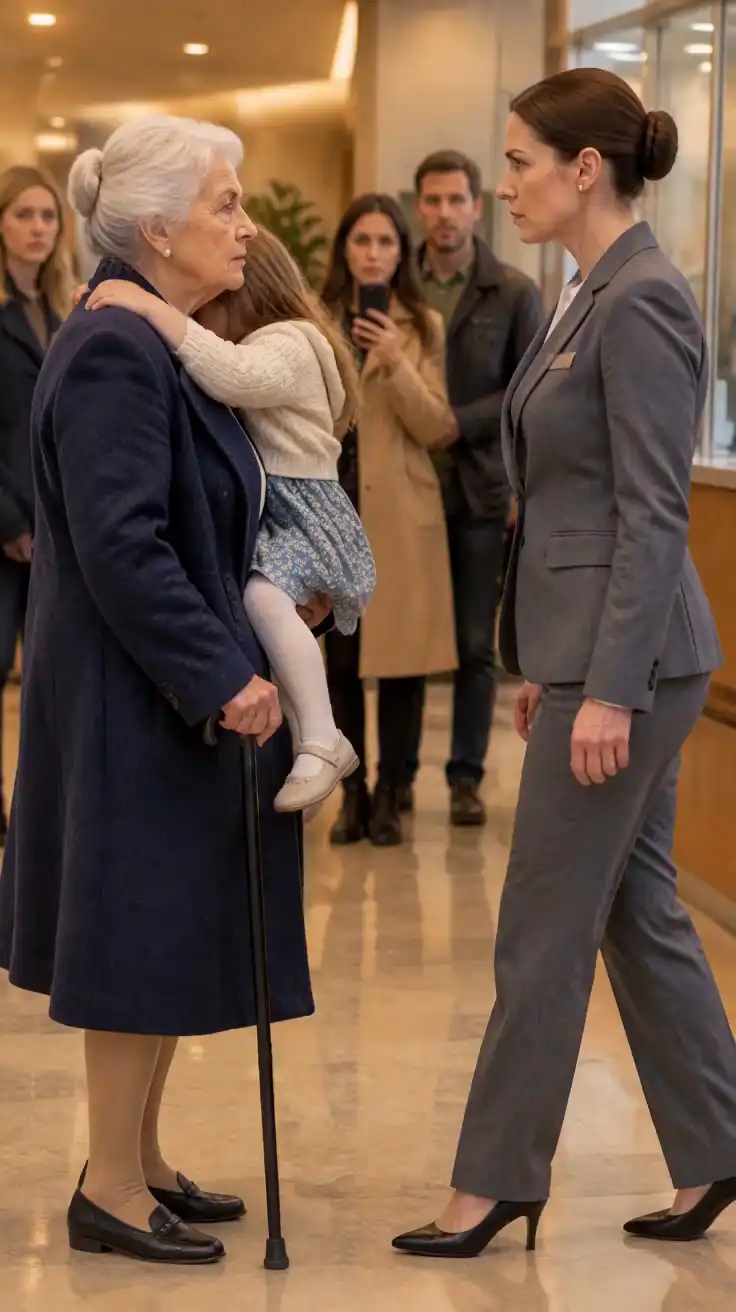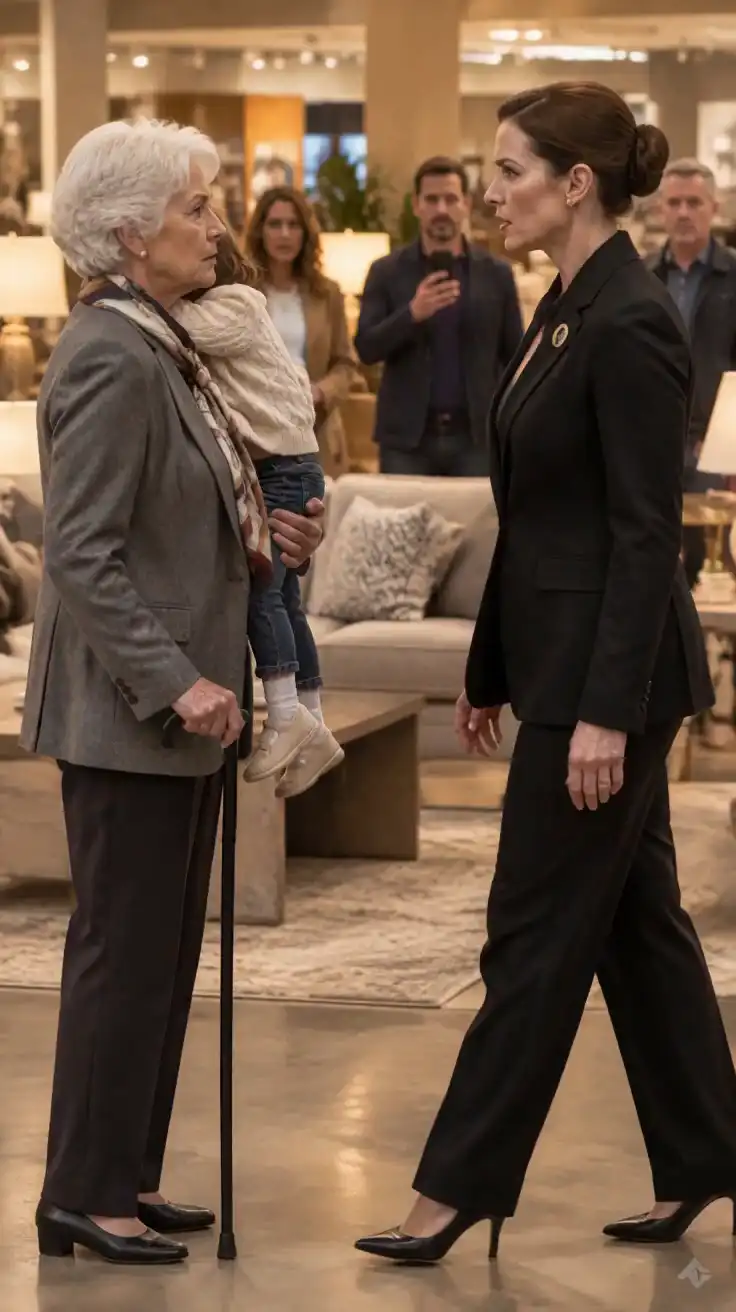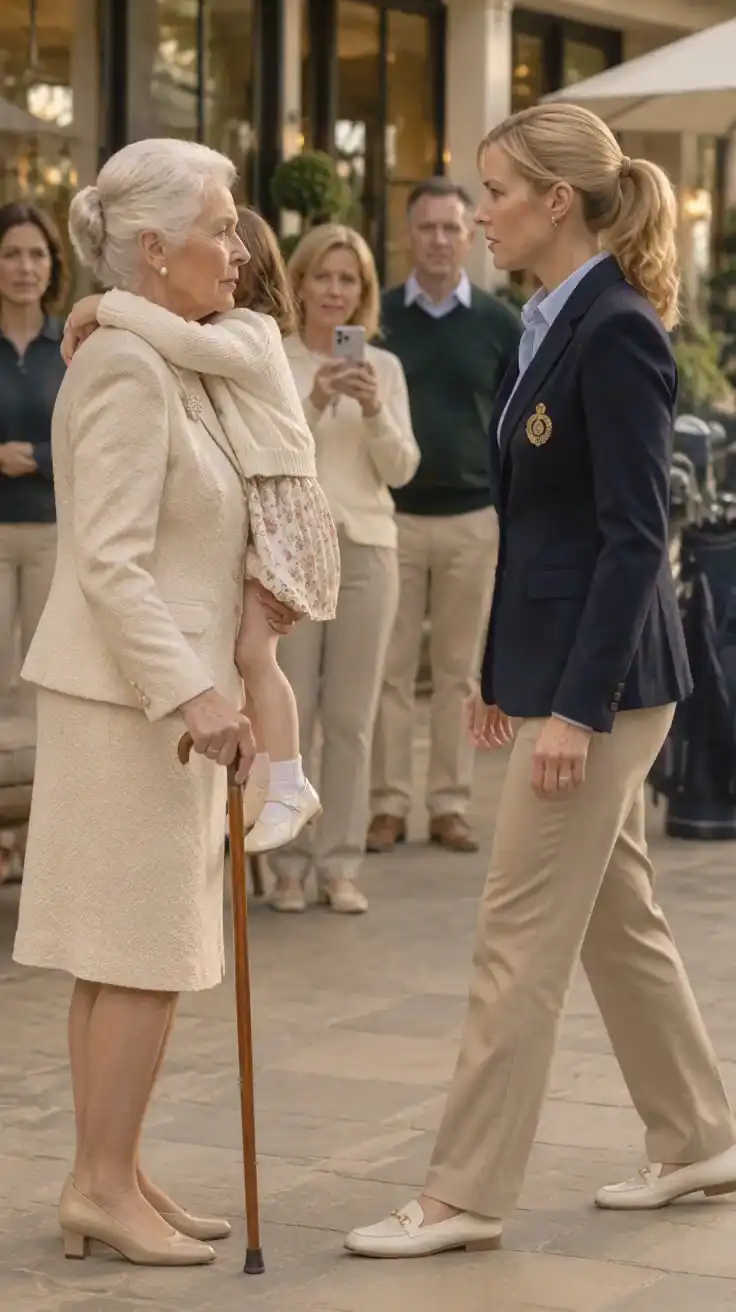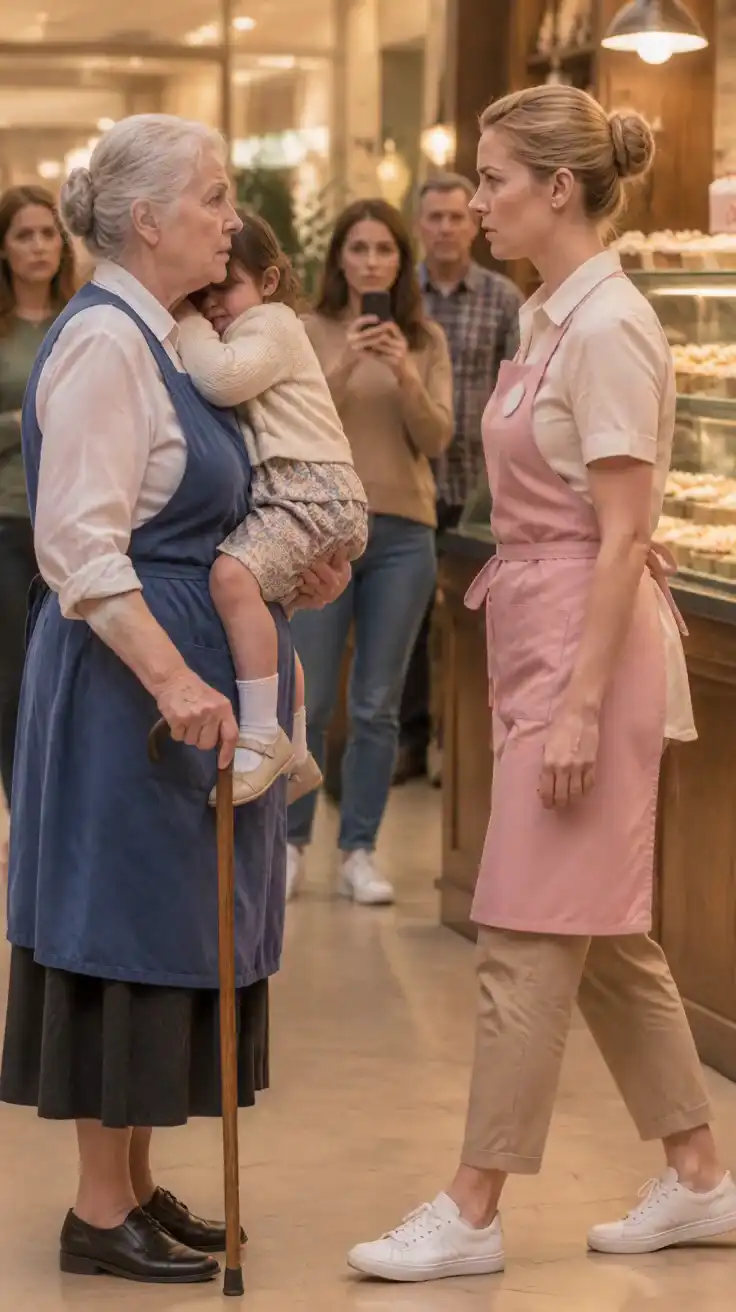
The rare-book room manager slapped me, and the guard ordered me out. My husband’s signature was inside the first edition I’d asked to see; I pulled out my phone and made the call.
Heat spread across my cheek. I pressed my fingertips against it and tasted something metallic at the corner of my mouth.
The security guard took hold of my elbow. “Ma’am, I need you to come with me.”
Beyond his shoulder, the rare-book room stood open. The first edition I had asked to see lay on the counter, its cloth cover faded along the spine. My husband’s signature was inside. I had not touched it.
The manager slid the book away from me. “She was leaning over the case,” he told the guard. “I saw her looking for the latch.”
A woman near the register stopped turning the pages of a paperback. The cashier stared at the counter, one hand resting on the card reader.
I pulled my phone from my coat pocket. The guard loosened his grip long enough for me to make the call, though he stayed between me and the rare-book room.
My son answered on the second ring. I told him where I was.
“Put the manager on,” he said.
The manager took the phone, listened for a few seconds, then moved toward the front windows. “I’m protecting the inventory,” he said. “She could have walked straight out with it.”
His voice dropped. He glanced back at me, then at the customers gathering near the register. When he returned the phone, his jaw was tight.
“He’s coming,” he said. “You can wait outside.”
The guard opened the door. Cold air blew in, lifting the corner of a paper receipt from the counter. I stayed where I was, and after a moment the guard let the door swing shut.
My son arrived with his coat unbuttoned and crossed the shop without stopping. The manager met him at the rare-book room, still holding the first edition.
“Ask anyone here,” the manager said. “She had no appointment.”
My son held out his hand. The manager did not give him the book.
Instead, my son opened its cover and turned to the dedication page, while the manager’s fingers remained clamped around the edge.
THE BOOK THAT KNEW MY HUSBAND
Paul pressed the dedication page flat beneath the manager’s hand.
“There,” he said. “The author gave this copy to my father.”
The manager looked down. His fingers loosened from the edge of the cover, but he did not let go.
The author had written my husband’s name above his own signature. Underneath was a short dedication thanking him for putting the book into readers’ hands when no one else in town would stock it.
“That’s my husband,” I said. “I’m his widow.”
The manager glanced at me, then back at the page.
Paul eased the book out of his hands and set it on the counter. “My mother and father opened this store together. She inherited it when he died. I run it for her.”
The manager drew his hands away as though the cloth cover had become hot.
“I didn’t know who she was,” he said.
“You could have asked,” Paul said.
“I did ask what she wanted.”
“I told you,” I said. “I wanted to see this book.”
The manager opened his mouth, then closed it. The cashier came around the end of the counter with a box of tissues and held it out to me. I took one and pressed it to the corner of my mouth.
Paul saw the tissue. He looked at my cheek, then turned toward the manager.
“Did you hit her?”
The cashier stopped beside me. The guard remained by the front door, his hands clasped in front of him.
The manager said, “There was a misunderstanding.”
“That wasn’t my question,” Paul said.
For a moment, I could hear the hum of the lights over the register. The woman with the paperback had put it down. Two customers near the history shelves had turned toward us.
“Yes,” the manager said. “I slapped her.”
Paul put one hand on the counter. “Why?”
“She was reaching toward the case.”
“I was pointing,” I said. “You asked which book.”
“She was right against the glass,” he said to Paul.
The guard shifted his weight. “I didn’t see what happened at the case. I came over after.”
Paul looked at him. “Did you put your hands on my mother?”
“I took her elbow.”
“He let go when I got my phone out,” I said.
The guard nodded once, but he didn’t look relieved.
Paul turned back to the manager. “Step away from the book.”
“I’m already away from it.”
“Then step away from the counter.”
The manager moved back. Paul picked up the tissue box and set it closer to me.
“Can you sit down, Mom?”
“I can stand.”
“I know you can. Would you sit anyway?”
The cashier pulled a chair from behind the register. I sat, mostly because my knees had begun to feel unsteady and I did not want to discover what would happen if they gave way in front of everyone.
Paul crouched beside me. “Do you need a doctor?”
“I don’t think so.”
“Your lip is bleeding.”
“It’s a little cut.” I lowered the tissue to show him. “See?”
He looked, then stood. “I’m getting you some ice.”
The cashier said, “There’s a cold pack in the staff freezer. I’ll bring it.”
As she went through the swinging door, the manager took a step toward Paul.
“Can we discuss this in your office?” he asked.
“Not yet.”
“There are customers listening.”
“Yes,” Paul said. “There are.”
The manager looked toward the woman by the register. She folded her arms around her purse.
“I thought she was trying to get into the case,” he said. “We’ve had losses.”
“Did you see her open it?” Paul asked.
“No, but—”
“Did you see her touch the book before you took it out?”
“No.”
“Did she threaten you?”
“No.”
The manager rubbed his thumb across the heel of his other hand. “I made a mistake.”
Paul looked at my cheek again. “You made several.”
The cashier returned with the cold pack wrapped in a clean dish towel. She handed it to me, then stayed at the counter rather than going back behind it.
“What’s your name?” I asked her.
“Lena.”
“Thank you, Lena.”
She gave a small nod. Her eyes were fixed on the book.
The manager noticed. “You were there,” he said to her. “You saw how close she was to the case.”
Lena glanced at Paul before she answered.
“I saw her point,” she said. “I heard her ask to see the book.”
“You were at the register.”
“I could hear you.”
The manager’s face tightened. “You didn’t see everything.”
“No,” Lena said. “I didn’t.”
Paul reached for the book, then stopped. “Mom, may I?”
I nodded. He turned the page slowly, keeping the cover supported on the counter. My husband’s signature was on the title page, where I remembered it, written in a hand that had grown shakier in his last years. He had signed it for our granddaughter one afternoon when she was still small enough to stand on a stool beside him.
The manager leaned forward. “That signature isn’t the author’s.”
“No,” I said. “It’s my husband’s.”
“Why would he sign someone else’s book?”
“Because our granddaughter asked him to,” I said. “She wanted his name in the one the author gave him.”
Paul smiled, but it disappeared when he looked at my face.
The manager said, “The catalog lists it as a signed first edition.”
“It is,” Paul said. “Signed by the author on the dedication page.”
“That isn’t in the description I was given.”
“Which description?”
“The inventory record.” The manager pointed toward the computer in the rare-book room. “It says first edition, signed, provenance unconfirmed.”
I looked at Paul. He frowned.
“That’s what it says now?” he asked.
The manager nodded. “I assumed the second signature was a previous owner’s. There was no file attached.”
“There should be,” Paul said.
“I checked.”
“When?”
“When I took over the room.”
“And you didn’t ask anyone about it?”
“I asked the previous manager before she left. She said a number of the older records hadn’t been fully converted.”
“Did you ask my mother?”
The manager looked at me. “I didn’t know she had anything to do with the store.”
I held the cold pack against my cheek. “How long have you worked here?”
“Fourteen months.”
“And you never wondered who opened it?”
“I know it’s a family business.”
“Whose family?”
He looked at Paul. “Yours.”
“And his father’s,” I said. “And mine.”
The manager glanced past me toward the front of the shop, where the old photograph hung beside the entrance. It showed my husband on a ladder, fixing the first shelf to the wall. I was below him, holding the other end of the plank and squinting into the sun.
“You pass that picture every day,” I said.
“I thought it was historical decoration.”
“It is historical. It’s also us.”
Paul went into the rare-book room and woke the computer. The manager started after him.
“Stay here,” Paul said.
“I can show you the record.”
“I know how to find it.”
The manager stopped in the doorway. I watched Paul type, then turn the monitor so I could see it from my chair. The record was brief. It listed the edition, the condition, the author’s signature and the uncertain provenance. There was no mention of my husband or the dedication.
“That was not the old entry,” I said.
Paul clicked through another screen. “The old database was archived when we changed systems.”
The manager said, “I was told to use the new one.”
“Who told you not to check the archive?”
“No one. I didn’t have access.”
“You could have asked me for it.”
“I had more than four thousand records to review.”
“And this was one of the books you put in a locked case.”
“It was valuable.”
I lowered the cold pack. “You knew enough to lock it up, but not enough to ask where it came from.”
The manager looked at the book again. “I followed the information I had.”
Paul returned to the counter. “The information you had didn’t tell you to hit anyone.”
The manager’s shoulders lifted. “I understand that now.”
The woman by the register made a sound in her throat. He turned toward her.
“I’m sorry,” he said.
She stared at him. “Why are you apologizing to me?”
He looked at me, but before he could speak, I lifted my hand.
“Not yet,” I said.
Paul gave me a quick look. I knew what he was thinking. He wanted to take me upstairs, close a door, and make every decision himself. He had done it when his father was sick, carrying bills and medicine and meals up and down the stairs until I had to tell him I could still butter my own toast.
“I want the ledger,” I said.
His expression changed. “The one from the first year?”
“It’s in the cabinet in your father’s office. Bottom shelf, behind the blue binders.”
The manager shook his head. “We don’t need an old ledger to establish that the book belongs to the store.”
“We need it because you said there was no file,” I replied. “There is one. You just didn’t know where it was.”
Paul glanced at the customers, then at Lena. “Can you mind the register?”
“Of course.”
“To be clear,” he added, looking at the manager, “you are not to handle the book.”
The manager’s mouth tightened. “I understand.”
Paul went upstairs. His footsteps were quick on the wooden treads. The guard stepped away from the front door to let a couple leave, then came back and stood several feet from me.
“Ma’am,” he said, “I should have asked what was going on before I took your arm.”
“You should have.”
“I was told a customer was trying to steal.”
“Did you see me take anything?”
“No.”
He looked toward the manager. “I’m sorry.”
I studied his face. His hands were open now, not clasped in front of him.
“Thank you for saying it,” I told him. “Next time, ask the person what happened before you put your hands on them.”
He nodded. “I will.”
The manager made a short, impatient movement with his head. “We have procedures for suspected theft.”
Lena turned to him. “Do they say to slap someone?”
“That is not what I said.”
“You keep talking about procedures,” she replied. “I’m asking which one covers that.”
He stared at her. Lena put the tissue box under the counter, then lifted it back out and set it beside me again. The manager looked away.
The woman with the paperback came closer.
“I saw it,” she said to Paul’s empty place at the counter, then corrected herself and looked at me. “I saw him hit you.”
“I know,” I said.
“I was standing right here. If you need someone to say so later, I will.”
The manager said, “There’s no need to make a scene.”
She looked at my cheek. “I didn’t make it.”
He took his phone from his pocket. “I’m going to call someone.”
Paul came down the stairs carrying the ledger under one arm and a thin folder in his other hand.
“Who?” he asked.
“My wife.”
“You can call her from the staff room. Leave your store keys on the counter first.”
The manager did not move. “Are you suspending me?”
“I’m telling you to leave your keys on the counter.”
“I haven’t had a chance to explain.”
“You’ve been explaining since I got here.”
Paul put the ledger down beside the book. Its cover had softened at the corners from years of being pulled in and out of the cabinet. My husband had wrapped the spine in clear tape, though the tape had yellowed and curled.
The manager looked at it. “That thing is an inventory record?”
“It was before we had a computer,” I said.
Paul set the folder next to it. “This was with it.”
I recognized the folder by the blue thread I had tied around it. The knot had come loose. I reached for it, but Paul put his hand over mine.
“Let me open it,” he said.
“I tied it. I know how.”
He took his hand away. I slipped the thread free and opened the folder. Inside were a few papers my husband had kept with the ledger: correspondence about the book, an old photograph from the author’s visit, and a note in my husband’s hand about where he had put the copy after the event.
The manager looked at the photograph. My husband stood behind a table piled with books. The author sat beside him, pen poised, while I leaned over the table to hand him another copy.
“That’s the author,” Lena said.
“Yes,” I told her. “He came on a Saturday. We didn’t have enough chairs, so my husband borrowed some from the diner next door.”
Paul opened the ledger. “Where should I look?”
“Near the back. We entered the gift after the signing.”
He turned the pages carefully. Some held columns of numbers; others had notes squeezed into the margins. My husband had kept track of everything, from books ordered to repairs on the front window.
“There,” I said.
Paul stopped at the page. He ran his finger down it, then read aloud the date, the title and the author’s name. The entry recorded the copy as a gift to my husband after the signing, not a purchase for stock.
The woman by the register came closer. Another customer set down a stack of books and joined her.
Paul continued, reading my husband’s note that the copy was to stay with the store’s collection. Beside it, in my own handwriting, was the date we had moved it into the locked case.
“I wrote that when we rearranged the room,” I said.
Lena leaned in. “So you’ve always known where it was.”
“Almost always. Your old manager moved it once while the shelves were being repaired. She told me where she’d put it.”
The manager gave a small laugh, but no one joined him.
Paul looked up. “What’s funny?”
“Nothing. I’m trying to understand why none of this was in the system.”
“You tell me,” Paul said. “You were responsible for the rare room.”
“I was responsible for the current inventory. I wasn’t given a box of family papers.”
“You were given access to the office if you needed something.”
“I was told not to reorganize it.”
“That’s not the same thing.”
The manager pointed to the screen. “The record was already incomplete when I got here. I didn’t delete the history.”
Paul looked at the computer again. “Maybe you didn’t. I’ll check.”
The manager seized on that. “Then you can’t blame me for not knowing.”
“I can blame you for what you did because you didn’t know.”
A man near the history shelves picked up his books and brought them to the register. Lena moved behind the counter to ring him up, but he stayed close enough to hear. The woman with the paperback had not moved.
I became aware of the number of faces turned toward us. A young couple stood near the stairs. Someone at the front window held a shopping bag against her coat. Nobody had raised a phone, but the shop had gone so quiet that every word carried.
I looked at the manager. “Did you ever read the dedication?”
He glanced at the open book. “Not closely.”
“Why not?”
“We don’t encourage unnecessary handling.”
“You took it out for me.”
“After you asked.”
“And before you hit me, you had it in your hands.”
“I was watching you.”
“You could have listened to me instead.”
He rubbed his forehead. “I thought you were trying to distract me.”
“By asking to see a book?”
“By asking questions while you stood beside the case.”
I turned to Lena. “Did I ask him to open it?”
“Yes,” she said. “You asked if he could bring the book to the counter.”
The manager folded his arms. “You don’t know what I saw.”
“I know what I heard,” Lena said.
The woman with the paperback said, “I heard it too.”
The manager looked at Paul. “Are we going to take statements from everyone who walked in today?”
“If they have something to say about what happened, yes.”
“You’re treating me like a criminal.”
Paul did not raise his voice. “I’m treating this like a man employed in my store hit a customer.”
“Your mother.”
“A customer,” Paul repeated. “That would be true whether she was my mother or not.”
The guard looked down at his shoes.
I rested the cold pack in my lap. The towel was damp now, and the cold had dulled the ache in my cheek.
“Paul,” I said, “ask him about the old manager.”
The manager turned toward me. “What about her?”
“She knew the book. Did you ask her why it was in the case?”
“I told you I asked about the records.”
“That’s not the same question.”
He hesitated. “She said some items had been kept for sentimental reasons. She didn’t have time to go through every one.”
“What did you say?”
“I said we needed a consistent valuation.”
“And then?”
“I reviewed what I could. The copy was valuable, so it stayed in the case.”
“Did you put the provenance down as unconfirmed?”
“Yes. Because it was.”
“To you,” I said.
He stared at me.
Paul turned the monitor back toward himself. “Did you remove the note from the old catalog?”
“I didn’t have access to the old catalog.”
“You just said you reviewed the record.”
“The new record.”
Paul clicked again. “There’s an import history.”
The manager shifted closer. “That doesn’t prove what was in the old database.”
“No,” Paul said. “It tells me who made changes after the import.”
I saw him read the screen. He did not speak for a moment.
“What is it?” I asked.
“The imported record included a note to check the paper file.” He looked at the manager. “You removed that note.”
The manager’s arms unfolded. “I cleared hundreds of temporary notes. They weren’t intended for the public catalog.”
“This wasn’t a public-facing note.”
“I didn’t know that.”
“You were trained on the system.”
“I was shown the basics.”
Lena stopped tapping the register. “I remember that one,” she said.
The manager turned sharply. “You weren’t working in the rare room.”
“No, but I helped with the inventory. You told me to flag records that had paper files. I asked where we should look for them.”
Paul said, “What did he tell you?”
Lena’s fingers rested on the counter. “He said the paper files were probably gone. He said to leave anything we couldn’t verify as unconfirmed.”
The manager shook his head. “I said some of them might be gone.”
“You said there was no point going through the office.”
“Because I was told not to disturb it.”
I looked at Paul. “Who told him that?”
“I did,” Paul said. “I told him not to throw anything away or move the filing cabinets while we were clearing Dad’s desk.”
The manager spread his hands. “There you are.”
Paul’s jaw moved. “I didn’t tell you not to ask me for a file.”
“You were rarely here during the transition.”
“I was here every week.”
“You were busy.”
“Yes,” Paul said. “I was. You still could have asked.”
I watched my son close the record without changing it. He had taken over the day-to-day running of the store after his father died. There had been months when he was trying to learn every supplier’s name, settle bills and keep the staff paid. I had stayed away more than I meant to; the sight of my husband’s empty chair in the office had been enough to send me back down the stairs.
“I should have come in and helped with the records,” I said.
Paul turned. “Mom, that’s not—”
“I’m not taking responsibility for his hand.” I looked at the manager. “But I knew there were papers upstairs. I could have made sure you knew too.”
The manager’s face eased, just a little.
Then I said, “And once you saw that note, you could have asked. You chose to erase it instead.”
His face tightened again.
The phone behind the register rang. Lena glanced at Paul.
“Answer it,” he said.
She picked up the receiver. “Good afternoon.”
She listened, then covered the mouthpiece. “It’s the shopkeepers’ association. They’re asking for you.”
The manager lifted his head. “Why are they calling?”
Lena uncovered the phone. “One moment, please.”
Paul took it. “This is Paul.”
The woman with the paperback stepped back to give him room. I could hear a voice through the receiver, too faint to make out the words.
“Yes,” Paul said. “It happened here.”
He listened again.
“My mother is with me. She’s sitting down.”
The manager reached for his own phone, then put it back in his pocket.
Paul said, “Who contacted you?”
Another pause.
“All right. Thank you for checking. We’re handling it.”
He glanced toward me. “No, she hasn’t seen a doctor yet. I’ve asked her.”
I held out my hand for the receiver. Paul gave it to me.
“This is Evelyn,” I said.
The association’s chair, Ruth, had run the stationery shop two blocks away for longer than I had known her. Her voice came through sharp and familiar.
“Are you all right?” she asked.
“My cheek hurts. My mouth’s a little cut.”
“Do you want me to come over?”
“No. We have enough people standing around.”
“I heard from the woman who went into the florist. She said a manager hit an older customer. Then she said Paul had come in, and I thought it might be you.”
“It was.”
Ruth was quiet for a beat. “I’m sorry, Evelyn.”
“Thank you.”
“Do you want help finding someone to cover the desk? Or do you need me to call your daughter?”
“My daughter lives three states away. Please don’t alarm her before I’ve spoken to her.”
“I won’t. What can I do?”
I looked at Lena, who was watching the manager and trying not to make it obvious.
“Would you ask the association to send us the contact information for the security company? Paul will want to speak to them.”
“I can do that.”
“And Ruth?”
“Yes?”
“Please tell whoever called you that Paul is here and I’m being looked after. I don’t want the story growing legs before we’ve even finished standing in the shop.”
She gave a short breath that might have been a laugh. “I can promise to tell them. I can’t promise about the legs.”
“That’s fair.”
I handed the phone back to Paul. He thanked her, listened to something else she said and hung up.
The manager said, “So now the association knows.”
“Someone who saw what happened told them,” Paul replied.
“They have no authority over this store.”
“No,” I said. “They’re our neighbors. One of them called to ask if I needed help.”
The manager looked at the customers again. The woman with the paperback met his eyes.
“I went into the florist,” she said. “I wanted someone to call for help, and I didn’t know who else to ask.”
“You could have called the police,” he said.
“I could have. Your guard was here, and he was trying to send her outside. I wasn’t sure who was going to listen.”
The guard’s face reddened. “I should have listened.”
She nodded at him. “You should have.”
Paul closed the ledger halfway, leaving his finger at the page. “Mom, I’d like to take you to urgent care.”
“In a few minutes.”
“You said that about the ice.”
“And I accepted the ice.”
He looked at the tissue in my hand. I folded it over the clean side.
“First,” I said, “I want to know why he’s still standing here with the keys.”
The manager’s hand went to his belt. “Paul, we need to have a private conversation.”
“You’ve had chances to explain,” Paul said.
“I want representation if this is going to be a disciplinary meeting.”
“You can speak to an adviser. You can also give me the keys now.”
The manager looked at the guard. “Are you going to let them do this?”
The guard blinked. “It’s his store.”
“I know whose store it is.”
“You didn’t a few minutes ago,” Lena said.
Paul held out his hand.
The manager unclipped a ring of keys and placed it on the counter. The metal struck the wood with a hard little sound. There was a separate key for the rare-room case, another for the office, and the newer security fob Paul had installed the previous year.
“Is that all of them?” Paul asked.
“Yes.”
“Any copies?”
“No.”
Paul picked up the ring. “Your employment here is terminated.”
The manager stared at him. “You can’t make that decision in front of customers.”
“I just did.”
“After fourteen months, you’re firing me without a proper hearing?”
“After you hit a woman in my store and admitted it to me. Yes.”
The manager’s gaze moved to me. “I didn’t know she was your mother.”
Paul set the keys down again. “That doesn’t make it better.”
“I didn’t mean to hurt her.”
I touched the towel to my cheek. “You did.”
His mouth opened. This time, whatever he had prepared did not come out.
Paul pointed toward the staff room. “You can collect your personal things. Lena, would you go with him?”
Lena looked at the manager, then at Paul. “Yes.”
“I don’t need an escort,” the manager said.
“You’re getting one.”
He took two steps toward the swinging door, then stopped. “What about my pay?”
“You’ll receive everything you’re owed. I’ll send the details.”
“And my side of this?”
“You can write it down and send it to me. I’ll keep it with the other accounts.”
The manager looked as if he might argue again. Lena held the door open. After a moment, he went through.
The woman with the paperback let out a breath. “I hope I didn’t make things worse by calling.”
“You didn’t,” I said.
She picked up the book she had set aside. “I’ll leave my number.”
Paul found a notepad. “Thank you. I’ll also want to speak with you about what you saw, if you’re willing.”
“I am.”
The guard said, “I’ll give you my report too.”
Paul nodded. “And I’ll speak with your supervisor.”
“I understand.”
The guard moved toward the front door again, but he did not stand in front of it this time. When a customer came in, he held it open and stepped aside.
Paul lifted the first edition by its covers and placed it on a clean cloth. He looked at me before closing it.
“Do you still want to see it?”
I almost laughed. “That’s what I came for.”
He brought the cloth and book to the table beside my chair. I put the cold pack down and opened the cover myself.
The paper had the same faint, dry smell I remembered. My husband had always insisted that books did not need to be sniffed to be appreciated, though I had caught him doing it more than once.
I turned to his signature. There was a small uneven mark at the end where he had lifted the pen. Our granddaughter had complained about it at the time.
“He said the pen slipped because she bumped his elbow,” I told Paul.
“She said he blamed her because he couldn’t write straight.”
“She was right.”
Paul leaned over my shoulder. “He kept that pen in his shirt pocket for a week because she’d given it to him.”
“It leaked on his best shirt.”
“He said it was worth it.”
“He said that after I got the ink out.”
Paul put his hand on the back of my chair. His fingers closed around the wood.
“I should have made sure everyone knew you,” he said.
“I don’t need every employee to recognize me.”
“You shouldn’t have had to explain.”
“I don’t mind explaining.” I turned the page back to the author’s dedication. “I minded being hit before I could finish.”
Paul looked toward the staff room. The door was shut. Voices came through it, low and indistinct.
“I’ll change the training,” he said.
“Good.”
“And the records.”
“Also good.”
He crouched beside me again. “I’m sorry I wasn’t here.”
I set my hand over his. “You came when I called.”
“I should have been here more often before today. Lena knew there was a problem with the files.”
“You asked people to help you run a store. You didn’t ask them to stop asking questions.”
“I still need to hear them when they do.”
He looked toward the register. Lena came back through the swinging door, carrying a small cardboard box. The former manager followed with his coat over his arm.
He stopped beside the table. “Mrs. Bennett.”
I did not answer immediately. He looked at the book, not at me.
“I shouldn’t have hit you,” he said.
“No,” I said.
“I was afraid the book would be taken.”
“It was on the counter between us.”
“I thought—”
“You’ve told me what you thought.”
His grip tightened on his coat. “I’m sorry.”
I looked at the hand he had used. It hung at his side now, pale against the dark fabric.
“I heard you,” I said.
He waited, perhaps for something else. When I did not offer it, he took the box from Lena.
Paul opened the front door. The former manager walked out without another word. Paul watched him go, then came back and locked the staff-room cabinet with one of the keys from the ring.
Lena stayed by the counter. “I should have said something sooner,” she said.
“You did say something,” I replied.
“After he hit you.”
Paul said, “You can tell me exactly what you saw. You won’t lose your job for it.”
She swallowed. “I was afraid if I contradicted him, he’d send me home.”
I glanced at Paul. He pulled a chair out for her.
“Sit for a minute,” he said.
“There are customers.”
“The register can wait.”
The man with the stack of books lifted a hand. “I’m in no hurry.”
Lena sat. Paul took the notepad the woman had used and turned to a fresh sheet.
“Start wherever you need to,” he said.
Lena looked at me. “You came in and asked for the rare room. I told you the manager had the key. He came out, and you showed him which book you meant.”
She paused.
“Go on,” Paul said.
“You told him your husband had signed it. He asked if you had an appointment. You said no, but you knew the book and wanted to look at the signature.”
The woman with the paperback nodded from beside the register.
“He opened the case,” Lena continued. “He put the book on the counter. You leaned over to see it, and he moved it away.”
I could see her fingers twisting in her lap.
“I should have come around then,” she said.
“What happened next?” Paul asked.
“He said you were trying to get at the case. You said you weren’t. He walked around the counter and hit you.”
Paul’s pen stopped. He waited until Lena looked at him.
“Take your time.”
“He laughed. Then he called for the guard.”
The guard bowed his head.
Lena looked at him. “You came from the front.”
“I heard him call,” he said. “I didn’t see the slap.”
“I know. You took her arm, and he said she was trying to steal.”
The woman with the paperback said, “He also said she had no business in there.”
Lena nodded. “Yes.”
Paul wrote. I watched the pen move across the page. My husband used to take notes the same way, his head bent so close that his glasses slipped down his nose.
When Lena finished, Paul asked the guard for his account. The guard gave it standing up, without trying to soften the part where he had taken my arm. He said he had repeated what the manager told him and tried to move me outside. He said he had not seen me touch the case or the book.
The woman with the paperback added what she had seen. Paul asked for her name and number, then tore off the page with her contact information and folded it separately.
By the time he finished, the man with the stack of books had left cash on the counter and gone. The young couple had drifted back toward the shelves. The shop was beginning to make its usual sounds again: pages turning, a register opening, the bell over the door.
Paul put down his pen. “Now we’re going to urgent care.”
I looked at the open book.
“I’ll put it somewhere safe,” he said.
“Not back in the case yet.”
He waited.
“I want to finish looking at it.”
He glanced at my cheek. “Five minutes.”
“You sound like your father.”
“He was right occasionally.”
“Don’t let it go to your head.”
Lena smiled, then pressed her lips together as though she was not sure she should. I smiled back.
Paul brought another chair and sat beside me while I turned the pages. The author’s dedication was brief, but my husband had loved it. For years he had shown it to anyone who asked about the signing, careful to support the spine and never opening the book wider than it wanted to go.
I pointed to the line where the author thanked him for finding readers.
“He repeated that for weeks,” I said.
“Dad?”
“Yes. Every time someone bought the book, he said he was finding another reader.”
Paul leaned closer. “He never told me the author had written it first.”
“He probably forgot where he got it. Or decided it sounded better coming from him.”
Paul laughed, and this time it stayed on his face.
I turned to my husband’s signature again. Our granddaughter had been eight when she asked him to write it. She had come into the shop after school, carrying a notebook full of stories about a horse that lived in the apartment above the bakery. My husband had told her a horse could live anywhere in a story, provided she remembered to explain how it got up the stairs.
“She’ll want to know what happened,” Paul said.
“I’ll tell her.”
“She’s working until six.”
“I can wait.”
Paul stood. “Can we go now?”
I closed the book. “Now we can go.”
He carried it back into the rare room and laid it flat in the cabinet beneath the case, with the folder and ledger beside it. He locked the cabinet and gave the key to Lena.
“I’ll be back before closing,” he told her. “Don’t put anything back in the case yet.”
“I won’t.”
The guard held the door for us. I paused beside him.
“What’s your name?”
“Martin.”
“Martin, I meant what I said. Ask next time.”
“I will, Mrs. Bennett.”
Outside, Paul offered me his arm. I took it. The cold air touched my cheek, and I turned my face toward his coat.
At urgent care, a nurse cleaned the cut and asked how I had gotten it. I told her. She asked whether I wanted to report the assault. Paul looked at me, but he did not answer for me.
“Yes,” I said. “I do.”
The nurse gave me the information I needed and checked the swelling. There was no serious injury, she said, but she told me what to watch for and gave me a fresh cold pack.
In the waiting area afterward, Paul called the security company. I heard him ask for Martin’s supervisor, then explain what had happened without raising his voice. He requested the company’s report and asked that Martin receive further training before returning to the store.
When he hung up, he sat beside me.
“He told them he took your arm without checking,” Paul said.
“I heard him.”
“They’re taking him off the assignment while they review it.”
I nodded. I did not know whether Martin would come back. I hoped that if he did, he would remember the woman he had tried to move outside was a person before she was anyone’s mother.
Paul drove me home, but I kept my coat on when we reached the porch.
“I’m coming back with you,” I said.
“You need to rest.”
“I can rest at the table in the office.”
“Mom.”
“The book is still in a cabinet with a ledger that hasn’t been put away properly. And Lena is there alone.”
“She isn’t alone. There are two other employees on the afternoon shift.”
“Then there will be plenty of people to tell me to sit down.”
He looked at the house, then at me. “One hour.”
“You sound more like your father every minute.”
“And you sound like you.”
At the shop, Lena met us with a mug of tea. She had called in another employee to cover the register and moved the ledger and folder to the office table upstairs.
“I didn’t want anyone handling them downstairs,” she said.
“Thank you,” I told her.
Paul stopped at the foot of the stairs. “You don’t have to work on this today.”
“I want to.”
He carried my tea while I climbed. The office smelled of paper and the lemon polish my husband used on the desk. His chair was still there, though Paul had moved it to the side of the room and put a smaller one behind the desk.
Lena had laid out the ledger on a folded towel. The folder sat beside it, its blue thread carefully coiled.
“I found the old catalog backup,” she said. “Paul gave me access before you went out.”
Paul looked at her. “Were you able to open it?”
“Yes. The entry has more detail than the new one. It mentions the dedication and says the ledger and papers are in the office.”
“Can you print it?” he asked.
“I already did.”
She handed him a sheet. He read it, then passed it to me. My husband’s description was plain and practical. He had noted the author’s gift, the date of the signing, and the fact that the copy was part of the store’s history rather than ordinary stock.
“He wrote that last line after someone offered to buy it,” I said.
“Did he refuse?” Lena asked.
“He did. The man offered twice as much the next week.”
Paul smiled. “Dad probably enjoyed refusing him.”
“He enjoyed telling him he could buy another copy and read it.”
Lena looked at the printout. “The note to check the paper file must have come from this entry.”
Paul nodded. “The import shortened the description. Then the note was removed.”
He sat at the computer on the desk and brought up the current record. “I’m going to restore the information.”
“Not just from the old entry,” I said. “Use the ledger too.”
He pulled his chair closer to the table. “Will you help me?”
I opened the ledger to the page he had read downstairs. Lena set the printout beside it. Paul entered the date of the gift and the author’s dedication, then added the reference to the ledger and the folder.
“What about Dad’s signature?” he asked.
“Say it was added later for his granddaughter. Otherwise someone will mistake it for the author’s again.”
He typed, then turned the screen toward me. I read the record and pointed to one line.
“Change ‘former owner’ to ‘founder,’” I said.
Paul made the change.
“And your name?” Lena asked.
I looked at her.
“You were there,” she said. “You helped open the store. The old record only names your husband.”
Paul moved his hands away from the keyboard. “She’s right.”
“He kept the books,” I said.
“And you kept the shop running when he went to see suppliers,” Paul replied. “You told me that yourself.”
“I also made him lunch.”
“Do you want that in the catalog?”
“No.”
“Then tell me what you do want.”
I looked down at the photograph in the folder. My hand was reaching across the table toward the author, a stack of books braced against my hip. My husband was smiling at someone outside the frame.
“Put that we founded the store together,” I said.
Paul typed it in. He read the whole entry aloud, including the gift, the dedication, the later signature and where the supporting records were kept.
Lena said, “Anyone working in the room should be able to see that.”
“They will,” Paul said. “And I’ll make sure the archive is accessible to the people who need it.”
He printed a copy for the file. Lena slid it into a clear sleeve, then placed the photograph and correspondence back in the folder.
“What should we do with the ledger?” she asked.
“Return it to the cabinet after we make a proper copy,” I said. “Not squeezed behind those binders again.”
Paul looked at the old cover. “We can get a box made for it.”
“And label the box,” I said.
He raised both hands. “I will label the box.”
Downstairs, the afternoon employee called up to ask whether the rare room was open. Paul went to the landing.
“Not today,” he said. “Tell customers we’re updating the display.”
When he came back, he looked at the book, which Lena had brought upstairs in its cloth.
“Should we leave it out until tomorrow?” he asked.
“No,” I said. “Let’s put it where it belongs.”
We carried everything down together. Paul took the book. Lena brought the newly printed record. I carried the folder against my coat.
The rare room had emptied of customers. Paul unlocked the case and lifted the glass. The space where the book had sat was visible in the dust-free rectangle on the shelf.
Lena paused with the record in her hand. “I can make a small card for the case. Not all the file details, just enough to explain it.”
“Do that,” Paul said.
She went to the register and returned with a neat card giving the book’s provenance: a gift from the author to the store’s co-founder, with the later family signature noted. She showed it to me before placing it inside.
“That’s right,” I said.
Paul set the first edition back on its support. He adjusted the angle so the cover would not strain, then lowered the glass. The card stood beside it, facing the room.
For a moment, all three of us looked through the case.
“It ought to have been there before,” Paul said.
“It’s there now,” I replied.
Lena locked the case and handed the key to Paul. He took it off the old ring and placed it on a separate hook behind the counter.
“No one person keeps the history to themselves anymore,” he said.
Lena nodded. “I’ll show the others where the files are.”
“And if a record doesn’t make sense?”
“We ask.”
“Even if I’m busy.”
“Especially if you’re busy,” she said.
Paul gave her a tired smile. “All right. Especially then.”
By the time we closed, the swelling in my cheek had begun to settle. Paul drove me home and stayed while I called my granddaughter.
She answered on the third ring. “Grandma? Is everything okay?”
“Your father told you to expect a call, didn’t he?”
“He said you had a rough day and that I should hear it from you.”
“He’s learning.”
I told her what had happened. She interrupted twice, once to ask whether I was hurt badly and once to ask whether the manager was still employed. I answered both questions.
Then I told her about the book.
“He didn’t know Grandpa got it from the author?” she asked.
“No.”
“But it says so inside.”
“Yes.”
There was a pause. “Did you see Grandpa’s signature?”
“I did.”
“The one where I bumped his elbow?”
“You remember that?”
“I remember him blaming me.”
I could hear her moving around in her apartment. A cabinet door closed.
“I’m coming this weekend,” she said.
“You don’t have to.”
“I know. I want to.”
“Then come on Saturday. We’ll go to the store.”
“Will they let us see the book?”
“They will.”
She was quiet for a moment. “I used to think that room was a museum.”
“Your grandfather thought so too, whenever he wanted you to stop touching things.”
“I touched everything.”
“You did. You also put the books back where you found them. Usually.”
She laughed. I could hear a kettle beginning to whistle behind her.
“I’ll see you Saturday,” she said.
After I hung up, Paul was still at the kitchen table, sorting the notes he had brought home. He had made a separate pile for the witness accounts and another for the catalog paperwork.
“You don’t have to do that here,” I said.
“I know.”
I sat opposite him. “I’ve been meaning to talk to you about the store.”
He looked up. “If this is about selling it, don’t decide tonight.”
“It isn’t.”
He set down his pen.
“Your father and I always talked about leaving it to our granddaughter,” I said. “You knew that.”
“I did.”
“I put it in the estate papers after he died. The store goes to her.”
Paul leaned back. “You don’t have to reassure me. I’ve never wanted you to leave it to me.”
“I know. But I want her to understand what she’s getting, and I want you to know I’m telling her.”
He glanced at the papers on the table. “She’ll need to decide whether she wants to run it.”
“Of course. It will be hers to decide. You can keep managing it as long as the two of you agree.”
Paul nodded. “I’d like that.”
“I don’t want her to receive a set of keys and discover no one can tell her what’s in the cabinets.”
He looked at me, then at the pile of records.
“That’s fair,” he said.
“Will you show her the accounts?”
“All of them.”
“And the old files?”
“Even the ones behind the blue binders.”
“Especially those.”
He gathered the papers into a folder. “I’ll call her tomorrow and arrange a time.”
“Let me tell her first.”
“I thought you were going to wait until Saturday.”
“I am. You can wait too.”
He held up his hands again. “I can wait.”
On Saturday, my granddaughter arrived with a paper bag of pastries and insisted on carrying it into the shop herself. Paul was already there, checking a delivery with Lena.
My granddaughter hugged me carefully, keeping clear of my cheek.
“Does it still hurt?”
“Only when I forget and press on it.”
She studied my face. “I brought your favorite.”
She opened the bag to show me a pastry dusted with sugar. Paul reached for one and she pulled the bag away.
“I brought enough for you too,” she said. “But let Grandma choose first.”
Lena came around the counter. I introduced them, and my granddaughter thanked her for staying with me.
“I’m glad I was here,” Lena said. “Would you like to see the room?”
“We would,” I said.
Paul unlocked the case. The new card stood beside the first edition. My granddaughter bent close to read it, then looked at me.
“You put Grandpa’s name on it.”
“And mine,” I said.
“Good.”
Paul lifted the book out and laid it on the counter. My granddaughter waited until he had opened it before bringing her hands close.
“May I?” she asked.
“You may,” I said.
She turned to the dedication, then to her grandfather’s signature. Her finger hovered over the uneven mark at the end without touching it.
“He never admitted that was his fault.”
“He was saving that confession for a special occasion,” I said.
She smiled. Paul brought the ledger from the office and opened it beside the book, using the folded towel beneath its cover. My granddaughter looked from the old entry to the dedication and back again.
“He wrote all this down?”
“He wrote everything down,” Paul said. “Which is why we could fix the record.”
She looked at the shelves, the case and the open door to the shop. A customer called to Lena from the register, and Lena excused herself.
I took my granddaughter’s hand.
“There’s something else I want you to know,” I said. “The store is yours after I’m gone.”
She looked at me. “Grandma—”
“It’s already in the papers. You don’t have to decide today what you’ll do with it.”
She glanced at Paul. He nodded.
“I’ll keep running it while you learn whatever you want to learn,” he said. “And if you decide you want someone else to run it, we’ll talk about that.”
My granddaughter looked down at the ledger again. “I thought you’d leave it to Dad.”
“He has his work here,” I said. “Your grandfather and I wanted you to have the store. Your father knows.”
She touched the edge of the towel. “I don’t know enough.”
“Neither did I when we opened,” I said. “Your grandfather knew how to buy books. I knew how to count what we had left after he bought them.”
Paul laughed. “She’s leaving out quite a lot.”
“There will be time for you to tell her.”
My granddaughter slid her arm around me. I leaned against her for a moment, then pointed to the book.
“Before we close it, look at his signature once more.”
She did. Paul stood on the other side of the counter, one hand resting beside the ledger. Beyond the room, Lena was helping a customer find a novel, and the bell over the front door sounded as someone came in.
My granddaughter turned the page back to the dedication. Then she closed the book gently, supporting its cover with both hands.
Paul returned it to the case beside the card. My granddaughter watched him lock the glass, and when he held out the key, she took it.
“Just while I put the ledger away,” he said.
“I know,” she replied.
But she kept the key in her palm until he came back, and then she gave it to him with the same care she had given the book.