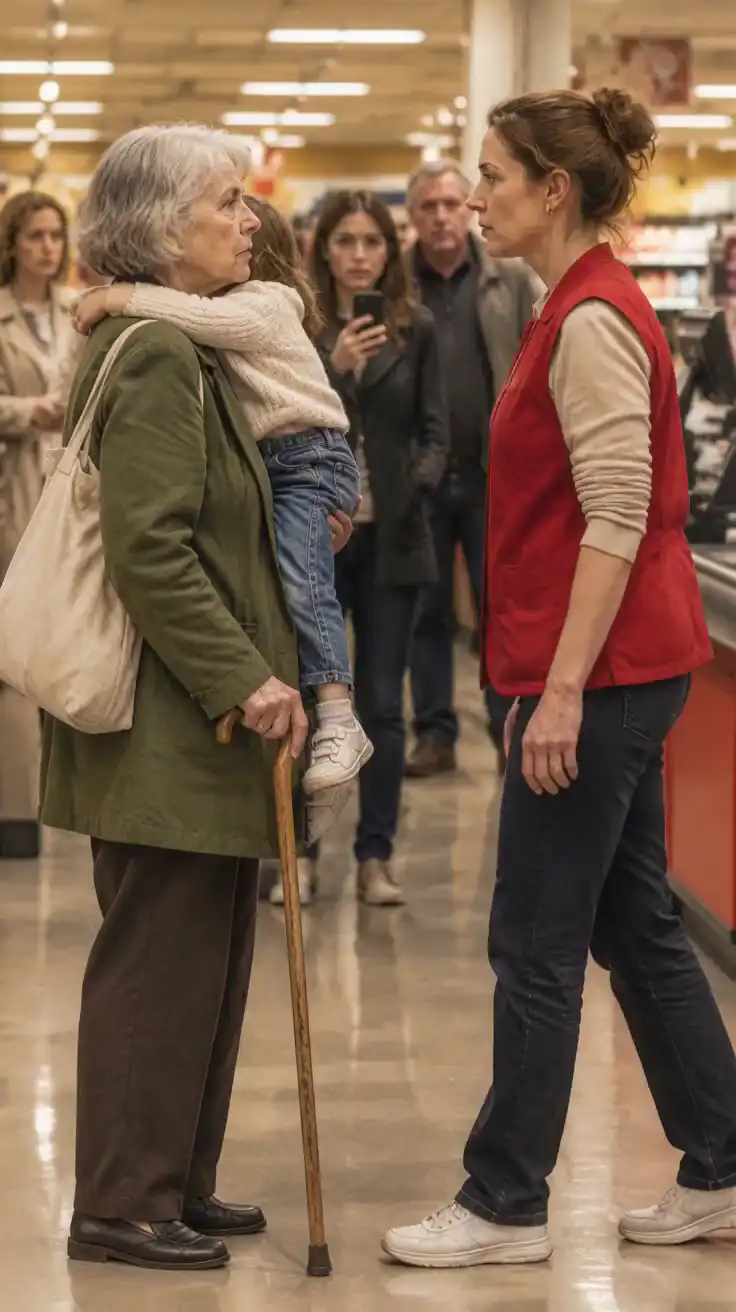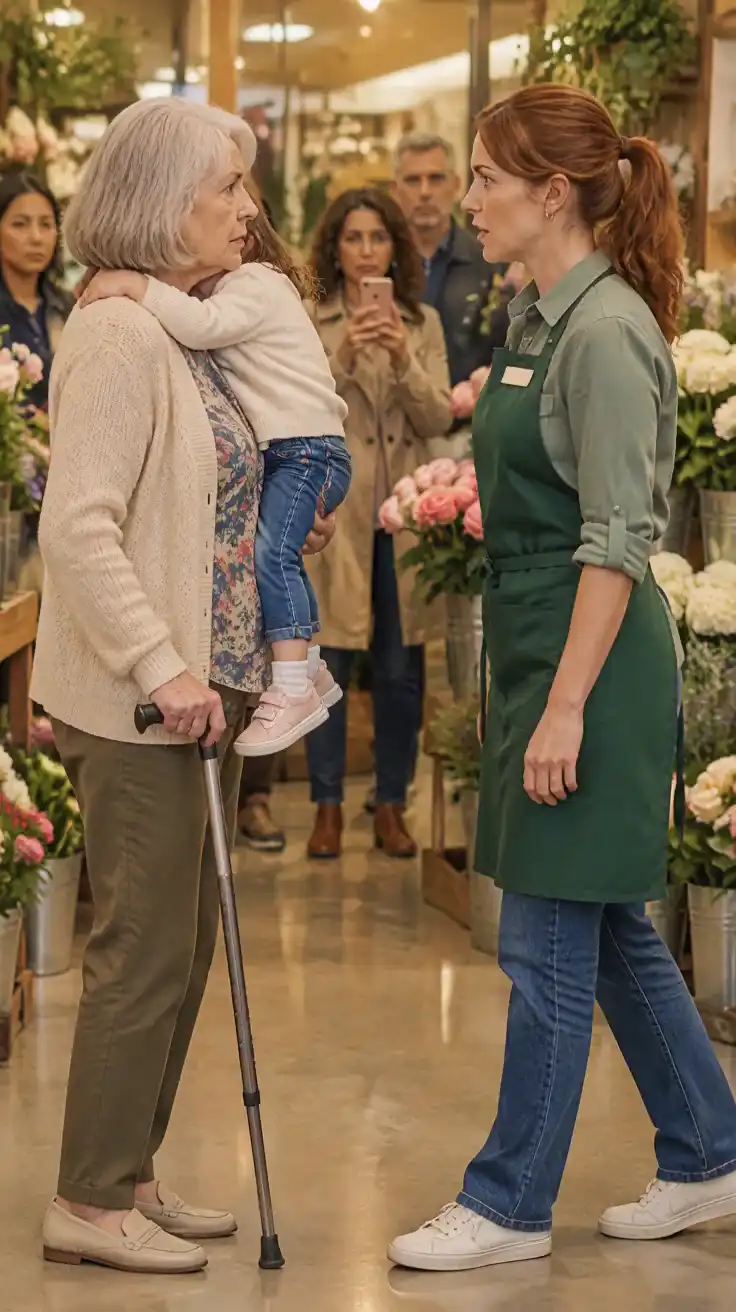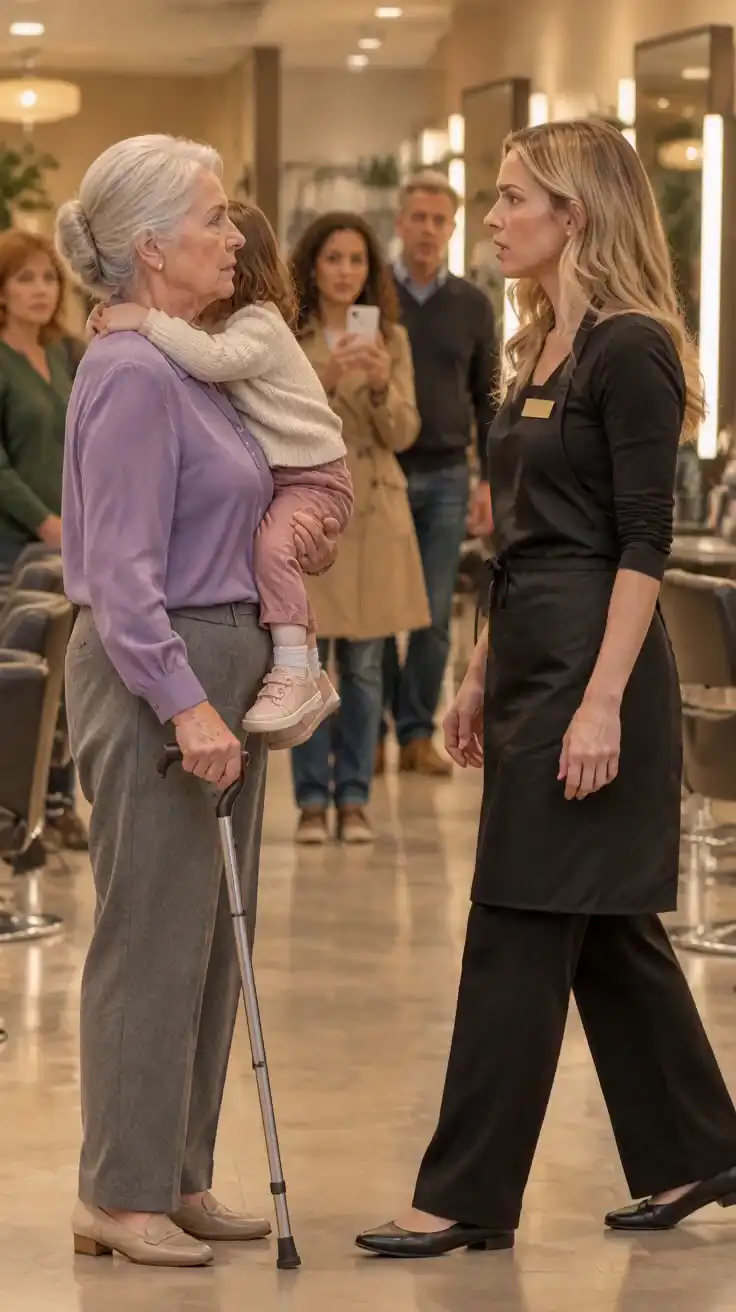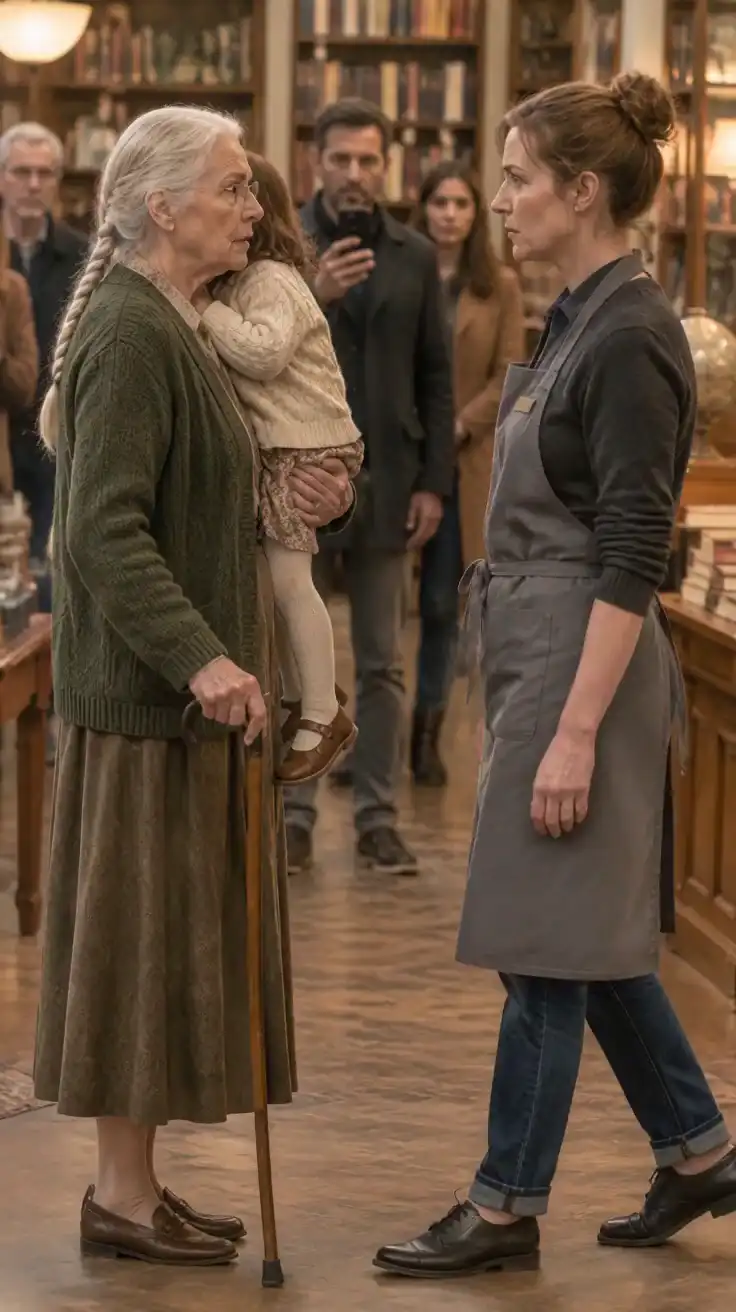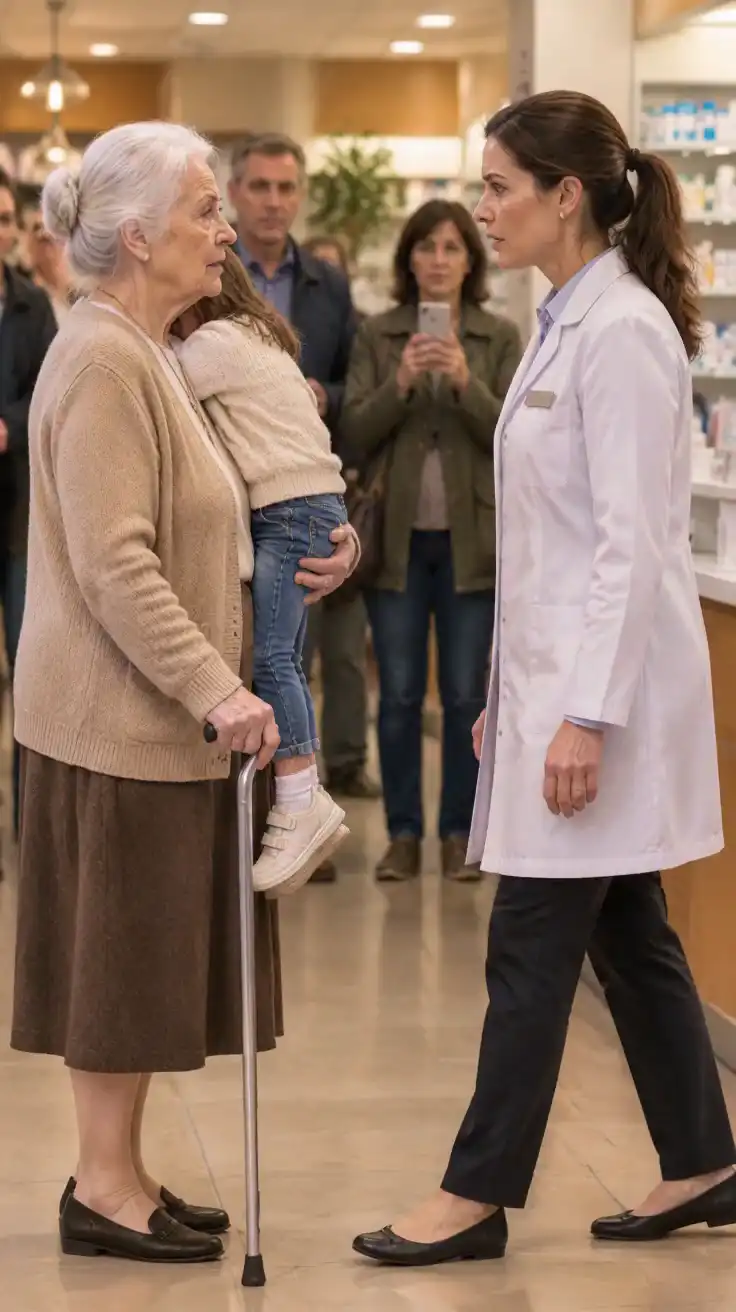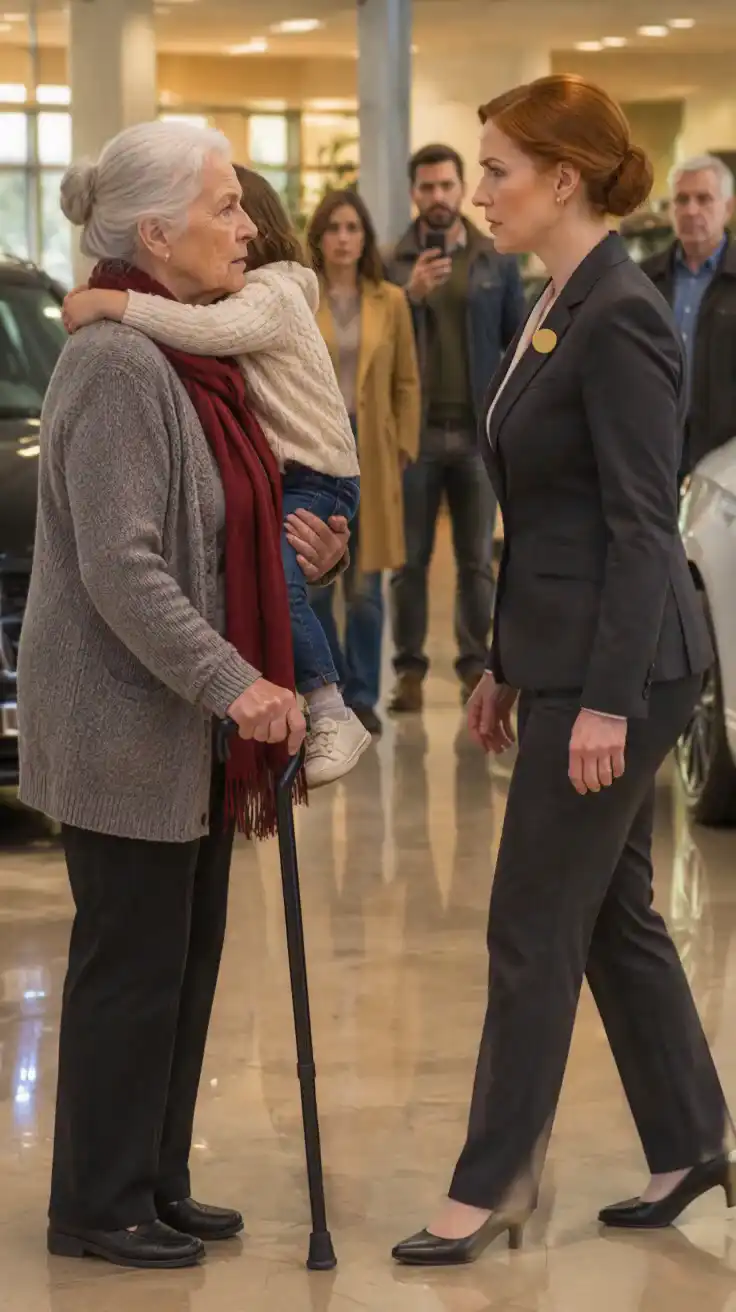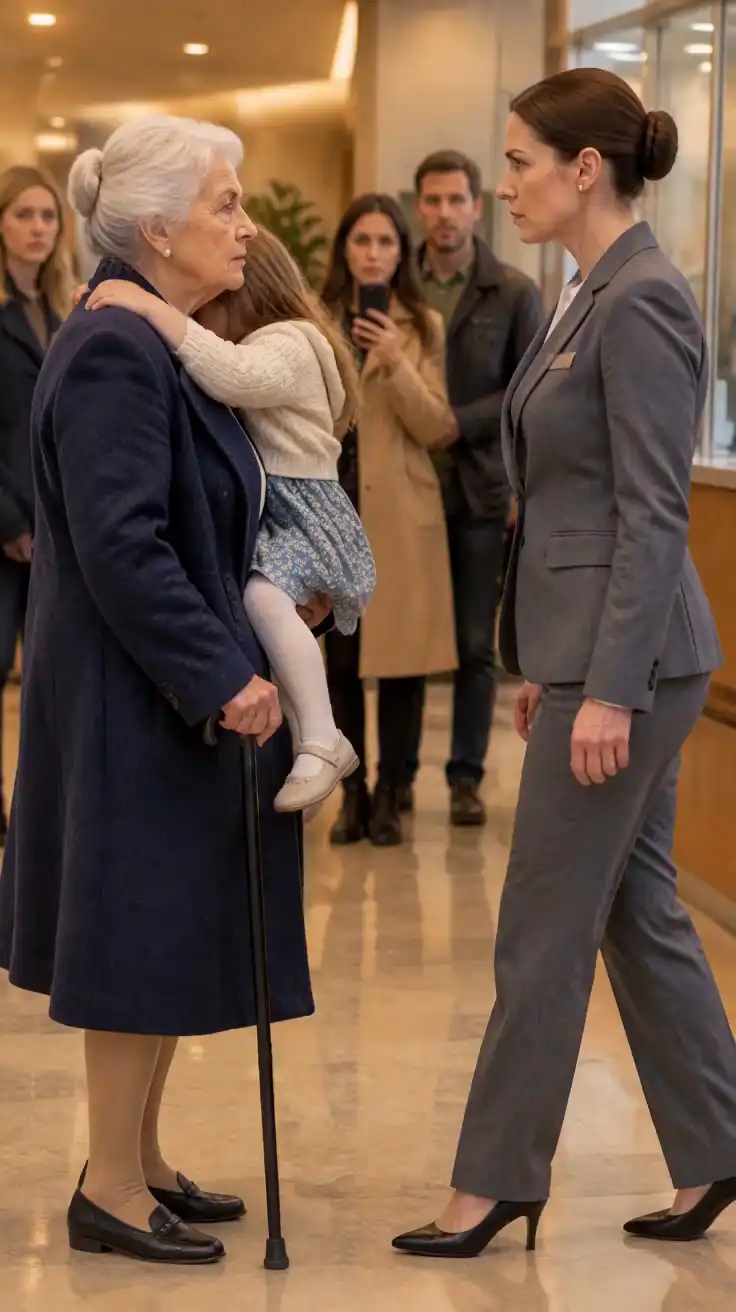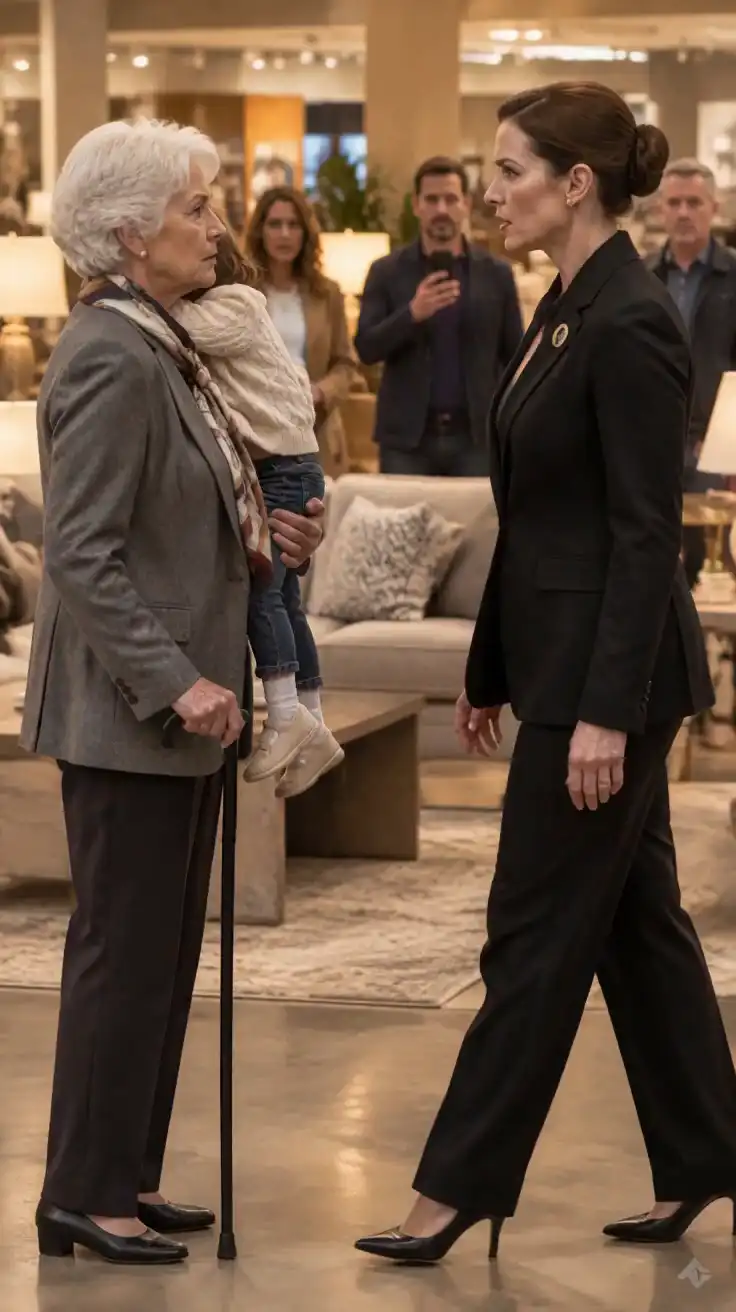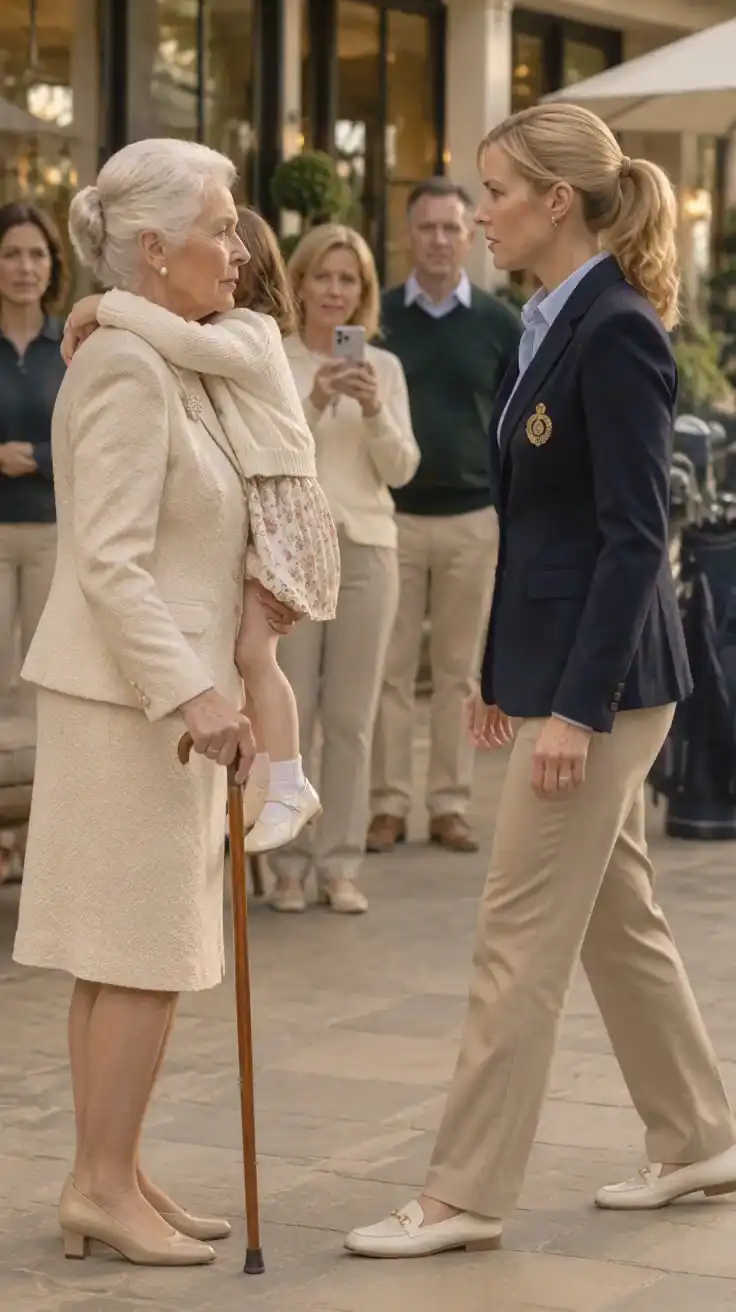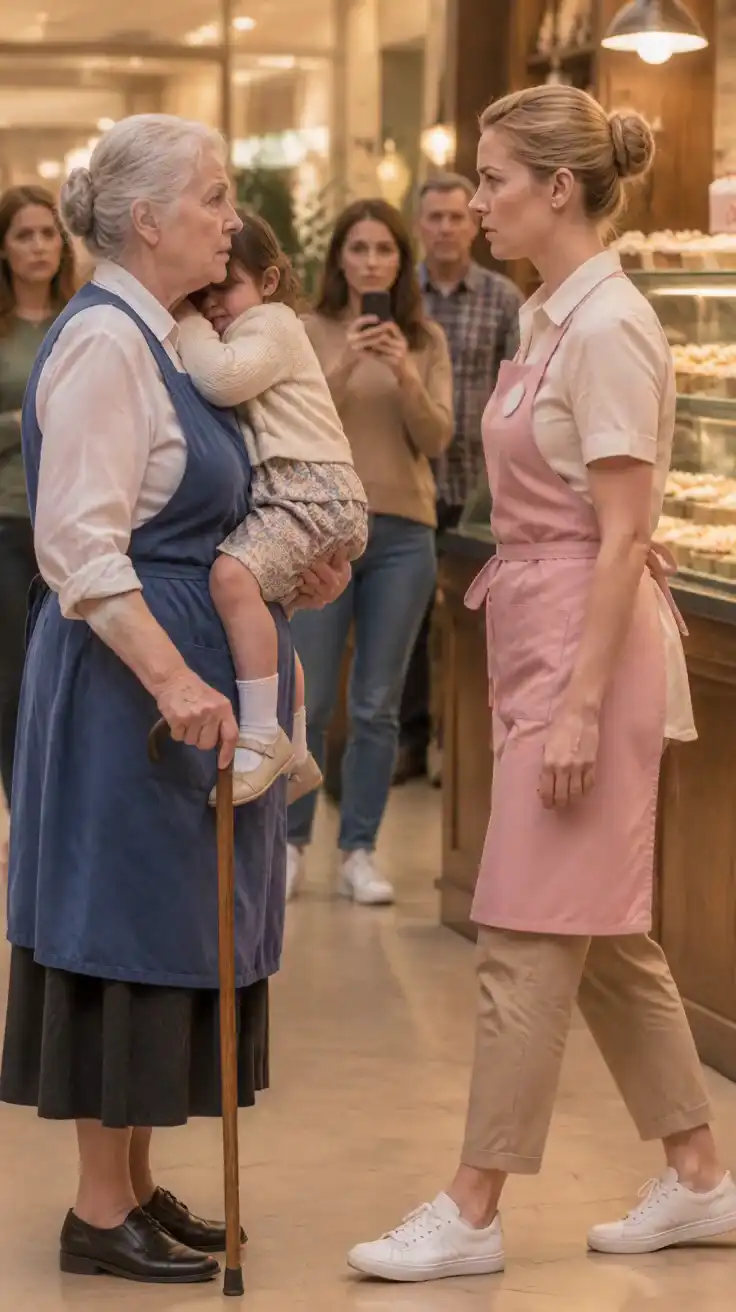
The gym manager slapped my cheek and ordered the guard to drag me from the elevator for being a non-member, but when I called upstairs, my son answered over the phone with the building deed.
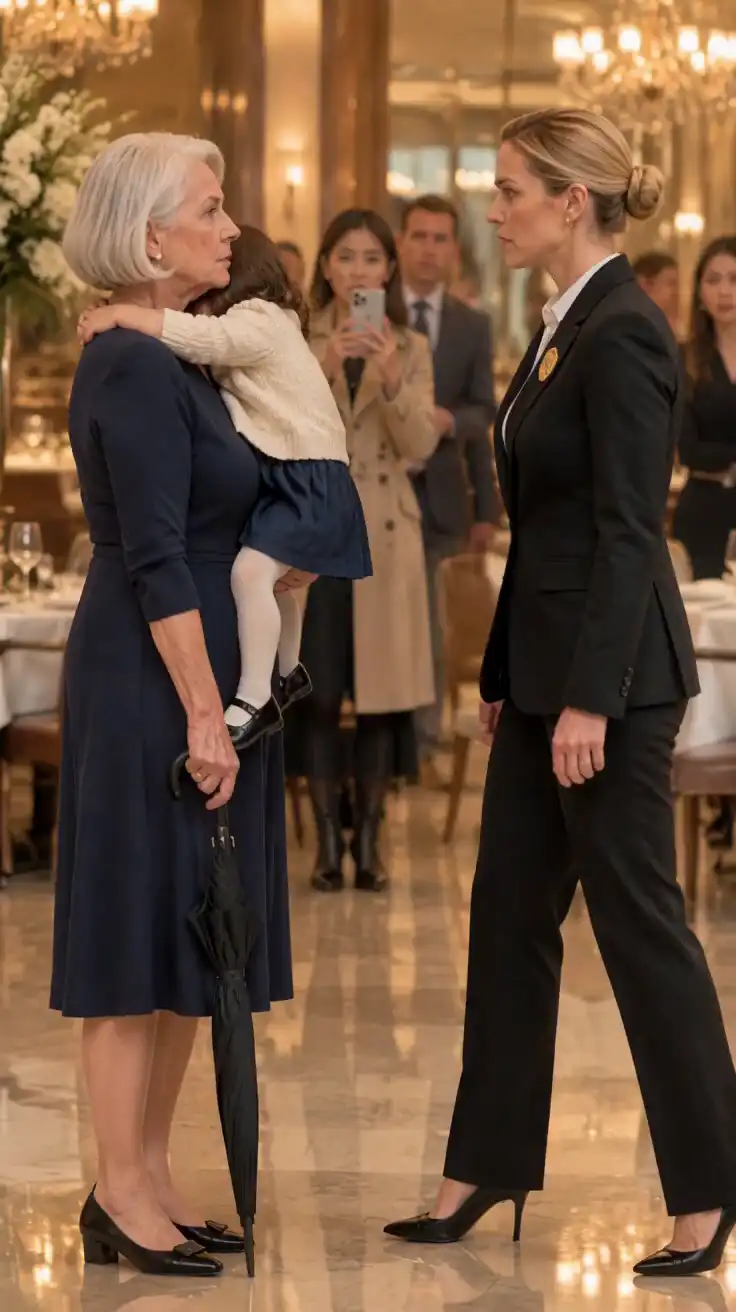
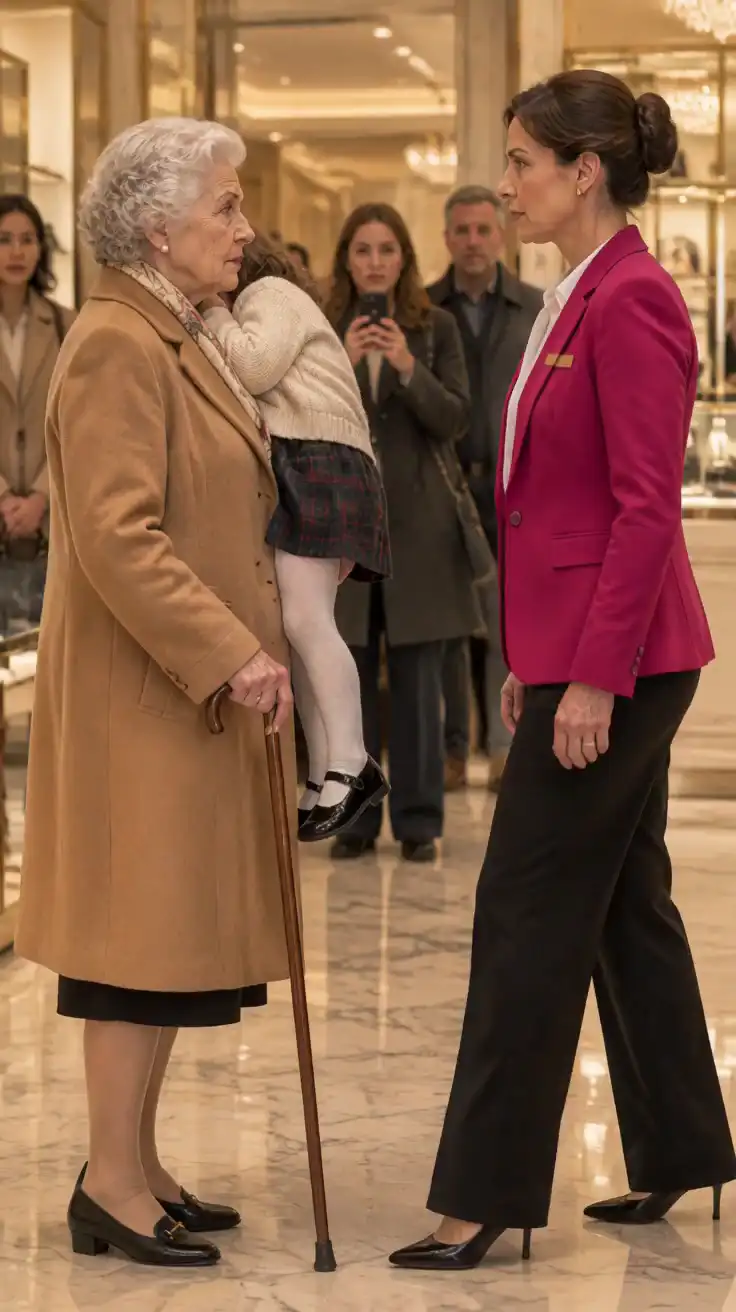
The sting in my cheek came first, hot and sharp, then the scrape of a guard’s hand closing around my arm.
“Keep moving,” he said. He steered me away from the elevator while the front-desk manager watched, one palm still raised from the slap. Behind him, the check-in line had stopped advancing. A man in a sweat-darkened shirt lowered his water bottle. Nobody looked away.
“I need the elevator,” I said.
“You’re not a member,” the manager replied. “You can’t block my desk.”
The guard tightened his grip. My shoes slid half an inch across the polished floor. I could have pulled free, but the members were watching, and I wouldn’t give the manager another excuse to call me a problem.
Then a phone rang behind the counter.
The manager glanced at it, frowned, and answered. His voice changed as he listened. The guard’s hand loosened on my arm. Around us, people leaned toward the desk, trying to catch the words coming through the receiver.
“Sir, there’s a woman here insisting—” The manager stopped. He looked at me, then back at the phone. “Yes. She’s right here.”
I watched his fingers clamp around the edge of the counter. Whatever he heard made him stand straighter, but it didn’t make him move aside.
My son’s voice came tinny through the speaker. “Put the papers on the counter.”
The manager stared at the phone. “What papers?”
“Do it.”
A hush spread from the front desk toward the weight room. The guard stepped away from me. The manager set the receiver down, then looked toward the entrance as if expecting someone to walk in.
No one did.
My son had told me he’d be there shortly. I hadn’t expected him to send anything ahead. I kept my hands at my sides while the manager waited, his face tightening with every second.
The front doors opened. My son crossed the lobby without looking at the crowd. He carried a folded bundle under one arm and stopped at the desk.
He laid the deed on the counter.
The manager’s hand stopped in midair.
THE NAME ON THE DEED
His fingers hovered above the folded paper, close enough to touch it, but he did not.
My son opened the deed and spread it across the counter.
The first page settled flat. Then the next. The manager’s hand stayed suspended over the corner as if the paper might burn him. My son put one finger beside the name printed beneath the property description.
“Read it,” he said.
The manager looked at the page. His lips moved once without sound. Behind him, the check-in line had become a loose half circle. The guard who had held my arm stood several feet away now, his hands lowered, watching.
The name on the deed was mine.
No one spoke for a moment. I heard the soft clink of a weight plate somewhere beyond the lobby and the hum of the elevator doors opening and closing upstairs.
The manager drew his hand back.
“That doesn’t—” He stopped, looked at the deed again, and tried a different sentence. “That can’t be current.”
“It is,” my son said. “The county recorded it. The gym leases this space from our family.”
The manager glanced toward me, then at my son. “You’re Chris?”
“I am.”
The guard’s face changed. He looked at my cheek, then at the hand he had used to steer me away. He took one step closer, but not close enough to touch me again.
I kept my eyes on the manager.
“You asked me to leave because I wasn’t a member,” I said.
“I was handling a situation at the front desk.”
“You hit me.”
The words landed more quietly than I expected. A woman in line made a small sound in her throat. The man with the water bottle set it down on the counter, as if he wanted both hands free.
The manager flushed. “I didn’t—”
“You did,” my son said. His voice stayed even. “The video shows it.”
The manager turned toward him sharply. “What video?”
“The one a member recorded. It starts when you walk around the desk and slap my mother. It catches the guard telling her, ‘Members only, grandma.’ It catches her asking for me. It catches your laugh.”
The manager’s eyes moved across the people around us. No one looked down.
I touched my cheek with two fingers. It had begun to throb. The skin felt hot under my hand.
My son shifted the deed so the name and address remained visible. “You knew she was asking to use the elevator. You did not ask her why. You did not call me. You put your hand on her.”
“I thought she was blocking the desk.”
“She was standing beside it.”
The manager’s mouth tightened. “I was trying to keep the entrance clear.”
“And then you hit her.”
No one shouted. Nobody needed to. The manager had spent the last few minutes speaking as if he were the only person in the building who could decide what happened. Now the people who had watched him act were close enough to hear each sentence.
The guard looked at me. “Ma’am, I didn’t know—”
“You didn’t ask,” I said.
He swallowed. His hands moved at his sides, flexing once. “I was told to move you.”
“You were told to move me because I needed an elevator.”
His eyes dropped to the deed. He did not answer.
My son put the folded bundle he had carried under his arm onto the counter beside the deed. He did not open it yet.
The manager looked at the bundle and then at the deed. “What is that?”
“Something you should have noticed before you decided the elevator was none of your concern.”
He opened the bundle carefully. A single framed certificate slid free, its edges protected by a plain paper sleeve. There were no words visible from where I stood. My son turned it face out and laid it behind the desk, where the frame had been mounted for years.
The manager stared at it.
A woman in the check-in line leaned around the man beside her. “That’s the elevator inspection certificate,” she said. “I’ve seen it back there every time I check in.”
The manager glanced over his shoulder. The certificate hung in its familiar place, its seal catching the lobby lights.
“I know what it is,” he said.
“Then you know the elevator is inspected,” my son replied. “And you know it was installed for this building.”
“I know there’s an elevator.”
“You told her she couldn’t use it.”
“I said members only.”
“You told her that after she said she needed it.”
The manager put both palms on the counter, as if bracing himself against the growing circle of witnesses. “The gym has policies.”
“The gym’s lease doesn’t give you control of the building’s elevator,” my son said. “That’s a shared access area.”
The guard looked from the certificate to me. “I didn’t know she owned the building.”
“I didn’t ask you to know that,” I said. “I asked for the elevator.”
A man near the entrance lifted his phone. The manager saw it and pointed at him.
“Put that away.”
The man lowered it, but he did not leave. “I’m not recording now.”
“Then don’t.”
“It’s already recorded,” someone behind him said.
The manager’s face tightened again. I watched his hand curl against the counter’s edge, the same counter he had stood behind when he decided I did not belong.
My son kept his voice low. “Do you want to tell everyone what happened, or should I?”
“There’s no need to make a spectacle.”
“You made one when you hit her in front of the check-in line.”
The manager looked at me. For the first time, he seemed to be waiting for my permission to end the conversation. I did not give it.
“Why didn’t you know?” I asked him. “The elevator has been there longer than you’ve worked here.”
“I started here last year.”
“And no one told you who installed it?”
“The building is leased. I don’t handle property matters.”
“You handle the front desk,” Chris said. “The certificate is behind it.”
“That doesn’t tell me who owns the place.”
“No,” I said. “The deed does.”
I could see the answer forming in him: he had not known. He had assumed I was a stranger, a woman in ordinary clothes who had stepped into his lobby without permission. He had turned that assumption into a decision. The paper did not make the slap worse. It only made the distance between his certainty and the truth impossible to ignore.
“I don’t have to know the owner to enforce gym rules,” he said.
“Correct,” my son replied. “You do have to know what those rules cover. And you do not get to strike people.”
The man who had set down his water bottle picked it up again. He wore a gray shirt with the gym’s logo on the chest. He looked toward me.
“I saw the whole thing,” he said. “She asked for the elevator. He came around and slapped her. The guard started pulling her away.”
The manager pointed toward him. “You don’t know what happened before that.”
“I was in line.”
“You were standing there.”
“Yes. I was.”
The man’s voice did not rise. That made the manager’s response sound louder than it was.
A woman near the turnstiles stepped forward. “I saw it too.”
The guard shifted his weight. “I didn’t pull her hard.”
“You closed your hand around my arm,” I said.
“I was trying to guide you away.”
“Did I ask you to?”
“No.”
“Did I threaten anyone?”
“No.”
“Then you didn’t need to guide me anywhere.”
He stared at the floor. The red mark on my cheek had begun to darken. I could feel the warmth of it spreading toward my ear.
My son watched the guard for a second, then turned his attention back to the manager. “I’m calling the company.”
The manager gave a short, incredulous laugh. It sounded nothing like his laugh from the video. “You don’t have authority over my staff.”
“My family holds the lease. The gym is a franchise. The company has authority over the manager it employs.”
“You’re the franchise owner,” I said to him.
“Yes.”
The manager’s eyes widened slightly. He knew Chris’s name now. He knew the deed belonged to me. The room had answered the question he had never thought to ask.
Chris took his phone from his pocket. “I’m calling the regional office, and I’m preserving the video.”
“You can’t just—”
“I can report an assault at a business I own. I can also report a manager who mistreats a person using a building’s common area.”
“I didn’t assault her.”
A voice from the line answered before my son could. “You slapped her.”
The manager turned toward the speaker.
A young man stood near the entry gates, holding his phone with both hands. “I got it on video. You can see everything.”
“Delete it.”
“No.”
“Put your phone away.”
“I already sent it to my sister.”
The manager took a step from behind the desk. Chris put a hand up between them—not touching him, only stopping his path.
“Stay there,” Chris said.
The manager halted. For a beat, I thought he might ignore the warning. Then he looked around at the members standing close and saw that they were not going to clear a path for him.
He backed toward the desk.
My son dialed. When someone answered, he introduced himself and gave the gym’s location. He described the manager’s action without embellishment. Then he said the manager had struck his mother in front of witnesses and that a member had recorded it.
He listened.
“Yes, I have the deed here,” he said. “And the elevator inspection certificate is posted behind the desk. I’d like the regional director on this call.”
The manager lowered his voice. “You’re doing this in front of customers?”
Chris covered the phone with his hand. “It happened in front of them.”
“I can explain it to you privately.”
“You’ve had several chances to explain. You said she was in your way. You said it was a policy issue. Now you say you didn’t hit her. Which explanation do you want recorded?”
“I never said I didn’t hit her.”
“You just did.”
The manager’s jaw worked. His attention shifted to me, as if he had decided that my son was the difficulty and I was the way to manage it.
“I was trying to keep the place safe,” he said.
“You made it less safe,” I replied.
The words were plain. I did not have to raise my voice to hear them clearly.
The phone on the counter rang again. The manager stared at it.
“Answer it,” Chris said.
“It’s the regional office.”
“Then answer.”
The manager picked up the receiver. “Front desk.”
He listened, then glanced at my son. His expression changed from defensive to wary.
“Yes,” he said. “He’s here.”
He put the phone down without transferring it.
Chris’s call was still connected. “They’re calling me now,” he said to the person on his end. “Stay with me.”
A soft murmur moved through the lobby. The members had stopped pretending this was ordinary business. A few had come in from the floor, towels over their shoulders. One woman in running shoes asked the guard whether the elevator was working. He looked toward me before answering.
“It’s working,” I said.
She nodded and stayed where she was.
The manager heard her. “The elevator isn’t for gym use.”
“It’s in the building,” Chris said. “The building has tenants above us. It’s for anyone with a reason to use it.”
“I have been told to keep gym guests from wandering.”
“Then keep them out of the gym. Don’t block the elevator.”
The manager looked toward the elevator doors. They stood open at the lobby level now, empty and waiting. A small brass plate beside them had been polished so often the edges had worn smooth. I remembered choosing its placement with my husband. We had argued about whether the call button should sit lower, where a seated person could reach it without stretching. I had insisted. He had stood beside me with the electrician’s plan tucked beneath his arm and said, “Then that’s where it goes.”
The manager followed my eyes but did not know what I was seeing.
“I asked for that elevator,” I said.
My son paused in his call. The manager looked back at me.
“You asked for it?”
“When my husband and I converted the building, the upper floors had stairs only. I said I would not rent the storefront until the building had an elevator that people could actually use.”
Chris put his free hand against the deed. “She made that part of the renovation.”
“I didn’t have to,” I said. “But there were older tenants upstairs, and one of them had trouble with the stairs. My husband and I talked about it. We agreed it mattered.”
The manager stared at the elevator button. The certificate behind him was still in place.
“Why didn’t you say that when you came in?” he asked.
“I told you I needed the elevator.”
“That doesn’t tell me who you are.”
“I shouldn’t need to tell you who I am to use it.”
A woman near the check-in gates nodded. “Exactly.”
The manager turned toward her. “This doesn’t concern you.”
“I’m standing here watching it concern everyone.”
Chris’s phone buzzed against his ear. He listened, then answered a question. “Yes. I own the gym. My mother owns the building. The lease is with our family. No, we have not changed the terms that govern common access.”
He stepped away from the desk by a few inches, but kept one hand near the deed.
“I’ll send the documents to the regional director,” he said. “I’m not asking you to decide based on what I say. The video is available. There are witnesses here. The manager is still on site.”
The manager looked past him at the members. “You’ve all got your story straight now?”
The man with the gray shirt lifted his bottle. “I have what I saw.”
“Your membership can be canceled.”
“Then cancel it.”
The manager’s eyes narrowed.
Chris said into the phone, “Please note that threat as well.”
The man set his bottle down again. His face had gone pale, but he did not step back.
The guard raised his head. “He’s not going to cancel your membership.”
The manager looked at him. “You want to join in?”
The guard held his ground. “I’m telling you he doesn’t have a reason.”
A change passed through the room. It was not a cheer or a victory. People simply stopped making space for the manager’s anger. The guard had been the one to put his hand on me. Now he was the first person in uniform to say the manager had gone too far.
My son ended the call and put the phone on speaker. “The regional director is joining us in a few minutes. She asked that nobody touch the deed or the certificate.”
“I wasn’t going to touch it,” the manager said.
“You reached for it.”
“I was going to look at it.”
“You can look. Don’t remove it.”
The manager’s cheeks reddened. “I know how to handle documents.”
“You have not handled this well.”
I reached for the back of a chair near the desk. My fingers found its cool metal top. The ache in my cheek had sharpened. Chris noticed and pulled the chair out.
“Sit down, Mom.”
“I’m fine.”
“You’re standing because nobody gave you a place to sit.”
“I can stand.”
He didn’t argue. He left the chair beside me, and I rested one hand on its back. My knees were steady. The pressure in my face was what kept pulling my attention away from everything else.
Chris looked toward the guard. “Can you get a cold pack?”
The guard turned to the manager.
“Go,” Chris said.
For a second, the guard remained still. Then he went through the side door into the staff room.
The manager watched him leave. “He’s not supposed to leave the floor.”
“He’s getting ice,” Chris said.
“He has other duties.”
“Get another employee to cover them.”
“There is nobody else.”
“There are three people behind the desk.”
Two staff members stood inside the small service area, both silent. One of them looked down at the check-in tablet. The other was watching the manager with an expression that had lost its blankness.
The manager noticed and pointed at her. “You’re on the clock.”
“I know,” she said.
“Then help the members.”
“I was helping them until this happened.”
He opened his mouth, but the phone rang again. This time he did not pick it up.
Chris did. “Front desk. Chris speaking.”
A woman’s voice came through the receiver, loud enough for those nearest to hear. “Chris, this is Dana, regional operations. I’ve been told there’s an incident.”
“There is. I’m at the front desk with my mother, the building owner. The manager struck her after she asked to use the elevator. The guard tried to move her away. A member has video.”
“Is she injured?”
“My cheek is red. We’re arranging ice. She has not asked for medical help.”
“I’m sorry this happened. I’m coming down.”
“You’re upstairs?”
“I’m in the management office on the fourth floor.”
My son glanced at the elevator. “Then you can take it.”
“I will.”
The manager put his hands on his hips. “Dana, I can explain—”
“I’ve heard enough to know I need to speak with you separately,” she said through the receiver. “Please stay at the desk and don’t contact any members about their accounts.”
“I haven’t contacted anyone.”
“You just threatened to cancel one man’s membership.”
The manager looked toward the man in the gray shirt.
Dana continued. “I’ll be there in a minute.”
The receiver clicked.
The manager looked at Chris. “You went upstairs for a reason, didn’t you?”
“I was there for a lease meeting.”
“Then why didn’t you come down when she called?”
“I did. I came down when you put the deed on the counter.”
The distinction stung him. I saw it in the way his shoulders pulled back.
A moment later, the elevator doors opened. Dana stepped out with a tablet in one hand. She was in a black blazer over gym clothes, her hair pulled tightly behind her head. She took in the deed, the certificate, the ring of members, and me beside the chair.
“Ms. Carter?” she asked.
I nodded.
She came toward me, then stopped at a careful distance. “I’m Dana Ruiz, regional operations. I’m sorry this happened. Would you like me to call someone for medical assistance?”
“No. I’d like to sit for a minute and have the manager explain why he thought he could decide I wasn’t allowed to use the building elevator.”
Dana turned to the manager. “What happened?”
He began quickly. “She came in through the front and stood near the desk. She said she needed the elevator. I thought she was trying to get into the gym without checking in. I asked her to step back, and things escalated.”
“Who escalated them?” Dana asked.
“She wasn’t cooperating.”
“I was standing still,” I said.
The manager ignored me. “I was trying to protect the members.”
Dana looked at the line. “Did anyone here feel threatened by her?”
No one answered immediately. The members watched one another, deciding whether they were willing to step into it.
The young man with the phone spoke first. “No. She asked for the elevator. He slapped her.”
The woman in running shoes said, “I was just coming down from the second floor. I saw her before the manager came out. She wasn’t bothering anyone.”
The man in the gray shirt nodded. “I saw the slap.”
“Did she touch you?” Dana asked the manager.
“No.”
“Did she threaten you?”
“No.”
“Did she strike you?”
“No.”
Dana turned to the guard. “Did you see the contact?”
The guard had returned with a cold pack wrapped in a thin towel. He held it out to me. I accepted it and pressed it gently to my cheek.
“Yes,” he said.
“Did she threaten anyone?”
“No.”
“Why did you move her?”
The guard glanced at the manager. “I was told to.”
“Did you ask her to leave?”
“Yes.”
“Did she refuse?”
“She said she needed the elevator.”
“That’s not the same thing.”
“No.”
The manager made a sharp sound. “He’s a security guard. He followed the instruction he was given.”
Dana turned back to him. “I’m not asking him to take responsibility for your decision.”
The guard lowered his gaze. “I shouldn’t have grabbed her arm.”
I held the cold pack in place. “No, you shouldn’t have.”
“I’m sorry.”
I studied his face. He looked younger than he had when his hand closed around me. Maybe the uniform had made him seem larger. Maybe his certainty had. Now he stood with his hands empty and his eyes fixed on the floor.
“Don’t put your hand on someone again just because a manager wants them moved,” I said.
“I won’t.”
Dana made a note on the tablet. “You’ll be taken off floor duty while we review what happened.”
The guard nodded. He did not ask whether he could return.
Dana turned to my son. “Can I see the deed?”
Chris slid it toward her without lifting it from the counter. She read the visible page, then checked the recording information and the property description on the next sheet.
“This is current,” she said.
“Yes,” Chris replied.
She looked at the manager. “You’ve been told about the building’s common areas.”
“I was told to keep the lobby orderly.”
“By whom?”
“The previous regional manager.”
“Did anyone tell you the elevator was members only?”
“No, but I assumed—”
“You assumed.”
“I have a job to do.”
“So does the building owner.”
The manager glanced toward me. “I was never told she owned it.”
“You were told to maintain the lobby,” Dana said. “You were not authorized to bar people from a common elevator. The certificate is posted behind the desk. How long have you worked here?”
“Eleven months.”
“And the inspection certificate has been behind the desk the entire time?”
“I never had a reason to look at it.”
Dana looked at the certificate. “It has the inspection date and the elevator identification. It is posted where staff can see it.”
“I wasn’t responsible for building maintenance.”
“You were responsible for not blocking access to the building.”
The manager’s face grew red again. “This is turning into a trial.”
“No,” I said. “It’s becoming a record.”
He looked at me, and this time he did not ask who I was. The deed had supplied the answer. It had not supplied the answer he needed most: whether I would let him turn my silence into consent.
Dana stepped a few feet away with Chris. They spoke softly. I heard my son say that the video had been sent to him, that he had not edited it, and that the member had offered to share the original. Dana asked for the member’s contact information. Chris gave it to her.
The young man came forward and unlocked his phone. He kept the screen angled toward himself, not toward the crowd.
“It starts before the slap,” he said. “You can hear the whole exchange.”
“Please send it directly to me,” Dana said. “Do not post it while we’re reviewing it.”
“I haven’t posted it.”
“Thank you.”
The manager listened to them talk about the recording. His mouth tightened whenever the young man spoke. But there was no way to remove what had happened from the room. The people there had seen it, and the video existed whether he liked it or not.
Dana reviewed the clip with the young man. She did not play it aloud. The manager watched her face while she watched the phone. When she finished, she handed it back.
“Please send the original file,” she said.
He nodded and tapped the screen.
The woman in running shoes asked, “Can the rest of us use the elevator?”
“Yes,” I said.
The manager spoke at the same time. “Members can use it if they’re going to the gym.”
Dana lifted a hand. “Don’t answer for the building.”
The woman looked between us. “I live upstairs. I have a membership downstairs. I’m asking because I don’t want to walk through the gym just to get to my apartment.”
“You can use the elevator,” I said. “It serves the whole building.”
“Thank you.”
She moved toward the doors. The manager shifted as if he might step into her path, then stopped. She pressed the call button and waited.
Nothing about the gesture was dramatic. She was not making a point. She had a place to go. When the doors opened, she stepped inside and pressed the button for an upper floor.
The manager watched the doors close.
The elevator was not a favor he could grant or withhold. It was a part of the building. My husband and I had paid to install it, and I had insisted it serve the people who lived and worked there. Until that moment, I had not realized how easily the people at the front desk had come to treat it as gym property.
Chris looked at Dana. “The lease is with our family. If the company wants to renew, we need the common-area terms respected.”
Dana nodded. “That’s reasonable.”
The manager broke in. “You can’t renegotiate our lease in the middle of an incident.”
“I’m not renegotiating it,” Chris said. “I’m explaining the lease. You don’t have the authority to restrict access. My mother doesn’t need a membership to use an elevator in her building.”
Dana held up her tablet. “Let me finish reviewing the incident before we discuss the lease.”
“That’s fine,” he said.
The manager looked at me again. “So this was about proving you own the place?”
“No,” I said. “It was about using the elevator.”
“You could have told me who you were.”
“I could have. I didn’t think I had to.”
His eyes darted to the members. “You’ve got everyone here taking sides over a misunderstanding.”
“Was the slap a misunderstanding?” Dana asked.
He looked at her, then away.
At the back of the group, a woman had arrived with a staff badge clipped to her waistband. She was carrying a small first-aid kit. Dana asked one of the desk employees to bring it over. The employee came around the counter, glanced at me, then stopped.
“Is it all right if I check your cheek?” she asked.
“Yes.”
She opened the kit and took out a sealed instant cold pack. She placed it in a cloth sleeve and offered it to me. I thanked her. The pack I had been holding was beginning to soften, and the new one was colder.
“Do you want to sit?” she asked.
“I will now.”
I lowered myself into the chair. The lobby looked different from that height. The desk rose between me and the manager, a polished barrier that had made him seem like the person in charge of the entire building. The deed lay on his side of it, open to my name.
My son crouched beside me. “Are you dizzy?”
“No.”
“Any trouble seeing?”
“No.”
“Do you want me to take you to urgent care?”
I looked at his face. There were faint lines between his brows that had not been there when he was younger. He was trying not to look frightened.
“If it gets worse, I’ll go,” I said. “Right now, I want this settled.”
He nodded once. His hand rested on the chair’s metal arm. He did not touch my cheek.
Dana had opened a call on her phone. “I’m speaking with the company’s employee-relations director,” she said. “I need the manager to step into the office while I report the incident.”
The manager did not move. “I’m not leaving the desk without a replacement.”
“I’ll cover the desk,” one of the employees said.
He turned on her. “You don’t have to volunteer.”
“I’m not volunteering. Dana told us to keep the line moving.”
Dana looked toward the turnstiles. “We can close check-in for a few minutes. The other staff can direct members to the side entrance.”
The man in the gray shirt shook his head. “There are people coming in now.”
“Then keep the desk open,” Dana said. “The assistant manager can cover it.”
The woman behind the counter stepped around the far end. “I can.”
The manager stared at her. “You’re an assistant manager?”
“Acting assistant manager. You asked me to take on the shift last month.”
He had no quick answer. The people behind the desk were no longer standing where he had put them.
Dana gestured toward the hallway. “Come with me.”
“I’m not leaving until I know what’s happening.”
“You’re being removed from the desk during the review. You are not being asked to leave the building yet.”
“Removed?”
“Temporarily.”
“I have a right to respond.”
“You’ll have one. This isn’t the interview.”
He looked to Chris as if hoping the owner of the gym would overrule her. Chris said nothing. My son had not hired the manager to hit people. He would not shield him from the process because they shared a business.
The manager looked at me. “Do you want me suspended?”
It was a different question from the ones he had asked before. For a moment, the crowd grew quiet again.
“I want you held responsible for what you did,” I said. “I’m not deciding your job for you.”
He studied my face, as if looking for an opening.
Dana answered for the process. “The company will decide your status based on the report and the evidence. You’ll have a chance to provide a statement.”
The manager’s lips pressed together. “Fine.”
He walked with Dana toward the office. He did not apologize. He did not look back at the deed. The office door closed behind them.
The lobby did not return to normal. The check-in line moved again, but slowly. People passed the desk and glanced toward me. A few nodded. One young woman whispered, “I’m sorry,” as she went through the gate. I nodded back.
The assistant manager came around the desk and put a bottle of water beside my chair.
“Would you like this?” she asked.
“Yes, thank you.”
She opened the bottle before handing it to me, then stopped, uncertain whether she had overstepped.
“You can leave the cap on,” I said.
Her shoulders eased a little. “I’m sorry I didn’t say anything sooner.”
“What could you have done?”
“I could have told him the elevator wasn’t ours.”
“Would he have listened?”
“I don’t know.”
That answer was honest, and I appreciated it more than an apology for something she had not done.
Chris sat on the edge of the chair beside mine. “Did you know he was this kind of man?”
“I didn’t know him at all.”
“He’s been here less than a year. Dana handled the interview.”
“I wasn’t asking whether you hired him.”
He looked at the deed. “I know.”
“I’m asking whether you knew the desk had become a place where somebody could make up rules.”
“No.”
“Neither did I.”
He rubbed his thumb along his phone case. “I should have visited more often.”
“You come by.”
“I come by to look at sales reports and equipment orders. I don’t stand in the lobby.”
“Then stand here.”
He glanced at the customers around us. “I will.”
The assistant manager leaned toward the certificate. “That’s been behind the desk longer than I’ve worked here.”
“How long have you worked here?” I asked.
“Three years.”
“You know what it is?”
“Yes. They told me during training. It’s the elevator’s inspection certificate.”
“Did you ever hear anyone say it was for members only?”
“No.”
“Did you hear anyone say it belonged to the gym?”
She shook her head. “No. The old manager always said it was a building elevator.”
“Then where did this rule come from?”
She looked toward the office door. “I think he thought the lobby was his.”
Chris’s mouth tightened. He opened it, then closed it.
The young man with the phone came back to the desk. “I sent Dana the video.”
“Thank you,” Chris said.
“I’m sorry I didn’t step in earlier.”
“You got the evidence,” I said. “That mattered.”
“I could’ve stopped him.”
“You couldn’t have known what he would do.”
He seemed unsettled by that. He turned his phone over in his hands.
The man in the gray shirt came closer. “I should have said something before the guard touched you.”
“Why didn’t you?”
He looked toward the gym floor. “I thought the manager would tell me to mind my business. Then he hit you, and I still froze for a second.”
“Most people do.”
“I don’t want that to be the answer.”
“Then next time, say something sooner.”
He nodded. “I will.”
It was not a heroic promise. It was a small thing a person could keep.
Chris stood and took the deed from the counter. He folded it along the existing creases, careful not to bend the pages. “I should keep this with me.”
“Leave a copy,” I said.
“We have copies in the property office.”
“Then the desk should have one too.”
The assistant manager straightened. “Would that help?”
“It would help staff know who to call about the building,” Chris said. “Not so they can decide who deserves the elevator. So they know the proper person to contact when there’s a building issue.”
“I can put the contact information in the shift binder.”
“And a copy of the common-area section of the lease,” Chris said.
The woman nodded. “I’ll ask Dana.”
“No,” he said, gentler. “Ask her to make sure it’s approved. We don’t need another sheet of paper that somebody assumes says something it doesn’t.”
The young man smiled briefly, then stopped when he saw my cheek. “That makes sense.”
The guard returned to the lobby without his jacket. He stood near the staff door, away from the members, waiting. Dana came out of the office and spoke to him. She asked him to give his account in writing and to remain off the floor until the company reviewed it. He nodded and followed her back inside.
He had apologized to me. That did not restore the way his hand had felt on my arm. It did not erase his choice to obey without asking what I had done. But I had heard him say he would not do it again, and I wanted the company to make sure he understood what that meant.
The woman who lived upstairs returned from the elevator and came to the desk. “I’m going to email building management about the lobby. I didn’t know the gym had been stopping people.”
“They haven’t been stopping everyone,” Chris said. “The manager decided today that he could.”
“That’s still a problem.”
“It is.”
“Will the elevator be open?”
“Yes,” I said.
She glanced at me. “For everyone?”
“For everyone who has a reason to be in the building.”
She nodded. “Good.”
At the far end of the lobby, the elevator doors opened. An older man stepped out, using a cane. He paused when he saw the crowd.
The assistant manager moved toward him. “Do you need help?”
“No,” he said. “I know where I’m going.”
He looked around at us, then at the open certificate behind the desk. “Everything all right?”
“It will be,” I said.
He gave me a small nod and walked toward the side exit.
I had seen him before. He rented an office upstairs. He had used the elevator since my husband and I had opened the building. I wondered whether he had watched the argument from the top floor, or whether he had simply arrived at the end of it.
The company’s employee-relations director called Dana. She came out of the office and asked Chris to join her for a few minutes. He stood, but looked down at me first.
“I’ll be right there.”
“Go.”
The two of them stepped into the office. Through the glass wall, I could see Chris place the deed on a table. Dana sat across from him. They spoke for several minutes. I could not hear them, and I did not try.
The lobby kept moving. The assistant manager checked people in. Staff directed building visitors to the elevator. Nobody stopped them. Once, a member asked whether the elevator was still restricted. The assistant manager answered, “No. It serves the building.”
The words traveled easily. People heard them and passed through without argument.
The regional director returned with a small notebook. “I need to ask you a few questions for the report,” she said to me. “Would you rather do that now or at another time?”
“Now.”
“Are you comfortable doing it here?”
“I’d rather sit in the office.”
She offered her arm. I stood on my own. Chris came back from the meeting and walked with us. The manager remained in the office down the hall, separated from the lobby by the closed door.
Dana took notes while I described what had happened. I told her I had entered the lobby and walked toward the elevator. The manager came around the desk. He said I was not a member. I told him I needed the elevator. He slapped me. The guard grabbed my arm and moved me away. I called Chris. The manager answered when the phone rang. Then Chris told him to put the papers on the counter.
“Did you feel afraid?” Dana asked.
“I felt trapped.”
“Did you think he would hit you again?”
“I didn’t know what he would do.”
“Did the guard’s grip hurt?”
“It pinched. It left a mark.”
She asked whether I wanted medical attention. I said no. She asked whether I wanted to contact the police.
“I haven’t decided.”
“You don’t have to decide here.”
Chris leaned forward. “We can report it without deciding anything else.”
“I know.”
Dana wrote that down. She did not push me toward either answer.
When we finished, she asked whether I wanted to add anything.
“I want the elevator to stay open to the building,” I said. “Not as a temporary exception because I own the place. It should be open because the gym leases the first floor and shares the lobby.”
“I agree.”
“I also want staff to know that a person does not have to prove they deserve to be treated decently.”
Dana lowered her pen. “That is not something I can put in the lease, but I can address it in training and in the review.”
“Then do both.”
“I will.”
Chris’s shoulders shifted. The tension in them loosened a little. He had been waiting for me to ask for something concrete, and I had.
Dana closed the notebook. “The manager is being placed on leave while we investigate. That is temporary, not a final decision.”
“Has he been told?”
“Yes.”
“Does he have access to the front desk?”
“Not while he’s on leave.”
“And the elevator?”
“The elevator remains accessible.”
We walked back to the lobby. The assistant manager had placed a small stand near the certificate with a sheet of plain paper held behind a clear cover. I could not read it from where I stood, and I did not approach to inspect it. The certificate remained behind the desk.
Chris moved the stand to the side so it did not block the counter. “That’s better.”
The assistant manager nodded. “I’ll have Dana approve whatever notice goes there.”
“Good.”
I returned to the chair. My cheek had begun to sting beneath the cold pack. The initial heat was fading, replaced by an ache that made me aware of every small movement.
Chris sat beside me. “I’m sorry.”
“For what?”
“For letting the building become a place where you had to remind someone you belong.”
“I didn’t remind him.”
“No. You shouldn’t have had to.”
He looked at the deed in his hands. The fold had grown soft where he had opened and closed it.
“You were going to put this in my name, weren’t you?” I asked.
He didn’t answer right away. “I was going to ask you.”
“Why?”
“You’ve been talking about simplifying things. The building is more than you want to manage. I thought it would be easier if I took responsibility.”
“Easier for whom?”
“For you. For me. For the gym.”
“The gym has been able to pay rent.”
“Yes.”
“The roof was repaired last spring.”
“Yes.”
“The upper apartments are occupied.”
“Yes.”
“Then it isn’t an emergency.”
“No.”
“Don’t use today to hurry me.”
He looked down at the deed. “I won’t.”
“Not because you’re my son. Not because you own the gym. Not because this manager embarrassed us both.”
“I understand.”
“I know you want what’s easiest.”
“I want what’s best.”
“Those aren’t always the same.”
He folded the deed once, then stopped. “We can talk about it later.”
“We can talk when we’re sitting at the kitchen table, not while the whole lobby watches.”
He looked at me and gave a quiet, reluctant smile. “All right.”
The people in the lobby began returning to their routines. The man with the gray shirt went toward the lockers. The young man with the phone entered through the gates. The woman in running shoes went back to the elevator and rode upstairs. Staff traded places behind the desk.
For a few minutes, I watched the elevator make its trips. A tenant came down with a grocery bag. A delivery worker rolled an empty cart out. A woman with a child held the door while a man with a cane stepped into the car. Nobody asked to see a membership card.
The building moved as it was meant to.
Dana came back from the office. “I’ve spoken with the company’s regional director and employee relations. The manager is suspended pending a formal investigation. He has been asked to leave the premises today.”
“Has he left?”
“He’s collecting his belongings now. A staff member is with him.”
“I don’t need to see him leave.”
“I understand.”
“Has he said anything to you?”
“He maintains that he was enforcing a policy. He acknowledges making physical contact. He has not apologized.”
I looked at the office door. “That’s his choice.”
Dana nodded. “The investigation will include the video, your statement, the guard’s statement, the desk staff, and the members who witnessed it.”
“Good.”
“Can you confirm your son is the current gym owner?”
Chris answered. “Yes.”
“And that the lease is with your family?”
“Yes. The building title is in my mother’s name.”
Dana looked toward the deed. “The company will need a copy for its file.”
“We can provide one,” he said.
“Please include the section of the lease that defines the common areas.”
“I’ll send it through the property office.”
Dana turned to me. “Would you like us to arrange a ride home?”
“No, thank you. I drove.”
“Can your son drive you?”
“He can.”
“I can,” Chris said.
I stood. The ache had not worsened, but I was ready to be out of the lobby. I took the cold pack away from my cheek. The skin beneath it was tender. Chris reached for the chair.
“I’m not going to faint,” I said.
“I know.”
He still held the chair steady until I was upright.
The manager emerged from the hallway carrying a small cardboard box. His face was set. One staff member walked behind him. He did not look at the members, but they watched him pass. At the entrance, he paused.
“Chris,” he said.
My son turned.
“I want to talk about my side.”
“Not here,” Chris said. “Send it to Dana.”
“I don’t want this to ruin my career over one mistake.”
I watched him, waiting to see whether he would say what the mistake was.
He looked toward me. “I’m sorry this got out of hand.”
“That is not an apology,” Chris said.
“I said I’m sorry.”
“You’re sorry it got out of hand. You haven’t said what you did.”
The manager shifted the box against his hip. “I’m sorry I slapped you.”
It was the first time he had named it. His eyes stayed on my face, but the sentence came out stiffly, like words someone else had handed him.
I pressed the cold pack lightly to my cheek again. “You chose to do it.”
He lowered his chin. “I was wrong.”
“Then don’t do it again.”
He nodded once.
There was no embrace or forgiveness. I did not tell him it was all right. It was not. He had apologized, and I had heard him. The apology did not change the record or decide what the company would do.
Dana opened the front door for him. He stepped outside with the box. The door shut behind him.
The guard remained inside the staff office. He would also have to answer for his part. The manager’s exit did not make him innocent, and his apology did not erase what he had done. Dana told me the review would consider the guard’s actions separately, including his cooperation, his role, and his acknowledgment that he should not have grabbed me.
That was all I wanted to know for the moment.
Chris picked up the deed. “Let’s go.”
“I want to see the elevator.”
He nodded.
We walked to the call button. I pressed it. The doors opened without a sound. Inside, the floor was a dull silver with a narrow rubber strip along the edge. My husband had chosen it because it would not show scuffs as quickly. He had been right.
I stepped in first. Chris followed.
“Which floor?” he asked.
“The ground floor is where we are.”
He smiled. “I meant the car.”
“Then take me to the second. I want to check the landing.”
He pressed the button. The doors closed.
The elevator rose smoothly. My cheek throbbed once with the movement, then settled. The display above the doors changed. No paper sign told us where we were allowed to go. No one stood in our way.
At the second floor, I stepped out. The landing opened toward the small offices and apartments. A tenant had left a potted plant beside her door. Its leaves leaned toward the window.
I checked the rail by the wall. It was secure. The button panel was clean, with no tape covering the lower controls. The light over the exit sign was on.
Chris waited behind me. “Everything all right?”
“Yes.”
“What are you checking?”
“That it still works.”
“It does.”
“I know.”
We rode back down. In the lobby, the certificate hung behind the desk where it had been. The assistant manager stood beside it, talking to a staff member. They had moved the check-in tablet a few inches away from the frame so the certificate was clear.
I stopped in front of the counter.
“This shouldn’t be hidden by the sign,” I said.
The assistant manager looked at the frame. “You’re right. I’ll move the sign to the other side.”
“Put it somewhere people can read it.”
“I will.”
Chris folded the deed and put it in his briefcase. “The certificate doesn’t prove ownership,” he said quietly. “It proves the elevator was inspected.”
“It proves somebody has to maintain it.”
“And the deed proves who owns the building.”
“Neither one tells people how to behave.”
“No.”
“They still have to be taught.”
He looked at the desk staff. “They will be.”
The next few days were filled with calls, reports, and questions that were not dramatic enough to tell as a story but too important to ignore. Dana asked me to confirm the time I had arrived and the words I remembered. The member who recorded the slap sent the original video. The assistant manager provided the shift schedule. The guard wrote that he had moved me because the manager instructed him to, and that I had not threatened anyone. A second witness said the same.
Chris forwarded the lease documents to the company’s legal department. I sent him the building records that belonged in the property file. None of us had trouble locating the deed after that. It had been in the same folder for years, kept with the other papers my husband and I had assembled when we converted the building.
The manager did not return to the front desk while the investigation was underway. The company interviewed him, the guard, and the staff. They reviewed the video. They also interviewed the member who had been threatened with cancellation.
A week later, Dana called to ask whether I could come to the gym. The company had finished its review and wanted to speak with me and Chris together.
I did not want a ceremony. I told her that.
“It won’t be one,” she said. “We need to explain the outcome and finalize the access instructions.”
Chris picked me up. This time, I entered through the front doors without anyone stepping around the desk to question me. The assistant manager saw me and came forward.
“Good afternoon, Ms. Carter.”
“Good afternoon.”
“Dana is in the office.”
“I know.”
She walked with us, but did not touch my arm. She had learned the difference between offering help and taking control.
Dana was waiting with a representative from employee relations. The manager was not there. The guard was not there. They had both already given their statements.
The representative introduced herself and explained that the company had reviewed the video, the statements, and the lease. She spoke in careful language, but she did not hide the result.
“The company has concluded that the manager violated our conduct policy by striking a visitor and misusing his authority over a shared building area. He is suspended effective immediately while the company completes the termination process.”
“Is he coming back?” Chris asked.
“No. He has been terminated.”
The representative looked at me. “We apologize for what happened. The guard has received a written warning and will be retrained. He will not work the front desk or security post until that training is complete.”
“Is he still employed?” I asked.
“Yes. The review found that he followed an instruction, but that he should not have put his hands on you. His statement was consistent with the video and the witness accounts. We have made clear that he must refuse an instruction that would put someone at risk.”
“That is your decision.”
“It is.”
The assistant manager stood near the door, listening. She had been asked to sit in because she would take over the desk schedule. Her hands were clasped in front of her.
The representative placed a copy of the updated operating instructions on the table. I did not read the text. I watched her point to the section about the elevator and common areas.
“Staff are not to restrict access to the building elevator,” she said. “If there is a safety concern, they contact building management or emergency services. A membership card is not required for the elevator.”
“Who decides what counts as a safety concern?” I asked.
“Staff can respond to immediate hazards, but they cannot use that as a reason to exclude a person from the elevator without a specific, documented issue.”
“And the lease?”
“We have reviewed it with the franchise owner. The gym acknowledges the common-area terms.”
Chris nodded. “That’s what I needed.”
The representative turned to him. “The company also wants to make sure the desk knows who to contact if there is a property issue. We’ll keep the owner contact information in the shift binder.”
“Good,” he said. “A copy of the relevant lease language will be there too, once our property office sends it.”
The assistant manager spoke up. “I’d like training for the staff before the next weekend shift.”
“Approved,” the representative said.
“Not just a video,” she added. “A real session. We need to know what to do when someone asks for the elevator.”
The representative glanced at Dana and made a note. “We can arrange that.”
I looked at her. “What would you do now?”
The assistant manager took a breath. “I’d ask whether the person needed help. I’d tell them the elevator is available. If they said they were going somewhere in the building, I’d direct them to it.”
“And if a manager told you to move them?”
“I’d ask why. If they weren’t causing a safety problem, I wouldn’t touch them or block the elevator. I’d call the building contact if I was unsure.”
“That’s better.”
Her shoulders relaxed, though her expression stayed serious. “I should have said it then.”
“Yes.”
“I’m sorry.”
“Thank you.”
We finished the meeting. The representative asked whether I wanted a written copy of the findings. I said I did. She said it would be sent to Chris and me through the property office. I did not ask them to announce the termination to the members. I did ask that the company tell the staff why he was gone, so the lesson did not become a rumor about a missing manager.
Chris agreed.
Outside the office, the lobby had changed in small ways. The desk had been cleared of loose flyers. The elevator certificate sat unobstructed in its frame. A copy of the building contact information was kept inside the shift binder, not posted in a way that exposed private numbers to customers.
The elevator doors opened. A woman with a stroller came out, steering the front wheel over the threshold. The assistant manager went to help only after the woman asked.
“Could you hold the door?” she said.
“Of course,” the assistant manager replied.
She held it while the stroller cleared the gap.
The woman thanked her and pushed on toward the street. The elevator doors stayed open until the assistant manager pressed the button.
Chris stood beside me. “The building is working.”
“For now.”
“You want more than that.”
“I want it to work when nobody knows who owns it.”
He nodded. “I’ll make sure the training happens.”
“You’ll attend?”
“Yes.”
“Good.”
He took a folded paper from his coat pocket. “The property attorney finished the transfer documents.”
I looked at him. “You brought them here?”
“No. I brought a summary. I wasn’t going to ask you to sign anything today.”
“Why bring it up?”
“Because we talked about it. The building is in your name. You said you were tired of handling the paperwork. I thought we could discuss a transfer when you’re ready.”
“Is the gym’s lease dependent on it?”
“No.”
“Is anything urgent?”
“No.”
“Then we’ll discuss it at home.”
“Okay.”
He put the paper away.
We sat in the small office my husband used to share with the property manager. The desk was still there, though it had been refinished. A drawer held spare keys, maintenance receipts, and a collection of old elevator parts that no one had thrown away because no one had known what they were for.
Chris pulled two chairs close to the desk. He did not spread out a contract or ask me to sign. He waited.
I took off my coat and hung it on the back of my chair.
“You really want the property in your name?” I asked.
“I want you to have the choice.”
“And what do you want?”
“I want the building to be taken care of. I want the gym to keep operating here. I want the apartments to stay rented. I want you not to have to track every repair bill.”
“That sounds like a list of things you want me to let you handle.”
“It is.”
“Why?”
“Because I’ve been handling the gym anyway, and I know the building. But I don’t want to use that as a reason to take it from you.”
He had learned something in the lobby. Not everything, but enough to hear the difference between offering and claiming.
“What happens to the gym if I keep the building?” I asked.
“Nothing. The lease stays in place. I pay rent.”
“And if I transfer it?”
“Then the lease changes. I become the landlord and the tenant. We’d need another structure so the gym stays responsible for its rent and the building’s costs don’t disappear into the business accounts.”
“Would you do that?”
“Yes.”
“Would you keep the elevator open?”
“Yes.”
“Would you keep the inspection certificate where staff could see it?”
“Yes.”
“Would you let the staff know that the elevator isn’t a membership perk?”
He nodded. “Yes.”
I took the old keys from the desk drawer. They rested cold in my palm. Some belonged to rooms that no longer existed. One had a small strip of blue tape around it. My husband had marked it himself.
“I’ll think about it,” I said.
“Take your time.”
“I will.”
We put the keys back. They had not been part of the incident, but I wanted to see them. They reminded me that a building was not a name on a page alone. It was doors people needed to open, stairs they could no longer climb, repairs that had to be made before anyone noticed a leak.
The deed had answered the manager’s question about who I was. It had answered my son’s question about what he could take on. It had not answered every question about what should happen next.
That was all right. The decision could wait.
Before we left, Chris went to the front desk and spoke with the assistant manager. He introduced himself to the evening staff and told them the elevator was a building common area. He did not say it as a favor or a warning. He told them where the lease information would be kept and who to contact if a maintenance problem came up.
One of the staff members asked whether she could send building visitors through the gym floor if the elevator was busy.
“No,” he said. “Direct them to the elevator. The gym floor isn’t a hallway.”
The assistant manager looked at him. “We’ll add that to the shift notes.”
“Good.”
I waited near the entrance. A member came in carrying a gym bag, followed by a delivery worker pushing a handcart. The desk employee checked the member in and held the gate. The delivery worker continued toward the elevator without being stopped.
He had a narrow package balanced against the cart. He looked at the certificate, then at the elevator doors, and pressed the call button.
The doors opened. He rolled inside.
Nobody asked whether he was a member.
A month later, Chris brought the transfer papers to my kitchen. He laid them on the table, but kept the pen in his jacket pocket. We read every page with the attorney present on a video call. We discussed taxes, repairs, the leases, and what would happen if the gym ever moved. I asked the questions I needed answers to. Chris answered them without rushing.
I had the deed changed to his name only after I knew the building would remain separate from the gym’s daily accounts. We signed the papers at the attorney’s office, not at the front desk, and not in front of an audience. My son became the owner of the building. The gym remained his business and remained a tenant. The elevator remained part of the building.
The arrangement did not erase what had happened. It did not make the manager’s decision less wrong, or the guard’s hand on my arm less real. It gave my son responsibility for the place he had already been helping run, and gave me room to stop carrying every invoice and inspection notice myself.
The next time I came to the gym, I used the elevator without thinking about the desk.
The assistant manager was working. She looked up and smiled.
“Good afternoon,” she said.
“Good afternoon.”
“Going upstairs?”
“Yes.”
She stepped out from behind the counter. “I’ll hold the elevator.”
“You don’t have to.”
“I know.”
She walked with me, keeping pace at my side rather than ahead of me. At the doors, she pressed the call button and waited. When they opened, she stepped back so I could enter first.
I rode to the second floor alone.
When I came back down, the front desk was busy. A new staff member was checking in a man with a towel over his shoulder. Another person waited beside the certificate with a small suitcase. The assistant manager moved toward them.
“Can I help you?” she asked.
“The elevator, please,” the traveler said. “I’m staying in one of the offices upstairs.”
“It’s right here.”
She pointed to the open doors.
The traveler thanked her and went in.
I paused beside the desk. The inspection certificate was still hanging in its frame, visible to everyone. The deed was no longer spread across the counter. There was no need for it to be. The name it carried had changed, but the rules of the building had not.
Chris came down from the second floor while I was standing there. He saw me and came over.
“Ready?” he asked.
“Yes.”
We stepped into the elevator together. He pressed the button for the ground floor.
“You know,” he said, “you could have told the manager you owned the building.”
“I could have told him.”
“You didn’t.”
“I was going to tell him my name. Then you called.”
“That’s not the same thing.”
“No.”
He watched the floor numbers change. “You were right. You shouldn’t have had to prove who you were.”
The doors opened. I stepped out first.
The lobby was busy, but nobody stopped us. The members passed through the gates. The tenants passed toward the elevator. Staff stayed behind the desk, answering questions instead of inventing rules.
Chris held the front door open.
I looked once toward the counter. The certificate showed behind it, not as decoration, but as a record that someone had to inspect the elevator and keep it running. Then I walked outside.
The question had been answered. I was the woman whose name was on the deed, the one who had asked for the elevator to be installed, the one who could have made the entire lobby stop to prove it.
But the elevator did not belong to me because I could say so. It belonged in the building because people needed it.
I went home with my son, and the elevator stayed open for everyone.