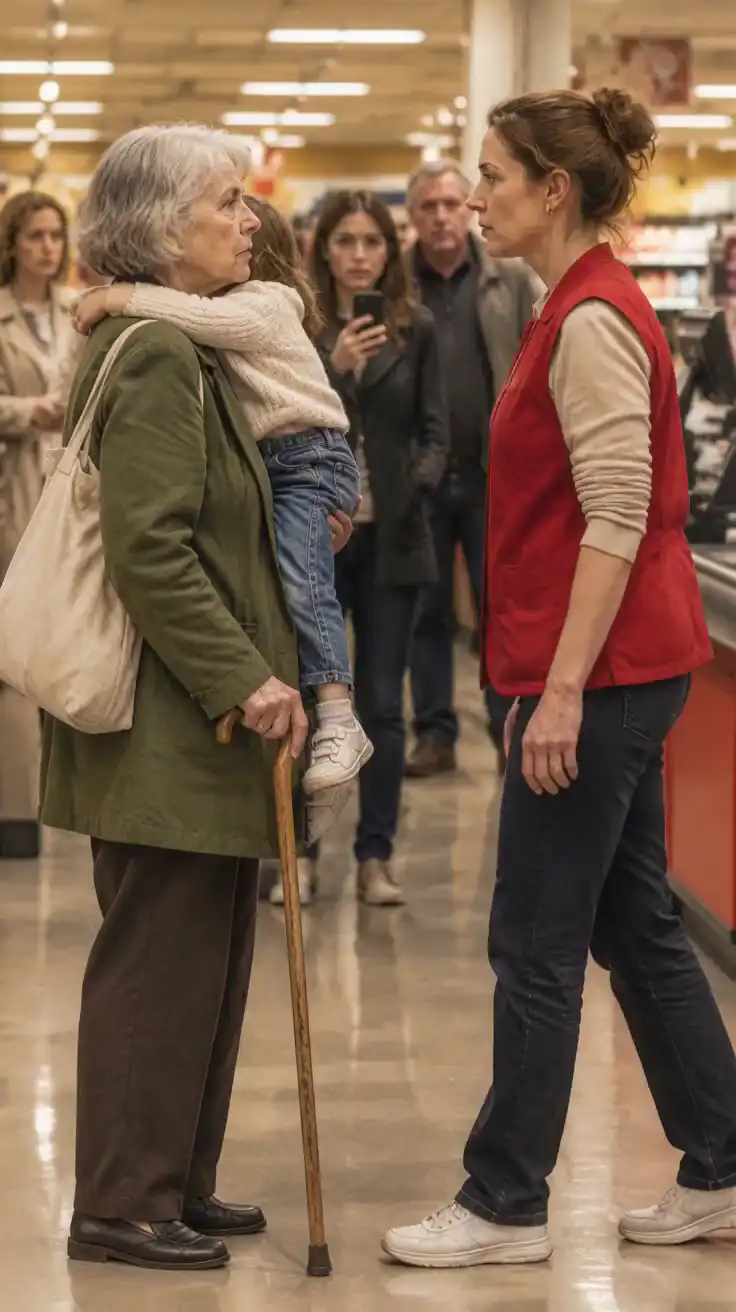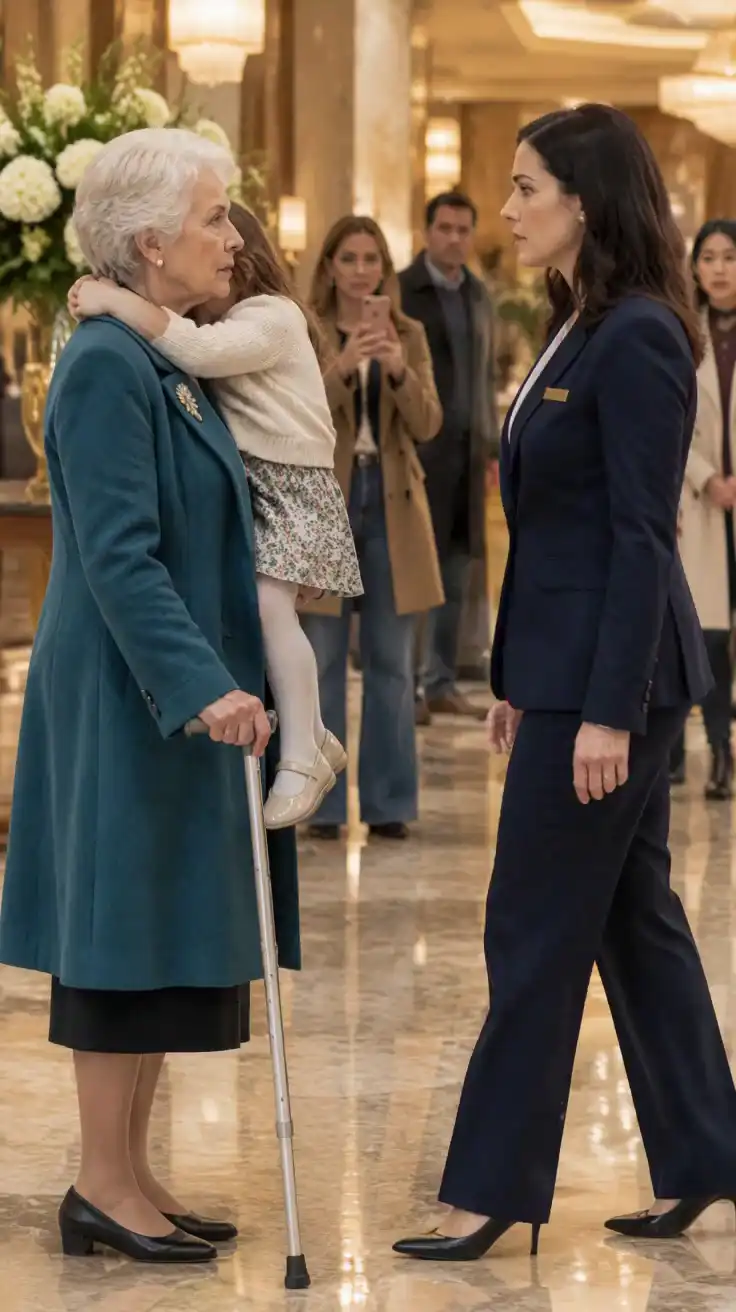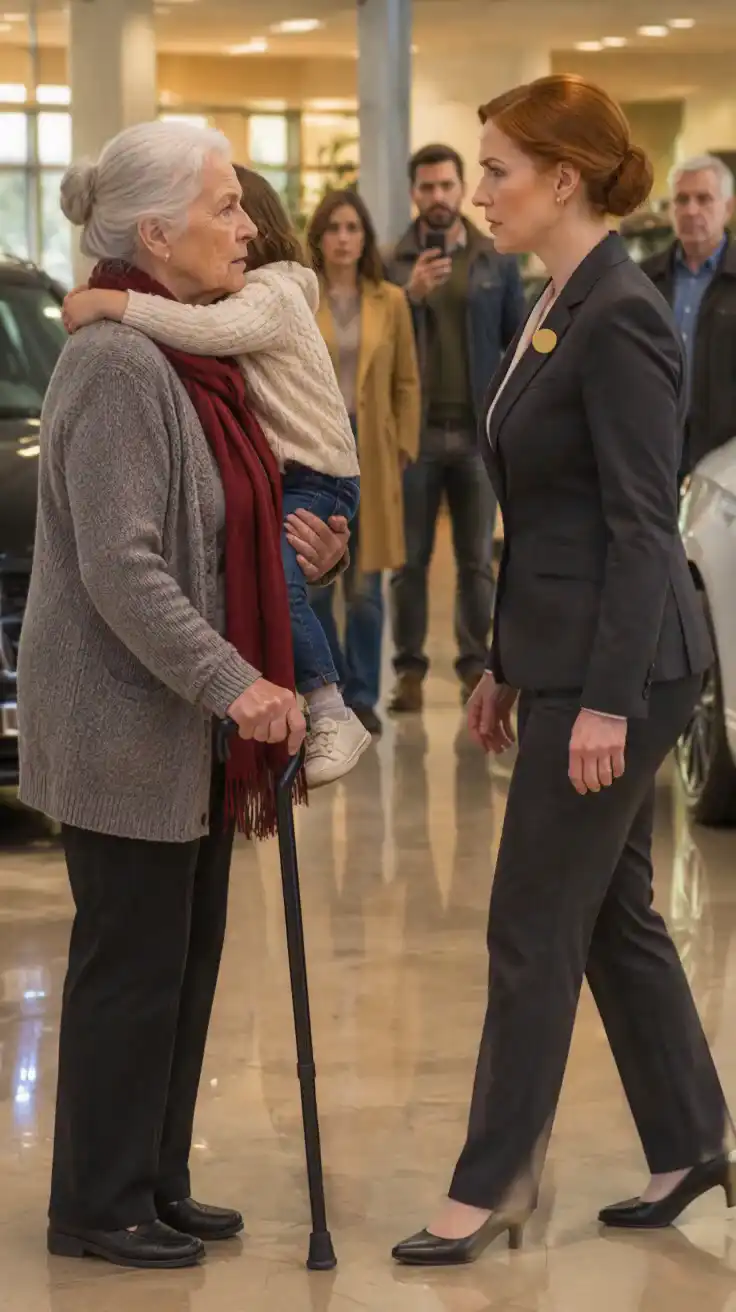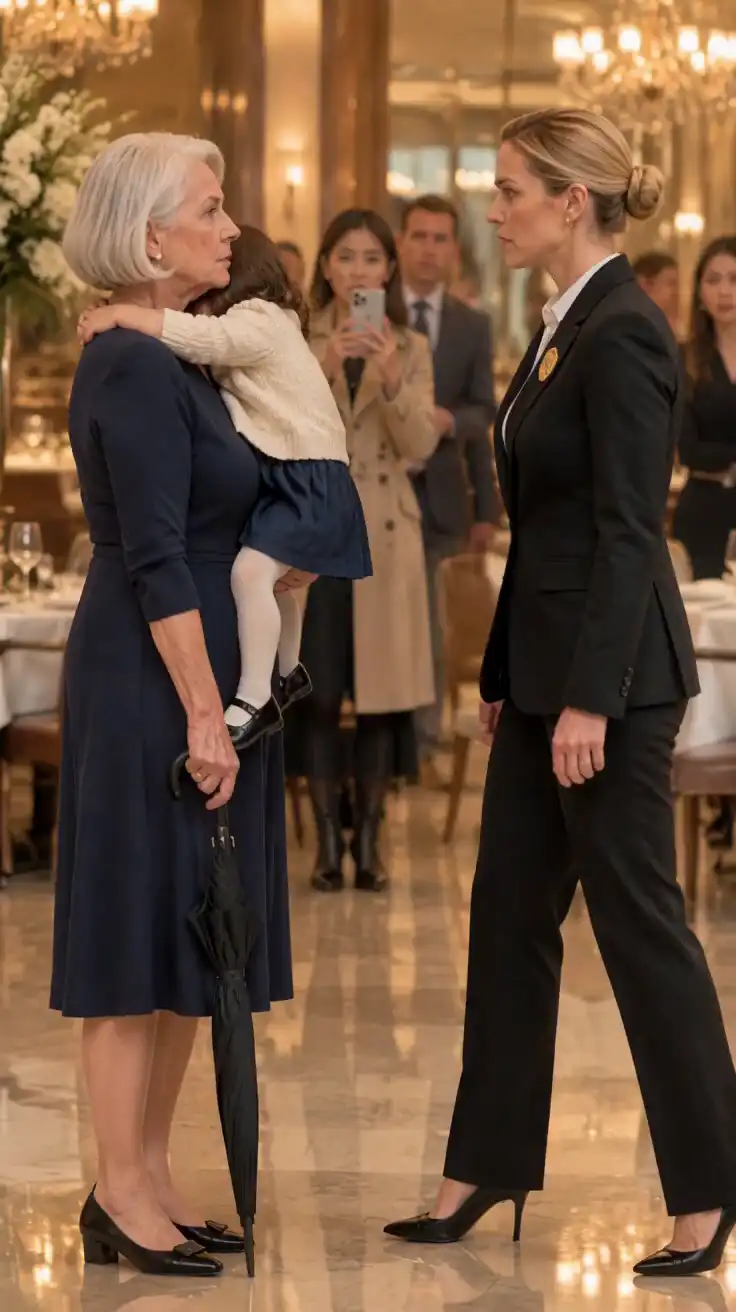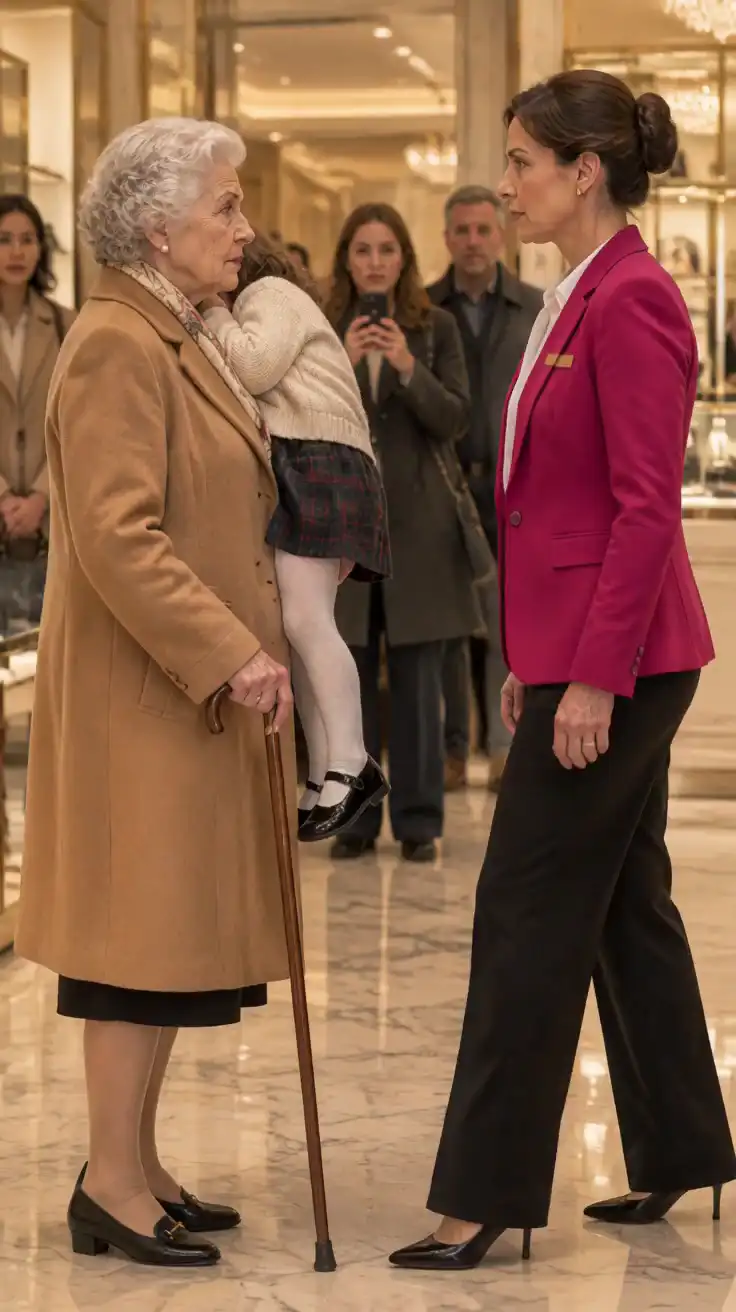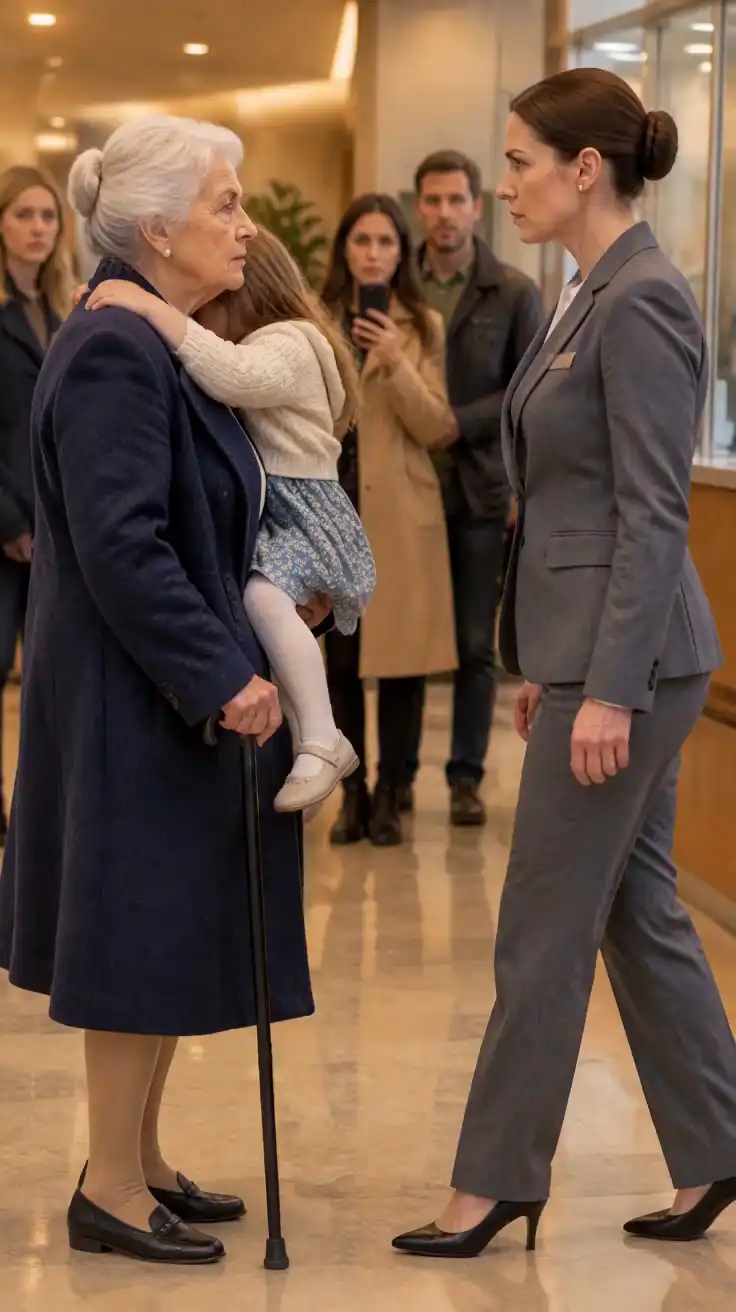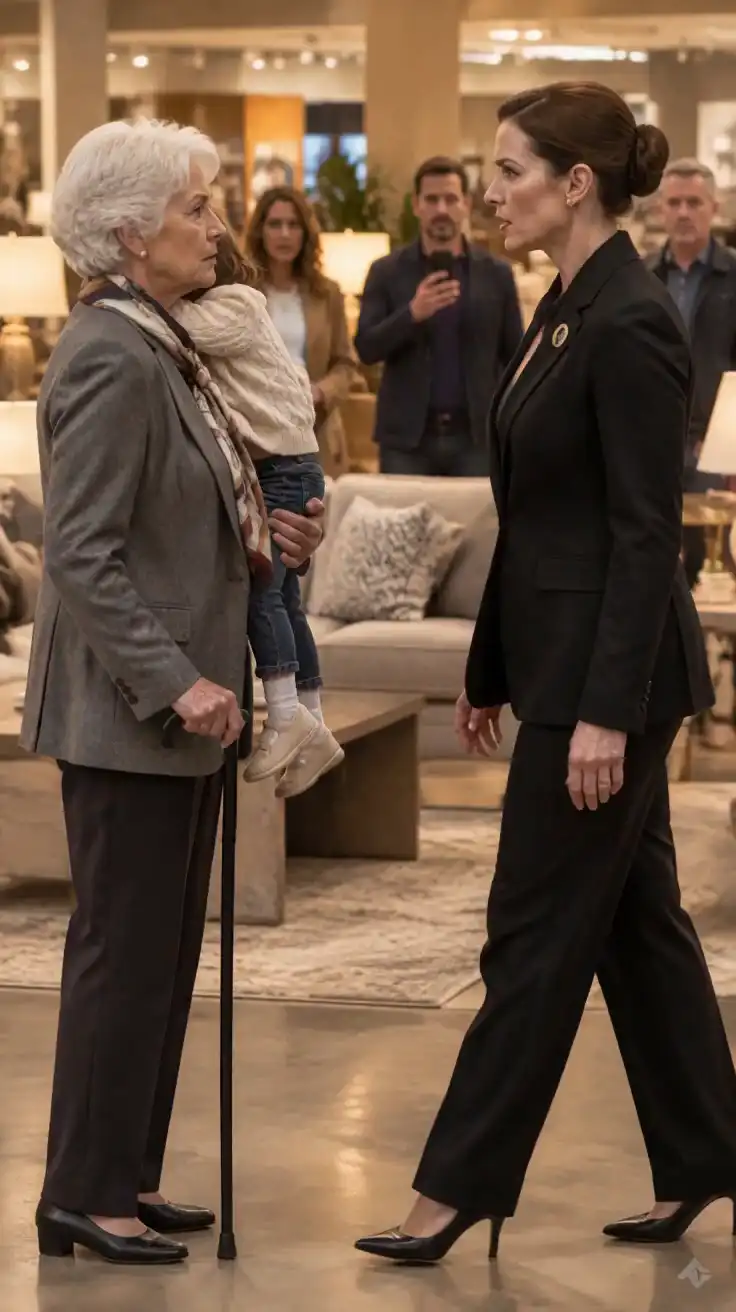
The jewelry store manager grabbed my wrist and called me a thief over a worn ring, but the entire shop was my dowry, and the voice on my speaker just ordered the clerk to pull out the original sketches.
Heat climbed from my wrist to my elbow as the manager pulled me toward the entrance. My old ring knocked against the glass case, making the diamonds inside tremble in their velvet slots.
“Keep moving,” he said. “You can’t try on merchandise and walk out.”
“I haven’t walked out,” I said.
The guard tightened his arm around my shoulder. A child near the display began to cry, and her mother drew her behind a brass stand. Two customers lifted their phones, but the manager snapped, “Put those away. This is private.”
Private. The word hung between the cases and the polished floor.
I looked down at the ring. Its band was scratched smooth from decades of wear. I had slipped it on because the shape felt familiar beneath my thumb, not because I wanted to take it. The manager had seen only an old woman in a plain coat, standing too long beneath the brightest lights.
“Call the owner,” one customer said.
“He’s already being contacted,” the manager replied. “He’ll confirm she has no business here.”
The guard started pulling again. My shoes scraped over the threshold, and the ring caught briefly on the edge of the case. The manager reached for it with his free hand.
“Don’t touch that,” I said.
It was the only time I raised my voice.
The phone in my coat buzzed before he could answer. The manager glanced at the screen, then held out his hand.
“Give it to me,” he said. “I’ll explain what happened.”
I kept the phone against my chest. The voice coming through the speaker was low and urgent, asking where I was and who had put their hands on me. The manager’s face tightened.
“She’s confused,” he told the caller. “We’re handling a suspected theft.”
Around us, the customers pressed closer. Someone set a coffee cup on the counter and whispered, “That’s her ring?”
The voice on the phone went silent for one long second.
Then it said, “Open the bottom drawer. There should be a flat envelope.”
The manager barked at a clerk, “Don’t move.”
But the clerk opened it anyway. She pulled out a bundle of aging design sketches, edges curled and corners darkened by time. At the same moment, the voice said, “Put those on the counter.”
The sketches landed beside the ring while the manager’s hand still held my wrist.
THE RING THAT OWNED THE ROOM
The sketches landed beside the ring while the manager’s hand still held my wrist.
For a moment, nobody moved.
The top sheet had yellowed along the edges. A pencil drawing curved across its center: a low, oval stone held by four narrow claws, with a twisted band that opened like two hands meeting beneath it.
My husband had drawn that ring at our kitchen table fifty-two years earlier.
I knew the crooked line at the left shoulder. I knew the dark smudge where his thumb had dragged through the graphite. Most of all, I knew the initials pressed into the corner in his impatient handwriting.
E.M.
Elias Mercer.
My Elias.
The manager looked down at the sketch, then at the ring on my finger. His grip loosened by a fraction.
“What is this?” he demanded.
I turned my wrist, and his fingers finally slipped away.
“The beginning,” I said.
The guard released my shoulder a second later. His hand dropped as if he had touched a hot stove.
A clerk picked up the top drawing. She looked from the initials to me.
“Mrs. Mercer?”
The manager snapped his head toward her. “You know her?”
“I’ve seen her in the old photographs.”
His face changed, but not enough. Pride kept trying to hold it in place.
“What photographs?”
The clerk swallowed. “The ones in the office. The opening-day photographs.”
I placed both palms on the counter. My wrist throbbed where his fingers had dug into it, but I kept my eyes on the manager.
“Open the vault room,” I said.
He gave a short, humorless laugh. “You don’t give orders here.”
I reached beneath my coat and pulled out the envelope the clerk had found. The paper had been folded and refolded so many times that its corners were soft. Inside was the original deed Elias’s father had signed in 1974.
I laid it beside the sketch.
The manager glanced at the page. His eyes moved over the lines, then stopped.
The clerk leaned closer.
“That’s the store address,” she whispered.
“It is,” I said. “And the name above the door belongs to my family.”
The manager stared at me.
No one had asked who I was. They had decided.
The deed listed the building, the storefront, the back workshop, and the narrow upstairs rooms where Elias and I had lived during the first years of the business. It also recorded the transfer of the property to me as part of my dowry.
Not a loan.
Not a favor.
Not a sentimental promise.
A dowry.
Elias had signed the receiving line beneath his father’s name. The store had been mine before the first display case arrived, before the first customer stepped inside, before the name Mercer & Sons was painted in gold over the entrance.
The manager’s mouth opened.
“You can’t just bring in old papers and claim—”
“I’m not claiming anything,” I said. “The paper already does.”
I pulled another sheet from the envelope.
The clerk took it before he could stop her. Near the bottom, under a column of numbers, she found the inventory mark stamped beside the drawing.
“Seven-fourteen,” she said. “That’s the ring number.”
The manager reached for the sketch.
I placed my hand over it.
“Careful,” I said. “You’ve already handled enough of what belongs to me.”
A murmur passed through the store.
The mother who had pulled her daughter behind the brass stand stepped forward. The child peeked around her coat. The customers with their phones had stopped pretending they were shopping. Every face was turned toward the counter.
The manager’s eyes moved from the deed to my hand.
“You said you were trying it on,” he said.
“I was.”
“You said you didn’t know the inventory number.”
“I didn’t need to.”
“You said—”
“I said nothing to you.”
His cheeks darkened.
The ring had never been merchandise in the way he understood the word. Elias had designed it for me before the store opened. He had made the first model in the back room, using silver wire and a stone his father had bought from a dealer in Antwerp. The finished ring had been placed in the first case on opening day because Elias wanted customers to see what the new workshop could do.
He had taken it off the display before closing and put it on my finger.
That was where it had stayed.
The manager looked at my hand again, as if the ring might become less familiar if he stared long enough.
“You’re telling me this ring belonged to the store?”
“No,” I said. “I’m telling you the store belonged to me, and my husband designed this ring for me.”
The clerk’s face went pale.
Behind her, the guard shifted his weight. He kept looking at the spot on my wrist where his arm had been.
The voice on the phone was still connected. Simon had heard everything.
“Mother,” he said, “is the regional office on the line yet?”
I lifted the phone. “Not yet.”
“Call them.”
The manager stepped toward me. “You’re not calling anyone from inside my store.”
I pressed the phone to my ear.
“Simon,” I said, “your manager says this is his store.”
There was a pause.
Then my son said, “Put him on speaker.”
The manager’s jaw tightened.
I tapped the screen.
Simon’s voice filled the quiet showroom.
“Mr. Hale, this is Simon Mercer.”
The manager went still.
The clerk looked at him.
The customers looked at him.
Even the guard raised his head.
Simon continued, “You have my mother’s wristprint on your hand, and you have a family-owned ring sitting on your counter. You will step away from her and wait for the regional manager.”
Mr. Hale found his voice. “Simon, you’re misunderstanding the situation.”
“I saw the footage.”
His eyes flicked toward the ceiling cameras.
“You were told she was a suspected thief,” he said. “You slapped her, laughed, ordered security to remove her, and then tried to take her phone.”
The room tightened around us.
One of the customers whispered, “He slapped her?”
“I didn’t—” Hale began.
“You did,” Simon said. “The recording is clear.”
Hale’s hand curled at his side.
The manager had not known who was speaking when he had told the caller I was confused. Now he knew. He had been speaking to the owner of Mercer & Sons.
He also knew he had done it while the owner’s mother stood in front of him.
But Simon did not stop there.
“Open the vault room,” he said.
Hale looked at me. “You don’t have authorization.”
I took the brass key from the chain around my neck.
The customers nearest the counter leaned in.
I had carried that key for forty-eight years. The teeth were worn smooth, and the small metal tag had long ago lost its stamped number. Elias had given it to me the morning after the store opened.
“Your father gave me this,” I said. “He told me never to let anyone else decide what belongs behind that door.”
Hale stared at the key.
The clerk turned toward the back hallway.
“Mrs. Mercer still has access,” she said.
“She’s not an employee,” Hale replied.
“No,” I said. “I’m the owner.”
The words settled more heavily than I expected.
I had not used them in years.
Not because they were untrue. Because Simon had taken over the daily work after Elias died, and I had been happy to let him. I had spent decades choosing stones, balancing invoices, calming frightened brides, and sitting beside Elias while he drew designs on the backs of receipts. When grief hollowed out the workshop, Simon filled it with his own hands.
He had never asked me to leave.
I had simply stepped away.
Hale mistook silence for surrender.
That was his mistake.
The door to the vault room stood behind the sales floor, concealed by a wall of dark wood. I walked toward it. The manager started after me.
“Wait.”
I stopped.
“You’re not going anywhere until we sort out the theft,” he said.
The guard moved between us.
Then he looked at my wrist.
A red mark had risen beneath the skin in the shape of the manager’s fingers.
The guard’s face tightened.
He stepped aside.
“I’m not holding her,” he said.
Hale turned on him. “I told you to keep her here.”
“You told me she was stealing,” the guard said. “You didn’t tell me she owned the place.”
“That doesn’t change procedure.”
“It changes what I’m doing.”
He removed the radio from his belt and set it on the counter.
“I’m done touching her.”
The manager looked around for support, but the store had changed sides without anyone announcing it. The clerk stood near the sketches. The guard had moved away from my shoulder. The customers had formed a loose half-circle around the counter.
No one was laughing now.
I put the key into the vault door.
The lock turned with a stiff metallic click.
Hale’s voice rose behind me. “You can’t take anything out of there.”
“I’m not taking anything.”
I opened the door.
“I’m putting something back.”
The vault room was smaller than most people imagined. It held old ledgers, sealed trays, repair boxes, and the first pieces Elias had made after we married. The air smelled of metal, paper, and cedar.
On the lowest shelf sat a long black case.
I had not seen it since the year after Elias died.
I reached for it, but Simon’s voice came through the phone.
“Mother, wait for me.”
“I know.”
“I’m five minutes away.”
The customers heard him.
Hale heard him.
The manager took one step back.
Until then, he had been holding on to the belief that the call could be contained, explained, rewritten. He had assumed the person on the phone was someone who might be persuaded by a polished version of events.
He had not expected Simon to come.
Hale turned toward the clerk. “Close the front doors.”
She did not move.
“Did you hear me?”
“I heard you,” she said.
“Then close them.”
The mother with the child stepped between the entrance and the counter.
“No,” she said. “Leave them open.”
Hale looked at her. “This is a private business.”
She glanced at me. “Apparently not private enough to hit an old woman in front of everyone.”
A customer near the window nodded.
Another lifted his phone higher.
Hale pointed at the devices. “Put those away.”
The guard spoke into his radio. “I need the regional manager sent to this location immediately. There’s been an assault involving staff.”
Hale spun around. “You’re suspended.”
“Then suspend me after I finish the report.”
The guard gave his name and the store address. His voice was steady, but his knuckles were white around the radio.
I carried the black case from the vault room and placed it beside the deed.
The latch resisted before opening.
Inside lay an old silver setting, wrapped in cloth, and beneath it a stack of cards tied with blue thread.
Elias had kept every early sketch.
He had drawn while standing, while eating, while waiting for trains. He sketched with his left hand when the right was busy polishing a stone. Some designs had coffee stains. One had a burn mark from the stove.
I lifted the top card.
The same ring appeared there, more carefully rendered than on the first page. The stone was oval, pale blue, with a narrow line of diamonds along one side of the band.
The ring on my finger had been made from that drawing.
On the lower edge, Elias had written the inventory number.
714.
Under it, he had added three words.
“For Margaret. Always.”
I touched the writing with my fingertip.
The store noise faded for half a breath.
I could see him again in our old kitchen, his dark hair falling over his forehead, his pencil tucked behind one ear. He had pushed the sketch toward me and said, “You keep saying you want something simple.”
“I said I wanted something I could wear while kneading bread.”
“So no large stone.”
“No sharp edges.”
“No fuss.”
“And no price tag.”
He had smiled then.
“That last part may be difficult.”
The manager’s voice pulled me back.
“This is absurd,” Hale said. “Anyone could have old family papers.”
“Not anyone,” I replied. “The deed has the county seal. The inventory book has the same number. And the original design carries my husband’s initials.”
Hale looked at the open case.
The clerk reached for the inventory ledger on the shelf behind her. She was young, perhaps twenty-three, and had worked for the store less than a year. I had met her once during a holiday rush, but she remembered the photographs.
She opened the ledger carefully.
“Seven-fourteen,” she said. “Blue oval. Four-prong setting. Mercer original.”
Hale moved toward her.
“Give me that.”
She held it against her chest.
“You don’t have to hand it over,” I said.
His eyes hardened. “I am the manager.”
“Not for much longer,” Simon said through the phone.
Hale flinched.
The sound of the front door opening made every head turn.
Simon entered with his coat unbuttoned and his tie pulled loose. He had driven straight from the office. His hair was silver at the temples now, but when he looked at me, I saw the boy who had once slept beneath the workbench while Elias finished a wedding order.
He crossed the store without looking at the manager.
He came to me first.
“Let me see your wrist.”
“I’m fine.”
“Mother.”
I gave him my hand.
His fingers hovered over the red marks without touching them. His face went rigid.
“I’m fine,” I repeated.
“That’s not the point.”
“I know.”
He looked at Hale.
The manager stood behind the counter, still trying to keep his shoulders square.
“Mr. Mercer,” he said. “There’s been a misunderstanding.”
Simon turned toward him.
“Did you slap her?”
Hale’s lips parted.
“It happened quickly.”
“That wasn’t my question.”
“I was stopping a suspected theft.”
“Did you slap her?”
Hale looked at the customers, then back at Simon.
“She refused to return the item.”
“She was wearing her own ring.”
“I had no way of knowing that.”
“You had eyes.”
The clerk lowered the ledger.
Simon reached for the design sketch and placed it flat on the counter. Then he took the deed from my hand and opened it to the stamped page.
He did not rush. He made sure everyone could see.
“This is the original design,” he said. “Elias Mercer drew it in 1974. This is the inventory record. This is the deed transferring the building and business capital to my mother as her dowry before the store opened.”
Hale looked at him.
Simon continued, “My father designed the ring for her. It was displayed here on opening day, then removed from inventory and given to her. The number remained in the archive because he refused to erase the work.”
The mother with the child leaned toward the counter.
“So she owns the ring?”
“She owns the ring,” Simon said. “And she has a legal claim to the property beneath your feet.”
A customer let out a low whistle.
Hale’s face had gone pale around the mouth.
I touched the ring.
“I didn’t come here to prove that,” I said. “I came because Simon asked me to look at an old collection in the vault.”
Simon glanced at me. “I asked you to check the 1974 designs. The archive was being reorganized.”
“I found the ring first.”
“And tried it on.”
“I wanted to remember how it felt.”
The words came out quieter than the rest.
Simon’s expression softened for a moment. Then he looked at Hale again.
“You called her a thief.”
Hale said nothing.
“You told security to drag her out.”
Still nothing.
“You told the caller she was confused.”
“I was trying to de-escalate.”
“You laughed after hitting her.”
The manager’s gaze dropped.
One of the customers spoke. “He did. I saw it.”
“So did I,” another said.
The child’s mother folded her arms. “You laughed when she said not to touch the ring.”
Hale’s hand went to the counter.
Simon rested his palm over the deed.
“My mother is not a trespasser in this store,” he said. “She is not a customer who needs permission to examine the archive. She is not a confused old woman who wandered in from the street.”
He looked at me.
“She is the reason this building exists.”
The store fell silent.
For years, I had been introduced as Simon’s mother. Sometimes as Elias’s widow. At family dinners, people called me Margaret. At charity events, I was the woman who donated the first sapphire bracelet. At the store, younger employees often assumed I was visiting because I liked jewelry.
They saw the gray hair first.
They saw the plain wool coat.
They saw the old ring and thought it was something I had picked up from a bargain drawer.
Hale had looked at all of that and decided I could be pushed aside.
Now the customers were looking at me differently, but I did not want their surprise. I wanted them to understand that nothing about me had changed.
Only the information had.
The front doors opened again.
A woman in a navy suit entered carrying a leather folder. Behind her came a man from corporate security. The guard stepped forward to meet them.
“Regional manager Dana Brooks,” he said. “And corporate investigator Michael Chen.”
Brooks looked at the crowd, the open vault door, the sketches on the counter, and the red marks on my wrist.
“Who is Mrs. Mercer?” she asked.
Simon answered, “She is.”
Brooks frowned. “I’m sorry?”
“She is Margaret Mercer. The widow of Elias Mercer. The founder.”
Brooks stopped.
She knew the name. Everyone in the company did. Elias’s portrait hung in every regional office, though most people below the executive level had never met anyone who had known him.
Brooks looked at me.
“I’ve seen your photograph,” she said.
“That photograph was taken before your mother was born,” I replied.
Her eyes moved to my wrist.
“Are you hurt?”
“My wrist will be fine.”
“That wasn’t what I asked.”
“I’m angry.”
Brooks nodded slowly.
“That I understand.”
Hale came around the counter. “Dana, this is being exaggerated. We had a suspected theft. The woman refused to cooperate, and—”
“Did you strike her?”
He looked toward the corporate investigator.
“I made contact while trying to stop her from leaving.”
Brooks did not blink.
“Did you strike her?”
Hale’s voice thinned. “Yes.”
The customers reacted at once. Someone muttered, “There it is.”
Brooks opened the folder.
“Then the first part is not complicated.”
Hale’s face tightened. “You need to hear the full context.”
“I will. But the video already gives me the first fact.”
She turned to me.
“Mrs. Mercer, may I see the documentation?”
Simon handed her the deed.
Brooks read the first page, then the transfer page. Her expression changed as she reached the county seal.
“Where did you get this?”
“It was given to me in 1974.”
“You’ve kept it all these years?”
“In a safe.”
“Why bring it today?”
“I didn’t. It was already in the vault.”
Brooks looked toward the open door.
“Why was the vault opened?”
“Because I asked for it,” Simon said.
Hale turned sharply. “You authorized her access?”
“I authorized her to review the archive. She has always had access.”
“You never told me.”
Simon’s eyes stayed on him.
“You never asked.”
Brooks took the design sketch from the counter. She studied the initials and the number.
“Is this the original?”
“Yes,” I said.
“Can you authenticate it?”
“I can tell you when and where it was drawn.”
Simon said, “The archive has conservation records.”
Chen, the corporate investigator, had been examining the red mark on my wrist. He looked up.
“Do you have an inventory record for the ring?”
The clerk held up the ledger.
“I found it.”
Chen took it carefully. He compared the number in the ledger with the sketch and the ring on my hand.
“Seven-one-four,” he said. “All three match.”
Hale stepped closer.
“That doesn’t prove she owned it when she entered.”
I turned to him.
“You watched me put it on.”
“I saw you remove it from the case.”
“I removed it from the case because you had placed it there.”
The clerk’s eyes widened.
Hale looked at her.
“You placed that ring in the display?”
She nodded.
“Where did you get it?”
“It was in the vault tray marked heritage pieces. Mr. Hale told me to move several items to the front case for the anniversary display.”
Hale shook his head. “I didn’t know it was hers.”
“You didn’t ask,” Simon said.
“I was told to display the old designs.”
“By whom?”
Hale hesitated.
Brooks turned to him. “By whom?”
“The merchandising department.”
“Did you review the item list?”
“Yes.”
“Did you read the notes attached to the pieces?”
“I reviewed what was necessary.”
Chen flipped through the ledger.
“The note beside 714 says ‘family property—do not sell, loan, or alter placement without owner approval.’”
Hale looked at the page.
The clerk pointed to the line.
“It’s right here.”
He reached for the ledger.
Chen closed it before his hand could touch it.
“Don’t.”
The manager’s hand fell.
Brooks folded the deed and returned it to Simon.
“Mrs. Mercer, I’m going to ask you to leave the building while we conduct the employee investigation.”
Hale’s shoulders lifted.
I saw the calculation cross his face. He thought leaving would weaken me. He thought the room would become his again once I crossed the threshold.
I shook my head.
“No.”
Brooks regarded me.
“No?”
“I’m not leaving.”
“Your safety—”
“I’m safe now.”
The guard moved closer, not to restrain me, but to stand beside me.
Brooks looked at him, then back at me.
“I’m not asking because I doubt your ownership. I’m asking because you’ve been assaulted.”
“I understand. But the assault happened here, and I want to hear what is said here.”
Simon placed his hand lightly against my back.
“I’ll stay with her.”
Brooks considered the crowd.
“Then we’ll close the customer area and move the investigation to the office.”
The mother with the child raised her voice.
“Are we supposed to leave?”
Brooks looked at her. “There is no sale happening right now.”
“I want to know what happens to him.”
Hale snapped, “This is an internal matter.”
“No,” she said. “You made it public when you hit her in front of us.”
A man near the entrance lifted his phone.
“And when you tried to throw her out,” he said.
Brooks turned to Chen.
“Secure the footage and collect witness statements.”
Hale’s face drained.
“You can’t use customer recordings.”
“We can ask for them,” Chen said.
“I didn’t consent.”
“You were working in a public retail space,” Brooks replied. “And the company cameras recorded the incident.”
The manager looked at Simon.
“You’re going to let them do this?”
Simon’s voice stayed calm.
“You did this.”
Hale turned on me.
“You walked in here pretending—”
“Stop,” Simon said.
The word cracked across the room.
Hale stopped.
Simon stepped between us.
“You will not accuse her of pretending anything. You saw an older woman and decided she had no authority. That decision was yours.”
Hale’s eyes flashed.
“You weren’t here.”
“No. But the cameras were.”
The guard gave his statement first.
He described the manager approaching me, taking my arm, and striking me. He admitted he had followed Hale’s order to remove me before knowing who I was. He also said he had not been told to verify the ring’s ownership.
The clerk spoke next.
She explained that Hale had moved the ring to the display case for the anniversary collection. She said he had mocked my coat when I entered.
“I said the woman might be connected to the family,” the clerk told Brooks.
Hale interrupted. “You said she looked familiar.”
“I said I had seen her in the old photographs.”
“And I said old photographs weren’t proof.”
The clerk looked at me.
“I’m sorry.”
“You didn’t hit me,” I said.
“But I didn’t stop him.”
“You were afraid.”
She looked down at her hands.
“I was.”
I reached across the counter and squeezed her fingers.
“Being afraid explains silence,” I said. “It doesn’t make it harmless. Next time, use your voice sooner.”
She nodded, tears gathering but not falling.
The mother with the child gave her statement after that. She described the slap and the manager’s laugh. The customers added what they had seen.
With every account, Hale grew smaller.
Not because anyone shouted.
Because no one needed to.
The facts stood on their own.
Chen asked to examine the ring.
I removed it carefully and set it on a square of velvet. Without it, my finger showed a pale band where the metal had protected the skin from the sun for half a century.
Simon noticed.
“You don’t have to give it to them,” he said.
“I want them to examine it.”
Chen wore gloves. He compared the ring with the sketch, then held it beneath a magnifying lamp.
“The underside has an engraving,” he said.
Hale stepped closer.
“What engraving?”
Chen angled the ring toward the light.
“E.M. and M.M.”
The initials of Elias Mercer and Margaret Mercer.
I had forgotten they were there. Elias had engraved them after I complained that no one would know the ring was mine if it were ever lost.
“Elias did that at two in the morning,” I said. “He had burned his finger polishing the band, so he was in a terrible mood.”
Simon smiled faintly.
“You told him to leave it alone.”
“He said he had already ruined the ring.”
“You wore it the next morning.”
“I did.”
The memory moved through the room more gently than the anger had.
Brooks examined the engraving.
“Mr. Hale,” she said, “why was this piece listed with the anniversary display?”
“I didn’t know it was personal.”
“It was marked family property.”
“I didn’t read the note.”
“You moved it anyway.”
“I was told to create a heritage presentation.”
“You could have used the framed design.”
“The ring looked better under the lights.”
“And when Mrs. Mercer tried it on?”
“I believed she had removed it from the case.”
“You believed that because?”
“She was wearing a plain coat and carrying an old handbag.”
The silence after that was worse than a shout.
Brooks closed her folder.
“Your own words are enough.”
Hale looked toward the customers.
“I was doing my job.”
“No,” Brooks said. “You were protecting merchandise from the person who owned it.”
His mouth tightened.
“Are you firing me?”
Brooks did not answer immediately.
She looked at the red marks on my wrist, the open vault, the deed, the old sketch, and the guard standing beside me.
“Yes,” she said.
Hale stared at her.
“On what grounds?”
“Physical assault. Abuse of authority. Failure to follow verification procedures. Misrepresentation to the owner. And conduct damaging to the company.”
He laughed once, but there was no humor in it.
“You’re firing me over a misunderstanding?”
“I’m firing you because you struck a customer.”
“She wasn’t a customer.”
“That does not improve your position.”
“She was trespassing.”
“She had a key.”
“She didn’t identify herself.”
“You didn’t ask her name before hitting her.”
Hale’s face twisted.
“I thought she was stealing.”
“You thought,” Brooks said, “and then you acted.”
The guard collected Hale’s access badge.
The manager did not hand it over at first.
He looked at me.
All the certainty he had carried when he grabbed my wrist was gone. He seemed to be waiting for me to rescue him from the consequence, perhaps by saying I did not want to ruin his life, perhaps by accepting a private explanation.
I had spent too many years making other people comfortable.
I said nothing.
He placed the badge on the counter.
Brooks told him his employment ended immediately. Corporate security would escort him to collect his personal belongings from the office. He was not to return to the store without written permission.
Hale turned toward the door.
The crowd parted.
No one clapped.
No one cheered.
The mother held her daughter close and watched him leave.
At the entrance, Hale stopped.
For one second, he looked back at me.
I expected anger. I expected another accusation.
Instead, his eyes settled on the ring lying on the velvet.
Then he walked out.
The guard locked the door behind him.
The store became quiet in a different way.
Simon sat me in the chair near the repair counter and brought a cold cloth for my wrist. He pressed it against the bruising himself.
“I can do it,” I said.
“I know.”
“You’re pressing too hard.”
“I’m not.”
“You always pressed too hard when you bandaged your own cuts.”
“I was twelve.”
“You were careless.”
“You let me use the polishing wheel.”
“Your father let you.”
“You could have stopped him.”
“I was making lunch.”
“You were watching from the doorway.”
I smiled despite myself.
He noticed.
“There,” he said. “That’s better.”
I looked at him.
“You came quickly.”
“You told me to open the vault room.”
“That wasn’t an invitation.”
“It was the closest thing you’ve ever given me to one.”
I glanced toward the deed.
Simon lowered the cloth.
“Why didn’t you tell me you still had it?”
“The deed?”
“The ring. The sketches. All of it.”
“I thought you knew.”
“I knew the ring was important. I didn’t know it was the first one.”
“It was never the first one.”
He looked confused.
“The first one was silver,” I said. “Elias made it from wire. He couldn’t afford a stone then.”
“Where is it?”
“In the house.”
“You kept it?”
“I keep everything.”
“That explains the basement.”
“The basement is organized.”
“It has three boxes labeled ‘miscellaneous.’”
“They are very specific miscellaneous boxes.”
He laughed softly, and the sound loosened something in my chest.
Then he looked down at the deed.
“I should have made sure the staff knew who you were.”
“You shouldn’t have needed to.”
“I know.”
“I came here because you asked me to review old work. I didn’t expect a ceremony.”
“I didn’t expect this.”
“No one expects a hand to come at their face.”
His mouth tightened again.
“I’m sorry.”
“You didn’t do it.”
“I hired him.”
“You hired a manager. You didn’t hire his judgment.”
“That is exactly what I hired.”
I set the cold cloth on my lap.
“Simon, your father trusted people too quickly.”
“He trusted them after they proved themselves.”
“He also liked giving people room to grow.”
“You think I gave Hale too much room?”
“I think you let the store become something you only visited on paper.”
He looked toward the cases.
The modern displays reflected the ceiling lights. Jewelry gleamed behind glass, arranged by price and collection. Above them hung a large framed photograph of Elias standing outside the store on opening day.
In the photograph, he wore a borrowed suit. His hair was too long, and his left hand rested on my shoulder. I was younger than Simon was now, with a white ribbon tied around my waist.
The gold lettering over the door was new then.
MERCER & SONS.
Elias had added “Sons” because his father had given us the workshop space. Simon had hated the name when he was a child because there was only one son, and customers constantly assumed he was already in charge.
I looked at the photograph.
“The store has changed.”
“It has to.”
“I know.”
“You don’t like the new cases.”
“I didn’t say that.”
“You don’t like the lighting.”
“It makes everyone look pale.”
“You don’t like the music.”
“It makes me feel trapped in an elevator.”
He smiled.
“But you like the work,” he said.
“I like that people still come here looking for something they’ll keep.”
“That part hasn’t changed.”
“It almost did today.”
He looked toward the door Hale had left through.
“No,” Simon said. “That part didn’t.”
The customers had begun to leave, though several paused to speak to the clerk. The mother brought her daughter to me before going.
“Her name is Lily,” she said.
Lily looked at my wrist.
“Did he hurt you?”
“A little.”
“Did you own the store?”
“I do.”
The girl glanced up at her mother.
“Then why didn’t he know?”
The mother’s eyes met mine.
“That’s a good question.”
I looked at the child.
“Sometimes people look at what you’re wearing and decide they know what you can afford. Sometimes they look at your age and decide you no longer have a say. They can be wrong about both.”
Lily considered this.
“Your ring is pretty.”
“Thank you.”
“Did your husband make it?”
“He did.”
“Was he good?”
I touched the ring.
“He was stubborn.”
“That’s not what I asked.”
I smiled.
“Yes,” I said. “He was very good.”
After they left, Brooks approached me.
“I owe you an apology,” she said.
I looked at her.
“You didn’t hit me either.”
“No. But our systems failed before I arrived. The inventory note was clear. The ownership record was clear. The staff should have known.”
“The clerk knew.”
“She knew enough to be frightened.”
Brooks glanced at the open archive.
“I’m going to order a full review of the heritage collection. Every piece will be photographed, documented, and marked properly. No one will move family property without authorization.”
“Good.”
“And the company will cover your medical examination.”
“I don’t need one.”
“Please accept it anyway.”
I thought about the pressure of Hale’s fingers.
“All right.”
Chen handed Simon a small envelope.
“The footage and witness statements will be preserved. You may want to speak with counsel before deciding whether to make a police report.”
Simon looked at me.
The question was his to ask, but the decision was mine.
I looked toward the doors.
Hale had not apologized. He had not admitted what he had done until the evidence left him nowhere to hide. He had used suspicion as a shield and authority as a weapon.
But I did not want the rest of my life to be built around his name.
“Make the report,” I said.
Simon nodded.
Brooks said, “I’ll provide all company records.”
The guard, whose name I learned was Victor, stood nearby with his radio clipped back to his belt.
“I’m sorry too,” he said.
“You released me.”
“After I had already put my arm around you.”
“You believed your manager.”
“I should have asked questions.”
“Yes,” I said.
He accepted that without defending himself.
“What happens to you?” I asked.
“I don’t know.”
Brooks turned to him.
“You’re not being terminated.”
Victor looked surprised.
“You will receive a formal warning and retraining,” she continued. “You followed an order, but you ignored an opportunity to stop an assault.”
He nodded.
“That’s fair.”
“It is,” I said.
He looked relieved, but not proud.
By late afternoon, the store was empty.
Simon locked the front door and turned the sign to CLOSED. Sunlight stretched across the floor, catching dust above the cases. Without customers, the room looked smaller and more like the workshop I remembered.
The original sketch remained on the counter.
Simon lifted it by the edges.
“Where do you want it?”
“Not in the office.”
“Where, then?”
I stood beneath the photograph of Elias.
“Take down the landscape.”
He looked at the painting above the central display.
“It’s been there for ten years.”
“It’s a painting of a bridge no one in this family built.”
“You hate that painting.”
“I dislike the bridge.”
He laughed again.
Together, we removed it from the wall.
Behind it, the paint was lighter. A small nail remained in the plaster.
Simon held the design sketch against the empty space.
“Here?”
“Higher.”
“Your father was shorter than me.”
“He was proud of being exactly the right height.”
“He was five feet eight.”
“He said height was a distraction.”
“From what?”
“From his hands.”
Simon raised the frame.
I stepped back.
The sketch looked different outside the vault. The pencil lines were faint, but the ring seemed to lift from the paper. Beneath the drawing, Elias had written the date.
June 14, 1974.
Our wedding anniversary.
Simon found a simple frame in the storage room. He cleaned the glass three times before placing the sketch inside. Then he hung it above the center case.
I stood beneath it.
For the first time in decades, the store displayed the work before the merchandise.
Simon returned to the counter and picked up the deed.
“What should we do with this?”
“Put it back in the safe.”
“You’re sure?”
“No.”
He looked at me.
“I’m sure it belongs there,” I said. “I’m not sure I want it hidden again.”
He set the deed down.
“What are you thinking?”
“That the store has been telling the wrong story.”
He glanced at the framed sketch.
“The story of your father?”
“The story of the family. The people who built it. The people who kept it.”
“That includes you.”
“Yes.”
He leaned against the counter.
“Do you want your name on the wall?”
I looked toward the old gold letters above the entrance, visible through the glass doors.
MERCER & SONS.
“My name is already in the deed.”
“That isn’t what I asked.”
I thought about the moment Hale had stared at me and asked what the old papers were. I thought about the way the clerk had said Mrs. Mercer, as if she had recognized a face but not understood the authority behind it.
I had let my name become a footnote because Elias’s work was easier to display than my ownership.
“No,” I said. “Not on the wall.”
Simon waited.
“Put it under the drawing.”
He nodded.
“What should it say?”
“Nothing that sounds like a speech.”
“That narrows it down.”
“Just the date. The design. And who it was made for.”
He opened a notebook.
“‘Original design by Elias Mercer, June 14, 1974. Created for Margaret Mercer.’”
“That will do.”
He wrote it down.
Then he added, “First owner of Mercer & Sons.”
I looked at him.
“You’re being dramatic.”
“I’m being accurate.”
“Leave out ‘first.’”
“Why?”
“Because you are the owner now.”
He stopped writing.
The store lights reflected in his eyes.
“I am.”
“You have been for years.”
“I know.”
“No,” I said. “You know the business. That isn’t the same thing.”
He closed the notebook.
“I thought you wanted me to run it.”
“I did.”
“That meant you didn’t want to be involved.”
“It meant I trusted you.”
He absorbed that.
“Those aren’t the same thing either.”
“No.”
He came around the counter and stood beside me.
“I should have told everyone who you were.”
“You shouldn’t have had to announce me like a visiting dignitary.”
“But I should have made sure the records were clear.”
“They were clear.”
“For the people who read them.”
“Then make people read them.”
He nodded.
The next morning, Simon called a staff meeting.
I sat at the end of the long worktable with my wrist wrapped in a thin bandage. The bruise had deepened overnight, turning purple along the edges. Victor stood near the door. The clerk sat beside him, holding a folder against her knees.
Brooks attended by video call, but Simon did not place her on a screen behind a desk. He set the tablet on the table so every employee could see her face.
There were twelve people in the meeting.
Several had never met me.
Simon introduced me without embellishment.
“This is my mother, Margaret Mercer,” he said. “She is Elias Mercer’s widow. She is also the legal owner of the property and the family business.”
A young sales associate looked at the ring on my finger.
“The ring from yesterday?”
“The same one,” I said.
Simon continued.
“The manager who assaulted her has been terminated. A report has been filed. All staff will receive training on ownership verification, elder protection, and de-escalation. But training is not the only issue.”
He looked around the table.
“The problem was not just that one employee made a bad decision. The problem was that everyone allowed the room to become unsafe before anyone challenged him.”
No one moved.
The clerk raised her hand.
Simon nodded.
“I did say something,” she said. “But not quickly enough.”
“You did say something,” he replied. “And next time, say it sooner.”
She looked at me.
“I will.”
Victor spoke next.
“I followed the order because I thought I had to.”
Simon leaned forward.
“You have to follow lawful instructions. You do not have to assist in an assault.”
Victor nodded.
“I understand now.”
“No,” I said. “Understanding is what happens after. What matters is what you do when it happens again.”
He met my eyes.
“I’ll stop it.”
“Good.”
Brooks described the changes to the store’s procedures. Family pieces would be stored separately from sale inventory. Each heritage item would have a photograph and a custody record. Any dispute over ownership would require a senior review before anyone touched the person or the object.
One employee asked who could approve access to the vault.
Simon answered, “My mother and I.”
I lifted my bandaged wrist.
“And the person who carries the key.”
A few people smiled.
The meeting lasted an hour. No one left feeling comfortable, which was exactly what Simon wanted.
Afterward, the clerk stayed behind.
“I have something,” she said.
She placed a folded paper on the table.
“What is it?” I asked.
“A copy of the old staff handbook. I found it in the office.”
Simon unfolded it.
The paper was from 1974. On the first page was a list of principles written by Elias in blue ink.
The first said that every customer should be treated as if they were carrying something precious.
The second said that no employee should mistake an expensive object for a valuable person.
The third said that the store existed to protect trust, not merely to sell metal.
I read the lines twice.
“He wrote this?” Simon asked.
“Yes.”
“Why haven’t I seen it?”
“It was in the bottom drawer.”
“Under what?”
“Receipts.”
He looked toward the ceiling.
“My father hid his best ideas under receipts.”
“He thought people only respected things that came in folders.”
Simon folded the handbook carefully.
“We’ll frame this too.”
“Not everything needs a frame.”
“This does.”
The clerk smiled.
“I can make the labels.”
I stopped her.
“No printed speeches.”
She laughed nervously.
“What, then?”
“Simple facts.”
That afternoon, the old landscape was removed from the front wall. The framed design went above the center case. Beneath it, Simon placed a narrow brass plate.
Elias Mercer Original design, June 14, 1974 Created for Margaret Mercer
He left off the word owner because I had asked him to.
But he added my name.
That was enough.
The ring did not return to the display case.
Simon placed it in a small family box lined with blue velvet. The box had been made by Elias from walnut, with a hinge that squeaked when opened. I had kept it in a drawer for years, but now it sat in the vault beside the original sketch and the deed.
When I put the ring inside, my finger felt strangely light.
Simon watched me.
“Are you sure?”
“It has been on my hand for fifty-two years.”
“That’s why I’m asking.”
I looked at the design above the center case through the open vault door.
“I’m not giving it up.”
“You’re putting it away.”
“For now.”
He nodded.
“Will you wear it again?”
“When I decide to.”
“Good.”
I closed the box.
On the inside of the lid, Elias had carved three uneven letters.
M.M.
He had never been good at making anything perfectly straight.
That evening, Simon drove me home.
He carried the deed in a locked case and the original sketch beneath his arm. The store would keep the framed copy, but the original would return to my house.
At the front steps, he stopped.
“Do you want to come back tomorrow?”
“No.”
“Next week?”
“Maybe.”
“Do you want to attend the ownership review?”
“Yes.”
He nodded.
“Do you want to review the hiring process?”
“Yes.”
He sighed.
“I knew that one was coming.”
“You hired Hale.”
“He interviewed well.”
“He hit poorly.”
“I know.”
We went inside.
The kitchen still held the same long table where Elias had drawn the ring. The surface had been sanded twice but still carried a pale burn mark near the edge.
Simon placed the original sketch there.
For a moment, neither of us spoke.
Then he said, “I kept thinking you were giving me the business.”
“I was giving you responsibility.”
“I thought those were the same.”
“They aren’t.”
“Why didn’t you tell me?”
“Because you were working hard to prove you could carry it.”
“I was carrying it badly?”
“No.”
“Then why?”
I ran my thumb across the edge of the sketch.
“Because I saw what happened when people treated your father like he was only a name. They wanted his designs, his reputation, his signature. They did not always want the difficult parts—the debts, the repairs, the long nights, the customers who changed their minds.”
“You wanted me to learn those parts.”
“I wanted you to choose them.”
“And now?”
“Now you’ve chosen them.”
He looked at the sketch.
“I don’t want you standing outside the store.”
“I’m not standing outside.”
“You know what I mean.”
“I do.”
He sat across from me.
“Come in whenever you want. Use the vault. Review the books. Tell me when the staff is making a mess of your father’s principles.”
“They will.”
“I know.”
“You’ll regret saying that.”
“I already regret several things.”
I smiled.
He reached into his coat pocket and pulled out the small brass plate that had been replaced beneath the sketch.
“What happened to the old one?”
“It’s in the office.”
“What did it say?”
“‘Mercer & Sons, established 1974.’”
“That’s not bad.”
“It left you out.”
“It left everyone out.”
“It left you out.”
He set the plate on the table.
“I’m having a new one made for the entrance.”
I looked at him.
“What will it say?”
“Mercer & Sons. Founded by Elias and Margaret Mercer, 1974.”
The room seemed to grow very still.
“You don’t have to do that.”
“I know.”
“Your father might object to his name being first.”
“He would object to mine being last.”
“That sounds like him.”
Simon’s fingers rested on the old brass.
“Mother, when the manager said you had no business there, I realized I had spent years letting people think the store was only mine because I didn’t want to make you carry it again.”
“I didn’t want you to carry it alone.”
“I haven’t.”
“No,” I said. “But you forgot who helped build the handles.”
He looked toward the kitchen cabinets.
Elias had installed every handle himself. Several were crooked. One had been replaced after Simon broke it while trying to climb onto the counter.
“I remember,” Simon said.
“Then don’t forget.”
“I won’t.”
The following week, the new plate went above the entrance.
The old gold letters remained. Simon did not rename the store. He did not erase his father or turn the business into a monument to me.
He simply added the truth beneath the name.
MERCER & SONS FOUNDED BY ELIAS AND MARGARET MERCER, 1974
The first time I stood beneath it, the clerk came out to see.
She had been promoted to senior associate while the investigation continued. Victor still worked security, but now he stopped every employee who tried to bypass the new procedure.
Brooks sent monthly reports. Hale’s termination became permanent. The company barred him from all Mercer locations, and the report described the incident exactly as it had happened.
He had called me a thief.
He had slapped me.
He had laughed.
He had ordered me removed.
He had been wrong.
There was no dramatic scene when I heard he had lost his job. I was sitting in the vault with Simon, reviewing the heritage inventory. He read the notice aloud, then placed it in the file.
I closed the folder.
“Good,” I said.
Simon looked at me.
“That’s all?”
“That’s enough.”
The ring remained with the family.
Sometimes I wore it at home. Sometimes I left it in the walnut box. The choice belonged to me again, which was different from simply keeping it.
The sketch stayed above the center case.
Customers asked about it. The staff told them the story. They said Elias designed the ring for his wife before the store opened. They said the building had been part of Margaret’s dowry. They said the ring had been mistaken for merchandise by someone who had not bothered to learn what he was looking at.
They did not say I had been rescued by my son.
Simon had arrived, yes. He had brought the papers and opened the truth in front of everyone.
But the claim had been mine before he was born.
The deed had carried my name through forty-eight years of dust and locked drawers. The sketches had preserved Elias’s hand. The ring had held the shape of his promise.
When the manager looked at me, he saw a woman who had no business in the store.
He had been standing inside my dowry.
He had put his hand on the wrist of the woman whose name belonged beneath the one above the door.
And by the time he understood who I was, the whole room already knew.