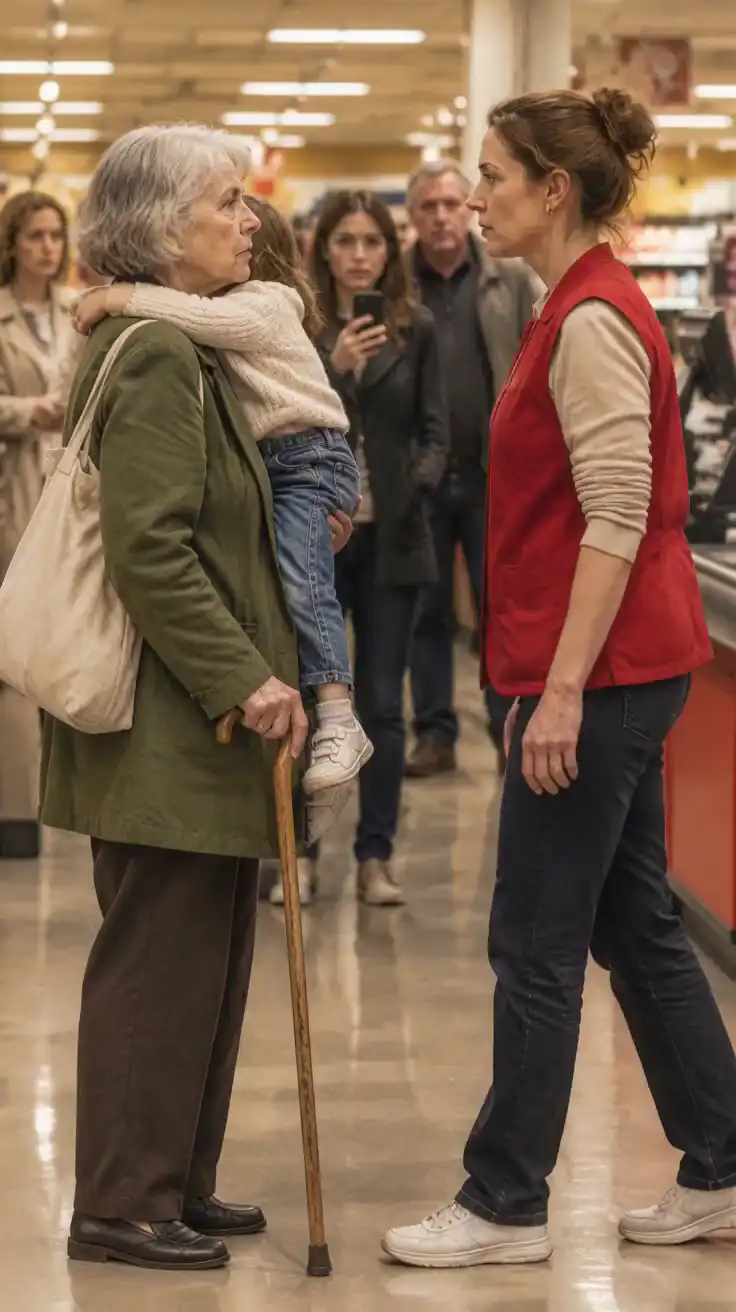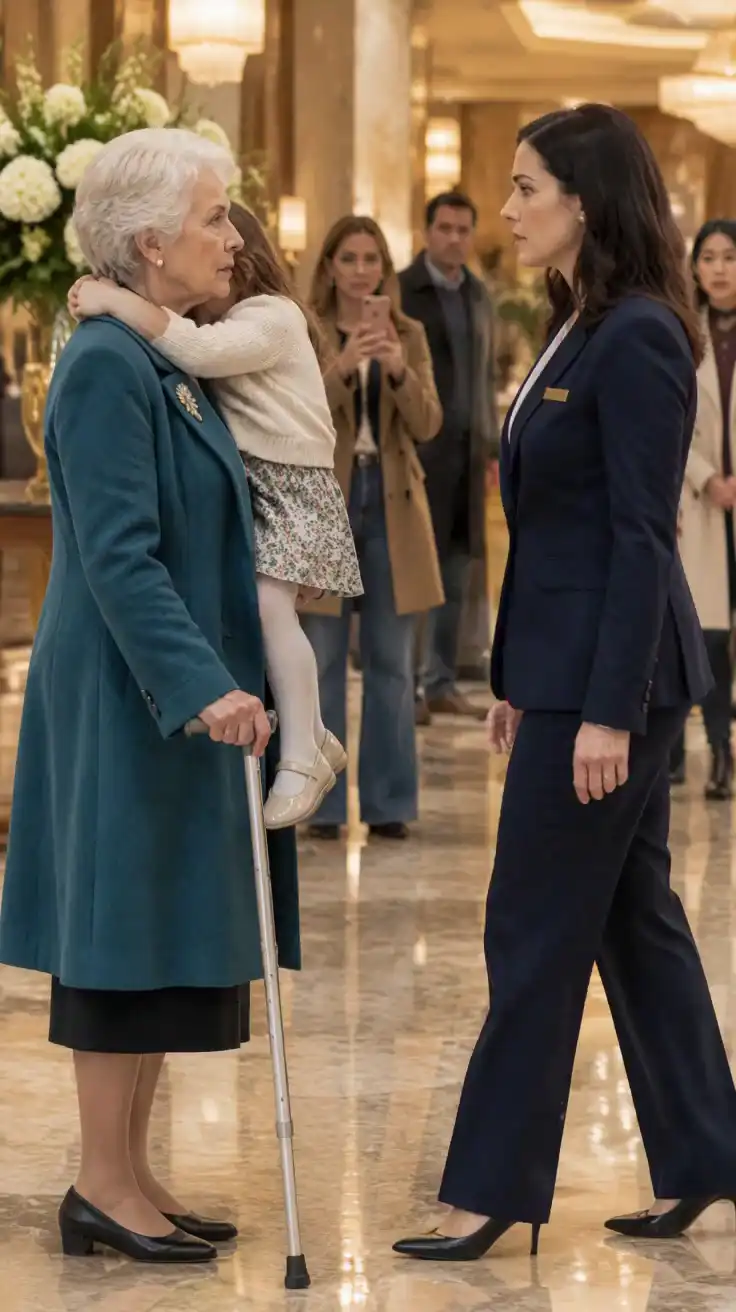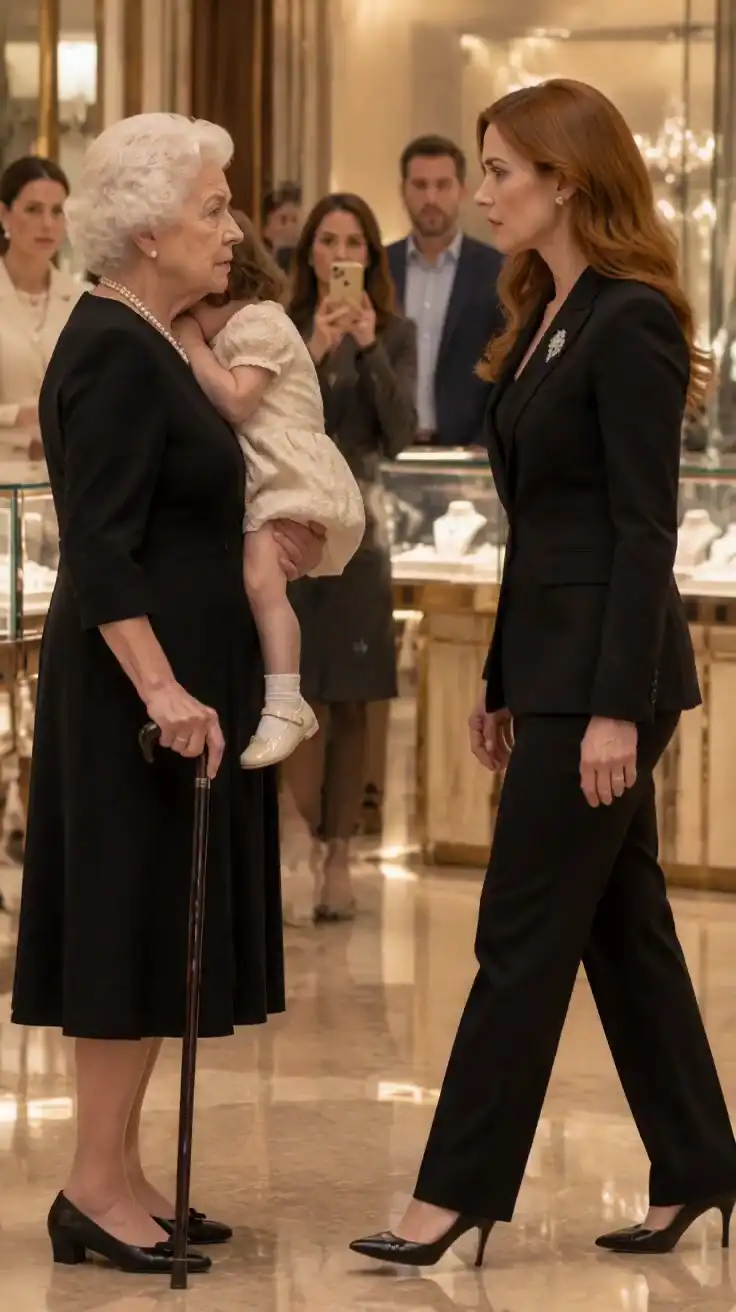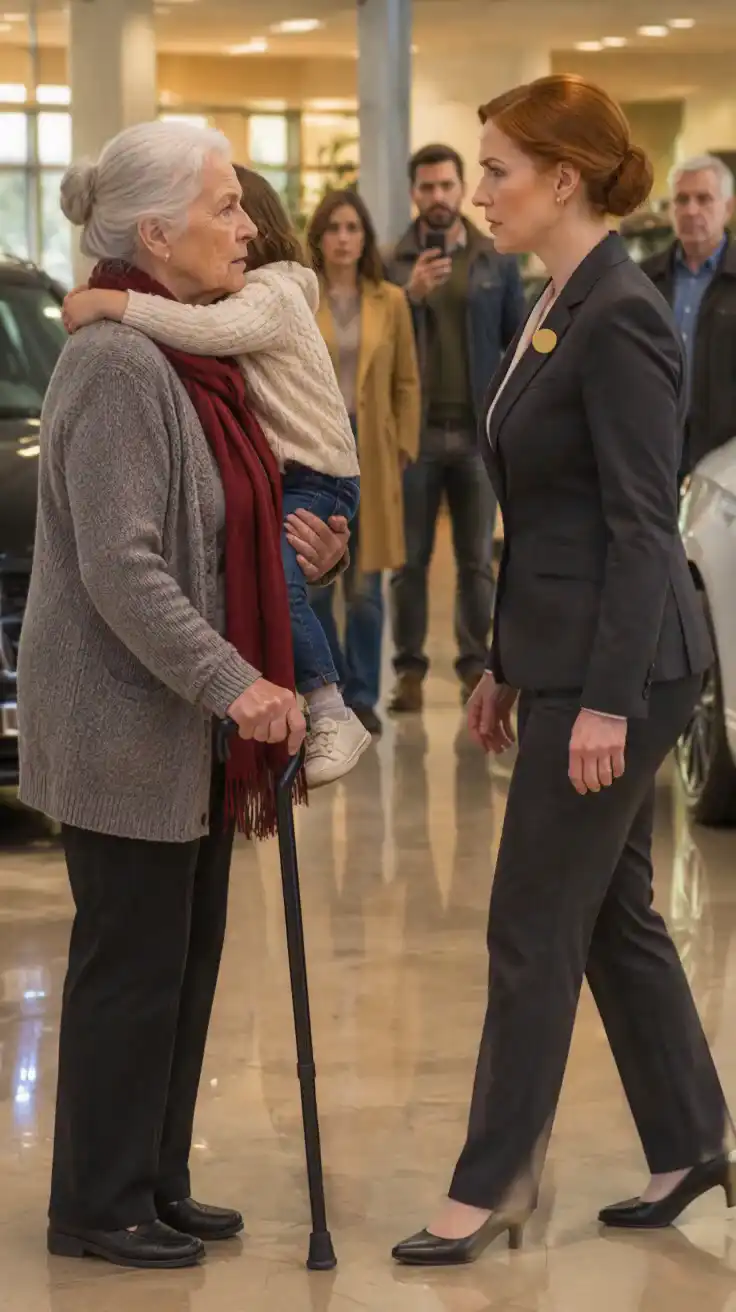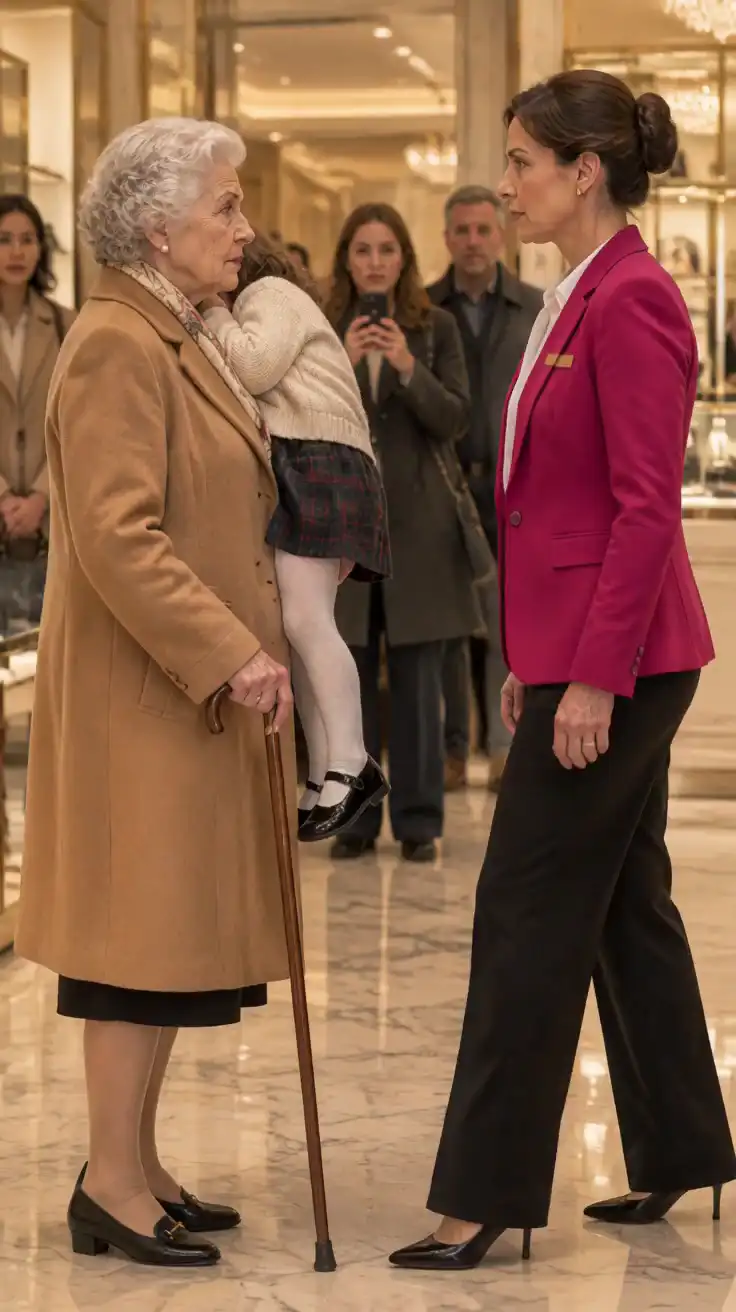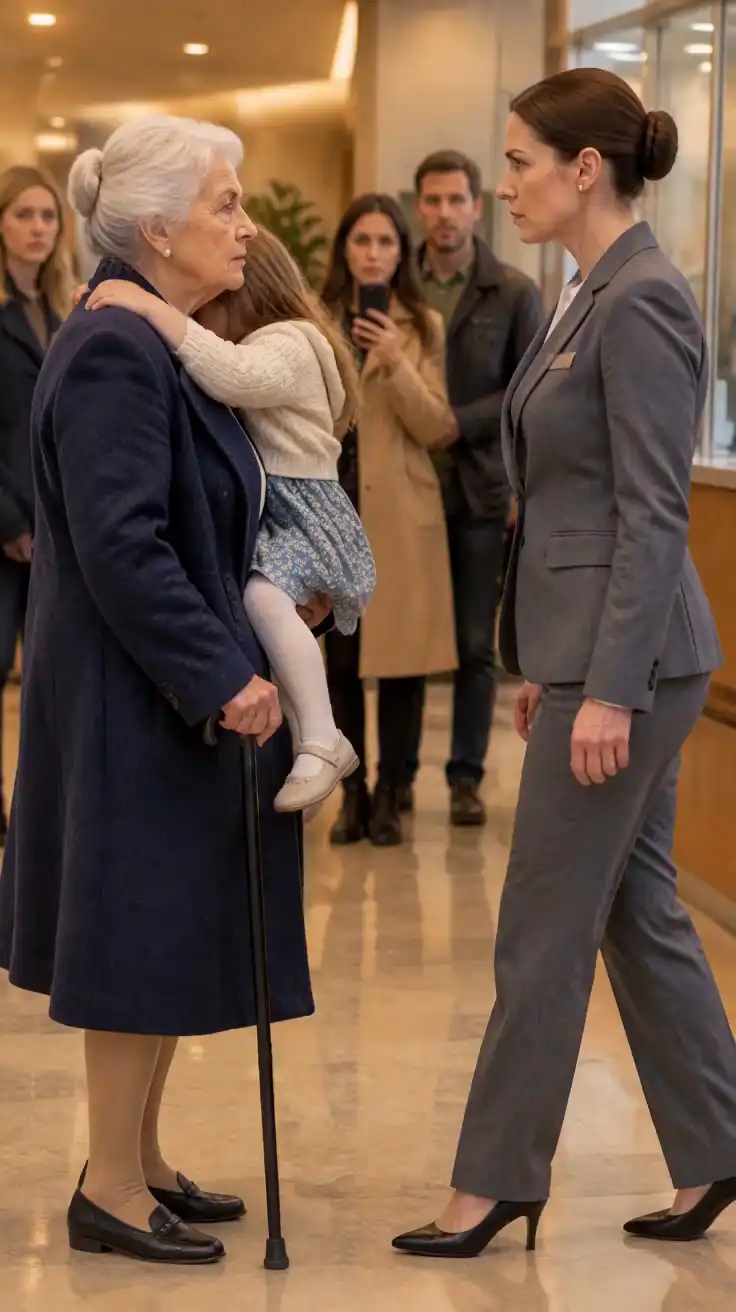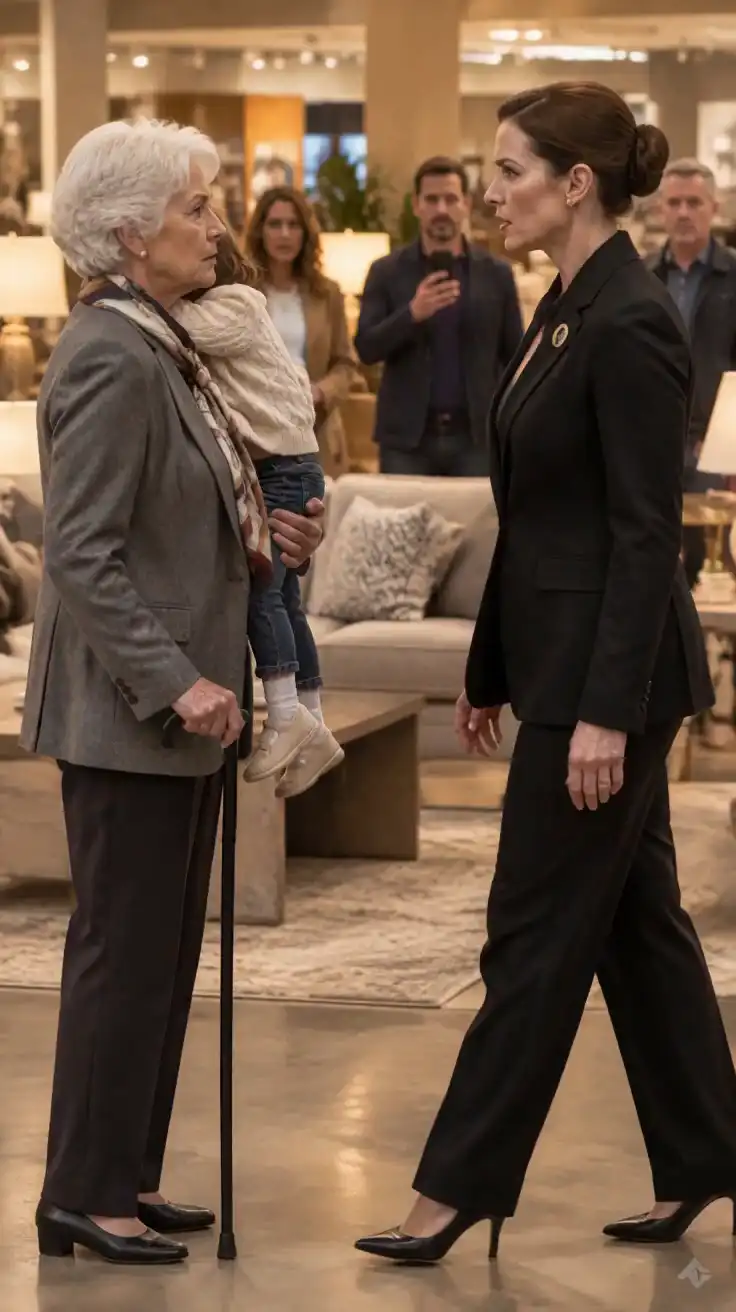
The manager slapped my face and ordered guards to drag me out after I returned an undercooked fish. My late husband built this entire restaurant group, and now footsteps cross the dining room toward my table.
The sting in my cheek kept time with my pulse. One guard held the door open while the other watched my hands, as if I might make trouble by reaching for my purse.
“Let’s not turn this into a scene,” the manager said. He stood between me and the table, his voice smooth enough for the diners nearby. “You sent it back. We’ve handled it.”
A woman at the next table lowered her fork. Nobody met my eyes. The plate sat untouched where I’d left it, the fish pale at its center. I could still feel the manager’s fingers against my face.
“I asked for it cooked through,” I said.
He gave the guards a small nod. “She’s refusing to leave.”
My phone buzzed in my purse. I took it out and answered without looking away from him.
“Are you all right?” came the voice.
The manager’s smile tightened. “You can call whoever you like. This is a restaurant, not a family office.”
I didn’t answer. The voice on the phone asked me to wait. I heard a chair scrape somewhere beyond the entrance, then footsteps crossing the room. The guards shifted apart, just enough to make a path.
The manager turned toward the newcomer. “I’m dealing with a customer who won’t accept that we’re busy.”
“Busy?” someone murmured from a nearby table.
He ignored them. His hand lifted as he started explaining, palm out, each word quicker than the last. “There’s been a misunderstanding. She got upset over one dish, and my staff—”
The newcomer set a folded deed on the table.
The paper opened flat between us. The manager’s hand stopped in midair. Around the room, forks hovered and glasses paused halfway to mouths. The guard nearest the door let it swing shut behind him.
The manager stared at the page, then at me. His explanation caught somewhere behind his teeth.
I watched his fingers remain suspended above the table.
THE NAME ON THE DEED
Peter turned the deed toward the room and placed one finger beside the owner’s line.
“My mother,” he said. “She owns this building.”
Nobody moved. The guard by the door had let it close, and now he stood with one hand still on the handle. The woman at the next table lowered her fork to her plate.
The manager looked from the paper to me. His hand dropped.
“That can’t be right,” he said.
Peter didn’t raise his voice. “It’s right.”
I could see my name on the page. I had signed enough deeds, leases, and tax forms to know the shape of it without needing to lean closer. Peter had brought the original from the office upstairs. Its folds ran along the same lines they had for years.
The manager reached toward the page, then checked himself. “I’m sure there’s some misunderstanding.”
“There isn’t,” Peter said.
I touched the tender place on my cheek. The room stayed quiet around the small movement.
The manager’s eyes returned to my face. For a moment he seemed to be searching for something to say that would put us back where we had been: him standing between me and my table, the guards waiting for his signal, the diners pretending not to see.
“I didn’t know,” he said.
“No,” I replied. “You didn’t.”
Peter turned the deed back toward me and left it open. “The building is hers. It has been since 1989.”
The woman at the next table looked at the paper, then at me. “You own the whole building?”
“Yes,” I said.
A man at the bar set down his glass. One of the guards took his hand off the door.
The manager glanced toward him. “Could you give us a minute?”
The guard didn’t move. “You told us to remove her.”
“I said we had a situation.”
“You said she didn’t belong here,” I told him.
His jaw worked. “I was trying to keep things under control.”
“You were trying to make me leave.”
He drew a breath, then looked toward Peter. “I’m sorry. I didn’t know who she was.”
Peter’s expression barely changed. “Would that have made the slap acceptable?”
The manager looked down at the deed.
I didn’t wait for him to answer. “The fish was undercooked. I asked for it to be cooked through. That was the whole problem.”
“There was no need for this to get out of hand,” he said.
“It got out of hand when you hit me.”
The room had gone so still that the ice in someone’s glass made a sharp click. A young server came out from the service corridor carrying a tray. She saw the crowd of people facing the manager and stopped.
Peter shifted to give her room. “You can set that down,” he said gently.
She placed the tray on an empty table. Her fingers were shaking.
“Were you the one who brought the fish?” I asked.
“Yes, ma’am.”
“Did you see what happened?”
She glanced at the manager.
“Answer her,” Peter said, not sharply, but firmly.
The server looked at me. “I brought the plate back after you asked. I saw him hit you.”
The manager shut his eyes for a second. When he opened them, he looked toward the nearest diners, as though they might agree to turn the moment into something smaller.
“I shouldn’t have touched you,” he said.
“That’s true,” I replied.
He put both hands on the table’s edge. “I was frustrated. We were short-staffed, and you were upset—”
“I was not upset when I asked for the fish to be cooked through.”
“You raised your voice.”
“I had to ask twice.”
The server spoke before he could answer. “She asked once. I took the plate back. He told me to bring it out again as it was.”
The manager turned toward her. “That’s not what I said.”
“You told me it was fine.”
“You’re not part of this conversation.”
“She was part of it before I was,” I said.
Peter lifted his eyes from the deed. “Then she stays.”
The manager’s mouth tightened. He looked toward the guards again, but neither moved. The guard who had told me I didn’t belong here now watched the floor.
A few minutes earlier, I had believed the deed would answer only one question. It answered the question of who owned the building. It did not answer why the people working inside it had been taught to treat me like a stranger.
Peter read the date and property description aloud, then the line bearing my name. He did it slowly enough for the diners nearby to hear. He did not read the financial terms or the legal details. He read only what mattered.
When he finished, the manager stared at the paper.
“How long have you owned it?” he asked.
“Since before this restaurant opened,” I said.
“And you come here often?”
“Every Thursday.”
He looked at the empty place setting on my table, the folded napkin, the water glass I had not touched. “You come here every week?”
“I used to.”
Peter glanced at me. He knew what I meant. For years, that table had been the easiest way for me to feel close to the life my husband and I had made together. I had never needed anyone to announce my name. The host knew where I liked to sit. The cooks knew I preferred the fish with lemon and no sauce. The servers knew I ordered tea after dinner and took half of it home.
The manager had been hired after most of those people were gone.
“You didn’t know her,” Peter said.
“I didn’t,” the manager replied.
“Did you ask?”
The manager looked at him.
“Did you ask who she was before you ordered two guards to put her outside?”
“I didn’t order them to put her outside. I asked them to help her leave.”
The second guard’s face changed. “You told us she was trespassing.”
The manager turned on him. “I said she was refusing to leave.”
“You said, ‘She doesn’t belong here,’” I told him.
He looked back at me, then at the guard. “I was trying to calm things down.”
Peter placed his palm flat beside the deed. “It didn’t calm anything down.”
“No,” I said. “It didn’t.”
A chair scraped behind us. A woman stood near the entrance with a dark blazer draped over her arm. She had been sitting alone at a table near the front, and now she crossed the room with her phone in her hand.
“Peter,” she said. “I got your call.”
“Thank you for coming, Renee.”
The manager straightened. “Ms. Alvarez.”
She looked at the deed, then at me. “Mrs. Bennett?”
“Yes.”
“I’m Renee Alvarez, the regional director. I’m sorry you were treated this way.”
“Thank you,” I said. “I want to understand how this happened.”
The manager moved into the space between us. “There’s more context.”
“I’m sure there is,” Renee said. “You can give it to me after we speak with Mrs. Bennett.”
“I need to explain that she was disruptive.”
“Was she?”
The manager glanced at the server. “She rejected the meal.”
“I asked for it to be cooked through,” I said. “The server took it back. He sent it out again unchanged.”
Renee’s eyes went to the plate. She pulled a chair from the nearest table, but paused before sitting. “May I?”
“You may.”
She took the seat opposite me. Peter stayed standing beside the deed.
“Would you tell me exactly what happened?” Renee asked.
“I would. First, I want the server to stay.”
The young woman still stood beside the tray.
“Of course,” Renee said. “What’s your name?”
“Lena.”
“Lena, would you join us?”
Lena looked toward the manager. He did not answer. She came to stand near the end of the table, her hands clasped in front of her.
I described the meal without embellishment. The fish had arrived with a glossy, translucent center. I had cut into it and felt the texture give way beneath my fork. I told Lena it needed more time. She apologized and carried the plate away. When it came back, the fish looked the same. I called her over and asked whether it had been cooked again.
“She said she’d check,” I said. “Then the manager came over.”
Renee turned to him. “Did you check?”
“I looked at it.”
“That wasn’t my question.”
He rubbed his thumb along the edge of the table. “No, I didn’t ask the kitchen to cook it again.”
“Why not?”
“Because she’d already sent it back once. We were in a rush, and I thought she was making a scene.”
“I wasn’t making a scene,” I said. “I was trying to eat dinner.”
Renee wrote something in a small notebook. “And then?”
“He told me I was holding up the staff. I said I was waiting for the fish I had ordered. He leaned over the table and slapped me.”
Renee’s pen stopped.
The manager’s face had gone red at the collar. “I don’t remember leaning over.”
“You came to my side of the table,” I said. “You slapped me, laughed, and said ‘Hah.’”
He looked at me. He didn’t deny the words.
Lena lowered her eyes.
“Did you hear him say that?” Renee asked.
“Yes.”
“Did you see the slap?”
“Yes.”
Renee turned to the guards. “Did either of you?”
The guard near the door answered. “I saw him strike her.”
“And what did you do?”
“I came over after.”
The other guard shifted his weight. “I was at the entrance.”
“You told me I didn’t belong here,” I said.
His face tightened. “Yes.”
“Why?”
“The manager said you were causing a problem and needed to leave.”
“Did you know what the problem was?”
“No.”
“Did you ask?”
“No.”
Renee closed the notebook. “What did you do when she called someone?”
“We stood back,” the first guard said.
“And then?” she asked.
“Then you came in,” I said.
Renee nodded. “I saw part of the exchange from the front. I didn’t know the owner of the building was involved until Peter called.”
“That’s not why this matters,” I said.
“No,” she agreed. “It isn’t.”
The manager let out a short breath. “I’ve been working here six months. Nobody told me there was a family connection.”
Peter looked at him. “You keep saying that as though it changes what you did.”
“It explains why I didn’t know who she was.”
“It explains why you didn’t recognize her,” Peter said. “It doesn’t explain the way you treated her.”
“I didn’t know she was the owner.”
“You didn’t need to know,” I said. “The plate was undercooked whether I owned the building or rented a room in it.”
He opened his hands. “I understand that now.”
“What do you understand?”
“That I handled it badly.”
“You handled it with your hand.”
His hands fell to his sides.
One of the diners near us spoke up. “He told her to get out before he even asked what was wrong.”
The manager faced him. “Sir, I was trying to keep the dining room from being disrupted.”
“You were the disruption,” the man said.
Renee stood. “I’m going to move everyone who wants to leave into the private room. No one will be asked to make a statement here. If anyone is willing to speak with me privately, I’ll take your name.”
Nobody moved for a moment. Then the woman at the next table raised her hand.
“I saw the slap,” she said.
“Thank you,” Renee replied.
The man at the bar nodded. “So did I.”
The manager looked around the room. His jaw worked once.
Peter gathered the loose edge of the deed so it wouldn’t catch on the water glass. “We need to discuss more than the assault.”
Renee looked at him. “Agreed. We should go upstairs.”
“Not yet,” I said.
Peter stopped.
I had not come to the restaurant to make a public example of the manager. I had come because I wanted a meal and because returning a plate should not require a family intervention. But once he had hit me, ordered guards to drive me out, and called my presence a problem, the entire room had been pulled into it. They deserved to hear the truth before the discussion moved behind a closed office door.
“I want everyone who was here to hear this,” I said. “Then we can go upstairs.”
Renee studied me. “All right.”
The manager rubbed his palms against his trousers. “Mrs. Bennett, I am sorry.”
“You have apologized for not knowing who I am. Have you apologized for hitting me?”
He stopped rubbing his hands.
“I’m sorry I hit you.”
“And for trying to remove me?”
“I’m sorry I tried to have you removed.”
“And for sending the fish back without having it cooked?”
He hesitated. “I should have had the kitchen check it.”
“That is not quite an apology.”
“No,” he said. “It isn’t.”
The server looked at him. “You told me not to remake it.”
“Lena,” he began.
“I’m not trying to get you in trouble,” she said. “I just don’t want you to say I made the choice.”
The words left her quietly. They landed harder than an accusation.
Renee turned to the manager. “We’ll discuss the staff instructions in private.”
“Fine,” he said.
I pushed my chair back. Peter reached to help, then stopped when I lifted my own hand. I was able to stand without assistance. The guards shifted aside as I moved from the table.
The manager stepped back to clear the way.
I looked at the fish. It was still untouched. “Please have it removed.”
“Yes,” he said.
“Not as a favor. It’s not safe to serve.”
Renee caught the attention of a busser, who picked up the plate carefully and carried it toward the kitchen.
That small action changed the room more than the deed had. The deed established who owned the floor beneath us. The plate established what had happened on it.
We went upstairs by the rear stairwell. Peter carried the deed in a leather folder. Renee followed with her notebook. The manager walked behind us, with the two guards at a distance. Lena waited until we reached the landing.
“Am I supposed to go back to work?” she asked.
Renee turned. “You’re not expected to work through this. Please clock out, and I’ll make sure you’re paid for the remainder of your shift. I may need to speak with you later. Would you be willing?”
“Yes.”
“Thank you. I’ll come find you before you leave.”
Lena looked at me. “I’m sorry, Mrs. Bennett.”
“You didn’t hit me,” I said. “You told the truth.”
She nodded, but her shoulders stayed tight.
At the third-floor landing, a glass door opened into the group’s head office. Peter used his keycard. The receptionist rose when she saw him, then took in the manager and Renee behind us.
“Peter,” she said. “Is everything all right?”
“No,” he replied. “Can you ask the leadership team to come to the conference room?”
She didn’t ask for details. “I’ll do that.”
The head office had been on that floor since the group expanded out of the original restaurant. My husband had chosen the space because it was close enough to the dining room to hear the kitchen bell if the stairwell door was left open. He used to say a restaurant office should never get so far from the room that the people in it forgot what the work felt like.
Peter had kept the office there. He had remodeled the conference room, replaced the old cabinets, and moved the company’s files into a secure archive. But he had left the brass rail along the hall untouched. My husband had installed it himself after an employee slipped on the stairs carrying a crate.
Renee noticed me looking at it.
“You’ve been here before,” she said.
“I used to come up every week.”
The manager glanced at the door at the end of the hall, where the old dining room plans were framed. “Nobody mentioned that.”
“People mention what they think will matter,” I said.
Peter opened the conference room. The table was long and plain, with a few marks along one edge where a printer had once been dragged. A framed photograph of the first restaurant hung on the wall. My husband stood in front of it, sleeves rolled to his elbows, one hand resting on a chair back. The group had been smaller then. So had our problems.
Renee waited for me to choose a seat. I sat at the head of the table. Peter placed the deed in front of me.
The manager sat on the far side, between the two guards. Renee took a seat beside him, not as his ally but as the person responsible for asking questions. Peter sat to my right.
“Before we talk about policies,” I said, “I want to know why nobody told you who I was.”
The manager looked at Peter. “You can answer that better than I can.”
Peter folded his hands. “There isn’t an official list of relatives that every manager has to memorize.”
“Did you know her?” I asked.
“I’d seen her,” he said.
“You knew I was your father’s wife.”
“Yes.”
“Did you tell him?”
“No.”
“Why not?”
He looked at the photograph. “Because it didn’t seem relevant to managing the restaurant.”
“That’s what he just said.”
“I didn’t know he’d say it that way.”
“I’m not angry because he failed to recognize me. I’m asking why the people in this company don’t know the family their name comes from.”
Peter didn’t answer immediately.
I had never wanted a place of honor in the company. My husband had built the restaurant group by feeding people, learning their names, and solving the small problems that kept them from coming back. He had asked me to manage the books in the first years, when we had no one else. I did it at the kitchen table after our son went to bed. I helped choose the first location. I signed the building papers. I sat with him when he had to tell a cook that the restaurant could not afford another week of waste.
Then the business grew. There were more locations, more offices, more managers who had never met him. I was content to let Peter take the work. I never asked for a title. But I had not expected that being quiet would turn me into a stranger in my own dining room.
Peter pressed his thumb against the side of his hand. “I thought keeping you out of the company’s internal life would give you peace.”
“I didn’t ask to be kept out.”
“You didn’t ask to be in.”
“I asked for one table on Thursdays. I thought that was enough.”
“It should have been.”
“Then why did you let the restaurant stop knowing me?”
He turned his head toward the photograph. “I thought they knew you because they knew the story.”
“Which story?”
“The company story.”
“What do you tell them?”
“That Dad started the first restaurant and built it into the group.”
“And what do you say I did?”
Peter pressed his lips together. “I talk about the lease, the first building, the early financing.”
“Do you tell them I signed the deed?”
“Not often.”
“Do you tell them the company was your father’s work and mine?”
“Yes.”
“To whom?”
“To the board. To the regional directors. Not every manager.”
“Then you’ve been telling the story where it’s convenient.”
The manager looked down at the conference table. Renee’s pen was still. She didn’t interrupt.
Peter leaned back. “You’re right.”
I wasn’t asking him to confess for the benefit of the manager. I needed him to hear it himself.
“When your father died,” I said, “I transferred the operating company to you because you had spent years working beside him. I kept the building because I did not know what the business would become, and I wanted the company to have a stable place to operate. That was not an accident. It was a decision.”
“I know.”
“Do you?”
“Yes.”
“The third floor is the group’s head office. Your father left the charter there. The building has been part of the company’s life from the first day. People work here every week, but they have never been told whose name is on the deed.”
Peter looked at Renee. “The original charter is in the archive cabinet.”
Renee sat forward. “I’d like to see it.”
“Bring it up,” I said. “And the leases.”
Peter rose. “I’ll get them.”
“Don’t go alone,” I said.
He paused.
“Ask the receptionist to pull the charter and the last three years of restaurant operating statements. Have the finance lead join us. I want the records brought here.”
Renee looked at me. “You want the restaurant accounts?”
“I want to know what the restaurant has done while I’ve been sitting in it.”
“What are you looking for?”
“I don’t know yet. That’s why I want to see them.”
Peter’s face changed. “Mom, you don’t have to examine three years of accounts to prove what happened tonight.”
“I’m not doing it to prove the slap. I’m doing it because I have been treated like a stranger in a place I own, and because the manager says there’s a context. I want to understand the context he thinks excuses it.”
The manager lifted his eyes. “I never said the business explains it.”
“You said you were short-staffed and busy.”
“I did.”
“Then show us what busy means.”
Renee turned to Peter. “I’ll have finance bring the statements. We should also preserve tonight’s shift report and the service records for the table.”
“Agreed.”
The manager shifted in his chair. “I don’t think you’ll find anything in the books related to this.”
“Then there’s no reason not to look,” I said.
The first to arrive was the company’s finance lead, Marisol, carrying two binders and a laptop. She had been with the group long enough to remember my husband. When she saw me, she stopped in the doorway.
“Mrs. Bennett.”
“Hello, Marisol.”
She set the binders down. “I’m sorry about what happened downstairs.”
“Thank you.”
“I heard you asked for the statements.”
“I did.”
She looked at Peter. “All three years?”
“Yes,” he said. “Restaurant-level operating reports, staffing, service incidents, refunds, and any corrective-action records.”
The manager’s chair creaked.
Marisol took in the room. “Should I bring the full audit file?”
“Not yet,” I said. “Let’s begin with the restaurant’s records and the charter.”
“I’ll get them.”
Before she left, she looked back at me. “The original charter is in the same archive box as the incorporation papers. Your name is on the meeting minutes.”
“Bring those too.”
She nodded and went down the hall.
Renee took out her phone. “I need to notify the compliance lead and ask that the camera footage from tonight be preserved.”
The manager’s shoulders lifted. “I thought this was about a customer dispute.”
“It’s an assault allegation involving a senior employee and a guest,” Renee said. “It’s a company matter.”
“I didn’t mean to suggest—”
“You suggested it was a customer dispute.”
“I said the original issue was a customer dispute.”
“It stopped being that when you struck her and tried to remove her.”
He looked at me. “I understand.”
“What do you understand now?” I asked.
“That it wasn’t just about the meal.”
“It was about the meal. It was also about how you decided a person should be treated once you thought she was troublesome.”
The answer appeared to leave him without another place to stand.
Renee made a short call and gave the compliance lead the time, restaurant, and names of those involved. She asked him to preserve all available camera footage, staff records, and manager notes from the shift. She did not tell him what conclusion to reach.
When she hung up, she explained what she had requested.
“Thank you,” I said.
“I also want to speak with each witness individually,” she said. “No one should be asked to coordinate accounts.”
“Fine.”
The manager leaned forward. “I can explain the staffing situation right now. We had two callouts, and we were trying to keep the dining room moving.”
“Were there two callouts?” I asked.
He looked at Renee.
“We’ll check the schedule,” she said.
The guard near the door spoke up. “There was one callout. One server had left early sick.”
The manager turned toward him. “You weren’t responsible for the schedule.”
“I know.”
“Then let Renee handle it.”
“I am,” she said.
The guard sat back. He looked as though he regretted speaking, but he had already spoken. The room had changed in small ways since we came upstairs. People who had followed the manager’s instructions without asking why were beginning to answer for their own parts.
I looked at the guard. “What’s your name?”
“Dale.”
“And the other guard?”
“Marcus.”
“Were you assigned to the dining room?”
“Marcus was. I was at the front entrance.”
“Why were you called over?”
Dale glanced at the manager. “He said a guest was refusing to leave and he needed help.”
“Did he say I was violent?”
“No.”
“Did he say I threatened anyone?”
“No.”
“Then why did you stand between me and the exit?”
“To help him.”
“Did he tell you to use force?”
“No.”
“Did he tell you to frighten me?”
Dale swallowed. “Not directly.”
Renee wrote that down. “We’ll speak separately after this meeting.”
“I’m not asking you to make that part of the manager’s decision,” I said. “I want an honest account.”
“Understood.”
Peter returned with the receptionist and Marisol. The receptionist carried a flat archival box. Marisol had a slim binder and a laptop.
“The charter is here,” Peter said. “The original is in a sleeve.”
He set the box on the table and removed the documents carefully. The charter was typed on thick paper, its edges soft from years of handling. Beneath it sat the minutes of the founding meeting and a small ledger listing the first location’s expenses.
My husband’s name was on the charter as founder. Mine appeared beneath his among the original officers. My signature stood beside the line authorizing the purchase of the building.
I didn’t need Peter to read it aloud, but he did.
“This charter was adopted in 1991,” he said. “It names Arthur Bennett as founder and president, and Ruth Bennett as treasurer and property holder.”
He turned the paper so the others could read the names.
The manager leaned closer. His face had gone pale.
Renee scanned the document. “The charter confirms the company history and your role at the founding.”
“It confirms what I did,” I said. “It does not tell you how to treat a guest.”
“No,” Renee replied. “It doesn’t.”
Peter turned to the founding minutes. “The company’s head office was designated as this building’s third floor.”
“It has been here since the beginning?” Marisol asked.
“Yes,” Peter said.
“Then the staff have been working above the original restaurant.”
“They have,” I said.
The manager looked toward the open door, as if he could see down the stairs. “I honestly had no idea.”
“You were hired to run the restaurant,” Peter said. “You should have known the basics of the company you represented.”
The manager’s face tightened. “No one gave me these.”
“Did you ask for the history of the group?” Renee asked.
“No.”
“Did you ask who owned the building?”
“No.”
“Did you ask anyone whether Mrs. Bennett had a standing reservation?”
His eyes shifted toward me. “No.”
“Then you didn’t know because you didn’t ask,” Renee said.
He put both hands on the table. “I came in to stabilize the dining room. The previous manager had let service slip.”
“What did you change?” I asked.
“Standards. Pacing. Table turns. We were behind on our numbers.”
“Did you tell staff not to remake meals that customers sent back?”
“I told them to use judgment.”
“What did that mean?”
“It meant not to give away food without checking.”
“Who was supposed to check?”
“I was.”
“Did you check mine?”
“No.”
“Why not?”
He stared at the pages. “I thought you were testing me.”
“That is quite a thought to have about someone asking for properly cooked fish.”
“I understand that.”
“No. You’ve said you understand several times. I’m asking what you understood at the moment you made the choice.”
He took a long breath. “I thought you were a difficult customer.”
“Based on what?”
“The fact that you sent the food back.”
“Once.”
“And then asked again.”
“Because it still wasn’t cooked through.”
“Before I had seen the plate.”
“Yes.”
“Before I had heard what the kitchen had done.”
“Yes.”
“So you decided I was difficult before you checked whether I had a reason.”
He looked down. “Yes.”
“And you decided the way to handle a difficult person was to hit her.”
“I did not decide that.”
“Then what did you decide?”
He remained quiet.
Renee spoke. “We’ll continue this part in the formal interview. For now, let’s review the operating records.”
Marisol opened the laptop. “I pulled the last three fiscal years of monthly restaurant reports and staffing summaries. I also have service recovery, waste, refund, and labor records.”
“Why did you bring the waste reports?” the manager asked.
Marisol looked at him. “Because you said staff were being told to check food remakes against waste limits.”
He looked surprised. “I didn’t say that to you.”
“I reviewed the restaurant’s notes before this meeting. There’s a line in the weekly operations file about reducing unnecessary remakes.”
“Those notes were for the kitchen.”
“They were copied to the service managers,” she said. “The instructions say managers should approve replacements.”
“Right.”
I pulled the nearest binder closer. “Show me the reports.”
Marisol sat beside Peter and began with the first year. She explained the columns: labor hours, food cost, comped meals, returns, and operating margin. The figures were not difficult to read. I had kept books before there was a finance department. My husband used to bring home the day’s cash in a paper envelope and leave it beside the sugar bowl until I matched it to the ledger.
The restaurant had been steady in the first two years. Labor costs had fallen slightly. Food waste had also fallen. Guest complaints had risen.
“How much?” I asked.
Marisol pointed to the rows. “Formal complaints increased thirty-two percent from the first year to the second. They rose another twenty-one percent the year after that.”
“What counts as a formal complaint?”
“Anything logged through the customer system, written to management, or escalated to a regional office.”
“Does that include a guest asking for a dish to be remade?”
“Only if it’s recorded as a service incident.”
“Is every returned plate recorded?”
“Policy says yes.”
“Did this restaurant follow that policy?”
Marisol checked another tab. “Not consistently. Some returned dishes appear only in the waste report. They’re not all linked to guest-service records.”
The manager sat very still.
“How many?” Peter asked.
“I can’t give you a verified number yet. The categories changed in the middle of the period, and some of the descriptions are handwritten.”
“Then don’t estimate,” I said. “Find out.”
Marisol nodded. “I can have an analyst reconcile them.”
“Who entered the waste limits?” Renee asked.
“Restaurant managers. The current template was introduced eighteen months ago.”
The manager turned to her. “I didn’t write the template.”
“I didn’t say you did.”
“I followed the guidance I was given.”
“Did anyone tell you to refuse a remake without checking the food?” Renee asked.
“No.”
“Did anyone tell you to treat a complaint as misconduct?”
“No.”
“Did anyone tell you to slap a guest?”
“No.”
He lifted his eyes. “I’m not claiming that.”
“Then don’t lean on the policy as an excuse.”
I looked through the figures. Food waste had dropped every quarter after the manager started. The reduction was not dramatic, but it was consistent. The number of recorded remakes had also dropped. The number of complaints about food that had been returned and not corrected had climbed.
“Were your bonuses tied to this?” I asked.
“Some of them,” Marisol said. “The managers’ performance plan includes food cost and guest satisfaction.”
“Does the group have a target for remakes?”
“No formal target.”
“Then why was there pressure to reduce them?”
“The pressure was to reduce avoidable waste.”
“Who decides what is avoidable?”
“Managers are expected to use judgment.”
“Exactly,” I said.
Peter was studying the report. “The restaurant’s satisfaction score dropped below the regional average last year.”
“By six points,” Marisol said.
“Was the manager told?”
“He received the monthly reports.”
The manager rubbed the back of his neck. “I was also told to improve the score.”
“What did you do?”
“I reminded the team to be attentive.”
“Did you ask why complaints were rising?”
“I did.”
“What did they say?”
“They said we were too busy.”
“Who said that?”
“The staff.”
“Which staff?”
“I don’t remember.”
“Did you speak with them individually?”
“No.”
“Did you change the schedule?”
“We had limited labor.”
“Were you below the staffing plan?”
Marisol looked at the summary. “Not for most of the year. This quarter, the restaurant has been short about one and a half shifts per week compared with the target. Tonight it was one shift.”
“Not two callouts,” I said.
The manager looked at the table.
The records did not answer why he had hit me. Nothing in a spreadsheet could do that. But they showed a habit of choices made without checking: a plate sent out unchanged, a guest dismissed as difficult, a request turned into a problem, a guard called before anyone asked what had happened. The slap had not been an isolated bad gesture in an otherwise careful system. It had been the most visible version of a smaller pattern.
“What does the restaurant’s operating report say about remakes?” I asked.
Marisol found the page. “The count dropped by forty percent over three years.”
“And complaints rose by more than fifty percent?”
“Yes.”
“Then those numbers don’t describe improved service.”
“No,” she said. “They may describe fewer complaints being recorded.”
“Or fewer people bothering to complain,” Peter said.
“Which is why we need the underlying records,” Marisol replied.
I turned to Renee. “How will you find out whether staff were discouraged from logging returns?”
“I’ll interview the service team and compare their accounts with the shift logs. I’ll also review communications and manager notes. We’ll preserve the records before anyone edits them.”
“Will the staff be paid while they meet with you?”
“Yes.”
“Will they be protected from retaliation?”
“Yes. I’ll put that in writing to the team.”
“Not as a promise from one manager. From the company.”
Renee nodded. “I’ll send it under my name and Peter’s.”
Peter leaned forward. “I’ll sign it.”
The manager looked at him. “Are you suspending me?”
Renee did not answer immediately. “You are being removed from the floor while the investigation is open. You’ll be on administrative leave pending review.”
His face changed. “I have a shift tomorrow.”
“You will not work it.”
“I’m the manager.”
“Not while we’re investigating whether you struck a guest and gave false reasons to remove her.”
“I didn’t lie.”
“You told the guards she was refusing to leave. You told them she didn’t belong there. You told us there were two callouts. We’ve established there was one. We’re going to examine each statement.”
He looked at Peter. “You’re going to let her do this?”
Peter’s voice stayed even. “Renee is the regional director. This is her responsibility.”
“You own the company.”
“I do. That doesn’t mean I decide an investigation by myself.”
The manager turned back to Renee. “So I’m suspended.”
“You’re on administrative leave while we gather the facts. I’m not making a final decision today.”
He drew his chair backward. “And Mrs. Bennett gets to decide whether I keep my job?”
“I haven’t asked for that,” I said.
“You’re asking for the records. You own the building. Your son runs the company. How is that not deciding?”
“I can tell you what I want from the company,” I replied. “I want the facts checked. I want the staff to be able to speak without being punished. I want the restaurant to serve safe food and record complaints honestly. The decision about your job is not mine.”
He looked as if he had expected a demand for dismissal. That might have been easier for him to understand. If I had asked for him to be fired, he could have spent the rest of the day describing me as an owner who used her influence to punish an employee. Instead, he had to sit with the narrower truth: he had hit me, and the company had to decide what that meant.
Renee closed her notebook. “We’ll take a short break. I’ll speak with the witnesses and review the footage. Peter, I need you to preserve the charter and deed in the office archive. Mrs. Bennett, I’d like to speak with you again after that.”
“You can speak with me now.”
“I don’t want to wear you out.”
“You can ask what you need.”
Peter glanced at my cheek. “Maybe she should rest first.”
“I’ll decide that.”
He nodded and sat back.
I had a cold cloth pressed to my face while the others left the room. The receptionist brought it in. She didn’t ask what had happened. She simply set it down and put a glass of water beside it.
“Thank you,” I said.
She looked at the deed. “I never knew it was yours.”
“I know.”
“Mr. Bennett used to come through this office every morning.”
“I remember.”
She smiled, briefly. “He’d stop at my desk and ask whether the mail had come. Even when he was the one who’d brought it in.”
“He liked asking questions he already knew the answers to.”
“He did.”
She began to leave, then turned back. “I’m sorry we let you disappear from the story.”
The cloth was cool against my cheek. “You didn’t make me disappear.”
“No,” she said. “But we helped.”
I didn’t have a clean answer for her. She had not been responsible for a manager’s choices. Neither had the servers who were told to keep moving. But the company had made a habit of telling the story of its founder without the woman who had signed the deed and kept the first books. It had made it easier for people to mistake my presence for an inconvenience.
The receptionist closed the door.
Peter stayed with me. He did not talk until I set the cold cloth down.
“You’re right,” he said.
“I know.”
“I thought if I talked about your role, people would assume you wanted control of the company.”
“Did you assume I wanted control?”
“No.”
“Then whose fear were you managing?”
He looked at the old photograph through the glass in the wall. “Mine, probably.”
“Of what?”
“That I wouldn’t be able to do what you and Dad did.”
“You have been running the group for years.”
“Not the way he did.”
“Neither did he run it the way I did.”
“I know.”
“Do you?” I asked. “You can’t keep using his name as a shield. You can’t tell people he built the group and leave out that I helped make it possible.”
Peter’s mouth tightened. “I didn’t want to make you feel as though you had to come back into the company.”
“I never left the family.”
“No.”
“I stopped coming to the office because you were managing it. I did not stop being part of the company’s history.”
He rested his forearms on the table. “When Dad died, I was afraid every decision would be compared to his. I thought if I kept the company story simple, I could keep it moving.”
“You made it simple by leaving me out.”
“Yes.”
“Do you think that made it easier to run?”
“I don’t know.”
“It made it easier to forget me.”
He held my gaze. “Yes.”
I opened the deed folder and touched the paper’s edge. “The building has been the company’s home for thirty-five years. I never charged it rent at the market rate. I didn’t do that because I wanted a place at the table. I did it because the company needed room to grow.”
“I know.”
“Do you?”
“I know now that I’ve taken your quiet for granted.”
He had not expected that phrase. His hands moved as if he might reach across the table, then settled.
“I’m sorry,” he said.
“Are you sorry I was struck, or sorry I own the building?”
“Both. But that isn’t what you’re asking.”
“No.”
“I’m sorry I let people who work here miss what you gave the company.”
I watched his face. He was not looking toward the door or checking his phone. He had brought the deed because I called him. He had stayed after the paper had done its work.
“I don’t need a plaque,” I said.
“I know.”
“I don’t need someone to introduce me before I can ask for a meal.”
“I know.”
“I need you to tell the truth about the company. And I need the company to behave as if the people who built it still matter, even when they’re not standing in the room with the deed.”
He nodded once. “I can do that.”
“Not just for me.”
“Not just for you.”
The door opened. Renee came back in with two printed statements and a small drive.
“The video from the dining room is preserved,” she said. “It confirms the sequence you described. The camera has no audio. We also have statements from two diners, both guards, and Lena. The manager will have an opportunity to respond.”
“What did the camera show?” I asked.
“The manager approached your table, struck you, and then walked away. The guards came over afterward. It doesn’t show the plate clearly, but the service records confirm it was returned.”
“Does it show the guards making room when Peter arrived?”
“Yes.”
“Does it show the manager smiling?”
Renee looked down at her notes. “At the end, before Peter reached the table, he smiled while speaking to one of the guards.”
Peter’s fingers closed around the edge of his chair.
“Do not use that as proof he expected to get away with it,” I said. “We don’t know what he was thinking.”
“I won’t,” Renee said. “I’ll keep the findings to what we can establish.”
“Thank you.”
“The incident report is the next problem,” she said. “The draft he entered says a guest became verbally aggressive after an order was corrected. It does not mention physical contact.”
The manager was not in the room, but his chair remained pulled out.
“Who wrote it?” Peter asked.
“The manager. He saved it before we put the preservation request in.”
“Can he edit it now?”
“The system shows it as submitted. It can be amended, but the original version remains.”
“Was it written before or after he knew there was video?” I asked.
“Before. He submitted it eleven minutes after the incident.”
“Then the fact that he left out the slap matters.”
“Yes.”
Renee turned to Peter. “I’m going to have compliance review the reporting process. The manager may say he omitted it because he was focused on the customer dispute, but the camera and witnesses will be part of the record.”
“I want the original preserved,” I said. “And every revision.”
“It will be.”
The manager returned with Renee after his interview. He looked tired and angry, but he sat down when asked.
“I have an update,” she said. “We reviewed the video and spoke with the witnesses. The video confirms that you struck Mrs. Bennett. You left that out of your incident report. You also told the guards she was refusing to leave, though the available footage and witness accounts show she had not threatened anyone or attempted to block the restaurant.”
“I was trying to resolve the situation.”
“After you struck her?”
“I was flustered.”
“Did you write the report?”
“Yes.”
“Did you review it before you submitted it?”
“Yes.”
“Why didn’t you include that you hit her?”
He rubbed his forehead. “I didn’t think of it as hitting. I reacted.”
A short silence followed.
“What did you think it was?” I asked.
He looked at me. “I don’t know.”
“You struck me with your hand.”
“I know that now.”
“What did you think when you wrote the report?”
He lowered his eyes. “I was trying to describe the guest interaction.”
“Did you describe your own action?”
“No.”
“Why not?”
“I was embarrassed.”
Renee’s pen moved. “That is not the same as forgetting.”
“I didn’t say I forgot.”
“Did you intentionally leave it out?”
He did not answer.
“Did you?” she repeated.
“Yes.”
The word was small, but it changed the room. The manager had crossed the line from a hurried report to a deliberate omission. Renee wrote it down and asked him to explain what had led him to do that.
“I thought if I included it, I’d be suspended immediately.”
“You thought the consequence might be serious,” Peter said.
“Yes.”
“So you left out the fact that you had hit a guest.”
“I shouldn’t have.”
“Correct,” Renee said.
The manager turned toward me. “I was afraid.”
“Of losing your job?”
“Yes.”
“Were you afraid when you hit me?”
“I didn’t think about it.”
“Were you afraid when you told the guards I didn’t belong here?”
“I wasn’t afraid then.”
“What were you?”
“Angry.”
“Because I asked you to cook the fish?”
“Because I thought you were challenging me in front of the staff.”
I let the answer sit.
“You thought a customer asking you to check a plate was a challenge,” Peter said.
“I felt like I was losing control of the room.”
“Then you should have asked for help,” Renee said. “You chose to use your authority against her.”
The manager stared at the table. “Yes.”
Renee took a breath. “The decision today is that you will remain off the schedule while the investigation concludes. You are not to contact staff about their statements. The company will notify you when the final review is complete.”
“I understand.”
“Do you have anything else you want entered into the record?”
“I want it noted that I’m sorry.”
“Your apology is noted,” Renee said.
He looked toward me. “I’m sorry for hitting you, and for telling the guards to remove you. I know that doesn’t fix it.”
“It doesn’t.”
“Is there anything I can do?”
“No. There is nothing you can do that makes the slap not happen. What you can do now is tell the truth, even when it costs you.”
He nodded. His eyes dropped again.
Renee asked the guards to come in one at a time. The first admitted he had followed the manager without asking what had happened. He said he had believed the manager would not ask them to intervene without reason. The second admitted he had shouted the words because the manager had told him the guest was refusing to leave, and he had felt foolish when the deed was opened.
“Did you believe she didn’t belong there?” I asked.
“I didn’t know what to believe.”
“Then you should have asked.”
“Yes, ma’am.”
The phrase ma’am seemed to make him uncomfortable. I didn’t correct him. He had not earned the comfort of pretending this was a misunderstanding between equal parties who had both spoken too sharply.
Renee told both guards they would be removed from that assignment while their actions were reviewed. They left without arguing.
Lena came in after them. She sat at the far end of the table and folded her hands.
“Did you feel pressure not to remake the fish?” Renee asked.
Lena looked at the manager’s empty chair. “Yes.”
“Who told you not to?”
“He said to bring it back out. He said he had checked it.”
The manager’s voice came through the speaker on the phone Renee had left recording. He was not in the room, and the recording was from his earlier interview. He said he had looked at the fish.
Renee paused the playback. “Did he look at the center after it had been cut?”
“No. He saw the top.”
“Did you know the fish was undercooked?”
“I thought it looked undercooked. The guest said it wasn’t cooked through.”
“Why did you bring it back as it was?”
Lena looked down at her hands. “I was afraid he would take me off the floor. He’d been doing that if people didn’t follow his instructions.”
“What do you mean?”
“He said some of us were too slow. If he was angry, he’d change our station or send us home early.”
“Did he threaten your job?”
“Not directly. He’d say he needed people who could keep up.”
Renee wrote carefully. “Did you report that to anyone?”
“No.”
“Why not?”
“I need the hours. I didn’t know who to tell.”
“You could have told me,” I said.
Lena looked up. “I didn’t know you were part of the company.”
“I shouldn’t have been the only way to tell someone.”
Renee nodded. “That is something we need to fix.”
“I don’t want anyone to think I lied about the fish because I was scared,” Lena said.
“Your account is consistent with the plate and the other witnesses,” Renee replied. “No one is asking you to defend yourself.”
Lena let out a breath. “Okay.”
“Would you be willing to work here again?” I asked.
She rubbed one thumb across the other. “If he isn’t managing.”
“That is an honest answer,” I said.
Renee said she would make sure Lena was not scheduled under him while the review was open. Lena asked whether the rest of the staff would know what had happened. Renee told her the company would not share private details, but it would explain that staff could raise service concerns without being retaliated against.
“Will the restaurant still have the same targets?” Lena asked.
“We’re reviewing them,” Renee said.
“Then could I say something?”
“Please.”
“Sometimes the table numbers matter more than whether we actually fix a problem. If we take a dish back, the manager says it slows the next seating. If we bring it back fast, the guest is still unhappy and it’s our fault.”
Peter looked at the report. “That sounds like the wrong incentive.”
“It is,” Lena said. “We’re told to be warm and fast, but if someone asks for something twice, we get told we’re letting them take advantage.”
I looked at her. “Did you hear the manager say that?”
“Yes.”
“What did you think when he said it?”
“I thought I should bring the plate back before he got more upset.”
“Did you think it would still be undercooked?”
“Yes.”
Her answer sat in the room beside the manager’s report. It changed the question from whether one plate had been handled badly to whether staff had been trained to prioritize speed over the food on it.
“Marisol,” I said, “please compare the remake numbers with guest complaints, and speak to the service team before making any new targets.”
“I will.”
“Don’t use complaint reduction as a performance goal until you know how complaints are being logged.”
“I agree.”
“Don’t use food waste as a reason to serve food that hasn’t been cooked safely.”
“Agreed.”
“Make those instructions clear to every manager and server, not just the people in this room.”
Marisol wrote it down. “I’ll draft the notice for Renee and Peter to approve.”
Peter leaned closer. “Have the kitchen leads review it too. They should be able to stop a plate from going out if they think it needs more time.”
“Absolutely,” Marisol said.
“What about the reservation?” Renee asked.
I looked at her. “What about it?”
“Your standing Thursday table. Would you like the restaurant to hold it for you?”
“I already have a standing reservation.”
“I know. I mean, would you like to keep it?”
“I don’t know yet.”
Renee accepted that without trying to persuade me. “All right.”
Peter said, “We can make sure it’s handled properly.”
“I don’t want the staff to act properly because they’ve been told I own the building.”
“They shouldn’t.”
“I want them to act properly when they don’t know who owns anything.”
“Yes.”
“And if I come back, I don’t want a procession. I want a table.”
“We can do that,” Renee said.
“Then do that.”
The investigation took four more days. I did not sit in on every interview. Renee told me what she could share and kept the rest in the company file. Marisol’s team reviewed the last three years of dining room records, including the handwritten logs and the electronic notes that had been moved into a different system. They found that service returns had been recorded in three places, not one. Some complaints had been marked as “guest preference,” which kept them out of the formal service totals.
The manager had not created the entire system. He had used the loose parts of it to justify his choices. The final report said the restaurant had no written instruction to refuse remakes. It also said the staff had been given repeated verbal reminders about waste, labor, and table time without equal attention to correcting meals. That did not excuse the manager. It explained the atmosphere he had helped make.
The company interviewed every server who had worked under him. Two said they had been sent home early after questioning a decision. One said she had been told to stop writing up returned plates unless the guest asked for a manager. The manager denied saying that. The shift notes showed several blank service reports on nights when the waste log recorded returned dishes.
The report did not make every blank entry proof of wrongdoing. It did make clear that nobody had been asking whether a quiet guest had left unhappy.
When Renee came to my house with Peter to review the conclusion, she brought a copy of the findings and the manager’s written response. She sat at my kitchen table, where I had kept the old books when the group was small.
Peter had found a place for the deed in the folder my husband used for property records. He had brought it along but left it in his briefcase.
“You don’t need to put it on the table every time you talk to me,” I said.
“I know.”
“Do you?”
He set the briefcase on the floor.
Renee opened the report. “We substantiated that the manager struck you, directed staff to remove you without a safety reason, and submitted an incident report that omitted his own physical contact. We also substantiated that he disregarded a request to recook the fish without checking the center and that he had not consistently recorded service complaints.”
“What did he say in response?”
“He accepts that he struck you and that he left it out of the report. He says the omission was an attempt to avoid an immediate suspension, not an attempt to deny the event. He says he regrets the decision.”
“Does he still say I challenged him?”
“Yes.”
“Then he still doesn’t understand the problem.”
“He says he felt publicly undermined.”
“I asked for a plate to be corrected. That is not the same thing.”
“I agree,” Renee said. “The findings say the same.”
“What is the consequence?”
“He will be removed from the restaurant manager position and transferred to a non-supervisory role at another location while the company completes a separate review of his employment. He will not be assigned to work with you or manage the staff who provided statements.”
“Why a transfer?”
“Because the review found serious conduct, but the company’s disciplinary policy allows a final employment decision to consider the full record. The report also identifies failures in the restaurant’s service and reporting practices that cannot be assigned to one person alone.”
“Will he manage people there?”
“No.”
“Will he have authority to decide whether a complaint gets recorded?”
“No. The role is not supervisory.”
“Is that what you would do if I weren’t sitting here?”
“Yes,” Renee said. “The physical contact and the false report would still be grounds for serious discipline. The transfer reflects the other parts of the review and the company’s policy. If new evidence comes up, the decision can be revisited.”
Peter leaned his arms on the table. “I’ve reviewed it. I agree with Renee.”
I looked at him. “Are you agreeing because it’s the right decision, or because you want me to stop asking?”
“Because it’s the right decision. You can keep asking.”
“I don’t want him punished for not knowing whose name was on the deed.”
“Neither do I,” Peter said. “He is being disciplined for what he did.”
Renee slid the report toward me. “The company has also directed the restaurant to restore your Thursday reservation if you want it. The table will not be flagged as an owner request. It will be listed the same way any standing reservation is listed.”
“What does that mean?”
“It means the host sees a reservation, not a warning. The manager on duty will know only that you have a regular table. We’re updating the handoff process so preferences and accessibility needs are visible without putting personal status in the system.”
“I don’t want a special table.”
“You’ll have the table you’ve always had, when it’s available.”
“Was it ever not available?”
“No.”
“Then that part is not a favor.”
“No,” she said. “It is a correction.”
I tapped the report with one finger. “What is changing for everyone else?”
“Returned food will be logged with the reason, whether it’s remade, and who approved the decision. The guest can ask for a manager, but no one has to prove a plate is wrong before it can be checked. The kitchen lead will have authority to stop a dish from going out if it isn’t ready. The team will receive updated training on service recovery and incident reporting. We’re also removing the food-waste measure from individual manager reviews until the records are reliable.”
“Will that reduce the pressure on the kitchen?”
“It should.”
“Should isn’t a plan.”
Renee nodded. “We’re adding labor coverage for the dinner shift at this location for the next eight weeks. The regional team will review the schedule every two weeks. If the shift is still short, the manager must report it rather than trying to make the numbers work by cutting service.”
“Who will review it?”
“Marisol and me.”
“Not the manager?”
“He’ll submit the schedule. We’ll verify it.”
“What happens after eight weeks?”
“We’ll review the staffing data and the complaint reports. If the service remains behind, the coverage continues.”
I looked at Peter.
He said, “I’ll make sure the company funds it.”
“Not because I own the building.”
“Because the restaurant needs it.”
“Good.”
Renee turned to the final page. “The report also recommends a company-history section for new managers, with the charter and building history included. It won’t be a list of family members to memorize. It will explain how the locations, leases, and company structure fit together.”
“Why does that matter?” I asked.
“Because managers should know what commitments the company has made to the people and places it depends on. The building is part of the group’s operation, not just the address on a contract.”
“That’s fair.”
Peter said, “I’d like to add an account of the first restaurant and how Mom handled the books and property.”
“Write it with the people who were there,” I said. “Don’t make me a legend.”
“I won’t.”
“And don’t use the story to make a manager think a guest is powerful because of her family.”
“I won’t.”
“What will you teach them, then?”
He looked toward the old kitchen doorway. “That the person asking for the food to be cooked properly does not have to be related to the owner.”
“Good.”
Renee set her pen down. “We can make that the first line.”
It was the first thing that made me smile.
The following Thursday, Peter offered to go with me to the restaurant.
“No,” I said.
He stopped beside the front door. “I thought you might want someone there.”
“I want to see whether I can walk in and sit down.”
“You can.”
“Then let me.”
He did not argue. “I’ll stay home.”
“Thank you.”
“Call me if you need anything.”
“I will.”
I drove myself. The building looked the way it always had from the street: brick front, wide windows, the faded awning my husband had wanted to replace ten years earlier. I had told him it looked fine. He had said that was not the same as being fine. He never replaced it.
The host at the entrance was a young man I had not met. He checked the reservation list, then looked up.
“Mrs. Bennett?”
“Yes.”
“Your table is ready.”
He did not glance toward the manager’s station or ask anyone to confirm. He picked up two menus and led me through the room.
The table was at the side window, the same one I had used for years. The napkin was folded. A glass of water waited beside the place setting.
“Would you like your usual tea?” he asked.
“After dinner.”
“Of course.”
He did not ask whether I owned the building. He did not call me ma’am. He treated me as a person with a reservation.
I sat down.
A new manager was on the floor, a woman with short gray hair and a small notebook tucked into her apron. She introduced herself as Dana and told me she was covering the restaurant while the regional team completed the transition.
“I’m here if you need anything,” she said.
“I need nothing yet.”
She nodded. “I’ll check on you after the food arrives.”
“Please do.”
When Lena came to take my order, she had steadier hands. She asked whether I wanted the fish. I did.
“Would you like it cooked all the way through?” she asked.
“Yes.”
“I’ll tell the kitchen.”
“Thank you.”
She wrote it down. “If it isn’t right, let me know and I’ll take care of it.”
“I will.”
She returned with the plate. The fish was white at the center and came apart cleanly beneath my fork. I ate slowly. Lena checked on me after a few minutes.
“Is it cooked through?”
“Yes.”
“Good.”
She brought my tea after dinner. Nothing about the meal was extraordinary. That was the point.
When I finished, Dana came to the table.
“How was everything?”
“Good.”
“Thank you for coming back.”
“I came because I wanted dinner.”
“I understand.”
“Do you?”
She held my eyes. “I hope so.”
I looked at the room. The server at the next table had stopped to ask a guest whether the kitchen could replace a side dish. The guest nodded. The server took the plate away without calling a manager first.
“Keep it that way,” I said.
“We will.”
That night, I did not call Peter to report how the restaurant had treated me. He called me the next morning.
“How was dinner?”
“Good.”
“Just good?”
“Yes.”
“Was it uncomfortable?”
“A little.”
“Do you want me to ask Renee to check in?”
“No. I want you to leave it alone.”
“All right.”
“The table was there. The fish was cooked. The server did her job. The manager checked on me once.”
“Was it the new manager?”
“Yes.”
“Did she know who you were?”
“She knew my name from the reservation.”
“That’s not what I mean.”
“I know. She didn’t need to know.”
He was quiet. Then he said, “I’m glad.”
“Don’t be glad yet. The records still need work.”
“They’re being reviewed.”
“Every three years.”
“Yes.”
“Not just the restaurant where it happened. All of them.”
“We’ve started the reconciliation across the group.”
“Then finish it.”
“We will.”
That Saturday, Peter came to the house with a folder. He asked me to read a draft of the company-history section for manager training. I sat at the same kitchen table and turned the pages slowly.
The first version began with my husband opening the first restaurant. It described the menu, the neighborhood, the first cook, and the long line outside the door. My name appeared near the end, in a sentence about the property paperwork.
I set the pages down.
“You said you wanted to tell the story honestly.”
“I do.”
“Then why am I an afterthought?”
He rubbed the side of his jaw. “Because I wrote it from Dad’s perspective.”
“Then write it from the company’s.”
He pulled the pages toward him. “What should it say?”
“What happened.”
He picked up a pen.
“My husband had the idea,” I said. “He knew how to cook. He knew how to make people feel welcome. I did not invent his restaurant.”
Peter wrote.
“I handled the books, negotiated the first lease, and signed for the building. I kept the accounts while working at home. When the business could not pay a supplier on time, I called the supplier. When we needed a second location, I looked at the numbers before your father did.”
He wrote each sentence down, then stopped. “You never told me the supplier calls were difficult.”
“They weren’t difficult.”
“You had to ask them to wait.”
“I had to make sure they knew when we would pay.”
“That sounds difficult.”
“It was work. Don’t turn it into a heroic story.”
He crossed out a phrase he had started to write. “So how do I say it?”
“Say I did the work. Say your father did his. Say the company grew because we had different skills and trusted each other enough to use them.”
He wrote that down.
“You should include the building,” I said. “I chose it because the first location needed space to grow. The charter put the head office upstairs so the people running the group could stay near the dining room. That is why it is still here.”
He nodded. “I’ll add that.”
“And the restaurant’s managers should know that company records are not just numbers used to push them. They’re how we learn what the work costs and whether the service is holding.”
“I’ll put that in the training.”
“Don’t put the words in my mouth.”
“I won’t.”
“Use your own.”
He set down the pen. “I know this is about more than the manager.”
“It became about more than him when he hit me. It was also about him. Don’t let the bigger lesson erase the person who made the choice.”
“I won’t.”
A week later, Peter called to say the manager had been formally transferred out of the role. The company offered him a non-supervisory position at another location, where he would not have authority over the staff from the restaurant or any involvement with me. He accepted it. The disciplinary file recorded the assault, the false report, and the failure to check the returned meal.
The two guards received written warnings and additional training. One remained on the restaurant assignment after meeting with Renee and completing the review. The other asked to transfer to building security, where he would work away from the dining room. Renee approved the request.
The company also changed its incident-report form. A manager could no longer submit a report involving physical contact without answering a separate question about whether anyone had been touched or struck. The original report remained preserved with the correction attached.
Marisol’s team finished the three-year review. They found the same pattern at two other restaurants, though less severe: staff had been encouraged to reduce waste and speed up tables, and some had treated returns as a failure rather than a chance to make the order right. Peter removed the remake count from manager reviews and directed every regional lead to review complaints alongside food returns.
It did not make every restaurant better overnight. It did give the staff a clearer way to say what was happening. Lena sent a note to Renee two weeks later about a customer who had received the wrong side dish. The server had replaced it without delay, and the incident had been logged. Renee forwarded the note to Peter and me because the team had followed the new process. I told her to thank the server and leave it at that.
On the last Thursday of the month, I went back again. Peter asked whether he could join me.
“You can come as my son,” I told him. “Not as the owner.”
“I can do that.”
He arrived a little after I did and took the chair across from me. No one announced him. No one changed the table. Lena brought us water, then asked what we wanted for dinner.
Peter ordered the fish. I ordered the same.
When his plate arrived, he cut into it, checked the center, and looked at me.
“Cooked through,” he said.
“So is yours.”
He laughed once and set his fork down. “I’m trying not to make a speech.”
“Then don’t.”
He ate. After a while, he asked whether I wanted the deed transferred to him.
“Why now?”
“The title company finished the review. The transfer would put the building with the operating company. It may make the leases and maintenance simpler.”
“And what do I get?”
“Nothing. You’d be gifting it.”
“I know.”
“I don’t want to pressure you.”
“You’ve been waiting a long time to ask.”
“I’ve been thinking about it for a long time.”
“Why do you want it?”
“Because the company depends on the building, and I’m responsible for the company. You’ve kept the property out of your name only because you wanted the business to have a stable home. I don’t want you carrying that responsibility forever.”
“You would have to maintain it.”
“Yes.”
“You would have to keep the restaurant in it.”
“Yes.”
“You would have to keep the head office upstairs.”
“I would.”
“You would have to tell the managers how the building became part of the company.”
“I will.”
“Not because it makes you look generous.”
“Not because of that.”
“Then we’ll talk to the lawyer.”
He did not reach for my hand. He stayed across the table and let the answer settle between us.
The deed was transferred to Peter the following month. I signed it in the small office on the third floor, with Renee and Marisol as witnesses. Peter had prepared the papers, but I read every line before I signed. My name remained in the record as the owner from 1989 until the transfer. The company’s history file kept a copy of the original deed and the 1991 charter.
I did not give the building to my son because he had arrived when I called. I gave it to him because he had taken responsibility for what came after, and because I believed he understood what the building was for.
The restaurant kept my Thursday table. No one made a ceremony of it. The fish came cooked through. When I sent it back once, months later, because the sauce had been spilled across the rim, the server apologized and replaced it. The new manager asked what else I needed.
“Nothing,” I said.
He nodded and carried the plate away.
By the time I left, the dining room had filled. Someone at the bar was laughing. A server was balancing two plates along one arm. The host was writing down a reservation. The restaurant sounded like itself again.
Outside, Peter waited by the entrance.
“Do you want me to drive you home?” he asked.
“I drove myself.”
“I know.”
“Then why ask?”
“Because I’m your son.”
I took his arm as we crossed the sidewalk, not because I needed help, but because I wanted to. The building was behind us, its windows lit against the evening. His name would be on the deed now. Mine would remain on the pages that showed how the group had begun.
The manager had not known who owned the building. It had taken a slap, a folded deed, and a roomful of witnesses to make the answer plain. But the deed had never been the reason I belonged there.
The fish was cooked. My table was waiting. Peter walked beside me.