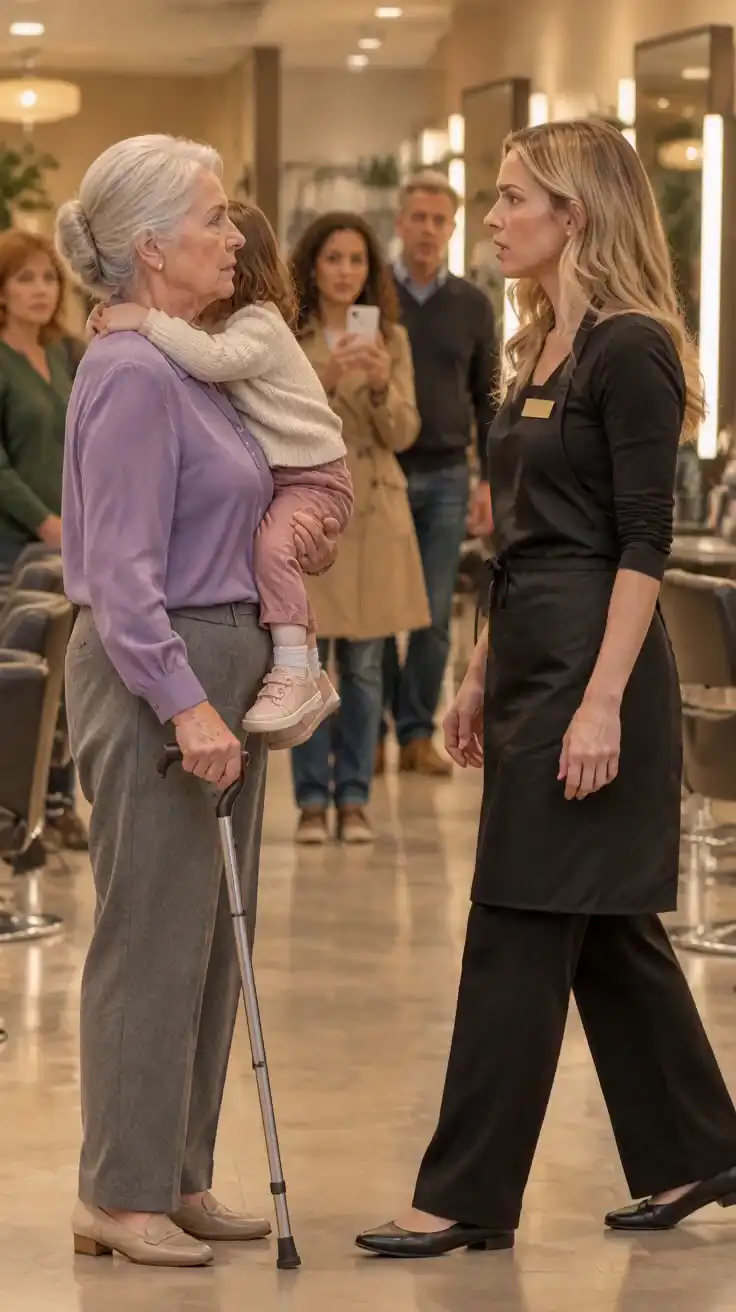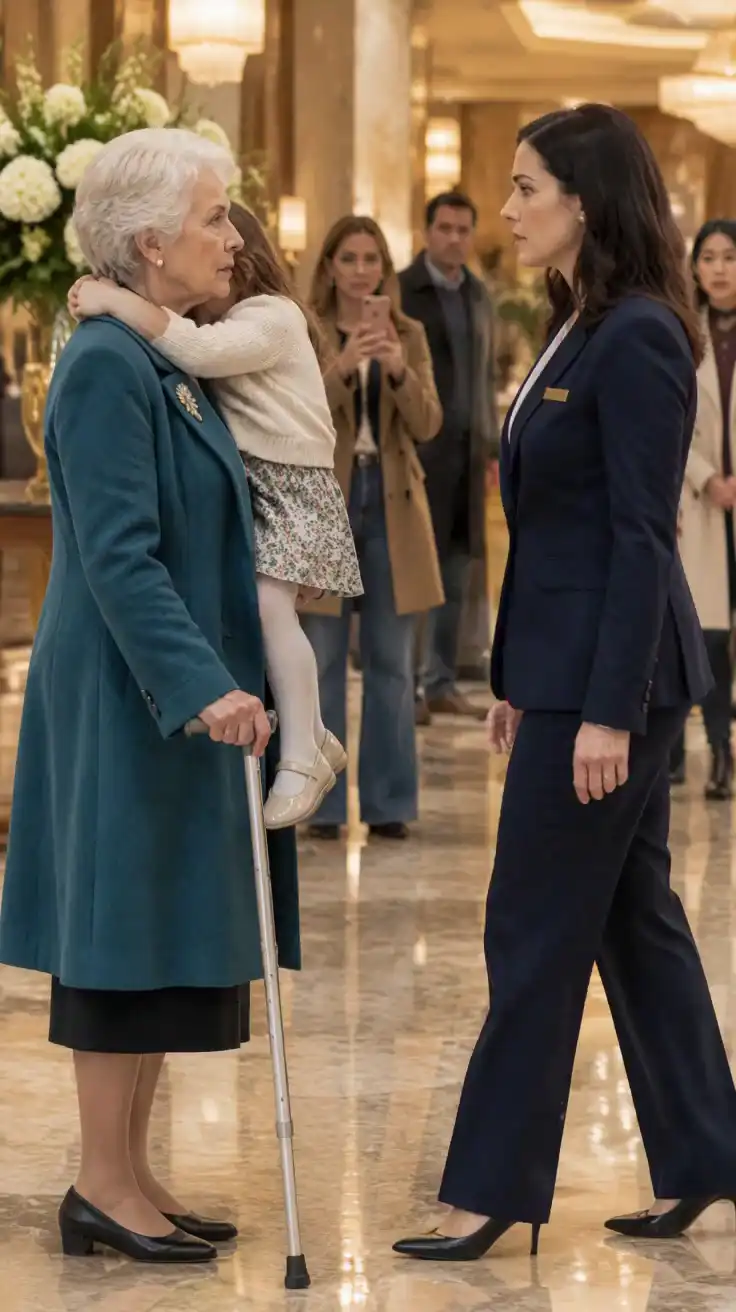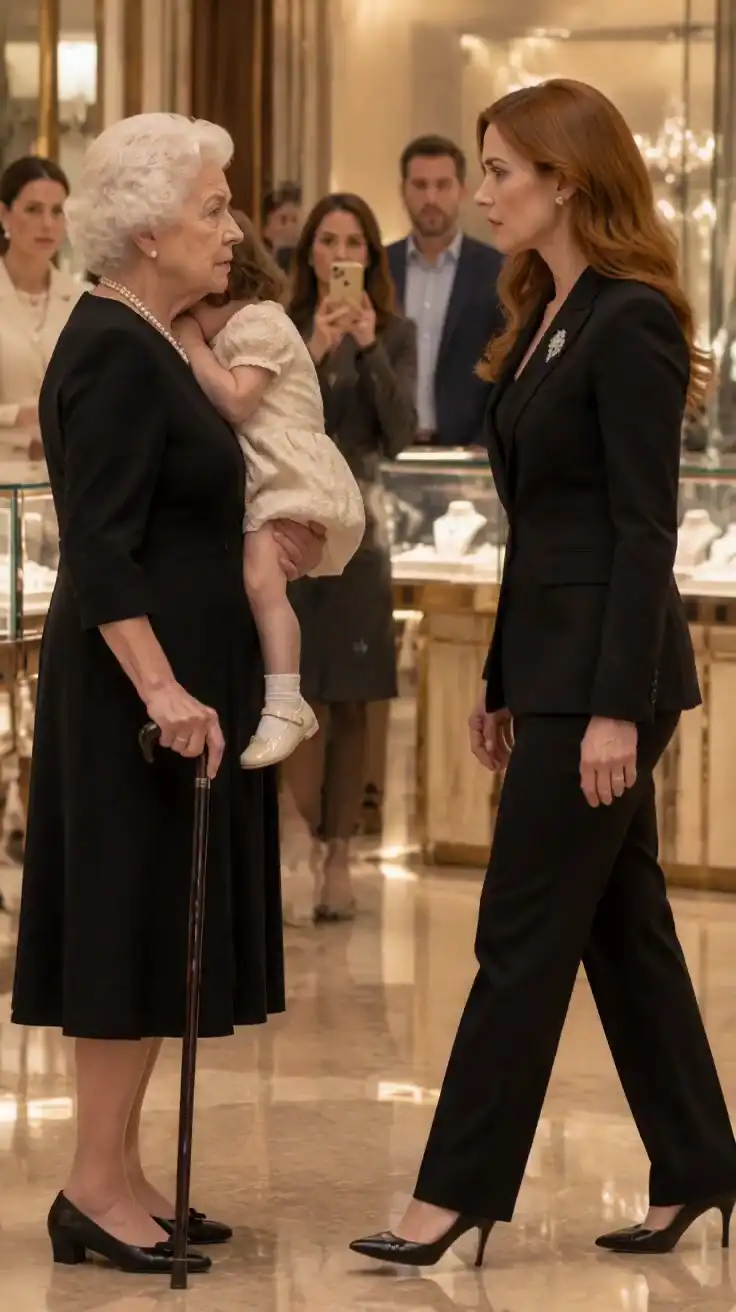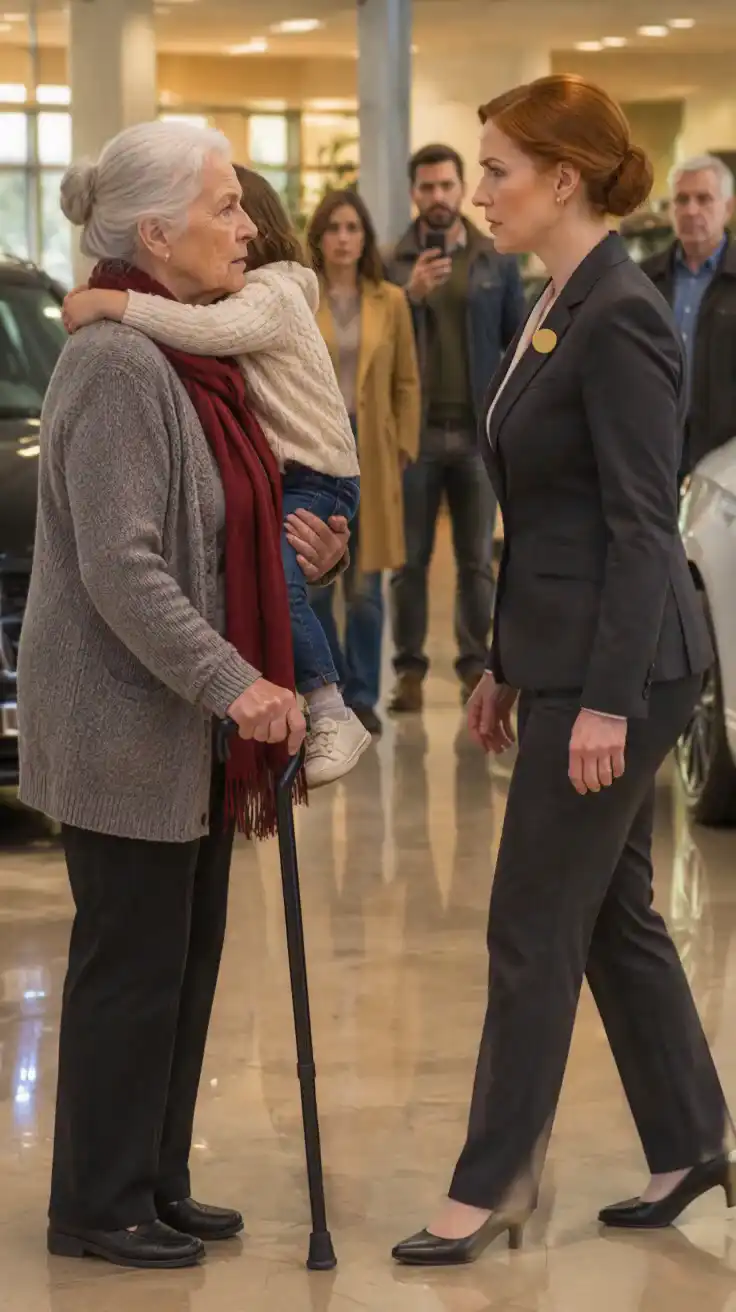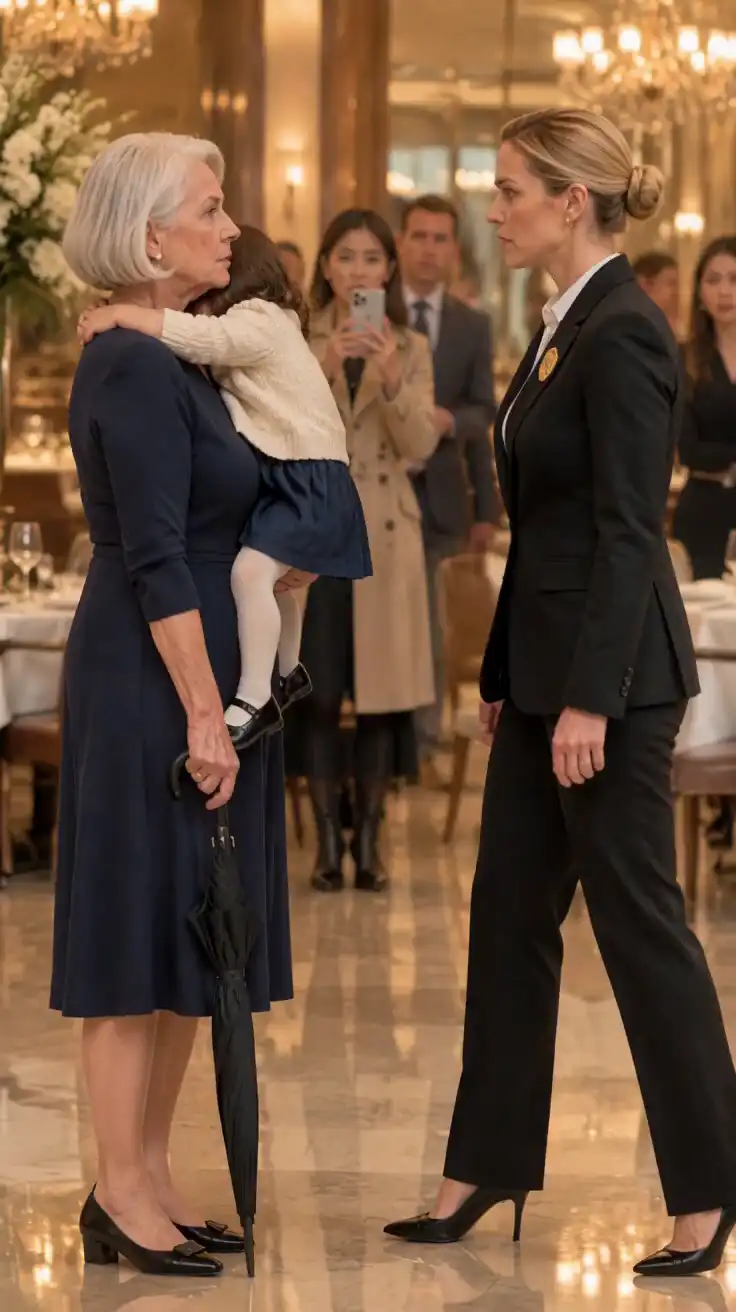
My fiancée shoved my mother through the glass railing on the boat my mother co-owned. My mother had already checked the company ledger; I ran toward her as a deckhand caught her wrist.
The rail pressed cold against my palm as I hauled my mother back onto the deck. Glass crunched beneath my shoes. A deckhand kept hold of her wrist until I had her weight, then let go.
“Mother!”
“I’ve got you,” I said, though my fingers were locked around her sleeve.
Fiona stood a few steps away. Water shone on the deck between us. She glanced at the broken railing and lifted her chin.
“She slipped on the wet deck.”
My mother looked at me. Her hair clung to her cheek; one hand stayed curled around my coat. I put myself between her and Fiona.
“Try that again.”
No one answered. The river moved beyond the shattered glass. Our wedding was set for the next day, aboard the boat my mother co-owned and had spent years keeping afloat. The tables were dressed. The flowers were tied in place. A captain’s chair scraped as the deckhand stood up.
My mother steadied herself against my arm. “The ledger,” she said.
Fiona’s eyes shifted to the cabin door.
The company ledger had been in my mother’s hands the night before. She had asked me to look at it with her, but I’d told her we could talk after the wedding. I had thought there would be time. Now I followed her inside, with the deckhand close behind.
My mother opened the ledger on the captain’s desk. Its pages smelled of damp paper and ink. Beside it lay a printed email from the auditor, folded once down the middle.
Fiona stopped in the doorway.
I turned the ledger toward myself. Three transfers were marked in the same narrow column, each pointing to a private account. The account holder’s surname matched Fiona’s.
My mother kept one hand on the open page. “I found this yesterday.”
The captain stepped in, took the ledger by its covers, and closed it carefully.
“Until the board sees it, nobody moves this book,” he said.
I looked from the captain to Fiona. The flowers, the place cards, and the ceremony waiting on the deck had all belonged to tomorrow. None of us could pretend that tomorrow was still settled.
I set the auditor’s email beside the ledger. The captain’s thumb rested on the cover.
“Did the board approve these transfers?” I asked.
THE THREE TRANSFERS
Fiona answered without looking at me. “Of course they did.”
Captain Ellis kept his thumb pressed to the ledger’s cover. “That is not an answer.”
“It’s the answer you wanted.” Fiona’s voice had gone thin, but her chin was still raised. “The board approved the operating budget. Those transfers were within it.”
My mother pulled out the chair beside the desk and sat down. Her hand remained wrapped around the edge of the table.
“The operating budget did not authorize payments to a private account,” she said.
Fiona looked at her. “You’re confused.”
“No.” My mother lifted the folded email. “I was confused yesterday. That’s why I asked for the auditor’s explanation.”
I opened the email again. The paper had softened at the fold. At the top, beneath the company letterhead, the auditor had written:
I cannot reconcile the three outgoing payments listed below with any approved vendor, employee, or board resolution. Please provide the supporting invoices before 10:00 a.m. tomorrow.
Below that were three dates and three amounts.
I read them twice.
The first transfer had been for forty-eight thousand dollars. The second was sixty-two thousand. The third, made only four days earlier, was ninety thousand.
All three had gone to an account held by Fiona Mercer.
My hand stopped on the last line.
“That’s your account,” I said.
Fiona’s mouth opened, then closed.
Captain Ellis looked at James—at me—with the same steady expression he used when a storm pushed the river against the hull.
“Is it your account?” he asked.
Fiona stepped over the threshold. “It’s a family account.”
“Your name is on it,” I said.
“My father’s name is on it too.”
“Your father doesn’t work for the company.”
“He advises us.”
“Your father died three years ago,” my mother said.
The cabin became very quiet.
Outside, something knocked against the boat’s side. The sound came up through the floorboards and stopped.
Fiona stared at my mother. “You went through my things.”
“I went through the company’s books.”
“You had no right.”
“I’m one of the owners.”
“And I’m your future daughter-in-law.”
My mother’s fingers tightened on the edge of the desk. “Those two facts are not in conflict. Unless you believe marrying my son gives you authority over his family’s company.”
Fiona turned toward me. “James, you know what this is.”
I looked at the three figures again.
“I know the money went to an account with your name on it.”
“You know I was handling a short-term investment.”
“For the company?”
“For the company.”
“Where are the investment documents?”
Her eyes flicked toward the door.
That was the first time I understood what my mother had meant when she said there was no more time to pretend this was a bookkeeping question.
Captain Ellis closed the ledger and slid it toward himself.
“James,” he said, “call the board secretary.”
Fiona stepped between us and the door. “No.”
Captain Ellis did not raise his voice. “Move.”
“You can’t hold me here.”
“No one is holding you.”
“I am leaving.”
“Then leave,” my mother said. “But you will not take that book, and you will not take another document from this cabin.”
Fiona laughed once. It made a sharp, empty sound. “You think you can ruin me because you’re upset about the wedding?”
My mother looked down at the broken skinless edge of glass scattered beyond the cabin door. Then she looked back at Fiona.
“The wedding became the least important thing on this boat when you pushed me through that railing.”
Fiona’s face changed.
Not much. A small tightening near one eye. A breath held too long.
But I saw it.
So did Captain Ellis.
He reached for the brass key hanging beside the chart cabinet. “I’m sealing the captain’s desk.”
“You can’t seal company property,” Fiona said.
“I can secure evidence of a possible theft on a vessel I command.”
“Possible theft?”
“Until the board votes, that is the phrase.”
My mother picked up the auditor’s email and handed it to me. “Keep this with you.”
Fiona took a step toward her.
I moved first, putting the desk between them.
“Don’t,” I said.
She stopped.
For the first time since I had known her, Fiona looked at me as if I were a stranger standing in the wrong room.
“I’m your fiancée,” she said.
“You were.”
The words came out before I had planned them.
Her eyes widened.
On the deck, the deckhand who had caught my mother’s wrist stood near the shattered railing. His name was Nate. He had been working on the upper line when he heard the glass break. He kept his gaze on the river, but his shoulders were rigid.
Captain Ellis locked the desk and removed the key.
“Tom will bring the board secretary’s number,” he said. “Nate, stay by the cabin.”
Fiona turned sharply. “You’re giving orders to keep me here?”
“Nobody is keeping you here,” I said. “But if you leave, you leave without the ledger, without the email, and without any company files.”
“I don’t need your permission to go home.”
“No,” I said. “You don’t.”
She reached for the door.
Then my mother spoke.
“Fiona.”
Fiona stopped but did not turn.
“Why did you ask me to approve the third transfer?”
The question landed harder than anything else had.
Fiona turned slowly. “I didn’t.”
“You sent it through my office on Thursday.”
“I sent a payment request.”
“For ninety thousand dollars.”
“For materials.”
“What materials?”
“Marine equipment.”
“From which supplier?”
Fiona’s gaze moved to me. “This is ridiculous.”
My mother opened a drawer beneath the desk and took out a yellow folder. She did not open it. She laid it on top of the locked ledger.
“I called the supplier listed on your request,” she said. “They had no order. Their invoice number belonged to an invoice from the previous year.”
Fiona stared at the folder.
“You forged the invoice,” I said.
“I did not.”
“Then show us the order.”
“I’m not carrying a warehouse in my purse.”
“You sent the request from the company system,” my mother said. “You can access it from your phone.”
Fiona’s hand went to the small white bag at her side.
I watched her fingers curl around the strap.
My mother saw it too. “Leave the phone on the desk.”
Fiona gave a short, disbelieving smile. “You cannot be serious.”
“Leave it,” I said.
She looked at me.
I thought of her standing on the deck with water shining between us, saying my mother had slipped. I thought of the way she had looked at the door when my mother mentioned the ledger.
Fiona placed the phone on the desk.
Captain Ellis kept the key in his fist. “James, call the secretary.”
I took out my phone.
The board secretary, Margaret Voss, answered on the fourth ring. Her voice was rough with sleep.
“James?”
“It’s me. I need an emergency board meeting.”
“At this hour?”
“I need everyone on a secure call within the hour.”
“What happened?”
I looked at Fiona. She had folded her arms across her chest.
“There are three company transfers to a private account,” I said. “The account is in Fiona Mercer’s name.”
Margaret was silent.
Then she asked, “How much?”
I read the amounts.
The silence on the other end lengthened.
“Where is the ledger?” she asked.
“On the riverboat.”
“Who has it?”
“Captain Ellis has secured it.”
“Good. Do not let it leave the vessel.”
“My mother found an auditor’s email asking for an explanation.”
“Forward it to me.”
“I will.”
“James, is Fiona there?”
Fiona’s face hardened.
“Yes.”
“Is she in possession of any company device or company documents?”
“Her phone is on the desk.”
Margaret exhaled. “Do not search it. Do not touch it again. If she chooses to leave, let her leave. We will preserve the company records through the proper process.”
Fiona’s head snapped up. “I’m right here.”
“I know,” Margaret said. “I can hear you.”
Fiona stepped toward my phone. “You have no right to discuss this without me.”
Margaret’s voice sharpened. “Ms. Mercer, your name appears on three questionable disbursements. You will have an opportunity to respond before the board.”
“I’m the chief operating officer.”
“You are also the subject of an internal inquiry.”
Fiona looked at me as if I had arranged every word.
Margaret continued, “The meeting will begin at two in the morning. All directors will attend. James, send the email and photographs of the ledger pages. Do not alter the book.”
My mother said, “The original stays sealed.”
“It must,” Margaret replied. “And I want the captain to document who had access to the cabin after the seal.”
Captain Ellis nodded, though Margaret could not see him.
Fiona reached for her phone.
I put my hand over it first.
“Don’t,” I said.
“I’m calling my attorney.”
“Call from your own phone.”
“This is my phone.”
“It’s also connected to the company system.”
“That doesn’t make it yours.”
“It’s on the desk.”
Her eyes went to Captain Ellis.
He said, “Pick it up and walk out. I won’t stop you.”
Fiona snatched up the phone. “This is a farce.”
“No,” my mother said. “The farce was the wedding.”
Fiona looked at her with open hatred.
I expected my mother to flinch. She did not.
She took the yellow folder from the desk and placed it in Captain Ellis’s hands. “Put this with the ledger.”
Captain Ellis unlocked the cabinet beneath the chart table. Inside were tide logs, maintenance records, and the vessel’s legal documents. He cleared a space and placed the folder there.
“What about the email?” he asked.
“I have it,” I said.
“Then keep it on your person.”
Fiona shook her head. “You are all acting like I’ve been convicted.”
“No,” Margaret said through the phone. “We are acting like the company has lost two hundred thousand dollars and the person responsible may be standing beside the books.”
The line went quiet.
Fiona’s voice dropped. “James, come outside.”
“No.”
“I need to speak to you privately.”
“You spoke privately to my mother.”
“That was an argument.”
“You pushed her.”
“She slipped.”
My hand closed around the phone.
Margaret heard the silence. “James?”
“I’m here.”
“Stay with the evidence. I’ll wake the directors.”
“Margaret,” Fiona said, “you know me.”
“I know your title,” Margaret replied. “The board will determine the rest.”
She ended the call.
Fiona stood very still.
The deckhand, Nate, shifted near the door. He had been silent since pulling my mother over the railing, but now he looked at Fiona.
“You said she slipped,” he said.
Fiona’s eyes moved to him.
Nate wiped his wet palm against his work trousers. “I was close enough to see her hand on the rail.”
“You weren’t there when it happened.”
“I was under the rail when you pushed her.”
Fiona’s face lost color.
Nate’s voice remained even. “I saw your hands.”
“You were facing the wrong way.”
“I heard you tell her to give you the ledger.”
Fiona looked at me.
My mother’s eyes closed briefly.
I turned to her. “You asked Fiona for the ledger?”
“I asked her why the pages had been removed.”
“What pages?”
Fiona stepped back. “This is absurd.”
My mother opened the yellow folder. Inside were photocopies, each marked with a date.
“The monthly reconciliation pages for March, April, and May,” she said. “They were missing from the company copy. Fiona said they had been sent to the accountant.”
“I never said that.”
“You said the accountant was traveling.”
“He was.”
“I called him.”
Fiona’s breathing quickened.
“He had never seen the pages,” my mother said. “That was when I asked you to explain the transfers.”
Fiona’s voice rose. “You were accusing me in the middle of my wedding preparations.”
“Our company was paying your private account.”
“You were humiliating me.”
“I asked you a question.”
“You brought me up here like a criminal.”
“I asked you to come to the captain’s cabin because the wedding guests were arriving tomorrow and I did not want a confrontation on the public deck.”
Nate glanced toward the broken railing.
My mother continued, “You came willingly. You told me the transfers were reimbursements. I asked for receipts. You told me you had left them in your cabin. Then you tried to take the ledger.”
“I was going to get the receipts.”
“You grabbed the book.”
“You wouldn’t let go.”
“You pushed me.”
Fiona’s eyes flashed. “I did not.”
My mother looked at me. “She said if I canceled the wedding, she would make sure the company lost its largest contract.”
I felt something cold move through my chest.
Fiona’s expression changed again.
“You never told me that,” I said.
“You wouldn’t listen.”
“I told you we could talk after the wedding.”
“You told me I was jealous of Fiona.”
“I didn’t say that.”
“You said I had always wanted to control your life.”
I remembered the conversation in my mother’s office. The closed blinds. The ledger on her desk. The way she had asked me to stay for ten minutes while I checked messages from the florist.
I had been angry because Fiona had called three times.
I had said, “Not everything is a conspiracy, Mom.”
My mother had placed both hands over the ledger and said, “Just look at the payments.”
I had looked at the clock.
“I’ll look tomorrow,” I had told her.
She had nodded.
Now she lowered her eyes to the yellow folder.
“I should have stopped the wedding before you came aboard,” she said. “I thought I could show you the records and let you decide.”
Fiona let out a breath that sounded almost like a laugh. “There it is. She’s been trying to turn you against me for months.”
I faced Fiona. “Did you threaten our largest contract?”
“I said a company cannot survive if its owners are going to interfere with operations.”
“That isn’t what she said.”
“She’s twisting it.”
“Did you say it?”
Fiona’s lips pressed together.
“Did you?” I asked again.
She looked at the floor.
That was enough.
Captain Ellis removed the ledger from the cabinet only long enough to photograph the sealed lock and record the time in his log. Then he placed it back inside.
“Captain,” Fiona said, “you work for the company. You cannot take sides.”
“I’m not taking sides,” he said. “I’m recording what happened on my deck and securing what was left in my care.”
“You saw nothing.”
“I saw your hands on Mrs. Hale’s back.”
Fiona took another step away from him.
My mother stood, using the desk for balance. “James, we need to inspect the company drive before anyone can alter it.”
Margaret’s instruction returned to me.
“Not without the auditor,” I said.
“Call him.”
I found his number in the email signature. The call went to voicemail.
Fiona crossed her arms. “He won’t answer at this hour.”
“I’ll leave a message.”
“You’re making a mistake.”
I turned toward her.
She had said that to me before. Usually over restaurant menus or seating charts, whenever I questioned one of her decisions. The words had always carried the confidence of someone certain I would eventually apologize.
This time there was no apology waiting in me.
I left the auditor a message and sent Margaret the email. Then I photographed the three ledger lines without touching the book. Captain Ellis watched each image appear on my phone.
“Send those to me,” he said.
I did.
My mother moved to the small sink and ran water over a cloth. She wiped the river water from her hands, though there was no injury to clean.
Fiona watched her.
“Are you going to tell the board I attacked you?” she asked.
My mother wrung out the cloth. “I’m going to tell them exactly what happened.”
“You’ll destroy James.”
“No,” my mother said. “You did that when you made him choose between the truth and the wedding.”
Fiona looked at me. “You really believe her?”
I looked at the broken glass visible through the cabin door.
“I believe what I saw.”
“You saw me standing there.”
“I heard you say she slipped.”
“Because she did.”
“I heard Nate say he saw you push her.”
“He wants to protect his job.”
Nate’s jaw tightened, but he kept his mouth shut.
I said, “He caught my mother’s wrist.”
Fiona stared at me.
“He could have let go,” I continued. “He didn’t.”
“He was doing his job.”
“And you were doing what?”
She looked away.
At two o’clock, every director joined the call.
Margaret had sent the access code to the seven people listed in the company charter. My mother sat at the captain’s desk. Captain Ellis stood behind her with the ledger locked away. Nate remained near the door, not as a guard but as the only person who had witnessed the deck clearly.
Fiona sat across from me at the small dining table.
She had removed her engagement ring and placed it beside her phone.
I had not asked her to do that. She had taken it off when Margaret said the board meeting would be recorded.
The screen showed six faces in separate squares. Margaret was in her home office. Daniel Price, the company treasurer, wore a shirt beneath a robe. Two other directors appeared from dark rooms. The seventh, our outside counsel, joined from a conference room and immediately asked whether the original records were secured.
“They are,” Captain Ellis said.
“Who has access?” the counsel asked.
“Only me, until the board directs otherwise.”
“Good.”
Margaret looked at me. “James, state the issue.”
I held the printed email in front of the camera.
“At approximately eleven forty-five tonight, my mother found three company transfers to a private account held by Fiona Mercer. The amounts are forty-eight thousand, sixty-two thousand, and ninety thousand dollars. The total is two hundred thousand.”
Daniel leaned toward his camera. “Do we have confirmation of the account?”
My mother answered. “The account number appears in the ledger. The account holder name matches Fiona’s legal name.”
Fiona lifted her head. “It is a family investment account.”
“Who else controls it?” Daniel asked.
“My father’s estate.”
“Your father died in 2021,” Margaret said.
“The account was never closed.”
“Who has signing authority?”
Fiona did not answer.
Daniel turned to the camera. “Fiona?”
“My mother.”
“Your mother is in Arizona,” my mother said. “She has been in assisted living since last year.”
Fiona’s hand moved toward the ring.
The outside counsel said, “Ms. Mercer, this is not a criminal examination. You may decline to answer until you have counsel. But the board needs to know whether you dispute the account ownership.”
“I don’t dispute it.”
“And did the company receive goods or services in exchange for the transfers?”
“Yes.”
“What goods?”
Fiona looked at me. “The same goods listed in the invoices.”
“Which supplier?” Daniel asked.
“Harbor Industrial.”
My mother opened the yellow folder. “Harbor Industrial has no record of the orders.”
“You called them after hours?”
“I called their regional manager at six yesterday evening.”
“Without my authorization?”
“They are a company vendor.”
The outside counsel said, “Do we have written confirmation?”
My mother held up another sheet. “I printed the email he sent me.”
Margaret said, “Read it.”
My mother did.
The regional manager confirmed that Harbor Industrial had not issued the invoices in question, and that the invoice numbers belonged to old orders already paid. He had attached copies of the originals.
Daniel rubbed his forehead. “How were the payments entered?”
I opened the images on my phone. “The ledger lists Fiona as the submitting officer. The approval line has a digital authorization from the operations account.”
Fiona’s voice sharpened. “I had authority to approve vendor payments.”
“Up to twenty-five thousand,” Daniel said.
She turned toward the camera. “The board expanded my authority during the spring contract.”
“Where is that resolution?” Margaret asked.
“It was discussed.”
“Was it recorded?”
“I don’t remember.”
Daniel pulled a file from somewhere off camera. “It wasn’t in the minutes.”
Fiona looked at him. “You were there.”
“I was there for a discussion about temporary purchasing authority,” he said. “It was never approved for transfers to accounts connected to an officer.”
“I didn’t tell anyone it was connected to me.”
“You were required to disclose it.”
“I didn’t know the account was still under my name.”
My mother’s gaze remained fixed on her. “The payment requests used your tax identification number.”
Fiona’s hands went flat on the table.
Daniel asked, “What did the money purchase?”
She said nothing.
The outside counsel leaned forward. “Ms. Mercer, if these payments were personal transfers disguised as vendor invoices, the company will need to suspend your authority immediately.”
“You’re all deciding this before I can explain.”
“Then explain,” Margaret said.
Fiona looked at me.
“James knows why I needed the money.”
I felt every face on the screen turn toward me.
“I don’t,” I said.
“You knew I was trying to secure the Riverside contract.”
“You told me the contract was already secure.”
“It required a deposit.”
“From the company?”
“Of course.”
“Why didn’t you tell the board?”
“Because the board would have delayed it.”
Daniel said, “The Riverside contract did not require a deposit. I negotiated the terms.”
Fiona’s eyes closed.
The outside counsel asked, “Was any part of the two hundred thousand dollars paid to Riverside?”
“No,” Daniel said before Fiona could answer. “The contract was signed without a deposit.”
Margaret looked at Fiona. “Where is the money?”
Fiona stood abruptly.
The chair legs scraped the floor.
Captain Ellis did not move, but Nate straightened near the door.
“I’m done with this,” Fiona said.
The outside counsel said, “You may leave the vessel. But you are suspended from company duties effective immediately. Do not access company accounts, systems, or records.”
Fiona looked from the screen to me. “You’re suspending me because his mother made an accusation?”
“We are suspending you because the records show unauthorized transfers,” Margaret said. “The audit will determine the final findings.”
“You can’t do this.”
“We can,” Daniel said. “And we must.”
Fiona picked up her phone.
“Leave the company phone,” I said.
She gave me a bitter smile. “You don’t get to order me around.”
“Margaret told you not to access the system.”
“I’m not going to.”
“Then leave it.”
The phone remained in her hand.
The outside counsel said, “Ms. Mercer, place the device on the table. We will arrange for a neutral examiner to preserve its contents.”
Fiona’s fingers tightened around it.
I saw the choice forming in her face: keep the phone and walk out, or surrender the thing that could show where the money had gone.
Captain Ellis stepped to the table and set down a padded evidence envelope.
“Put it inside,” he said.
Fiona looked at him. “You think you’re important because you steer a boat.”
“No,” he said. “I think records matter because water carries away what people drop.”
She slipped the phone into the envelope.
The counsel instructed him to seal it. He did so in front of the camera, writing the time and his initials across the flap.
Fiona stood beside the table, suddenly without anything in her hands.
Margaret said, “The board will reconvene at eight in the morning with the auditor present. Until then, all payment authority remains frozen. James, your mother, and Captain Ellis will preserve the original ledger and related documents.”
Fiona laughed again. “You’re leaving them in charge of the investigation?”
“No,” Margaret said. “We are leaving them in possession of the evidence because they are already on the vessel where it was found.”
“Of course.”
The meeting ended.
The screen went black.
For several seconds, no one spoke.
Then my mother lowered herself into the chair.
Her face looked older than it had an hour earlier, but her voice was steady.
“James, the auditor’s email came at nine yesterday morning.”
I sat across from her. “Why didn’t you call me?”
“I did.”
“I was at the rehearsal dinner.”
“You sent me to voicemail.”
“I thought it was about the seating chart.”
“It was about your fiancée transferring company money to herself.”
I looked down at the printed email.
The sentence was still there, black and precise.
“Why did you wait until tonight to confront her?”
“I didn’t. I asked her to meet me at four.”
“What happened?”
“She said she had to finish arrangements for tomorrow. I told her the wedding could wait.”
My mother folded the cloth she had used at the sink.
“She came to my office at six. I showed her the first two transfers. She said they were reimbursements for expenses she had paid personally. I asked for receipts. She said they were in her cabin.”
“And you believed her?”
“No.”
“Then why didn’t you stop everything?”
“I wanted you there.”
I looked at her.
“I wanted you to see it,” she said. “Not hear it from me. Not be forced to choose between us because I had made a decision for you.”
“You could have canceled the wedding.”
“I could have canceled the use of the boat. I could not cancel your marriage for you.”
Fiona had said my mother wanted control.
The words had lodged in me because there was some truth in them. My mother had controlled schedules, repairs, payroll, weather reports, and every emergency that had ever touched the boat. She had made decisions when other people were still arguing.
But tonight she had waited.
She had waited until waiting put her at the railing.
“You should have told me about the threat,” I said.
“Yes.”
The answer came without defense.
My mother looked toward the door. “When Fiona said she would destroy the company’s largest contract if I stopped the wedding, I thought she was trying to frighten me. I did not understand she had already taken money.”
“She did not say she would destroy it,” I said.
“She said she could withdraw the financing.”
“Riverside?”
My mother nodded.
“Why would she control that?”
“She told me she had a private investor ready to step in if the board refused her terms.”
I remembered Fiona’s calls from the previous week. Her insistence that I trust her. Her anger when I said the new contract belonged in the company’s name, not hers.
“Did she name the investor?”
“She named the account receiving the transfers.”
I turned toward the locked cabinet.
Captain Ellis stood beside it. “We should add that statement to the log.”
My mother nodded. “Write it exactly.”
He opened the logbook, kept it on the counter, and wrote while she spoke.
She gave the date, the time, and Fiona’s words as closely as she could remember them. Captain Ellis read the entry back to her.
She corrected one phrase.
He crossed it out with a single line and rewrote it.
When he finished, he signed beneath the entry.
Then Nate spoke from the doorway.
“She told me the same thing.”
My mother looked up. “When?”
“Yesterday afternoon. She asked me to move the wedding supplies from the lower storage room. She said if the company didn’t secure the Riverside financing, the boat might have to be sold.”
I stared at him. “Why didn’t you tell me?”
Nate shrugged, but his eyes stayed on the floor. “I figured it was business.”
Fiona turned toward him. “You’re lying.”
Nate looked at her. “I’m not.”
“You weren’t even there.”
“I was carrying the chairs.”
“You were behind the galley.”
“I heard you.”
Fiona’s mouth tightened.
Captain Ellis wrote a second statement.
The evidence grew not through accusation but through small details that had belonged to different people: an email, an invoice, a threat, a ledger line, a sentence overheard near a stack of chairs.
At six in the morning, the auditor arrived at the boat.
His name was Peter Lang. He carried a black briefcase and a portable scanner. He stopped just inside the cabin door and looked at the broken railing through the glassless opening.
“Is everyone all right?” he asked.
“Yes,” my mother said.
“Good.”
He did not ask for a story. He asked for the ledger.
Captain Ellis showed him the lock, the seal, and the entry in the log. Peter photographed each one before the cabinet was opened.
Fiona had left the boat at four. She had taken only her coat and purse. She had not said goodbye.
Peter placed the ledger on the table without opening it.
“Who handled this after the seal?” he asked.
“Captain Ellis,” I said. “My mother and I were present. Fiona was present when it was locked.”
“Anyone else?”
“Nate.”
“Did he touch it?”
“No.”
Peter nodded and photographed the cover.
The captain broke the seal.
The pages lay exactly as they had before. The three transfers were marked with blue tabs. Peter scanned them one at a time, then asked for the company’s digital transaction records.
Margaret had sent them overnight.
Peter opened the files on his laptop. “The first payment request was submitted from Ms. Mercer’s credentials on March 14. The second on April 22. The third on June 6.”
My mother said, “The invoices were entered as equipment purchases.”
“Correct.”
“Who approved them?”
Peter turned the laptop toward us. “The electronic approval was entered from the operations terminal. Ms. Mercer’s terminal.”
Fiona had told the board she had authority to approve vendor payments.
Peter opened another file. “But the approval limit attached to her profile was twenty-five thousand dollars. Each payment was split from a larger batch request.”
I leaned closer. “What does that mean?”
“The system recorded several smaller approvals within minutes of one another, then bundled them into one outgoing transfer. The first transfer was divided into four approvals. The second into five. The third into seven.”
My mother’s face went still.
“She avoided the limit,” I said.
Peter nodded. “That is what the records suggest.”
“Could someone else have used her credentials?”
“Possibly. But the terminal required a physical key and a secondary code.”
“Who had them?” Daniel asked over the video call. He had joined from his office.
Peter replied, “The operations officer.”
“Fiona,” I said.
“And the assistant operations manager,” Peter added.
“Who was on leave during two of the transfers,” my mother said.
Peter looked at her. “I’ll verify that.”
He did. The assistant manager had been out of state on all three dates.
At eight o’clock, the board reconvened.
This time Fiona joined from an attorney’s office. A woman with silver hair sat beside her and introduced herself as Ellen Marsh.
Margaret began by reading the suspension order.
Fiona listened with her arms folded.
When Margaret finished, Ellen said, “My client disputes the characterization of these payments as personal transfers.”
Peter presented the records.
He showed the original ledger entries, the digital approvals, the false invoice numbers, and the supplier’s written confirmation. He explained the split approvals and the account ownership.
Fiona interrupted twice.
“That system was not secure.”
“The password was changed after the first transfer,” Peter said. “The second and third were entered after the change.”
“Someone could have obtained it.”
“Your token was used.”
“Someone could have taken the token.”
“Your token was physically checked out to you on those dates.”
“Anyone could have signed the log.”
Peter displayed the scanned sign-out record.
Fiona’s signature appeared three times.
Ellen touched Fiona’s arm. “Let him finish.”
Peter moved to the final document: a bank confirmation from the account receiving the money.
“The account was opened in the name of Mercer Family Ventures,” he said. “The authorized manager is Fiona Mercer. The secondary manager is Fiona Mercer Consulting.”
Daniel leaned toward his screen. “Is that consulting company registered?”
Peter opened the record. “Yes. It was formed two weeks before the first transfer.”
My mother looked at me.
I had been with Fiona the night she filed the company paperwork. She had told me it was for advising small marine businesses. I had congratulated her.
“You said it was for outside clients,” I said.
Fiona looked directly at me. “It was.”
“Did our company pay it?”
“No.”
“The transfers went to it.”
“They were loans.”
“Where are the loan agreements?”
“We were preparing them.”
After the money was transferred?
Fiona did not answer.
Margaret asked, “Did the board approve any loan to Fiona Mercer Consulting?”
“No,” Daniel said.
“No,” my mother said.
“No,” said the outside counsel.
Margaret’s gaze stayed on Fiona. “Then the payments were unauthorized.”
Ellen raised a hand. “My client needs time to review the records.”
“You have had the records since seven-thirty,” Margaret said.
“That is not sufficient.”
“You will have the full audit file by noon.”
“And until then?”
“Until then, Fiona remains suspended and barred from company systems.”
Fiona leaned toward the camera. “You are doing this because James’s mother wants to stop our wedding.”
“No,” Margaret said. “The wedding is a private matter. The board is acting because two hundred thousand dollars left the company without authorization.”
Fiona turned to me. “Tell them.”
“Tell them what?”
“That the money was for us.”
I felt the room narrow around her words.
“What does that mean?” I asked.
“We were going to use it to buy a house.”
“No.”
She blinked. “You wanted a house near the river.”
“Not with company money.”
“It was an advance against your ownership.”
“I don’t own a share of the company.”
“You were going to.”
“My mother never offered me one.”
“She would have.”
My mother’s expression did not change. “Not without a board vote.”
“You said James would inherit your position.”
“I said James could become a director if he chose to learn the business.”
“You see?” Fiona said to me. “She keeps everything from you. Even what belongs to you.”
“What belongs to me is not money you took from the company.”
“I was protecting our future.”
“By hiding the payments?”
“You would have agreed if she hadn’t poisoned you against me.”
I stood up.
My chair moved backward and struck the wall.
“Don’t put this on her,” I said.
Fiona’s eyes hardened. “You let her.”
“I let you talk.”
“You always let her talk.”
“I let you talk when you told me the transfers were equipment purchases.”
Her face went blank.
The room on the video call stayed silent.
I continued, “I let you talk when you told me the Riverside deposit was real. I let you talk when you said my mother was jealous. I let you talk when you said she slipped.”
Fiona’s attorney touched her arm again.
Fiona pulled away.
“You’re ending this over money,” she said.
“I’m ending it because you lied about money, threatened my mother, and pushed her through a railing.”
“I didn’t push her.”
Nate’s voice came from behind me. “You did.”
Fiona glared at him.
Peter said, “The deck camera recorded audio.”
Everyone turned toward him.
Captain Ellis’s face tightened. “The camera on the upper deck?”
“It records sound as part of the safety system. The video file from last night was overwritten after fifteen minutes, but the audio buffer retained the final segment.”
Fiona’s attorney sat up. “You have a recording?”
Peter opened a file.
Static filled the cabin.
Then Fiona’s voice came through the laptop.
Give me the ledger.
My mother’s voice followed, low and controlled.
Not until you explain the payments.
A scrape. A sharp breath.
Then Fiona said, “You have no idea what you’re doing.”
My mother said, “I know exactly what I’m doing.”
There was a rush of sound. The recording broke into a burst of crackling noise.
My mother’s scream cut through it.
Then Nate shouted, “No—don’t let go!”
My mother cried, “Help me!”
My voice came next, distant and panicked.
“Mother!”
The recording caught Fiona saying, “She slipped on the wet deck.”
Then my voice, close and cold:
“Try that again.”
The file ended.
No one moved.
Fiona’s attorney closed her eyes.
Margaret said, “Add that to the audit record.”
Peter saved the file under a new evidence number.
Fiona stared at the laptop.
“You recorded us,” she said.
“The safety system recorded the deck,” Peter replied.
“You weren’t supposed to hear that.”
“No,” my mother said. “You weren’t supposed to push me.”
Fiona looked at me.
There was no anger in her face now. There was something smaller, more desperate.
“James.”
I did not answer.
She stood and walked out of the attorney’s office on the screen. The connection remained open for several seconds. Then Ellen Marsh leaned forward.
“My client will cooperate with the financial review,” she said. “But she denies wrongdoing.”
Margaret replied, “The board will issue a written finding.”
Ellen’s eyes shifted to me. “Mr. Hale, I advise you not to make personal statements until the review is complete.”
“I won’t need to.”
“Good.”
The call ended.
My mother sat down again.
Captain Ellis closed the ledger and resealed it.
Peter packed the scanned pages into a folder.
The next hours filled with documents, signatures, and calls, but each action had a clear owner. The auditor traced the payments. The counsel sent preservation notices to the bank and the company’s software provider. Margaret instructed the bank to freeze the account. Daniel prepared a demand for repayment.
No one called the police. No one arrived at the boat. The company used its own board, counsel, and auditors to handle its records.
At noon, the bank confirmed that the remaining money in Mercer Family Ventures had been frozen.
At one, the auditor found the first transfer had been used to pay a private credit card. The second had gone to a down payment on a house listed under Fiona’s consulting company. The third was still in the account.
By three, the bank had reversed the third transfer under the company’s fraud procedure.
The first two took longer.
Fiona claimed the house payment was a legitimate business investment. The title company produced the purchase documents. The buyer was Fiona Mercer Consulting. The funds had come directly from the company’s operating account.
The board voted to demand the property’s sale or repayment.
Fiona’s attorney negotiated.
My mother did not participate in those negotiations. She sat in the galley with a cup of tea while I stood beside the window and watched the river change color.
At six, she said, “You should go home.”
“I’m staying.”
“You have nowhere to sleep.”
“I have a cabin.”
“You have a wedding to cancel.”
I looked at the flowers on the deck through the open doorway.
They were still tied to the brass rails. White ribbons moved in the river breeze. The place cards sat beneath small glass weights so they would not blow away.
“Not just cancel,” I said. “We have to tell everyone.”
“You don’t owe everyone an explanation.”
“We invited them onto the boat.”
“Then tell them the ceremony will not take place.”
“And the money?”
“That belongs in the company’s statement.”
I turned to her. “I want to say what happened.”
“Why?”
“Because she told people you were jealous. She told them you slipped.”
My mother looked at the flowers.
“People who believe her will believe her,” she said.
“I don’t care.”
“Yes, you do.”
I sat across from her.
She pushed the tea toward me.
“I cared when I thought Fiona was going to be my daughter,” she said. “I cared when I thought you were happy. I cared when I believed the company could survive whatever mistake she had made.”
“You still care about her.”
My mother considered that.
“I care that she is accountable,” she said. “That is not the same as wanting her punished.”
The sentence stayed with me.
The board met again at nine that evening.
By then, the auditor had completed the first report. He found that all three transfers were unauthorized and that Fiona had created the consulting company to receive them. He found no evidence that any board member had approved a loan, investment, reimbursement, or deposit.
The company’s counsel explained that the board could remove Fiona from her position immediately.
Margaret asked each director to vote.
The vote was unanimous.
Fiona was removed as chief operating officer.
Then came the vote to terminate her employment and expel her from the company’s membership structure.
That vote was also unanimous.
My mother abstained.
Fiona’s attorney asked why.
My mother answered, “Because I am the mother of the man she was supposed to marry. I can vote as an owner, but I will not use that vote to settle a personal betrayal.”
Margaret said, “The record will reflect the abstention.”
The board approved the removal.
Fiona joined the call for that portion. She sat rigidly beside her attorney, her engagement ring still absent from her hand.
When Margaret read the resolution, Fiona said, “You’re all making a mistake.”
Daniel replied, “The mistake was trusting you without sufficient controls.”
“You’ll lose the Riverside contract.”
“No,” Daniel said. “You were not the contract.”
“You don’t know what I arranged.”
“We know what the signed agreement says.”
“You’ll regret this.”
Margaret did not raise her voice. “Fiona, you are no longer authorized to speak for the company.”
Fiona looked at me.
I kept my eyes on the screen.
She said, “James, you can still stop this.”
I said, “No.”
“You don’t even know what you’re giving up.”
“I know what I’m refusing.”
“Your mother has wanted you under her control since the day you joined the company.”
My mother remained silent.
I answered, “You were the one who asked me to leave the company and build a life somewhere else.”
Fiona’s lips parted.
“You said the boat was a trap,” I continued. “You said my mother’s work made her incapable of love. You said if I married you, I would finally belong to a real family.”
“I was trying to help you.”
“You were trying to separate me from everyone who could question you.”
Her attorney whispered in her ear.
Fiona shook her head. “This isn’t over.”
Margaret said, “It is over as far as your position in this company is concerned.”
The call ended.
The wedding was canceled before midnight.
My mother drafted the notice, but she made me send it.
I wrote:
The ceremony scheduled for tomorrow aboard the riverboat will not take place. Please do not come to the vessel. Further arrangements will be communicated directly.
I wanted to write why.
My mother stopped me.
“Let the company’s report speak for the money,” she said. “You do not need to turn your private life into a public trial.”
I sent the notice.
Replies came within minutes. Some asked if I was safe. Some asked if they could help. I answered only the practical questions.
No ceremony.
No reception.
No guests aboard.
The flowers came down at dawn.
The caterer arrived at the dock and stood with his hands in his coat pockets while Captain Ellis explained. He took the food back to the kitchen. The musicians were paid for their canceled booking. The florist collected the arrangements one by one.
No crowd gathered. No one shouted. The boat became quieter with every table cleared.
My mother sat in the captain’s chair while I carried the place cards into a box.
I found Fiona’s card beneath the wedding program.
FIONA MERCER AND JAMES HALE.
The printed names looked like a promise made by someone else.
I tore the card in half and put both pieces in the box.
“You don’t have to do that,” my mother said.
“I know.”
At ten that morning, the board issued its written finding.
The report stated that three payments totaling two hundred thousand dollars had been transferred without authorization to accounts controlled by Fiona Mercer. The invoices had been falsified. The transfers had not been approved by the board. The company had recovered the remaining funds and had initiated recovery proceedings for the rest.
The board also stated that Fiona Mercer had been removed from all positions in the company.
The money returned in stages.
The ninety thousand still in the account came back first.
The credit card payment was reversed within a week.
The house deposit required a sale agreement and a court-approved repayment schedule, but Fiona’s attorney negotiated before the matter reached a hearing. The property was sold. After fees, the company recovered the remaining one hundred ten thousand dollars.
Peter sent the final reconciliation to the board.
Total recovered: $200,000.
I read the line twice.
My mother was at the window, checking the river level.
“We got it back,” I said.
She turned.
“All of it?”
“All of it.”
She nodded once, then looked down at the page.
“Then close the file.”
I placed the report in the company records.
The original ledger remained in the captain’s cabinet until the audit was complete. When Peter returned it, Captain Ellis removed the seal in the presence of Margaret and my mother. The pages were intact. Nothing else was missing.
Not the March page.
Not the April page.
Not the May page.
The ledger answered the question that had brought us into the cabin.
Three payments were missing from the story Fiona had told us.
But the larger truth was that the money had never been missing from the books. It had been hidden in plain sight, beneath false invoices and split approvals, waiting for someone to stop treating a wedding as more urgent than the company.
A month later, the board held its regular meeting aboard the riverboat.
The broken glass had been replaced. The new railing was clear and bright, with a narrow metal line running along its top. My mother had insisted on the strongest panel the supplier offered.
Nate stood on the upper deck, testing the fittings.
Captain Ellis brought the ledger into the cabin and placed it on the table.
“Final audit copy,” he said.
My mother signed the receipt.
Then she slid the book toward me.
“You’re a director now,” she said.
I looked at the title page.
“Is that a promotion?”
“It is a responsibility.”
“What if I don’t want it?”
“Then say so.”
I thought of Fiona telling me I could not have a future without her. I thought of my mother telling me she would not choose for me.
“I want to learn,” I said.
My mother nodded. “Then start with the pages you ignored.”
I opened the ledger.
The three transfers were marked in red, with Peter’s notes beside them and the board resolution attached behind each entry. The account numbers were visible. The invoices were cross-referenced. The final recovery receipts were filed at the back.
Nothing was hidden anymore.
Captain Ellis leaned against the doorframe. “We’ll need to replace the deck camera too.”
“Why?” I asked.
“The audio held,” he said. “The video didn’t.”
My mother looked at the new railing. “Replace it.”
“I already ordered one.”
“Good.”
He left.
For a while, my mother and I sat without speaking.
The company was still standing. The contract was still active. The wedding was gone. Fiona’s name had been removed from the employee list, the company directory, and the ownership records.
There had been no dramatic scene when she left. No apology that fixed anything. No single sentence that returned the night to what it had been.
There had only been the ledger, the email, the audit, the board’s vote, and the money brought back.
My mother closed the book.
“You should stop blaming yourself,” she said.
“I’m not.”
She gave me a look.
I put my palms flat on the table. “I should have listened.”
“Yes.”
The directness almost made me laugh.
“And you should have told me sooner,” I said.
“Yes.”
We sat with that.
Then she reached across the table and tapped the ledger.
“Next time, we talk before the wedding.”
“There won’t be a next time.”
“Not necessarily.”
I looked at her.
She lifted one shoulder. “People do marry after difficult beginnings.”
“I’m not discussing marriage.”
“Good. Discuss the quarterly figures.”
I opened the book again.
The river moved beyond the new glass, dark and unbroken. A deckhand crossed the upper deck carrying a coil of line. Captain Ellis called something from below, and Nate answered.
No one was running.
No one was holding on to a wrist.
The ledger lay open in front of me, and every transfer had an owner, a date, and a reason recorded beside it. The money had been found. The false account had been exposed. The person who had taken it was no longer part of the company.
And the wedding would never happen.
That was not the ending Fiona had expected.
It was the first honest decision I had made in months.