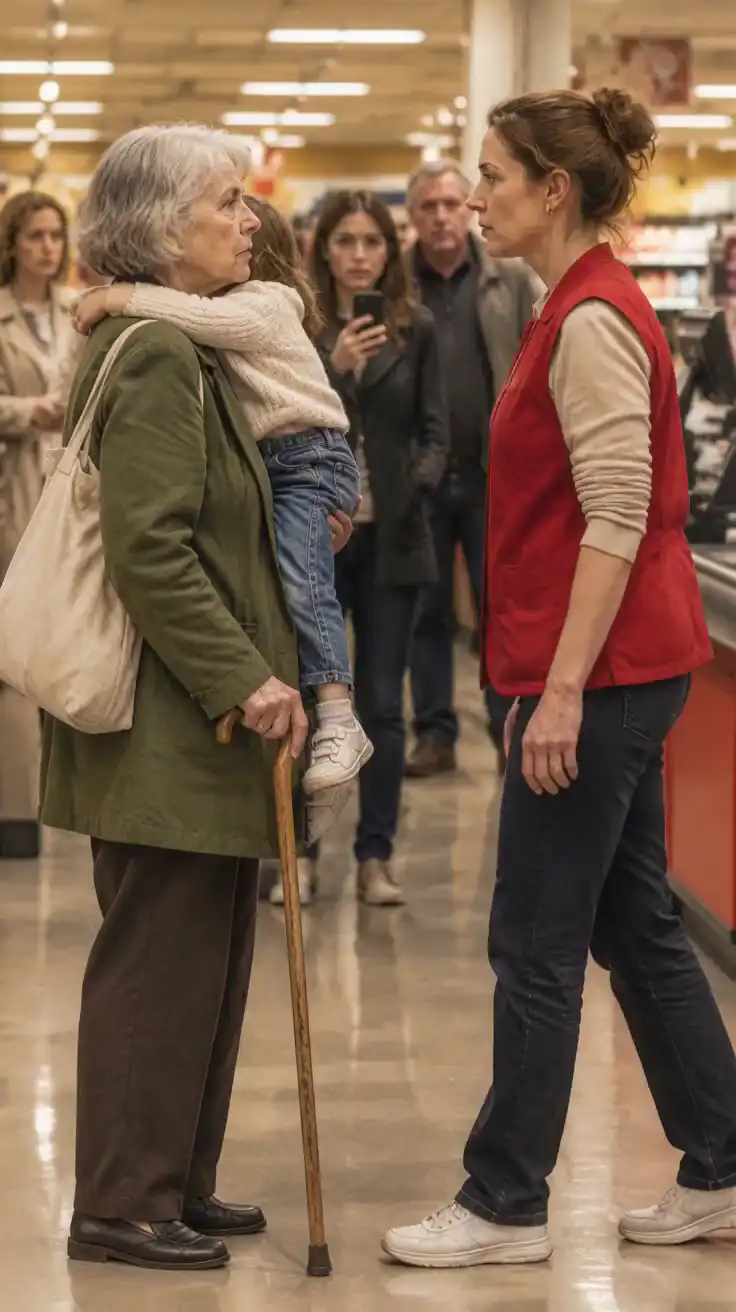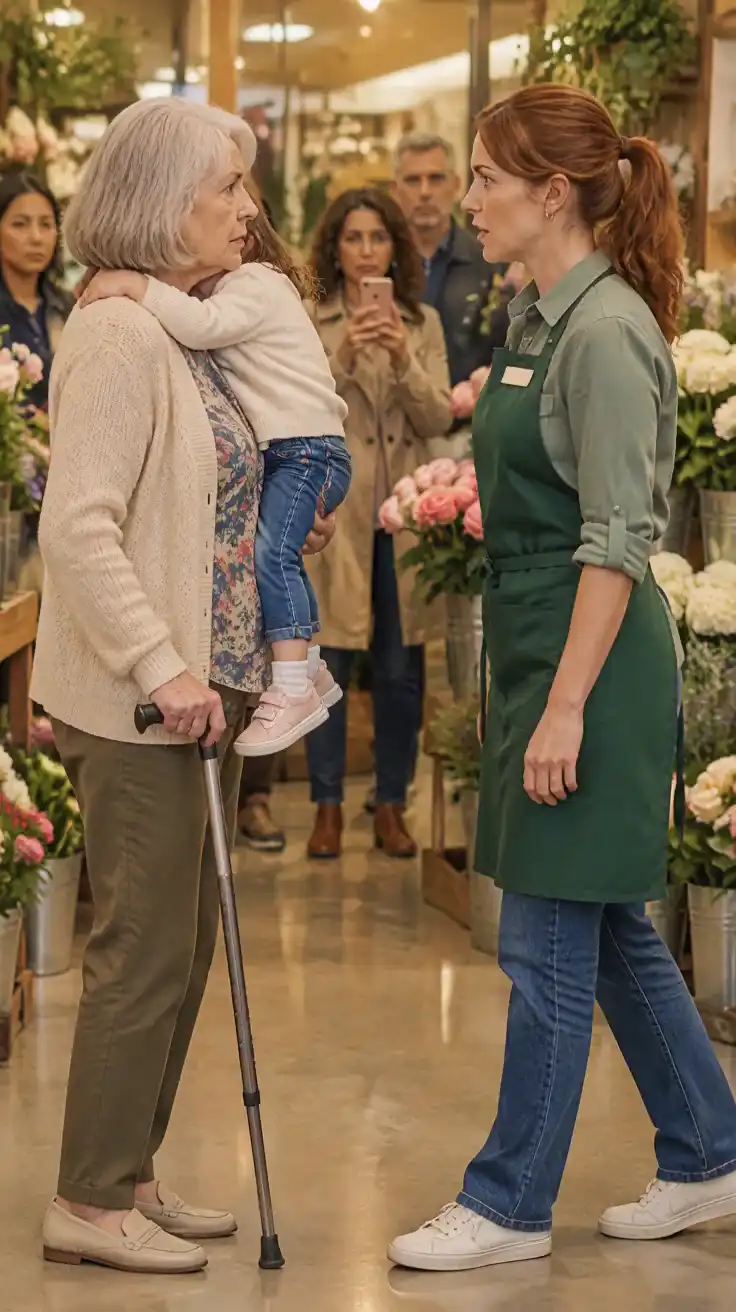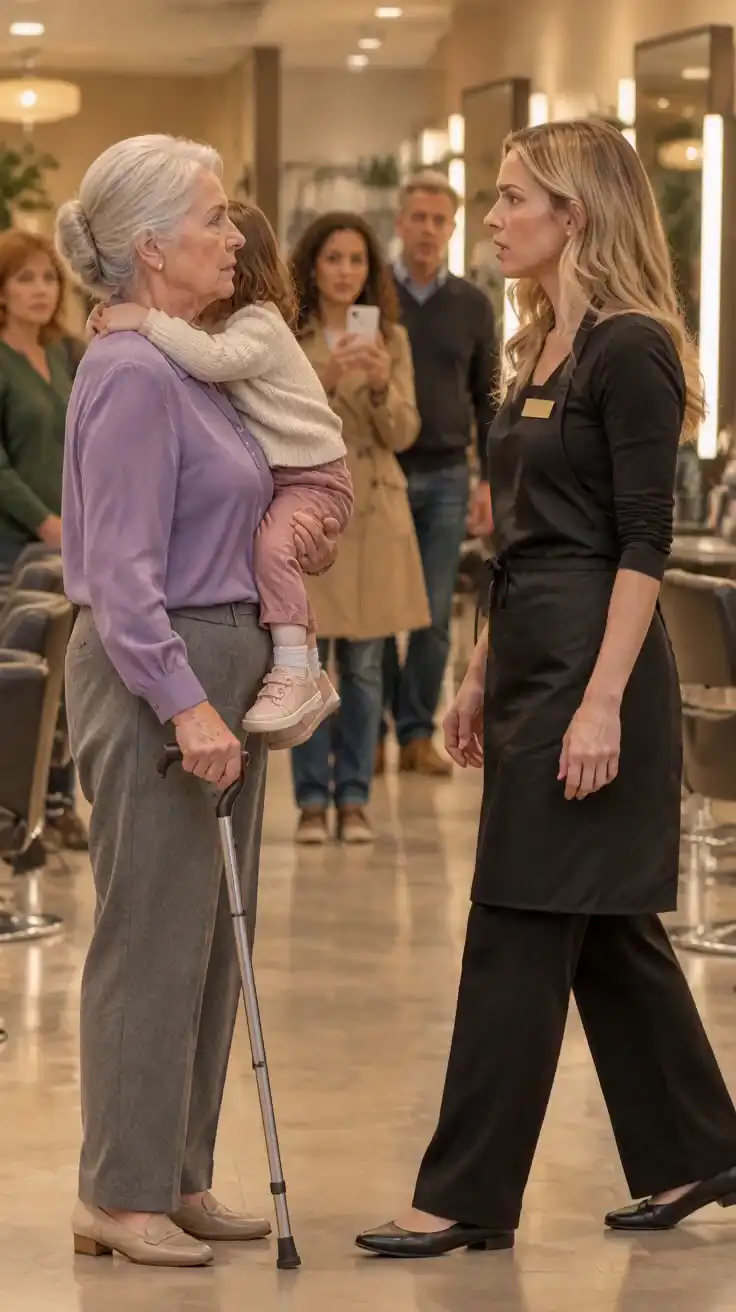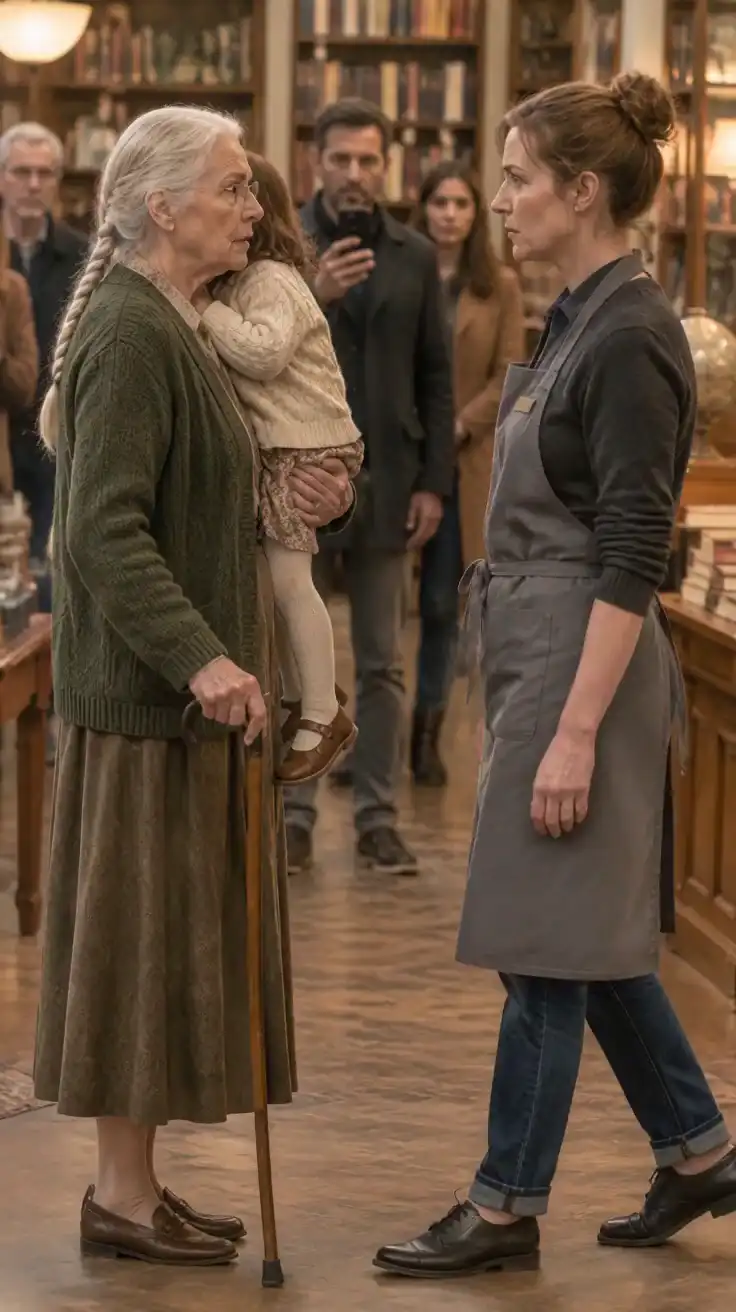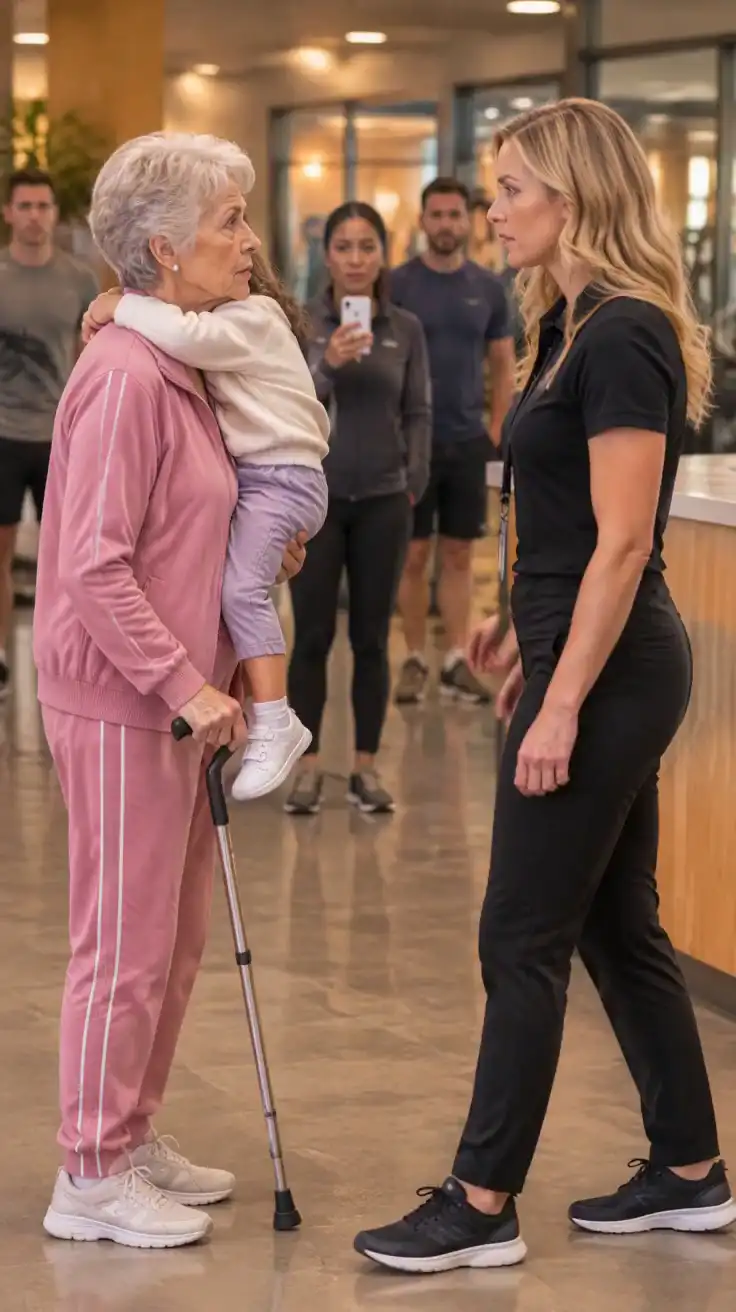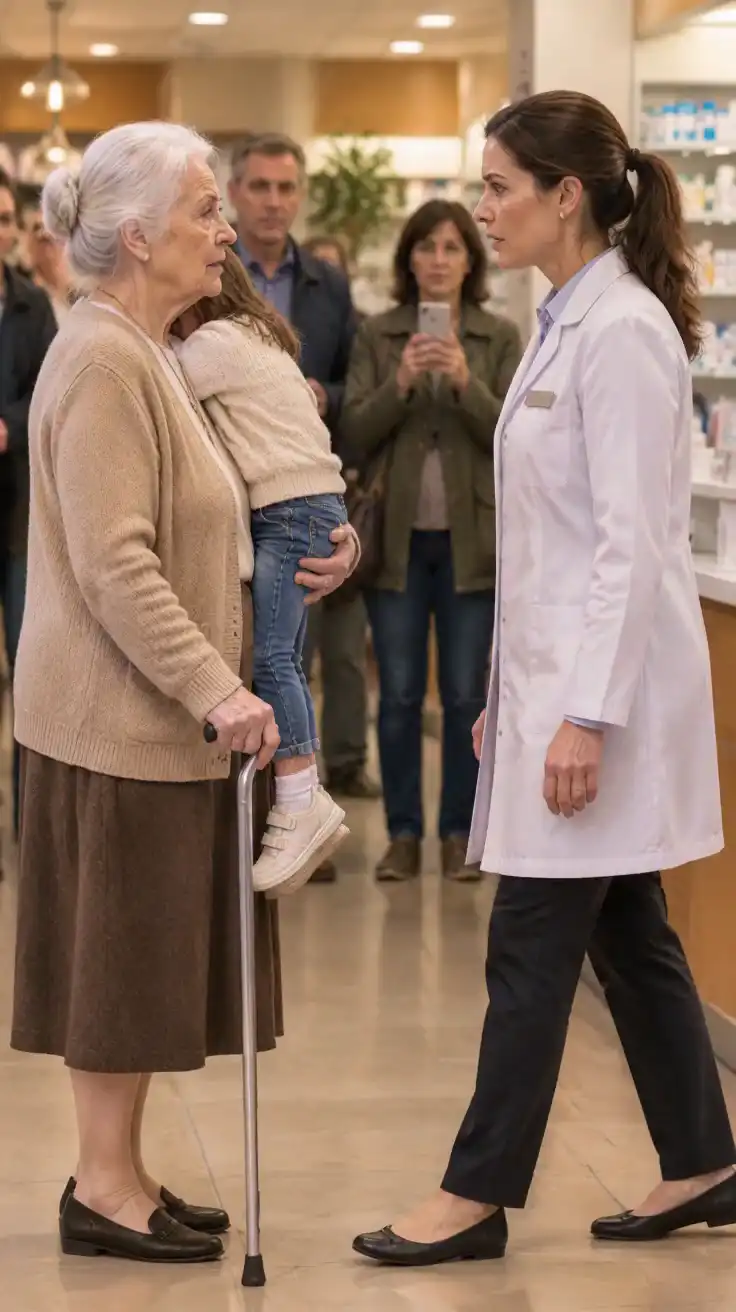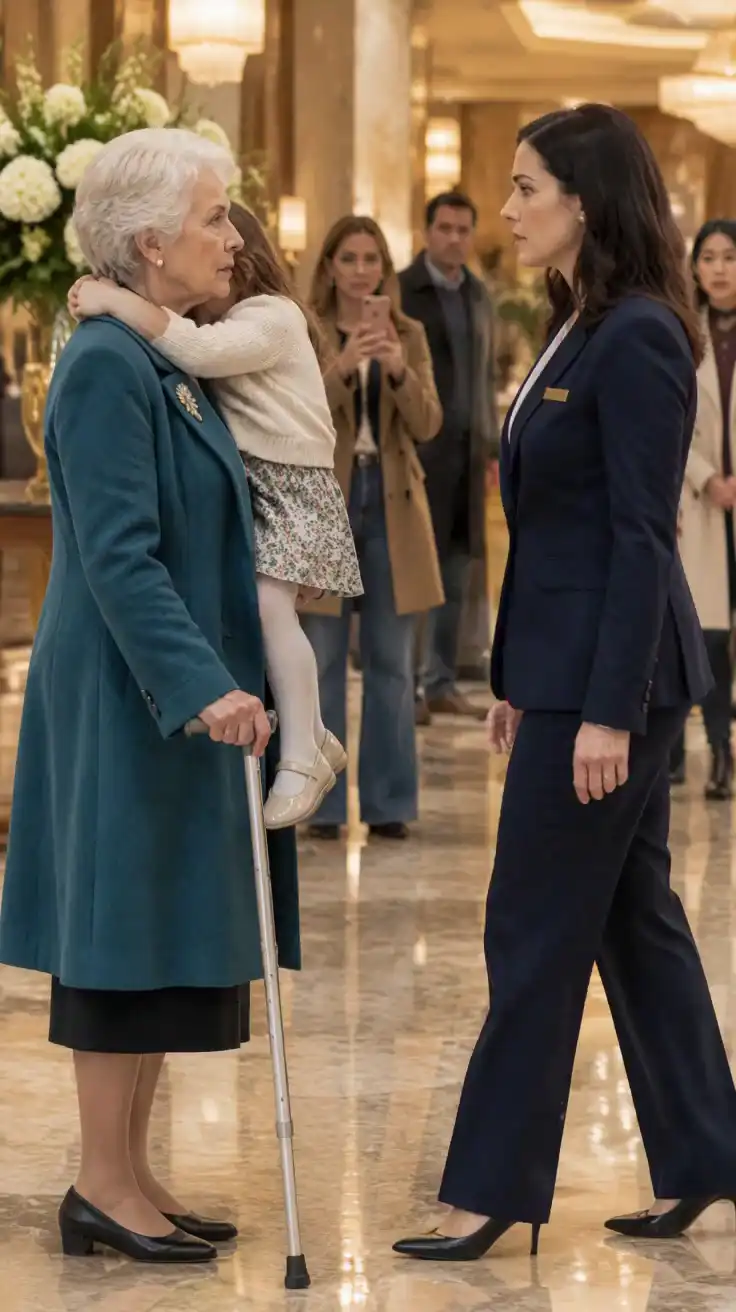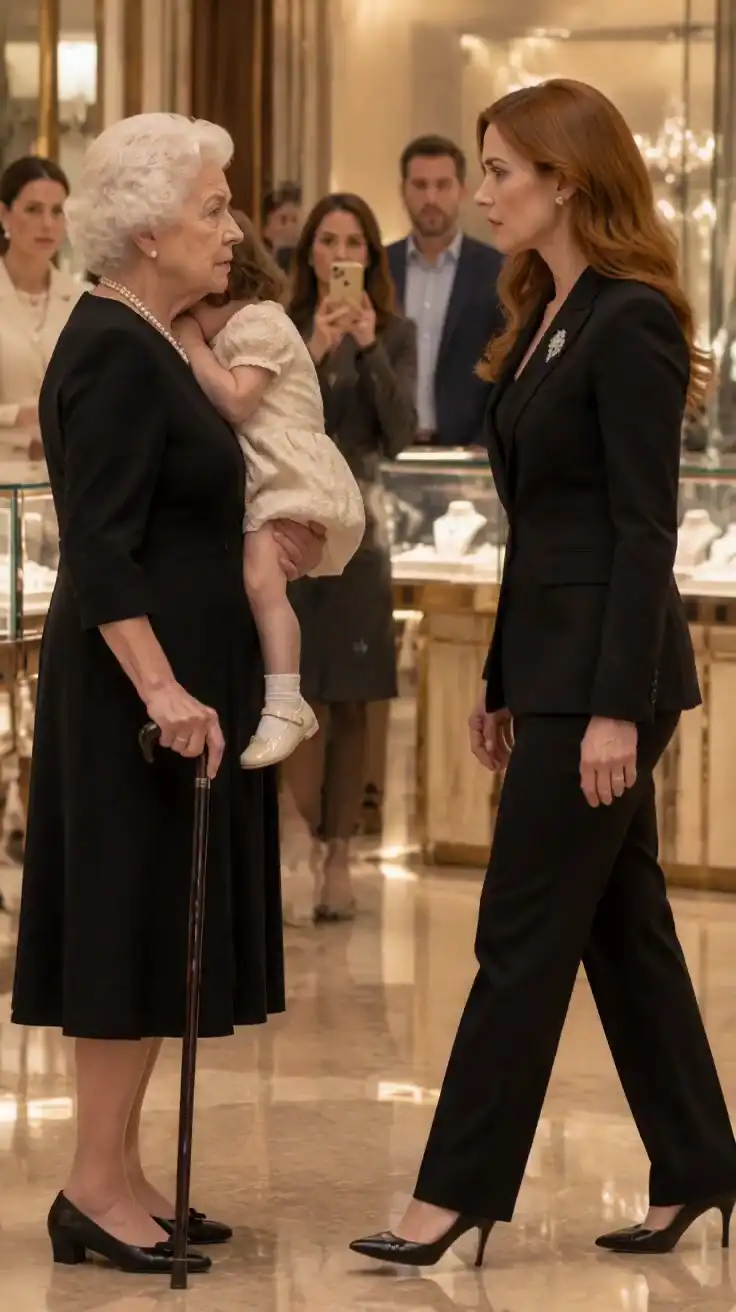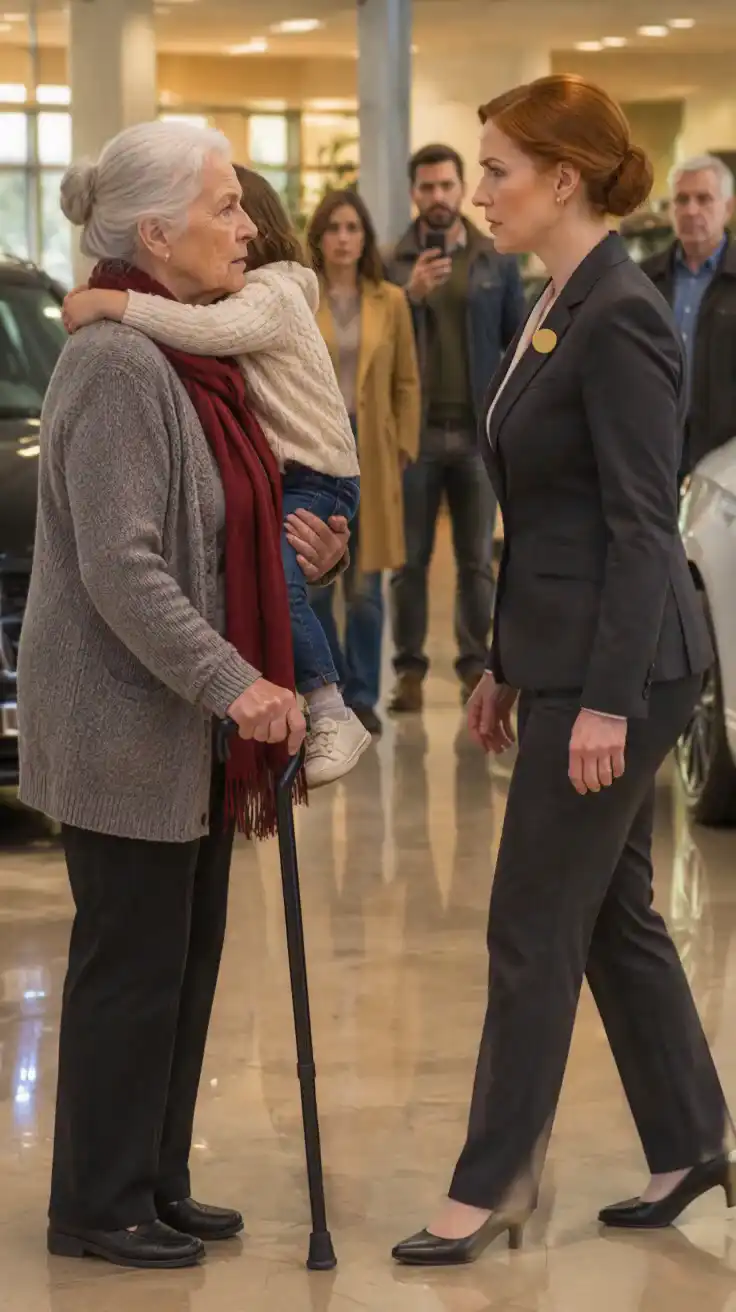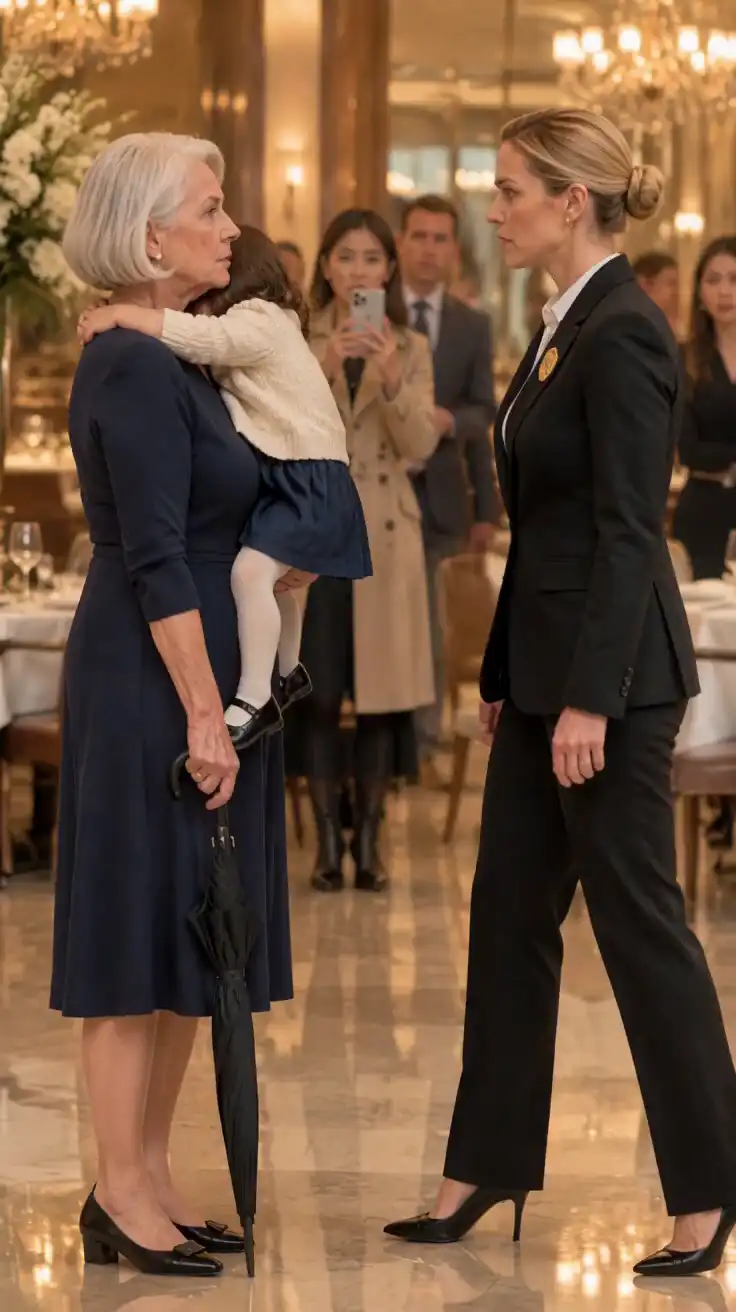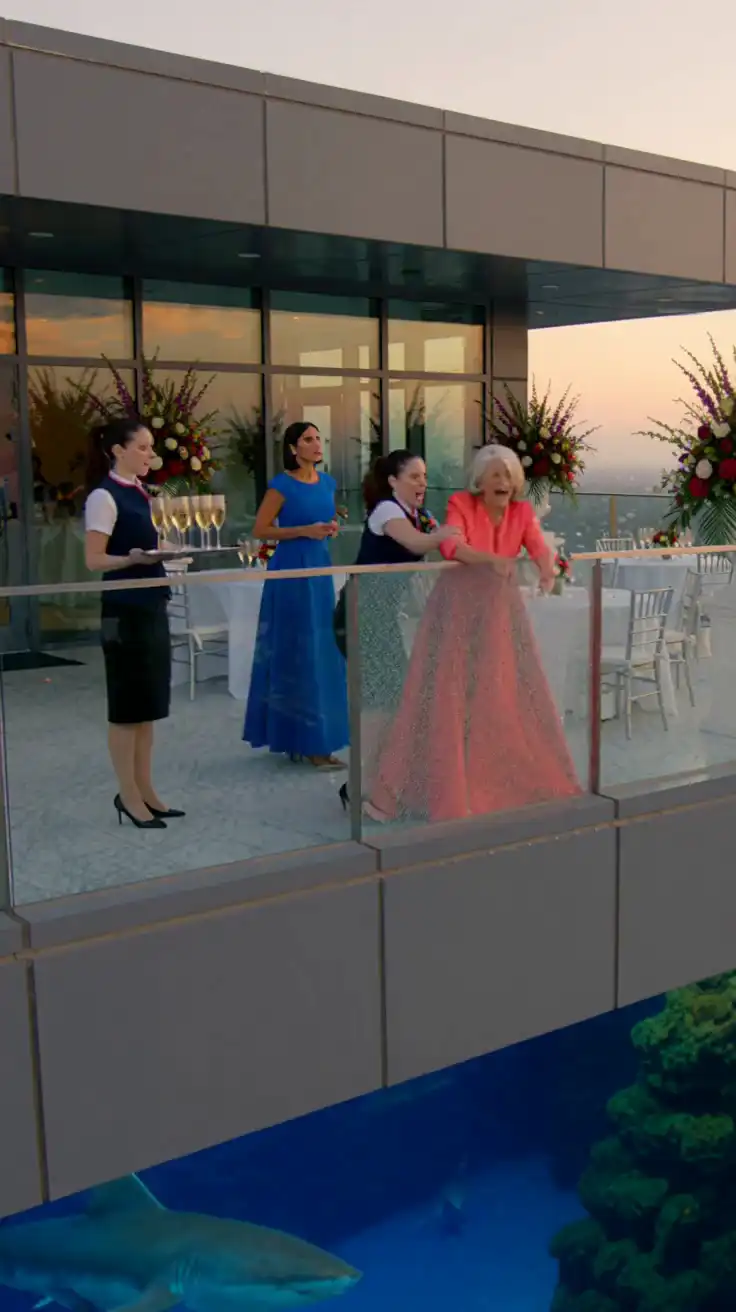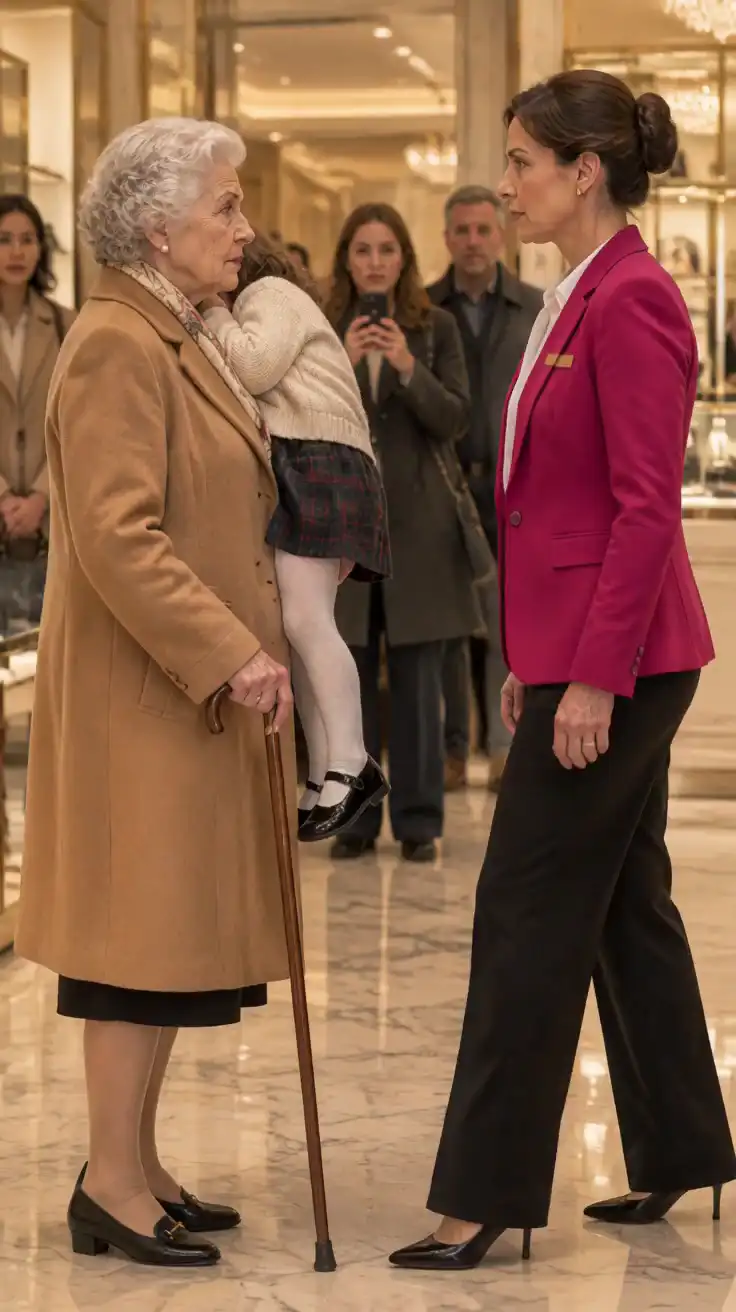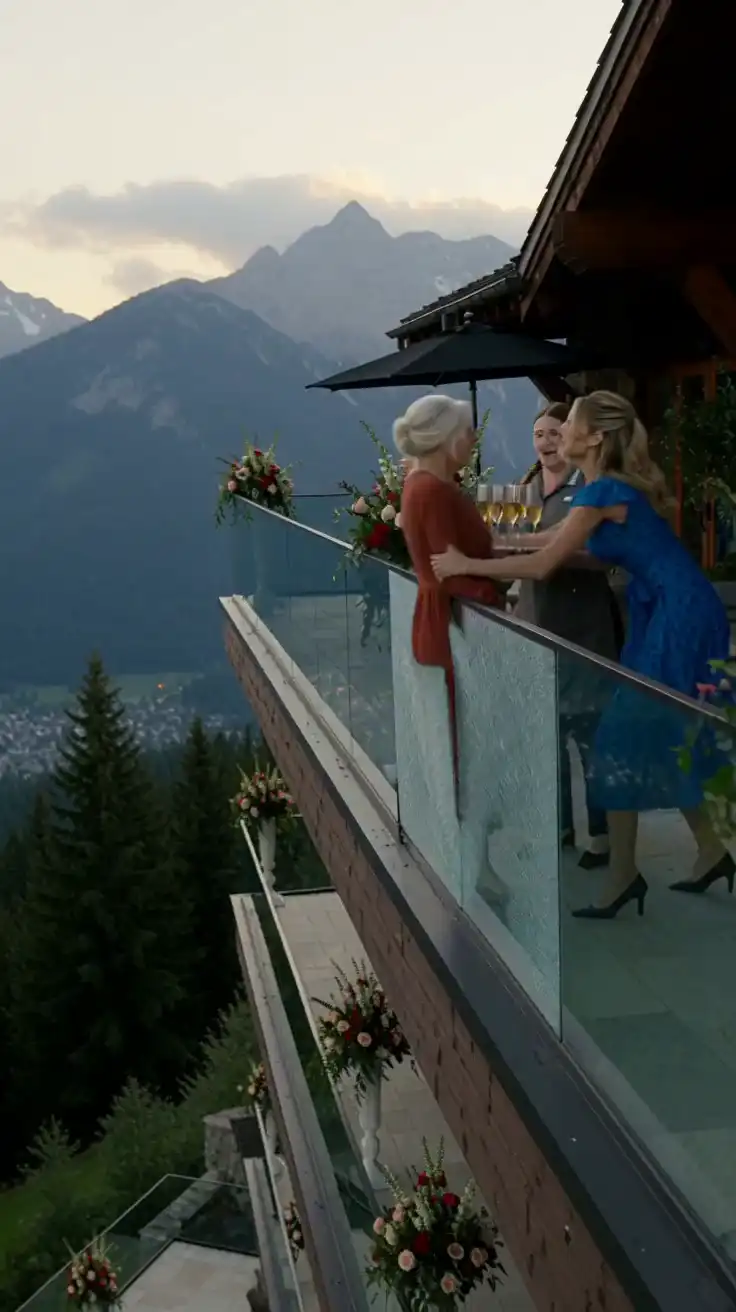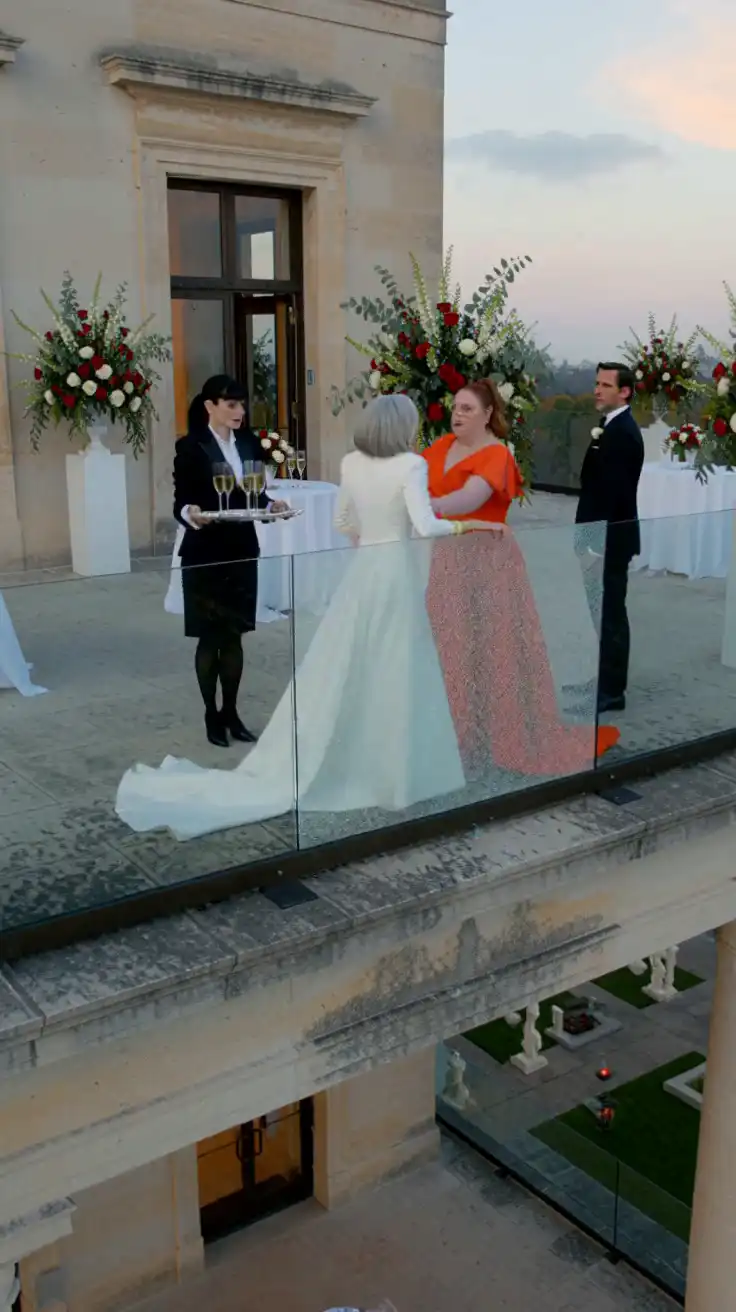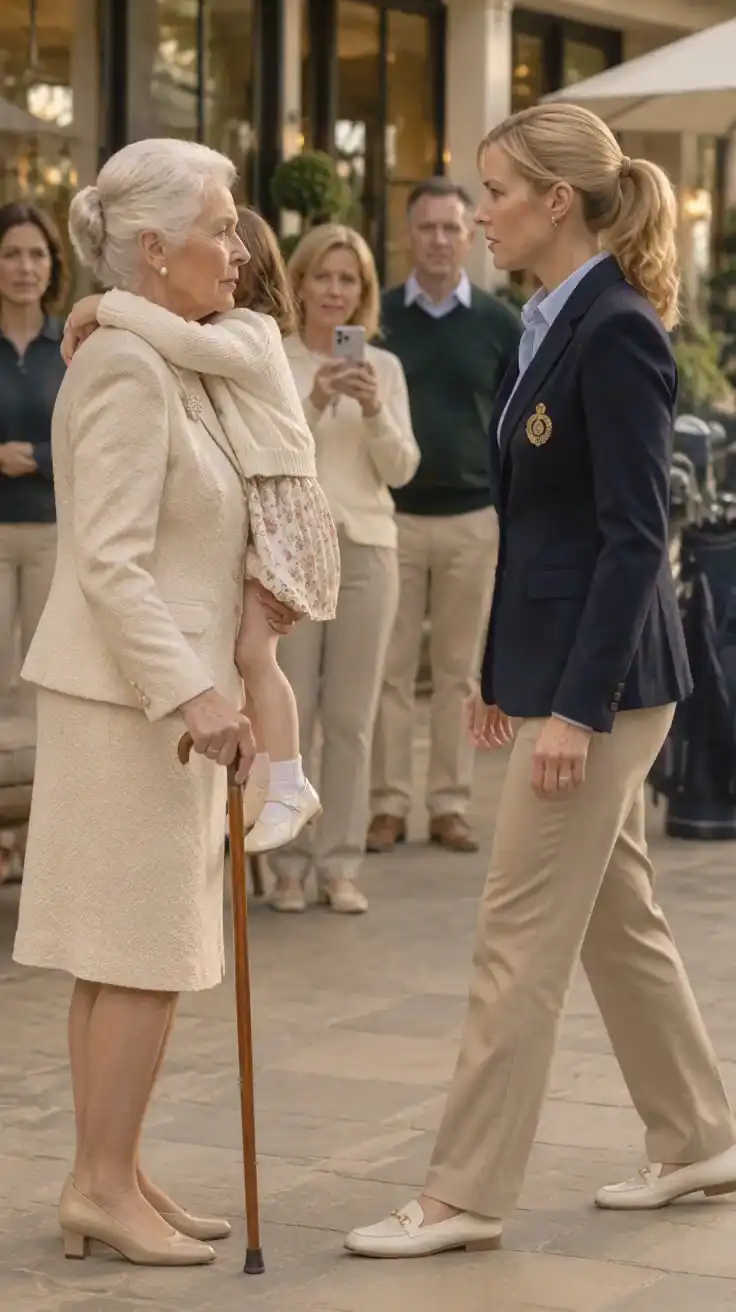
My son’s bride shoved me through the terrace glass railing to secure an opera board nomination, but after an attendant caught my wrist, my son pulled me back and raised the recommendation letter toward the light.
Glass dust pressed cold against my palm as I pulled myself upright beside the shattered railing.
The opera terrace tilted beneath my shoes. A white-gloved attendant still had one hand locked around my wrist, her other hand braced against the marble ledge.
“Easy, ma’am,” she said. “I’ve got you.”
My son Henry came through the terrace doors, his tuxedo jacket open and one cuff hanging loose.
“Mother!”
“I’m here,” I said.
Natalie stood several feet away in her wedding dress. A thin piece of glass glittered near the hem, but she didn’t look down. She kept looking at the letter clenched in my fingers.
“She was dizzy,” Natalie said. “She leaned into the railing.”
Henry stopped beside me. His face had gone still.
“Say it again.”
Natalie lifted her chin. “She was dizzy.”
The attendant released my wrist only after Henry took my elbow. Her name badge read Clara, and her breathing came fast beneath the neat collar of her uniform.
“She was standing,” Clara said. “Then Natalie moved toward her.”
Natalie’s mouth opened.
Henry looked from Clara to Natalie, then down at the paper in my hand. The corner had been crushed during the struggle. My thumb had left a gray mark across the seal.
“This is the letter?” he asked.
I nodded.
He reached for it, but I held on for one second longer. The paper was thick, cream-colored, and addressed to the opera board. At the bottom sat a familiar signature from Professor Whitmore, the man who had once taught half the board members and died two years ago.
Henry eased the letter from my fingers.
Natalie stepped forward. “Henry, don’t make this into something it isn’t.”
“It carries a recommendation for Natalie,” he said.
“And the board nomination is dated last month,” I added.
The wedding was supposed to begin in less than an hour. The private box I had reserved still waited beyond the terrace, its velvet seats untouched, its flowers arranged beneath the gold trim. Natalie had expected to enter that room as my daughter-in-law and leave it with a place at the opera house.
Henry unfolded the letter carefully.
The dead professor’s name showed beneath the chandelier.
He raised the page toward the light, and Natalie’s face went white.
THE NAME BENEATH THE LETTER
“Professor Whitmore died two years ago,” Henry said, keeping the page beneath the light. “This says he interviewed you last month.”
Natalie glanced at Clara, then at me.
“Henry, please. We shouldn’t discuss this in front of staff.”
“She caught my mother.”
“I know that.”
“Then you can answer in front of her.”
He lowered the page just enough to read the next line.
“‘Following several recent conversations with Miss Natalie Pierce, I recommend her appointment to the vacant trustee position.’ When did you have those conversations?”
Natalie caught a fold of her dress between two fingers.
“The date must have been changed.”
“By whom?”
“I didn’t handle every part of the application.”
“Whose signature is this?”
She reached toward the paper. Henry moved it out of her reach without stepping away from me.
“Whose signature, Natalie?”
No answer came. From inside the private box, a telephone began to ring.
Clara looked toward it but stayed beside my chair.
“Please get Mr. Bell,” I told her. “Ask him to come himself.”
She hesitated until Henry pulled a chair against mine and sat close enough that our shoulders touched.
“I’m staying here,” he said.
Clara went inside. Natalie watched her through the open doors.
“You’re calling management?”
“The terrace has a broken railing,” I said.
“You know what I mean.”
I folded my hands in my lap. My fingers would not lie flat, so I tucked them under the edge of Henry’s jacket, which he had draped around me.
He noticed. He put his hand over mine.
Natalie took one step closer.
“Mrs. Mercer, I think we both said things out here that we would take back.”
Henry looked up.
“What did she say?”
Natalie pressed her lips together.
“What did my mother say to you?”
I watched the little pearl buttons at Natalie’s wrist as she worked one loose and fastened it again.
“I told her the recommendation could not go before the board,” I said. “I asked her to withdraw it.”
“And?”
“She asked whether I meant to ruin her wedding.”
“Our wedding,” Natalie said.
Henry laid the letter across his knee.
“You’ve had three chances to explain that signature.”
“This is a terrible time.”
He glanced at the jagged opening beyond the chairs.
“Yes,” he said. “It is.”
Clara returned with Arthur Bell, the opera house’s executive director. He had a radio in one hand and the box’s emergency key in the other. He stopped in the doorway, taking in the broken barrier, Henry beside me, Natalie standing several feet away.
“Clara told me enough to close this area,” he said. “Elena, can you walk into the box with us?”
“I can.”
Henry rose when I did. He offered his arm and waited while I found my footing.
Natalie moved toward the door first.
Arthur held it open, but he watched her pass. Then he spoke quietly into his radio, telling the facilities manager to seal the terrace and preserve the area.
Inside, the flowers smelled too sweet.
I had chosen white roses because Henry had once told me Natalie liked them. Two arrangements stood beside the doors to the private box. Beyond them, six velvet chairs faced the empty stage.
Arthur guided us into the small adjoining dining room instead. Clara brought water, then stood near the door with her hands clasped.
“Sit down, Clara,” I said.
“I’m on duty, Mrs. Mercer.”
“So is Mr. Bell.”
Arthur pulled out a chair for her.
Natalie remained standing.
“There are things being misunderstood,” she said. “I’d appreciate a moment alone with Henry.”
Henry set the letter on the dining table.
“You can speak here.”
“To my fiancé?”
“To me,” he said.
She looked at his hand. He had laid it beside the letter, his fingers spread, as though holding a page open against wind.
Arthur took the seat opposite me.
“Clara says she saw you push Mrs. Mercer,” he said to Natalie. “Is that what happened?”
Natalie drew a breath.
“She was upset. I reached for her.”
Clara’s chair scraped softly.
“May I say what I saw?”
Arthur nodded.
“Mrs. Mercer was facing her. Natalie put both hands against her and pushed. I was at the terrace door with the water tray.”
“You couldn’t have seen clearly,” Natalie said.
“I saw your hands.”
“You were behind me.”
“Yes.”
Henry closed his eyes for a moment. When he opened them, he turned toward Clara.
“Thank you for staying.”
“I wasn’t going anywhere.”
Arthur set his radio on the table.
“I’m calling the police,” he said. “Clara, I’ll need you to give them your account. Elena, yours as well.”
Natalie pulled out a chair but did not sit.
“Arthur, this is a family matter.”
He looked at the letter beneath Henry’s hand.
“An allegation that someone was pushed through a railing at this opera house is a matter for the police.”
“You’ll destroy the whole day.”
Henry reached into his jacket for his phone.
“The wedding is canceled.”
Natalie stared at him.
He found a number and put the phone to his ear.
“Daniel? It’s Henry. Stop the ceremony preparations. There won’t be a wedding.”
She put her hand on his sleeve.
He stood and moved away from it.
“Yes,” he said into the phone. “I’m certain. Please notify the vendors and the officiant. Tell anyone calling about arrival that the ceremony has been canceled. I’ll speak to you again shortly.”
He ended the call.
Natalie was still holding her hand where his arm had been.
“You did that without talking to me.”
“I asked you what happened to my mother. You told me she was dizzy.”
“She was shaking.”
Henry looked at the water glass I had not managed to lift.
“She is now.”
Arthur stepped into the adjoining room to make his call. Through the open door, I heard him give the opera house’s address and ask for officers to attend an incident involving a guest pushed through a terrace railing. He answered questions carefully, without lowering his voice to hide them.
Natalie sat at last.
“Give me the letter,” she said.
Henry looked at me.
I nodded toward Arthur’s empty place.
“It belongs in the opera house’s application file.”
“It’s my recommendation.”
“It was submitted in support of your nomination,” I said. “That makes it a board record.”
“You brought it out here.”
“Yes.”
“Why?”
“Because I wanted to give you a chance to withdraw before the committee met.”
Her chair shifted back an inch.
“There. You admit you were trying to stop me.”
Henry drew the page closer and read it again. This time he read the entire paragraph aloud.
It described Natalie’s judgment, her experience cultivating donors, her commitment to preserving the opera house’s educational programs. The last sentence urged the trustees to welcome her into “the next generation of the Mercer family’s stewardship.”
Henry stopped there.
“My mother didn’t write that.”
“I never said she did.”
“But you used our name.”
“We were getting married.”
He looked at the wedding band waiting in its open box on the sideboard. The planner had placed it there before we came upstairs.
He closed the little lid.
Arthur returned.
“Officers are on their way,” he said. “I’ve also contacted Miriam. She’s convening an emergency board meeting by video. We can use my office.”
Natalie straightened.
“You called the chair?”
“The letter concerns a pending nomination. Elena has raised a question about its authenticity, and I have an obligation to notify her.”
“My nomination hasn’t even been voted on.”
“Then the board needs to address it before it is.”
I reached for my water. Henry moved it closer but let me take it myself.
Arthur waited until I had set it down.
“Elena, how did this letter reach you?”
“Ruth sent it with the nomination packet yesterday afternoon. I asked her to bring the paper file this morning because the signature looked familiar.”
Natalie turned sharply toward me.
“You said you only found it today.”
“I saw the original today.”
“Why were you looking through my application?”
“I sit on the governance committee.”
“You should have recused yourself.”
“I did. When your name was proposed, I told Miriam I wouldn’t sponsor you or vote on your nomination. That didn’t mean I could ignore a forged document sent to the committee.”
Arthur pulled a notepad toward him.
“Ruth has the submission records?”
“She should.”
He made another call.
This time Natalie watched his pen move.
Henry sat beside me again.
“Did you know she was applying?” I asked him.
“She told me the board had approached her.”
“No one approached her through me.”
“I know that now.”
Natalie leaned forward.
“Miriam said they needed younger trustees.”
Arthur covered his phone briefly.
“She says that at every annual meeting. It is not an offer of a seat.”
He returned to his call, asking Ruth to bring the nomination file, the submission email, and the archived program I had requested that morning.
At the mention of the program, Natalie stopped moving her fingers against the tablecloth.
Henry noticed.
“What program?”
I looked at her before I answered.
“The Whitmore memorial concert.”
Clara’s eyes went to the letter.
Natalie gave a small, breathless laugh.
“This is absurd.”
“Then the file will clear it up,” Henry said.
Arthur’s office was down a private corridor behind the box level. He walked ahead to unlock it while Clara accompanied us. Henry stayed at my side. Natalie followed with the skirt of her dress gathered off the floor.
At the office door, she stopped him.
“Five minutes,” she said. “That’s all I’m asking.”
He waited.
“Alone.”
“No.”
She looked past him at me.
“You’ll let her do this?”
Henry’s arm tightened beneath my hand, but his voice stayed level.
“I’m the one who canceled the wedding.”
Arthur held the door.
Inside, he moved two visitor chairs toward the conference table. He offered me his own desk chair because it had arms. I took it without arguing.
Clara stood by the door until Arthur asked her to sit again.
“You’re a witness, Clara. Your shift is covered.”
“Thank you, sir.”
Natalie selected the chair nearest Henry. He moved his to the other side of mine.
Arthur opened his laptop. While it connected, he placed a clean folder on the table.
“Henry, may I have the letter?”
Henry looked at me once more, then slid it into the folder by its edges.
A knock came before Arthur could close it.
Ruth entered carrying a blue file and a slim black program. She was the board secretary, and for twenty-three years she had treated a missing attachment as a personal affront. Today she set both items down without a word about the wedding dress.
“Is this the complete file?” Arthur asked.
“Everything submitted, including the email headers and the receipt acknowledgment.”
“Thank you. Please stay.”
She sat near his laptop.
Natalie looked at the blue file.
“That contains private information.”
“It will remain within the board’s process and the police inquiry,” Arthur said.
“You’ve already decided what it means.”
Miriam’s voice came from the laptop.
“No, Natalie. That is why we’re meeting.”
Arthur turned the screen.
Miriam appeared in her home office, glasses hanging from a chain against her sweater. Two other trustees joined her, each identified by name on the screen. Ruth checked the attendance and confirmed that the four trustees present, including me, met the emergency quorum requirement.
“I’ll take no part in a vote concerning the nomination,” I said.
Miriam nodded.
“That is recorded. The three disinterested trustees also constitute a quorum.”
Natalie smoothed the fabric across her knees.
“I should have been told this meeting was happening.”
“You’re here to respond,” Miriam said. “Before we discuss the application, Arthur, is Elena being looked after?”
Henry answered before Arthur could.
“I’m with her.”
Miriam looked at me until I nodded.
Then she asked Ruth to open the file.
The first page was the nomination form. The second listed Natalie’s proposed contribution to donor development. The third was the letter Henry had held beneath the chandelier.
Ruth put the printed email beside it.
“Received from Miss Pierce’s personal account at 8:14 p.m. on the ninth of last month,” she said. “The attachment was described as Professor Whitmore’s current recommendation.”
“Was it sent by the professor’s office?” Miriam asked.
“No.”
“Was there any correspondence with an executor or former assistant?”
“No. Miss Pierce wrote that Professor Whitmore had asked her to forward it directly because he was traveling.”
Henry bent his head over the email.
Natalie reached for the edge of the file. Arthur put his palm on the folder.
“Please leave the documents where they are.”
“That email was informal,” she said.
Miriam waited.
“It wasn’t meant to be examined like a legal document.”
“You submitted it to support an appointment as a trustee,” Miriam said. “We need to know whether it is true.”
Natalie looked at the screen, then down at her hands.
I had heard her answer questions at dinners. She could remember a donor’s dog’s name after meeting him once. She could turn a request for a check into an invitation to feel indispensable. Now she rubbed one thumb along a seam in her dress.
Ruth opened the black program.
“Mrs. Mercer asked for this at nine this morning,” she said. “I brought it from the archives.”
She laid it next to the letter and turned to the inside cover.
There was Professor Whitmore’s photograph, followed by a brief tribute. Beneath it, the designer had reproduced a note he had written years earlier, thanking the opera house for establishing a student rehearsal fund.
His signature sat at the bottom.
Henry stood to see both pages.
“The W,” he said.
Ruth pointed without touching.
“And the break here.”
In the memorial program, a tiny gap interrupted the upward stroke of the final letter. The same gap appeared on Natalie’s recommendation. Beside both signatures sat the same small slanted mark, left by Whitmore’s pen when he lifted it from the paper.
Natalie looked toward the office door.
Miriam asked, “Elena, is this what you recognized?”
“Yes. I helped his daughter choose the note for the memorial program. The original was addressed to the education office. He wrote it six years before he died.”
“And you asked Natalie about it today?”
“On the terrace. I showed her the two signatures and asked who had prepared her letter.”
“What did she say?”
I looked across the table.
“She said the board wouldn’t care where a signature came from if the recommendation described the work she intended to do.”
Natalie pushed back from the table.
“That isn’t fair. You’re making it sound—”
“Then tell us what you meant,” Henry said.
She turned toward him.
“I meant I could do the work.”
“Did Professor Whitmore write this letter?”
She said nothing.
“Did you ever meet him?”
“I attended events where he spoke.”
“That isn’t what I asked.”
“No,” she said.
The word barely carried across the table.
Ruth stopped writing.
Miriam leaned closer to her screen.
“Who prepared the letter, Natalie?”
Natalie looked at the memorial program again.
“I put the application together.”
“Did you write the recommendation?”
“I used language from other recommendations.”
“And the signature?”
Natalie swallowed.
“The program was online in the archive.”
Henry sat down slowly.
“So you took it from there.”
“I needed someone the board respected.”
Nobody spoke for several seconds.
Then Henry put both hands flat on the table.
“You had my mother.”
Natalie’s head came up.
“She wouldn’t recommend me.”
“She offered to introduce you to the education committee.”
“For volunteer work.”
I felt Henry turn toward me, but I kept looking at Natalie.
“It was a six-month appointment,” I said. “You would have helped administer the school matinees. You told me you wanted to learn how the house worked.”
“I didn’t need to hand out student tickets to prove I belonged here.”
Clara lowered her eyes to her uniform.
Henry saw that too.
“Careful,” he said.
Natalie looked at Clara and then back at him.
“That isn’t what I meant.”
“You asked her to leave a room after she caught my mother.”
“I wanted privacy.”
“And now you’re telling us work in this building was beneath you.”
She pressed both palms over her knees.
“I was going to be your wife. I thought that counted for something.”
“It counted for marrying me,” Henry said.
Miriam let the silence stand before she spoke.
“The trustee position carries responsibility for the opera house’s finances, staff, and public commitments. Marriage to a board member’s son conveys no entitlement to it.”
Natalie’s shoulders drew back.
“I know that.”
“You submitted a letter claiming the recent endorsement of a man who had been dead for two years.”
“I have admitted there was a problem with the letter.”
Ruth looked up.
“Should the minutes say you copied the signature from the memorial program?”
Natalie stared at her.
“That’s what you’ve just told us,” Ruth said.
Henry moved his chair closer to mine. Beneath the table, his knee touched the side of my chair and stayed there.
Arthur’s desk phone lit up. He listened, then told Miriam that two officers had arrived and were waiting in the adjoining administrative room.
Miriam asked Ruth to preserve the application exactly as received.
“Before we adjourn, I want the nomination addressed,” she said. “There is no reason to leave it pending.”
One of the other trustees leaned toward his camera.
“I move that the board withdraw Natalie Pierce’s nomination from consideration, based on the false recommendation submitted in support of it.”
The second trustee gave the required second.
Natalie looked at me.
“You can stop this.”
I held the arms of the chair.
“I’m not voting.”
“You know what I mean.”
Henry answered her.
“Don’t ask her.”
Miriam called the vote. Three voices agreed. Ruth recorded each name.
“The nomination is withdrawn,” Miriam said. “The committee will be notified today. The minutes will state the reason.”
Natalie drew a long breath through her nose.
“So that’s it? One letter and I’m erased?”
Arthur closed the blue file.
“There is also what happened on the terrace.”
Her face changed at that. She looked at Henry again, searching his face in a way she had not searched mine.
“You know me.”
“I’m learning what you’ve done,” he said.
Miriam asked Arthur to keep the board informed through counsel, then looked directly at me.
“Elena, you don’t need to remain for the rest of the administrative work.”
“I’d like to hear what happens to the file.”
“It will be secured. The police will receive the materials they request, with a record of what is provided.”
Ruth lifted the folder slightly.
“I’ll take care of it.”
I thanked her. Miriam ended the meeting only after Ruth had read back the resolution.
The screen went dark.
Natalie watched her own faint reflection in it.
Arthur brought the officers into a smaller meeting room next door. Henry came with me, while Clara waited to give her account separately. Natalie remained in Arthur’s office with Ruth and one of the officers until they were ready to speak with her.
The officer sitting across from me introduced herself as Officer Davis. She put a notebook on the table and asked whether I wanted water before we began.
“I have some,” I said.
Henry loosened the cap on the bottle Arthur had given him and set it beside me.
Officer Davis asked me to tell her what had happened in my own words.
I started with the letter.
She listened without interrupting while I described asking Natalie to withdraw the recommendation, then telling her I would have to give the file to the committee if she refused.
“What did she do when you said that?”
“She asked whether I would still tell them after she married Henry.”
“What did you say?”
“That the wedding wouldn’t change the letter.”
Henry looked down at his hands.
Officer Davis waited for me to continue.
“She reached for it. I moved it behind me. Then she put her hands against me.”
I stopped.
The officer did not fill the silence.
Henry slid his chair a few inches closer, careful not to touch the table.
“I don’t want to go over the edge again,” I said.
“We’re here,” he told me.
I could see the door, the bookcase, a printer with a yellow service sticker. I looked at each one before I continued.
“She pushed.”
Officer Davis wrote that down.
“Did you stumble before she made contact?”
“No.”
“Had you told anyone you felt dizzy?”
“No.”
She asked where Clara had been and when Henry arrived. I answered as precisely as I could. When I could not remember whether I had dropped my bag before or after the glass broke, I said so.
“That’s all right,” she told me. “Please don’t try to fill in anything you don’t remember.”
Henry gave his own account next. He kept to what he had seen and heard. When he repeated Natalie’s explanation, his voice caught on the word “dizzy.”
He cleared his throat and said it again.
Officer Davis asked him about the letter. He described reading it, the questions he had asked, and Natalie’s answers during the board meeting.
“Other people heard that conversation?”
“Arthur Bell, Ruth Sloane, Clara, and the trustees on the call.”
She wrote down the names.
When we finished, she explained that the accounts and documents would become part of the investigation. She did not offer a verdict or promise us an outcome.
“Arthur has arranged another room for you,” she said. “You won’t need to wait with Miss Pierce.”
Henry thanked her.
In the corridor, he stopped with his hand on the meeting room door.
“Mother.”
I turned.
“I told her about that opening on the board.”
He kept his eyes on the door handle.
“We were having dinner. I said you’d been looking for someone with fundraising experience. She asked questions. I thought she was interested in what you did.”
“She knew there was a vacancy before she applied. That isn’t something you caused.”
“I told her you’d be at the committee meeting.”
“Henry.”
“I told her where you kept the nomination packet.”
He looked at me then.
“She asked because she said she wanted to surprise you by being prepared.”
I took his hand from the door handle.
“You told the woman you planned to marry about your mother’s work.”
His fingers closed around mine.
“I almost married her.”
“I know.”
The corridor was quiet. From somewhere beyond the office wall came the rolling sound of a cart being taken away.
He bent his head until his forehead rested against mine.
For a moment neither of us moved.
Then Arthur came out of his office and stopped well short of us.
“Take your time,” he said.
Henry straightened, but he kept my hand.
Arthur told us Natalie had asked to speak with Henry before leaving.
“You don’t have to,” he added.
Henry looked at me.
“I’ll wait here,” I said.
“I’d rather you came.”
Arthur opened the office door.
Natalie stood beside the conference table. Ruth had put away the memorial program, but the recommendation remained inside a clear document sleeve awaiting collection. The cream paper looked smaller there.
Natalie’s veil lay over the back of a chair.
She looked first at Henry, then at our joined hands.
“I asked to speak to you.”
“My mother is staying.”
Arthur remained near his desk. The door stayed open.
Natalie took off her engagement ring. She held it between her thumb and forefinger, waiting for Henry to move toward her.
He set a small empty envelope on the table.
She put the ring inside.
“Is there anything I can say?” she asked.
Henry folded the flap down.
“You could tell the truth without someone having to lay it out in front of you.”
“I wanted a life with you.”
He looked at her for a long moment.
“Then why did you tell me the board had approached you?”
“I thought if you knew I was applying, you’d ask your mother to help, and she’d say no.”
“So you said it had already happened.”
“I thought I could make it happen.”
“And when she found the letter?”
Natalie glanced toward me.
“I asked her to wait until after the wedding.”
“You pushed her.”
Natalie’s mouth moved, but she did not speak.
Henry put the envelope into his jacket.
“I heard you tell me she was dizzy while she was sitting beside broken glass. Clara was still trying to catch her breath. You looked at me and said it.”
“I panicked.”
He nodded once, as though he had finally received an answer he could use.
Then he turned toward Arthur.
“My mother reserved the box. Please close the wedding account with her office. Send anything in my name to me.”
“I will.”
Natalie put one hand on the chair holding her veil.
“What am I supposed to tell my parents?”
“The truth,” Henry said.
He waited while I stood. Natalie did not try to stop us when we left.
Arthur took us to the trustees’ lounge, a plain room behind the elaborate rooms the public saw. Clara was there, holding a paper cup of tea with both hands.
She stood when I entered.
“Please,” I said. “Stay where you are.”
Henry brought a chair over for me. The wedding planner called him again, and he stepped a few feet away to answer.
“Yes, everything,” I heard him say. “The dinner too.”
Clara watched the door.
“Have they finished with you?” I asked.
“For now.”
“You should call someone to take you home.”
“My sister is coming when Arthur says I can leave.”
“Good.”
She turned her cup slowly.
“I should have come onto the terrace sooner.”
I leaned forward.
“Clara.”
“I heard voices. I thought you needed privacy. Then I saw her reach—”
“You came when I needed you.”
Her fingers stopped on the cup.
Henry ended his call and sat beside us.
“The planner has reached the officiant and the vendors,” he said. “No one will be coming up.”
Clara looked from him to me.
“I’m sorry about your wedding.”
Henry rested his elbows on his knees.
“Thank you.”
He looked at her hands around the cup.
“I don’t think I said it properly before. Thank you for holding on to her.”
Clara swallowed before she answered.
“She told me not to let go.”
I reached across the small table. She set the cup down and took my hand.
We sat that way until Arthur knocked on the open door.
He carried a single sheet and a pen. Ruth stood beside him with her tablet.
“The board asked us to bring you the completed actions before you leave,” he said.
He gave the paper to Henry first.
“The nomination has been removed from the agenda and the candidate register. Ruth has sent the correction to every trustee who received the packet. It states that Professor Whitmore did not write or authorize the recommendation.”
Henry passed the page to me.
Beneath the resolution was a second entry.
Arthur waited until I had read it.
“Under the visitor policy, I’ve revoked Natalie’s access to the opera house,” he said. “Her name is on the barred-entry list used by security and the ticket office. She may not attend performances, rehearsals, events, or private bookings here. The board chair has countersigned it.”
Ruth turned her tablet so I could see the confirmation.
Natalie Pierce. Access revoked. No admission.
“She’s on the blacklist?” Henry asked.
“Yes,” Arthur said. “Security has the notice. If she needs to retrieve anything, it will be arranged through management.”
I looked up at him.
“And Clara?”
“She’ll have paid leave for the rest of today and tomorrow. Her account is preserved, and she’ll have whatever support she needs during the investigation.”
Clara began to protest.
Arthur shook his head.
“The schedule is already covered.”
Ruth handed me a smaller envelope.
“The police have the copy they requested. The original application and recommendation are secured in my office. This is your receipt for the documents you provided.”
I took it.
For most of the afternoon, everyone had wanted something from my hands: the letter, a glass, my account, a signature. This was the first thing someone had given back with an instruction to keep it.
Henry read the access notice once more.
“Thank you for putting it in writing.”
Arthur nodded.
“I also need a decision about the box reservation. We can close it today or leave it open while the account is settled.”
“Close it,” Henry said.
Arthur looked at me, because the reservation was mine.
“Yes,” I said. “Close it.”
Ruth made the entry. A moment later, my phone chimed inside the bag Clara had retrieved for me.
The cancellation notice had arrived.
No ceremony. No reception. No balance left for us to discuss that afternoon.
Henry helped me put on my own coat. He took his tuxedo jacket from the back of my chair and folded it over his arm.
Clara’s sister called as we reached the private lift. Clara listened, told her which entrance to use, and put the phone away.
“I’ll wait with you,” I said.
“You don’t need to.”
“I’d like to.”
We stood inside the quiet lobby until a compact car pulled up beyond the glass doors. Clara’s sister got out and waved.
Clara turned to Henry.
“Take her home.”
“I will.”
She hugged me carefully, as though still unsure she was allowed. I put both arms around her.
“Thank you,” I said into her shoulder.
She nodded against my coat and stepped away.
Arthur walked her to her sister’s car. Henry and I waited until she was inside before turning toward the other entrance.
My driver had brought the car around, but Henry shook his head when I reached for the door.
“Would you mind if I drove you?”
“Of course not.”
He spoke to the driver, then held the passenger door while I got in. Before closing it, he took the wedding ring box from his pocket and set it in the compartment between the seats.
He did not open it.
As he settled behind the wheel, his phone lit up again. The planner’s name appeared on the screen.
Henry answered.
“Yes?”
He listened, looking through the windshield at the opera house doors.
“No. There’s no revised date.”
Another pause.
“Please mark it canceled.”
He put the phone away and fastened his seat belt.
I held Ruth’s envelope in my lap. Through the windshield, I could see Arthur returning inside, carrying the key to the private box. He locked the outer door behind him.
“Home?” Henry asked.
“Yes.”
He reached across the space between us and waited with his hand open.
I put mine in it.