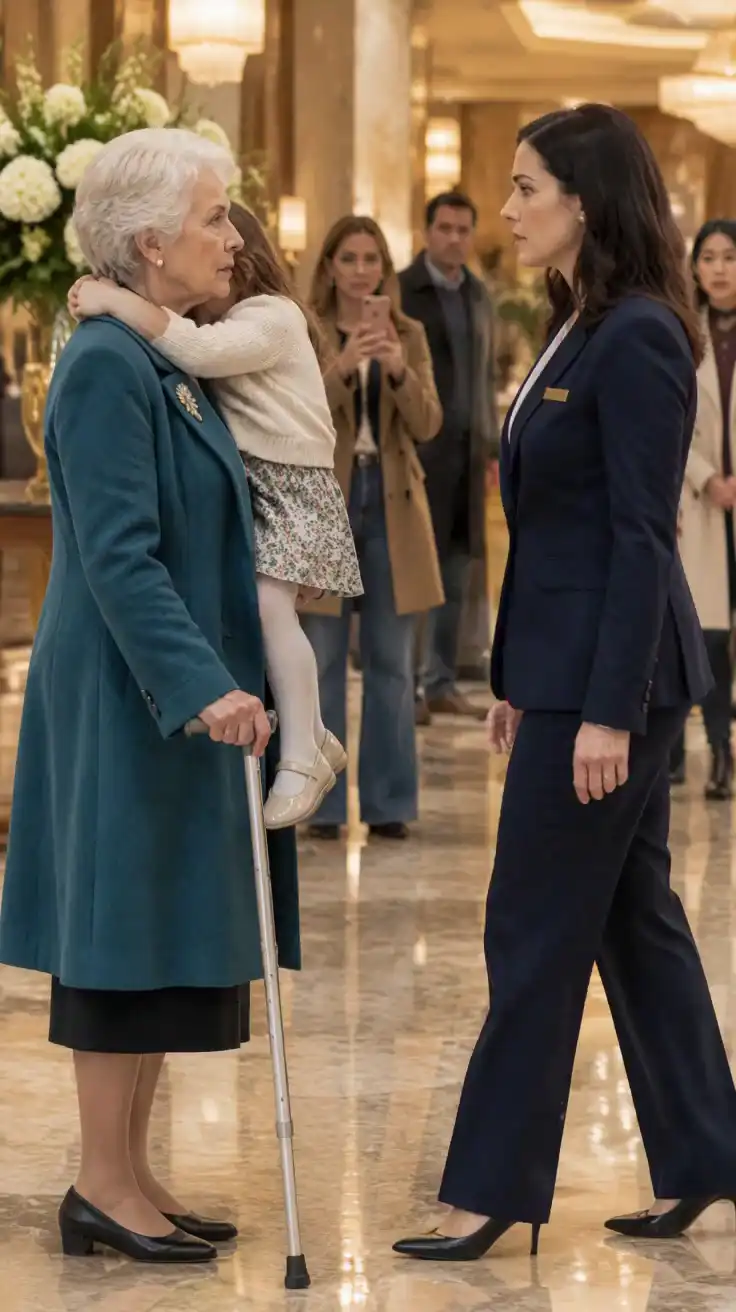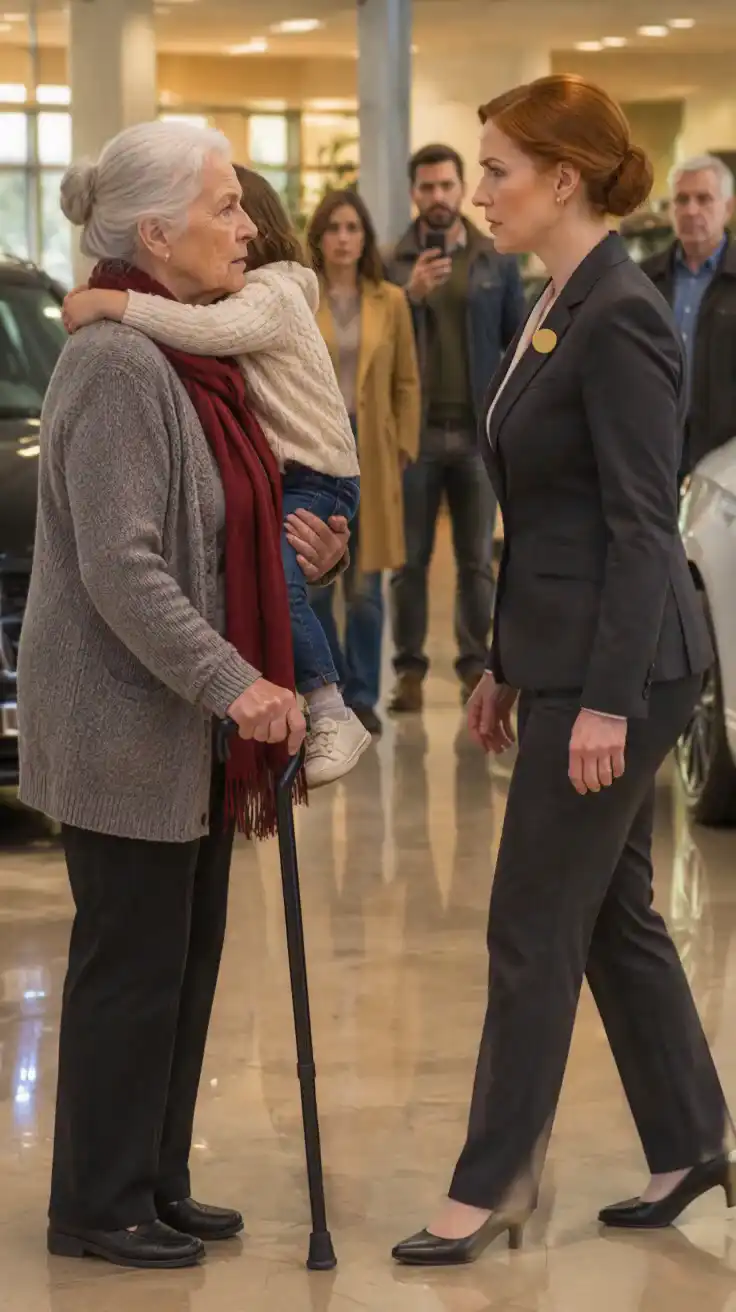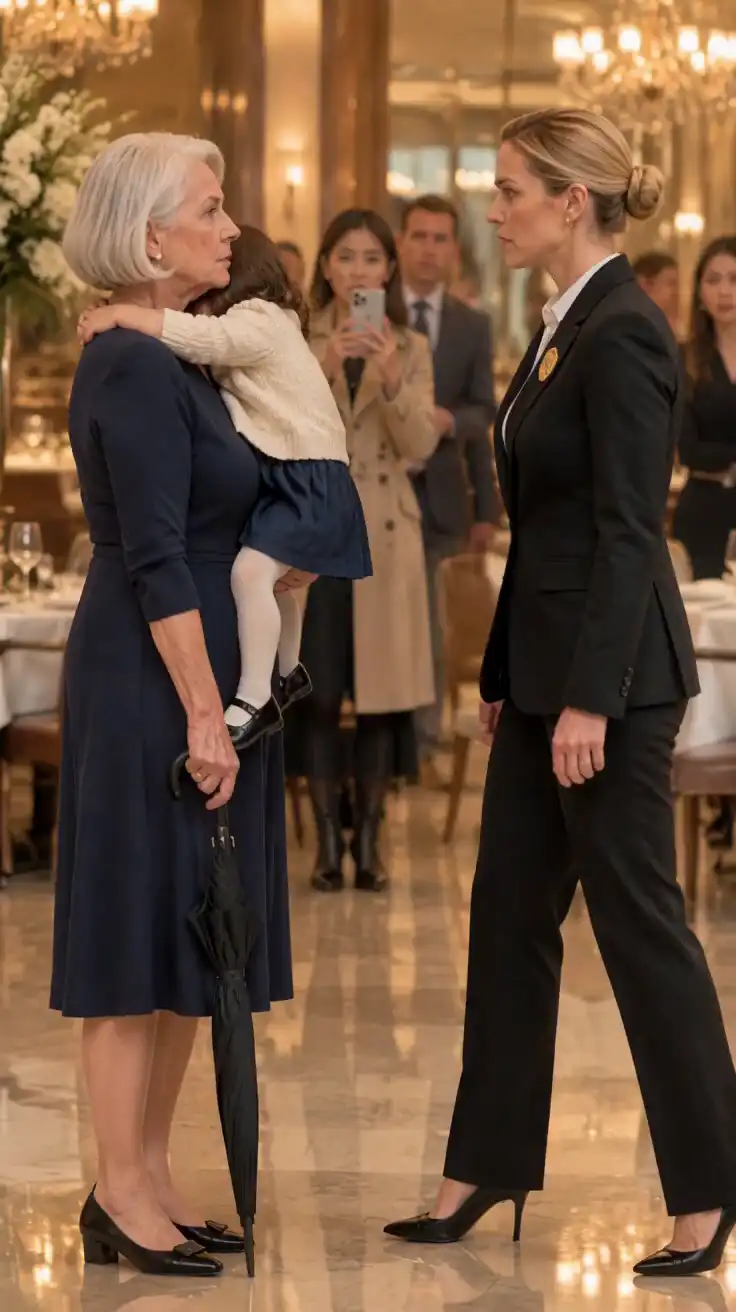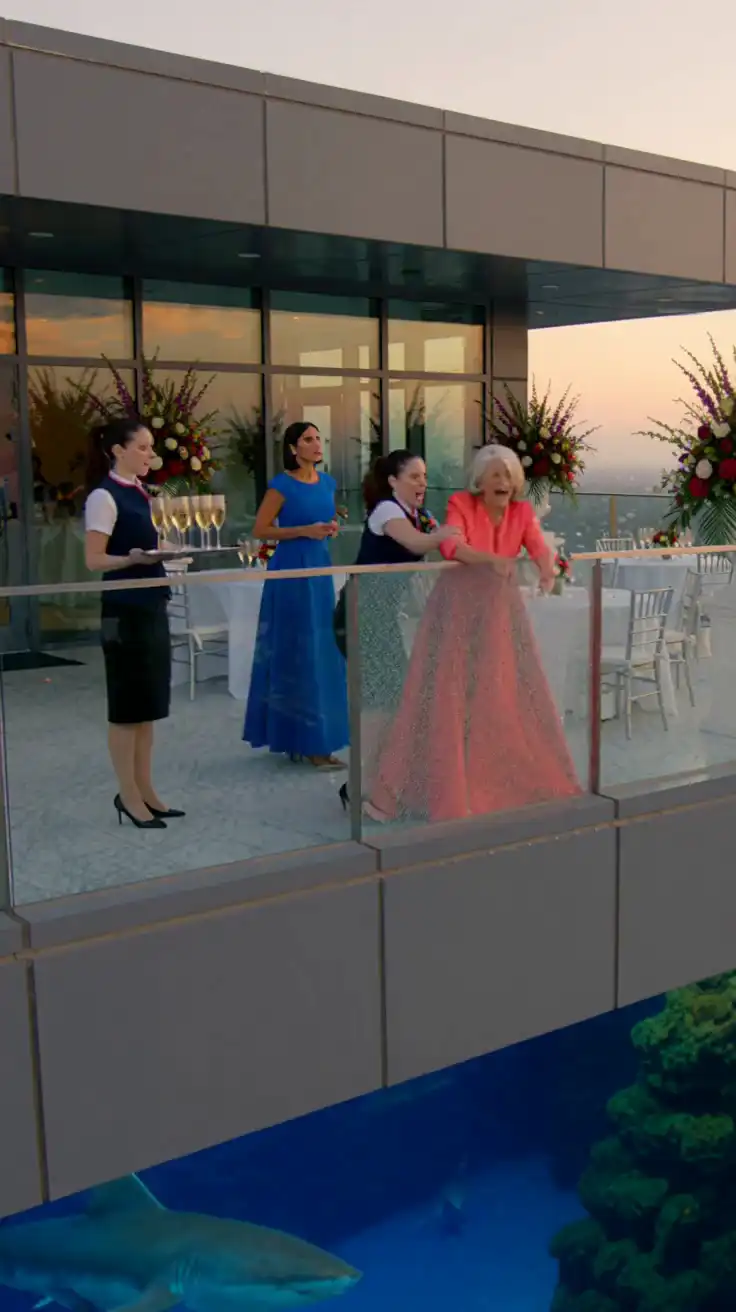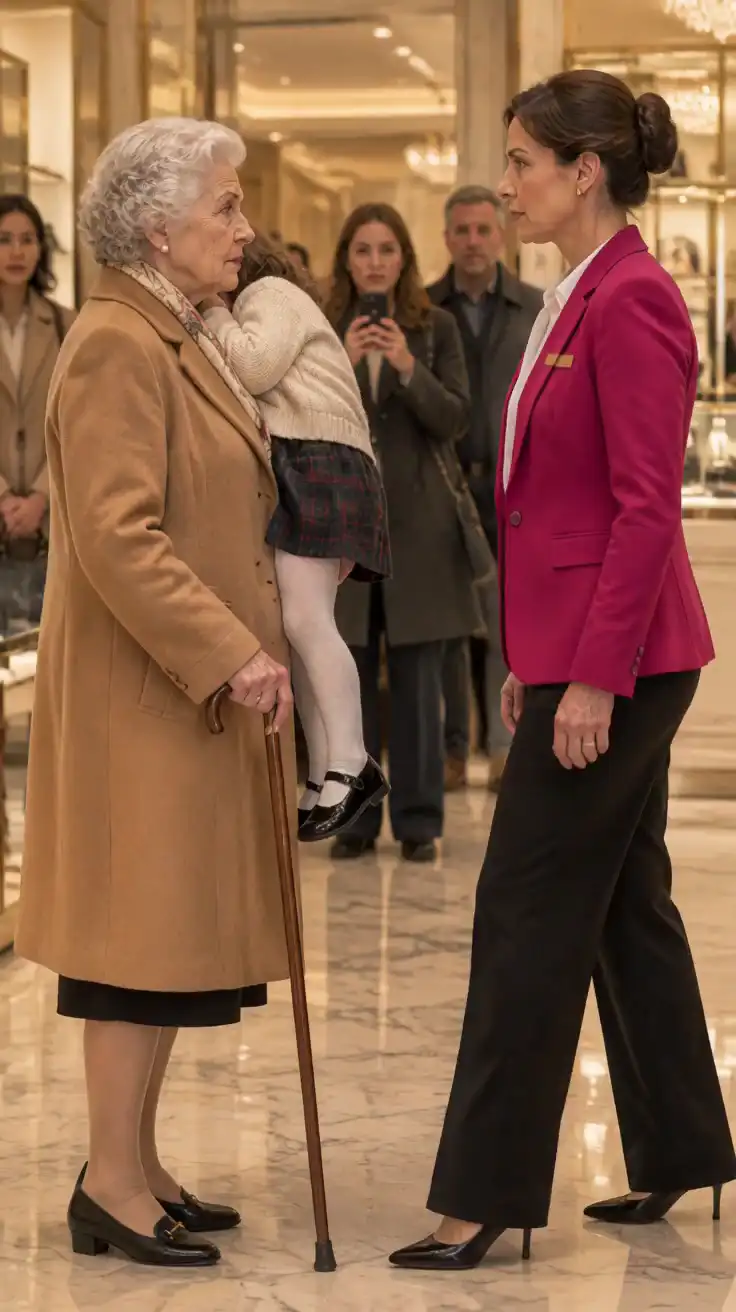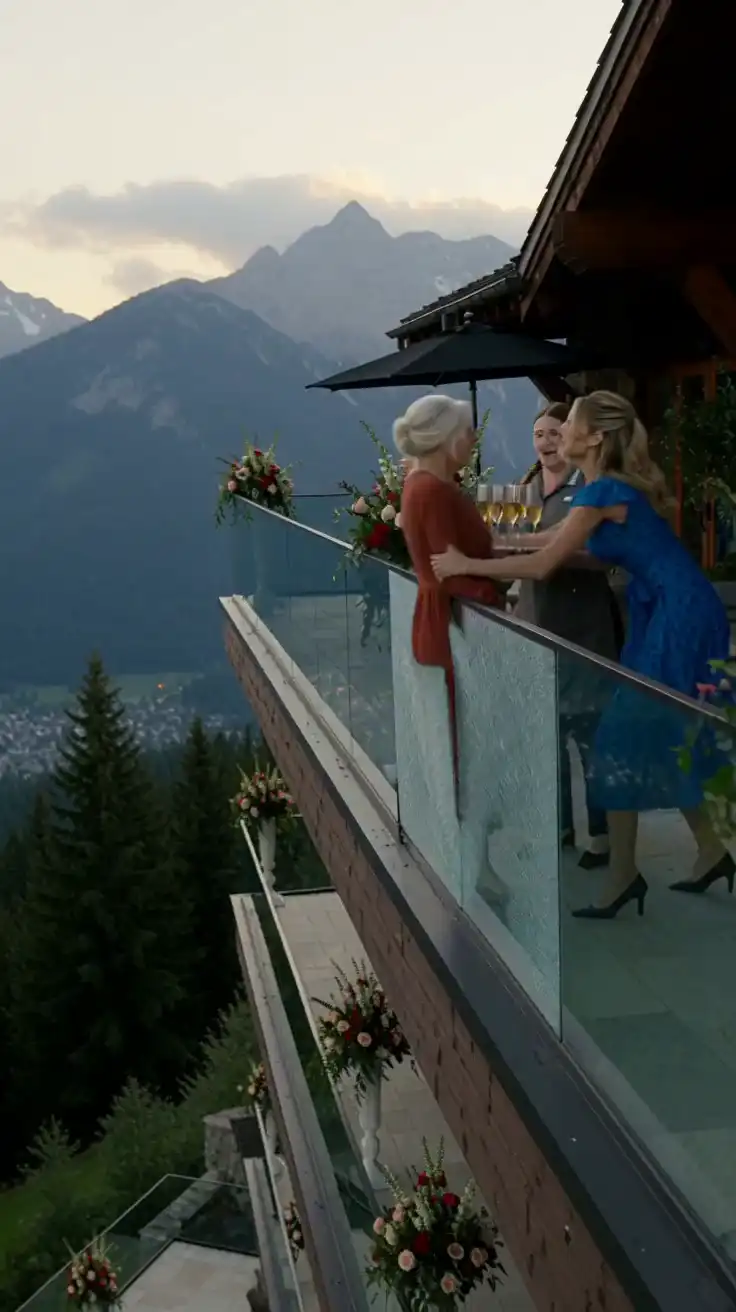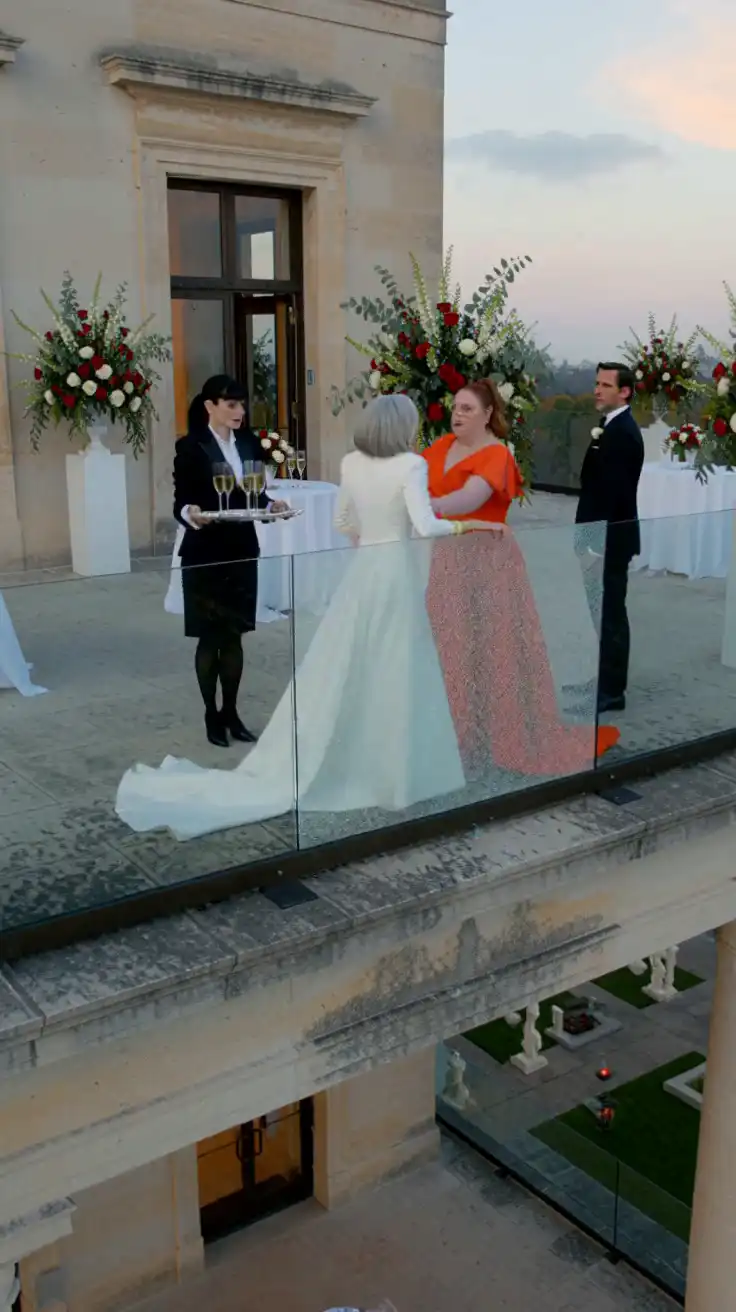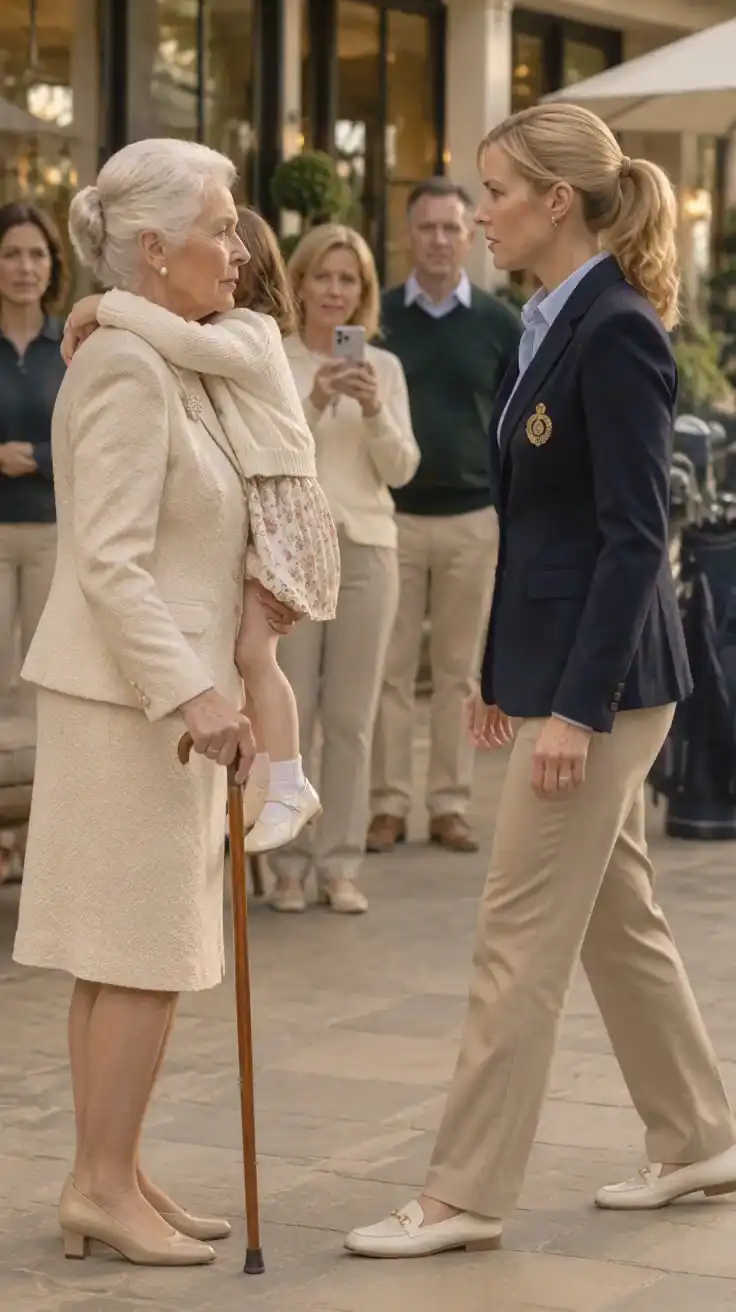
My son’s bride shoved me through the glass railing to take the concert hall naming rights I funded, but the usher caught my wrist just as my son rushed toward us on the terrace.
Eva’s fingers dug into my wrist. The edge of the terrace pressed against my ribs, and my shoe scraped for something solid.
“Hold on,” she said. Her other hand was braced against the terrace floor.
Simon reached us and pulled me back beside her. I stayed on my knees while he stood between me and Greta, his wedding jacket hanging open.
“She lost her footing,” Greta said.
“Say it again.”
She looked past him at the open doors to the concert hall. Somewhere inside, a musician drew a few notes from a violin, then stopped.
Eva picked up the program she had dropped and offered it to me. Its white cover was creased across the gold lettering. I kept my hands in my lap; they were still shaking.
Greta smoothed the front of her dress. “Simon, people are waiting. We can talk about this after the ceremony.”
He took the program from Eva instead. “You were arguing with my mother. What did you want?”
“A name on a wall.” Greta gave a little shrug. “You knew that.”
Simon turned toward me. He had heard her ask about the hall before, over dinner, when she ran her finger along the donor names printed on an old program. That night she asked whether a new name could replace one already there.
I had put down my fork. The ten-year sponsorship contract was in my study, and I remembered the naming-rights clause: it named Irene. Greta’s own name appeared elsewhere in the agreement, enough for her to ask questions about a transfer.
She had asked the hall office for a copy last month. Eva had found the request among the papers Greta brought for the wedding and slipped it into a program for Simon to see.
“You went through my things?” Greta asked her.
“You left the folder at the desk,” Eva said. “The request had your signature on it.”
Greta held out her hand. “Give me the program.”
Simon moved it away from her. The violin started again inside, a thin line of music reaching through the doors.
He opened the program and turned to the sponsor page. Greta’s transfer request was tucked behind it.
THE NAME IN THE PROGRAM
“Concert sponsor: Irene Whitcomb,” Simon read aloud.
The request slid from behind the page and landed at his feet.
For a moment Greta stared at it. Then she bent to pick it up, but Eva reached it first. She held the sheet by its corner and passed it to Simon.
“That’s mine,” Greta said.
“Yes,” he said. “Your signature is at the bottom.”
“It’s an application, not a confession.”
Simon looked down at the date. “You signed it on the fourteenth. Last month.”
“I asked a question last month. Apparently that’s a crime now.”
Eva helped me to my feet. I kept one hand on her arm until the terrace stopped tilting beneath me. The broken section of railing lay around us, and beyond the opening there was nothing I wanted to look at.
“Let’s go inside,” Eva said.
Simon offered me his arm, but Greta stepped between us and the doors.
“You can’t walk in there holding that paper,” she said. “It was in my folder.”
“You asked the hall to transfer my mother’s naming rights,” Simon said. “Why?”
“Because my name is in the contract.”
“That isn’t an answer.”
“It is if you let me finish.”
She reached for the request again. Simon folded it once and put it inside the program.
“Move, Greta.”
Her face changed when he said it. She glanced at the doors, then moved aside.
Eva stayed close enough for me to take her arm again. Inside, the little reception room was empty except for a table laid with water glasses and a vase of white flowers. Someone had set three place cards on the mantel for photographs: SIMON, GRETA, and IRENE.
Greta picked up hers and turned it over. “You’re making this much bigger than it is.”
Simon pulled out a chair for me. “Sit down, Mother.”
I sat. Eva filled a glass and put it in front of me. My hand shook against the rim, so she steadied it until I had taken a sip.
“Thank you,” I said.
She nodded and stepped back, though she kept her eyes on Greta.
The violin stopped. Through the closed inner door I could hear a chair scrape, followed by someone speaking too quietly to make out the words.
Greta set her place card down. “The musicians are ready. We’re due in the hall in twenty minutes.”
“Then they’ll have to wait,” Simon said.
“They’ve already been paid.”
“I know who paid them.”
He held up the program so she could see the page. My name appeared in black type beneath the words WEDDING CONCERT SPONSOR. Below it, in smaller print, was the name of the hall’s director, Miriam Cole, with a note thanking her staff.
Greta crossed her arms. “The program doesn’t say who owns the hall.”
“No one said it did,” I told her.
“You like people to assume it.”
I looked at her. “I’ve never claimed to own it. I sponsor its music program. I offered to pay for your wedding concert because you and Simon wanted to be married here.”
“And put your name in front of ours.”
“The director puts the sponsor’s name in every concert program,” Eva said. “It isn’t just this one.”
Greta turned sharply. “Were you asked?”
“No,” Eva said. “But I know how the programs are printed.”
Simon put the folded application on the table, keeping his hand over it. “You told me you wanted the wedding here because you loved the hall.”
“I do love it.”
“You also told me the name on the wall was just an idea.”
“It was an idea.”
“An idea you signed and submitted.”
“I didn’t submit it,” Greta said. “I filled it out. There’s a difference.”
Eva spoke before Simon could. “The office stamped it received.”
Greta’s eyes went to the corner of the sheet under Simon’s hand.
Simon lifted his hand. A blue stamp showed the date, three days after Greta had signed the request.
“You said you asked for a copy of the agreement,” he said. “You didn’t tell me you filed this.”
Greta put her palms on the table. “I filed an inquiry. The form says ‘request for transfer.’ It doesn’t say the transfer has happened.”
“What did the office tell you?” I asked.
She looked at me. “Nothing useful.”
“Greta.”
“They said the rights were yours for ten years. They said no transfer could be considered without your written consent.”
“And?”
“And they said if the sponsor died, the board would have to review the agreement before assigning the rights to anyone else.”
The room went quiet. Simon’s hand closed over the edge of the program.
Greta looked from him to me. “That’s what they said. I didn’t make them say it.”
“You asked what would happen if I died?” I said.
“I asked what happened if the sponsor was no longer able to exercise the rights. Those were the words on the form.”
Simon turned the application over. “They aren’t on this copy.”
“They were on the information sheet.”
“Where is it?”
“I don’t have it with me.”
“You brought the application to the wedding.”
“I brought my folder. I didn’t realize the application was still in it.”
Eva glanced at me. “The director should see this. She’s in her office getting the final seating list.”
Greta straightened. “There is no reason to involve Miriam.”
“There’s every reason,” Simon said. “She can tell us what you asked and what the contract allows.”
“She’ll tell you what your mother wants her to tell you.”
“Miriam doesn’t work for me,” I said.
Greta gave a short laugh. “She works for a hall you keep open.”
“The hall has a board, ticket income, other donors and an endowment. My sponsorship pays for a particular program. Miriam can explain that herself.”
I turned to Eva. “Would you ask her to come?”
“Of course.”
“Please tell her we need the contract too. The signed copy, not the one in Greta’s folder.”
Eva hesitated. “I shouldn’t leave you alone out here.”
“I’ll be with her,” Simon said.
Eva looked at him, then at Greta. She went to the inner door and opened it just wide enough to speak to someone in the corridor.
“Could you find Miriam Cole for me? Tell her Mrs. Whitcomb needs her in the reception room, and ask her to bring the sponsorship agreement from the office.”
A voice answered. Eva thanked the person and closed the door.
Greta had picked up the program while Simon was watching Eva. She turned the sponsor page toward herself.
“Look,” she said. “There it is. Your name in the largest type after ours.”
“The orchestra’s name is larger,” I said.
“That’s what you notice?”
“I notice that you’re trying to make the typeface the issue.”
She shut the program. “I wanted us to have something here. Simon and me. Something that wasn’t borrowed from you.”
Simon took the program back. “You could have told me that.”
“I did. You said your mother would never agree.”
“I said we should ask her, and you said not to bother.”
“Because I knew what she’d say.”
I put my glass down. “You never asked me to give you the naming rights.”
Greta’s mouth tightened. “I asked you whether you’d consider changing the name.”
“At dinner. You asked whether a new name could replace one already there. I said the agreement ran for ten years.”
“You said, ‘The hall knows who keeps its doors open.’”
“I said, ‘The hall knows what the money is for.’ Simon was there.”
He nodded. “That’s what she said.”
Greta looked at him. “You always remember her version.”
“I remember mine too. I asked what name you had in mind. You said you were thinking out loud.”
“I was trying not to offend her.”
“You filed the request a week later.”
She pulled a chair away from the table but did not sit. “It wasn’t only for me. The application says Greta and Simon Whitcomb.”
“It says Greta Whitcomb,” Simon replied. “My name is in the space for relationship to current sponsor.”
He turned the page toward her. She did not look down.
“I intended to change my name after the wedding,” she said.
“And put it on the hall before you changed it anywhere else?”
“That isn’t fair.”
“No,” he said. “It isn’t.”
The inner door opened. Miriam Cole came in carrying a dark blue file and wearing the black suit she always wore on concert days. She took one look at my face and put the file on the table.
“Eva said there had been an incident on the terrace. Are you all right, Irene?”
“I’m here,” I said. “Eva and Simon got me inside.”
Miriam’s gaze shifted to Eva, who gave a small nod.
“Do you need me to call an ambulance?” Miriam asked.
“No. I want to sit for a minute.”
“Is the terrace secure?”
“The railing is broken,” Eva said. “No one should go out there.”
“I’ll have the door locked and maintenance called.”
Miriam stepped into the corridor and gave the instruction. When she returned, she closed the terrace doors herself and tested the handle.
Simon placed Greta’s application beside the blue file.
“Miriam, did your office receive this?”
She picked it up, checked the stamp and signature, and nodded. “Yes. I remember it.”
“What did you tell Greta?”
Greta drew in a breath. “Miriam, I’d prefer we discussed my correspondence privately.”
“You asked our office about an agreement with Irene,” Miriam said. “Irene is here, and Simon is named on the application as your relationship to her. I can explain what I sent you. I won’t discuss any unrelated correspondence.”
She opened the file. Inside was a copy of the signed contract, several pages clipped together.
“This is the agreement between the hall and Irene Whitcomb,” she said. “It began two years ago and runs for ten. The sponsorship supports our concert series and the education program attached to it.”
She turned to a marked page and laid it in front of Simon.
“The naming rights for the concert hall are assigned to Irene for the term of the agreement. She chose not to put her name over the entrance. That choice doesn’t make the rights available to someone else.”
Greta leaned over the table. “Read the next paragraph.”
Miriam did. “‘Requests concerning transfer or use of the naming designation will be considered by the board upon written authorization from the sponsor.’”
“And my name is there,” Greta said.
Miriam turned another page. “Your name appears in the schedule for today’s wedding concert. You and Simon were listed as the couple requesting use of the hall. It gives you no authority over the sponsorship or the naming rights.”
Greta pointed at the page. “It says I can make requests regarding the event.”
“Regarding the event,” Miriam repeated. “Music, seating, accessibility, the order of the ceremony. Not the hall’s name.”
“I was told I could apply.”
“You were told you could submit a request. Anyone can submit one. I also told you it couldn’t proceed without Irene’s written authorization.”
Simon looked at Greta. “You knew that before today.”
“I knew she had to sign something.”
“You knew I had to agree,” I said.
Greta’s fingers pressed against the contract. “You could have agreed.”
“You never asked me.”
“I shouldn’t have had to beg.”
“No one asked you to beg,” Simon said.
She pulled her hand back. “You both keep saying that as if I didn’t spend the last six months asking permission for everything. Which flowers could go near the stage. Which entrance we could use. Whether the musicians could play after the ceremony.”
“Those are questions every couple answers with the hall,” Miriam said. “Our staff has to protect the instruments and keep the exits clear.”
“And every time I asked, someone said, ‘We’ll check with Irene.’”
Miriam looked at me. “Did someone say that?”
“They checked with me about the music I was paying for,” I said. “The hall made the other decisions.”
“I remember one question coming to you,” Miriam said. “Greta wanted the concert extended by half an hour. You agreed to cover the extra musicians’ fees.”
Greta looked away.
Simon opened the application again. “When did you decide you wanted the naming rights?”
“At dinner, if you need a date.”
“You asked for the contract before that.”
Greta’s eyes moved to the file.
Miriam said, “She requested a copy six days before the dinner. We sent the portions relevant to the wedding and the naming clause, with Irene’s permission.”
“I thought you wanted to understand the event terms,” I said.
“I did.”
“Why the naming clause?”
“Because I saw my name in the agreement. I wanted to know why it was there.”
“And when you found out?”
“I saw that the hall would have to review the rights if the agreement ended early,” she said. “I thought perhaps there was a way for Simon and me to take over.”
“Without paying for the sponsorship?” Simon asked.
“We could have found donors.”
“Had you found any?”
“I hadn’t asked yet.”
“You filed the transfer request first.”
“Because I needed to know whether it was possible.”
Miriam held out her hand. Simon gave her the application.
“I replied to this in writing,” she said. “I brought the response because Eva said you wanted the agreement.”
She took a single sheet from the file and placed it beside the request.
Greta did not reach for it.
Miriam read from the letter. “‘The naming designation remains with Irene Whitcomb for the full term of the current agreement. A request from another party cannot be placed before the board without her written consent. The wedding schedule does not confer naming rights.’”
She looked up. “I sent that to you the day after we received your request.”
“You left out the part about early termination,” Greta said.
Miriam turned the letter. “It’s here. ‘If the agreement ends before its scheduled expiration, the board will determine the disposition of any naming designation under the terms then applicable.’ It does not promise you the rights.”
Greta’s voice rose. “I never said it did.”
“You said the hall would have to review them,” Simon replied. “You didn’t say it would give them to you.”
“I didn’t know what it would do.”
“And you still wanted my mother out of the way.”
Greta stared at him. “I did not say that.”
“You argued with her on the terrace about the name.”
“Because she wouldn’t listen.”
“I heard you,” I said. “You told me the hall could have your name if I wasn’t here to stop it.”
“That’s not what I meant.”
“What did you mean?”
“I meant if you stepped aside.”
“You said, ‘You won’t be here forever.’”
Greta picked up her place card, bent it once, and flattened it against the table. “People say things when they’re angry.”
Eva stood beside the door, her hands clasped so tightly that her knuckles had gone pale.
Simon noticed. “Eva saw what happened.”
Greta turned to her. “You came out at the end.”
“I came out when I heard Mrs. Whitcomb say no,” Eva said.
“You didn’t hear the whole conversation.”
“I saw you put both hands on her and shove.”
Greta’s chair scraped across the floor as she stepped back. “She was already leaning.”
“I saw you,” Eva repeated.
Simon moved to my side. “I’m not asking Mother to explain herself to you again.”
Miriam closed the contract and kept her palm on the file. “I need to ask whether anyone else should be contacted.”
“I’ll call someone about the terrace,” Simon said. “But first I want the wedding stopped.”
Greta looked at him. “Simon.”
He took the small folded schedule from his jacket pocket and placed it next to the contract. “The ceremony. The concert. All of it.”
“You can’t decide that because an usher misunderstood what she saw.”
“Eva didn’t misunderstand.”
“You weren’t there until afterward.”
“I was there when you said she lost her footing. I was there when you tried to get me to walk past her and go on with the ceremony.”
“I was trying to keep things calm.”
“My mother was on the floor.”
Greta pressed the bent place card between her hands. “I was frightened too.”
Simon shook his head. “You told me people were waiting.”
“They are.”
“No,” Miriam said. “The wedding party was asked to remain in the lower dressing rooms until the hall was ready. The musicians are onstage for a final check. I haven’t opened the auditorium doors.”
Greta seized on that. “Then we can still fix this without embarrassing anyone.”
Miriam’s expression did not change. “I didn’t say that.”
I looked at the schedule Simon had put down. The first piece was one he had chosen with his father when he was a boy. He had asked whether it could be played before the ceremony, and I had called Miriam the next morning to make arrangements.
“Miriam,” I said, “the wedding concert is a separate expense from my sponsorship, isn’t it?”
“Yes. Your sponsorship agreement remains in place. The wedding concert was arranged separately and billed to you.”
“I want to withdraw my funding for today’s concert.”
Greta turned toward me. “You’d punish the musicians?”
“I want them paid for the time they’ve reserved and the work they’ve done,” I said. “Whatever the contracts require. I’m withdrawing the money for a performance at this wedding.”
Miriam nodded. “We can cancel the performance and settle their fees. I’ll speak to the orchestra manager.”
“You promised us the music,” Greta said.
“I promised to pay for music at your wedding. Simon has said there won’t be a wedding.”
“He said he wanted it stopped. He hasn’t spoken to the officiant.”
“I’m speaking now,” Simon said. “There won’t be a wedding.”
Greta looked at Miriam. “Could you give us a moment alone?”
“No,” I said.
Greta’s gaze snapped to me. “I was asking Simon.”
“And I’m answering for myself. I’m not leaving him alone with you while I’m sitting here.”
“I don’t need protecting,” Simon said softly.
“I know. I need you where I can see you.”
He rested his hand on the back of my chair. “Then I’m staying.”
Miriam picked up the schedule. “I’ll tell the orchestra manager the concert is canceled. Simon, would you like me to ask the officiant to come here?”
“Yes. And please ask the wedding party to stay where they are for a few minutes. I’ll speak to them myself.”
Greta reached across the table. “Simon, don’t send her.”
He stepped away from her hand. “Miriam.”
Miriam left with the schedule. Eva remained at the door.
Greta watched it close. “You could have talked to me before doing that.”
“I’ve been talking to you.”
“You’ve been reading forms at me.”
“I asked you why you filed one. I asked what the office told you. You gave me a different answer each time.”
“Because every answer I give becomes another accusation.”
“You could tell me you pushed her.”
Greta’s lips parted, then closed.
Simon waited. I could hear a muted voice in the corridor, Miriam speaking to someone. Then footsteps moved away.
Greta said, “If I say I put my hands on her, you’ll make it sound as though I planned it.”
“I won’t have to make it sound like anything.”
“It happened fast.”
Eva took a step forward. “You had time to tell her to move.”
Greta turned. “You don’t know what she said to me.”
“I know what I saw.”
“You were behind me.”
“I was by the door. You were facing her.”
Greta looked down at her hands. “She wouldn’t stop talking.”
My son’s fingers tightened on the chair.
“What did you want me to stop saying?” I asked.
She raised her head. “You said my name would never be on that hall.”
“I said I wouldn’t transfer my rights to you.”
“You said it in front of Eva.”
“Eva had just come through the door.”
“You knew she was there.”
“Yes,” I said. “I was glad she was.”
Greta’s eyes flicked to Eva. “You make it sound deliberate.”
“You pushed me.”
She rubbed her thumb across the heel of her other hand. “I wanted you to get away from me.”
“The doors were behind you,” Eva said.
“Enough,” Simon told Greta.
She looked at him. “I didn’t want her to go through the glass.”
“But you shoved her.”
Greta said nothing.
Simon took the ring box from his inside pocket. He opened it, looked at the two bands, and closed it again.
Greta’s hand went to the engagement ring on her finger. “You’re really going to do this here?”
“Yes.”
“After everything we planned?”
“Yes.”
She pulled the ring off and held it out. He did not take it immediately.
“You gave it to me,” she said.
“I did.”
“Then take it.”
He opened the box and lifted out the wedding bands, setting them on the table. Greta dropped the engagement ring into the empty space.
“Those are yours too,” she said, pointing at the bands.
“I know.”
He put them back in the box and shut the lid. Greta watched him slide it into his pocket.
The inner door opened again. Miriam came in with an older man in a dark suit, the officiant Simon and Greta had chosen. He held a slim folder against his chest.
“Simon,” he said. “Miriam tells me the ceremony is canceled.”
“It is, Reverend. I’m sorry you came all this way.”
The reverend looked at Greta. “Is that what you both want?”
“No,” she said.
“It’s what I want,” Simon said. “I won’t be marrying her.”
The reverend nodded slowly. “Then there can’t be a ceremony. I’ll put the license away.”
Greta’s voice rose. “Could you at least ask him to wait until we’ve spoken?”
“I have spoken to him,” she said, looking at Simon. “We’ve spent a year planning this.”
“And I’m telling you my answer,” he replied.
The reverend closed his folder. “I’ll be in the corridor if either of you needs me for practical arrangements.”
“Thank you,” Simon said.
When the reverend left, Miriam stayed. “The orchestra manager has been told. The musicians will be paid according to their agreements. They’re packing their instruments.”
From beyond the door came the low murmur of voices and the soft closing of cases. No music followed.
Greta stared at the floor. “You’ve already told them.”
“Yes,” Miriam said.
“You didn’t have to do it so quickly.”
“They needed to know not to begin.”
Miriam looked at me. “Irene, I’ve asked our finance manager to prepare an adjustment for the wedding concert. The deposit will be applied to the musicians’ fees and the hall costs already incurred. We can return the remainder or send you an accounting first.”
“Send me the accounting,” I said. “And make sure no one loses money because the concert was canceled.”
“I will.”
Greta gave a brittle laugh. “Even now you have to make yourself the generous one.”
I reached for the water glass. This time I held it without help.
“The musicians came here to work,” I said. “They aren’t responsible for what happened.”
“They’ll all know it was canceled.”
“They need to know they aren’t performing,” Miriam said.
“And what are you telling them about me?”
“Nothing beyond that the wedding and concert have been canceled.”
Greta looked toward the door. “Then perhaps you can tell them it was a misunderstanding.”
“No,” said Simon.
Miriam opened the blue file again. “There is one other matter. Your transfer request, Greta. It has not gone to the board because it lacked Irene’s authorization. Given what Irene has said today, I’ll mark it closed.”
Greta lifted her chin. “You can’t prevent me from making another request.”
“You may write to the hall,” Miriam said. “But the answer under this agreement will remain the same. Irene holds the naming rights, and she has not authorized a transfer.”
“What if she changes her mind?”
“I won’t,” I said.
Greta looked at me for a long second. “You’d rather have no name on the building than mine.”
“Yes.”
Simon drew a breath, but I put my hand over his.
“I didn’t take the rights because I wanted a plaque,” I told her. “The board offered them as part of the sponsorship. I chose to leave the entrance as it was. You could have asked me about that. You could have told me you wanted to support the hall yourself. Instead, you asked how to take the rights I already had.”
“I wanted something that belonged to us.”
“You wanted something that belonged to her,” Simon said.
Greta’s hand went to the bare place on her finger. “You could have helped me.”
“You didn’t tell me what you were doing.”
“Because you would have run to her.”
“I would have asked her. There’s a difference.”
Miriam slid the application into a separate folder. “I’ll retain this with the office correspondence. Simon, may I have the copy of the letter back?”
He handed it to her. She checked that the contract was complete and closed the blue file.
Eva shifted beside the door. “Miriam, Greta’s bag and coat are at the usher’s desk.”
Greta looked up. “Why are you discussing my things?”
“Because you’ll need them when you leave,” Miriam said.
“I’m not leaving without speaking to Simon alone.”
“You’ve spoken to him,” Miriam replied. “He’s told you the wedding is canceled. The hall is closing the terrace and the reception room while we assess the damage. I’m asking you to leave the building.”
Greta turned to Simon. “Are you going to let her throw me out?”
Simon kept his hand on my shoulder. “Yes.”
“You won’t even walk me to the door?”
“No.”
She looked at me again. “That’s what you wanted.”
“I wanted you to stop,” I said.
Her mouth moved, but no words came. She picked up the bent place card, looked at it, and dropped it back on the table.
Miriam opened the inner door. “Eva, would you bring Greta’s things to the entrance? I’ll go with her.”
Eva hesitated, looking at me.
“I’ll be all right,” I said. “Thank you for staying.”
She crossed the room and squeezed my hand. “I’ll be right outside.”
Greta followed Miriam into the corridor. At the threshold she stopped.
“Simon,” she said.
He did not move from my chair.
“I did love you.”
“I loved you too,” he said. “I’m still not marrying you.”
Miriam waited without touching Greta. After a moment, Greta walked on.
The door closed. Simon pulled out the chair she had left and sat beside me.
For the first time since we came inside, neither of us spoke. He looked at the wedding bands through the open top of his pocket, then pushed the box farther down.
“I should call the wedding party,” he said.
“Yes.”
“And the guests.”
“Miriam can help with the hall’s list.”
“I should tell them myself.”
“You don’t have to tell everyone everything today.”
He nodded, though he kept staring at the table. “I asked you to pay for the concert.”
“You asked if it was possible. I said yes.”
“I kept telling you how happy she was that you’d offered.”
“She was happy about the hall.”
He looked at me. “That isn’t the same thing.”
“No.”
He rubbed his face with both hands. When he lowered them, he picked up the program and opened it to the sponsor page again. The paper had a crease where Greta’s request had been tucked behind it.
“I read your name so loudly,” he said.
“You did.”
“I wanted her to hear it.”
“She heard it.”
He rested the program on the table. “I also wanted you to hear it. She’d been talking as though the concert was hers.”
I touched the edge of the page. “The concert was supposed to be yours as well.”
“I know.”
The door opened. Miriam returned alone.
“Greta has her belongings,” she said. “I asked her to leave through the side entrance, and she has gone.”
Simon stood. “I’ll call the wedding party now.”
“I can bring you the contact list,” Miriam said. “The officiant has offered to help notify anyone whose number you don’t have.”
“Thank you.”
He went with her into the corridor, taking his phone from his pocket. I heard him ask for a quiet room, and Miriam directed him toward her office.
Eva came back a minute later. She carried my coat over one arm and my purse in her hand.
“They were at the desk,” she said. “I thought you might want them.”
“I do.”
She laid the coat across the chair beside mine. I opened my purse, found a handkerchief, and wiped my palms.
“Miriam told me the musicians will be paid,” Eva said.
“They will.”
“She also said your sponsorship isn’t affected.”
“No. That agreement continues.”
Eva glanced at the program. “I’m glad.”
“You were the one who kept hold of me.”
She looked down at her hands. “I was afraid I couldn’t.”
“But you did.”
“I kept calling for help.”
“And Simon came.”
She nodded. I held out my hand, and she took it carefully.
“Will you sit with me until he’s finished?” I asked.
“Of course.”
She sat in the chair across from mine. The white flowers on the table had begun to lean toward the water glasses, and Eva moved the vase so it would not tip.
After a few minutes Simon returned with Miriam. He had taken off his wedding jacket and folded it over his arm.
“The wedding party knows,” he said. “I’ve started calling the guests. Miriam’s office will help with the rest.”
Miriam set an envelope on the table. “Your copy of the sponsorship agreement, Irene. I thought you might prefer to take it with you today.”
I opened the envelope and checked the first page. My signature was where I remembered it, and beneath it was the date the ten-year term had begun.
“I’ll leave the hall’s copy in the office,” Miriam said. “Nothing in today’s cancellation changes it.”
“Good.”
“The next concert in the series is still scheduled for next month. We’ll use the regular programs, with the usual sponsor acknowledgment.”
Greta’s bent place card lay near the vase. Miriam picked it up and put it in the wastebasket beside the door.
Simon offered me my coat. I slipped my arms into it, and he settled the collar against my shoulders.
“Ready?” he asked.
“In a moment.”
I turned to Eva. “Will you be working at the next concert?”
“I’m scheduled to.”
“Then I’ll see you here.”
She smiled, a small one, and opened the door for us.
Simon picked up the program before we left. He folded it carefully along the crease and handed it to me. My name was still on the sponsor page, and the contract was in the envelope under my arm.