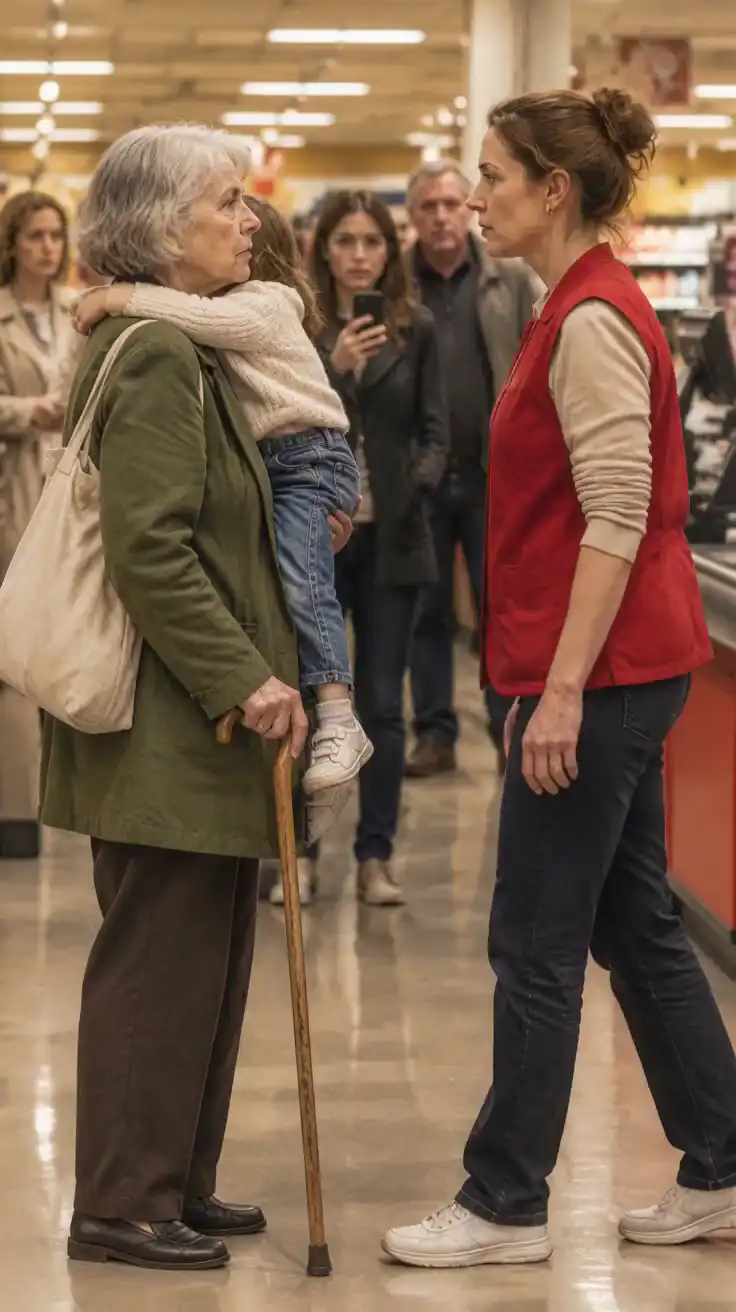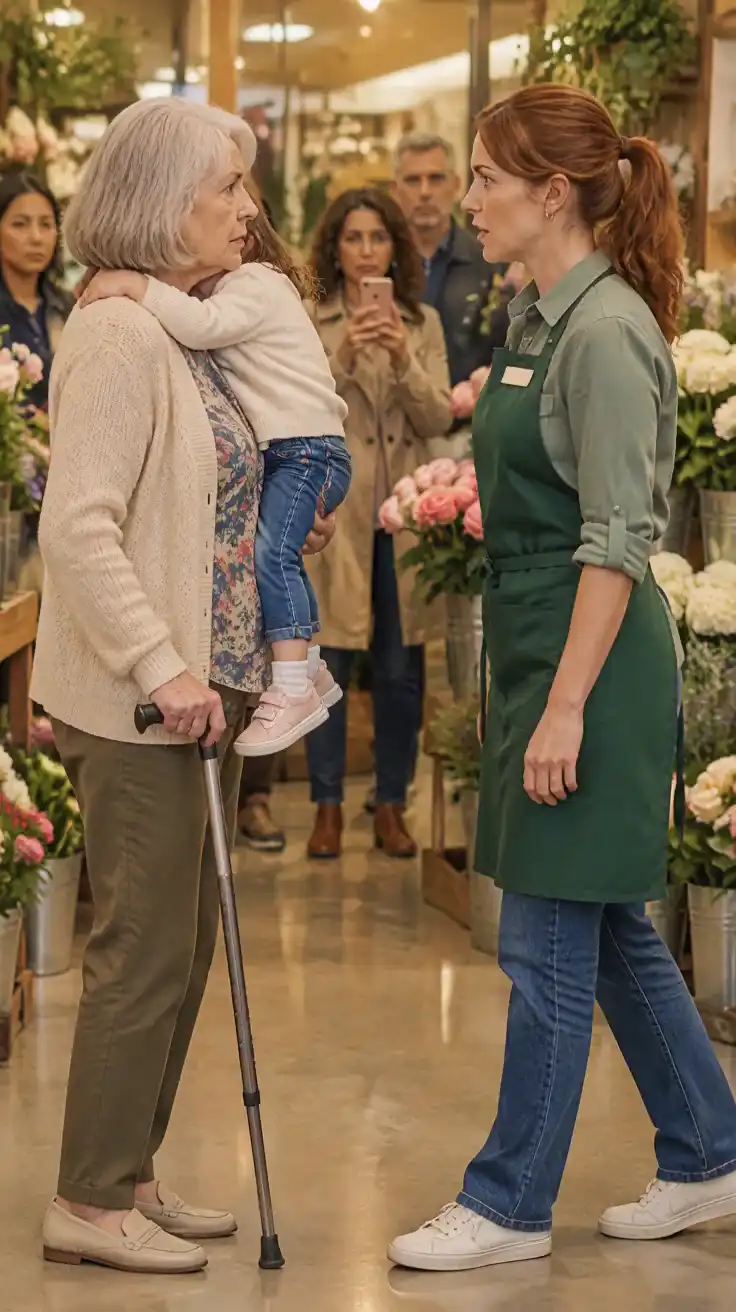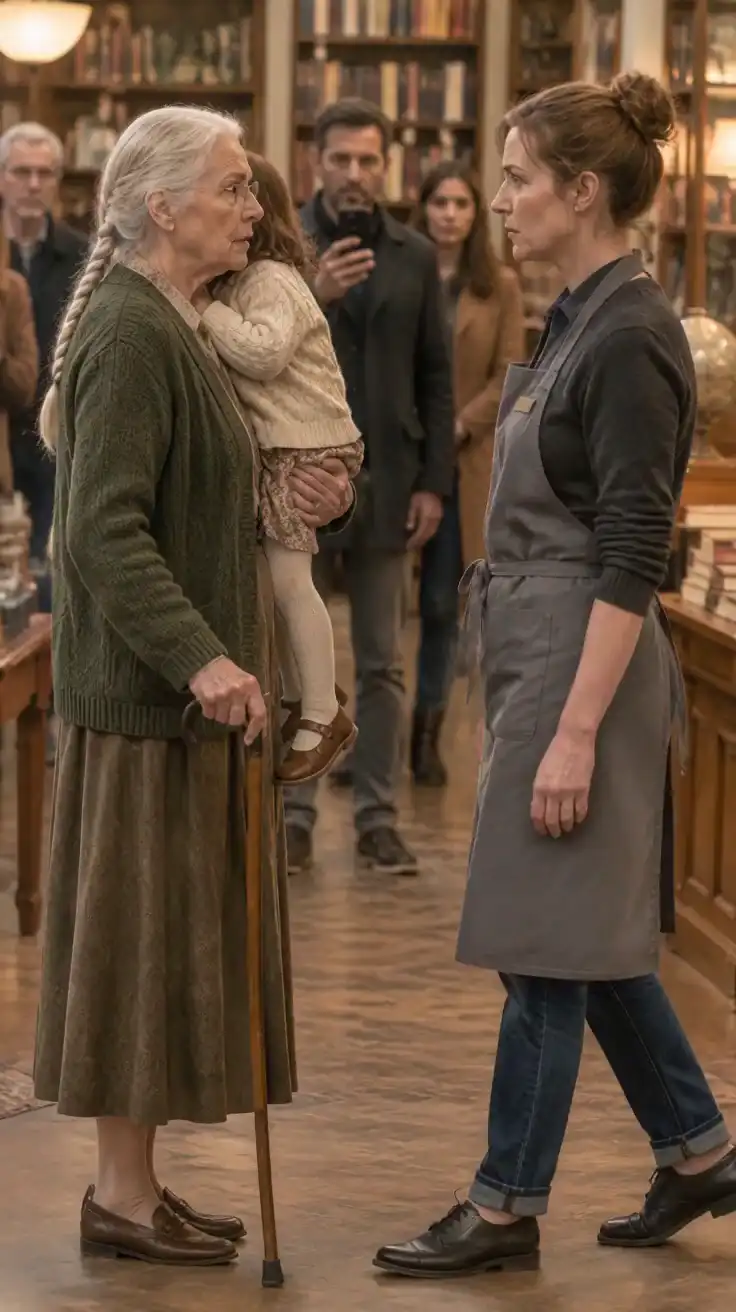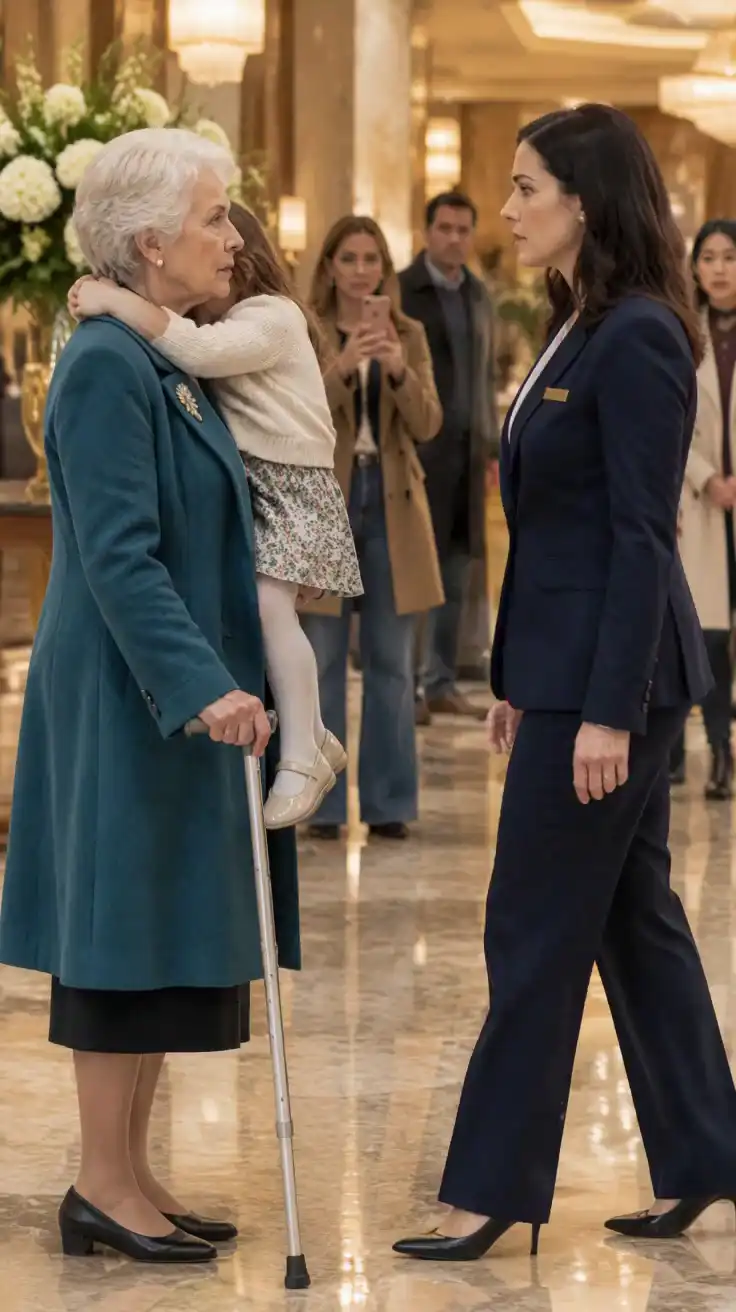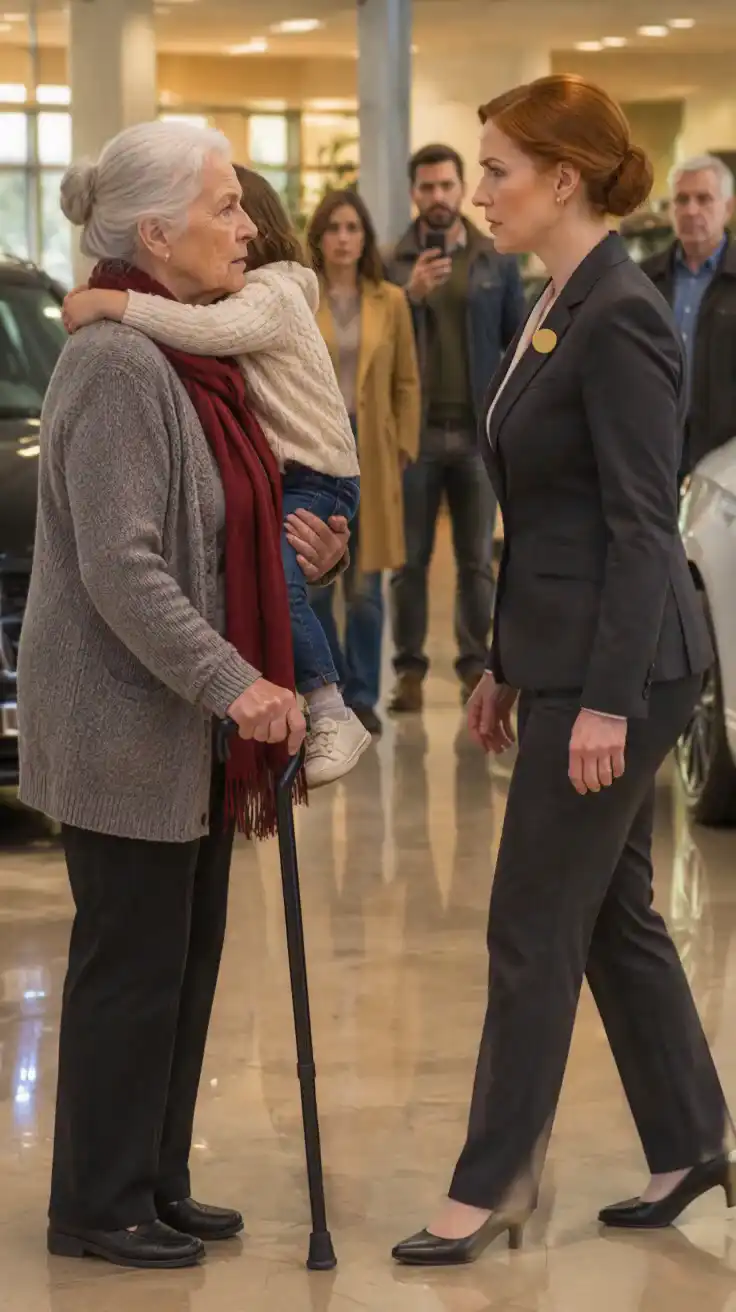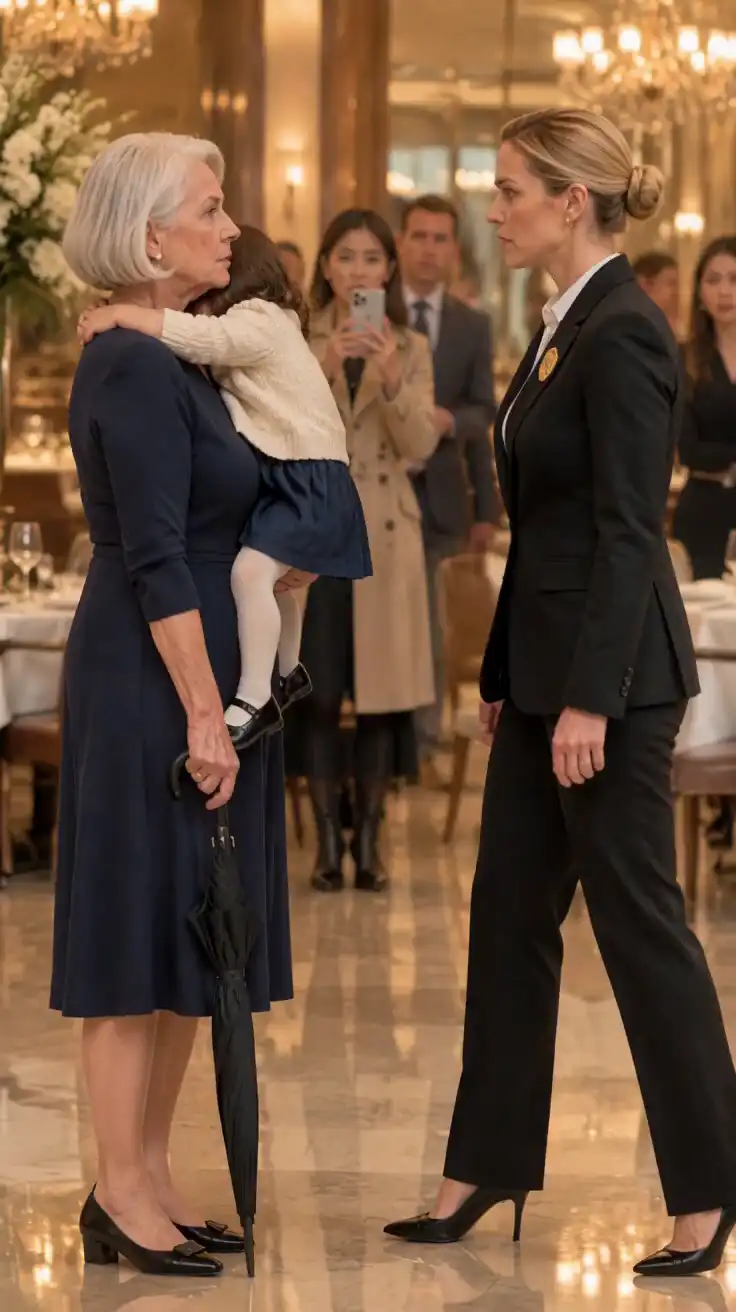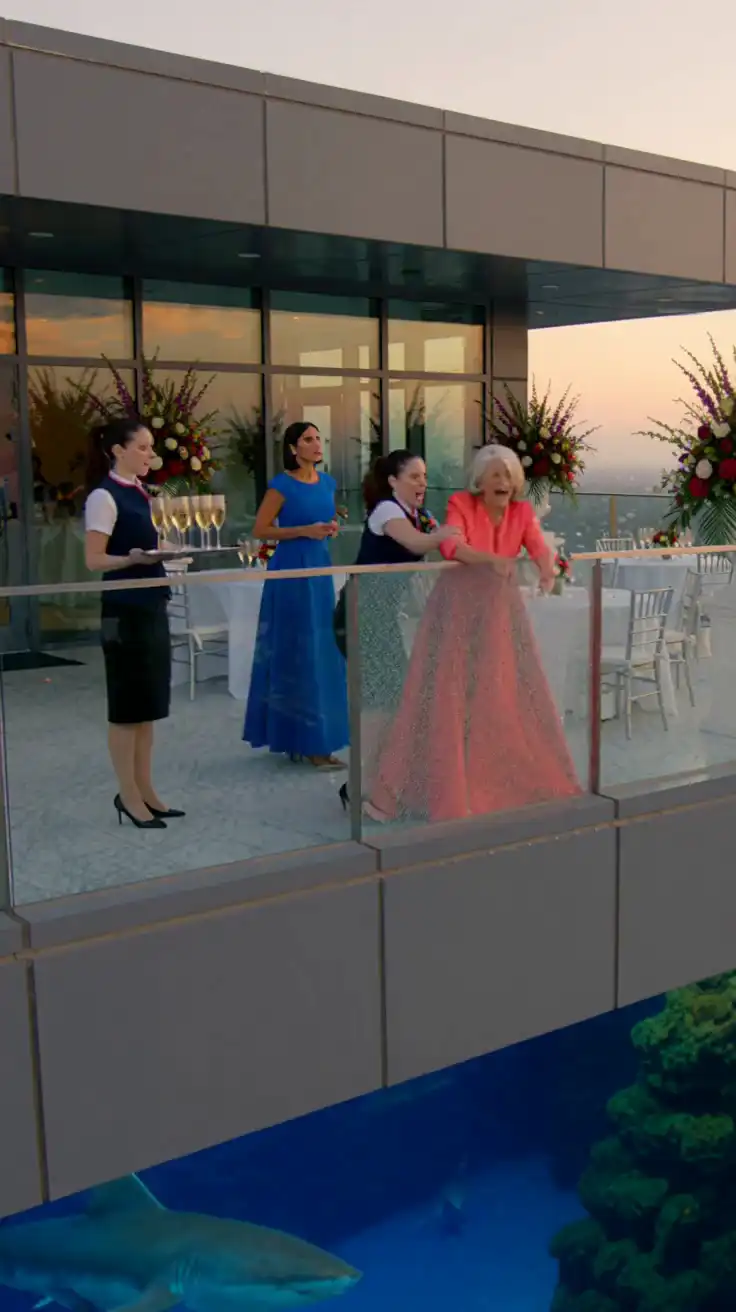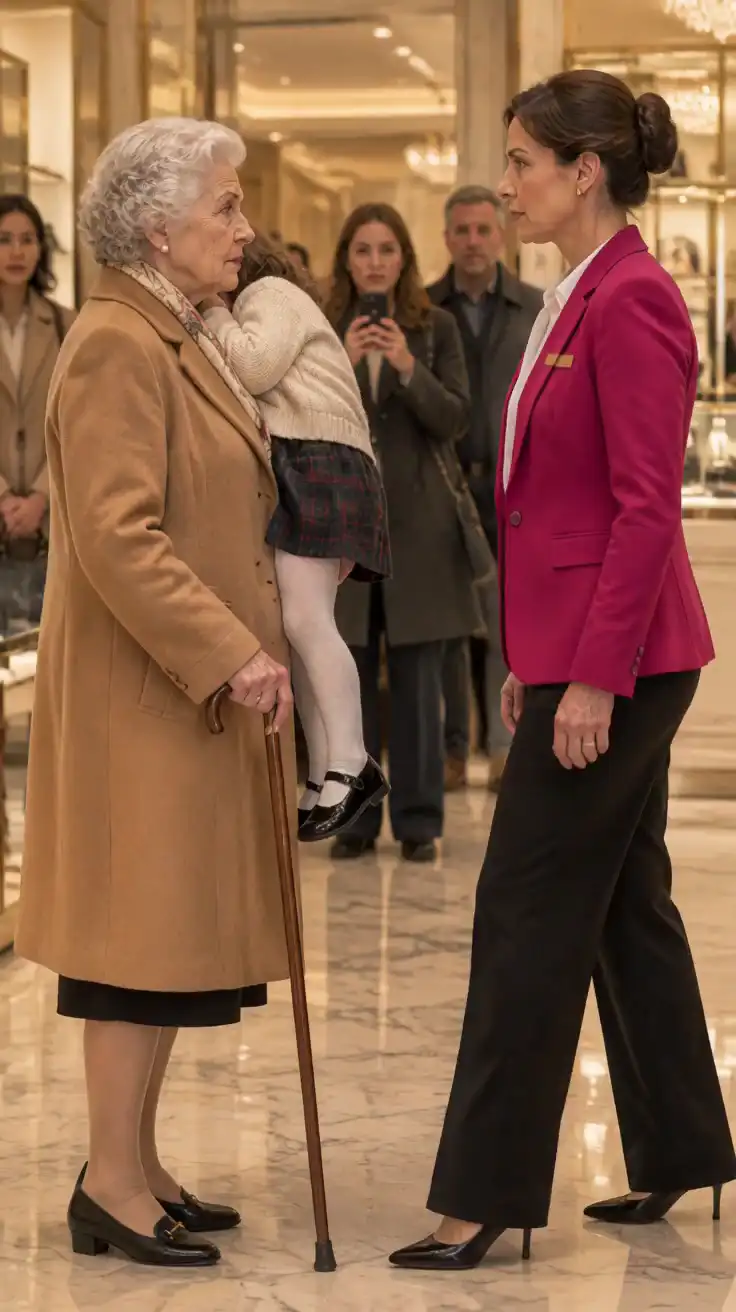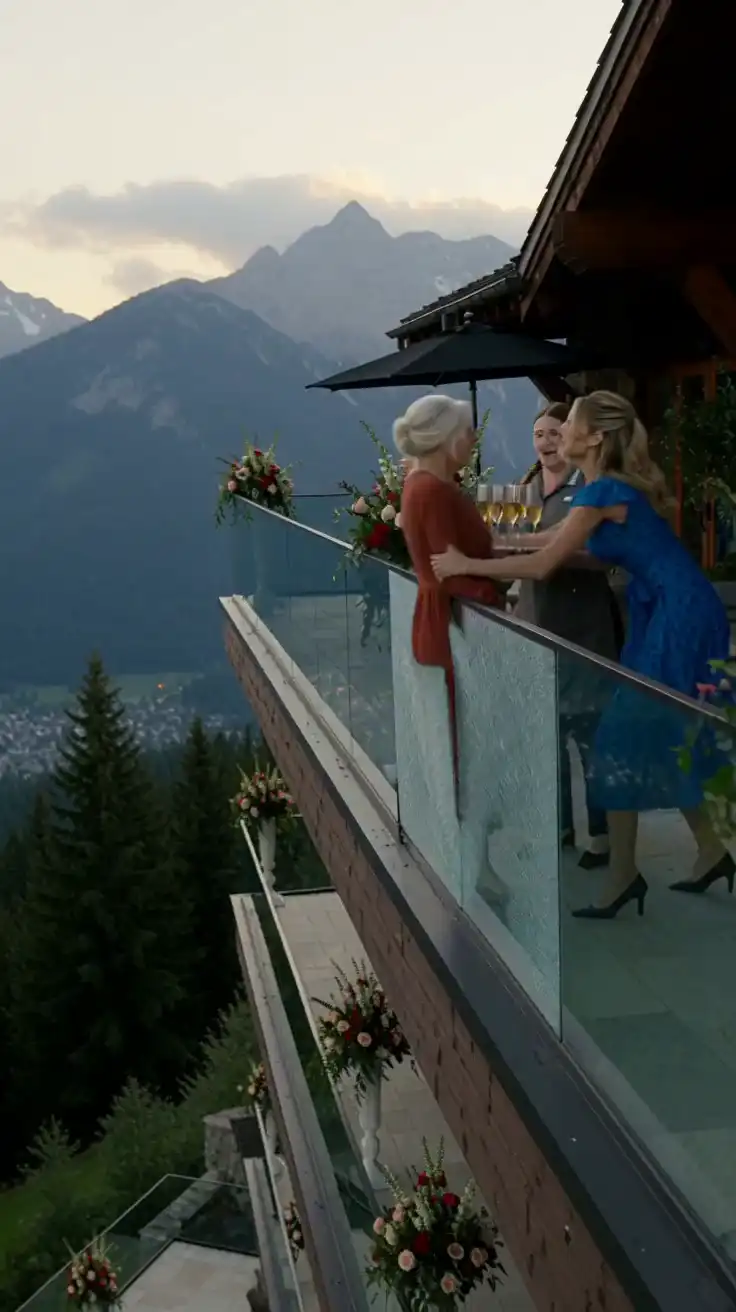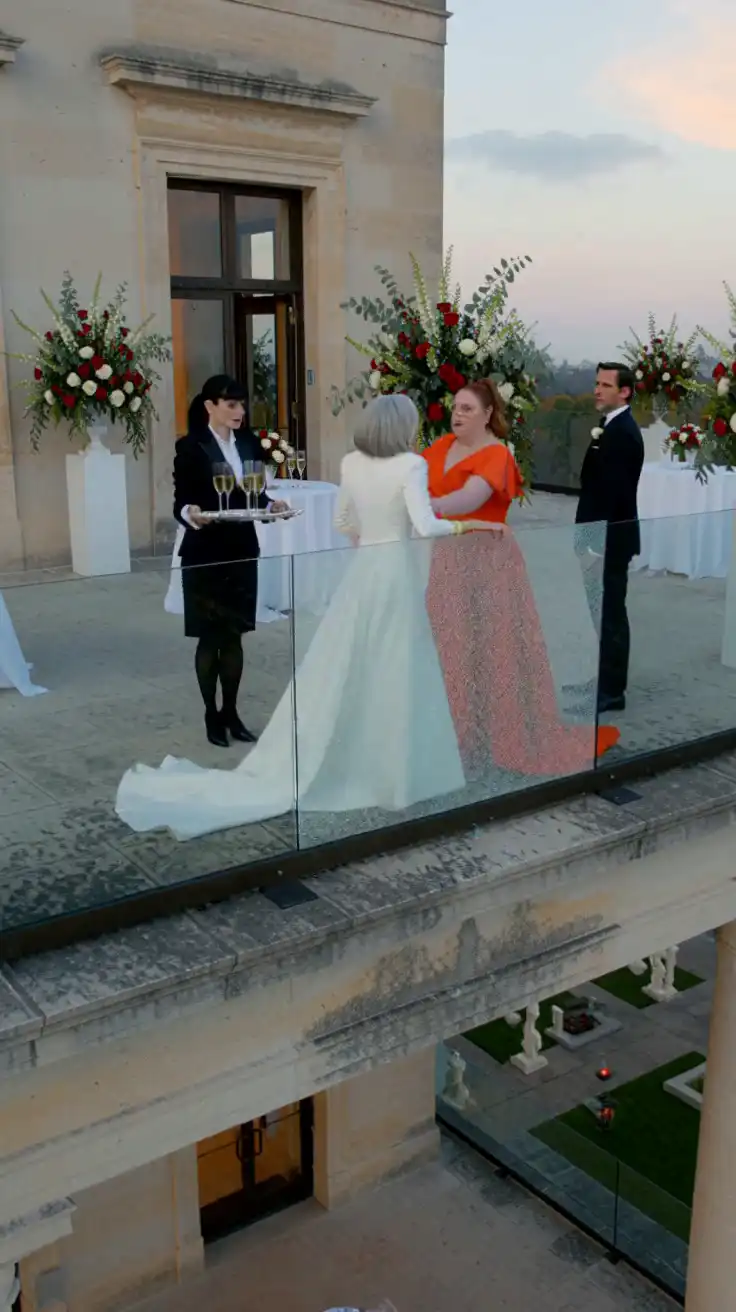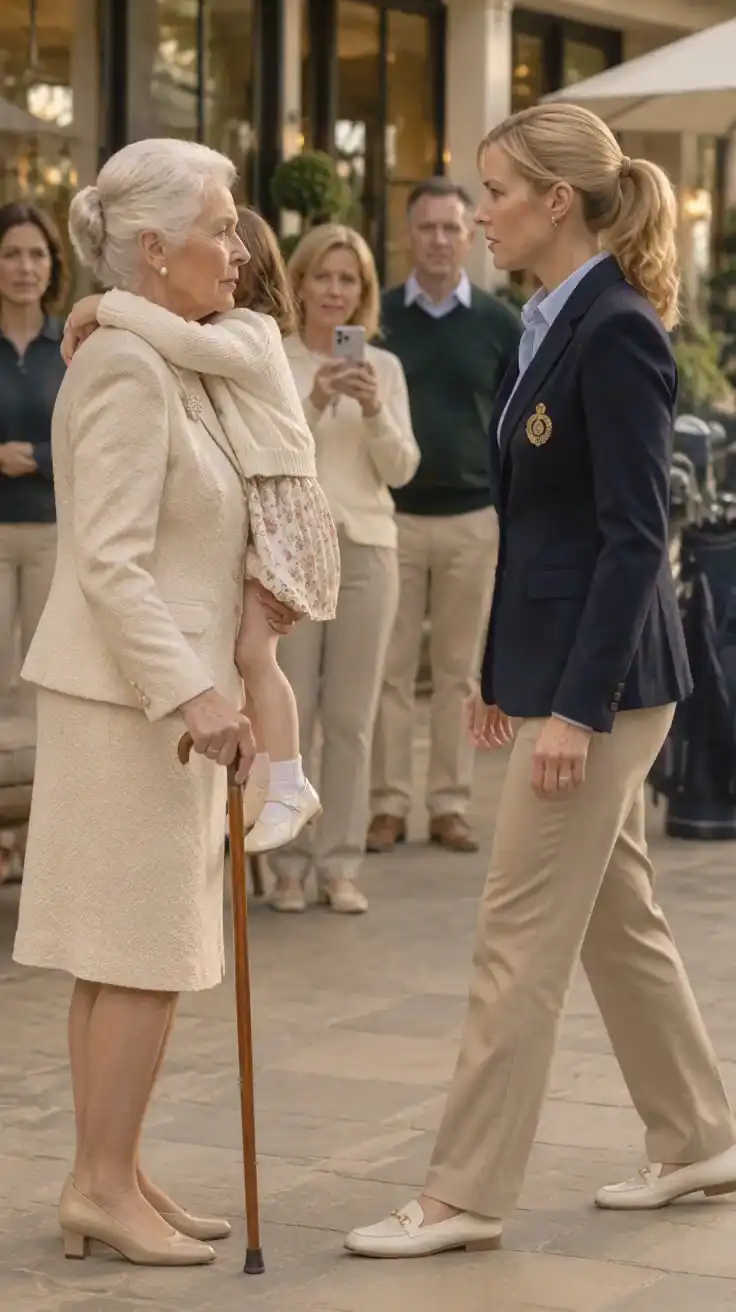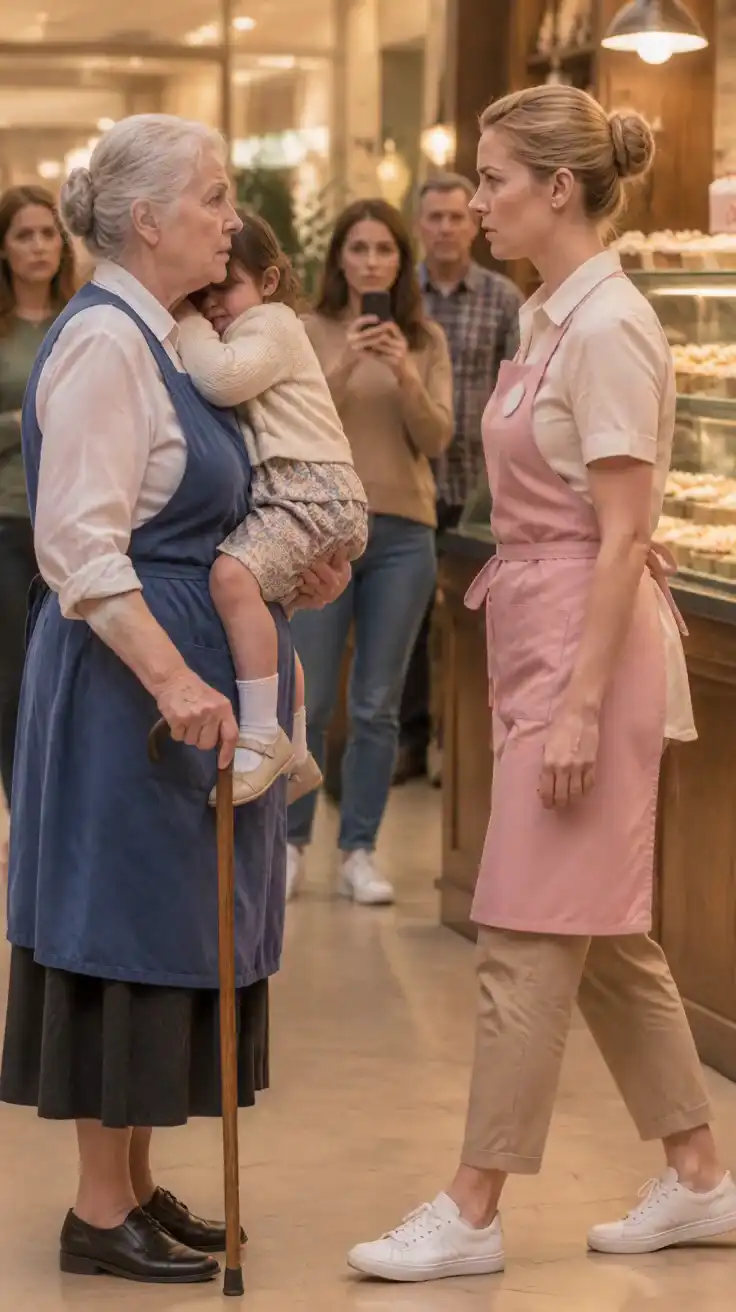
My future daughter-in-law shoved me through the glass railing at rehearsal. I built that garden and direct its gardeners; one caught my wrist as my son shouted “Mother!” and ran toward me.
The gardener’s fingers dug into my wrist, and the rough stone scraped my palm as Noah pulled me onto the terrace.
“Stay with me,” he said. He knelt beside me, his hands braced on my shoulders, while the gardener gathered the broken glass away from my feet.
Dana stood beside the rehearsal table, smoothing the front of her dress.
“She tripped,” she said again.
The gardener looked up. “I was right there, Miss Dana.”
Noah helped me into a chair. Across the garden, the roses needed tying back before the wedding; I had told the gardeners to leave them until I could show them which stems to cut.
Dana reached for my glass of water. Noah took it from her and handed it to me himself.
“Why were you arguing?” he asked.
“She doesn’t want us to use the house,” Dana said. “I thought once she saw the plans, she’d understand.”
I set the glass down. “I told you no.”
Dana’s mouth tightened. “It wouldn’t just be your house, Anna. Noah and I would run it together. Guests would pay to stay here. We could make the place support itself.”
I had spent years choosing what could grow in the salt wind and directing the gardeners who kept the paths clear. The cliff terrace was part of the garden, not a patio waiting for rows of paying guests.
Noah held out his hand. “What plans?”
Dana glanced toward the canvas folder tucked beneath the rehearsal papers. “Just ideas.”
The gardener pulled it free before Dana could reach it. A corner of a permit application showed beneath a folded survey map.
Noah opened the folder. The application had a date stamped near the top; I watched him look at it, then at Dana.
“When did you get these?”
“Before I knew your mother would be difficult about it.”
Noah said nothing. He turned to the survey, where a heavy line followed the cliff edge. A note beside it marked the area as protected.
Dana stepped closer. “That line doesn’t mean we can’t use the terrace.”
The gardener kept one hand on the back of my chair. Noah cleared the rehearsal papers aside and spread the survey map across the table.
Dana looked down at her name.
THE NAME ON THE APPLICATION
Noah put his finger on the application beside the map.
“This was submitted in March,” he said. “Three months before I asked you to marry me. And you put your name in the owner’s box.”
Dana’s hand hovered over the papers. “I knew the date was on there. I wasn’t trying to hide it.”
“You called them ideas.”
“They were ideas when I started. The application was a way to find out what the town would allow.”
Noah turned the page toward her. “It says ‘Dana Ellis, owner.’ Not ‘person asking a question.’”
She looked at me. “You always said you wanted Noah to have the house someday.”
“Someday,” I said. “That isn’t the same as signing it over to you in March.”
Dana gave a short laugh that stopped when neither of us joined her.
The gardener, Luis, moved his hand from my chair to the edge of the table. “Miss Anna, would you like me to get the other papers inside?”
“No,” Dana said quickly. “Those are mine.”
Luis looked at her, then at me.
I had given him his instructions in this garden for twenty years. He waited now, even though his face had gone pale and there were still tiny pieces of glass glittering on the terrace stones.
“Please bring me my green folder from the desk,” I said. “The one marked HOUSE.”
Dana stepped away from the table. “You’re making this sound as if I stole something.”
Noah kept his finger on the application. “Did you submit this?”
“Yes.”
“Did you tell my mother?”
“I was going to.”
“When?”
Dana glanced at the broken railing, then toward the house. “After the wedding. When we could sit down without everything becoming an argument.”
I held my water glass with both hands. “You mean after you had married my son and expected me to find it harder to say no.”
“That’s not fair.”
“You wrote your name where mine belongs.”
“It was a preliminary form.”
Noah lifted the top page. “There’s a file number.”
“That doesn’t mean it was approved.”
“Did you pay a fee?”
Dana didn’t answer.
“Dana.”
“Yes. I paid a fee.”
Noah set the page down carefully, as if laying it flat might make the words less plain. “Before we were engaged.”
“I knew what I wanted to do with the property before we got engaged,” she said. “That’s all.”
“With my property,” I said.
She folded her arms. “With the property you kept saying would be ours.”
“I said Noah would inherit it. I never said I would leave it now, and I never said the garden would become a parking lot.”
“It’s four parking spaces.”
Luis stopped at the terrace door. “Six on the drawing you showed me.”
Dana turned. “I asked you about a drawing. You didn’t have to count the spaces.”
“You asked me which roses could be moved.” He opened the door. “I counted the spaces because they were drawn over the rose beds.”
He went inside before she could answer.
Noah looked at the survey. “Where are the parking spaces?”
“They’re not on that sheet,” Dana said.
“Then where?”
“In the folder.”
He opened it wider. Beneath the survey was a rendering of the front garden, neat and bright, with little cars lined up where my climbing roses stood.
I recognized the stone arch over the path. In the picture it had been painted white, and a sign hung from it: CLIFF HOUSE GUEST ROOMS.
Noah picked up the rendering. “You had a sign made?”
“It’s an illustration.”
“With a name.”
“It needed a name.”
“Whose name did you give the designer for the property?”
Dana took a step toward him. “Please stop talking to me as if I’m a stranger.”
Noah moved the page out of her reach. “Then stop giving me answers that make me feel like one.”
The wind came through the gap in the railing and lifted one corner of the map. I pressed it down. The line marking the protected cliff edge ran close behind the terrace, beyond the beds where the sea thrift grew.
Dana saw where I was looking. “The surveyor said there might be a way to apply for an exception.”
“Did he say there would be one?” Noah asked.
“He said people apply for them.”
“That isn’t what I asked.”
“He didn’t promise anything.”
She leaned over the table and pointed at a penciled rectangle extending beyond the current terrace. “This was only a concept. A deck for breakfast. Not a hotel, not some enormous construction project.”
“Over the protected edge,” I said.
“Near it.”
“Over it,” Noah said. “The line is right there.”
Dana pulled her hand back. “I expected us to work through these details together.”
“You expected us to find out after you’d filed the application.”
“You were busy. Your mother wouldn’t listen. Somebody had to take a first step.”
I heard Luis return through the kitchen. He carried the green folder under one arm and a small broom in the other. He set the folder beside me, then began gathering the last pieces of glass into a dustpan.
“Leave that for now,” Noah said. “I’ll call someone.”
“If it stays there, the wind will move it,” Luis said.
I nodded to him. “Sweep it into the pan, please. Then put the pan in the potting shed where no one will walk into it.”
Dana watched him. “You don’t have to keep giving him orders, Anna.”
Luis straightened. “She’s keeping people away from broken glass.”
Noah pulled out a chair beside mine, away from the open section of railing. “Sit down, Dana.”
“I don’t want to sit.”
“Then stand. But you’re going to answer me.”
She stayed where she was, her fingers gripping the back of the empty chair.
I opened the green folder. The deed was in a clear sleeve, behind a copy of my husband’s will and the property tax statements. I had kept the original there because, after my husband died, everyone seemed to need another copy of something. The bank, the insurance company, the county. I had learned to keep the important papers together.
Dana watched me slide it out.
“You don’t need to show me that,” she said. “I know the house is yours.”
“You knew it in March, too.”
She pressed her lips together.
Noah took the deed from me only after I nodded. He read the names, the legal description, and the date my husband and I bought the property. He turned to the later documents showing that the house had passed to me.
“Your name isn’t here,” he said to Dana.
“I never said it was on the deed.”
“You said it on the application.”
“It asked for the owner. I thought since Noah would inherit—”
“Noah hasn’t inherited anything,” I said. “I’m sitting right here.”
Luis returned with the empty dustpan. He set it by the door and stayed near my chair.
Dana looked at him. “Could we have a private conversation?”
“No,” Noah said.
“She’s your mother. I understand that you’re upset, but he works for her.”
“And he saw what happened.”
Dana’s eyes moved to the gap in the railing. “I told you what happened.”
“You told me she tripped.”
“She was backing away from me.”
Luis’s jaw tightened. “You put both hands on her.”
Dana shook her head. “I reached for her.”
“You pushed her,” he said. “I was pruning the rose by the steps. I saw you put your hands against her and shove.”
Noah stared at Dana. “Is that true?”
“She was right at the edge, and we were arguing. I reached out. I didn’t mean for the glass to break.”
“That wasn’t his question,” I said.
Dana looked at me. “You were waving that map at me. You said you’d make sure I never touched the garden.”
“I said you wouldn’t cut down my roses.”
“You said you would call the town.”
“Yes.”
“And you were holding the papers out of my reach.”
“They were in my hand.”
“You wouldn’t listen.”
Luis took a step forward. “She told you no. Then you pushed her.”
Dana raised her voice. “I did not try to send her over a cliff.”
Noah’s chair scraped against the stones as he stood. “Stop telling us what you didn’t mean and answer what you did.”
She looked at him for a long moment. “I pushed her away from me.”
The wind shifted the edge of the rendering again. Noah put his palm over it.
“You pushed my mother,” he said.
“She was coming toward me.”
“I was holding a map,” I said. “You had room to walk away.”
Dana glanced toward the terrace door. “You’re all going to make me sound like a monster.”
Noah’s voice went very quiet. “I’m trying to understand why the woman I was going to marry put her hands on my mother.”
“I was frightened.”
“Of what?”
“That she was going to ruin everything.”
The words hung there.
I looked at the neat drawing of my garden and the little cars. “Everything you planned before you asked me.”
Dana turned to me. “You said no before you’d even looked at the numbers.”
“I looked at enough.”
“You looked at one page.”
“The page that showed my rose beds covered in gravel.”
“You don’t need all those roses.”
Luis let out a breath through his nose. He didn’t say anything.
I put the deed back in its sleeve. “They are mine to need or not need.”
Dana’s face reddened. “The house is too big for you. You have empty rooms, and you pay people to keep up a garden nobody uses.”
“I use it.”
“You sit in it.”
“And decide what grows there.”
Noah picked up the application again. “Who helped you file this?”
“No one helped me file it.”
“Who filled out the survey request?”
“I did.”
“Who paid the surveyor?”
“I did.”
“Did he know you weren’t the owner?”
“I told him I was working with the family.”
“Which family?” Noah asked. “Because you didn’t tell me.”
Dana’s hand slipped from the chair back. “I thought you’d be pleased when I had something real to show you.”
“You had something real. You kept it from me.”
“I kept it until I could make a proper proposal.”
“You put yourself down as owner.”
She looked at the application. “I can explain that to the town.”
“Yes,” Noah said. “You can.”
He took his phone from his pocket. Dana’s eyes followed it.
“Who are you calling?”
“The planning office.”
“You can’t just call and accuse me of fraud.”
“I’m calling to find out what this application does and how to stop it.”
“It’s Saturday.”
Noah looked at the date on his phone. “It’s Friday.”
For a moment Dana seemed about to argue with him about that, too. Then she sat.
The rehearsal was supposed to have been that afternoon, with the wedding the next day. I had spent the morning telling Luis which branches to leave on the arch. The florist was due later, but I had asked her not to bring anything until I called. I was glad of it now.
Noah found the planning office number on the application and put the call on speaker. A woman answered after several rings.
“Planning and zoning, this is Marcia.”
“My name is Noah Bennett. I’m here with my mother, Anna Bennett. We have an application for a guesthouse at her address, and we need to know its status.”
Marcia asked for the file number. Noah read it.
I watched Dana. She picked at a loose thread on her sleeve while the woman’s keyboard clicked.
“All right,” Marcia said. “I have an application submitted under Dana Ellis. Are you the applicant?”
“No,” Noah said. “She’s here. My mother owns the property.”
There was a pause. “Mrs. Bennett, are you on the call?”
“Yes.”
“Did you authorize Ms. Ellis to apply on your behalf?”
“No.”
Dana leaned toward the phone. “I paid the filing fee. I was going to provide the rest of the paperwork once we’d discussed the proposal.”
Marcia’s tone stayed even. “Ms. Ellis, the application identifies you as the property owner.”
“I expected to be part of the family that owns it.”
“That isn’t what the form asks.”
Dana sat back. “It’s an early application. Nothing has been built.”
“That’s correct. It is not an approved permit,” Marcia said. “The file has been incomplete since submission. We sent a notice requesting proof of ownership and a response concerning the protected area shown on the survey.”
Noah looked at Dana. “You got a notice?”
“It went to my apartment. I meant to answer it.”
“When?”
“I don’t remember.”
Marcia’s keyboard clicked again. “The notice was mailed in April.”
Two months before our engagement, I thought. I looked at Noah. He was staring at the application, his thumb pressing hard against its corner.
“What does incomplete mean?” I asked.
“It means no guesthouse permit has been issued,” Marcia said. “The application cannot be approved as filed without the owner’s authorization, and the ownership information needs to be correct. If you did not authorize it, Mrs. Bennett, we can note that immediately.”
“Please do.”
“I’ll also refer the file to the planning director. She can tell you what she needs from you in writing.”
“Can the application be withdrawn?” Noah asked.
“Ms. Ellis can request withdrawal as the applicant. If she doesn’t, the office can proceed with closing the incomplete file after review. Either way, there is no permit in effect.”
Dana crossed her arms. “I’ll withdraw it.”
Noah looked at her. “Today?”
“Yes, Noah.”
“Will you tell them the owner’s name was wrong?”
“I just did.”
Marcia said, “I’ll note what was said on this call, but we’ll need a signed withdrawal. Ms. Ellis, I can send the form to the email address on the application.”
“Fine.”
“And Mrs. Bennett,” Marcia continued, “if you have a copy of the deed, please bring or send it to our office with a short statement that you did not authorize the application. The director may want to speak with you.”
“I have the original here.”
“A copy will be sufficient. Please keep your original.”
“I will.”
Noah thanked her and ended the call.
Dana stood. “There. Nothing was approved. I’ll sign the form.”
Noah didn’t move.
“What else do you want?” she asked.
“The truth.”
“I just told you.”
“You told me after Luis said what he saw and after the planning office found your file.”
“I said I pushed her away.”
“You said she tripped.”
Dana looked toward me. “Anna, tell him how you were speaking to me.”
I put the deed back in the folder and closed it. “I told you that you could not turn my home into a guesthouse.”
“You told me I would never have any say here.”
“You wanted a say in whether I kept my own garden.”
“I wanted to be part of this family.”
“Then you could have started by asking me a question and accepting my answer.”
She pulled out her phone. “I can withdraw it right now.”
“Do that,” Noah said.
Her screen lit her face. She tapped several times, frowned, and tapped again.
“The form hasn’t come through.”
“We’ll wait,” Noah said.
She sat again. Luis picked up the rendering and held it by the corners.
“May I?” he asked me.
“Yes.”
He laid it beside the survey. “This is the front garden. The two beds here are the old climbers. She asked me in April if I could move them.”
Dana looked up. “You said they might survive.”
“I said I wouldn’t move them without Miss Anna’s permission.”
“You also said the roots were deep.”
“Yes. Because you asked how difficult it would be.”
Noah traced the edge of the drawing. “You saw this in April?”
“She showed me a printout on her phone. Asked what the work would cost.”
“Why didn’t you tell me?” I asked.
Luis looked at me. “I told you she’d asked about moving roses. You said to tell her no work would be done unless you approved it.”
I remembered. We had been tying back the yellow climber by the gate. I had thought Dana was asking about flowers for the wedding.
“You didn’t tell me about the parking,” I said.
“She said it was for a party. I should have asked to see the whole drawing.”
Dana gave a quick shake of her head. “It was for the wedding at first. We needed somewhere for guests to park.”
“Then why does the sign say guest rooms?” Noah asked.
“That drawing came later.”
Luis pointed to a small notation at the bottom. “The date is on it.”
Noah leaned closer. “April seventeenth.”
Dana glanced at the paper and said nothing.
“That was before I proposed,” he said.
“I thought you were going to.”
“You were planning the business before you knew I’d ask?”
“I knew where we were headed.”
“And you knew my mother owned the house.”
Dana looked at me. “You kept telling me how much work the place was. You complained about the roof and the salt on the windows and the gardeners needing direction. I thought you wanted help.”
“I wanted help fixing the roof. I didn’t ask you to make yourself the owner.”
“You wouldn’t have had to do any of the work. Noah and I would have run it.”
“Where would I have lived?”
“In the downstairs suite.”
“My bedroom is upstairs.”
“The suite would be easier for you.”
Noah looked at her. “You told me the downstairs room would be our office.”
“It could have been either.”
“You told me you’d put a desk where the window seat is.”
Dana’s gaze flickered to the house. “That was one possibility.”
“And the other was moving my mother out of her bedroom?”
“It has stairs.”
“I climb them every day,” I said.
“You won’t forever.”
“No,” I said. “And if I need a different room, I’ll choose one.”
Dana’s phone chimed. She looked down. “The form.”
Noah held out his hand. “Read it first.”
“I don’t need you to tell me how to fill out a form.”
“Then fill it out correctly.”
She opened it. Her thumbs moved over the screen. We waited while the wind pushed at the pages on the table.
Dana frowned. “It wants a signature.”
“You can sign on the screen,” Noah said.
“I know how.”
She made a mark with her finger and looked up. “Done.”
“Does it say submitted?” I asked.
“Yes.”
“May I see?”
Dana held the phone out to me. The confirmation showed the file number and a request to withdraw the application. Below it was her name.
I handed it back. “Thank you.”
She let out a breath. “Now can we go inside and talk without Luis listening?”
“No,” Noah said.
“Why not?”
“Because I want him here.”
Luis shifted beside me. “I can go if Miss Anna wants me to.”
“I want you here,” I said.
Dana stood so suddenly her chair tipped against the table. “You’re treating me like I’m dangerous.”
Noah caught the chair before it fell. “You pushed her through a railing.”
“I said I didn’t mean—”
“I heard you.”
“I apologized.”
I looked at her. “You haven’t.”
Dana opened her mouth, then closed it.
Noah set the chair upright. “You haven’t said you’re sorry to her once.”
“I’m sorry the glass broke.”
“That isn’t an apology to me,” I said.
She stared at the gap. “I’m sorry I pushed you.”
Luis moved closer to the table. I knew he was listening for what came next. So was I.
Dana looked at Noah. “I was scared you’d let her take the house away from us.”
I held up my hand before Noah could speak. “There is no ‘away from us.’ You never owned it.”
She made a small sound, almost a laugh, but her eyes stayed on Noah.
He picked up the rendering, folded it once, and put it back into the canvas folder. Then he gathered the application and the survey.
“Don’t put those away yet,” I said.
He stopped.
“The planning office asked for a statement. I want the file number in front of me.”
Noah set the application back on the table. “I’ll write it.”
“I can write my own statement.”
“I know.” He pulled another chair close to mine. “I’ll bring you a pen.”
He went inside. Dana watched him go.
“You could have let him do this with me,” she said quietly.
“Do what?”
“Make something of this place.”
Luis looked at me, but I answered before he could.
“This place is already something.”
“You know what I mean.”
“I do. You wanted paying guests in my bedrooms and cars over my roses.”
“And money coming in.”
“I have money coming in.”
“Not enough to keep paying for everything forever.”
“Have you seen my accounts?”
“No.”
“Then you don’t know what I can afford.”
“You told Noah the roof estimate was high.”
“It was high. I paid it.”
Dana rubbed her forehead. “You make every practical conversation sound like an attack.”
“You put your name on my house before we had the conversation.”
Noah came back with a pen and a pad from the kitchen. He also brought his laptop and set it on the table.
“I’m going to make a copy of the deed for the planning office,” he said. “Then I’m calling the people who were supposed to come tomorrow.”
Dana turned toward him. “What people?”
“The officiant. The caterer. The florist.”
Her face changed. “Why?”
“Because the wedding is off.”
“Noah.”
“I’m not marrying you.”
She took a step toward him. “You can’t decide that in the middle of this.”
“I can.”
“You’re angry.”
“Yes.”
“We can talk when you’ve calmed down.”
He opened the laptop. “There won’t be a wedding tomorrow.”
Dana put her hand on the screen before he could raise it. “You don’t have to say it like that in front of them.”
“Luis saw you push her. My mother was the person you pushed. They’re already part of this.”
“I said I was sorry.”
“You said you were afraid she’d take the house away from us.”
“I was afraid she’d turn you against me.”
Noah eased her hand off the laptop. “You did that yourself.”
Dana looked at the ring on her left hand. She twisted it once, but didn’t remove it.
“We’ve paid deposits,” she said.
“I know.”
“My parents have plane tickets.”
“I’ll call them if you want.”
“No.” She gripped the ring. “I’ll tell them.”
“Tell them the wedding is canceled.”
“What do you expect me to tell them about why?”
“The truth.”
She looked at Luis. “You’ll tell everyone I pushed her.”
“I’ll tell the truth if someone asks me,” he said.
“After everything I’ve done to make this wedding happen?”
Luis kept his voice level. “I tied the roses where you asked. I brought in extra chairs when you changed the arrangement. I didn’t put my hands on Miss Anna.”
Dana’s shoulders dropped. “You all decided what I am the moment the glass broke.”
“No,” Noah said. “You told us who you were when you called my mother an obstacle to a plan she never agreed to.”
He opened his laptop. “I’m calling the officiant.”
Dana moved away from the table and stood near the door, far from the broken railing. Noah made the call with the phone to his ear. I could hear only his side.
“Hi, Reverend. It’s Noah. I’m sorry to call so late. There won’t be a ceremony tomorrow.”
He listened.
“No. We’re both all right. I just need to cancel.”
He closed his eyes for a moment.
“Thank you. I’ll take care of the fee. Please don’t come out.”
When he ended the call, Dana was watching him.
“You really did it.”
“Yes.”
She held up her left hand. “What am I supposed to do with this?”
“That’s up to you for the moment. We can sort out the ring and the deposits later. You need to leave today.”
“I have things upstairs.”
“I’ll bring them down.”
“I can get them myself.”
“No.”
She looked at me. “Are you going to make him do this?”
“I haven’t made him do anything.”
“He always listens to you.”
Noah shut the laptop. “I’m standing right here.”
“You said we would make decisions together.”
“We were supposed to. You filed an application before you asked me, and you put your hands on my mother when she said no.”
Dana looked at me again. “You could have said yes.”
Luis made a sound under his breath. I rested my hand on the folder.
“Yes,” I said. “I could have. But I didn’t.”
For a moment she seemed to have nothing to do with that answer. Then she walked through the terrace door.
Noah followed. I heard their voices in the kitchen, low at first, then Dana’s sharper one.
“I know where my own bag is.”
“And I know where the stairs are.”
“Are you going to follow me into every room?”
“I’m going to get your things.”
Luis leaned toward me. “Would you like me to go in?”
“Stay here a moment.”
He stayed. I looked at the broken railing. Beyond it, the sea was visible between the trees, gray under the afternoon clouds.
Luis pulled the empty chair away from the opening. “We should keep everyone off this part of the terrace.”
“Put the two big planters across it,” I said. “Not the blue ones. They’re too heavy to move without the dolly.”
“The clay ones by the steps?”
“Yes. And bring the rope from the shed.”
He nodded, then hesitated. “Miss Anna, I should have come sooner.”
“You came when I called.”
“I heard the arguing before that.”
“You were pruning.”
“I heard her raise her voice.”
“So did I.”
He looked at his hands. “I thought you would tell me if you needed me.”
“I did.”
He lifted his head.
“You caught me,” I said. “You don’t have to find another thing you should have done.”
He pressed his lips together and nodded. Then he went to fetch the planters.
I wrote my statement while he worked. The pen moved slowly because I wanted the words to be plain.
I am the owner of the property. I did not authorize Dana Ellis to submit an application for a guesthouse. I do not consent to the proposed use.
I added the file number and signed my name.
Noah came back carrying Dana’s overnight bag and a garment bag with her wedding dress inside. Dana followed him, holding her shoes and phone.
“That isn’t everything,” she said.
“It’s what you need today. I’ll pack the rest and arrange a time for you to collect it.”
“I have a makeup case in the bathroom.”
“I’ll get it.”
“Noah.”
He stopped at the door.
She held out her hand. “My keys.”
He looked at her.
“The keys to my apartment,” she said. “They’re in the dish by the front door.”
“I’ll bring them.”
He went inside again. Dana stood beside her bags, her eyes on the garment bag.
“I didn’t want this,” she said.
I folded my statement and put it inside the green folder. “You wanted the house.”
“I wanted a life here.”
“You wanted a business here.”
“Both.”
“You could have had a life with Noah without owning my home.”
She picked up one of her shoes and turned it over in her hand. “He always talked about this place as if it would be his.”
“He talked about inheriting it.”
“He said he’d never sell it.”
“I’m glad he feels that way.”
“He said we could raise children here.”
I looked at the house. Noah had spoken to me about children, too, though he had always said if, not when. I had imagined little shoes by the back door and a small hand reaching for the lowest roses. None of that had required me to leave my bedroom or sign away the garden.
“He could bring children here,” I said. “They would be welcome.”
“You don’t even know whether I want children.”
“No. We never had that conversation.”
“We tried to have conversations. You always had something to say about where I put a chair or which flowers I chose.”
“The chair was on the seedlings.”
“It was one chair.”
“And I asked you to move it.”
Dana dropped the shoe into her bag. “You never liked me.”
“I invited you into my home. I asked you to dinner. I gave you the blue room when you stayed.”
“You corrected me in front of Noah.”
“When you told the gardeners to cut the roses back before they bloomed, yes.”
“They were in the way of the tables.”
“They were where I planted them.”
Dana looked away.
Noah returned with her keys and a small case. He set them beside her bag.
“I called a car,” he said. “It’ll be at the front gate in ten minutes.”
“I have my own car.”
“You left it at the hotel this morning. Remember? We came together.”
She took the keys. “I can call someone myself.”
“The car is already on its way.”
Dana slipped her phone into her bag. “I’ll tell my parents.”
“Thank you.”
She looked at him as though waiting for something else. He didn’t offer it.
Luis came back with the rope and looped it between the two planters. The barrier was temporary, but it marked the open edge clearly.
Dana watched him tie the knot. “You make it look like I did it on purpose.”
Luis pulled the rope tight. “I’m keeping someone from stepping through it.”
Noah picked up her bags. “I’ll walk you to the gate.”
She took the garment bag from him. “I can carry this.”
He let her.
They went around the side of the house. I could hear the gate latch, then the muted sound of their voices. I didn’t try to make out the words.
Luis stood beside me. “The planning office may want to hear what I saw.”
“Would you be willing to tell them?”
“Yes.”
“Tell them exactly what happened. No more than that.”
“I will.”
Noah returned alone a few minutes later. He came straight to the table and looked at my statement.
“May I read it?”
I passed it to him. He read it once, then again.
“That says what they need.”
“I thought so.”
He set it down and pulled his chair close. “Are you sure you don’t want to go inside?”
“I will in a minute.”
He looked at the rope, then at Luis. “Thank you.”
Luis nodded. “I’ll call the glass company. They can put up a proper temporary panel before anyone uses the terrace.”
“I’ll pay for it,” Noah said.
“We can discuss that later,” I told him.
He gave me a look I had seen since he was a boy: the one that meant he wanted to argue but knew I had already made up my mind.
“Call them,” I said to Luis. “And tell the other gardeners not to bring their carts through this way.”
“Yes, ma’am.”
When he had gone, Noah picked up the survey. “I should have seen this coming.”
“You didn’t see the papers.”
“I knew she wanted to use the house.”
“She talked about it with both of us. That isn’t the same as knowing she filed an application.”
“She kept saying you’d come around.”
“I kept saying I wouldn’t.”
He rubbed his hand over his face. “I thought she’d stop pushing the idea after the wedding.”
I looked at him.
He lowered his hand. “I know. That was foolish.”
“It was convenient.”
“Yes.”
“You wanted us to stop arguing without deciding which of us was right.”
“I wanted the two people I loved to get along.”
“She wanted my house.”
“I know that now.”
He folded the survey along its original creases. “I told her once that the house would be mine someday. I may have made it sound as if that meant we could make plans for it.”
“What did you tell her?”
“That I hoped we’d live here when you were ready to move somewhere smaller.”
I kept my hands on the folder. “You never asked whether I wanted to move.”
“No.”
“Did you expect me to?”
“I thought eventually. Not tomorrow, not next year. Eventually.”
“Eventually I may need help. That doesn’t mean I’ve chosen to leave.”
“I understand.”
“Do you?”
He looked at the house, then back at me. “I understand that I made plans around a decision that wasn’t mine.”
I let out a breath. “That’s a start.”
He took the deed from its sleeve, photographing each page with his phone. He checked the pictures, then slid it back.
“I’ll send these to the planning office with your statement,” he said.
“I’ll send them.”
“You don’t have to do everything yourself.”
“I know. I want my own name on the email.”
He passed me the laptop. “Then I’ll sit here in case you need the file number.”
I typed slowly. Noah didn’t reach across the keyboard or tell me where to click. When I had attached the photographs and the statement, I read the message aloud.
“To the planning director: I am the owner of the property identified in the attached application. I did not authorize the application. Please confirm that the file cannot proceed.”
“Add the withdrawal confirmation if Dana sends it,” Noah said.
“She showed it to me.”
“Ask the office to confirm they received it.”
I added the sentence and sent the message.
A reply came before Luis returned. The planning director, Ms. Chen, thanked me for the documents and asked whether she could call.
I showed Noah.
“Do you want me here?” he asked.
“Yes.”
Ms. Chen called a few minutes later. Her voice was brisk, but she gave me time to answer.
“I’ve reviewed the file and your deed, Mrs. Bennett. We also received Ms. Ellis’s withdrawal request.”
“Is the application closed?” I asked.
“I’m entering the withdrawal now. I’ll send written confirmation. The application was invalid as a basis for approval because the applicant represented herself as owner without ownership or your authorization. No guesthouse permit was issued.”
“And the survey?” I asked. “It shows the protected edge.”
“It does. Any future proposal affecting that area would require separate review. But there is no active proposal now, and no one can obtain approval to use your property on the basis of this withdrawn application.”
Noah leaned toward the phone. “What about the name she put on the form?”
“The original application remains in our records, along with your statement and the withdrawal. The record will show the discrepancy. If our office needs anything further, we’ll contact Mrs. Bennett.”
“Will she be charged with anything?” he asked.
“I can’t make that determination on this call. My immediate responsibility is the planning file.”
I appreciated that she didn’t promise us more than she could do.
“Thank you,” I said. “I wanted to make sure the house wasn’t going to be changed because of a paper I never signed.”
“It won’t be changed by this application,” she said.
After the call, Noah sat back.
“That’s it?” he asked.
“That’s the permit,” I said.
He looked toward the broken railing. “It isn’t everything.”
“No.”
He reached for my hand. “I’m sorry I wasn’t here sooner.”
“You came when Luis called.”
“I heard him yelling. I thought—” He stopped and held my hand tighter. “I thought I was too late.”
“You weren’t.”
He bowed his head. I let him hold my hand until he was ready to let go.
Luis returned with his phone. “The glass company can come tomorrow morning. They’ll secure it properly tonight if I send photographs.”
“Send them,” I said.
He took pictures from a safe distance, then turned back. “The crew is asking whether they should come in the morning, with the wedding canceled.”
Noah looked up. “How do they know?”
“I called to tell them not to come through the terrace. One of them asked about the wedding.”
“What did you tell him?”
“That it was canceled.”
Noah nodded. “That’s enough.”
Luis looked at me. “The roses still need tying.”
“They do.”
“Would you like us to come?”
“Yes. There’s no reason the roses should suffer because we’re not having a wedding.”
Noah gave a small, surprised laugh. It was the first sound he had made all afternoon that didn’t seem forced.
Luis smiled briefly. “I’ll tell them.”
“Tell them to wait for me before they cut anything,” I added.
“I always do.”
The planning director’s confirmation arrived while Noah was calling the caterer. I opened it and read the important lines twice: the withdrawal had been recorded, the application was closed, and no permit had been issued.
I printed a copy on the kitchen printer and put it in the green folder behind my statement. Then I placed the deed back at the front.
Noah came inside after his call. “The caterer understands. We’ll lose part of the deposit.”
“Then we lose it.”
“I’ll pay it.”
“We can talk about the money when you’ve eaten.”
“I’m not hungry.”
“Neither am I. I’m making sandwiches anyway.”
He followed me into the kitchen. For once he didn’t object when I took bread from the cupboard. He simply got plates and set them on the counter.
Luis came in after securing the terrace door. “I’ve sent the photographs.”
“Stay for a sandwich,” I said.
“I should get the tools put away.”
“You can put them away after.”
He washed his hands and sat at the kitchen table. Noah poured water for all three of us. The canvas folder lay at the far end, closed now, with the survey and the rendering inside.
Noah looked at it. “I’ll return those to Dana with the rest of her things.”
“Keep a copy of the application first,” I said.
“I already photographed it.”
“Good.”
Luis took a bite of his sandwich. “Miss Anna, the yellow climber by the gate is leaning into the path. If we tie it tomorrow, we won’t need to cut it.”
“Use the soft ties,” I said. “The new canes are still tender.”
Noah looked between us. “Can I help?”
Luis glanced at me.
“You can hold the ladder,” I said.
“I can do more than that.”
“You can learn where I want the ties first.”
He accepted that with a nod.
After Luis left, Noah carried the canvas folder to the hall closet, where Dana’s remaining things could wait until he arranged their return. He came back with his phone.
“She texted,” he said. “She’s at the hotel. Her parents are going to take her home tomorrow.”
“Did she tell them the wedding is canceled?”
“She says she did.”
He put the phone face down. “She asked whether you’d reconsider if she dropped the guesthouse idea.”
I looked at him. “Would you?”
“No.”
“Then there’s your answer.”
“She asked me to give it to you.”
“I won’t reconsider either.”
He nodded. “I’ll tell her.”
He sent the message while I washed the plates. When he joined me at the sink, he took the towel without being asked.
“There’s something else,” he said.
I waited.
“I don’t want you to think I’m staying close because I expect this house.”
I handed him a plate. “Then don’t make plans for it without me.”
“I won’t.”
“And come for dinner even if I decide to leave it to the roses.”
He dried the plate and put it away. “You can leave it to Luis. He’d make sure they were tied properly.”
“Luis would hand it straight back to me.”
“Probably.”
We finished the dishes. Outside, the temporary rope showed through the kitchen window, a pale line between the planters. Tomorrow the glass company would come, and Luis would show the crew where the ladder belonged.
Noah picked up the green folder from the table. “Where do you want this?”
“In my desk.”
He carried it there and waited while I opened the drawer. I put the folder inside myself, with the deed and the planning director’s confirmation together.
When I closed the drawer, Noah rested his hand on the desk.
“The house is yours, Mother,” he said.
“Yes,” I said. “And tomorrow you can help me with the roses.”