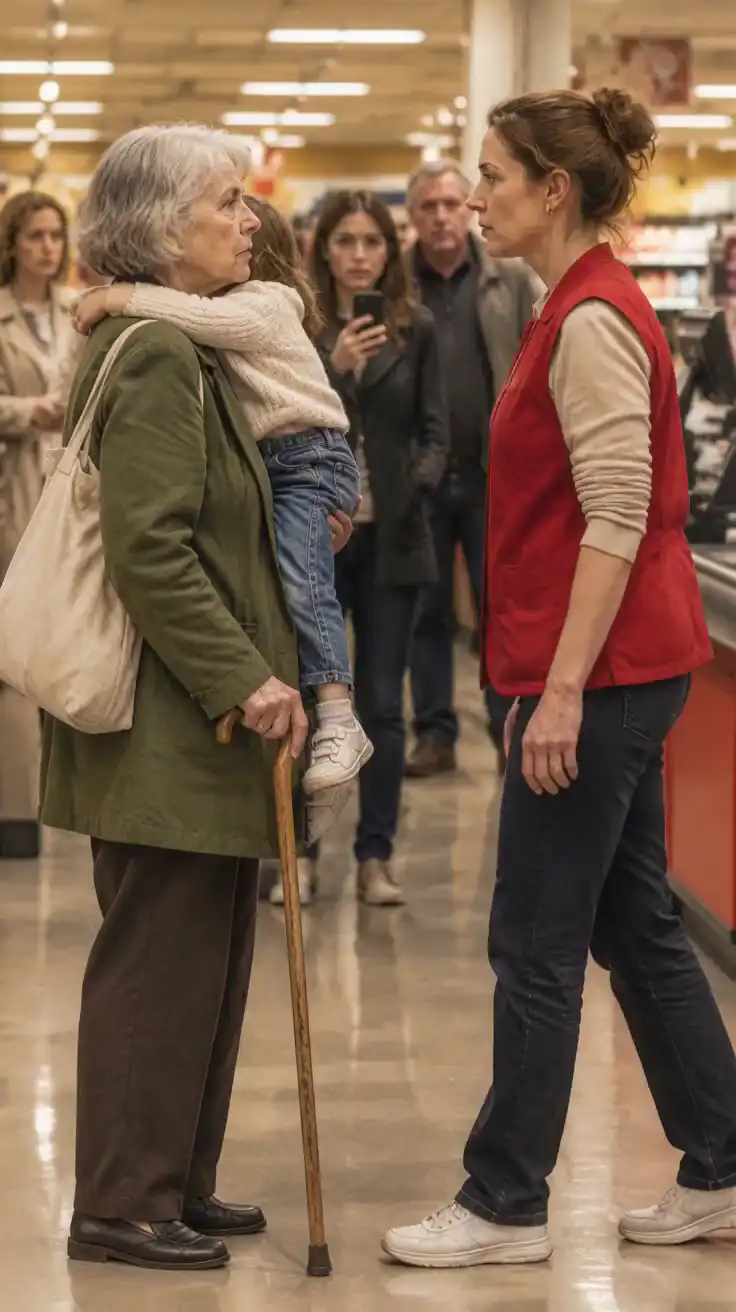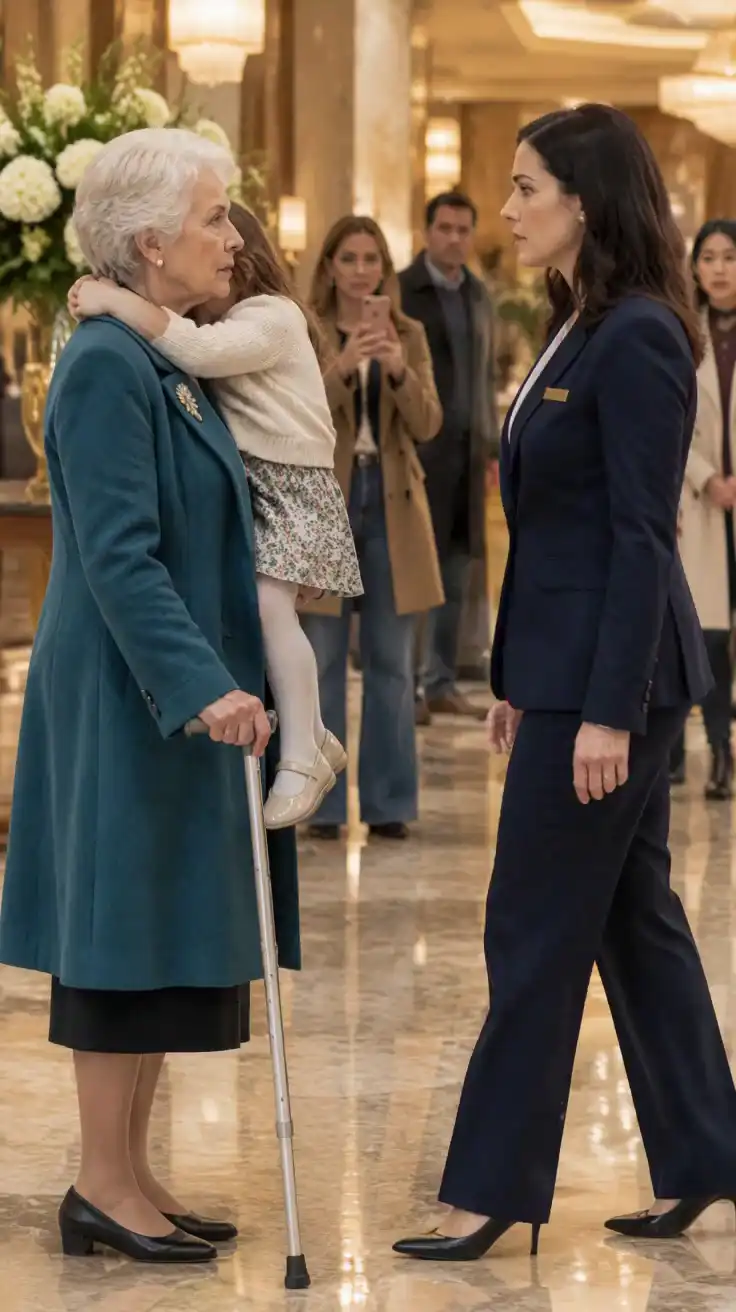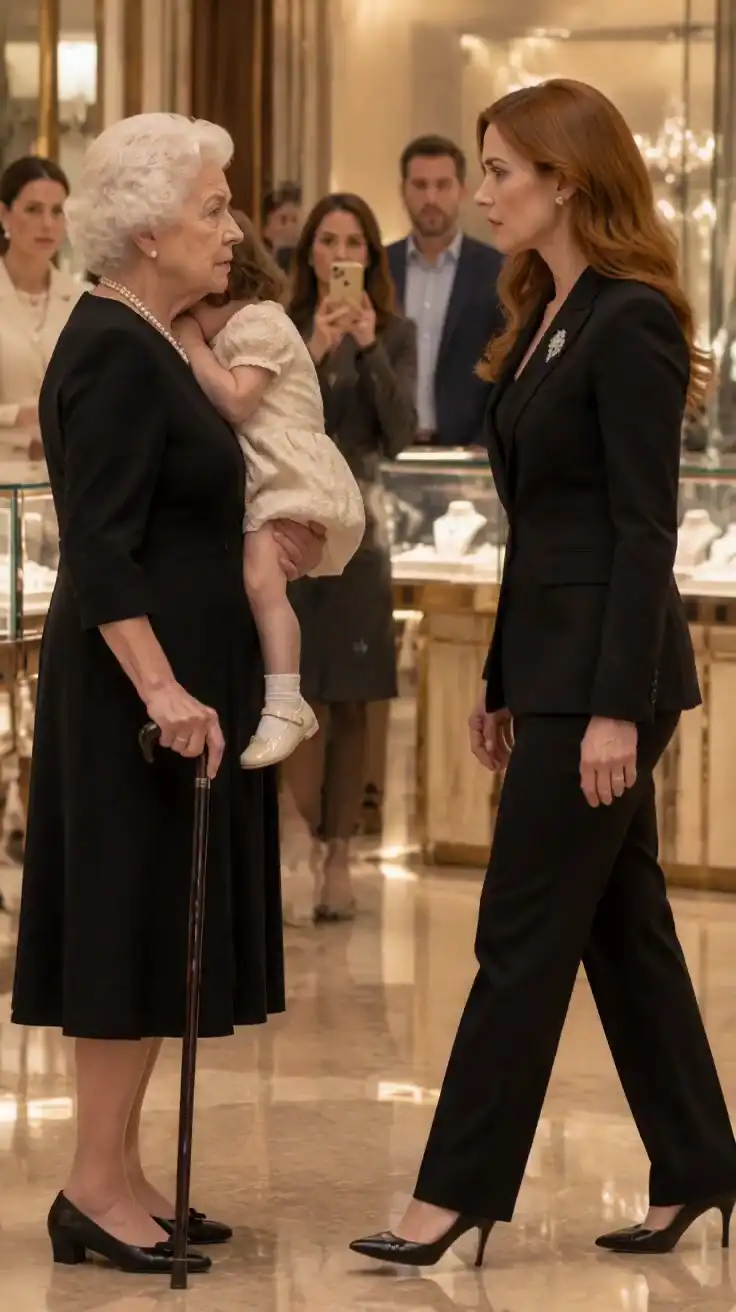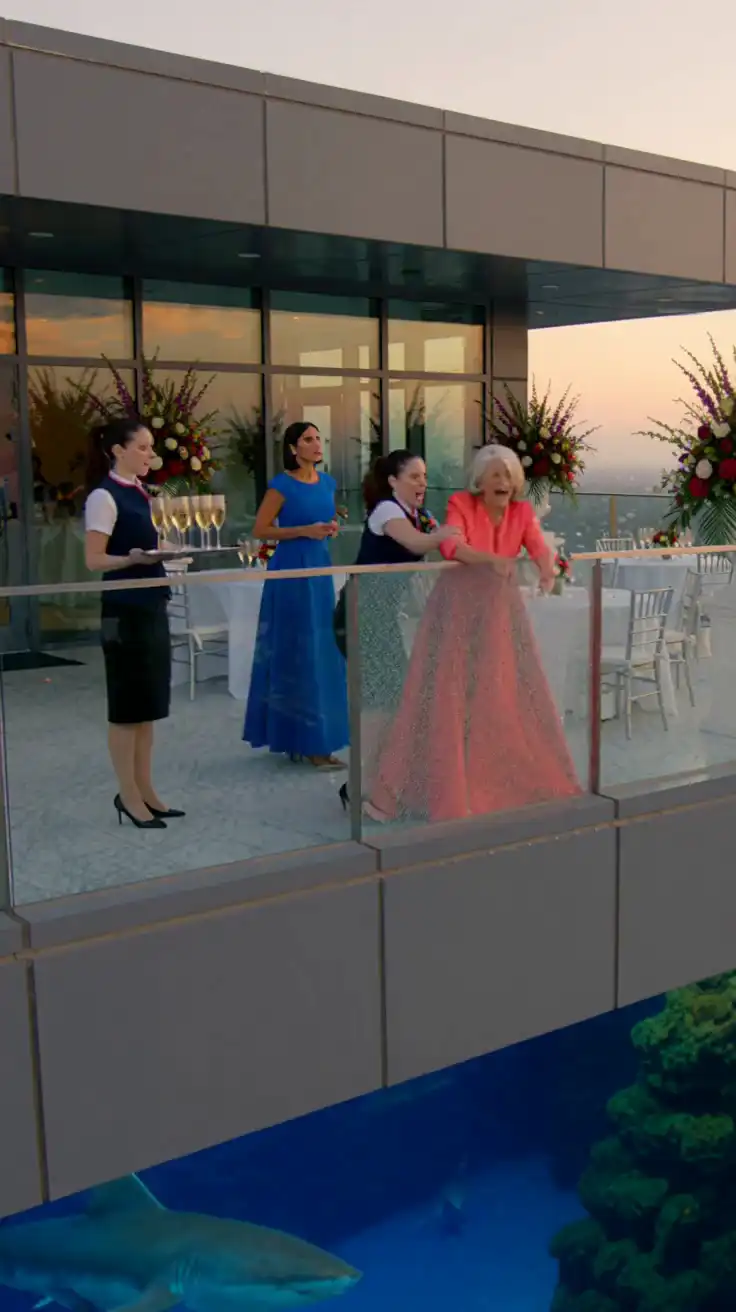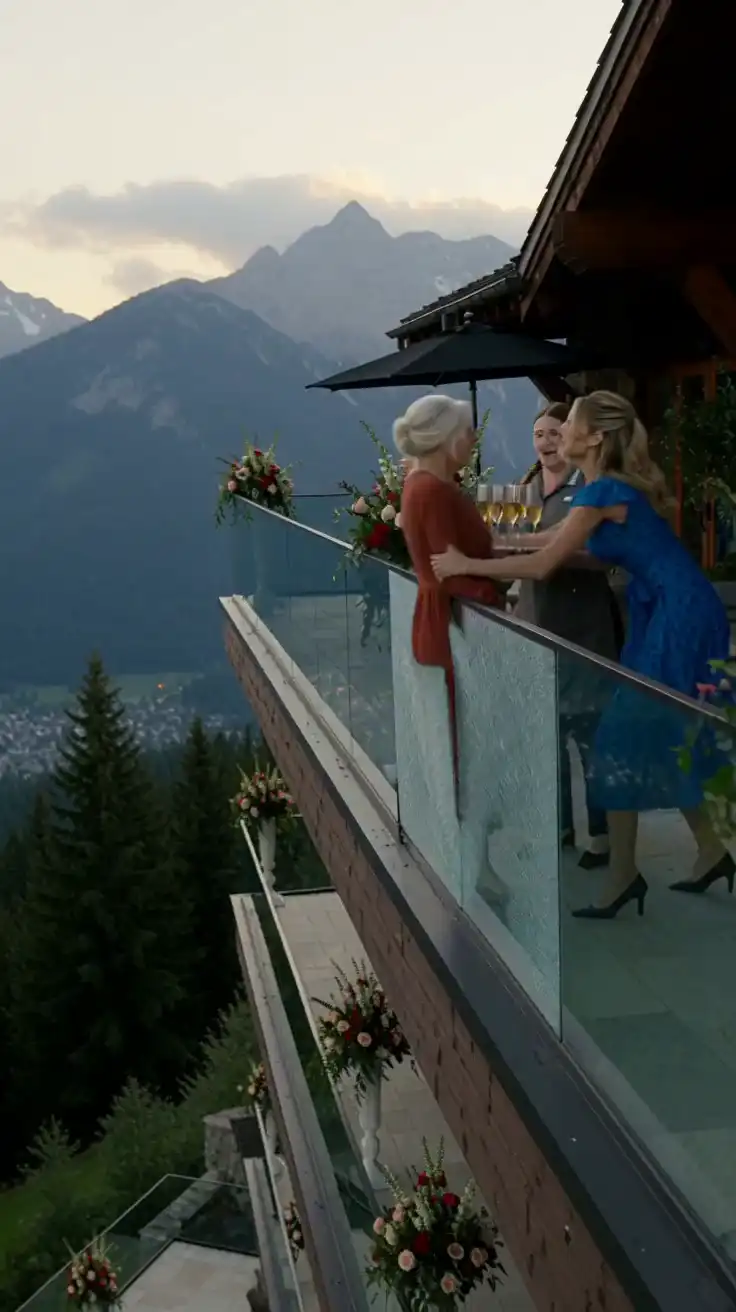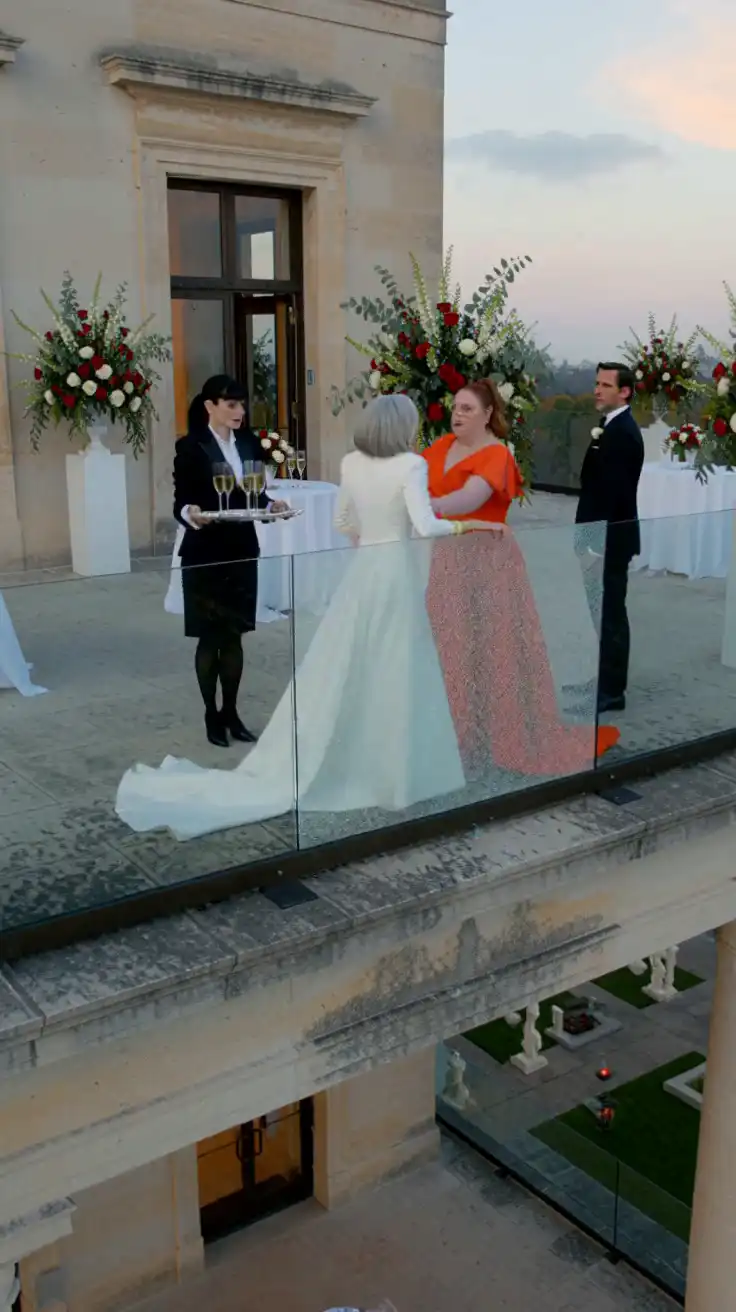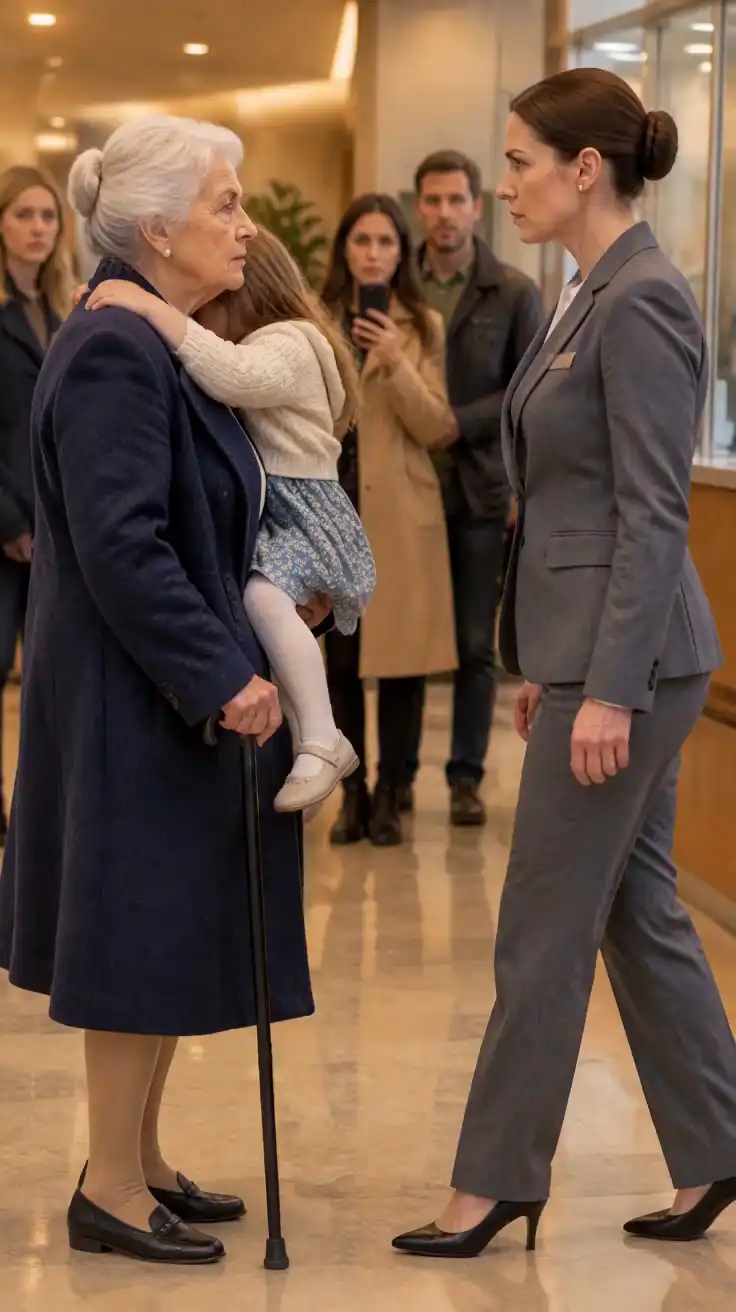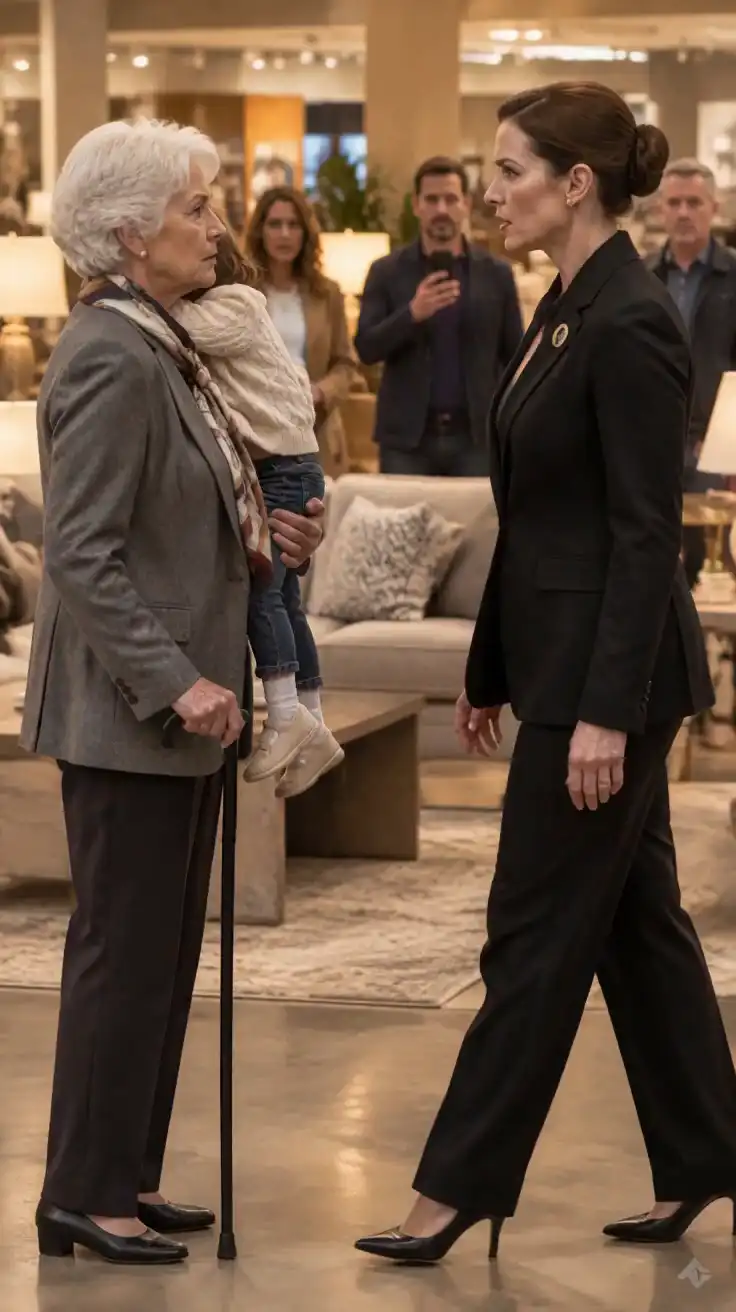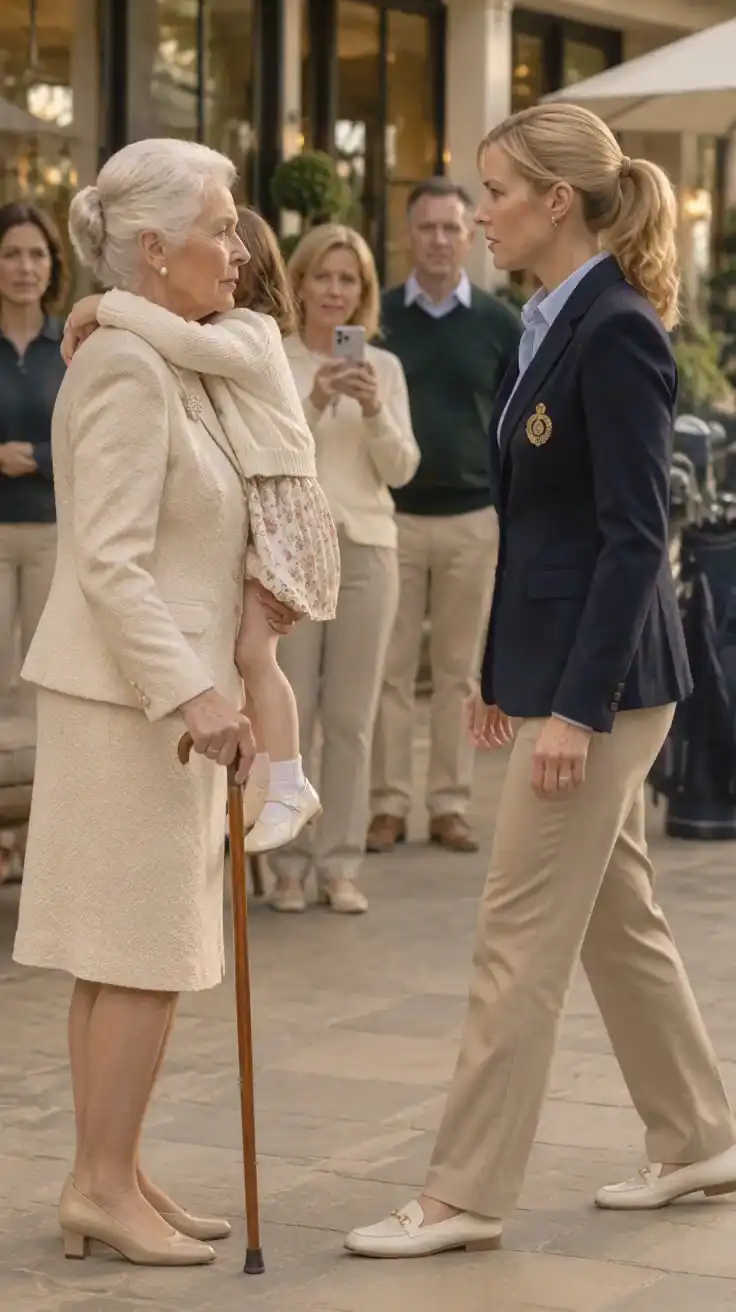
Two days before my son's wedding, his bride shoves me through the glass railing when I refuse to sell our lighthouse land, but the keeper grabs my wrist as my son runs toward the broken railing.
Salt wind scraped my throat as Luke pulled me back onto the observation deck. June kept both hands around my wrist until my shoes were flat against the boards.
Sienna stood beside the broken railing, her veil caught on a piece of glass.
“Say it again,” Luke said.
“She slipped.”
June rose slowly. “I was right here, Luke.”
He took off his jacket and wrapped it around my shoulders. Then he looked at Sienna.
“Inside. Now.”
The kitchen door banged behind us. June followed, pulling it shut against the wind. Luke guided me into a chair at the table where, an hour earlier, I had laid out cups for the wedding rehearsal.
Sienna stayed by the counter. “Your mother and I were discussing an offer. That’s all.”
June opened the cupboard beneath the sink and brought me a glass of water. Her hands rattled it against the table.
“An offer for what?” Luke asked.
Sienna smoothed her veil. “The land. A buyer approached me this spring. I thought we could all benefit.”
I kept my fingers around the glass. My husband had tended that light for years, climbing its narrow stairs even when the winter wind made the door hard to open. After he died, June took over as keeper. The house and the strip of ground around the tower were all I had left there.
Luke pulled out the chair across from me but didn’t sit. “You told me you were coming to talk about flowers.”
“I was going to tell you.” Sienna reached for her handbag. “There’s paperwork.”
June glanced toward the hall. “The old papers are in the desk, Edith?”
I nodded. She went into the little office and returned with a folder, its corners soft from years in the drawer. Inside was the lighthouse land deed, dated 1987, and a purchase record listing my late husband.
A sale offer from this spring was stapled to the record.
Luke lifted the pages by one corner. “Why is this attached to my father’s purchase record?”
Sienna put her handbag on the table and drew out a contract. “The buyer needs a signature before the wedding. I was trying to save us time.”
Luke laid the contract beside the old papers. He looked from the fresh staple to Sienna, then pushed the contract back across the table.
Sienna’s hand stopped in midair.
THE LAND BENEATH THE LIGHT
Luke picked up the deed and read aloud, “‘To Edith Margaret Cole and Thomas William Cole, as joint tenants with right of survivorship.’”
He looked at Sienna.
“Dad died six years ago. That makes my mother the owner.”
I reached for the deed, and Luke placed it in front of me. The paper trembled under my fingertips.
Sienna lowered her hand. “That doesn’t mean the sale can’t go through.”
“It means you can’t sell it,” Luke said.
She pointed at the contract. “The buyer agreed to the price.”
“He agreed to a contract with someone who doesn’t own the property.”
Luke took the pen from beside the telephone, drew two firm lines through Sienna’s proposed signature page, and wrote VOID across it.
Sienna stared at the ink. “You can’t just do that.”
“I can refuse to let you pretend this is my mother’s agreement.” He set the pen down. “And I’m calling her attorney before anybody signs anything.”
June came around the table and stood behind my chair. Luke read the names on the deed once more, slowly, so there was no mistaking either of them.
I could hear the kitchen clock over the wind.
Sienna pulled the contract toward herself. “You’re making a spectacle over a form.”
“You brought the form here,” Luke said. “You told this buyer you could deliver Mom’s land. I want to know how.”
“I didn’t tell him I owned it.”
“Then why is there a signature on the last page?”
Sienna’s fingers closed over the paper.
Luke held out his hand. “Let me see it.”
For a moment, I thought she might refuse. Then she slid the page across to him.
There was a signature at the bottom. Not mine. Sienna had signed her own name above a line that read AUTHORIZED REPRESENTATIVE OF THE OWNER.
“I never authorized you,” I said.
“I expected you would.”
“When?”
“At the wedding.” She looked at Luke. “After we were married, we could have talked about the practical side of things as a family.”
I pulled Luke’s jacket closer around my shoulders. “You talked to me about it this afternoon. I told you no.”
“You didn’t even look at the number.”
“I looked at it in April. I looked at it again in May. I said no both times.”
Luke turned toward me. “April?”
Sienna answered before I could. “It was an inquiry, Luke. I mentioned it to her.”
“You told me someone wanted to buy the property,” I said. “You didn’t tell me you were signing anything.”
“I signed an agreement to present the offer. That’s all.”
Luke examined the page again. “This says you agree to secure the owner’s signature by Friday.”
“Because I thought she’d listen.”
“And if she didn’t?”
Sienna’s gaze flicked toward me. “There was supposed to be a family discussion.”
June’s hand settled on the back of my chair.
“There was a discussion outside,” she said. “I heard Edith say she wasn’t selling. More than once.”
Sienna turned sharply. “You were inside.”
“I was coming through the door.”
“You didn’t hear everything.”
“I heard enough.”
Luke set the page down very carefully. “June, tell me what you saw.”
Sienna let out a breath. “Luke, she’s upset. Your mother lost her balance.”
June moved from behind my chair to the other side of the table. She had worked in our house for years before taking over as keeper, and she still wore the plain navy cardigan she kept on a hook by the pantry. One cuff was twisted from where she had caught me.
“I saw you put both hands on Edith,” she said. “I saw you shove her.”
Sienna’s face went still.
“I was close enough to reach her wrist,” June continued. “If I hadn’t been, I don’t know how Luke would have gotten to her in time.”
“June,” I said quietly.
She looked at me, and I shook my head. I didn’t want her standing there imagining it again. I had enough of that in my own head.
Luke put one hand on the table. “You told me she slipped.”
“She was backing away.”
“Did you push her?”
Sienna looked toward the window over the sink. The curtain moved with the draft from the door.
“Did you?” Luke asked again.
“I touched her arm.”
June gave a short, disbelieving laugh. “Both hands, Sienna.”
“I was trying to stop her from walking away.”
I remembered Sienna blocking the door to the deck, the contract folded in her hand. I remembered telling her she had no business asking me again. Then the sound of the glass had swallowed everything else.
“You didn’t want me to walk away,” I said. “You wanted me to sign.”
Sienna looked at me. “I wanted you to understand what you were throwing away.”
Luke reached for the telephone. “I’m calling Mr. Bell.”
Sienna took a step forward. “Your mother doesn’t need an attorney for a conversation.”
“She needs one for that contract.”
“She has me.”
“No,” Luke said. “She doesn’t.”
He dialed from the number written on the card beside the phone. Mr. Bell had handled the papers when my husband died, and he had kept copies of the deed and the purchase record. I heard Luke give his name, then ask if Mr. Bell could come to the house.
“Yes, today,” Luke said. “There’s a contract someone signed claiming to represent my mother. And there’s been an incident on the deck.”
Sienna folded her arms.
Luke listened, his eyes on her. “All right. We’ll leave everything where it is.”
He hung up.
“He’s finishing an appointment in town. He’ll be here in about an hour.”
“I don’t intend to sit here and be accused,” Sienna said.
“You can leave,” Luke told her.
She looked at him as if he had spoken in another language. “Our rehearsal dinner is tonight.”
“I know.”
“My dress is upstairs.”
“June can bring it down.”
“I want to speak to you alone.”
“No.”
Sienna’s hand went to the ring on her finger. She turned it once, then stopped.
“Luke, you’re angry.”
“Yes.”
“You don’t have to make a decision while you’re angry.”
“I’ve made one. You’re not staying in this house.”
She looked at me. “Is this what you want?”
The question was laid in front of me like a dish I was expected to pass back untouched.
“Yes,” I said.
Her mouth tightened. She took her handbag from the table, but Luke put his hand over the contract before she could pick it up.
“That stays.”
“It’s mine.”
“You brought it here to get my mother’s signature. Mr. Bell needs to see it.”
“I need a copy.”
“You can have one. The original stays until we’ve made it.”
June took the contract to the little printer in the office. We could hear the machine feed each sheet. Sienna remained by the kitchen door, her handbag tucked beneath her arm.
When June returned, she gave the copy to Sienna and the original to Luke.
“I’ll get your dress,” June said.
“I can get it myself.”
“I’d rather you didn’t go upstairs alone,” Luke said.
Sienna opened her mouth, then shut it. June went up, and a few moments later came down carrying the long garment bag Sienna had hung in the guest room that morning. The white zipper pull tapped against the banister.
Sienna took it without thanking her.
At the door she turned to Luke. “You’re really throwing me out over a misunderstanding.”
He held the door open.
“No,” he said. “I’m asking you to leave because I believe June and my mother.”
After she went, Luke locked the door. He stood with his hand on the bolt for several seconds.
Then he crossed the room, pulled out the chair beside me, and sat.
“Mom,” he said, “I didn’t know about any of this.”
“I know.”
“I should have asked why she was so interested in the property.”
“You knew she was interested?”
“She kept bringing up the cost of maintaining it. She said you worried about the bills.”
“I do worry about the bills.”
June pulled out the chair opposite us. “Everyone who has an old building worries about the bills.”
Luke rubbed his forehead. “She told me there were developers who could preserve the tower and build on the rest. I told her you’d never agree.”
“She told me you thought it was worth considering,” I said.
His hand dropped. “I said I’d listen if you wanted to talk about it. That’s different.”
“Yes,” I said. “It is.”
June filled the kettle. The ordinary sound of water running into it made my throat tighten. An hour ago, she had been setting out cups for the rehearsal dinner. Now the cups were still lined up on the counter, their saucers stacked beside them.
Luke noticed them too.
“I’ll put those away,” he said.
“Leave them,” June said. “We’ll need tea when Mr. Bell gets here.”
She set the kettle on the stove and turned the burner on.
Luke unfolded the sale offer from the folder. “Why was this stapled to Dad’s purchase record?”
“I don’t know,” I said. “The offer arrived by mail. I put it in the desk because I meant to show it to Mr. Bell when he came for my annual meeting.”
“You didn’t staple it?”
“No. The purchase record was in its own envelope.”
June leaned closer. “I saw Sienna in the office last week.”
Luke looked up.
“She said she was looking for the seating chart,” June said. “I didn’t think anything of it. The desk drawer sticks, and she asked me how to open it.”
“What did you tell her?” I asked.
“To lift the left side while pulling. I showed her.”
June’s mouth pressed into a line. “I thought she was helping with the wedding.”
“She was supposed to be,” Luke said.
He turned the offer over. On the back, in Sienna’s handwriting, was a phone number and a note: call after deed confirmed.
“She must have seen it before,” he said.
“I showed it to her when it came,” I said. “She was here when the mail arrived. I thought she should know why I wasn’t interested.”
“And she took it into the office afterward?”
“I don’t know. I left it on the table while I made lunch.”
Luke looked toward the hall. “I gave her the key.”
I put my hand over his.
“You gave your fiancée a key to your mother’s house. That isn’t something you need to apologize for.”
“She used it to get into your papers.”
“She made that choice.”
The kettle began to whistle. June poured the water, and Luke carried a cup to me. I took it in both hands. It was too hot to drink, but the warmth steadied my fingers.
“Who’s the buyer?” he asked.
I turned the offer so he could read the letterhead. “Daniel Rusk. His company owns the old marina north of town.”
Luke recognized the name. “Sienna met him through the hotel where she works. She said he was looking at wedding venues.”
“She told me the same thing,” June said. “Then she asked whether the lighthouse was open to private events.”
I looked at her. “When was that?”
“Before Easter. She wanted to know how many cars could fit in the field.”
“I told her the field was too soft after rain,” I said. “She said she was thinking about parking for the wedding.”
Luke read farther down the offer. “He wants the tower, the house, and the entire strip to the road.”
“All of it,” I said.
The price was printed in bold. It was more money than I had ever seen attached to anything with my name on it.
June took her tea to the window. “There’s a car at the gate.”
Luke rose.
“Is it Sienna?” I asked.
“No. Dark blue sedan.”
The car stopped, and a man got out carrying a leather folder. He wore a gray coat despite the mild weather and walked up the path without looking at the tower.
Luke opened the front door before he could knock.
“Can I help you?”
“I’m Daniel Rusk. I have an appointment with Sienna Vale.”
“She’s not here.”
Mr. Rusk glanced past him. “She told me to come at four. We’re expected to finalize an agreement.”
Luke stayed in the doorway. “My mother hasn’t agreed to sell.”
Mr. Rusk’s expression changed only slightly. “May I speak with her?”
I stood. My knees felt unsteady, but I wanted him to hear the answer from me.
“Let him in,” I said.
June moved beside me as Luke admitted him. Mr. Rusk entered the kitchen, nodded to each of us, and set his folder on the table.
“Mrs. Cole,” he said, “I’m sorry to arrive under strained circumstances.”
“You expected me to sign today?”
“Miss Vale assured me you were prepared to do so.”
“She was mistaken.”
He opened the folder. Inside was another copy of the contract, along with a check and several pages clipped together.
“I’ve spent considerable time and money on this purchase,” he said. “The agreement Miss Vale signed contains a termination provision.”
Luke’s voice cooled. “My mother didn’t sign it.”
“I can see that.”
“Then your agreement is with Sienna.”
Mr. Rusk removed one of the clipped pages. “Miss Vale represented herself as authorized to negotiate on Mrs. Cole’s behalf. She accepted an advance against expenses and agreed to a fee if she failed to secure the required signature by Friday.”
“How much?” I asked.
“Twenty-five thousand dollars.”
June set her cup down. “You gave her twenty-five thousand dollars?”
“Ten thousand was advanced. Fifteen thousand is the additional termination fee.”
Luke stared at the page. “She accepted money?”
Mr. Rusk pointed to a line halfway down. There was Sienna’s signature again, beside the amount.
“She said the advance would cover legal and relocation costs,” he said.
“I haven’t received a cent,” I told him.
“I didn’t suggest you had.”
“Did you check whether she had authority?” Luke asked.
Mr. Rusk closed the folder halfway. “I asked for confirmation. She said Mrs. Cole was reluctant to discuss business until after the wedding but had agreed in principle.”
“I did not,” I said.
“She provided a copy of the purchase record and a photograph of the deed.”
Luke looked at me. “She photographed it.”
Mr. Rusk nodded. “She said she had access to the family records.”
“That is not authorization,” Luke said.
“No,” Mr. Rusk replied. “It is not.”
He looked toward the papers on the table, then at the word VOID across Sienna’s signature page.
“I assume you’ve contacted counsel.”
“He’s on his way,” Luke said.
“Then I’ll wait.”
“You can wait outside,” June said.
Mr. Rusk regarded her. “And you are?”
“June Porter. I’m the keeper.”
He looked toward the window, where the tower rose beyond the kitchen garden. “I thought the light was automated.”
“It is. Someone still has to look after the property.”
Mr. Rusk seemed ready to answer, but Luke pulled out a chair.
“He can stay until Mr. Bell arrives,” he said. “I want the attorney to see what he brought.”
Mr. Rusk sat. He did not remove his coat.
June poured another cup of tea and set it before him without asking whether he wanted it. He thanked her, though he left it untouched.
I sat at the head of the table. On one side was Luke, with the deed in front of him. On the other was Mr. Rusk, with his folder open and the check still clipped inside.
“Why did you want the land?” I asked.
Mr. Rusk glanced at the check. “I intended to develop it.”
“What kind of development?”
“Small cottages. A restaurant near the road. The tower would remain.”
“And the house?”
“We hadn’t settled on the final plan.”
“That means you were going to tear it down,” June said.
“It means we hadn’t settled on a plan.”
Luke picked up the spring offer. “This says the existing structures would be evaluated for removal.”
“The tower is protected under the terms I proposed.”
“The tower isn’t the only thing on this land,” I said.
Mr. Rusk folded his hands. “Mrs. Cole, I understand your attachment. My offer reflects the property’s value.”
“It reflects what you think you can make from it.”
“That’s how purchases work.”
“Then you should have spoken to the person who owned it.”
His eyes moved to Sienna’s contract. “I believed I was working through her representative.”
“I’m telling you now that you weren’t.”
“I hear you.”
He slipped the check back into his folder. I watched him do it, watched him close the cover over the amount that had made Sienna so certain I would change my mind.
The front doorbell rang. Luke went to answer it, and a moment later Mr. Bell came into the kitchen carrying a worn brown briefcase.
He was a broad man with silver hair and a habit of removing his glasses when he wanted people to stop interrupting him. He had known my husband, and he had drawn up the papers after Thomas died. I had asked him to visit the following month to discuss the house. I had not expected to need him today.
“Edith,” he said, coming straight to my chair. “Are you all right?”
“I’m here.”
He looked at Luke and June, then at the broken section of railing visible through the kitchen door. His mouth tightened, but he didn’t ask me to tell him anything before I was ready.
Luke introduced Mr. Rusk and handed Mr. Bell the contract.
Mr. Bell read it standing up. Then he sat and read it again.
“Edith, did you authorize Miss Vale to negotiate or sign an agreement for the sale of this property?”
“No.”
“Did you ever tell Mr. Rusk or anyone acting for him that she had that authority?”
“No.”
“Did you sign any power of attorney in her favor?”
“No.”
He turned to Mr. Rusk. “Do you have any document bearing Mrs. Cole’s signature that grants Miss Vale authority?”
“No,” Mr. Rusk said. “I relied on her representations.”
Mr. Bell removed his glasses. “Then this agreement does not bind Mrs. Cole to sell her property.”
Mr. Rusk nodded once. “I understand that now.”
Sienna’s contract lay between them, with Luke’s thick black lines across the signature page.
Mr. Bell touched the marked page. “This is not, by itself, a legal cancellation. But Mrs. Cole never signed, and Miss Vale had no authority to bind her. There is no sale agreement enforceable against Edith here.”
Luke leaned back in his chair.
“What about the money?” he asked.
Mr. Bell glanced at Mr. Rusk. “That appears to be a separate matter between Miss Vale and Mr. Rusk.”
“The agreement calls for repayment of the advance and the termination fee,” Mr. Rusk said. “I intend to collect both.”
“From Sienna,” Luke said.
“From Miss Vale.”
I watched Luke’s face. He had been angry when he called Mr. Bell. Now he looked at the contract as though he expected it to explain something he had missed.
“She told me she was paying for half the reception with savings,” he said.
Mr. Rusk opened his folder again. “The advance was transferred in May. I can provide a record.”
Luke looked down at the table. “That’s when she booked the caterer.”
Mr. Bell held out his hand, and Mr. Rusk passed him the page showing the transfer.
“Edith,” Mr. Bell said, “I’d like to make copies of all this. I’ll also send Mr. Rusk written notice that Miss Vale was not authorized to represent you.”
Mr. Rusk nodded. “Please do.”
“And I’ll need the deed and purchase record.”
I slid the folder to him. He examined the 1987 purchase record, then the deed.
“Thomas and I bought it together,” I said. “The purchase record lists him because the payment came from his account. We put both names on the deed.”
“I remember,” Mr. Bell said. “After Thomas died, we recorded the affidavit confirming that title passed to you. I have a copy at the office.”
Mr. Rusk looked at the deed. “Miss Vale said the property was held by the family.”
“It is my family’s land,” I said. “That doesn’t mean every person who marries into the family gets to sell it.”
Mr. Bell put the deed back in its folder. “Exactly.”
Mr. Rusk rose. “I’ll take this up with Miss Vale.”
Luke stood too. “You should know she told my mother she needed a signature before the wedding. She didn’t mention any advance or termination fee.”
“I’ll take that into account.”
“Will you?”
Mr. Rusk picked up his folder. “Mr. Cole, I’m not asking your mother for money. I’m not asking her to sign. Miss Vale made an agreement with me, and I intend to enforce it against her.”
Luke held his gaze, then stepped aside.
At the door, Mr. Rusk paused. “Mrs. Cole, for what it’s worth, I would have preferred to hear your answer before today.”
“You could have asked me,” I said.
He gave a small nod and left.
Luke locked the door again. This time, he checked the bolt twice.
Mr. Bell waited until Mr. Rusk’s car had gone through the gate.
“Luke mentioned an incident,” he said.
June came back to the table. “I saw Sienna shove Edith through the railing.”
Mr. Bell looked at me. “Do you want to tell me what happened?”
I stared into my tea. A thin skin had formed on top.
“She came to talk about the offer,” I said. “She said she had a contract and that signing it before the wedding would make things easier for everyone. I told her I wasn’t selling.”
“What did she say?”
“That I was being selfish.”
Luke’s chair scraped the floor.
“She said the land would be worth more to the family if we sold it,” I continued. “I told her it wasn’t hers to decide. I wanted to come inside.”
June pulled the chair closer to mine and sat.
“Sienna stepped in front of me,” I said. “I told her to move. She put her hands on me and pushed.”
I stopped there. I didn’t need to describe the sound of the glass. June had heard it, and Luke had seen the railing.
Mr. Bell took out a small notebook. “May I write that down?”
“Yes.”
He asked June what she had seen. She gave him the same account she had given Luke, including where she had been standing and what Sienna had said afterward.
“I’ve known Edith and Thomas since they bought the place,” June said. “I worked in the house then. Thomas taught me how to check the tower equipment when he couldn’t get back from town, and after he died, Edith asked me to take over as keeper.”
She looked at me.
“I know how Edith walks on that deck. She was trying to get past Sienna. She didn’t trip.”
Mr. Bell wrote that down too.
“Would you be willing to give a statement if Edith decides to report this?” he asked.
“Of course.”
He turned to me. “You don’t have to decide this minute. But I recommend we document everything, including the damaged railing. If you want to make a report, I can help you do that.”
Luke said, “She should report it.”
I looked at him.
He put his hands flat on his knees. “Sorry. You should decide.”
“I want it documented,” I said. “And I want to make a report. I don’t want Sienna saying again that I slipped and having that be the only story anyone hears.”
Mr. Bell nodded. “I’ll help.”
He asked Luke to photograph the railing from inside the house, without going near the broken edge. June brought the curtain aside, and Luke took several pictures through the glass door. Mr. Bell wrote down the time and noted that no one should use the deck until it was secured.
“I’ll call the contractor who repaired the steps,” June said. “He can put up a temporary barrier.”
“Tell him not to clear anything until we’ve documented it,” Mr. Bell said.
June made the call from the hall. I could hear her giving the address, then saying, “No, nobody fell. Yes, she’s inside.”
Luke sat beside me again.
“I’m going to cancel the rehearsal dinner,” he said.
The words settled in the room. Mr. Bell kept writing, giving us the courtesy of not looking up.
“The restaurant will want to know about tomorrow too,” I said.
“I’ll tell them.”
“And the florist.”
“I’ll tell everyone.”
I touched his sleeve. “You don’t have to do it all this minute.”
“I do have to do it before people get on planes.”
He took out his phone and opened his list of numbers. His thumb hovered over the screen.
“Mom, I’m sorry.”
“You didn’t push me.”
“I brought her here.”
“You brought someone you loved here. I was glad to meet her.”
He looked down at his phone. “I thought she loved this place.”
“She liked the view.”
For the first time since we came inside, the corner of his mouth moved. It didn’t become a smile.
He called the restaurant first. I heard him ask for the manager, then say, “The wedding is canceled. Please don’t prepare for the rehearsal dinner.”
He listened, thanked the manager, and ended the call. Then he called the florist. Then the minister. He left two messages before someone answered.
He didn’t explain what had happened on the deck. He said only that there would be no wedding and that he was sorry for the short notice.
When he called Sienna’s mother, he stood and went into the hall. His voice stayed low, but I heard him say, “No, I’m not asking you to fix it,” and later, “Please tell her she needs to speak to her own attorney.”
June returned from her call. “The contractor can be here in an hour. He’ll bring plywood and posts to block the deck door from outside.”
Mr. Bell closed his notebook. “Good. I’ll take these copies to my office and prepare the notice.”
“Can you stay until Luke comes back?” I asked.
He looked surprised. “Of course.”
I hadn’t meant I needed him to protect me from anyone at the table. I meant I didn’t want Luke to come back into a room where I was sitting alone with my cup and the wedding dishes.
Mr. Bell seemed to understand. He took off his coat and draped it over the back of a chair.
“June,” he said, “would there happen to be another cup of tea?”
“There would.”
She poured one for him. He drank it while I told him where the old folder had been kept and when I had last seen the purchase record. He made a note about the fresh staple.
“I can’t tell you exactly what Miss Vale intended by attaching the offer,” he said. “But we’ll preserve it as it is.”
Luke returned from the hall.
“Sienna’s mother didn’t know about the buyer,” he said. “She said Sienna told her we were looking at property for an investment.”
Mr. Bell closed his notebook again. “Did she say where Sienna is?”
“At her apartment. I told her mother Sienna shouldn’t come back here without arranging it first.”
“What about her things?” June asked.
“She has clothes upstairs. And some decorations in the shed.”
“I’ll pack the clothes,” June said.
Luke shook his head. “I will.”
June looked toward me. I nodded. Luke needed something to do with his hands, and the clothes were in the room he had planned to share with Sienna after the wedding.
He went upstairs. We heard a closet door open, then the sound of hangers sliding along a rod.
Mr. Bell put his cup down. “Edith, you mentioned last month that you wanted to talk about what happens to the property later.”
“I did.”
“We don’t need to settle anything today.”
“I know. But I want Luke to hear it from me before he starts thinking this is his mess to solve.”
I called upstairs. He came down carrying a folded sweater and stopped on the bottom step.
“What is it?”
“Come sit for a minute.”
He put the sweater on the hall table and returned to the kitchen.
“I’m not selling,” I said.
“I know.”
“I want you to know why.”
He pulled out his chair. “You don’t have to explain that to me.”
“I want to.”
June turned off the burner beneath the kettle and joined us.
“When your father and I bought this place, the tower was in bad shape. The house wasn’t much better. The previous owner had closed the shutters and let the grass grow up to the porch.”
Luke nodded. “Dad told me.”
“He told you he fixed the porch. He didn’t tell you I held the boards while he argued with them.”
June smiled into her cup.
“He wanted a place where he could keep working after the coast service changed his post,” I said. “I wanted a place where we could stay. We put what we had into it. Your father took care of the light, and I took care of everything he forgot to eat while he was doing it.”
“You kept the books too,” June said.
“I did. And I rented the little room over the shed in summer. That helped pay for the roof.”
Luke looked at the deed. “You’ve never talked about selling.”
“Because I never wanted to. But that isn’t just because your father died here, or because I like looking at the water.”
I turned toward the window. Beyond the garden, the path curved toward the tower.
“People come up that path every summer. Children ask June how the light works. Old men tell us they saw it from their boats when they were boys. Your father used to let them stand at the bottom of the stairs while he explained every bolt he’d replaced.”
“He’d explain the same bolt twice if they let him,” June said.
“He would. And when the fog came in, he’d make sure the gate was shut so nobody wandered too close to the edge.”
Luke’s eyes moved toward the deck door.
“I know the light is automated now,” I said. “I know the land could bring a great deal of money. But if Mr. Rusk builds cottages and a restaurant, the path becomes a driveway, and the field becomes parking. Maybe he keeps the tower standing. That isn’t the same as keeping this place.”
Mr. Bell rested his hands on his briefcase.
“I can’t maintain it forever,” I said. “I’ve been thinking about a family trust. I want the land held together, with money set aside for the tower and the path. I want June paid properly for the work she does. And when I’m gone, I want Luke to have a say without having to decide alone.”
Luke leaned forward. “You already talked to Mr. Bell about that?”
“I asked him what it might require. We were going to meet next month.”
“Why didn’t you tell me?”
“Because you were planning a wedding, and because I wanted to understand the options before I handed you another responsibility.”
He shook his head. “You could have handed it to me.”
“I may yet.”
Mr. Bell opened his briefcase. “A trust could hold the property and set out those instructions. We would need to discuss funding, trustees, access, and what happens if a trustee can no longer serve.”
June looked at me. “I’m not asking you to guarantee me a job forever.”
“I know. I’m asking you to keep doing it because you know the place better than anyone.”
“I’ll do it as long as I can climb the stairs.”
“And after that,” I said, “we’ll find someone who can.”
Luke picked up the deed. “Would I be a trustee?”
“If you’re willing.”
“Yes.”
“You haven’t heard the work involved.”
“I’ve seen the roof bills.”
“That’s only the beginning.”
“I’m still willing.”
Mr. Bell took out a fresh sheet of paper. “We can start with your instructions today, Edith, if you want. Then I’ll prepare a draft for you to review.”
“I do.”
He wrote while I spoke. I told him the land should remain together, that the tower and house should be maintained, and that the path should remain open when conditions were safe. I wanted the trust to pay for insurance and repairs before anything else. I wanted Luke involved, but I also wanted a second trustee who could challenge him if he ever decided a restaurant was a good idea.
Luke looked at me. “You’re never going to let me forget that I listened to Sienna.”
“I might. Eventually.”
June brought over the folder of maintenance invoices. “You’ll need these for the budget.”
Mr. Bell took them. “This is exactly what I need.”
The doorbell rang again.
Luke stood so quickly his chair hit the cabinet.
“It’s probably the contractor,” June said.
Luke checked through the front window before opening the door. It was the contractor, carrying a measuring tape and a coil of rope. June met him outside and led him around the house, keeping him away from the broken railing until Luke had shown him the photographs.
Mr. Bell used the pause to call his office. He asked his assistant to retrieve the recorded affidavit and begin a draft notice to Mr. Rusk.
Luke went upstairs again. This time, I heard him open a suitcase.
I stayed at the table with the deed beneath my hand.
When June returned, she said the contractor could secure the deck that afternoon and order replacement glass once the opening had been measured.
“He asked if you wanted him to save the old frame,” she told me.
“Yes. If it can be used.”
“I told him to let us know before he removes anything.”
Luke came down with a suitcase and a cardboard box. He set them near the front door.
“There are some things in the bathroom,” he said. “I didn’t know which were hers.”
“I’ll help,” June said.
He hesitated, then nodded. They went upstairs together. A few minutes later, June called down to ask whether Sienna’s hair dryer was the small blue one. Luke said yes. Their voices moved from room to room, practical and quiet.
Mr. Bell finished his call.
“I’ll prepare the trust documents,” he said. “I’d like you to review them without any rush. We’ll also make sure the property is transferred into the trust correctly.”
“Will that stop someone else from signing a contract like this?”
“It won’t stop someone from putting a signature on paper. It will make the ownership and authority clear, and the trust terms can require more than one trustee to approve a sale. But no document prevents every dishonest claim.”
I appreciated him saying it plainly.
“And the contract with Mr. Rusk?” I asked.
“His claim appears to be against Miss Vale. I’ll make sure he has written notice that you dispute her authority. If he makes any demand of you, send it straight to me.”
“I will.”
Luke came down carrying a small toiletry bag. June followed with a pair of shoes in one hand and a folded shawl in the other.
“That’s everything we could find,” he said.
His phone rang. He looked at the screen.
“Sienna.”
He started toward the hall, then stopped. “Would you mind staying?” he asked Mr. Bell.
“Not at all.”
Luke answered and put the phone on speaker.
“Sienna.”
“Mr. Rusk called me,” she said. “He says you told him the wedding is off.”
“I did.”
“You can’t cancel it without talking to me.”
“I’m talking to you now.”
There was a pause. “I know what June thinks she saw.”
June set the shoes on the box and came to the table.
“I know what I saw,” she said.
Sienna went quiet.
Luke said, “You signed an agreement claiming you had authority from my mother.”
“I was trying to get an offer in place.”
“You took ten thousand dollars.”
“That was an advance. I was going to pay it back from the proceeds.”
“There aren’t going to be any proceeds,” I said.
“Edith, please. If you would just look at the plan—”
“I looked at the offer. I said no.”
“You didn’t understand what it could do for all of us.”
“I understood that you wanted me to give up my home.”
“It’s not just your home. Luke will inherit it.”
Luke’s voice cut in. “That doesn’t make it mine now, and it doesn’t make it yours.”
Sienna exhaled sharply. “Mr. Rusk wants twenty-five thousand dollars. I don’t have that sitting in my account.”
“What did you do with the advance?” Luke asked.
“Some went to the wedding.”
“How much?”
“I don’t know exactly.”
“You booked the caterer with it.”
“And the deposit for the reception. I thought we’d recover the costs.”
“We?”
“You were going to benefit too.”
Luke looked at me before he answered. “I didn’t agree to borrow money from a buyer for my mother’s land.”
“It wasn’t a loan.”
“Whatever you call it, you signed for it.”
Sienna’s voice rose. “You can’t leave me with the whole bill.”
“You made the agreement.”
“We were supposed to be married.”
“We’re not getting married.”
Silence stretched over the speaker. I could hear a faint television in the background.
Then Sienna said, “If Edith signs, there won’t be a bill.”
“No,” I said.
She didn’t answer me.
“Luke, talk to her.”
“I’m not going to ask her to sell.”
“You don’t understand what Rusk is threatening.”
“Then you need your own attorney,” Mr. Bell said.
Sienna’s voice changed. “Who’s that?”
“Harold Bell. I represent Edith.”
“You brought her lawyer into this?”
“Yes,” Luke said.
“I can explain the agreement.”
“You can explain it to your lawyer,” Mr. Bell replied. “Do not represent yourself as authorized to act for Edith again.”
Sienna was quiet for a moment. “I want my things.”
“They’re packed,” Luke said. “I’ll leave them with your mother tomorrow, if she agrees.”
“My ring is mine.”
“The engagement ring?”
“Yes.”
Luke looked at me, then away. “Keep it for now. We can sort out the rest through attorneys.”
“You’re really doing this.”
“Yes.”
“I came there to help.”
June spoke before Luke could. “You came to get Edith’s signature.”
“I didn’t mean for any of this to happen.”
“You told Luke she slipped,” June said.
“I was frightened.”
“So was she.”
Sienna said nothing.
Luke picked up the phone. “We’re done for today. Please don’t come to the house.”
He ended the call.
June folded the shawl once more, though it was already folded neatly. Then she put it in the box.
“I’ll call her mother about collecting these,” Luke said.
Mr. Bell rose. “I should get back to the office. Edith, I’ll send the notice today and bring you the trust draft as soon as it’s ready.”
He gathered his papers but left the original deed with me.
At the door, he shook Luke’s hand and thanked June for her statement. Then he turned to me.
“You made yourself clear,” he said.
“I hope so.”
“If anyone says otherwise, send them to me.”
After he left, June went outside to check on the contractor. Luke carried the packed suitcase and box into the hall closet, where they would be out of my way until Sienna’s mother collected them.
When he came back, he stood by the table.
“Do you want me to stay tonight?”
“Yes.”
“I can take the guest room.”
“The sheets need changing.”
“I know where they are.”
He went upstairs. I heard the linen closet open, then the thump of pillows being moved. June came in a few minutes later with sawdust on her cardigan.
“The deck door is blocked from outside,” she said. “He’ll finish securing the opening before he leaves.”
“Thank you.”
She looked at the cups still arranged on the counter.
“I suppose we can put these away now.”
I rose to help her. She took the top saucer from the stack, and I carried the cups to the cupboard. We worked without speaking until only three cups remained on the table: mine, Luke’s, and June’s.
That evening, Luke sat with me while I gave my account for the report Mr. Bell had helped arrange. June gave hers separately. No one asked me to change the words I used. When I said Sienna had pushed me, that was what was written down.
Afterward, Luke made sandwiches because neither of us wanted the food meant for the rehearsal dinner. June stayed until the contractor finished, then took a plate home with her.
Before she left, I walked her to the door.
“You don’t have to thank me,” she said.
“I wasn’t going to.”
She raised an eyebrow.
“I was going to ask if you’ll be here tomorrow.”
“At seven. The tower inspection is due.”
“Good.”
She touched my hand and went down the path.
The next morning, Sienna’s mother came for the suitcase and box. Luke met her at the gate. I watched from the kitchen window as she put the box on the back seat of her car. She spoke to him for a few minutes, one hand resting on the open door. Luke listened, then shook his head.
When he came inside, he placed my key on the table.
“She had it?” I asked.
“Her mother got it from her.”
I picked it up. The brass was warm from Luke’s hand.
A week later, Mr. Bell returned with the trust draft and a copy of the recorded affidavit. June joined us at the table because I wanted her to hear the maintenance provisions. Luke brought the invoices from the office and a notebook full of questions.
We went through the draft page by page.
“Here,” Luke said, pointing to a paragraph. “If the roof needs replacing and there isn’t enough in the repair account, can the trustees use the reserve?”
“Yes,” Mr. Bell said. “But both trustees have to approve it.”
“And if I think the roof can wait?”
June looked at him. “I’ll bring you upstairs when it rains.”
Mr. Bell smiled. “That may be the simplest inspection method.”
I asked him to add that the path should remain open to visitors when June or another keeper judged it safe. I also asked for the house to remain available to a keeper if that became necessary.
Luke read those lines twice.
“You want someone here even after June retires,” he said.
“I want someone here who knows when the gate should be closed and when the stairs need fixing. Someone who’ll notice if the door sticks before a winter storm.”
June tapped the page. “And someone who knows where the spare key is.”
“Under the blue flowerpot,” Luke said.
“Not anymore,” June replied. “I moved it after you told Sienna.”
He accepted that without argument.
Mr. Bell made the changes. He explained how the property would be transferred into the trust and what records the trustees would need to keep. He also showed us the written response from Mr. Rusk’s attorney acknowledging that he was not pursuing a sale against me.
“And Sienna?” Luke asked.
“Mr. Rusk has made a demand under her agreement. Her attorney has contacted his.”
Luke turned a page in his notebook. “Is he asking me for anything?”
“No.”
I watched him close the notebook.
“You don’t have to pay her bill,” I said.
“I know.”
He sat for a moment with his hand on the cover. “I almost offered to help when she called. Not with the sale. With the money.”
“What stopped you?”
“She told you to sign instead of asking what happened to you.”
June reached for the invoices, stacking them by date.
Mr. Bell put the draft in front of me. “Take a few days with it.”
“I will.”
He left us the pages. That afternoon, Luke and I sat on the porch, away from the deck, while I read them again. The contractor had covered the broken opening, and the new glass was on order. I could hear him working around the side of the house.
Luke read the trustee provisions aloud when I asked him to. He stumbled over one sentence, started again, and finally looked at me.
“This means I can’t sell it on my own.”
“That’s right.”
“Even if I marry someone who likes the view.”
“Especially then.”
He gave me a proper smile, brief but unmistakable.
I signed the trust documents at Mr. Bell’s office after the revisions were complete. Luke signed his acceptance as trustee, and Mr. Bell arranged for the deed transferring the lighthouse property into the family trust to be recorded. June came with us and carried the folder afterward, refusing to let me tuck it under my arm where the corners might bend.
On the way home, we stopped at the bank to set up the trust account. Luke deposited the first amount I had designated for repairs, and June handed him the latest invoice for the deck.
“You don’t waste time,” he told her.
“The glass doesn’t install itself.”
He wrote the check at the kitchen table that evening. I watched him copy the amount into the ledger, then ask June where she kept the receipts.
“Top drawer,” she said.
He opened it, lifted the left side when it stuck, and pulled.
A month later, Sienna’s attorney sent confirmation that she had settled Mr. Rusk’s claim herself. The advance and the termination fee were hers to pay; no money came from me, Luke, or the trust. Mr. Bell put the letter in our file and sent me a copy for the house records.
Luke read it at the table.
“That’s finished,” he said.
He folded the letter along its original creases and returned it to the envelope. Then he placed it in the folder behind the notice Mr. Bell had sent to Mr. Rusk.
The wedding flowers never came. The florist had managed to redirect most of them, and the restaurant returned part of the deposit to the account Luke had used. Sienna dealt with the deposits she had paid. Luke did not ask me to cover any of it.
By the time the new railing was installed, the trust paperwork had come back recorded. Mr. Bell brought the final copy himself.
June met him at the door and led him through the kitchen to the deck. The new glass was clear, its edges held in a fresh frame. The contractor had checked every fitting while June stood beside him with the invoice and a pencil.
Luke was there too. He had come that morning to help June clear the path after a windy night.
Mr. Bell handed me the folder.
“The land is in the trust,” he said. “The recorded deed is inside.”
I opened it. My name was still there, followed by the name of the family trust. I ran my finger beneath the description of the property, from the road to the strip around the tower.
Luke stood beside me.
“Read it,” I said.
He took the page and read the relevant lines aloud. June listened with her hands in her cardigan pockets. Mr. Bell stood by the door, his briefcase at his feet.
When Luke finished, he gave the paper back.
“No cottages,” June said.
“No restaurant,” I added.
Luke looked toward the tower. “What about a small sign at the gate? One that says when the path is open.”
“That,” June said, “would be useful.”
Mr. Bell left the folder on the kitchen table. After he drove away, Luke fetched a chair for me and set it on the deck, a comfortable distance from the railing. June brought out three cups of tea.
The path below was empty. The gate stood open, and beyond it the tower cast a narrow shadow across the grass.
Luke set his cup on the boards and crouched to inspect the new frame.
“June says I’m supposed to check these fittings every spring,” he said.
“And every fall,” she replied.
He looked up at her. “You’ve made a list.”
“I have.”
“Of course you have.”
She handed him a folded sheet from her pocket. He opened it, scanned the first few lines, and shook his head.
“There are two pages.”
“There are stairs too.”
He tucked the list into his shirt pocket. Then he took the chair beside mine.
Inside, on the table where Sienna had placed her contract, the recorded deed rested in its folder. June had put the old purchase record behind it, with the spring offer separated and filed away.
The land beneath the lighthouse belonged to the family trust now. The path was open, the keeper had her list, and my son sat beside me with the work of keeping it folded in his pocket.