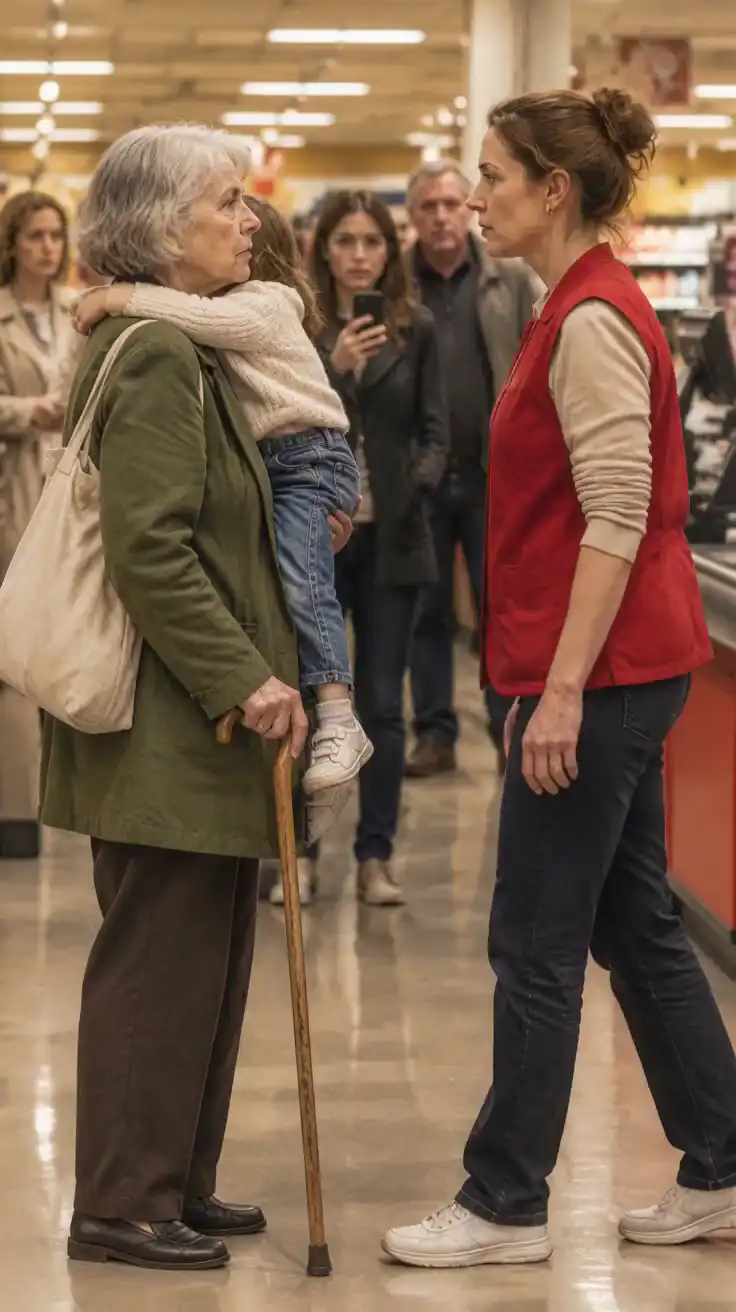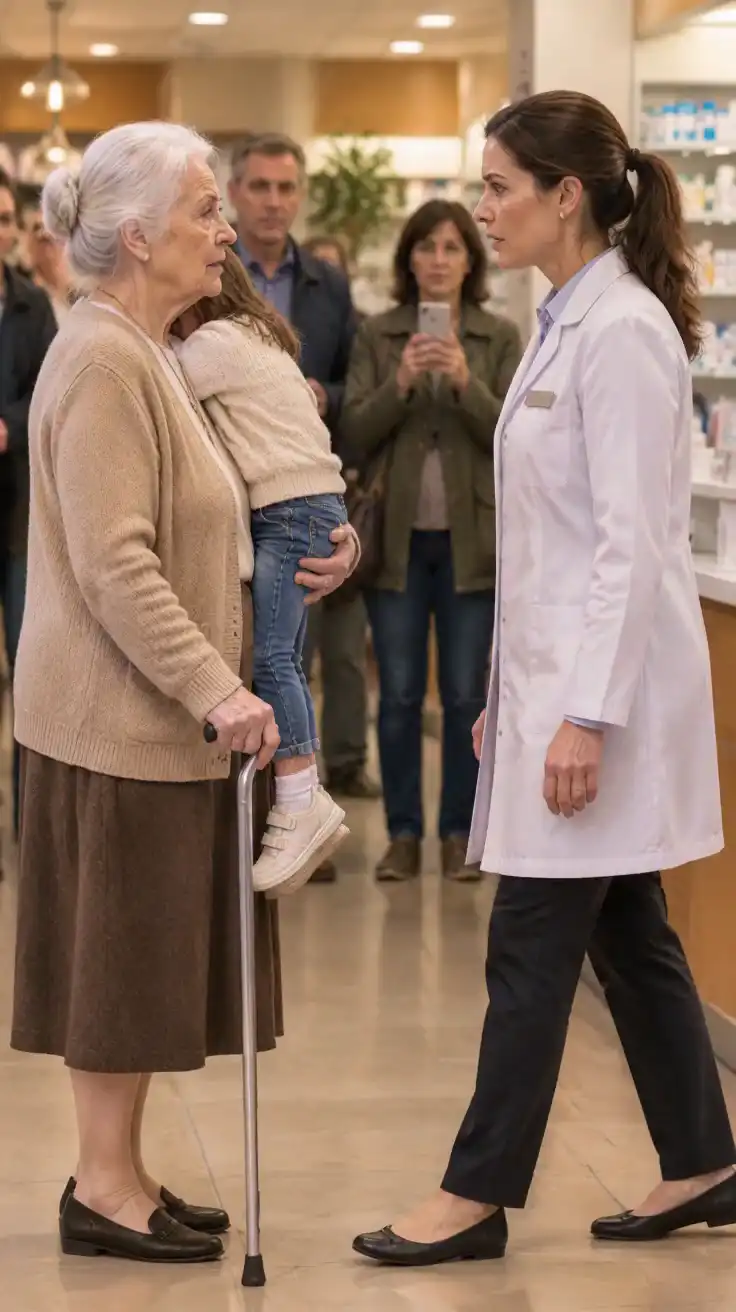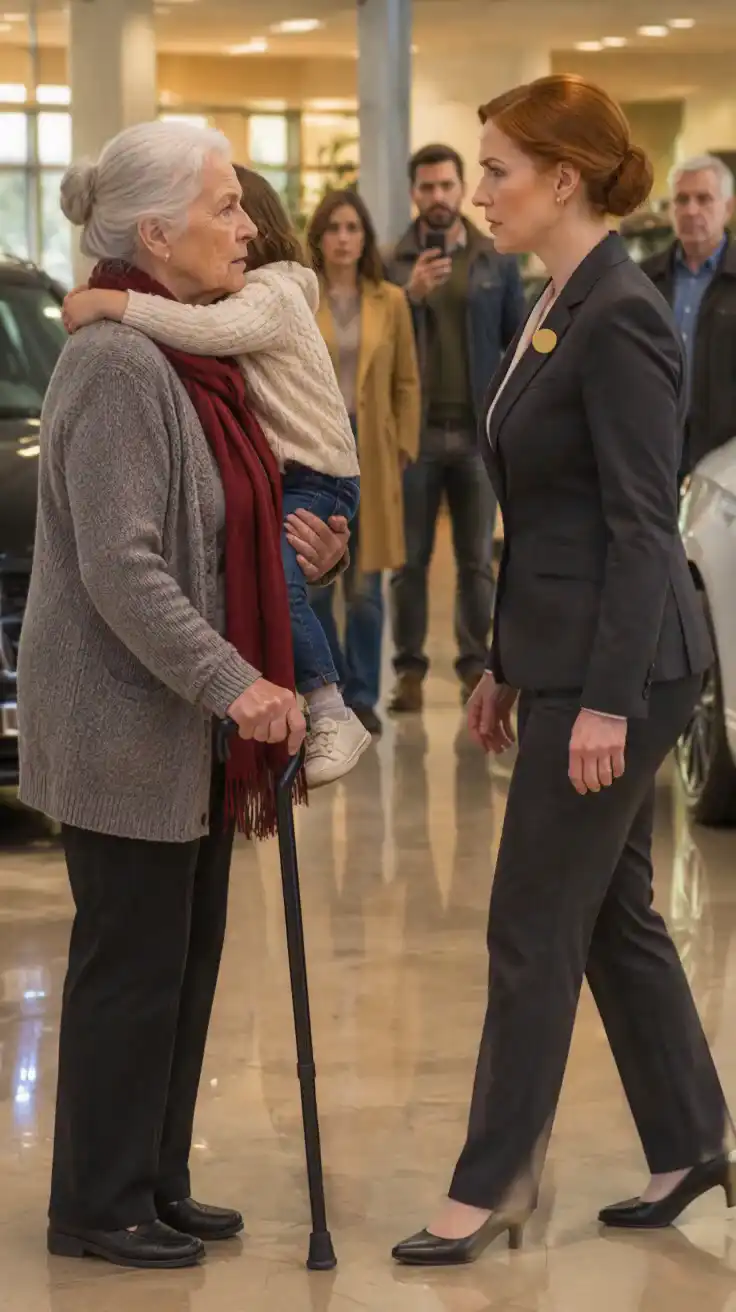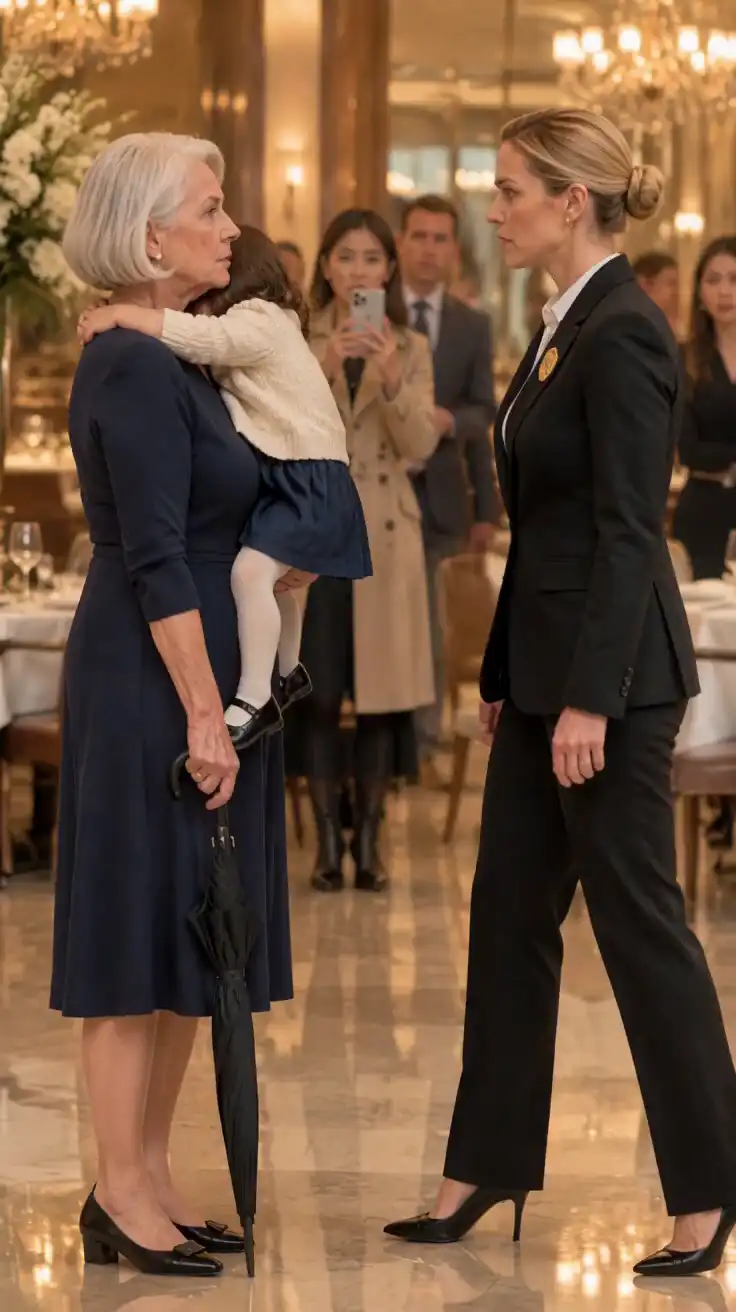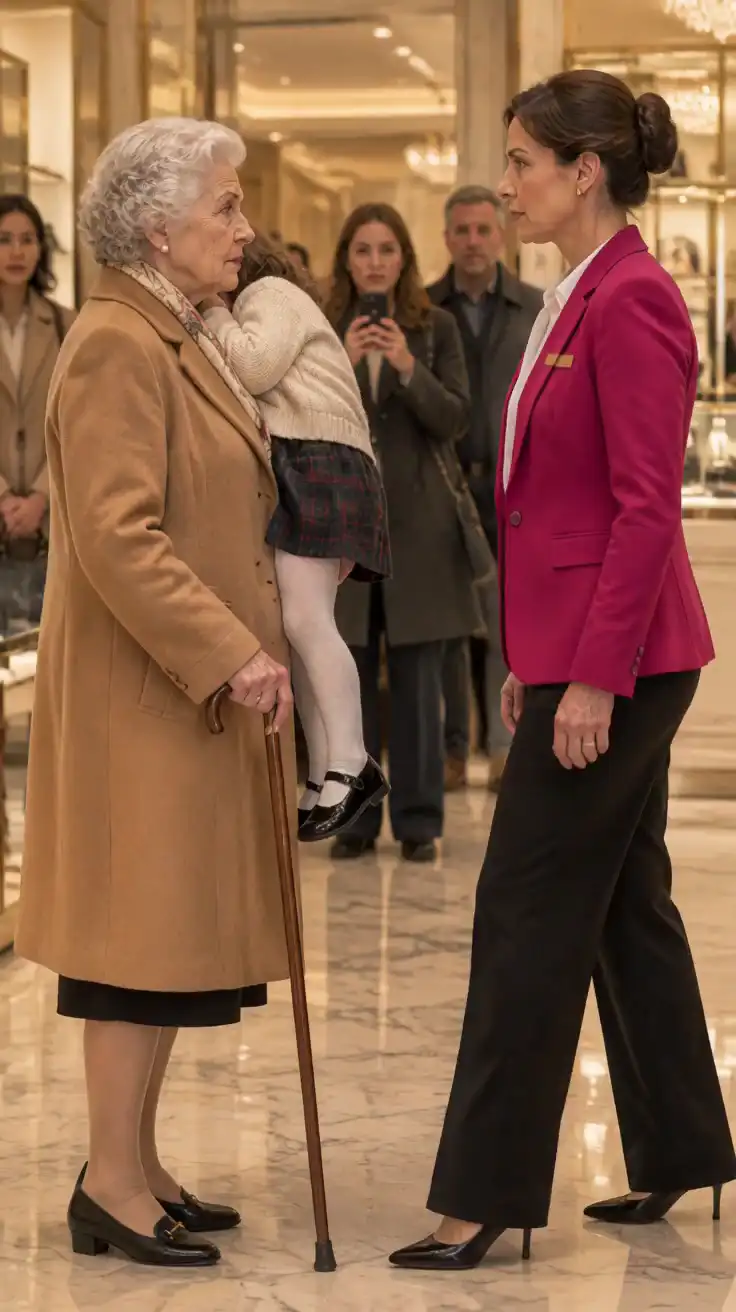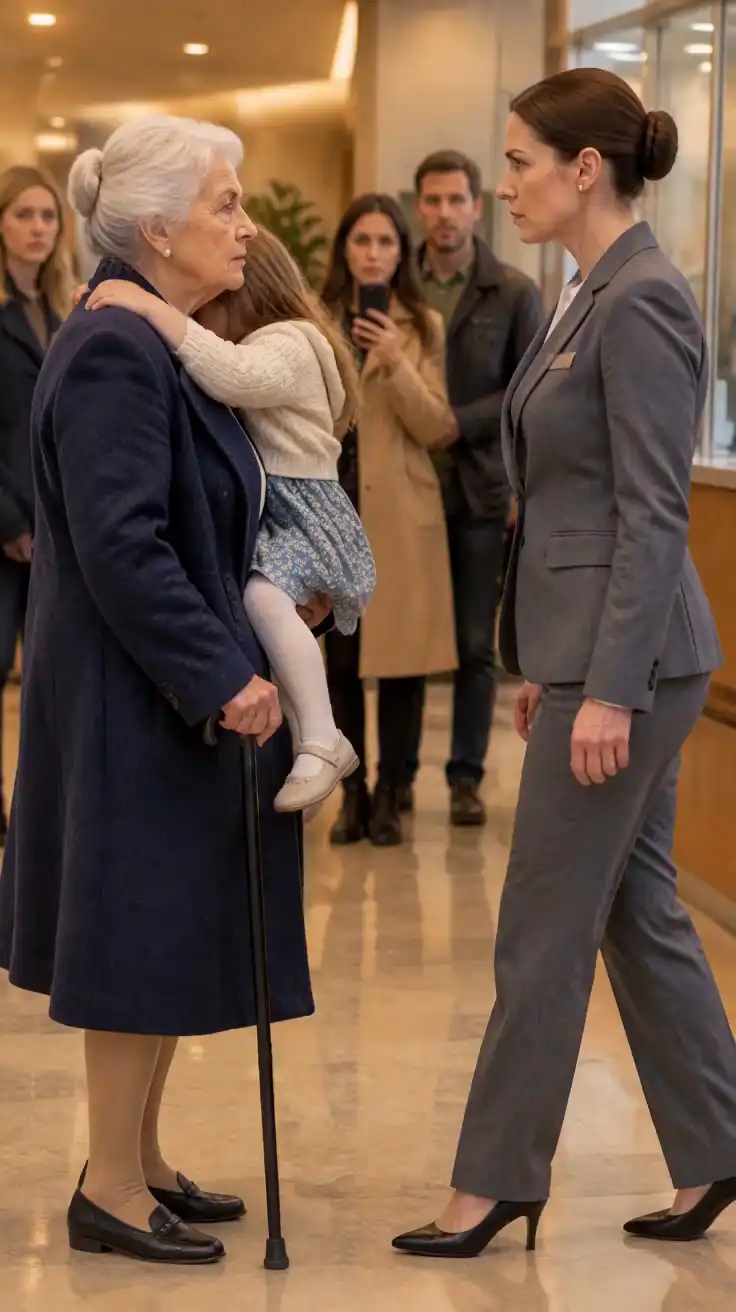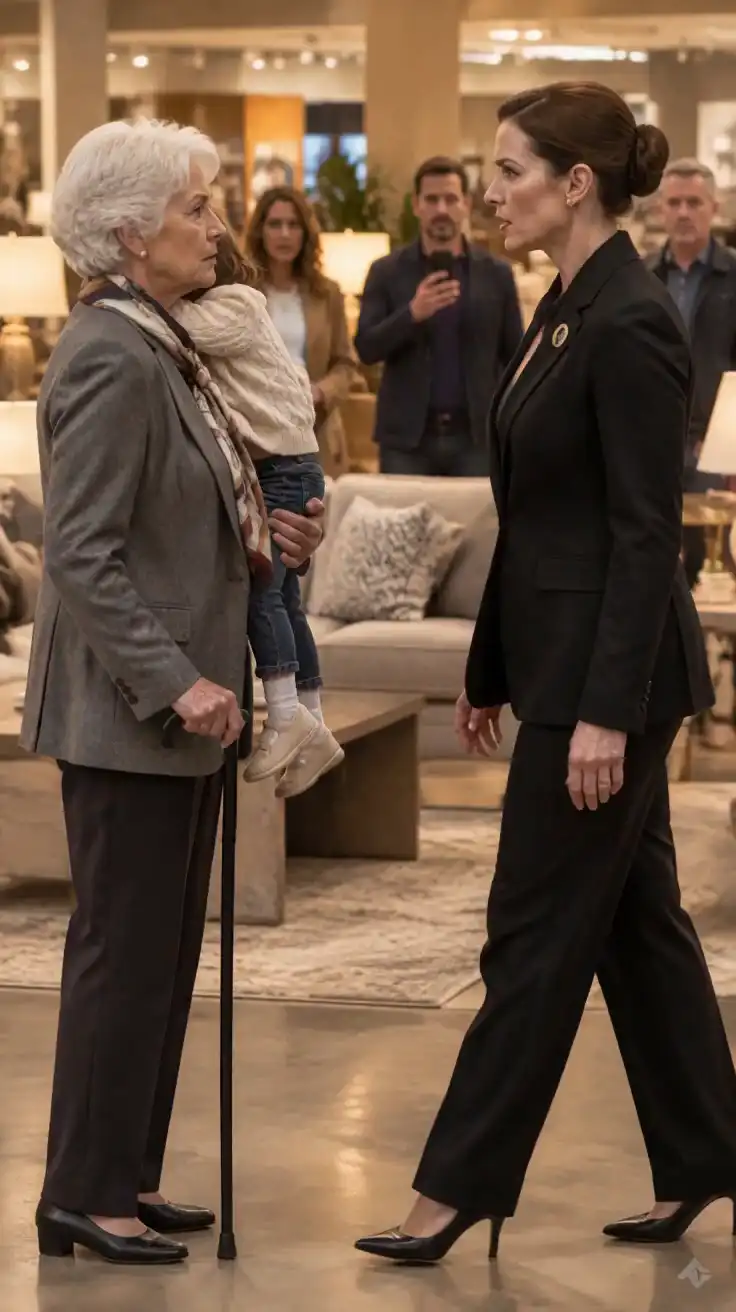
A hospital administrator kicked the cane from a retired social worker who spent thirty years finding beds, then denied the charity-care request she carried. The current social worker stood and walked toward him.
The rubber tip of Margaret’s cane skidded across the bus floor, and the metal shaft struck the seat frame with a sharp ring.
She caught herself against the next row, one hand gripping the vinyl backrest. Behind her, the hospital administrator who had kicked the cane laughed as if the whole bus belonged to him.
Margaret had retired after thirty years at the same hospital, where she found beds for patients nobody else had time to place. That morning, she had carried a folder against her coat because one of those patients was waiting on a charity-care decision. Without it, the family could lose the treatment slot they had fought to keep.
The administrator had rejected her request before boarding. He had not explained much. His denial letter cited missing paperwork, though Margaret had watched the required pages leave her desk together.
A phone screen went dark near the back of the bus.
Leah lifted her head. She was the current social worker at the hospital, though Margaret did not know her. Leah stood, slipped her phone into her pocket, and came up the aisle without saying a word.
The administrator’s laugh broke apart. His shoulders pulled back against the seat. Passengers turned their knees aside as Leah passed Margaret and stopped in front of him.
Margaret bent slowly and picked up the folder. Her fingers found the cane first, then a stiff envelope that had slid from the papers.
The approval letter inside was dated a week before the administrator’s denial. Behind it was the denial letter, with its claim about missing paperwork. The supposedly missing pages were stapled to the approval.
Leah took both letters from Margaret’s hand.
“Look at the dates,” Margaret said.
Leah placed the approval beside the denial on the administrator’s tray table. The bus rocked away from the curb. The administrator reached for the papers, but his hand stopped in midair.
The two letters lay open under the fluorescent light, and one question remained hanging over the silent aisle: where did that money go?
THE SIGNATURE BENEATH THE DENIAL
His hand stayed above the papers while the bus rolled through the intersection.
Margaret looked from the approval date to the denial date. Seven days separated them. The administrator’s signature sat beneath the earlier date, neat and dark. His initials appeared on the denial, too.
For a moment, he didn’t look at either letter. He looked at Leah.
Then he lowered his hand to his lap.
“You can’t take hospital records,” he said.
Leah kept her palm on the tray table, holding the pages in place as the bus swayed. “These are copies. Margaret brought them.”
“Those are confidential.”
“Then you should have been more careful about kicking her folder across a public bus.”
The driver glanced at them in the mirror. Two passengers shifted, making room in the aisle. Nobody spoke. Margaret’s grip tightened around her cane. Her knuckles had gone white against its polished handle.
The administrator sat straight-backed in his dark suit. A red line had appeared on his cheek where the seat’s vinyl edge pressed against him. He was broad through the shoulders, and his shoes shone under the bus lights. His eyes returned to the papers.
“Let’s not make a spectacle of this,” he said.
“You made one,” Leah replied.
Margaret leaned against the seat back. Her legs trembled from the stumble. She set the cane’s rubber tip on the floor and put her weight on it carefully.
“Those dates are right,” she said.
The administrator’s jaw worked once. “The approval was preliminary.”
“It says approved,” Margaret said.
“It was conditional.”
“What condition?”
He glanced at Leah, as if the answer belonged to her. “The file was incomplete.”
Margaret reached for the denial letter. Leah slid it toward her, keeping the approval beside it. The stapled pages were still attached. The forms Margaret had collected from the family, the signed income statement, the insurance explanation, the hospital’s own worksheet: all there.
“The missing paperwork is stapled to the approval,” Margaret said. “You signed that approval.”
“Those pages came in later.”
“They have a date stamp.”
The bus hissed as it pulled to the curb. The administrator stood, but Leah shifted just enough to remain between him and the papers.
“Sit down,” the driver called from the front. “We’re not at the terminal.”
The administrator paused. Every passenger was watching now. He sat again.
Leah took out her phone. “I’m calling the hospital’s financial office.”
“Don’t.”
She looked at him. “Why?”
“Because this is an internal matter.”
“It involves a patient who has a treatment slot tomorrow morning. It involves a signed approval and a denial that says the documents were missing. And it involves you kicking a retired employee’s cane out of her hand.”
“I did not—”
“Everyone on this bus saw you.”
The driver opened the doors for a passenger at the curb. Cold air moved through the aisle. A woman in a red scarf leaned out of her seat to look at Margaret.
“Are you hurt?” she asked.
“I’m all right,” Margaret said, though her hip stung where it had bumped the seat.
The woman’s eyes moved to the administrator. “You could at least apologize.”
He stared forward.
Leah dialed. “This is Leah Brooks in social work. I need someone from hospital finance on the line now. I’m with Margaret Ellis, and I have a charity-care approval signed by Mr. Vance, dated a week before his denial. The denial says required documents were missing. They’re attached to his approval.”
She listened.
“No, I’m not at the hospital. We’re on the number twelve bus, headed downtown.”
A pause.
“Then call the on-duty finance manager and have them meet us at the community clinic stop. This is about a patient’s treatment authorization, not a routine file question.”
The administrator rose again. “You don’t have authority to summon finance personnel.”
Leah covered the phone. “I have authority to protect a patient’s access to care. You have authority over the charity-care queue. That’s why I’m asking finance to verify the file.”
“Your supervisor will hear about this.”
“I hope so.”
The administrator’s mouth tightened. “You’ve worked here how long?”
“Six years.”
“And you think that gives you the right to—”
“I think the approval gives the patient the right to the decision you already made.”
He turned toward Margaret. “You should have left this with the department.”
“I did,” she said. “I delivered it to your office.”
“You’re retired.”
“I know.”
“You have no role in this process.”
“I had a role when you asked me to help the family get the application in. I had a role when I walked the forms over. I had a role when your office told me the papers were complete. I don’t need a badge to recognize the papers I carried.”
The bus moved on. Its windows shivered in their frames.
Leah listened to the phone again. “Yes. The clinic stop in front of the Eastside Center. Ten minutes.”
She ended the call.
“Who’s coming?” Margaret asked.
“Diane Cho, finance manager. She’s the person who oversees charity-care decisions when the director isn’t available.”
The administrator gave a short, humorless laugh. “Diane can’t change an approval on a bus.”
“She can check the ledger,” Leah said.
“Nothing was paid.”
“Then we’ll find out where the approval went.”
His eyes flicked toward the folder in Margaret’s hands. For the first time, she saw him look not angry but calculating. He measured the aisle, the passengers, Leah’s phone, the letters. Then he folded his arms.
Margaret lowered herself into the nearest open seat. Her hip twinged. She let her breath settle before she opened the folder.
The approval letter was on hospital letterhead, with a line for the patient’s account number and the amount covered. The amount had been written in by hand: $18,640. The signature was Andrew Vance’s. A week later, the denial letter cited incomplete documentation and stated that no adjustment could be made until the missing forms were received.
Below that sentence, someone had typed the date the file was closed.
Margaret recognized the patient’s name, Daniel Ruiz. She had met his mother at a discharge-planning desk two months earlier, when Daniel was still in the hospital after a severe infection. He had no insurance that covered the follow-up treatment. His mother, Elena, worked at a grocery store and had already missed several shifts. They had been told that if Daniel could not get the next treatment, he would have to return to the hospital when his condition worsened.
Margaret had retired, but she had not stopped returning calls.
She’d promised Elena that the forms were in. She’d told her that the hospital would review them. She had not promised an outcome, but she had wanted to believe the process meant what the letters said it meant.
The administrator had rejected the request before boarding the bus. He had not explained much. His denial letter cited missing paperwork, though Margaret had watched the required pages leave her desk together.
Now he sat opposite her with his hands folded, as if he could wait for the documents to become less real.
“Why did you deny it?” Leah asked.
“I’ve already told you. It was incomplete.”
“Which page was missing?”
“I don’t have the file in front of me.”
“You signed the approval.”
“I sign dozens of these.”
“Then you should know the procedure.”
“I do.”
“Does procedure allow a denial after an approval, using a reason disproved by the documents attached to it?”
He leaned closer. “You don’t know what happened after that approval was generated.”
“Then tell me.”
He said nothing.
The bus made another stop. A man with grocery bags climbed aboard and looked down the aisle at the little group. He chose a seat near the front.
Margaret set the cane between her knees. “Mr. Vance, why did you hold it back?”
“Margaret, this is not the time.”
“You had time to kick my cane.”
“That was a mistake.”
“You laughed.”
His gaze moved briefly to the other passengers.
She had spent thirty years learning what people did when they wanted a conversation to disappear. They changed the subject. They used a softer voice. They told the person who’d been hurt to consider the room, the schedule, the family waiting outside the door.
She had heard it from doctors, relatives, administrators, and frightened patients. It was often said as if silence were a kindness.
“An apology would be a start,” she said.
He looked down at his polished shoes. “I’m sorry I kicked the cane.”
The sentence came out flat, a receipt offered across a counter.
“You’re sorry you kicked it,” Margaret said. “Are you sorry you laughed?”
He did not answer.
Leah looked at him. “We’re keeping the letters together.”
The driver called out the clinic stop. Through the front windshield, Margaret could see the Eastside Center’s green awning. A woman in a gray coat was waiting at the curb, holding a tablet. Beside her stood a younger man with a hospital badge clipped to his belt.
The bus stopped.
Diane Cho climbed aboard first. She was in her fifties, with silver at her temples and a rain-spotted coat. The younger man followed. She looked straight at Leah.
“Show me what you have.”
Leah handed her the approval and denial. Diane read both without sitting. She turned the approval over, checked the attached pages, then examined the denial.
“Mr. Vance,” she said, “did you authorize this account?”
“I did.”
“When?”
“A week before the denial, apparently.”
Diane looked again at the signature. “This is your approval?”
“Yes.”
“Was there a condition attached?”
“The documents weren’t complete.”
“Which one?”
“I can’t identify it without the record.”
Diane raised her eyes. “The record is here.”
She looked over the stapled pages, then at the date stamps. “These were received together.”
“They may have been added afterward.”
“Not unless someone changed the receiving stamp.”
The younger man, who had introduced himself as Mark from finance compliance, studied the pages. “I can verify the intake scan from the system.”
“Do that,” Diane said.
He used his tablet, moving his thumb across the screen. The bus waited, its doors open. A small line had begun to form behind Diane.
“We can do this at the hospital,” Vance said.
“We can start here,” Diane replied. “We’ll finish it there.”
He stood. “I’m not staying on this bus for a disciplinary hearing.”
“No one said this was a hearing,” she said. “You are free to get off. The letters are not.”
He looked from Diane to Leah, then to Margaret. Nobody moved aside for him.
At last he stepped down to the curb. He remained under the awning as the doors closed. His arms were still crossed. The bus pulled away.
Through the window, Margaret watched him shrink behind them. He didn’t follow.
Diane took the seat across the aisle. Mark stood near the door, tablet in hand.
“Ms. Ellis,” Diane said, “I’m sorry. I should have heard about this before you got on the bus.”
“You didn’t know.”
“I should have known the file was being denied after approval.”
“Can you check where the money went?”
“That’s what we’re doing.”
Diane spoke into her phone, asking someone to pull the charity-care ledger and the adjustment history for Daniel Ruiz’s account. She did not raise her voice. She asked for the original entry, the status change, and any record of a transfer or reversal. Then she gave the name of the person who had authorized the approval.
Mark looked at his screen. “The intake scan has all six pages. They came in together the morning the request was submitted.”
“What date?” Leah asked.
“Three weeks ago.”
“And the approval?”
“It posted one week later.”
Diane leaned over his shoulder. “What happened after that?”
Mark scrolled. “The adjustment was reversed two days later. There’s a note that says the file was incomplete.”
“Who reversed it?”
“The user record says A. Vance.”
Diane held her hand out for the tablet. Mark passed it to her.
“Was the amount applied anywhere else?” she asked.
“I’m checking.”
The bus crossed a bridge. On the far side, the hospital rose above the low buildings, its windows catching the pale afternoon light. Margaret could see the public entrance and, behind it, the tower where she had worked. She knew the long hallway that ran from the social-work office to the patient elevators. She knew which bed managers were likely to be at their desks and which ones saved an empty chair for families who had no place to sit.
For years she had carried a list in her pocket: rooms that might open, numbers of shelters, names of relatives, a note beside each patient who needed a safe place to go. She had helped people find a bed when the hospital had none to offer, and she had walked families through forms they could barely afford the time to complete.
The work had taught her to keep copies.
It had also taught her that a signature could close a door as quickly as it opened one.
“Here,” Mark said. “There’s a charge.”
Diane moved closer to the screen. “What charge?”
“An administrative adjustment. Same amount, different account.”
“Whose account?”
Mark checked again. “The central reconciliation account.”
“Not a patient account?”
“No.”
“Was the money spent?”
“I can’t tell from this screen. It was moved out of the charity-care reserve. I’ll need the ledger detail.”
Diane sat back. “Who authorized the transfer?”
Mark made another selection. He stopped scrolling.
“It lists the administrator’s office as the request source,” he said.
Vance’s name was not there now, but the request source was enough to leave the three of them quiet.
Leah looked at Margaret. “That answers part of the question.”
“Not where it went,” Margaret said.
Diane nodded. “We’re not going to guess. We’ll get the ledger.”
She called her office again. “Put a temporary hold on any further transfers from the charity-care reserve until we reconcile the Ruiz account. Yes, I’m asking you to hold the whole reserve. I’ll explain when I’m back.”
The person on the other end said something.
“No, this isn’t optional. Freeze the outgoing adjustments and send me the last thirty days of movements. If there’s a reason not to do that, put it in writing.”
She ended the call.
Leah leaned over, listening to the noise of the bus engine under their voices. “Do you want me to call the clinic and tell them the patient’s treatment is on?”
“Not until we confirm the account,” Diane said. “But tell them the hospital is actively reviewing it. Ask them to hold the slot until morning.”
Leah dialed the clinic.
The phone rang twice. Elena Ruiz answered.
“Mrs. Ruiz, it’s Leah Brooks from social work. I’m with Margaret Ellis. We have the papers in front of us, and finance is checking the account now.”
There was a pause. “Does that mean the approval went through?”
“It means we found a signed approval, and we’re checking what happened to it.”
“I was told it was denied because we hadn’t turned in the insurance page.”
“The insurance page is attached to the approval.”
“But the letter said they didn’t have it.”
“We see that. I’m not asking you to resubmit it.”
Elena’s voice went thin. “They said Daniel might lose tomorrow’s slot.”
“We’re asking the clinic to hold it while we resolve the account.”
“Who is asking?”
“Diane Cho in finance, and I am.”
A breath came through the phone. “They said if the account wasn’t settled, they couldn’t start.”
“I understand.”
“I work evenings. I can’t keep leaving my shift to bring in the same papers.”
“You won’t have to bring them in again,” Leah said.
“Can you promise that?”
Leah glanced at Diane. She didn’t make the promise too quickly.
“I can promise I won’t ask you to carry the file back and forth again. I can’t promise the final billing outcome until finance confirms it.”
“That’s honest, at least.”
“I’m sorry you were told the paperwork was missing.”
Elena didn’t answer for several seconds. “Daniel’s ready for his treatment. He’s been waiting all week.”
“I know. We’re working on it now.”
“Please don’t let them move his slot.”
“We’ll call you as soon as we have a confirmed decision.”
The call ended. Leah kept the phone in her hand and looked through the window at the hospital.
“She’s right,” Margaret said. “They shouldn’t have had to say the same thing twice.”
Diane turned the tablet so Margaret could see it. “If this transfer was improper, I want the whole chain. Not just the one account.”
“Will you look?” Margaret asked.
“Yes.”
“And will you tell the family the truth?”
“Yes.”
Margaret nodded. She didn’t thank Diane yet.
At the hospital, they went directly to the administrative conference room. Diane used her badge to let them through a staff entrance, then asked the receptionist to bring Vance in. He arrived ten minutes later, still wearing the same suit. He set a slim leather portfolio on the table and kept his hand on it.
He looked at the documents in front of Diane. “I have a meeting in half an hour.”
“Then we’ll keep this focused,” Diane said.
“I already explained the application was incomplete.”
“Mark has confirmed that the intake scan contained all six pages. The pages were attached to your approval. Your office reversed the adjustment two days later and entered ‘incomplete file.’”
“The system can attach documents after an approval.”
“Not with the original intake timestamp.”
Vance sat. “There may have been a concern about eligibility.”
“Was there?”
“There’s always a question when an application is reviewed.”
“That is not the same as identifying an eligibility issue. Did you find one?”
“I don’t remember the details.”
“You signed the approval.”
“I sign hundreds of forms.”
Diane slid the two letters across the table. “You signed this one, then denied the same request with a reason the record contradicts. The account was reversed out of the charity-care reserve after the approval. Where did the funds go?”
“They went into reconciliation.”
“Reconciliation is a process. It isn’t an account with a purpose. What was the transaction correcting?”
He glanced at Mark. “Finance can’t ask me to account for ordinary adjustments from memory.”
“No one’s asking you to do that. We’re asking you to explain this transfer.”
“If the ledger says central reconciliation, then it went there.”
“Does it stay there?”
“I assume it was balanced against other accounts.”
“What accounts?”
“I don’t have that information.”
Diane placed a printed ledger detail on the table. “This is the transaction. It moved $18,640 from the charity-care reserve. Two business days later, it was used to clear an outstanding balance in the executive services account.”
No one moved.
Vance’s fingers tightened around his portfolio.
“Whose balance?” Leah asked.
Diane kept her attention on Vance. “The entry doesn’t identify a patient. It identifies the department.”
“That account covers administrative travel and retention expenses,” Vance said. “It’s a budget line.”
“Then why was a charity-care reserve used to clear it?”
“It was a temporary entry. The funds are fungible.”
“Not when they’re approved for a patient,” Leah said.
Vance looked at her. “You are a social worker. You are not a finance officer.”
“I don’t need to be. The letter says Daniel Ruiz was approved for $18,640. Then the money moved to an administrative account.”
Diane pointed to the transaction description. “Do you know who asked for it?”
“I’m not going to speculate from a ledger line.”
“I’m not asking you to speculate. I’m asking you to explain a transfer requested by your office.”
“My office handles routine corrections.”
“Who in your office requested this one?”
“I’d need to review my email.”
“Then we’ll wait while you do that.”
He shook his head. “This conversation is becoming accusatory.”
“It became an investigation when the money moved,” Diane said.
“I didn’t steal anything.”
“No one used that word.”
“It’s implied.”
Leah looked at the two letters again. “It wasn’t implied that the patient’s forms were missing. You wrote it.”
Vance’s face flushed. “You don’t know how many people ask for help they don’t qualify for.”
Margaret sat with both hands resting on her cane. “You knew this family qualified.”
He turned toward her. “You’re no longer responsible for these cases.”
“I know Daniel’s mother works nights. I know she brought the pay stubs twice because the first set had the wrong month. I know she stayed in the lobby with him when he was admitted because she couldn’t afford gas to drive home and back. I know the treatment team said tomorrow mattered.”
She reached into her folder and took out a small spiral notebook. Its cover was frayed at the corners. She opened it to the page with Daniel’s name and the dates of her calls.
Vance’s eyes moved over the handwriting. “You kept personal notes?”
“I kept a work notebook.”
“You’re not employed here.”
“I’m not billing anyone for this.”
“Why are you doing it, then?”
“Because I told a family I’d help them get a fair answer.”
“That is no longer your responsibility.”
“Responsibility doesn’t disappear because a job ends.”
Diane opened the conference-room door and asked the receptionist to call the chief financial officer. “Tell her I need her in this room. It concerns a transfer from the charity-care reserve and an approved patient request.”
Vance stood. “I’m not staying for a conversation that has already reached a conclusion.”
Diane didn’t block the door. “You can leave. You cannot access the charity-care system or authorize adjustments while we review this. I’m placing you on administrative leave, effective now.”
“That’s not your call.”
“It is. I oversee finance operations. I have standing to restrict your access when a fund is under review.”
“You’ll need a reason.”
“I have one.”
His chair scraped back. “This is ridiculous.”
Diane kept her voice even. “Mark, revoke his authorization to approve charity-care denials and transfers. Secure the relevant records. No one edits or deletes the activity history.”
Mark nodded and sent the instruction from his tablet.
Vance snatched his portfolio from the table. “You’re suspending me based on a misunderstanding.”
“I’m suspending your access while we investigate.”
“You can’t humiliate me in front of staff.”
Leah looked at the pages between them. “You didn’t mind doing it to Margaret.”
He stopped at the doorway. For a fraction of a second, his eyes met hers. Then he looked toward Margaret.
“I shouldn’t have kicked your cane,” he said.
Margaret didn’t move.
“I shouldn’t have laughed,” he added.
She waited, but he had nothing more to offer.
“Tell the family what you did to the application,” she said.
“That’s not my role.”
“Then you haven’t apologized.”
Diane’s phone rang before he could answer. She glanced at the screen, then put it on speaker. The chief financial officer was on her way up.
“Mr. Vance,” Diane said, “leave your badge on the table.”
He stood still, face gone pale. “I have an office full of records.”
“Your staff will preserve them. You may collect personal belongings with an escort.”
“An escort?”
“Until we secure the file.”
He unclipped his badge. It caught on the lapel of his jacket before coming free. He put it down hard enough to make the pen beside it roll.
Nobody laughed.
He left with the receptionist. Leah closed the door after him.
For several seconds, the room stayed quiet. Then Diane picked up the two letters and aligned their edges.
“Now we have to confirm the full transfer,” she said.
“What does that mean for Daniel?” Leah asked.
“It means his approval was valid. But the account needs to be restored before the clinic can rely on it.”
“Can you restore it?”
“I can place a provisional credit today. The ledger will still be reviewed. Daniel should not lose his slot over an internal transfer.”
Diane called the patient accounts director. She asked for the original authorization, not a new request. She stated the amount, cited the signed approval, and directed the director to restore the charity-care credit while the review proceeded.
When the call ended, she leaned back. “That gets the account covered for tomorrow.”
Leah called Elena again. “The finance manager has restored the credit. The clinic can keep Daniel’s slot.”
Elena went silent.
“Did they confirm it?” she asked.
“Yes. You do not need to bring in the forms again.”
“What do I say when I get there?”
“Tell them Leah in social work confirmed the charity-care credit with Diane Cho in finance. I’ll send the confirmation to the clinic myself.”
“Thank you.”
“Margaret was the one who brought the file back into view.”
“I want to thank her.”
“I’ll give her the phone.”
Margaret leaned toward the phone. “Mrs. Ruiz, I’m sorry it took this long.”
“You stayed with it,” Elena said.
“I should have checked sooner.”
“You did what you could.”
“I wish I’d known the denial would say the pages were missing.”
“I believed them when they said we hadn’t sent everything. I was starting to think it was my fault.”
Margaret’s hand closed around the notebook. “It wasn’t.”
“I know that now.”
“Daniel’s getting his treatment tomorrow.”
“Yes.”
Elena let out a breath that sounded as if she had been holding it for days. “I’ll tell him.”
When they hung up, Leah sat down beside Margaret. She had not removed her coat. Her hospital badge was turned backward, the metal clip still attached to the pocket.
“Why did you get up?” Margaret asked.
Leah looked toward the closed door. “On the bus?”
“Yes.”
“I heard the cane hit the floor. Then I heard him laugh.” Leah rubbed a thumb over the edge of her phone. “I was trying to finish a message. I’d been sitting in the back, thinking the whole ride was too short to deal with one more problem.”
“What changed?”
“I saw you grab the seat. He looked right at you and laughed again.” Leah’s thumb stopped. “I recognized the name on your folder. I’d read your old case notes when I came into the department. I’d heard people say you were the one who could find a bed for anybody.”
“You never met me.”
“No. I didn’t even know for sure it was you until I saw the paperwork.”
“And you still got up.”
“I didn’t want you standing there alone while he laughed.”
Margaret looked at Leah’s badge. “You could have been written up.”
“I know.”
“You could have lost your job.”
“I know.”
“What if he’d refused to show the letters?”
“He didn’t.”
“That’s not an answer.”
Leah glanced down at her hands. “I had a patient last year who got denied because somebody said a document was missing. Her husband kept bringing in copies. Every time he came back, the desk told him to wait. I told him I’d make sure the file stayed together.” She paused. “I didn’t catch the denial until the last day. She missed her first appointment.”
Margaret said nothing.
“I kept telling myself I’d learned from it,” Leah continued. “Then I saw this happen in front of me, and I could have kept my head down again. I couldn’t do that twice.”
Margaret looked at the letters. “You weren’t supposed to know who I was.”
“I didn’t need to.”
Diane stood near the table, listening without interrupting. Her phone rang again. She stepped into the corridor to take the call, leaving Leah and Margaret alone with the documents.
“What happens to him?” Margaret asked.
“Diane said administrative leave.”
“That’s not the same as being held accountable.”
“No.”
“Will the hospital tell us what it finds?”
“They should.”
“Should isn’t will.”
Leah tucked her phone away. “I’ll ask for the investigation contact and put the request in writing.”
“Good.”
Leah glanced at Margaret’s cane, which leaned against the chair. “Does your hip hurt?”
“Some.”
“Do you want me to call the clinic?”
“No. I’ve had worse bruises getting out of bed.”
“Would you let me walk you to the lobby?”
Margaret looked at her.
Leah didn’t reach for the cane. She waited.
“Yes,” Margaret said.
They took the elevator down together. The building was still busy. At the main desk, a receptionist looked up and recognized Margaret.
“Ms. Ellis? I thought you weren’t coming in anymore.”
“I’m not on payroll,” Margaret said. “I’m visiting.”
The receptionist noticed the papers under Leah’s arm. “Is that the Ruiz file?”
“It is,” Leah said.
“Are they okay?”
“The clinic has the confirmation,” Leah replied. “Daniel has his appointment tomorrow.”
The receptionist let out a breath. “His mother called the desk twice. She was worried we’d canceled it.”
“She won’t need to call again,” Leah said.
A man carrying a stack of charts stopped behind them. “Was that the charity-care request that got turned down?”
Diane returned from the corridor. “It was approved, then reversed. We’re checking the transfer now.”
The man shifted the charts in his arms. “I saw the bus clip.”
Margaret’s stomach tightened. “What clip?”
“Someone on the bus recorded it. It’s already going around.”
Leah looked at him. “Did you see the whole thing?”
“I saw the part where he kicked the cane.”
“And then?”
“He laughed, and you got up.” He looked at Leah. “You didn’t say anything.”
“No,” she said. “I didn’t.”
“People are asking what happened after.”
“We’re not discussing a patient’s private information in the lobby,” Diane said. “The hospital will address the matter through the appropriate channels.”
The man nodded and moved along.
Margaret watched the waiting room’s faces. Some people had glanced over, but nobody approached. The clip had turned the bus into a story people could watch without knowing the family, the request, or the consequences of a denied letter.
“Does the video show the papers?” she asked.
“No,” Leah said. “It ends when I reach him.”
“Then it shows what he did to me and what you did.”
“Nothing after that?”
“Nothing.”
Leah looked at the letters. “We should keep the evidence together.”
Margaret pressed the folder against her chest. “That’s what the stapler was for.”
At the desk, Diane asked an assistant to make secure copies of both letters and the intake scan. The original papers stayed with Margaret. Each copy was logged, time-stamped, and signed for. Diane explained that no one would remove the originals without Margaret’s consent.
That evening, Margaret sat at her kitchen table with the folder open beside a mug of tea. The cane leaned against the table leg. Her hip was stiff, and a bruise had begun to darken along the side of her hand where she’d caught the seat.
The phone rang. Leah’s name appeared on the screen.
“We confirmed the transfer,” Leah said. “The $18,640 went to clear part of the executive services account. The amount matched Daniel’s approval exactly.”
“Was there another account?”
“There were several charity-care adjustments moved over the past month. Diane is checking each one.”
“Who requested them?”
“Vance’s office. The log has his authorization on some and an assistant’s entry on others. Diane hasn’t concluded who made the decisions yet.”
“Is Daniel’s credit restored?”
“Yes. The clinic confirmed his appointment for eight tomorrow morning. I called Elena myself.”
“Did you tell her about the money?”
“Only that the original approval is valid and the internal transfer is being investigated. We don’t know how much she wants to hear tonight.”
“That’s her choice.”
“I’ll offer her the records once we have a clean copy.”
Margaret tapped the corner of the approval. “Don’t make her ask.”
“I won’t.”
Leah hesitated. “The hospital’s communications office wants to know whether you’ll make a statement about the bus.”
“What did you tell them?”
“That I wouldn’t answer for you.”
“Good.”
“They may ask again.”
“Then tell them I’m busy.”
Leah laughed softly. It was the first time Margaret had heard her laugh without someone on the other end being its target.
“Do you need anything?” Leah asked.
“No.”
“I can bring the paperwork by tomorrow.”
“I can come to the hospital.”
“With your hip?”
“It’s a bruise.”
“That isn’t the same as nothing.”
Margaret looked out the kitchen window at the dark sidewalk. “I’ve got an appointment at the clinic with Mrs. Ruiz after Daniel’s treatment.”
“Are you going as a volunteer?”
“I haven’t asked.”
“I can ask our volunteer coordinator.”
“No. I’ll ask.”
“All right.”
“Good night, Leah.”
“Good night, Margaret.”
She set the phone down and turned the approval over. A mark from the staple had pressed through to the back. The sheet had traveled from the family to her desk, from her desk to the administrator’s office, from his office into a folder, then into her hand on the bus floor. The pages had done everything a document was supposed to do. They had recorded the request, the review, the signature, and the approval.
The denial had not erased any of it.
In the morning, Margaret took the bus to the hospital. She held the cane in her right hand and the folder against her side. At the clinic entrance, Elena was waiting with Daniel, who wore a loose sweatshirt and had a paper bag of crackers tucked under one arm.
“Ms. Ellis,” Elena said. “You came.”
“I said I would.”
Daniel glanced at the cane. “Did you get hurt?”
“Nothing serious.”
“I’m sorry.”
“You didn’t do it.”
“I know, but Mom said the man knocked your cane away.”
“He did.”
“Was it on purpose?”
“Yes.”
Elena touched her son’s shoulder. “You don’t have to ask everything.”
“I want to know.”
Margaret shifted her weight. “He was angry about a decision. He took it out on me.”
“That’s stupid,” Daniel said.
“It was.”
He looked at the folder. “Is that the one?”
“Yes.”
“They said our papers were missing.”
“They were not.”
“Does that mean they lied?”
Margaret looked at Elena, who didn’t stop him.
“The letter said something that wasn’t true,” Margaret said. “The hospital is checking why.”
Daniel gave the folder a hard stare. “Will it happen again?”
“I don’t know.”
Elena’s hand tightened on his shoulder.
“But the hospital has confirmed your treatment is covered,” Margaret continued. “And they’re reviewing the other accounts. You shouldn’t have to prove the same thing a third time.”
Daniel nodded, still unsatisfied. He looked at the appointment desk.
A nurse called his name.
Elena stepped toward the door, then turned back to Margaret. “Thank you for staying with it.”
“I’m glad you called.”
“I almost didn’t. I thought they’d think I was being difficult.”
“Calling about a bill isn’t being difficult.”
Elena nodded and followed her son into the treatment area.
Leah came down the corridor holding a folder. “The clinic has the restored credit. They’ve got everything they need.”
“Then I’m going to the volunteer office.”
“Today?”
“Today.”
The volunteer coordinator, Mr. Jensen, was a narrow-shouldered man with a white beard and a desk so covered in clipboards that only a strip of wood showed. He looked at Margaret’s old hospital badge when she set it on his desk.
“You’re back.”
“Not on payroll.”
“I can see that.” He picked up the badge. “You’ve kept this?”
“I didn’t know what else to do with it.”
“Do you want to volunteer?”
“I want to help people get through the parts between the diagnosis and the next appointment.”
“That’s a specific job.”
“I’ve done it before.”
“You’ll need orientation, a background check update, and a health screening.”
“I expected that.”
He pulled a form from a drawer and handed it across the desk. “We’re short on people who know how to talk with families about the practical parts. But this role doesn’t let you handle financial decisions. You’ll refer those to staff.”
“I understand.”
“And you don’t get to promise a bed, a bill adjustment, or an appointment.”
“I’ve never promised those things.”
He studied her for a moment. “You used to tell families you’d find a way.”
“I told them I’d look.”
“Some people hear what they need to hear.”
“Then I’ll say it more carefully.”
He slid her a pen.
Margaret filled in her name, address, and emergency contact. When she got to the availability section, she checked two mornings a week.
“Two?” he asked.
“I’m not trying to replace the staff.”
“You’re not. We can use two mornings.”
He opened a drawer and found a blank badge. “It may take a few days.”
“I can wait.”
“Most people want to start immediately.”
“I’ve been waiting all morning.”
He printed her name and clipped the badge to a plastic holder. “This one is temporary. Wear it above the waist.”
She fastened it to her coat. The plastic was light. It didn’t carry the authority of the badge she had returned when she retired. Still, the receptionist waved when she crossed the lobby with it on.
At noon, Diane called a meeting with the patient accounts director and the hospital’s compliance officer. Margaret and Leah were invited because the first report had come from them, and because Margaret had the original letters.
The compliance officer, Nora Bell, took one copy of each letter. She asked Margaret when she’d received them, where they had been stored, and who had handled them. Margaret answered each question. She did not guess at anything she couldn’t remember.
Nora looked at the approval. “This signature is Mr. Vance’s?”
“Yes.”
“Did you see him sign it?”
“No. I received the letter from his office.”
“Who delivered it?”
“An administrative assistant. I don’t remember her name.”
“Did she say anything?”
“She said the request had been approved and that the family would receive a copy.”
Nora wrote it down. “Did you personally staple these pages to the approval?”
“No. The pages were already attached when I received it.”
“Could they have been added afterward?”
“No. The staple marks are old, and the intake stamp is on the documents.”
Nora looked at Diane. “The scan backs that up.”
“We’ve verified the intake record,” Diane said. “The request was complete. The approval was entered. Then the adjustment was reversed and the amount moved out of the reserve.”
“Was that transfer authorized by a policy?”
“We haven’t found a policy allowing it.”
“Where did the money land?”
“An executive services account used for travel, retention spending, and departmental expenses.”
Nora set down her pen. “Was it a single transaction?”
“No. We found four transfers in the last month. Their combined value is $61,200.”
Margaret looked from one woman to the other. “How many patients?”
“Four accounts,” Diane said. “We’re still matching each transaction to the original approval.”
“Were they all denied afterward?”
“Three were. One request was withdrawn before a denial went out.”
“Why?”
“We don’t know yet.”
Nora turned to Margaret. “The investigation will look at the record and the decision chain. We’ll need your notes, if you’re willing to provide them.”
“I’ll provide copies.”
“Please keep the originals.”
“I plan to.”
“Would you be willing to describe the bus incident as well?”
“Why is it part of your review?”
“It’s not part of the financial review. It may be handled separately as a conduct matter.”
“He kicked my cane and laughed.”
“Was anyone else involved?”
“No.”
“Did he say anything?”
“No.”
“Did you hear him say anything before he kicked it?”
“I heard the cane strike the floor. Then he laughed. I did not hear anything else.”
Nora looked at Leah. “You were there?”
“Yes. I was sitting in the back. I heard the cane hit the floor and saw Margaret catch the seat. I saw Mr. Vance laugh. I stood and walked toward him. I did not say anything on the bus.”
“Did you know him before that?”
“I knew who he was from his badge and his face. I’d seen him at the hospital. I didn’t know him personally.”
“Did you know Margaret?”
“No.”
Nora made a note. “Was anyone else involved in the incident?”
“The passengers were witnesses,” Leah said. “But there was one person who kicked the cane.”
Nora closed the notebook. “We’ll request the bus company’s passenger report and the recording, if available. We’re not asking them to release it publicly.”
“I don’t want the video posted with my name,” Margaret said.
“That’s your decision. We won’t publish anything.”
“Will the hospital tell people why the charity-care money was moved?”
“When we have verified findings, the hospital will correct the record with the affected families,” Nora said. “We will not disclose their private information outside the people who need it.”
“Good.”
The compliance officer gathered the copies. She did not take the originals.
That afternoon, Diane came to Margaret’s new volunteer station. The station was a small desk near the clinic waiting room, with a telephone, a supply of transit vouchers, and a list of local assistance programs. Margaret had not sat behind it yet. She was still learning which forms patients could complete there and which needed a staff member.
Diane held a printed sheet. “We’ve matched all four transfers.”
“And?”
“Three patient approvals were reversed. One was withdrawn after the family was told the paperwork was incomplete. The fourth amount was diverted before a denial went out. All four transfers went to the executive services account.”
“Was it all Mr. Vance?”
“His user credentials were used for three. The fourth was entered by an assistant under his office’s direction. We have emails confirming he requested it.”
“Does the assistant still work there?”
“Yes.”
“Was she involved in the decision?”
“We’re interviewing her. She may have followed instructions without knowing the source of the funds.”
Margaret nodded. “Don’t make her the answer just because she typed the entry.”
“That’s why we’re interviewing her.”
“What is the hospital doing for the families?”
“Restoring all four approvals and contacting each family directly. They’ll receive corrected letters. We’re also reviewing other charity-care accounts from the same period.”
“Who will call them?”
“Leah and the patient accounts director.”
“Together?”
“Yes.”
“Good. They shouldn’t have to repeat everything to separate offices.”
Diane folded the sheet. “I wanted you to know before the official review is complete.”
“Thank you.”
“Vance is on administrative leave. The hospital has disabled his approval access. The board’s audit committee has been briefed.”
“Will he be fired?”
“I can’t promise a particular outcome before the investigation is finished.”
“Don’t promise what you can’t do.”
“I won’t.”
Margaret shifted the cane beside the desk. “And the bus?”
“Human resources is reviewing the conduct complaint. They’ve spoken to the driver and requested statements from witnesses. The hospital cannot control his job outside this building, but his conduct here matters too.”
“He was wearing his badge.”
“He was on his way from work.”
“Then it matters.”
“Yes.”
Diane looked over the waiting room. A woman was trying to fill out a form with one hand while keeping a sleeping toddler from sliding off her lap. A young man sat beside her, tracing the edge of a folded bill with his thumb.
“Is this where you want to work?” Diane asked.
“I’m not sure yet.”
“You’ve already started.”
“I’ve filled out two forms and found a phone number for a pharmacy.”
“That counts.”
Margaret watched the woman struggle with the tiny print. “I’ll sit with them.”
“Do you need me to send someone?”
“No.”
She stood, then waited for her hip to loosen. Diane started to reach for her arm but stopped before touching it.
Margaret looked at her. “You can offer.”
“Would you like my arm?”
“No, but thank you.”
She walked to the waiting area without it. The young man looked up as she approached.
“Are you here to help with forms?” he asked.
“If you want.”
“I’m trying to find out how much the medicine will cost.”
“Do you have the prescription?”
He held out a folded paper. She read the name of the medication and the pharmacy.
“I can call the patient assistance line with you,” she said. “I can’t tell you what they’ll approve.”
“Okay.”
“Do you have time?”
He looked at the clock. “My ride is coming in twenty minutes.”
“Then we’ll start with the phone call.”
She sat beside him and dialed.
Leah came through the waiting room with a chart. She paused when she saw Margaret helping the young man, then continued down the hall. The work had started without a title, without a desk assignment, without anyone needing to make a speech about returning.
Two days later, the hospital held a staff briefing in the auditorium. Attendance was required for department heads and optional for other employees. Margaret had been invited because the review had begun with her report. She sat near the back with Leah. Diane stood at the front with Nora and the hospital’s chief operating officer.
The chief operating officer did not mention the bus until the end. First, he described the charity-care review. He said four patient approvals had been reversed and the funds transferred to an administrative account. He did not identify the patients. He said all four accounts had been restored, and that the hospital would continue auditing recent decisions.
The room shifted. A few employees looked down at their hands. Someone near the front asked whether the process had allowed one person to approve and reverse the same request.
“It did,” Diane said. “That control is being changed. Any reversal of a signed charity-care approval will now require review by a second finance manager. The reserve transfers are also frozen until the audit is complete.”
“What about people whose applications were denied for missing documents?” another employee asked.
“We’re rechecking those denials against the intake scans,” Nora said. “Affected patients will be contacted. We’ll correct any errors directly.”
An employee in the second row raised her hand. “Is this about the incident on the bus?”
“It is,” the chief operating officer said. “We have received a conduct complaint. The review is separate from the finance investigation, but the same employee is involved. He is on administrative leave.”
A low murmur crossed the room.
The chief operating officer waited until it subsided. “We will not discuss private personnel details here. We can say that kicking a person’s cane away from her is unacceptable. Laughing when she struggles is unacceptable. That behavior is being addressed.”
Margaret kept her eyes on the stage. She did not need a room full of employees to look at her again. She wanted them to look at the letters and understand the dates.
Diane took the microphone. “The charity-care reserve exists to help patients receive needed care. It is not an operating cushion. No one may redirect those funds to a department account.”
A man near the side aisle stood. “What was the money used for?”
“The funds went to expenses in the executive services account. The audit is tracing the specific charges. We will report the findings to the audit committee and, where required, the appropriate outside agencies.”
“Can the hospital recover it?”
“Yes,” Diane said. “The full amount has been restored to the reserve.”
“From where?”
“Hospital operating funds, pending the recovery review.”
Another question came from the back. “How do staff know this won’t happen again?”
“The approval and reversal are now separated. The ledger will be reviewed weekly. Patients will receive a written notice if their approval changes, and the notice will identify the missing item or policy reason. A generic missing-paperwork denial will not be accepted.”
Margaret looked at Leah. Leah’s hands were clasped over her badge. Her eyes were on Diane.
After the briefing, staff approached the speakers one at a time. Some wanted details; others wanted to know how to report a questionable denial. Nora gave them a contact sheet and instructed them to preserve records rather than forwarding patient information broadly.
A nurse came to Margaret. “I’m sorry that happened to you.”
“Thank you.”
“I saw the clip. You looked so steady.”
“I was holding a seat back.”
“I meant afterward.”
“There wasn’t an afterward in the clip.”
The nurse flushed. “I guess I didn’t think about that.”
“It’s all right.”
“No, it isn’t. People shared it like you were a symbol. They didn’t know you’d been trying to get that family’s bill handled.”
Margaret looked at the woman’s name badge. “What do you do?”
“Discharge nursing.”
“Then you know how a missing paper can stop a person from going home.”
The nurse nodded. “I do.”
“Keep an eye on the applications you send over.”
“I will.”
Leah approached after the nurse left. “The audit committee wants your statement about the patient file this afternoon.”
“I’ll give it.”
“Do you want me there?”
“Yes.”
“I’ll bring the copies.”
At three, Margaret sat with Nora in a small office while Leah waited outside. Nora recorded the interview, with Margaret’s consent. She asked her to describe the handoff, the letters, the cane, and the bus. Margaret told her what she remembered and said when she could not remember a detail. Nora asked no question about what Margaret thought Vance might have intended.
When the recording ended, Nora read back the statement.
“Is this accurate?” she asked.
“Mostly,” Margaret said. “Change ‘I carried the application to Mr. Vance’ to ‘I delivered the completed application to his office.’ I didn’t hand it to him.”
Nora changed the line. “Anything else?”
“Add that the denial letter was in the folder because I was bringing it to the clinic. I wanted the family to know what the hospital had said.”
“Will do.”
Nora saved the statement and gave Margaret a copy. “Thank you.”
“Will you tell me what happens?”
“We’ll tell you what we can. The patients will receive their own notices.”
“And the employee?”
“Human resources handles that portion.”
“Will the findings be public?”
“The hospital will issue a public statement about the misuse of the fund and the corrective measures. It won’t name the patients.”
“Will it say why their approvals were reversed?”
“Yes. In general terms, and without identifying them.”
“Will it say who did it?”
“Once the employment review is complete, the hospital will decide what can be shared. The board’s audit committee will receive the full report.”
Margaret lifted her cane. “That means I may never know.”
“It means I can’t promise what will be released.”
“Then I’ll wait.”
She left the office with Leah. In the corridor, Leah handed her a bottle of water.
“Your hip?” Leah asked.
“Better.”
“Your hand?”
“Fine.”
“You’re sure?”
“I’m sure enough to walk to the volunteer desk.”
They headed down the hall. At the elevator, Leah pushed the button.
“What did you think when you first saw the papers?” Leah asked.
“I thought they’d been mixed up.”
“Even with his signature?”
“I’ve seen people sign the wrong line. I’ve seen forms loaded into the wrong chart. I wanted it to be a mistake.”
“But the transfer?”
“I didn’t want that to be true either.”
Leah looked at the elevator doors. “I keep thinking about the family who withdrew the application.”
“They told them the papers were missing?”
“We don’t know yet.”
“Find out.”
“We are.”
“Call them. Don’t send a letter first.”
“Why?”
“Because a letter from a hospital can sound like another bill.”
Leah nodded. “I’ll call.”
“Ask if they want the corrected approval in person.”
“I will.”
The elevator arrived. They rode down in silence. On the ground floor, Margaret headed for the volunteer station. Leah walked with her until the desk came into view.
A man was waiting there with a yellow envelope. He looked from Leah’s badge to Margaret’s.
“Are you the person who helps with charity care?” he asked.
“I’m a volunteer,” Margaret said. “I can help you get to the right person.”
“They denied my mother. She’s in rehab. They say we’re missing a tax form.”
“Do you have the denial letter?”
He pulled it from the envelope.
Margaret read the date and the case number. “I’m going to connect you with a staff social worker. I can sit with you while you explain what you’ve already sent.”
“Will that help?”
“It will keep you from having to start over at the front desk.”
He stared at the form. “They’ve sent me back three times.”
“Then tell us the dates.”
She wrote them on a blank page. Leah joined them and opened the case-tracking screen. They did not promise an approval. They did not tell him the hospital had changed everything. They found the intake number and called the assigned worker.
The man stayed while they waited on hold. When the social worker answered, Leah gave the case number and asked for the original document list. The worker found the file and confirmed the tax form had been received two days earlier.
The man’s shoulders dropped. “So they have it?”
“They have it,” Leah said. “They’ll review the application again.”
“When?”
“I’ll ask for a timeline.”
She did. The worker gave one. Leah wrote it down and handed the paper to the man.
“If you don’t hear by Friday, call this number and ask for me.”
He looked at Margaret. “You’re not the person who decides?”
“No,” she said. “But I can make sure the question reaches the person who does.”
He folded the paper and placed it in his yellow envelope. “That’s better than being told to start over.”
Margaret watched him walk toward the elevator. She had spent years learning how many doors a person had to knock on before someone answered. The volunteer desk did not give her power over the decision. It gave her a place to stand while someone made the call.
For the next week, the hospital audited the charity-care reserve. Leah called the families whose approvals had been reversed. Diane sent each corrected approval with a written account history. Nora requested records from the executive services account and interviewed the staff who had entered the transactions.
Margaret came in twice that week. She met with a man trying to find a rehab bed for his wife and helped a daughter get a copy of the financial-assistance form in Spanish. She was careful not to take on the decisions that belonged to staff. When someone asked whether a bill would be forgiven, she said she didn’t know. When someone asked what to do next, she stayed long enough to find out who could answer.
The hospital called Elena on the third day with a corrected approval. Daniel had received his treatment and was home recovering. The amount was posted to his account. Elena asked for the approval letter by mail and a copy of the ledger entry showing the date the credit was restored.
“Does it say why the first approval was removed?” she asked Leah over the phone.
“Yes,” Leah said. “It says the approval was reversed without a valid missing-document basis, and that the amount was temporarily transferred to an administrative account.”
“Will you send that in writing?”
“Yes. It’s already in the correction notice.”
“Does it say who did it?”
“Not by name. The personnel review isn’t complete.”
“I don’t want him punished because I need money,” Elena said. “I want the bill corrected because Daniel was approved.”
“That’s fair.”
“I don’t want this to disappear either.”
“It won’t. The audit committee has the full report.”
“Will they tell us what they decide?”
“We’ll send you the final patient-specific findings and the corrected account history. We can’t share private employment details.”
Elena sighed. “I understand. I still want to know if the hospital does anything.”
“I’ll tell you when there’s an outcome I’m allowed to share.”
“Thank you.”
When Leah relayed the call to Margaret, she said Elena had seemed calmer.
“She shouldn’t have had to ask for the letter,” Margaret said.
“She didn’t.”
“Good.”
The personnel review concluded the following month. Margaret heard about it through Diane, who came to the volunteer desk after the audit committee’s meeting. She stood at the edge of the desk, waiting until Margaret finished helping a patient arrange a ride home.
“Are you free?” Diane asked.
“For a minute.”
“Vance has been terminated.”
Margaret set down her pen. “For the transfers?”
“For misconduct, misuse of restricted funds, and falsifying the basis for the denials. The committee found that he directed the transfers and ordered the reversals.”
“Did he admit it?”
“He admitted authorizing the transfers. He said he believed the reserve could be used temporarily and that he planned to replace the money after the next budget cycle.”
“Why deny the patients?”
“He said the denials kept the accounts from flagging as approved while the money was unavailable. He claimed he expected the transfers to be reversed before the families received bills.”
“Did he expect the family to give up?”
Diane looked down at her hands. “He said he thought most families wouldn’t appeal.”
Margaret’s pen rolled toward the edge of the desk. She caught it before it fell.
“Did he say why he kicked my cane?”
“He said he was angry that you confronted him about the denial.”
“I hadn’t confronted him on the bus.”
“He said seeing you with the folder reminded him of the case. That’s what he told human resources.”
“So he knew the papers were there.”
“Yes.”
“He knew the denial was wrong.”
“He knew the approval existed. He said he did not know the pages were attached until he saw them on the bus.”
“He’d signed them.”
“He said he signed the approval but expected the request to remain conditional until the transfer cleared.”
“Was that written anywhere?”
“No.”
“Did the hospital believe him?”
“The committee found the account did not support his claim. The approval was not conditional. The paperwork was complete. The denial’s stated reason was false.”
Margaret folded her hands over the desk. “What about the money?”
“All funds have been restored. The hospital has notified its auditors and filed the required reports with the state oversight office. The review is still continuing for the rest of the reserve, but we haven’t found any other transfers in the period.”
“Could there be older ones?”
“The audit is going back six months.”
“Good.”
Diane’s mouth tightened. “The committee asked me to tell you they regret that you were treated that way.”
“Did they ask you to tell me because I’m here, or because it’s in the report?”
“Both.”
“Then tell them to write it to the family too.”
“They have.”
“And to the other families.”
“Yes.”
Margaret considered the answer. “All right.”
Diane glanced toward the waiting room. “Leah is calling the withdrawn applicant today. The family has agreed to meet with her and the patient accounts director.”
“Will they get the amount restored?”
“If the application still qualifies, yes. They’re reviewing it under the correct criteria, not the false missing-paperwork denial.”
“Did they tell the family that?”
“Leah has.”
“Good.”
Diane set a folded letter on the desk. “The committee’s summary. It names the violations and the controls they’ve put in place. You can keep it.”
Margaret opened it. The language was formal but plain enough. It said the money had been diverted to executive services, the files had been marked incomplete despite complete submissions, and the affected patients’ approvals had been restored. It did not say Vance had laughed on the bus. It did not mention Margaret’s cane.
“Is there a correction about the bus?” she asked.
“The hospital’s conduct review is separate.”
“Has it concluded?”
“Yes. He was terminated for the financial misconduct. The conduct complaint was included in the personnel record.”
“Will the hospital say that?”
“The hospital has issued a statement that a former administrator was terminated after an investigation into the improper handling of patient-assistance funds. It also says the incident involving a retired employee on public transit was reviewed as part of his conduct record.”
“Does it say he kicked my cane?”
“Not in the public statement.”
“Why not?”
“Legal counsel advised the hospital to limit public details.”
Margaret folded the letter. “The people who saw it already know.”
“Yes.”
“Then the statement is for the people who didn’t.”
Diane nodded. “It’s also for the families.”
“Does it say the approvals were valid?”
“Yes.”
“Then that’s useful.”
A week later, Daniel came to the volunteer desk with Elena. He had a knit cap pulled low over his forehead and a folded letter in his hand.
“We got the final correction,” Elena said.
“Can I see?” Margaret asked.
Elena handed it over. The letter identified Daniel’s account, confirmed the charity-care approval, listed the date it was restored, and stated that the previous denial had been based on an inaccurate claim that documents were missing. It also said the hospital had referred the transfer for external review.
Daniel looked at Margaret. “Does that mean we don’t owe anything?”
“It means this letter says your approved amount has been applied to the account. Let’s have the patient accounts office confirm the balance.”
He pointed at a line near the bottom. “It says ‘inaccurate claim.’”
“Yes.”
“Does that mean he lied?”
Margaret took a breath. “It means the reason in the denial wasn’t true.”
“Why can’t they say he lied?”
“Because this letter is about your account. There’s a separate process for what he did.”
Daniel’s mouth drew into a line. “He’s not here anymore.”
“No.”
“Can he do it again?”
“Not at this hospital.”
“Can he go somewhere else?”
“I don’t know.”
Elena put a hand on his shoulder. “That’s enough.”
Daniel didn’t look away from the letter. “I don’t want someone else to get this.”
“Me neither,” Margaret said.
They went to patient accounts together. A clerk checked the balance and printed the statement. The charity-care credit covered the approved amount. No payment was due from the Ruiz family for Daniel’s treatment.
Elena read the line twice. She pressed the statement flat against the counter.
“Can I get two copies?” she asked.
The clerk printed another.
Elena placed one in her purse and gave the other to Daniel. “You keep this one.”
He tucked it into the pocket of his jacket.
Outside the office, he stopped. “Ms. Ellis, did you know the money had gone to the administrator’s account before Leah stood up?”
“No.”
“Did she know?”
“No.”
“Then why was he afraid when she walked up?”
Margaret looked toward Leah, who was speaking with a family near the elevator. “Maybe he knew the truth was about to catch up with him.”
Daniel thought about that. “She didn’t even say anything.”
“No.”
“She just stood up.”
“Yes.”
He nodded, as if the answer fit. “I’m glad she did.”
“So am I.”
At the volunteer desk, a patient was waiting with a stack of papers. Margaret set the cane against the side of her chair and invited him to sit.
“Is this for financial help?” he asked.
“It might be. Let’s find out which office needs to see it.”
He handed over the stack. Margaret sorted the pages by date and found the appointment notice on top.
“Have you spoken to the social worker?” she asked.
“They said there isn’t one assigned.”
“Then we’ll ask the clinic to assign one.”
“Can you get it approved?”
“No. I can help you get the right person to review it.”
He looked uncertain. “That’s what they said last time.”
“Did they give you a name?”
“No.”
“Then we’ll get one.”
She picked up the phone. Leah glanced over from the other end of the room and gave her a small nod.
The hospital released its final audit summary two weeks later. It confirmed that the $61,200 had been moved from four patient approvals into the executive services account. The funds had gone to travel expenses, a retention payment, and departmental costs. The hospital recovered the full amount from operating funds while it pursued reimbursement through its internal process. It corrected every affected patient account and reviewed six months of charity-care transactions.
The state oversight office opened its own investigation. Vance’s employment had ended, and the hospital reported that his authorization privileges had been revoked. The public notice did not name the patients. It did name the account category and the false reason used to reverse the approvals.
Margaret read the notice on a printed page at the volunteer desk. Leah had placed it in the office’s staff bulletin, where anyone handling patient-assistance requests could see it.
“Is that enough?” Leah asked.
“For a notice?”
“For the story.”
Margaret folded the page along its existing crease. “Stories don’t settle bills.”
“No.”
“People do.”
Leah sat on the edge of the desk. “Daniel’s account is settled.”
“And the others?”
“Two are settled. One family is still working through the corrected application. The family who withdrew has an appointment tomorrow with patient accounts.”
“Will you go?”
“Yes.”
“Then we’ll see them there.”
The next morning, the withdrawn applicant’s family came in together. Mr. Harris was an older man in a brown sweater. His daughter carried a document box, and his wife held a hospital appointment card with the corner worn soft.
Leah greeted them at the clinic entrance. Margaret stood beside her, leaning lightly on the cane.
“I’m Leah Brooks,” Leah said. “This is Margaret Ellis. She worked in social services here for thirty years. She’s volunteering now.”
Mr. Harris looked at Margaret. “You’re the one who kept the forms?”
“I’m the one who found the copies.”
“We were told not to bother after the second denial.”
“I’m sorry.”
His daughter held out the box. “We have everything. I labeled the folders this time.”
“You shouldn’t have had to make a second set,” Leah said.
“I didn’t know what else to do.”
Leah led them to a small meeting room. The patient accounts director was already there with the corrected review worksheet. He introduced himself and explained that the family’s first approval had been reversed, then the application withdrawn after they were told documents were missing. He acknowledged that the statement was inaccurate and apologized.
Mr. Harris kept his hands on the box. “Are you saying it was approved?”
“We’re reviewing the original eligibility information under the correct process,” the director said. “The documents are complete. We should have a decision by this afternoon.”
“Why can’t you tell us now?”
“Because I need to verify one income figure and check the patient’s other coverage. I don’t want to give you a number I can’t support.”
“Will somebody call?”
“Yes. I’ll call you directly. If you don’t hear from me by four, you can call this number and ask for me.”
The daughter looked at the number. “Are you the person who made the denial?”
“No. I’m the patient accounts director. I’m responsible for this review now.”
“Then don’t send it back to the same office.”
“It won’t go back to that office. The second review is assigned to me.”
Mr. Harris nodded once. “All right.”
Margaret did not add anything. She sat with them while the director checked the income figure. When he needed to call the insurance office, she stayed. When he asked the family to explain why they had withdrawn the request, their daughter answered that they had been told the hospital couldn’t review it without a tax form they had already submitted.
The director wrote it down.
“We should have caught that,” he said.
“You should have,” Mr. Harris replied.
“Yes.”
The word landed without defense. Mr. Harris’s hands loosened on the box.
At four, the director called. The application was approved under the hospital’s charity-care policy. He sent the letter by secure delivery and read the amount to the family over the phone.
The daughter closed her eyes. “Thank you.”
“We still have to check the account after the credit posts,” the director said. “I’ll call tomorrow to confirm.”
“Please do,” Mr. Harris said.
When the call ended, Margaret helped them gather their papers.
“I don’t know whether to feel relieved or angry,” the daughter said.
“You can feel both,” Margaret said.
“My father kept apologizing for not sending the forms right.”
“He didn’t make the mistake.”
Mr. Harris took the document box from his daughter. “I know that now.”
“Keep the approval letter,” Margaret said. “Keep the account statement when it comes. If anything changes, bring both.”
He looked at her. “You’re still here.”
“Two mornings a week.”
“Why?”
“Because some things take more than one phone call.”
He nodded. “That’s true.”
Outside the meeting room, Leah walked them to the elevator. Their daughter held the corrected approval to her chest, while Mr. Harris carried the box. They stopped at the doors.
“Will they do this to someone else?” he asked.
“The hospital changed how approvals can be reversed,” Leah said. “A second finance manager has to review any change. The audit is checking the other accounts.”
“That doesn’t guarantee it.”
“No,” Leah said. “It doesn’t.”
The elevator opened. The family stepped inside.
Margaret stayed in the corridor with Leah.
“You answered well,” she said.
“I didn’t want to promise.”
“Good.”
“I wanted to say it won’t happen again.”
“But you don’t know that.”
“I know the system is better.”
“Then say that.”
Leah put her hands in her coat pockets. “You’ve spent thirty years correcting people.”
“Only when they’re wrong.”
“That sounds like a lot.”
“It was.”
A month after the bus incident, the hospital held a small ceremony in the auditorium to introduce the revised patient-assistance process. Staff from finance, social work, admissions, and the clinics attended. No patient names were mentioned. The chief financial officer described the new approval controls and the weekly reconciliation report. The compliance officer explained how employees could flag a questionable denial without sending patient records to a broad email list.
At the end, she invited Margaret to speak about the volunteer desk.
Margaret stood with the cane in one hand and a few notes in the other. She placed the notes on the podium but did not read from them.
“I worked here for thirty years,” she said. “I spent a lot of that time helping patients find beds. Sometimes there was an empty bed in the hospital. Sometimes there was a bed at a rehab center or a shelter. Sometimes the person already had a place to go but didn’t know how to get there.”
A few people smiled.
“I learned not to tell a family I could fix something before I knew what had happened. I also learned not to tell them to leave and come back with the same papers.”
The room went quiet.
“When a denial says a page is missing, someone has to check the file before asking the patient to start over. When an approval changes, the hospital has to say why. Those are not complicated ideas. They matter because the person waiting for an answer may have already taken a day off work, paid for a ride, or rearranged care for a child.”
She set the notes aside.
“I’m volunteering two mornings a week. I can’t approve an application. I can help someone find the person who can. I can make sure the question gets answered.”
She stepped away from the podium. There was no standing ovation. A few employees clapped, then more joined them. Margaret waited for it to stop before sitting.
After the meeting, Leah stood by the exit.
“I didn’t know you were going to talk about beds,” she said.
“That’s what I did.”
“You also talked about the forms.”
“That’s what I do now.”
Leah’s phone vibrated. She checked the screen. “Elena called. Daniel’s next appointment is scheduled, and the charity-care credit is still on the account.”
“Good.”
“She wants us to know he’s doing better.”
“I’m glad.”
“She asked whether you’d come by.”
“When?”
“Tomorrow morning.”
Margaret adjusted her coat. “I’ll be here.”
The next morning, Margaret entered the clinic through the public doors. Her temporary volunteer badge tapped against her coat with each step. She stopped at the desk, signed in, and placed her cane beside the chair.
Elena and Daniel were waiting near the window. Daniel’s sweatshirt hung looser at the shoulders than it had the month before. He held a folded statement, but his hand wasn’t tight around it.
“You came back,” he said.
“I told you I would.”
Elena stood to greet her. “The statement is clear. Nothing due. The next appointment is covered.”
“Did the clinic confirm the authorization?”
“Yes. Leah called yesterday, and they put it in the account. We didn’t have to bring anything.”
Daniel looked at the cane. “Is your hand okay?”
“Long since healed.”
“And your hip?”
“Better than my patience.”
He grinned. “That’s good.”
Elena touched the edge of the folded statement. “They sent the correction letter. I put it with the first approval and the denial.”
“Keep all three together.”
“I did.”
A nurse called Daniel’s name. He rose, then looked back at Margaret.
“Will you be here after?”
“I’ll be at the desk.”
“I want to tell you how it goes.”
“I’ll listen.”
He followed his mother through the clinic doors.
Leah arrived with a stack of intake forms tucked under her arm. “You’re both here.”
“Daniel’s appointment is covered,” Margaret said.
“Good. The account was checked this morning.”
“Good.”
Leah set the forms on the desk. “We’ve got two new applications to review. One has a missing pay stub, according to the note.”
“Did anyone check the scan?”
“I’m checking now.”
“Before anyone calls the patient.”
“I know.”
Leah opened the file and read the intake history. She found the scan, clicked through the pages, and stopped at the pay stub.
“It’s here,” she said.
“Then the note is wrong.”
“I’ll correct it.”
“And tell the patient they don’t need to send it again.”
“I will.”
Leah turned the screen so Margaret could see the status change. It now read: Documents complete. Review in progress.
The words were small. They were not a final approval. They did not settle every question or erase what had happened. But they were accurate.
Margaret placed her hand around the cane handle and rose from the chair. The rubber tip met the floor without skidding.
Across the lobby, the elevator doors opened. A family stepped out carrying a folder and a paper bag. The father scanned the room, looking for a desk, a name, someone who might know where they should go.
Margaret moved toward them before they had to ask twice.
“Good morning,” she said. “What do you need help with?”
The father held out the folder.
“We were told to come here,” he said. “But we don’t know what to do next.”
Margaret opened the folder, found the first dated page, and pulled a chair toward him.
“Let’s start with what they already have,” she said.
He sat. His wife sat beside him. Leah came around the desk with a pen and a second chair. The family opened their folder between them, and no one told them to go home and bring the same papers back.